Radhika Dhedia

UR3596

UUR22138

This study examines how redevelopment pressure and land-use regulations shape Ahmedabad's urban morphology in its central and transit-oriented zones. Using Byahut, Patel, and Mehta's theory of fragmented open spaces, it treats maximized FSI utilization as efficient land use. Eighty-six RERA-registered projects completed since 2017 were compared before and after redevelopment, mapping plots, footprints, setbacks, streets, and open spaces against GDCR provisions. Sensitivity experiments, informed by builder interviews, tested how footprints, height, margins, and common open plot affect FSI. Findings show GDCR constraints prevent full FSI use, causing suboptimal land utilization; making some regulations advisory rather than mandatory could enable optimal use.

View Additional Work
Report Content

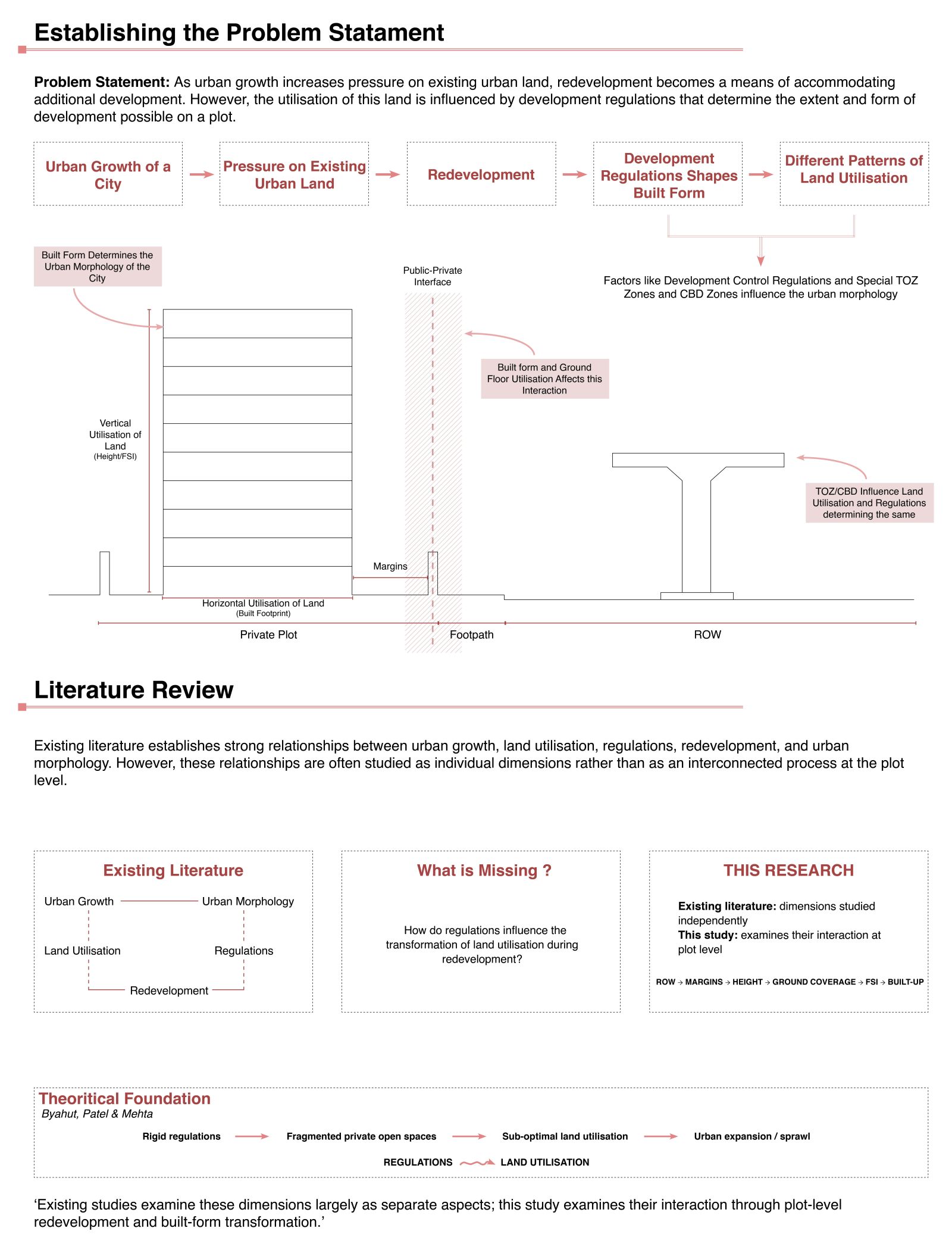
Problem Statement and Literature Review: Identifying the research gap between development regulations, redevelopment and land utilisation.

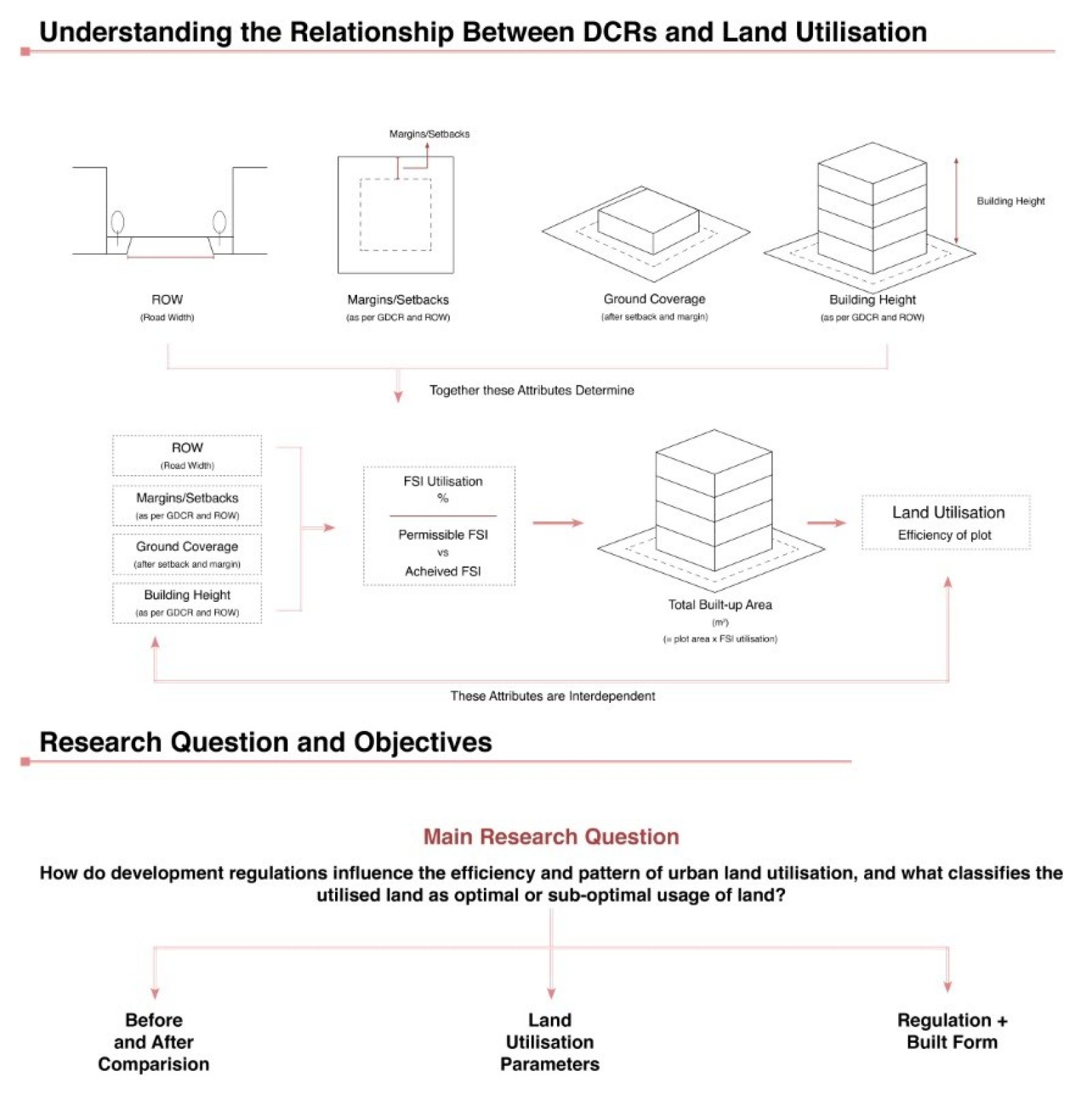
Regulatory Framework and Research Objectives: Relationship between development control regulations, built-form parameters and urban land utilisation.

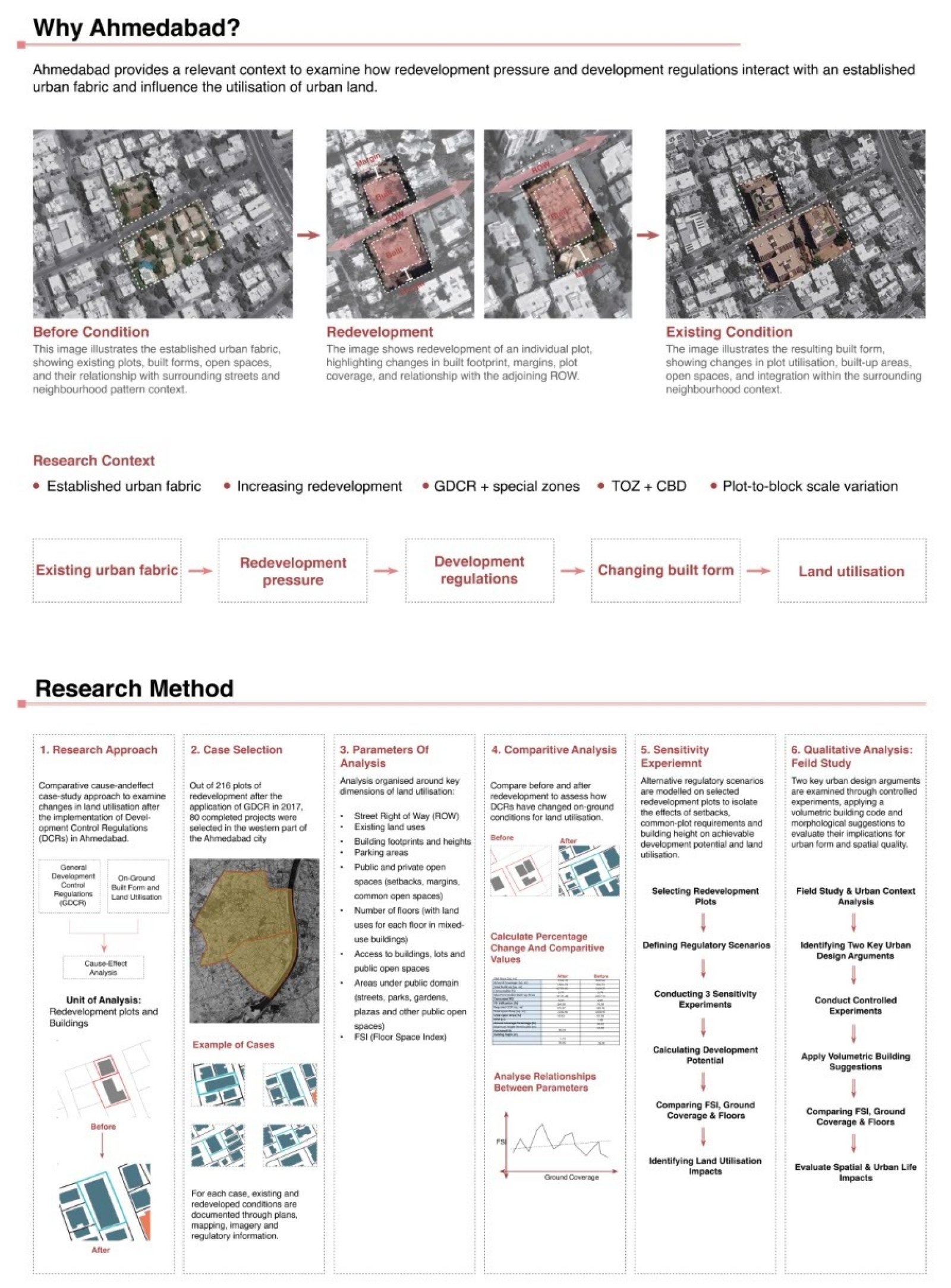
Research Context and Methodology: Ahmedabad’s redevelopment context, research approach, case selection and analytical framework.

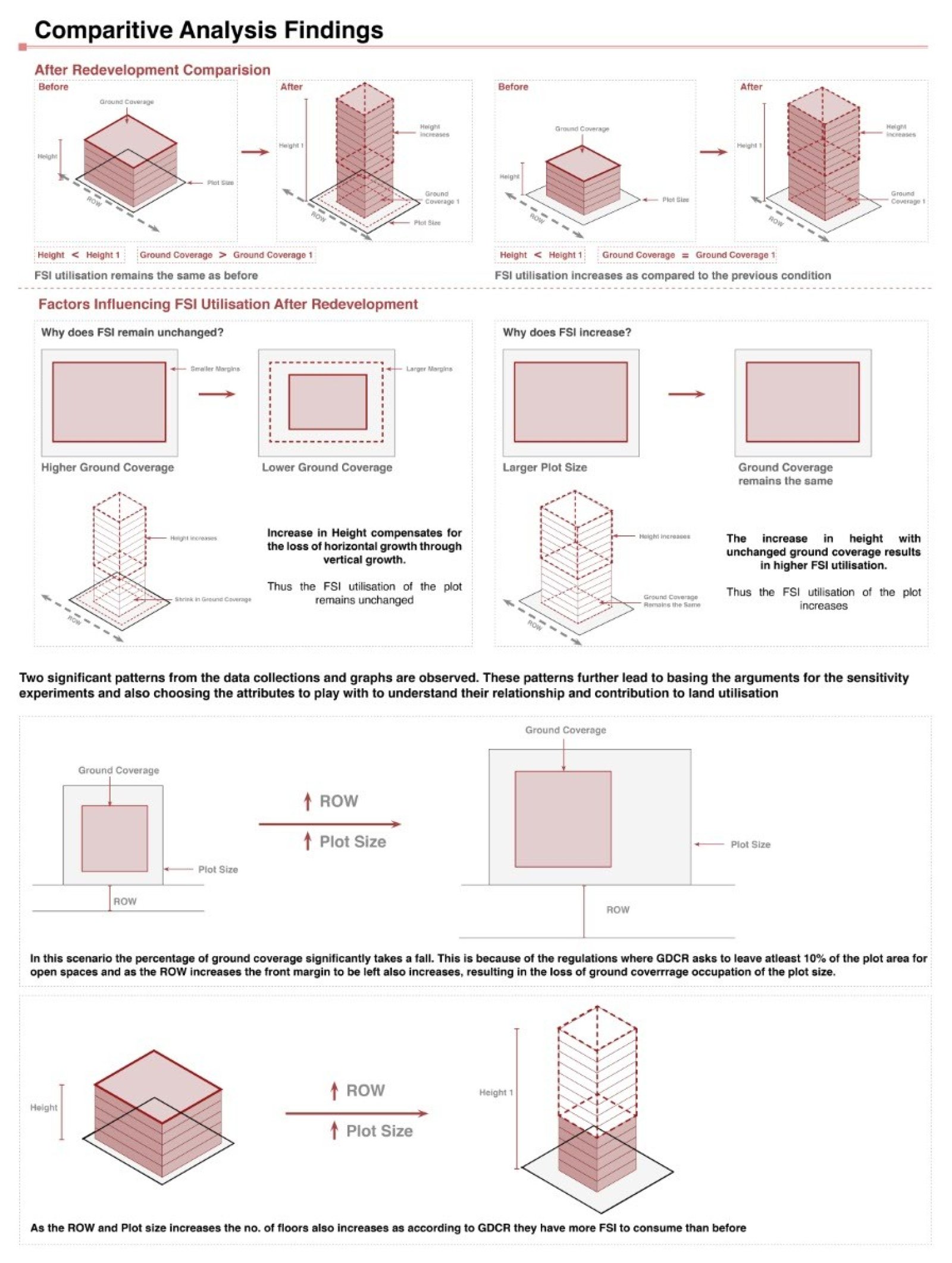
Comparative Analysis Findings: Changes in built form and FSI utilisation following redevelopment under existing development regulations.

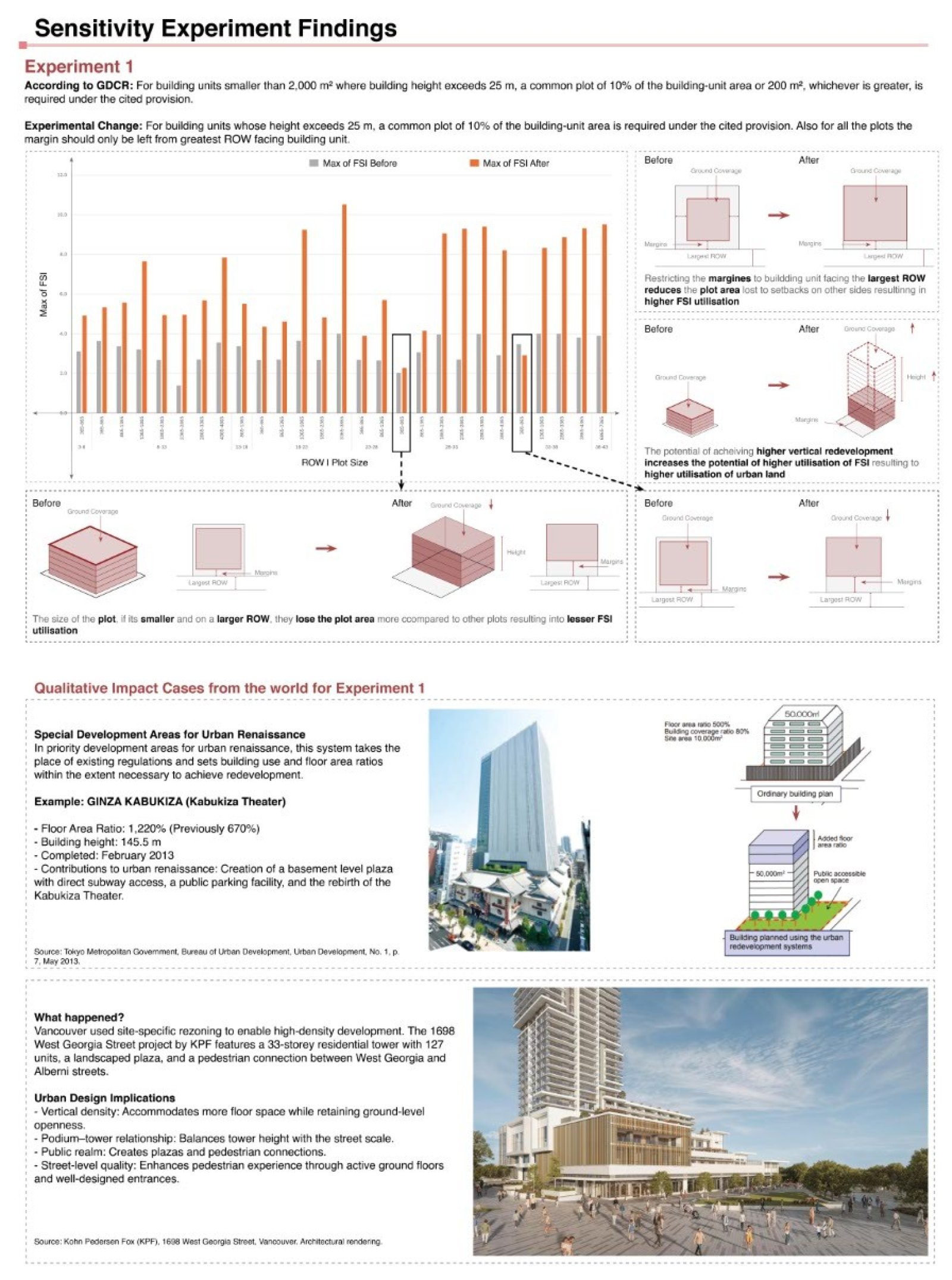
Sensitivity Experiment 1: Impact of revised margin requirements on ground coverage and FSI utilisation.

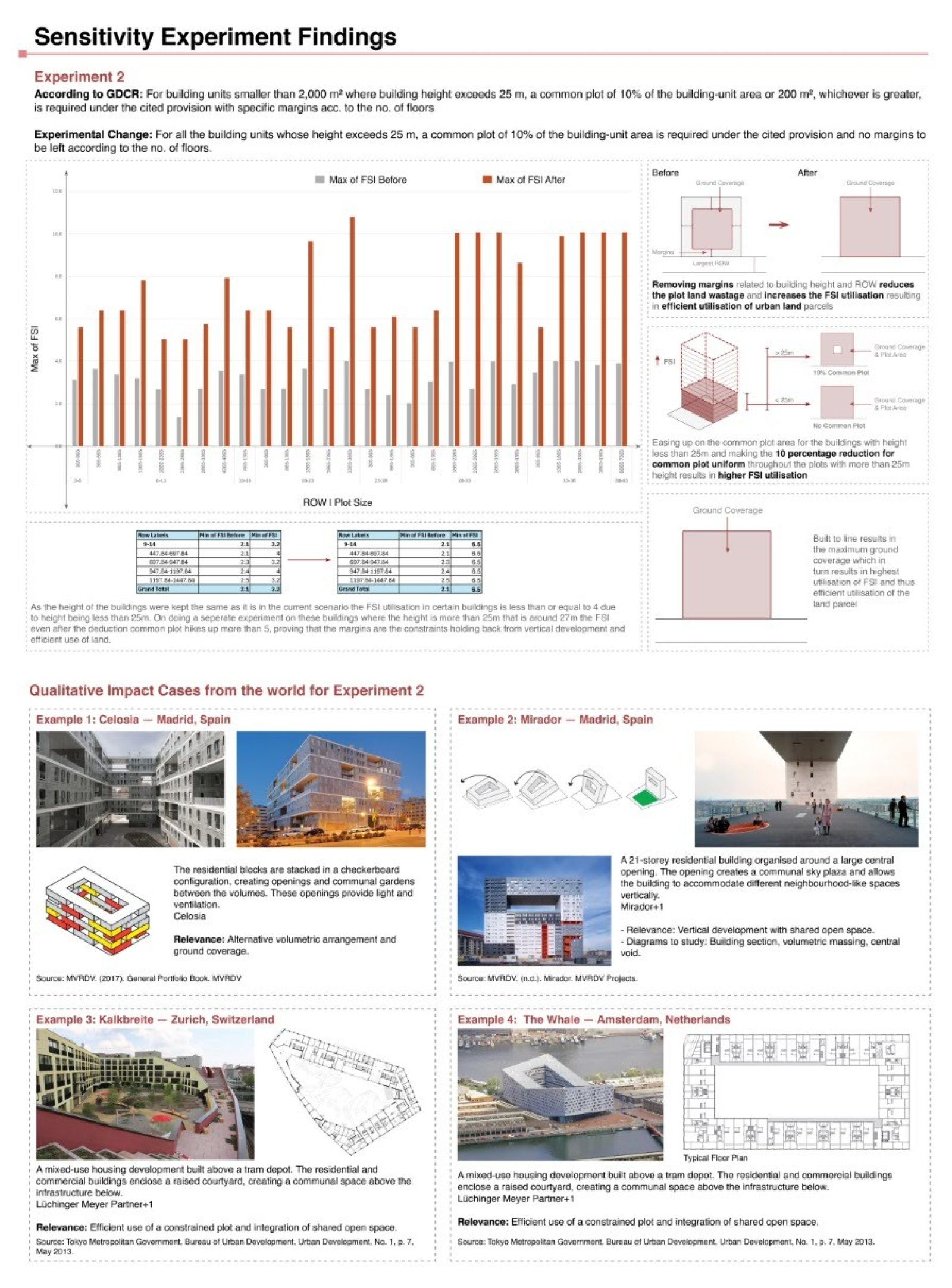
Sensitivity Experiment 2: Impact of removing height-dependent margins on permissible development potential and FSI utilisation.

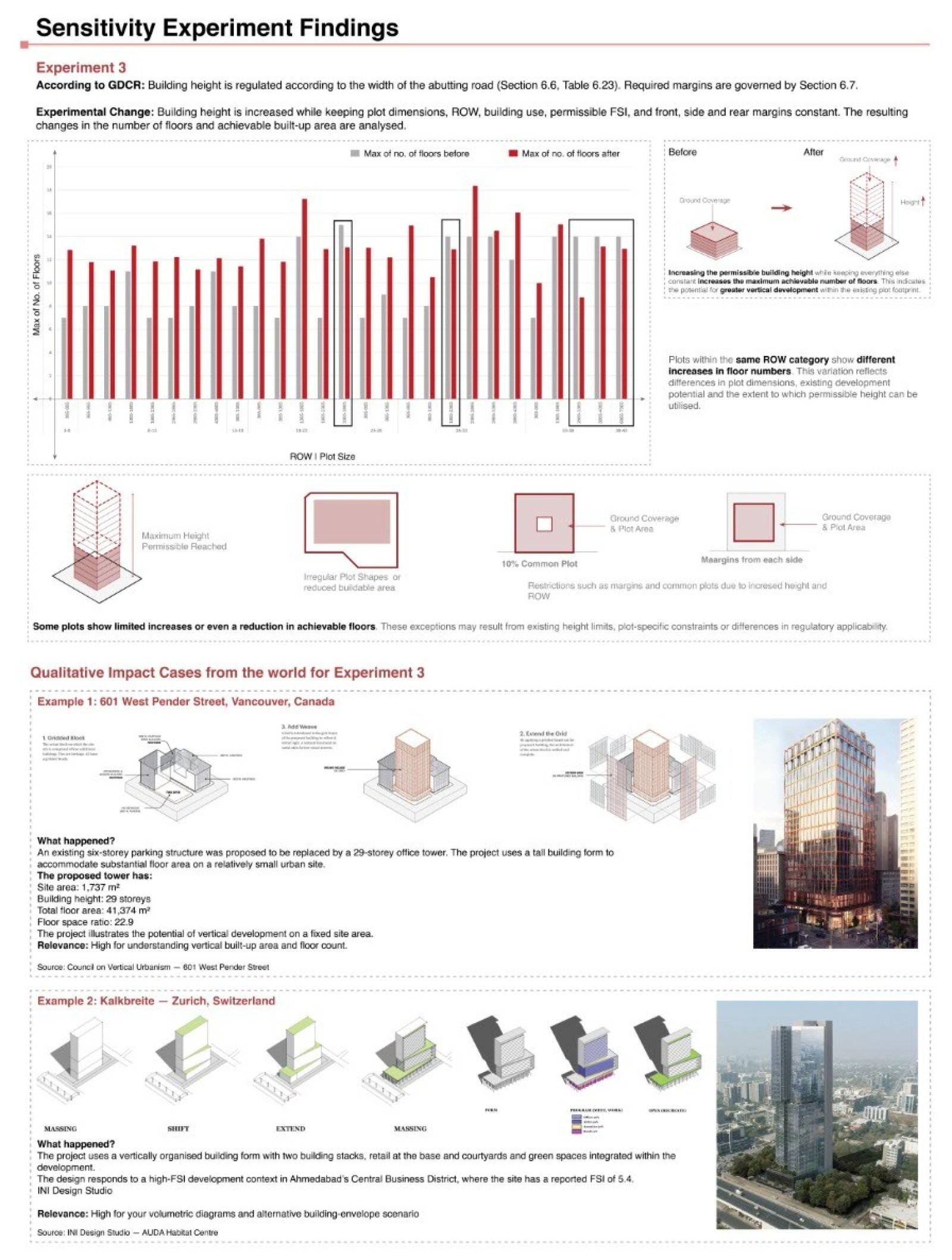
Sensitivity Experiment 3: Impact of increased building height on achievable floors and built-up area.

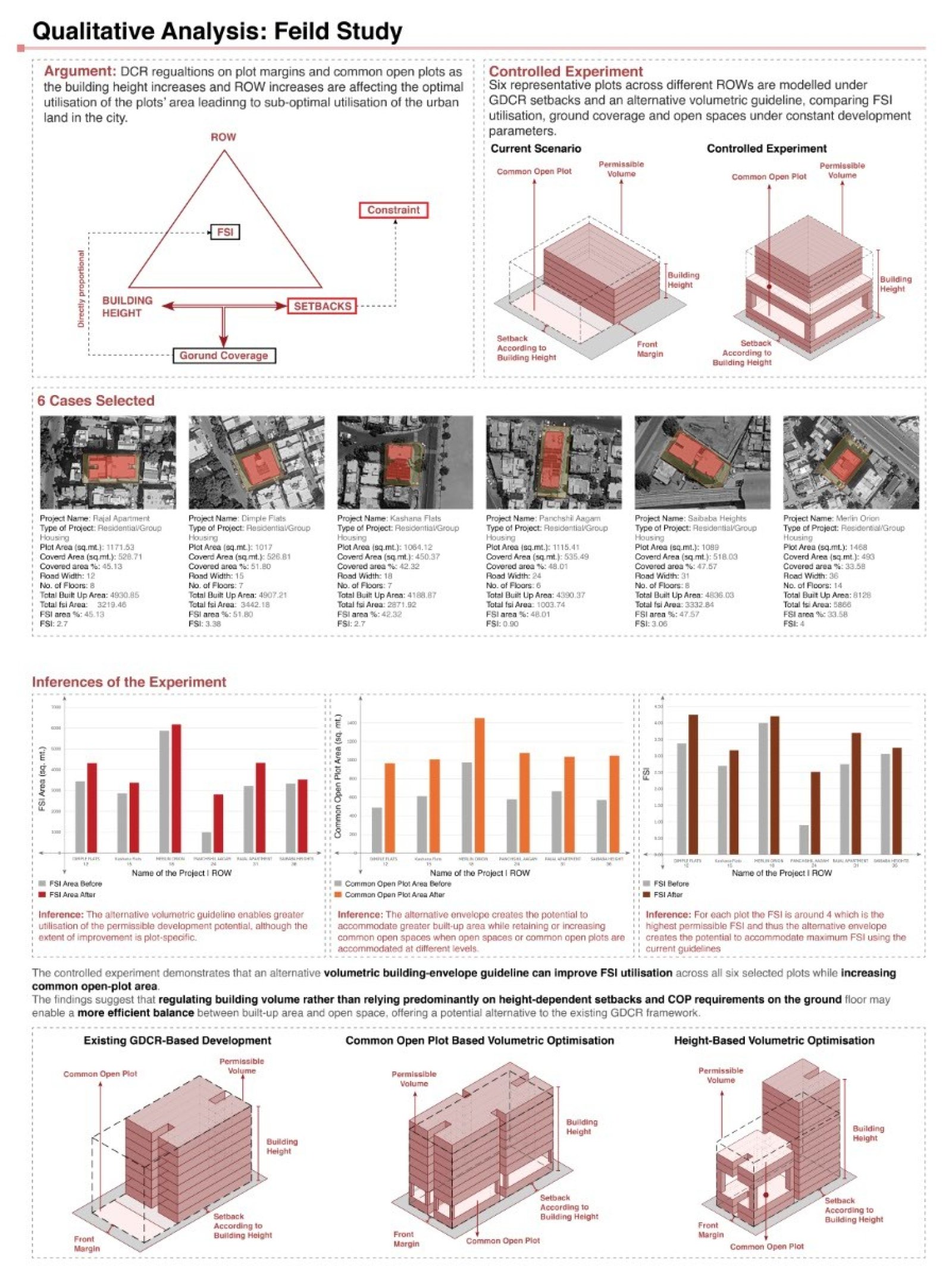
Qualitative Field Study: Controlled volumetric experiments evaluating alternative development envelopes across six selected plots.

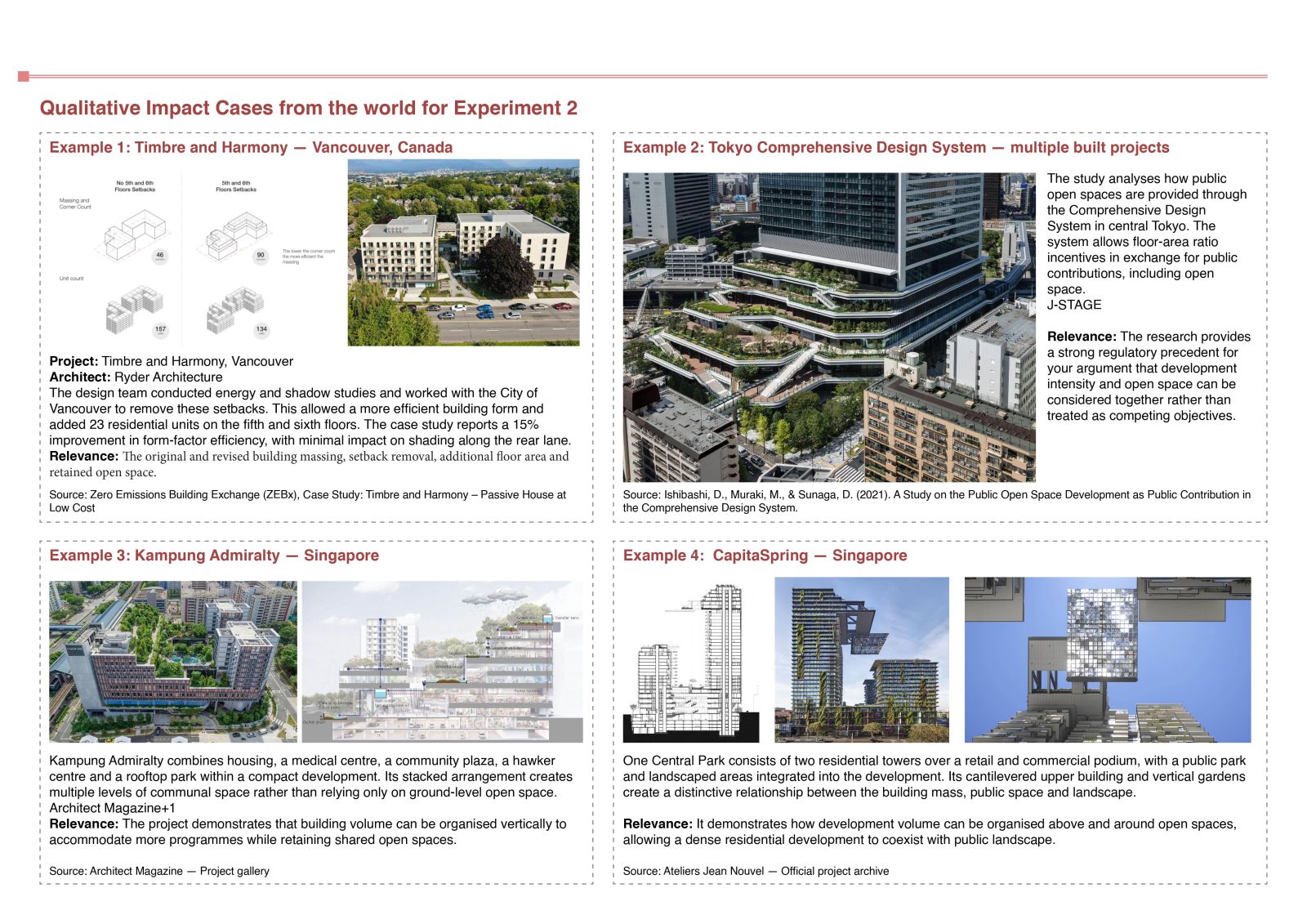
International Precedents for Volumetric Development: Global examples demonstrating alternative approaches to building massing and shared open spaces.

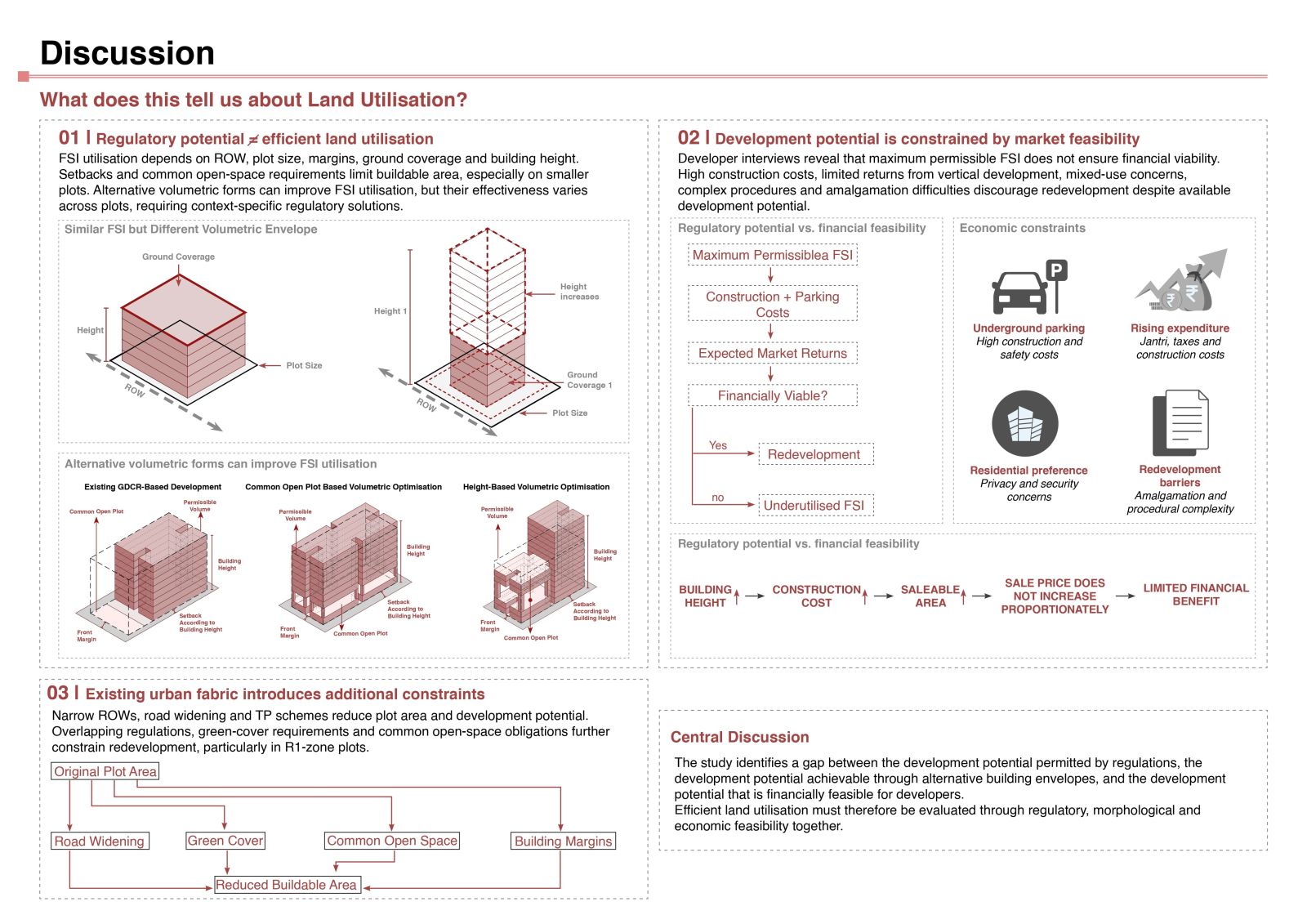
Research Discussion: Regulatory, economic and existing urban fabric constraints influencing redevelopment and land utilisation.