Your browser is out-of-date!
For a richer surfing experience on our website, please update your browser. Update my browser now!
The studio was to understand urban design as a methodology that involves comprehension and interpretation of the built environment based on its basic components: urban blocks, open space, streets, and architectural typologies. The studio was designed in a series of modules and focused on analysis, design, and communication.
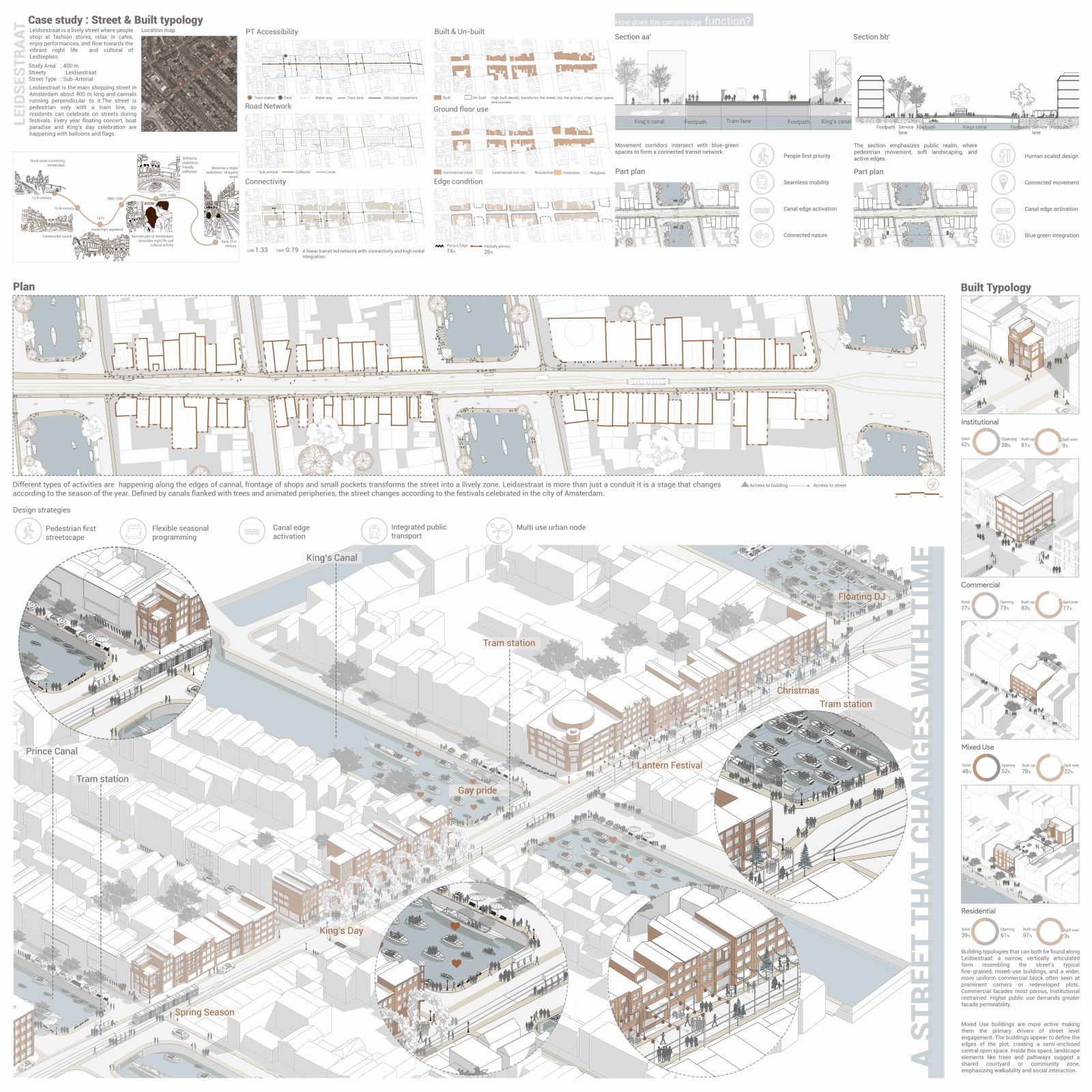
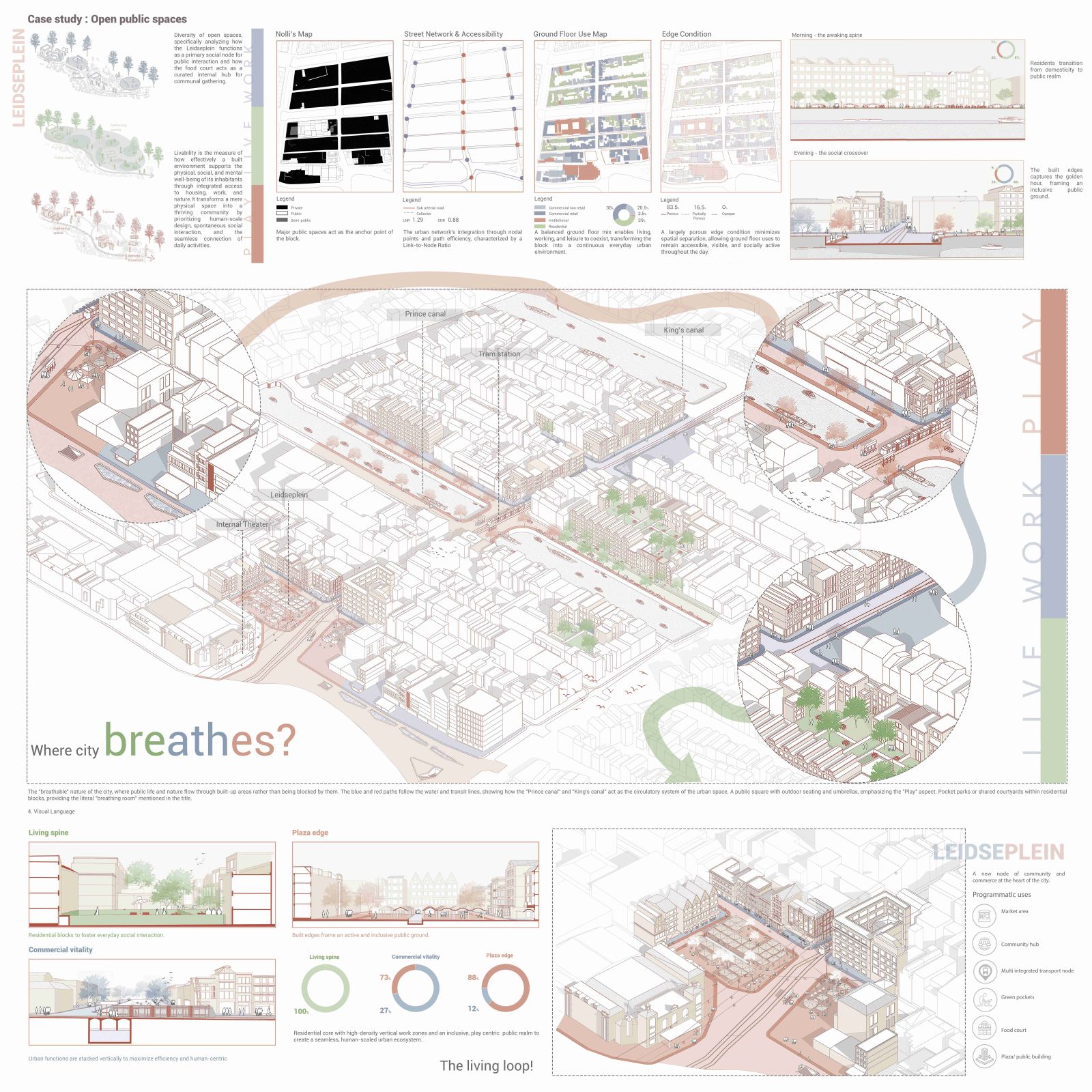
Module one concerned the study and presentation of the city form. In connection with this, Leidsestraat in Amsterdam was studied to gain knowledge about the spatial and functional aspects of urban vitality.The intersection of canals and tram networks revealed how movement infrastructure shapes urban typology and activates public life. The study of open spaces further examined the “live–work–play” framework, highlighting temporal transformations and adaptive use patterns that enhance livability.
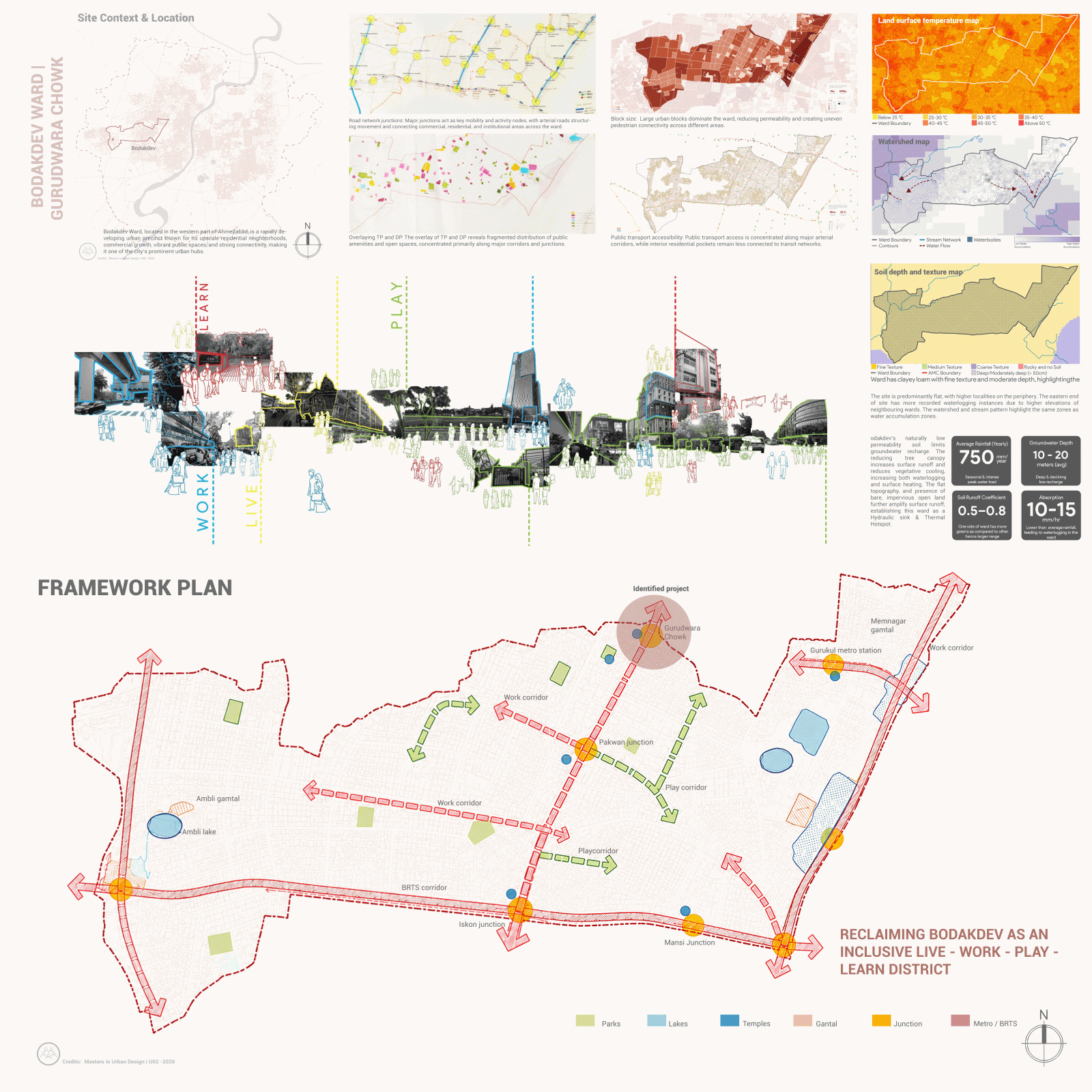
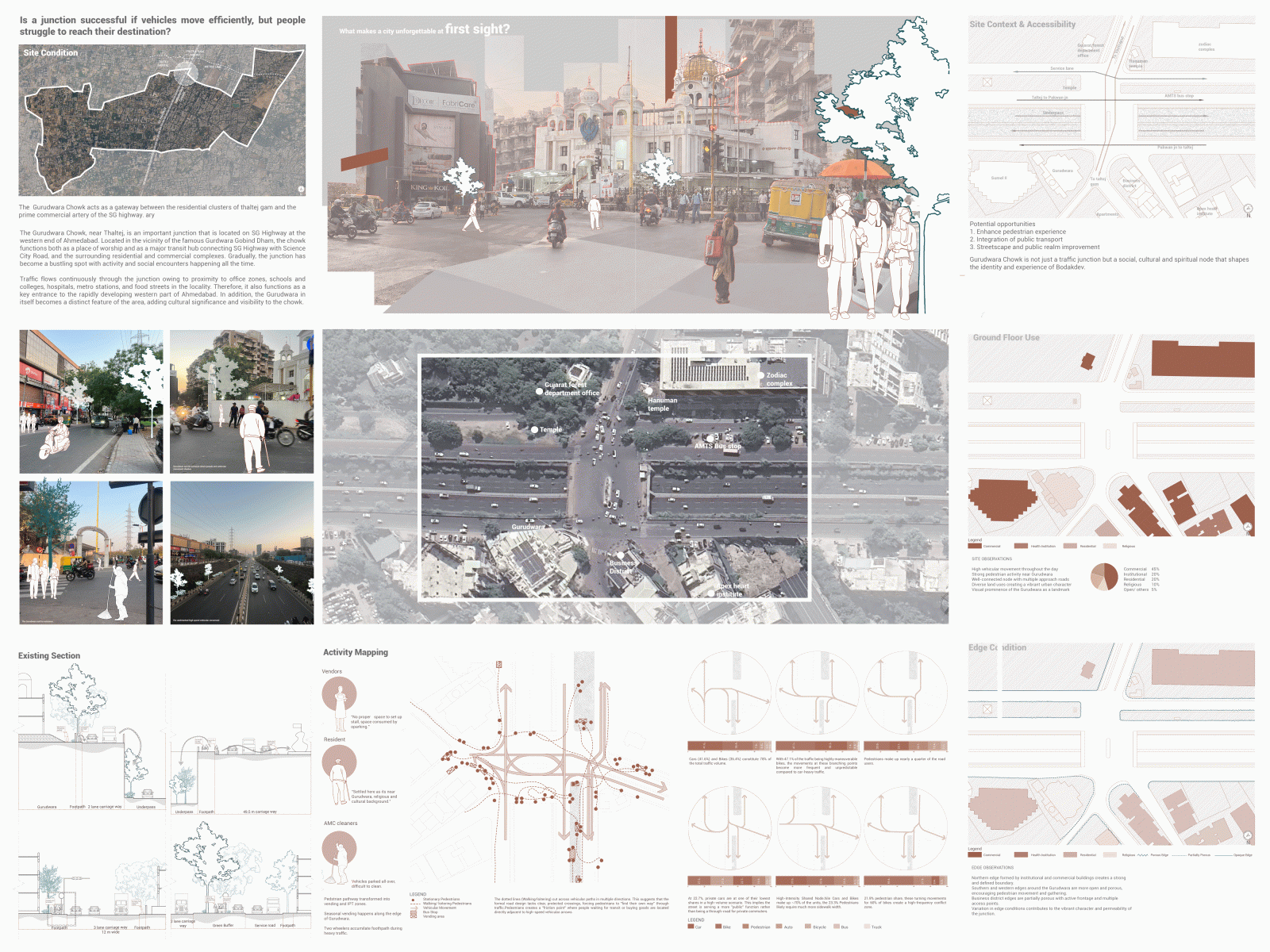
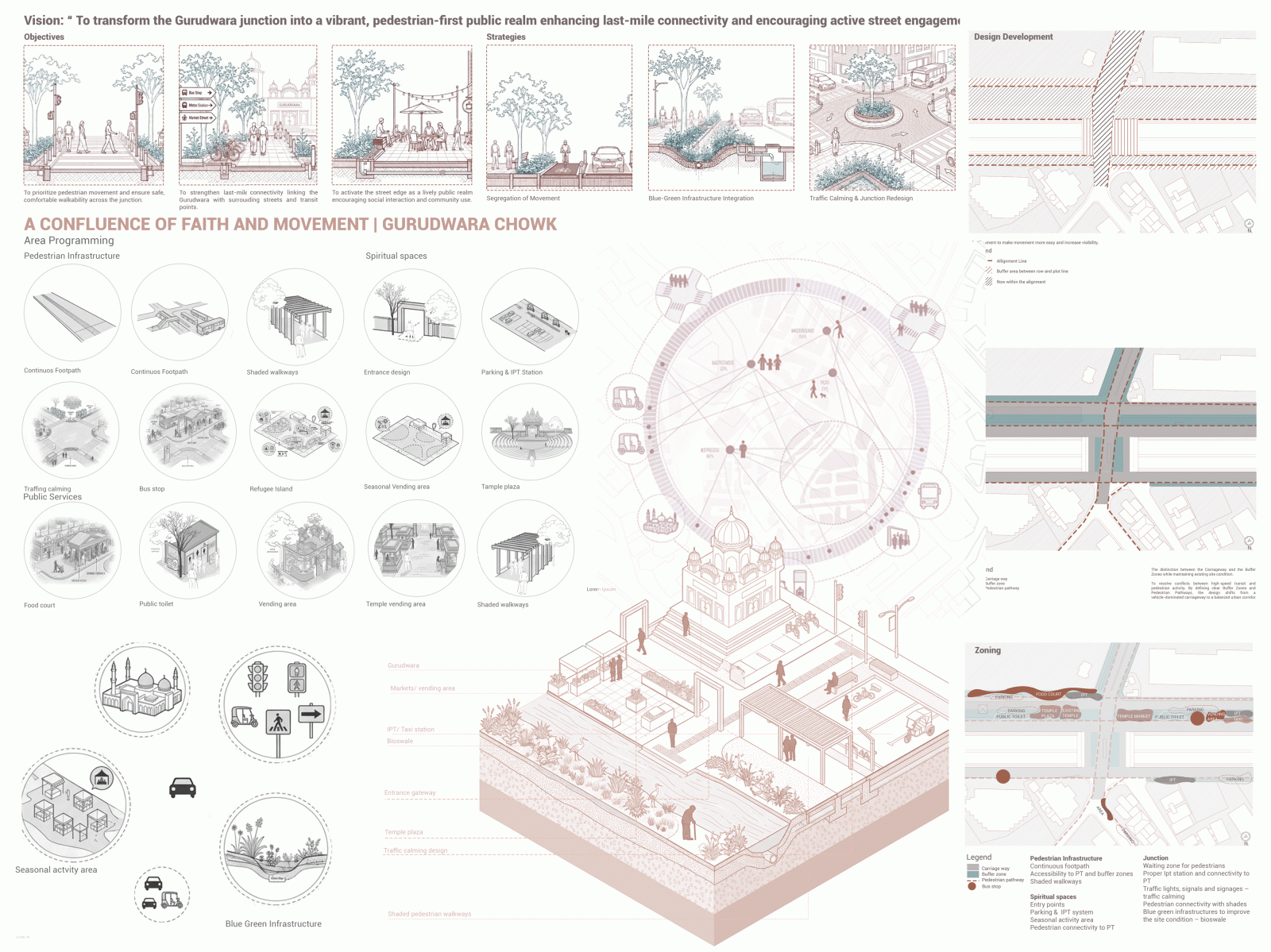
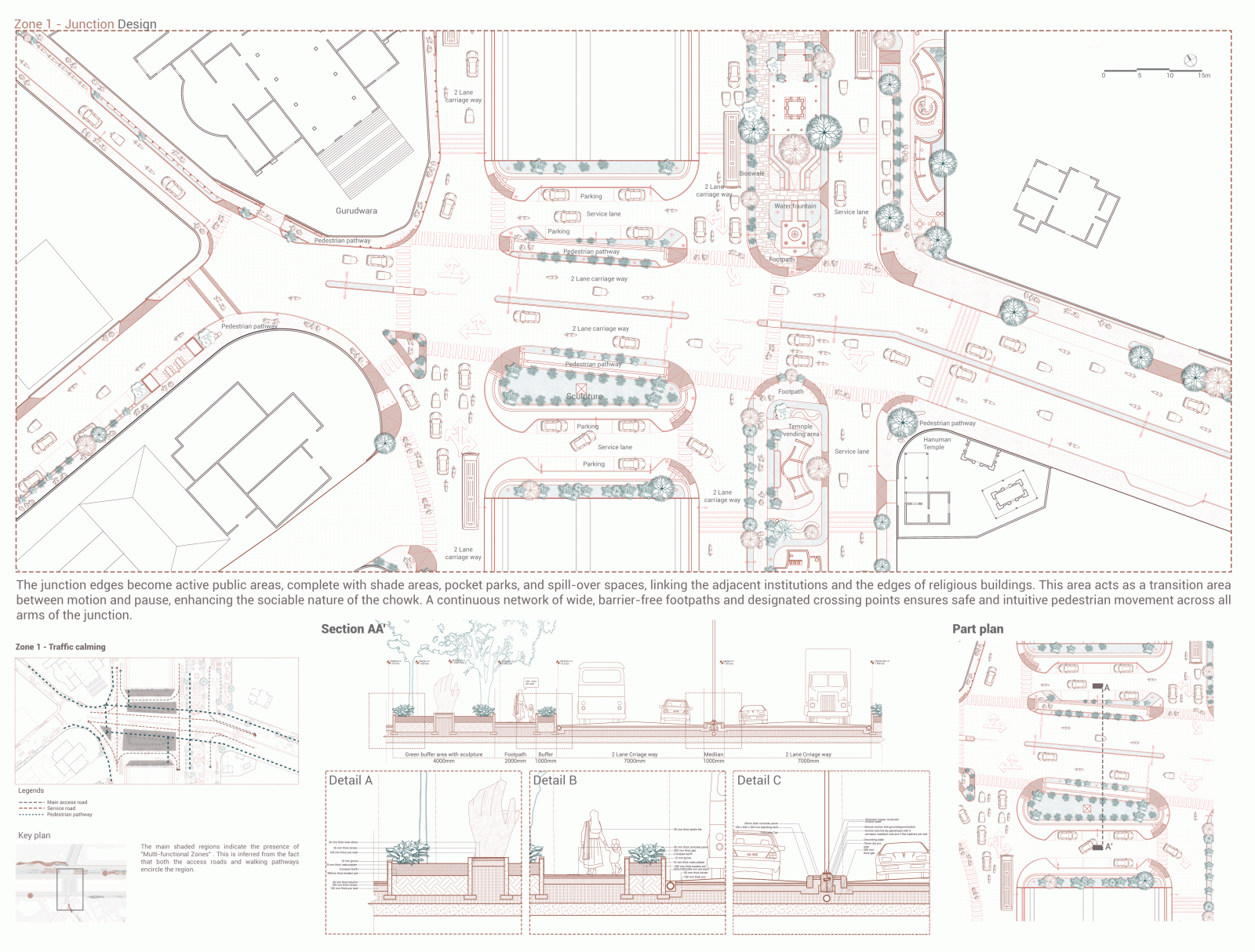
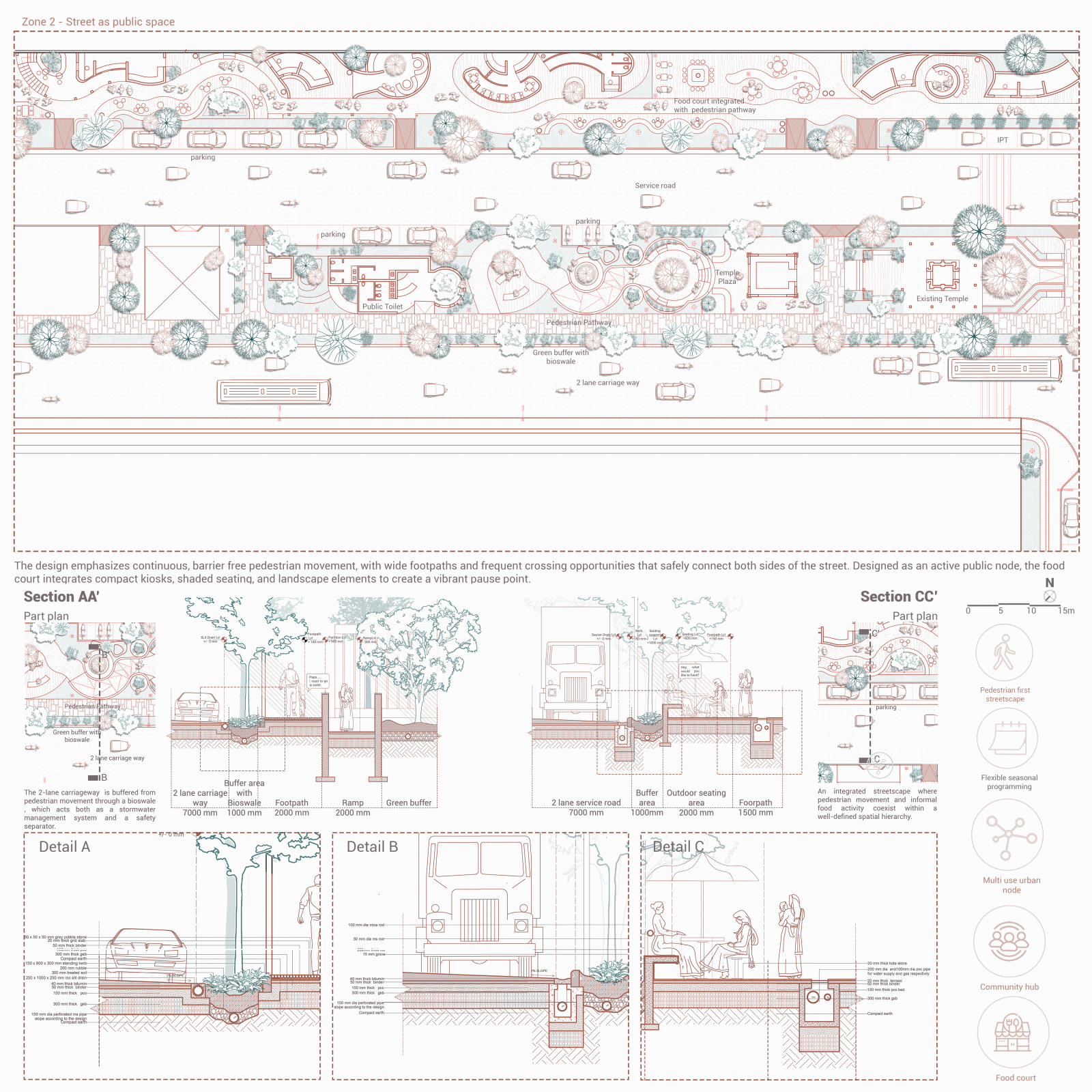
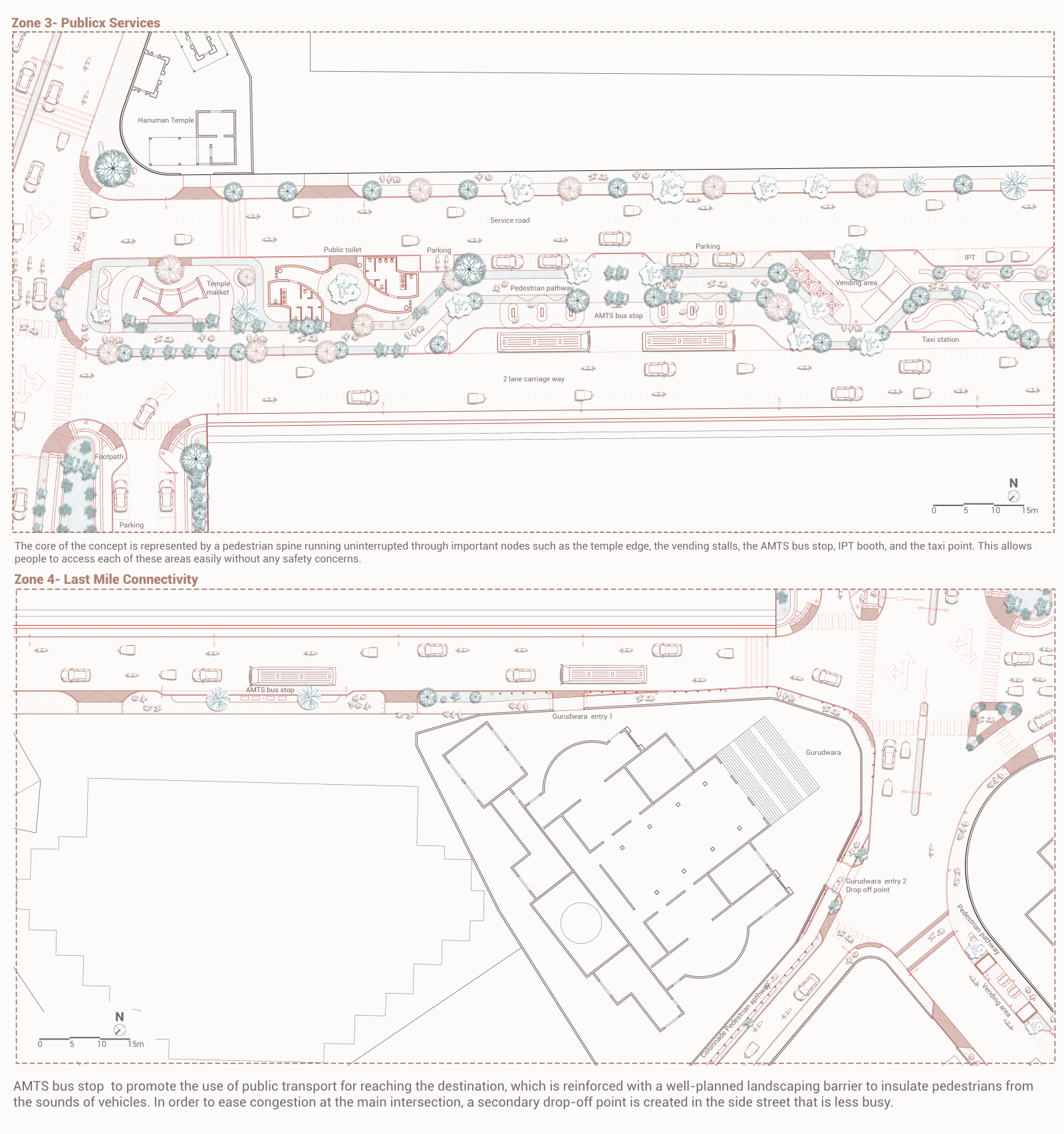
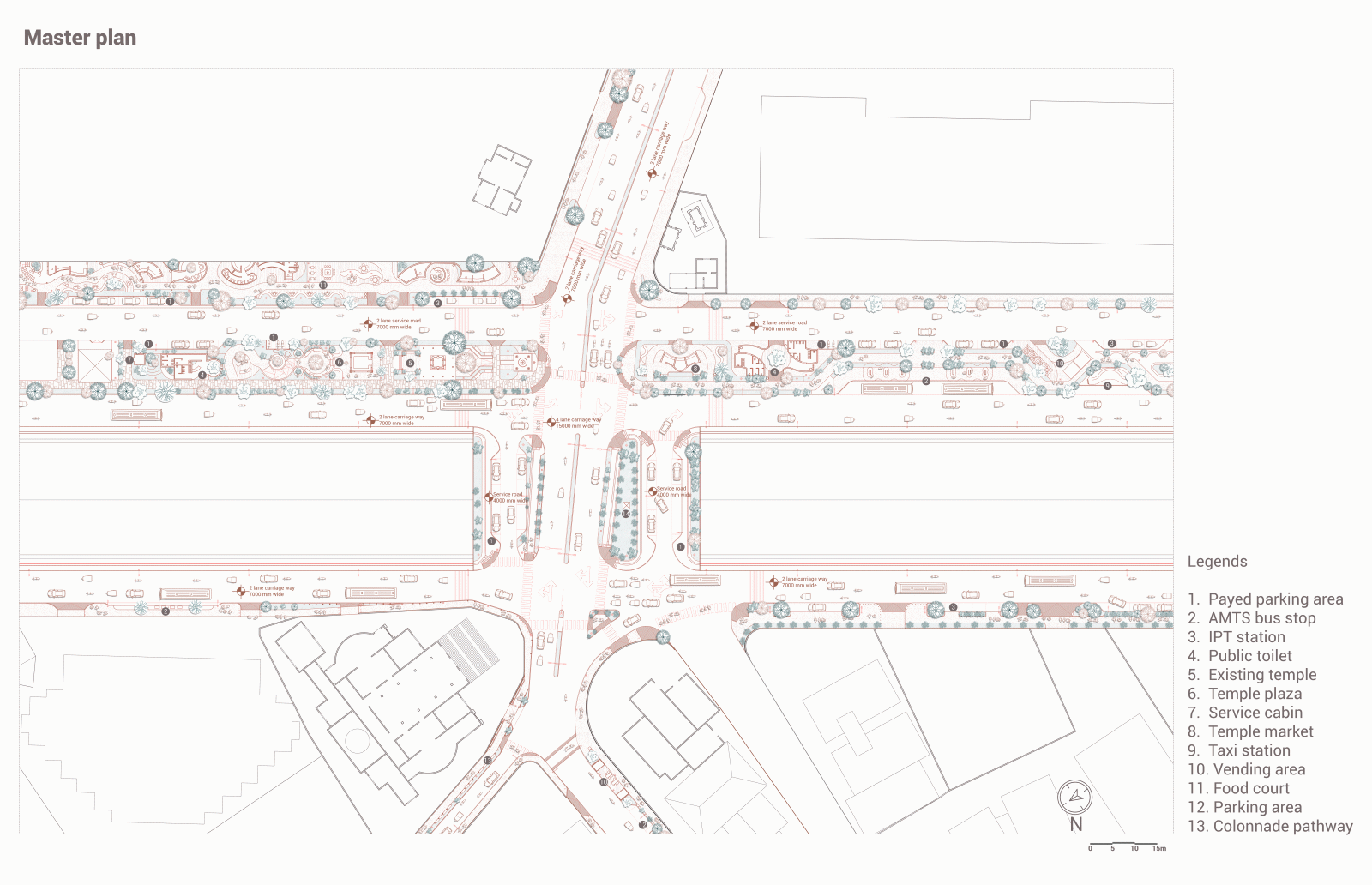
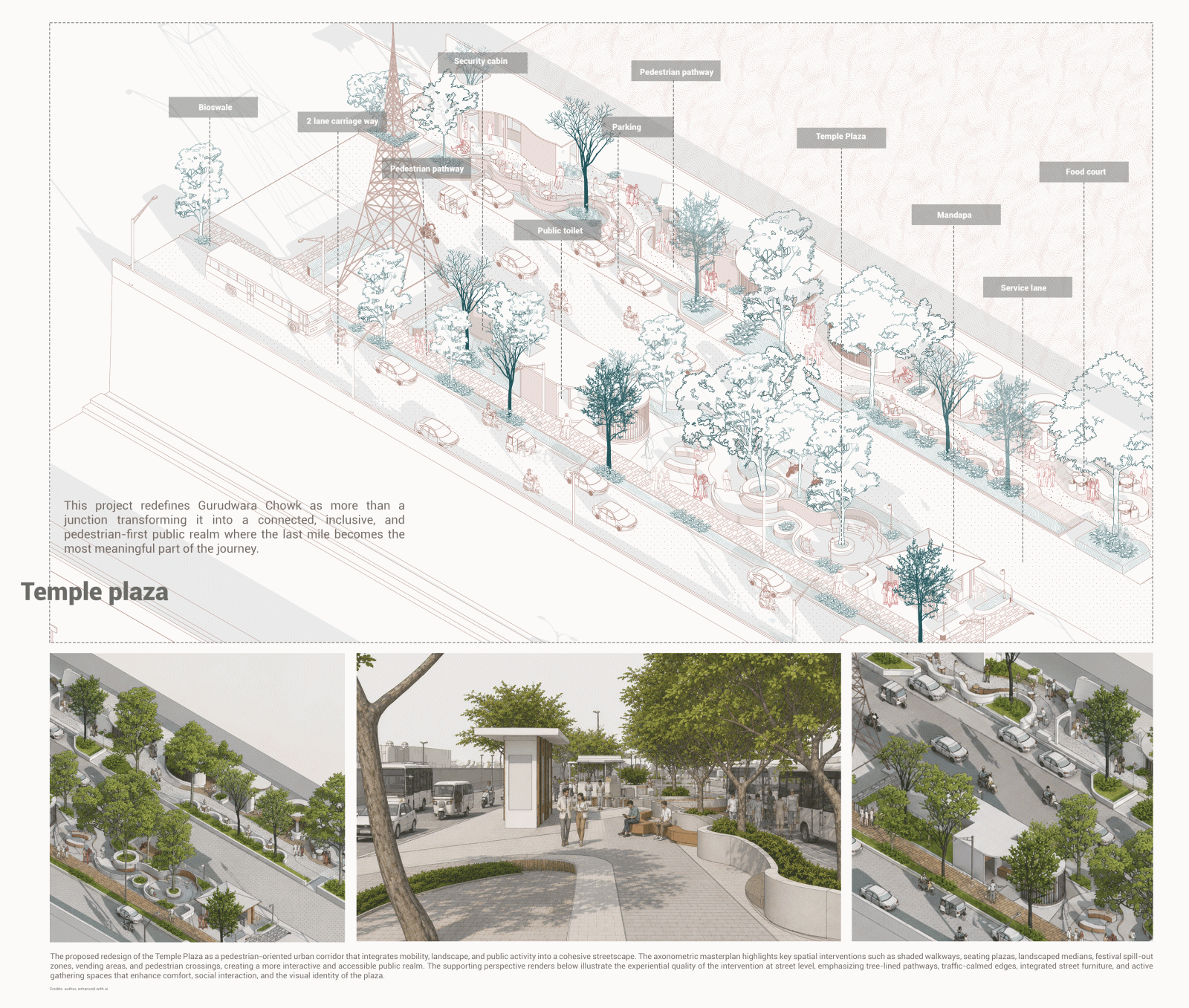
Module Two applied these lessons learned through a design intervention set in the city of Ahmedabad. Specifically, the project was centered around the area of Gurudwara Chowk in Bodakdev, which is a traffic-oriented intersection located near SG Highway. This design intervention seeks to transform the area into a more pedestrian-oriented environment, through better connections, activation of the edges, and traffic segregation. In conclusion, the studio has led to a more complex comprehension of how the scale, form, and context come together in the shaping of cities by means of an analytical-design approach.