Your browser is out-of-date!
For a richer surfing experience on our website, please update your browser. Update my browser now!
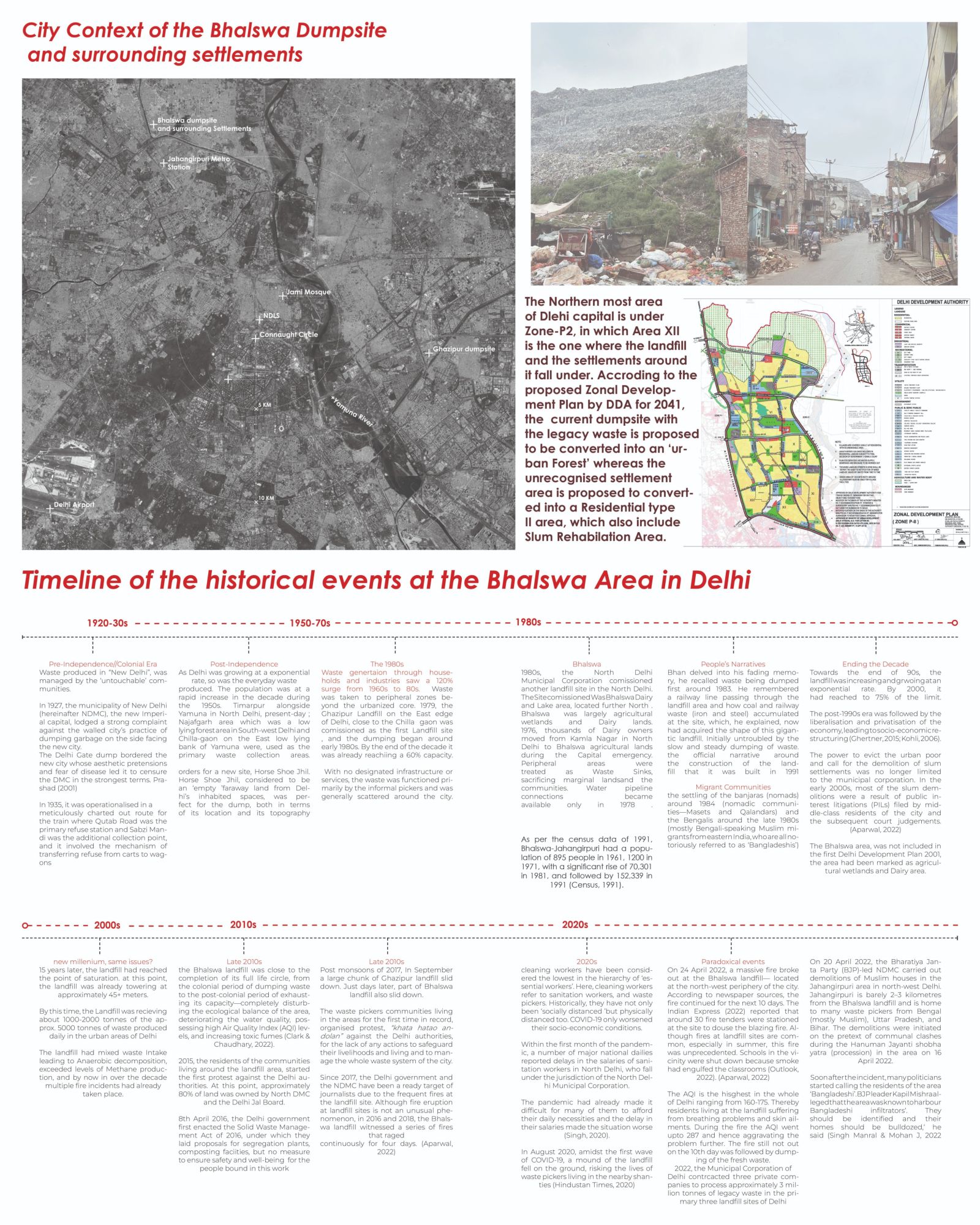
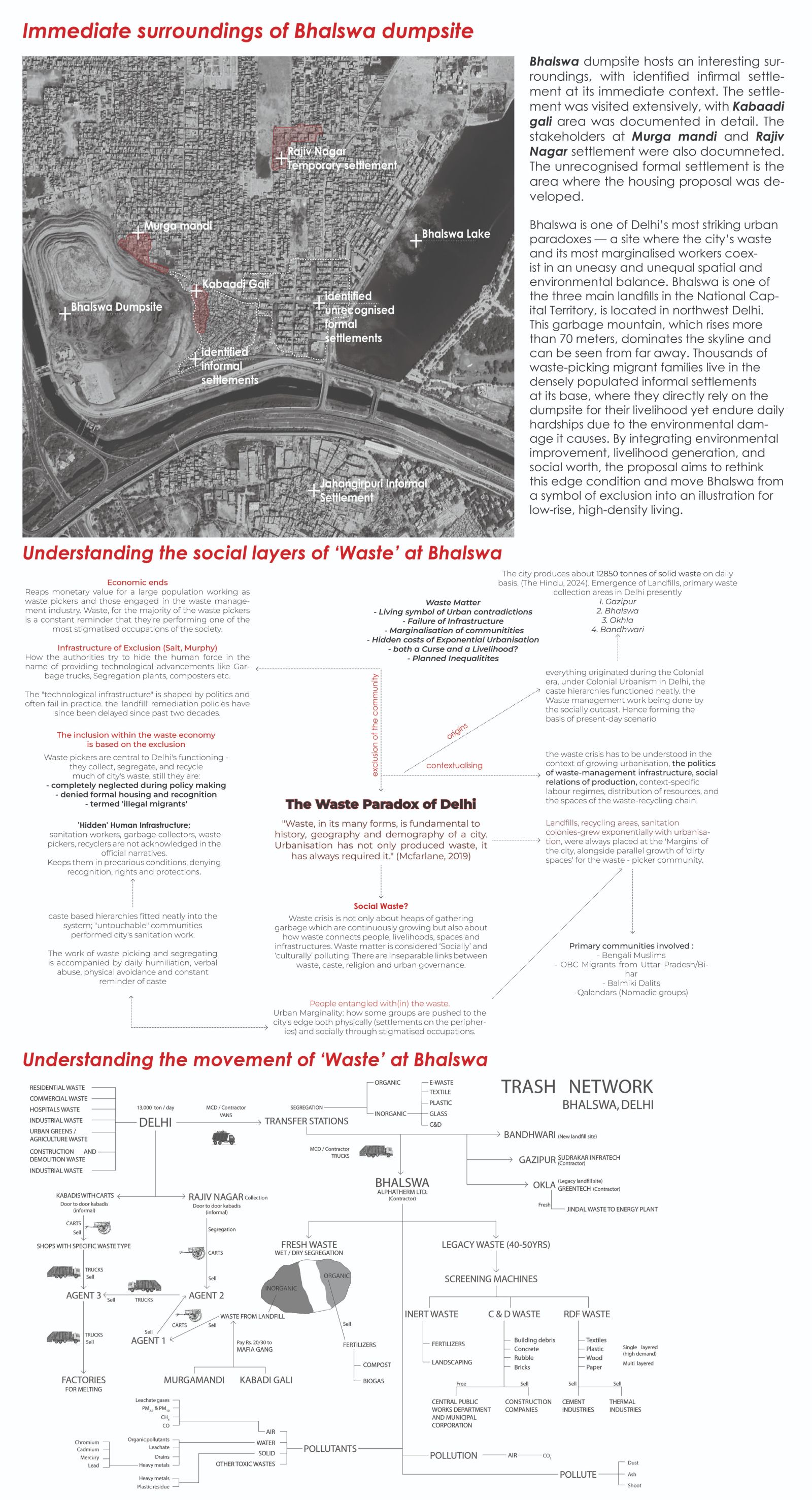
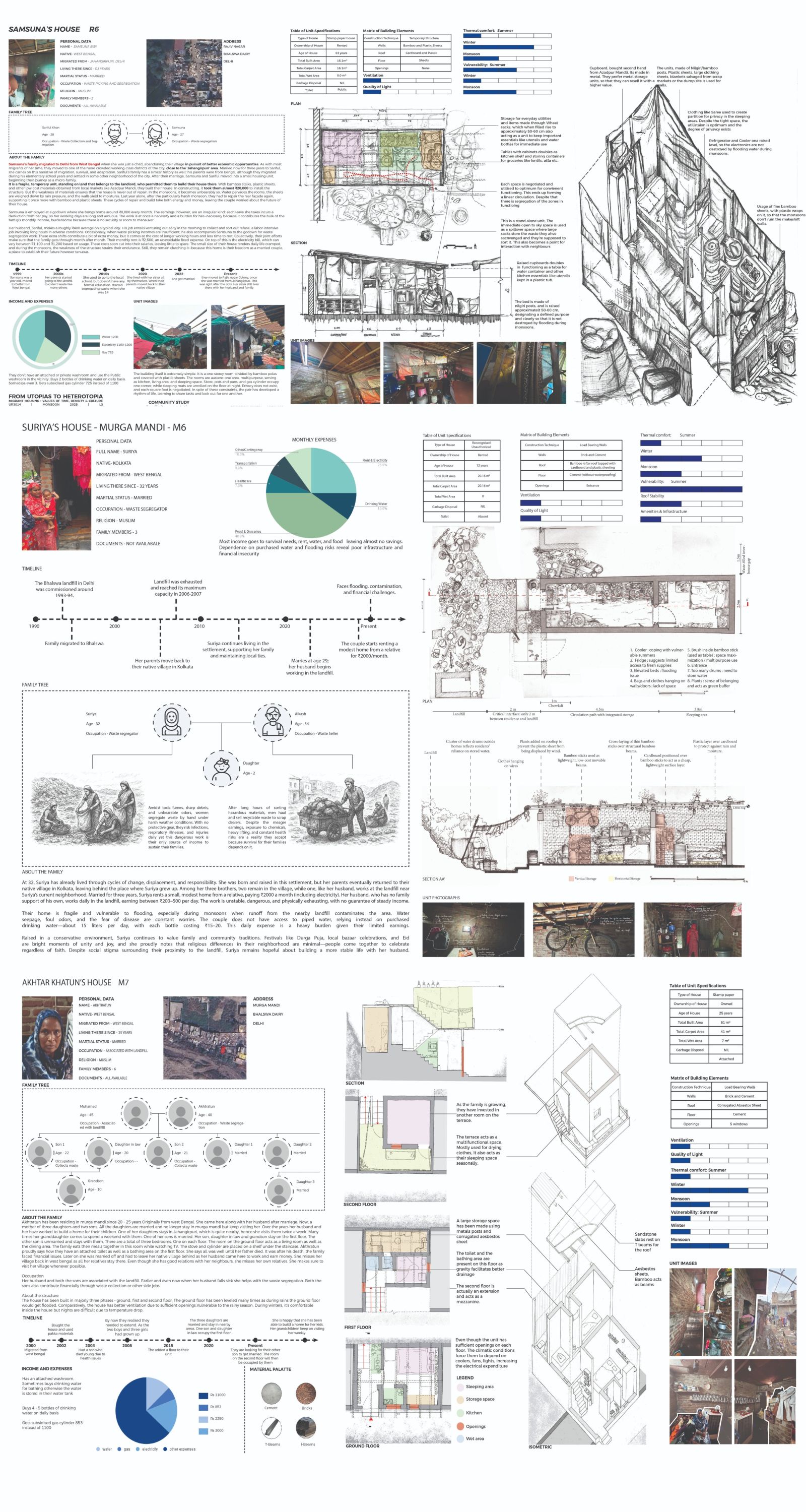
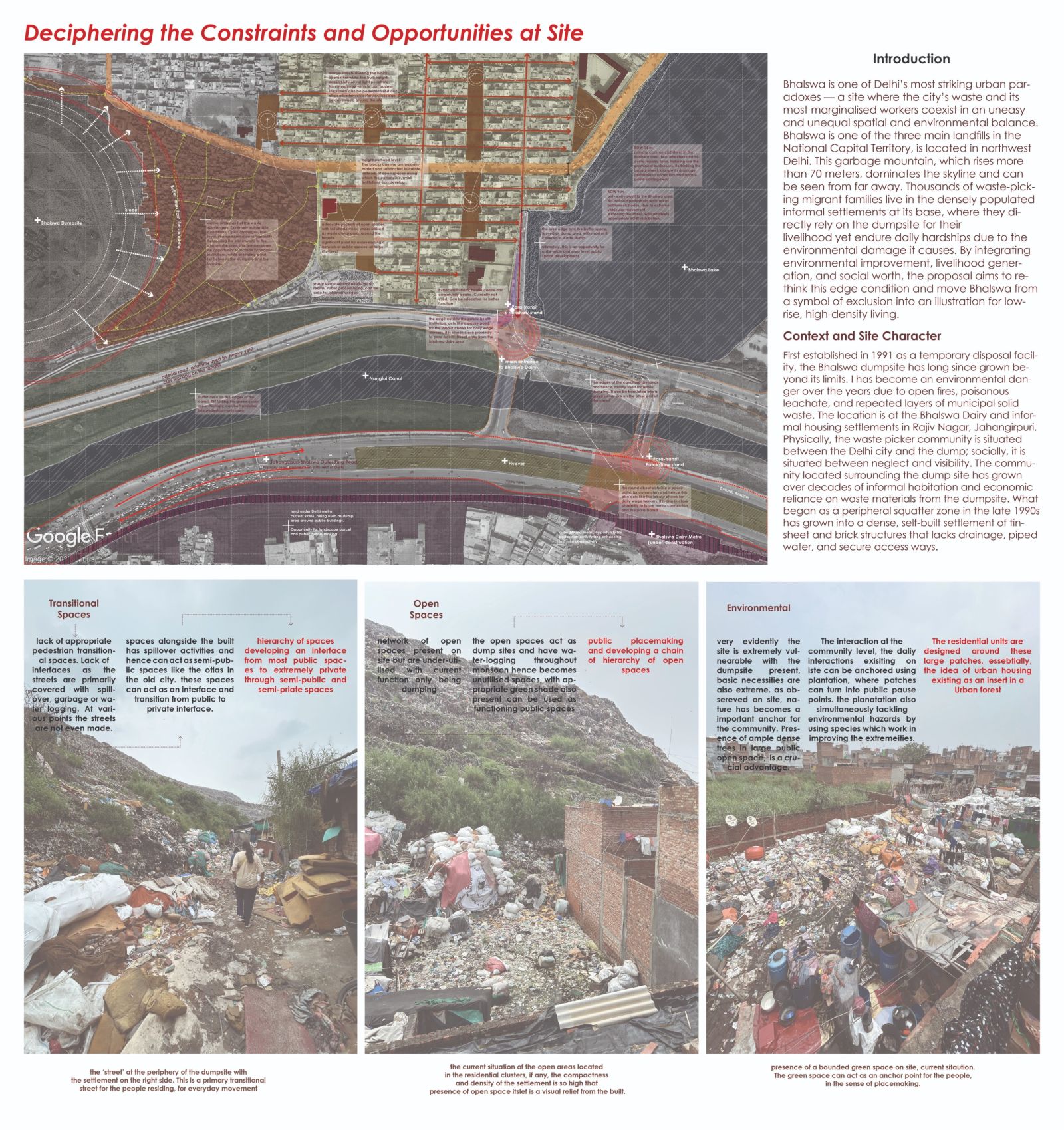
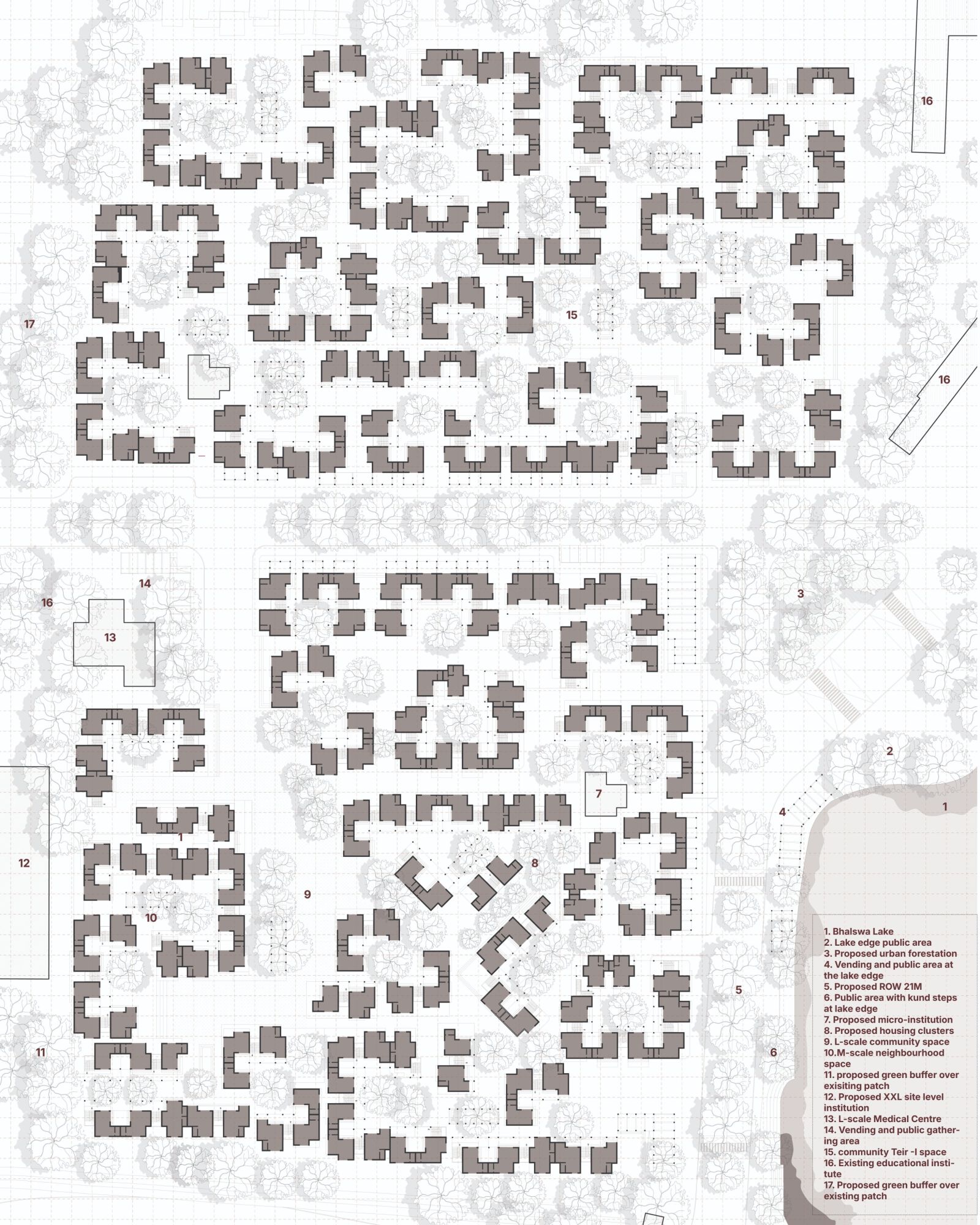
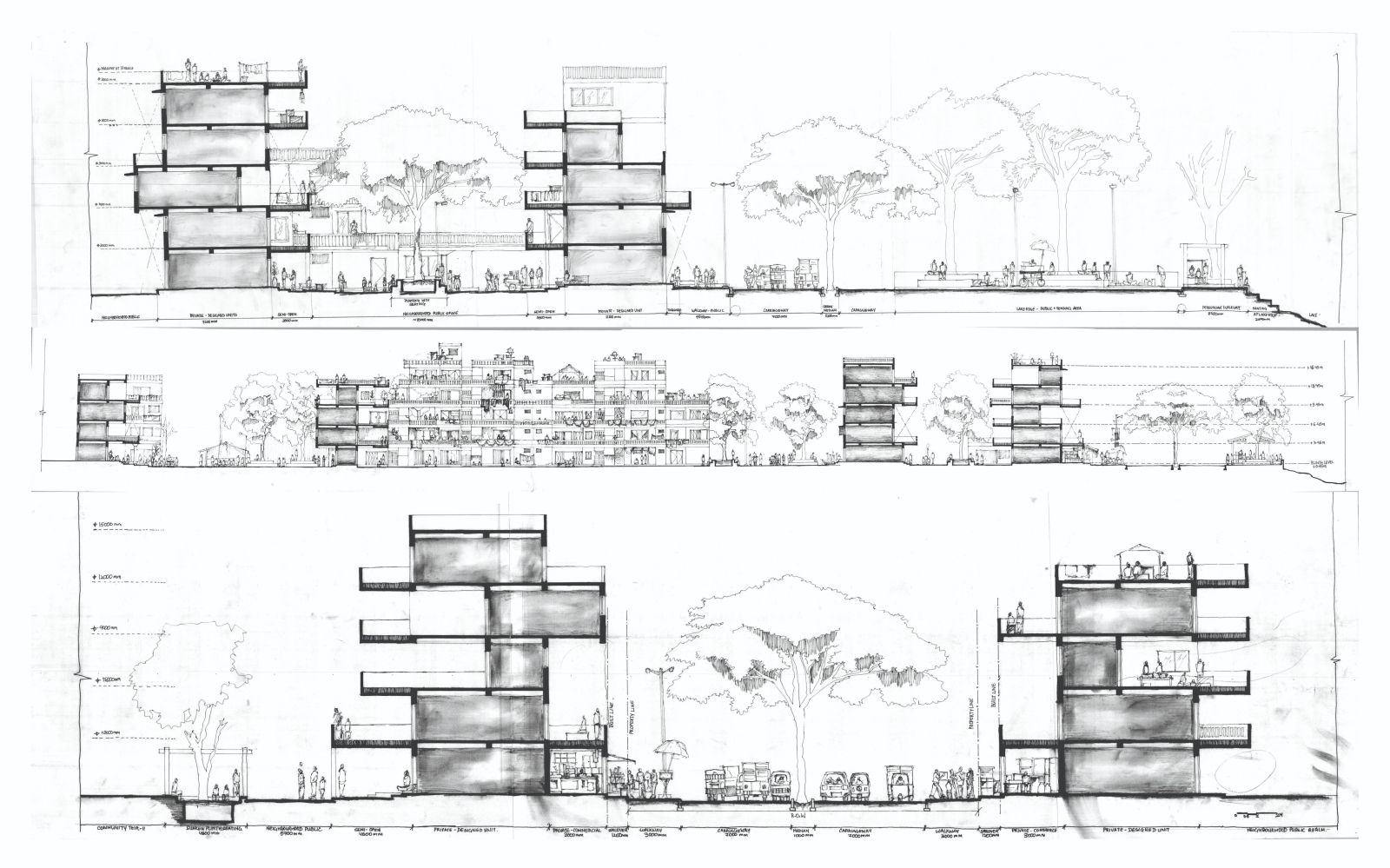
Bhalswa is one of Delhi’s most striking urban paradoxes — a site where the city’s waste and its most marginalised workers coexist in an uneasy and unequal spatial and environmental balance. Bhalswa is one of the three main landfills in the National Capital Territory, is located in northwest Delhi. This garbage mountain, which rises more than 70 meters, dominates the skyline and can be seen from far away. Thousands of waste- picking migrant families live in the densely populated informal settlements at its base, where they directly rely on the dumpsite for their livelihood yet endure daily hardships due to the environmental damage it causes. By integrating environmental improvement, livelihood generation, and social worth, the proposal aims to rethink this edge condition and move Bhalswa from a symbol of exclusion into an illustration for low-rise, high-density living.