• Home
  • FP
  • UI4001
  • Decentralised Urban Water Bank for Ahmedabad

Uddipan Adhikary

UI4001

Decentralised Urban Water Bank for Ahmedabad

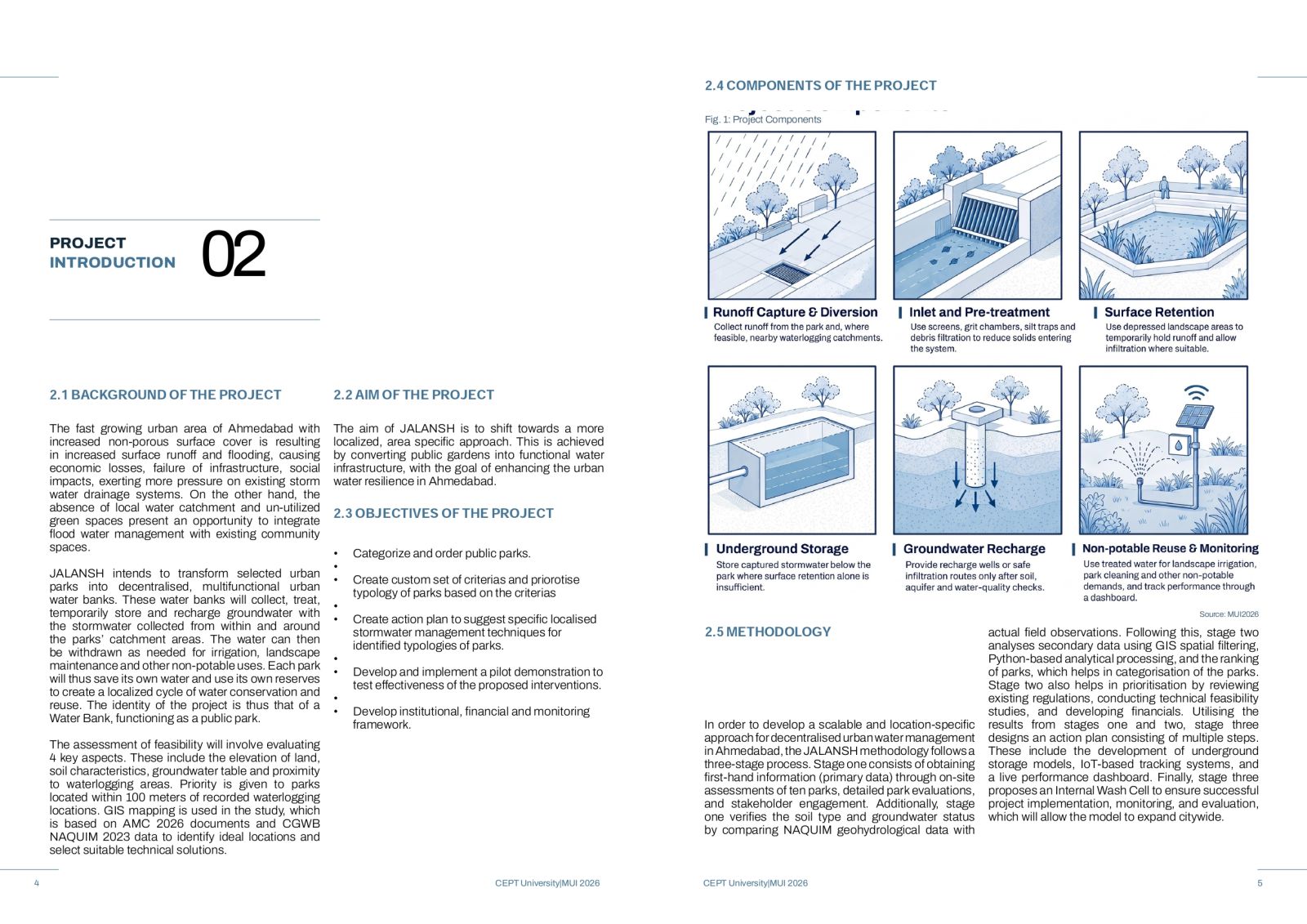
JALANSH proposes transforming selected public parks in Ahmedabad into decentralised urban water banks to address increasing urban flooding, inadequate stormwater drainage and the underutilisation of public open spaces. The project integrates stormwater capture, inlet treatment, surface retention, underground storage, groundwater recharge and non-potable water reuse within existing parks while preserving their recreational functions. Through GIS-based spatial analysis, field assessments, hydrological calculations and multi-criteria park prioritisation, the project identifies suitable intervention sites and develops context-specific engineering solutions. Uttam Nagar Garden is selected as the pilot demonstration site, with a phased implementation strategy supported by institutional coordination, blended financing and IoT-based performance monitoring. JALANSH envisions public parks as productive urban infrastructure that can capture, store, recharge and reuse water locally, strengthening Ahmedabad's long-term water resilience.
Report Content

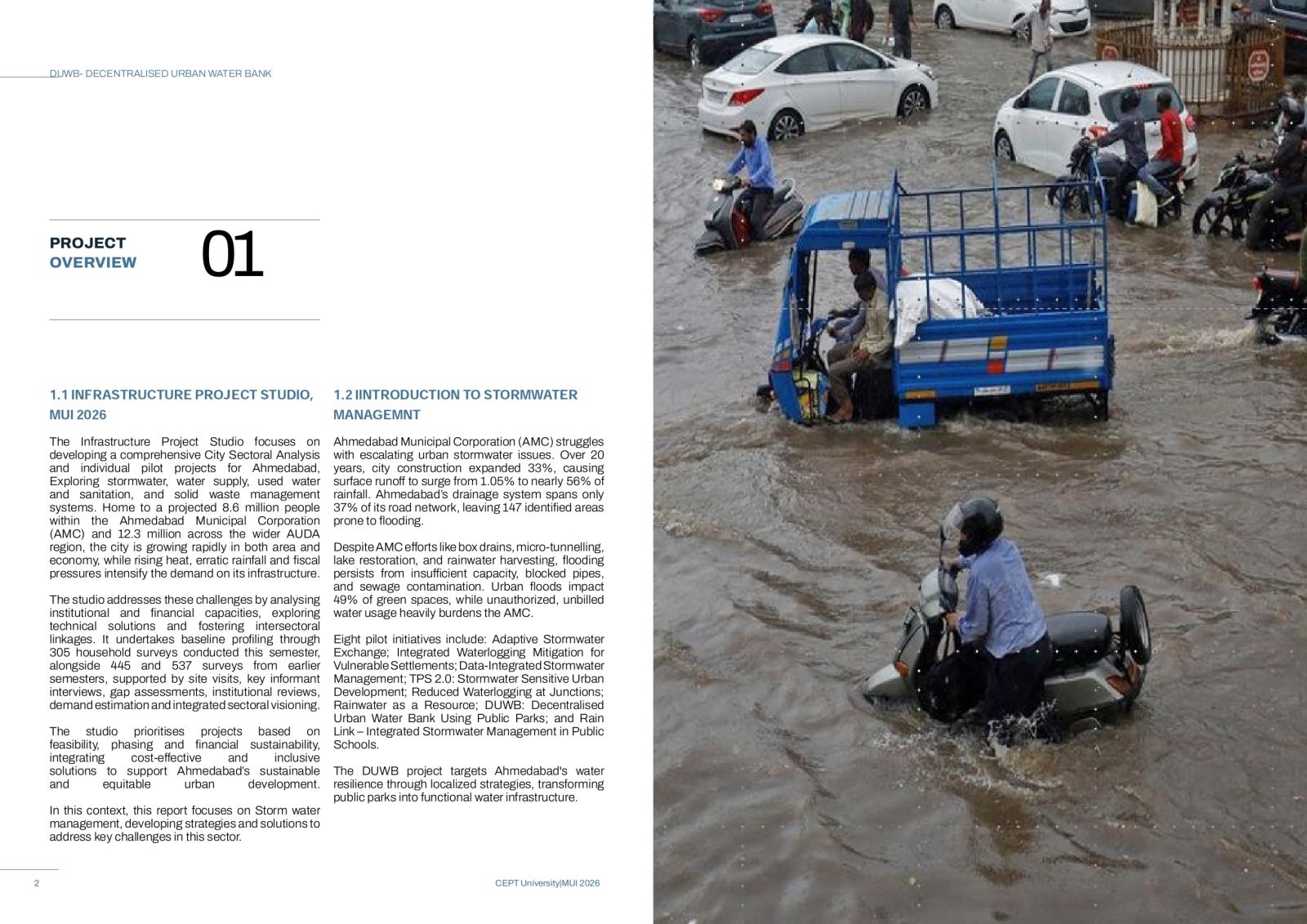
Ahmedabad’s growing urbanisation and inadequate stormwater infrastructure highlight the need for decentralised, integrated and locally responsive water management solutions.

JALANSH positions public parks as multifunctional urban water assets by integrating runoff capture, storage, groundwater recharge and reuse.

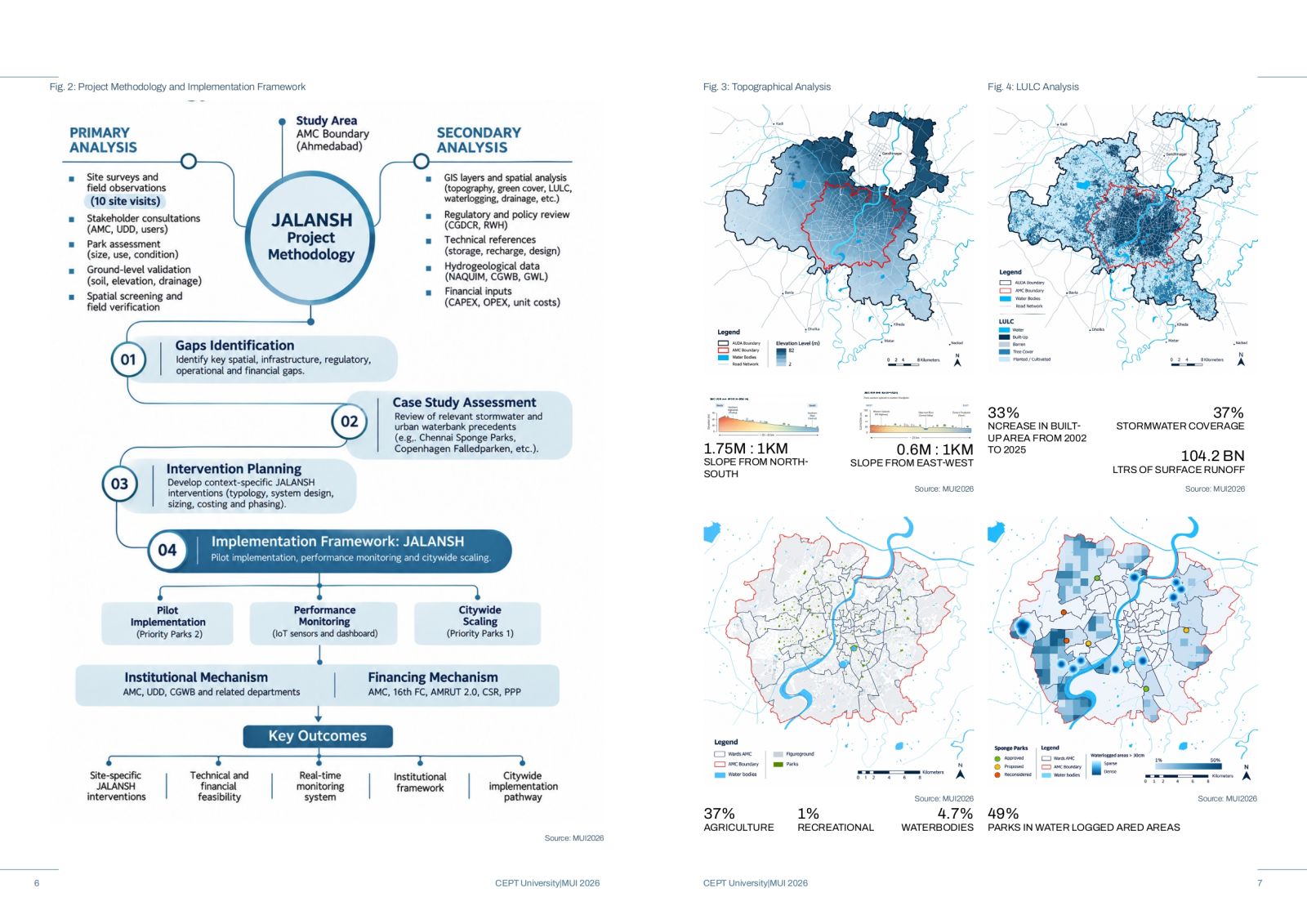
GIS-based spatial assessment, field investigations and secondary data establish the citywide baseline for identifying stormwater vulnerabilities and intervention opportunities.

Increasing imperviousness, inadequate drainage capacity and unevenly distributed waterlogging hotspots reveal significant gaps in Ahmedabad’s existing stormwater management system.

Global precedents demonstrate the potential of integrating stormwater infrastructure into public spaces, providing a basis for context-specific park interventions.

A multi-criteria assessment of elevation, soil suitability, catchment proximity and park characteristics enables systematic identification of priority intervention sites.

Site-specific topography determines whether parks can facilitate gravity-based retention or require engineered conveyance and underground storage solutions.

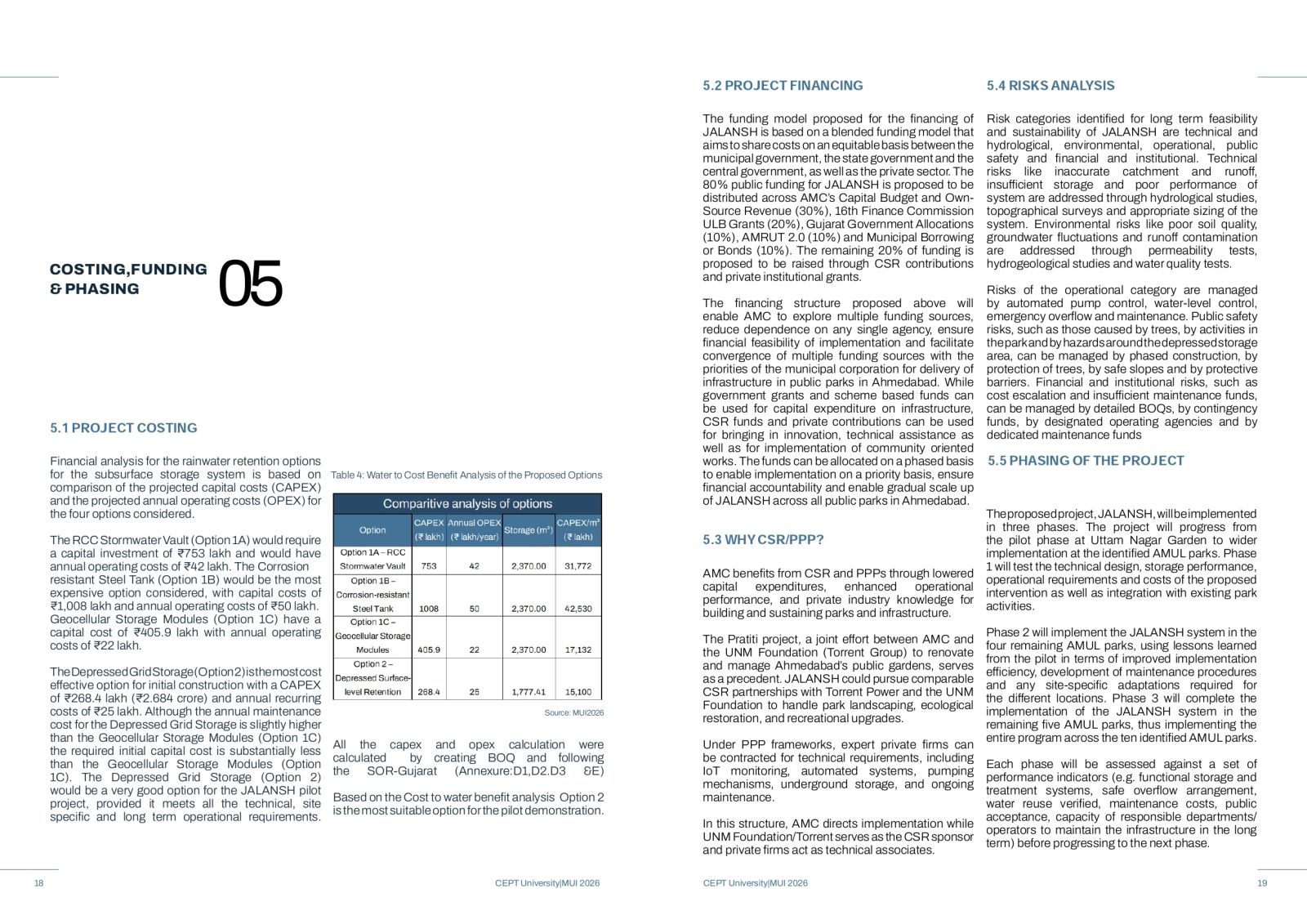
Hydrological calculations establish the required storage capacity, while alternative structural systems provide technically adaptable solutions for capturing and reusing stormwater.

A comparative financial assessment and blended funding strategy establish a phased implementation pathway for the long-term scalability of JALANSH.

JALANSH demonstrates how decentralised stormwater infrastructure can strengthen urban water resilience while transforming existing public parks into productive community assets.

Project Video