• Home
  • FP
  • UI4001
  • R.I.S.E : Enhancing Public Toilet Accessibility for all

Rhea Ann Pothan

UI4001

R.I.S.E : Enhancing Public Toilet Accessibility for all

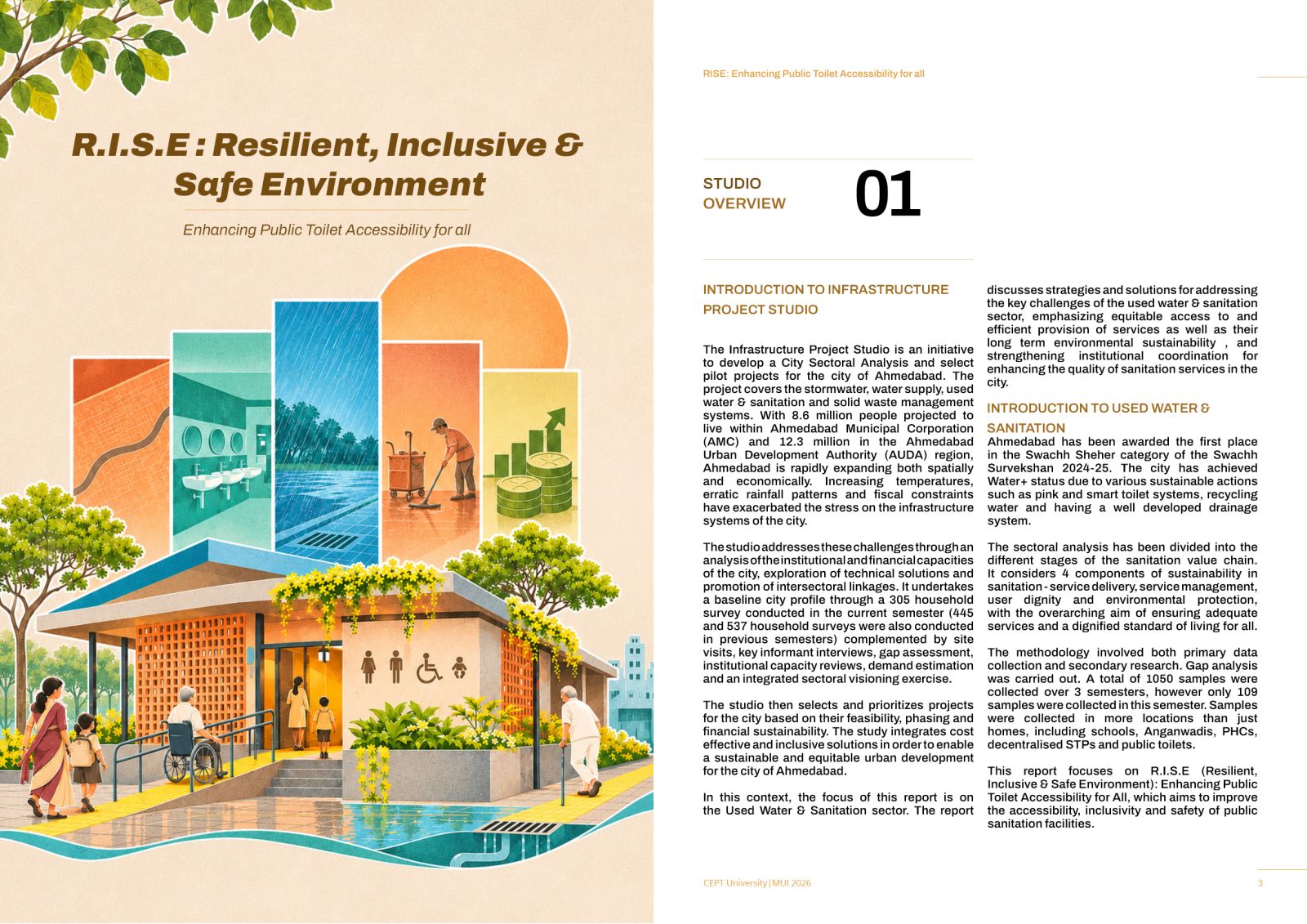
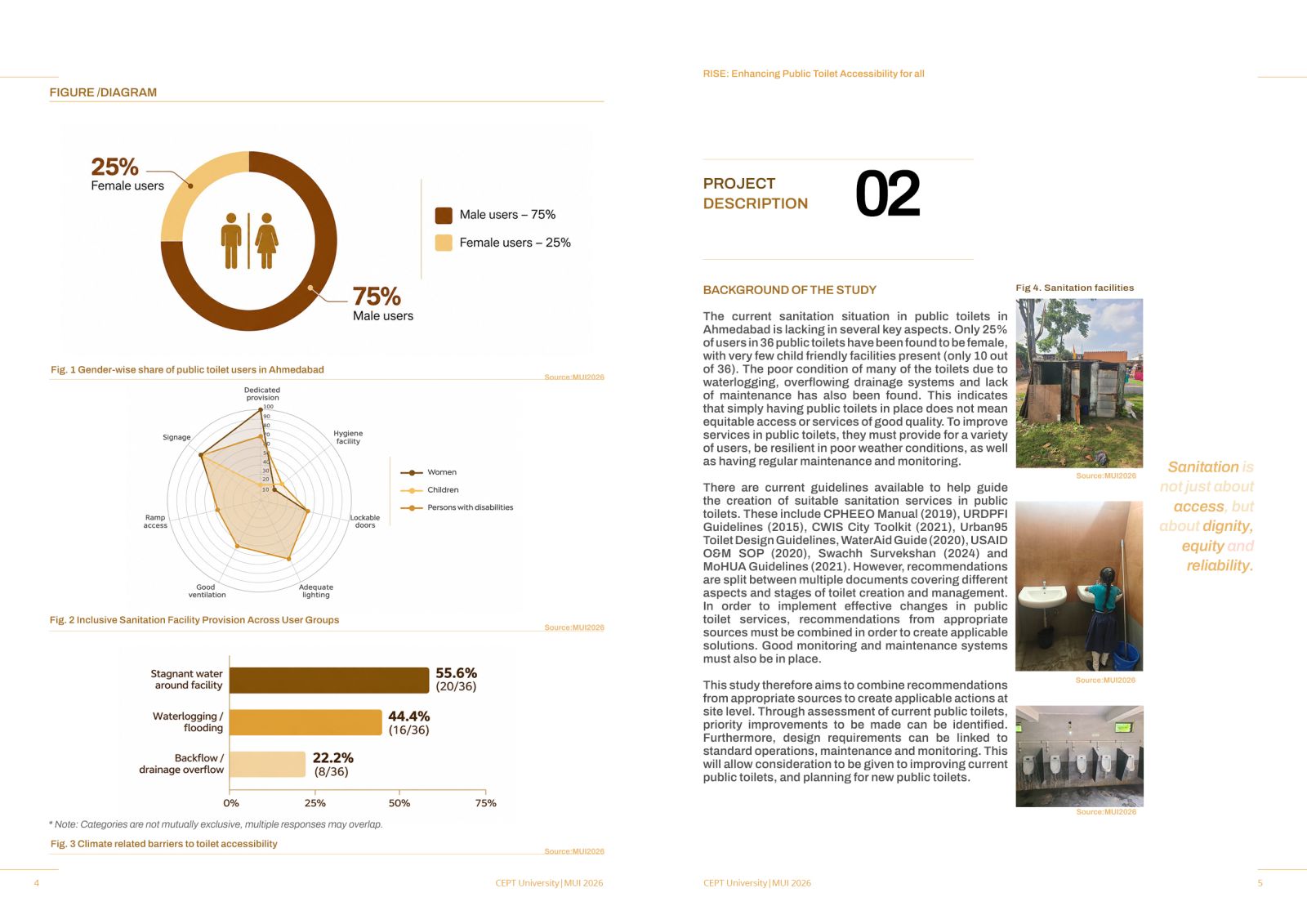
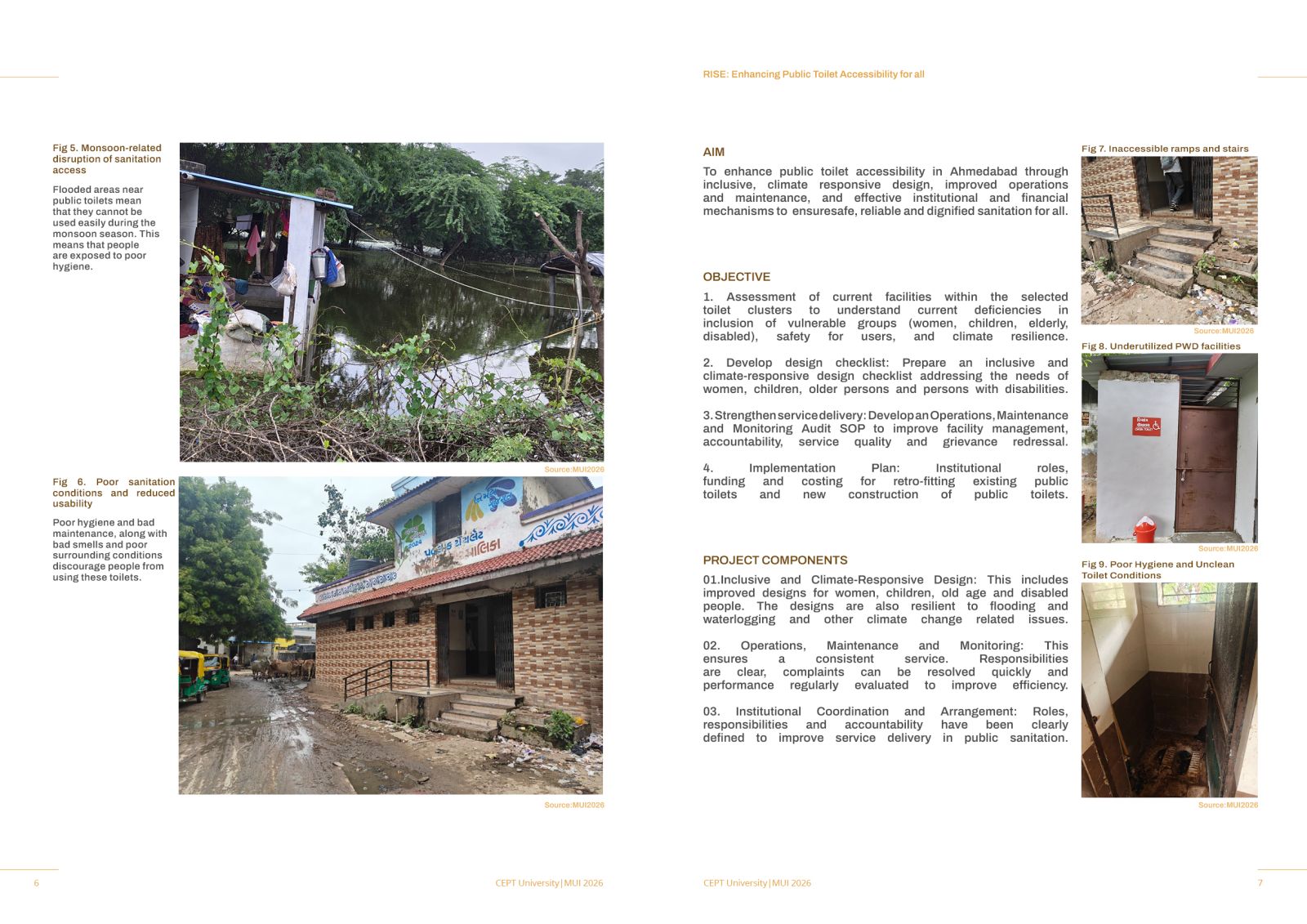
R.I.S.E. (Resilient, Inclusive and Safe Environment) addresses gaps in the accessibility, usability and reliability of public toilets in Ahmedabad. It examines how facilities serve women, children, older persons and persons with disabilities, while considering barriers caused by flooding, waterlogging and poor maintenance. Through spatial assessment, field surveys, stakeholder consultations and guideline reviews, the project identifies gaps in infrastructure and service delivery. It proposes an Inclusive and Climate-Responsive Design Checklist, an Operations, Maintenance and Monitoring Audit SOP, and a strengthened institutional framework. Retrofit and greenfield costing support implementation, with the aim of making public sanitation safer, inclusive and dependable for all.
Report Content

Project Introduction & Studio Overview: Introducing R.I.S.E. and the broader urban infrastructure and sanitation context of Ahmedabad.

Understanding the Existing Scenario: Identifying gaps in public toilet accessibility, inclusivity and climate resilience through key findings and field evidence.

Project Vision & Objectives: Establishing the need for inclusive, safe and climate-responsive public sanitation through defined objectives and interventions.

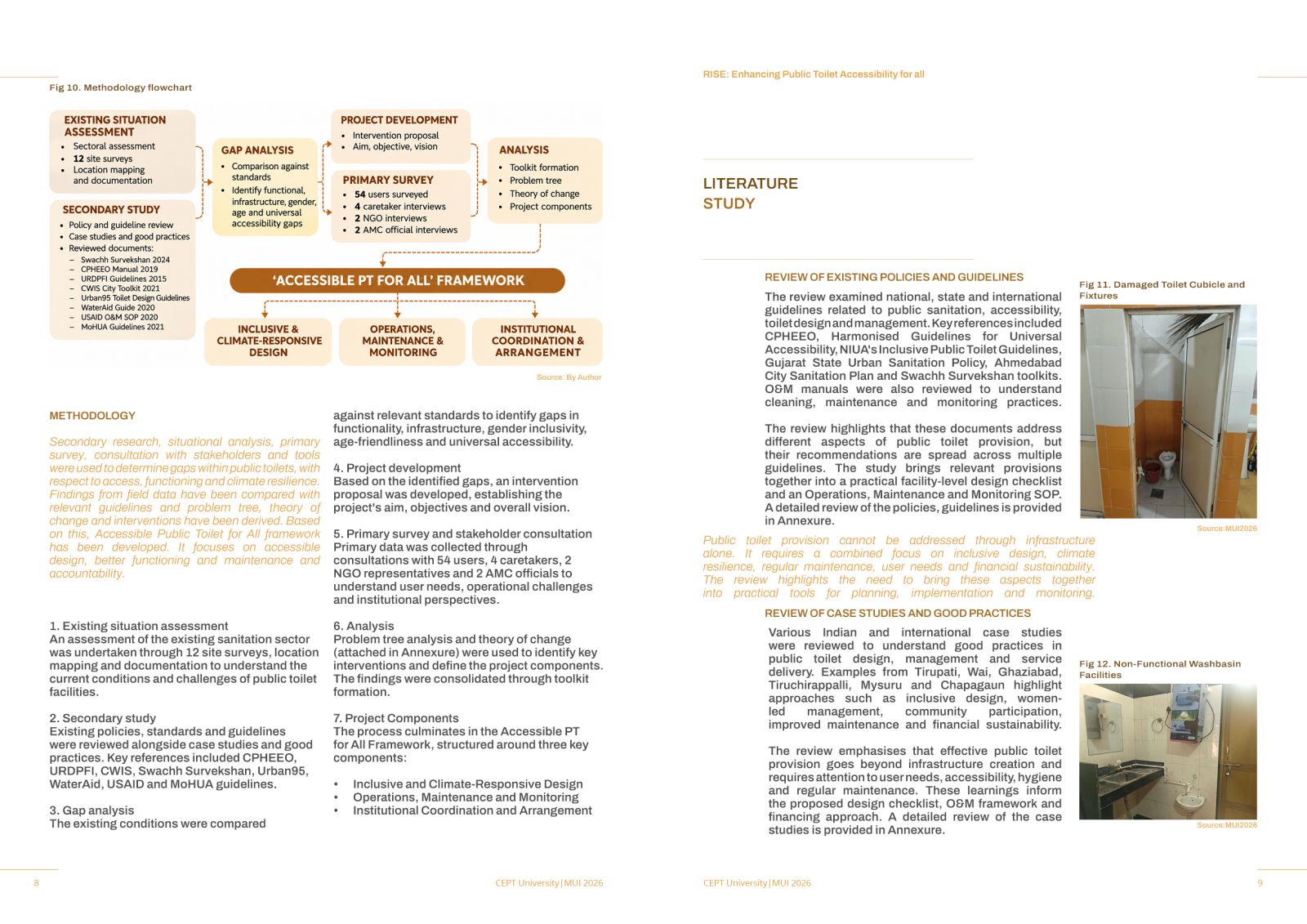
Methodology & Literature Review: Combining spatial assessment, field surveys, stakeholder consultations and policy reviews to develop an evidence-based framework.

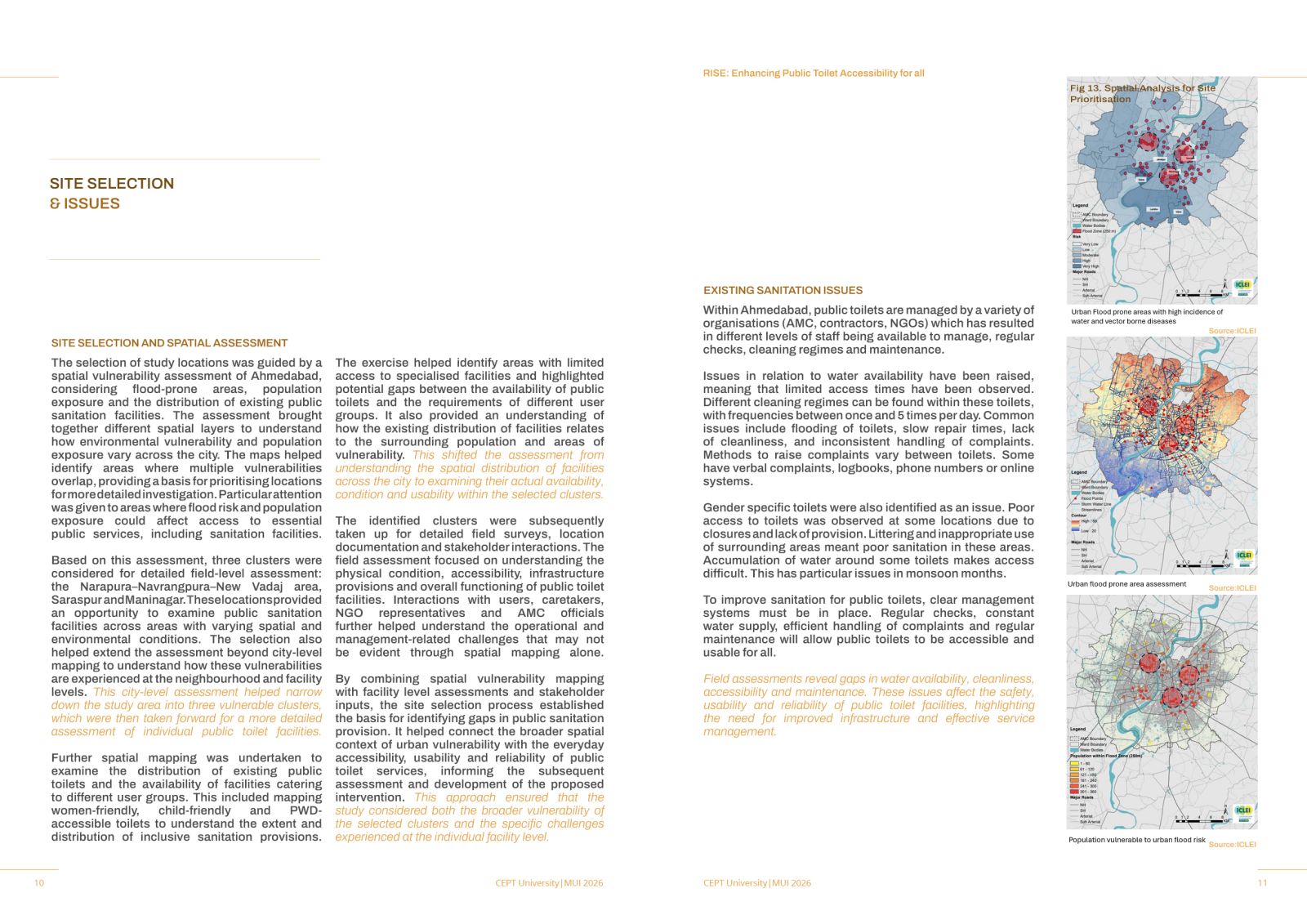
5. Site Selection & Spatial Vulnerability Assessment: Identifying vulnerable clusters across Ahmedabad through flood-risk mapping, population exposure and sanitation infrastructure assessment.

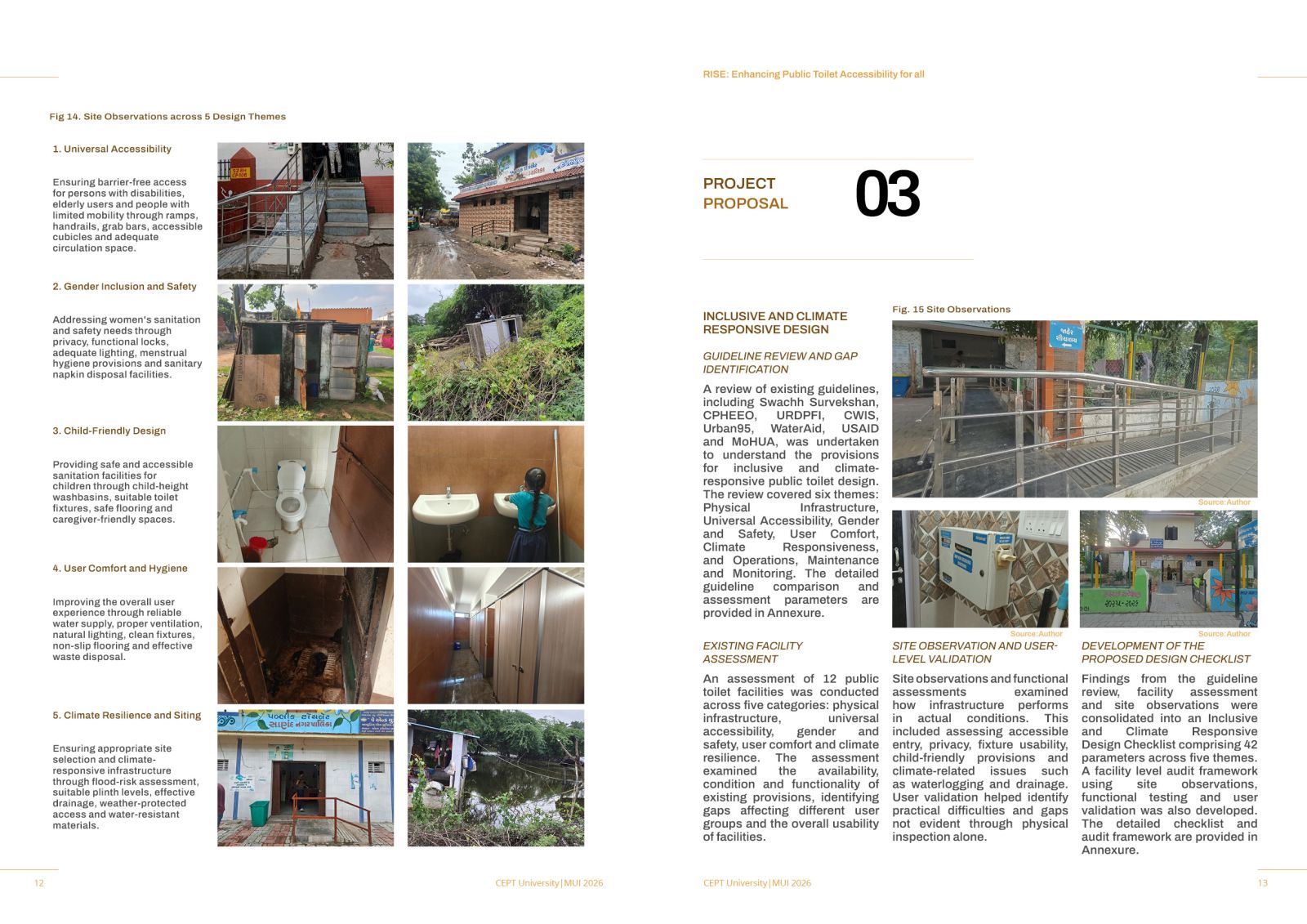
Field Assessment & Design Framework: Evaluating existing facilities across five themes to identify gaps and develop an inclusive, climate-responsive design checklist.

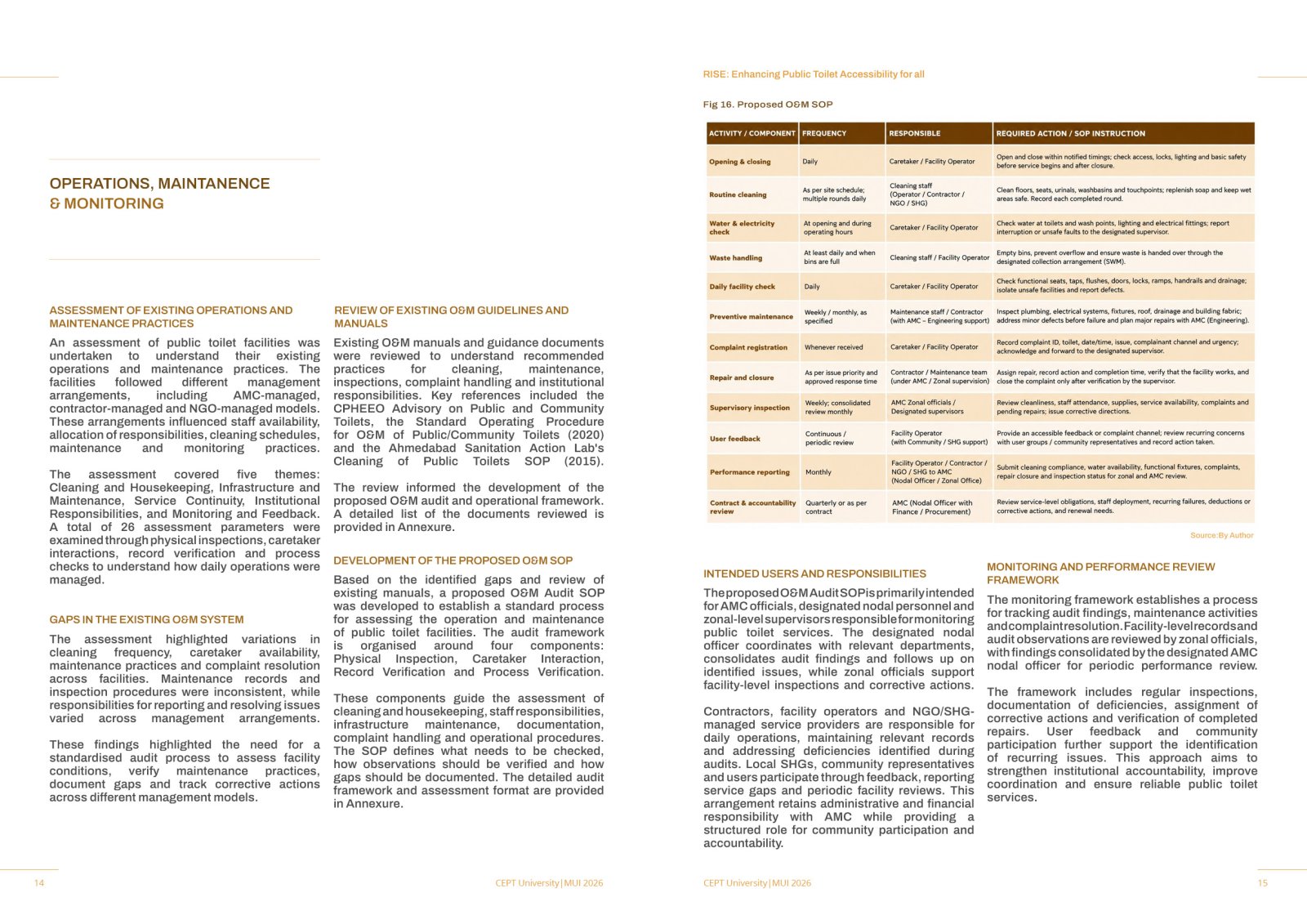
Operations, Maintenance & Monitoring: Developing a structured audit SOP to strengthen facility management, maintenance practices and service accountability.

Institutional Framework & Coordination: Assessing existing governance structures and proposing clearer roles, coordination mechanisms and accountability within AMC.

Costing & Financial Feasibility: Comparing Greenfield development and retrofit options to understand capital investment and operational expenditure.

Impact Assessment & Conclusion: Establishing the expected benefits, addressing implementation risks and outlining a scalable framework for accessible public sanitation.

Project Video