• Home
  • FP
  • UI4001
  • TPS 2.0: STORMWATER SENSITIVE URBAN DEVELOPMENT

Mohit J Kumar

UI4001

TPS 2.0: STORMWATER SENSITIVE URBAN DEVELOPMENT

The TPS 2.0 Project is an initiative focused on integrating site-specific stormwater management strategies into the Town Planning Scheme (TPS) process to address urban flooding, enhance groundwater recharge, and promote rainwater harvesting. Developed as part of an academic studio at CEPT University, the project examines existing planning practices, institutional frameworks, infrastructure gaps, and spatial conditions. Through GIS-based analysis, field surveys, and a decision-support toolkit, it explores how stormwater considerations can inform planning decisions from the early stages of area development. The project proposes a systematic approach to making future TP schemes more responsive, stormwater-sensitive, and resilient.

View Additional Work
Report Content

Introduction to the Infrastructure Project Studio and overview of the TPS 2.0 project.

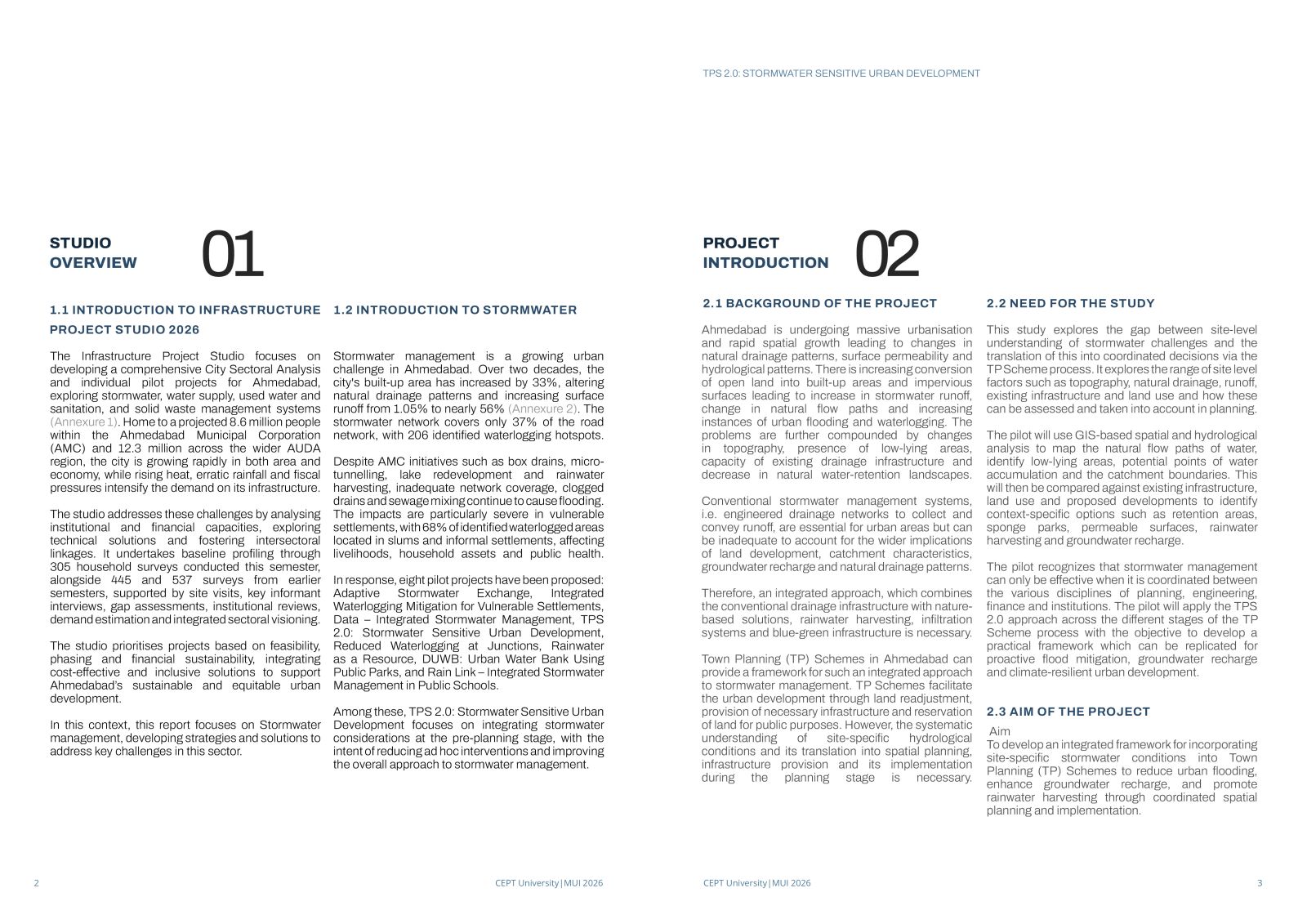
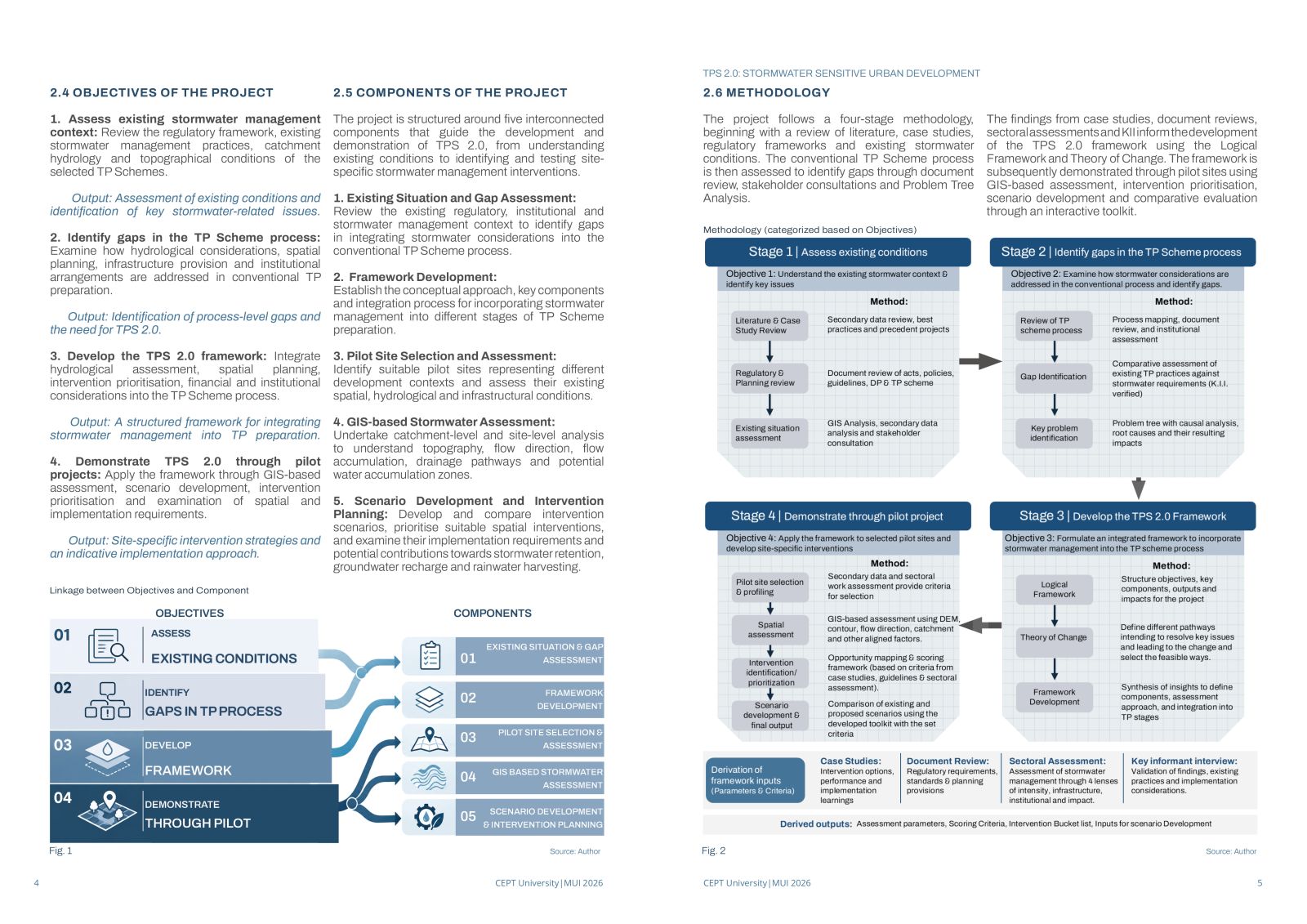
Project objectives, key components, and the overall methodology adopted for TPS 2.0.

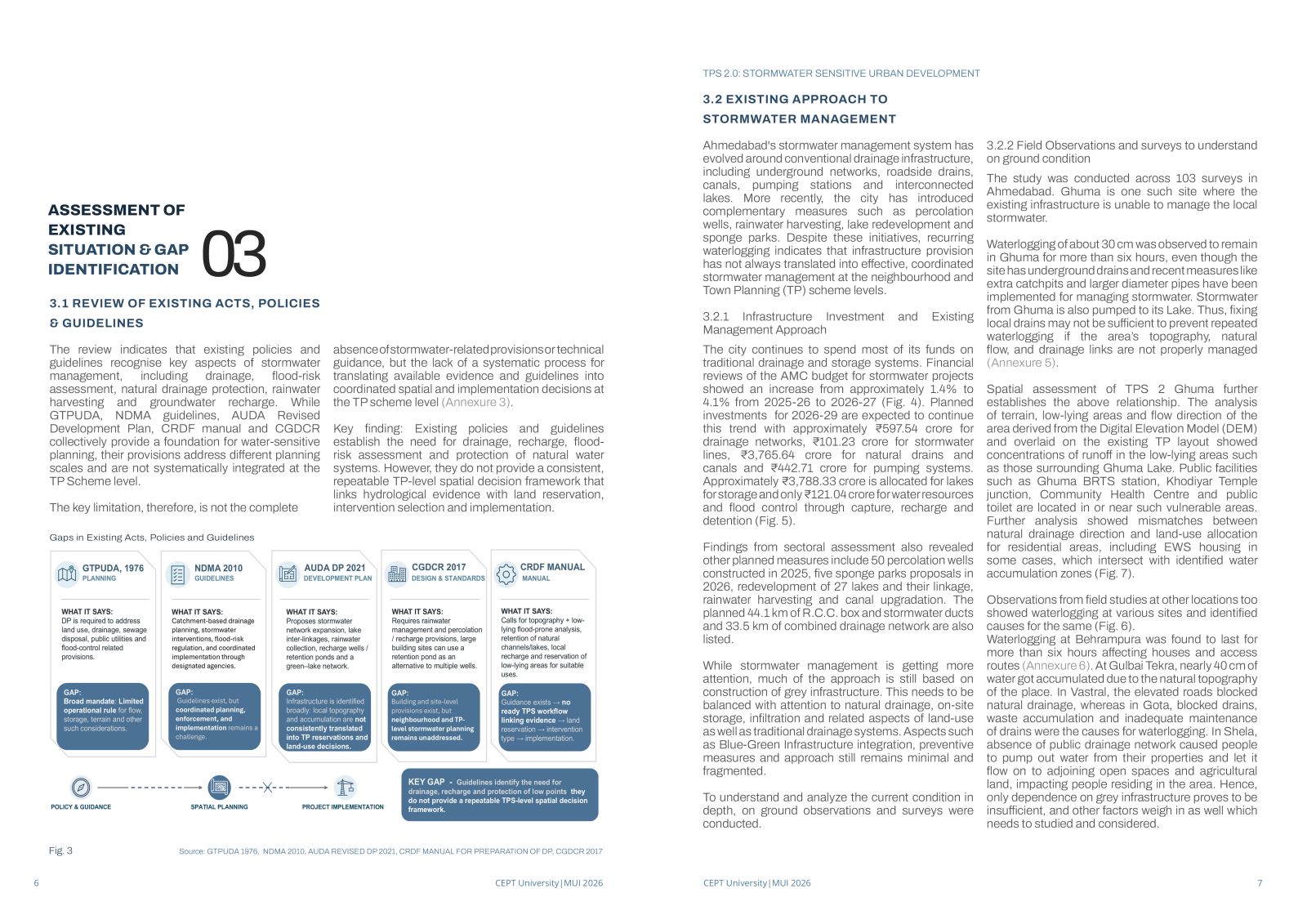
Review of existing policies, guidelines, stormwater infrastructure, and identification of planning gaps.

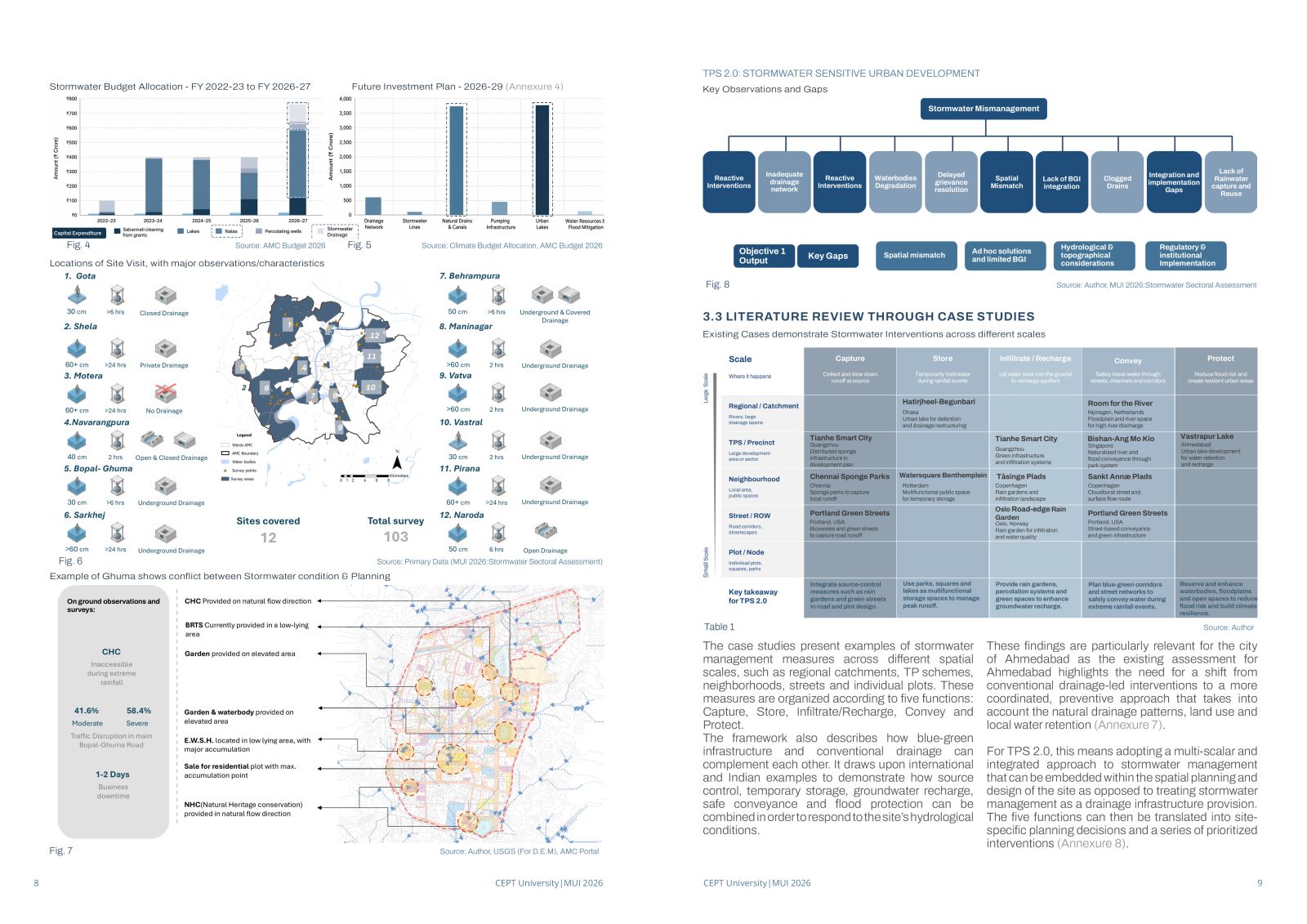
Stormwater budget assessment, field survey findings, spatial observations, and review of relevant case studies.

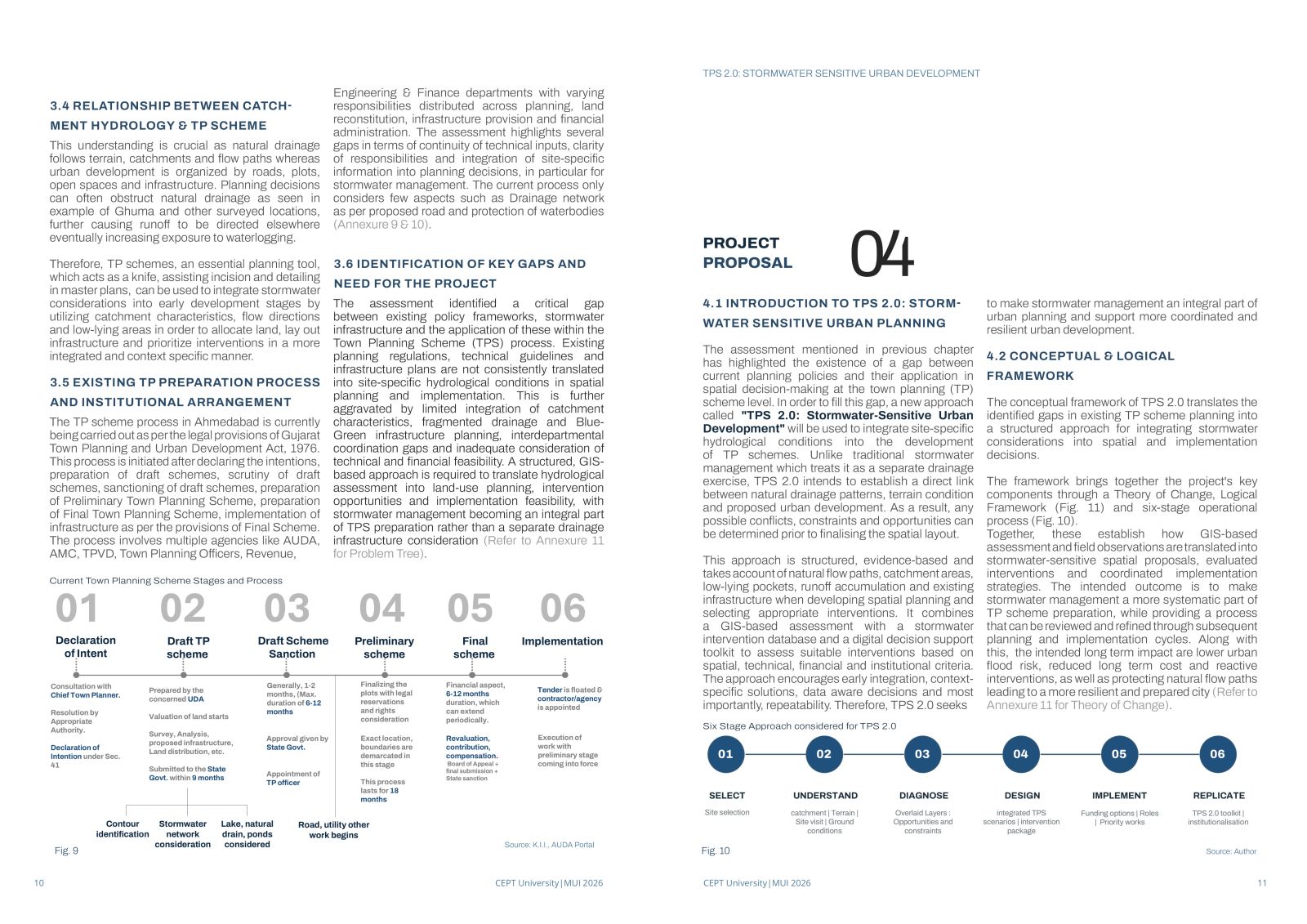
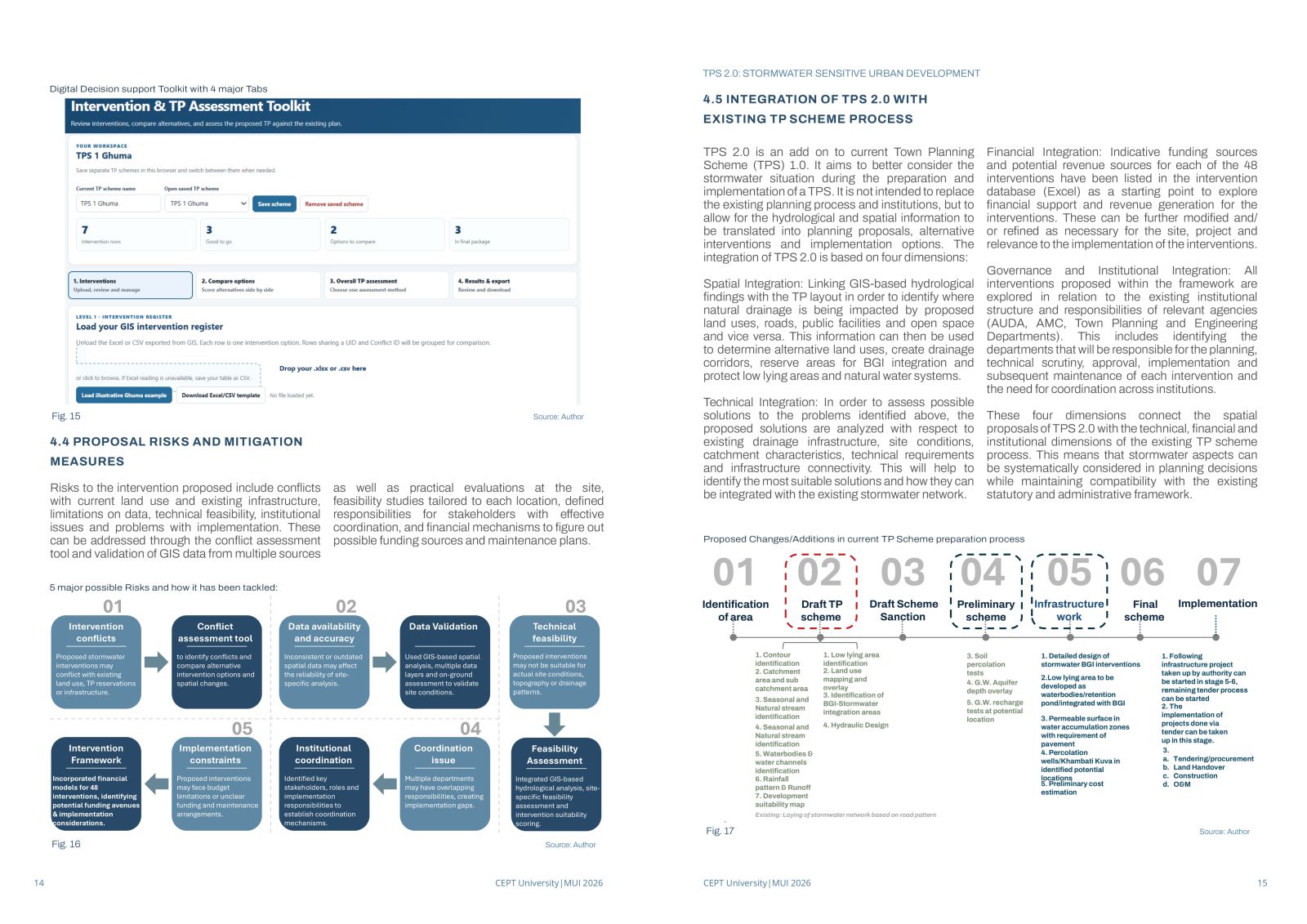
Assessment of the existing Town Planning Scheme process and introduction to the TPS 2.0 conceptual and logical framework.

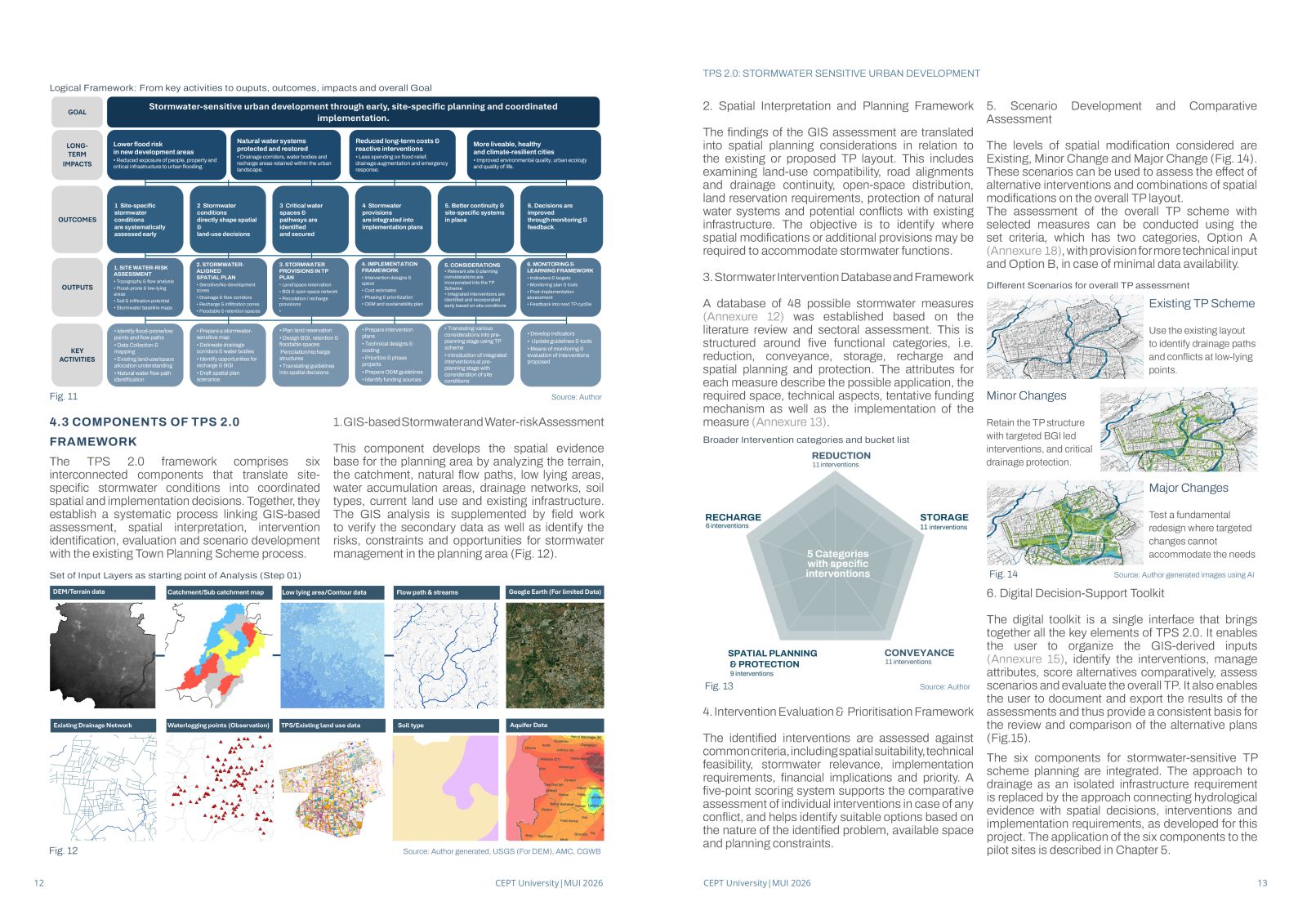
Detailed explanation of the TPS 2.0 framework, GIS-based assessment, intervention categories, and decision-support approach.

Digital decision-support toolkit, intervention risk assessment, and integration of TPS 2.0 into the existing TP scheme process.

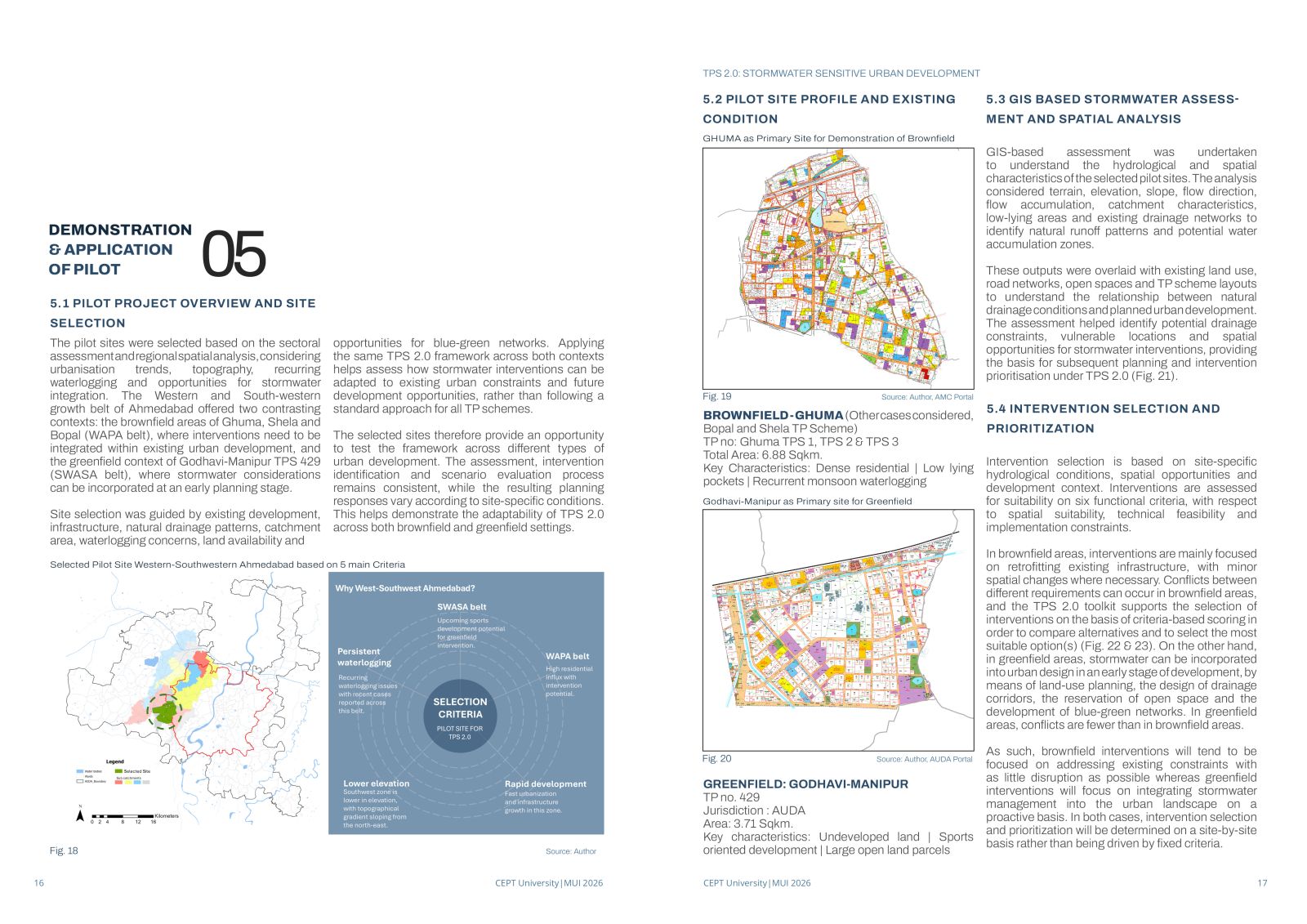
Pilot project overview, site selection rationale, and existing conditions of the Ghuma and Godhavi-Manipur sites.

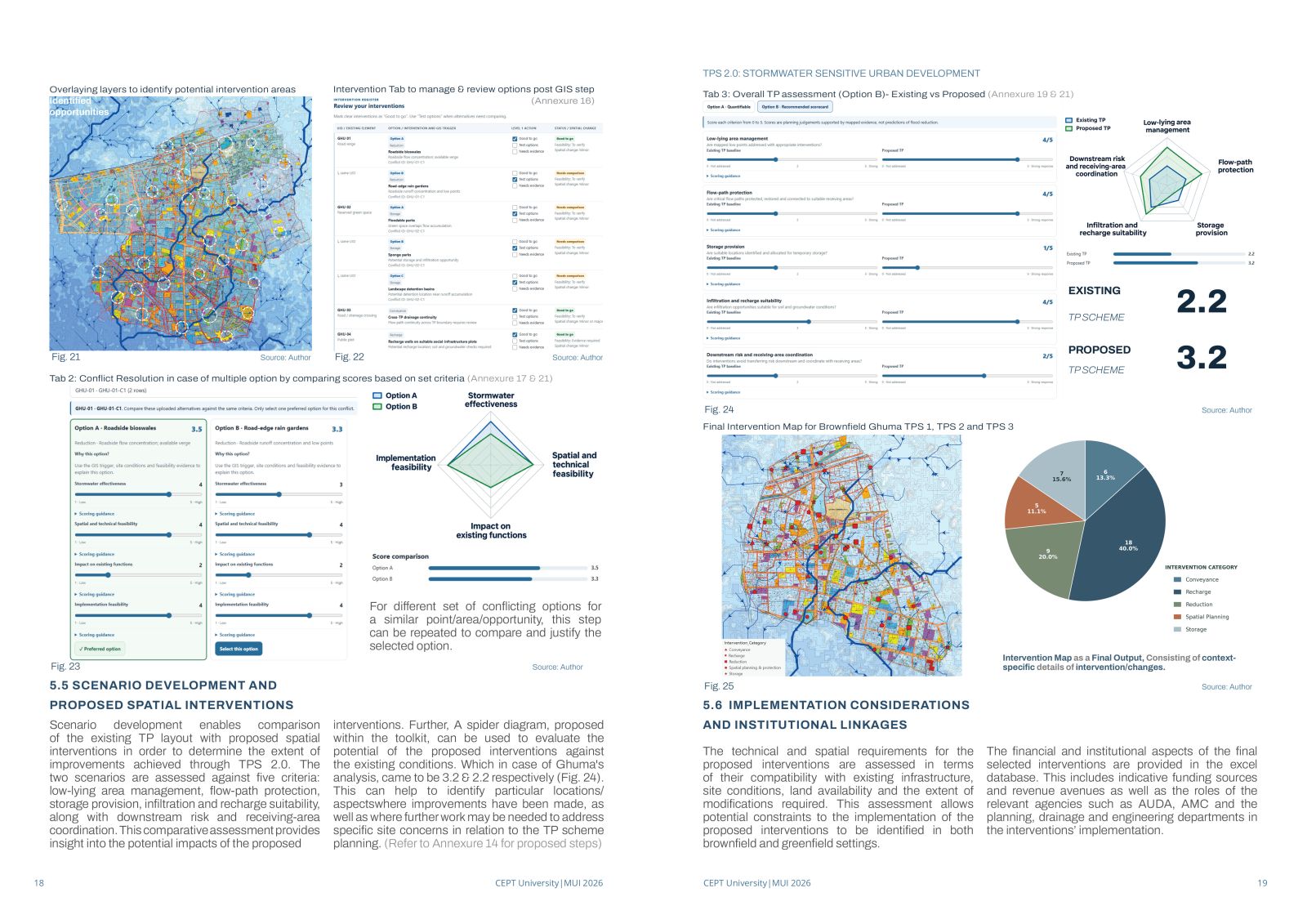
GIS-based spatial analysis, intervention identification, comparative scoring, scenario assessment, and proposed intervention map.

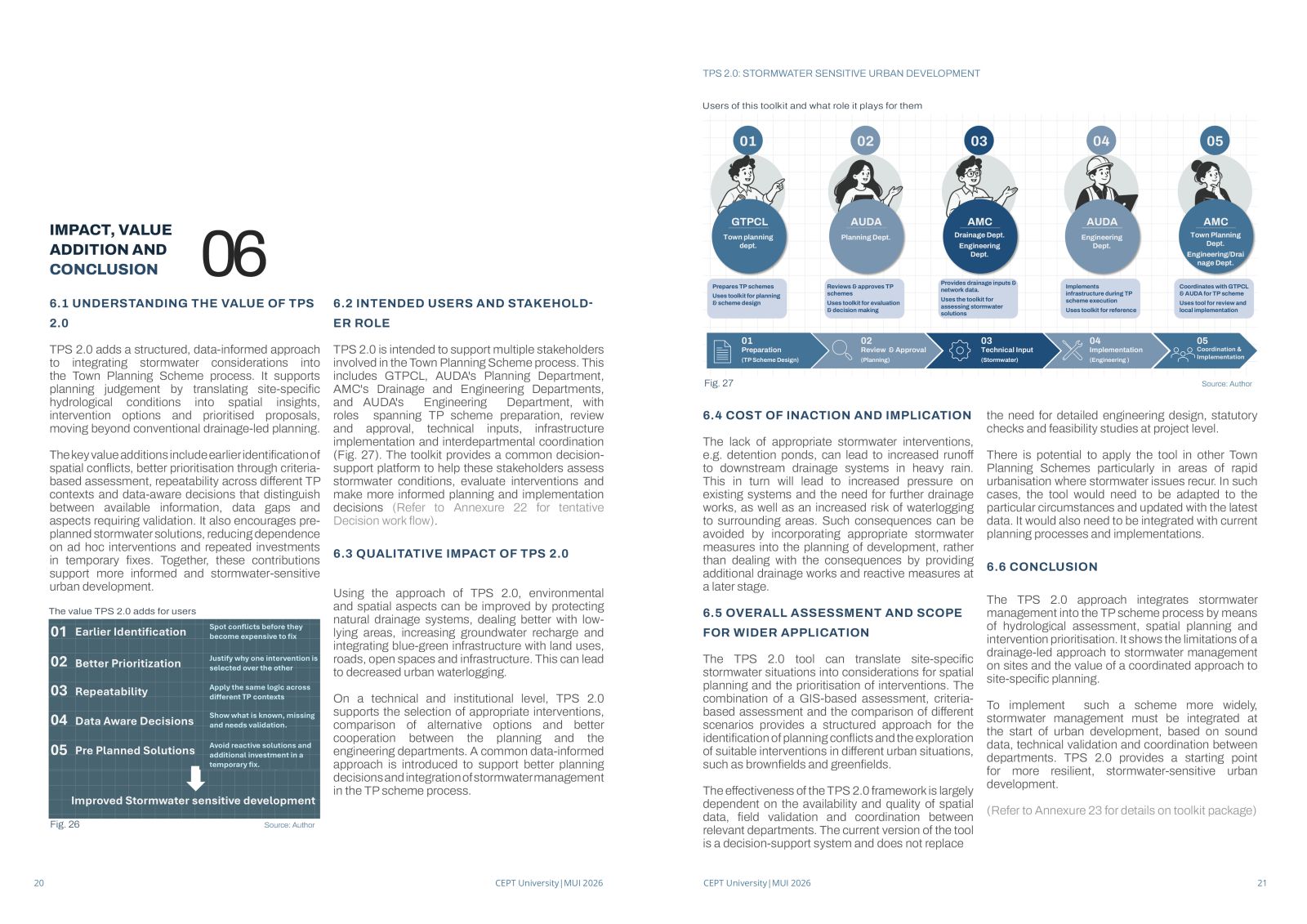
Impact assessment, stakeholder roles, value addition, wider applicability, and overall conclusion of TPS 2.0.

Project Video