Your browser is out-of-date!
For a richer surfing experience on our website, please update your browser. Update my browser now!
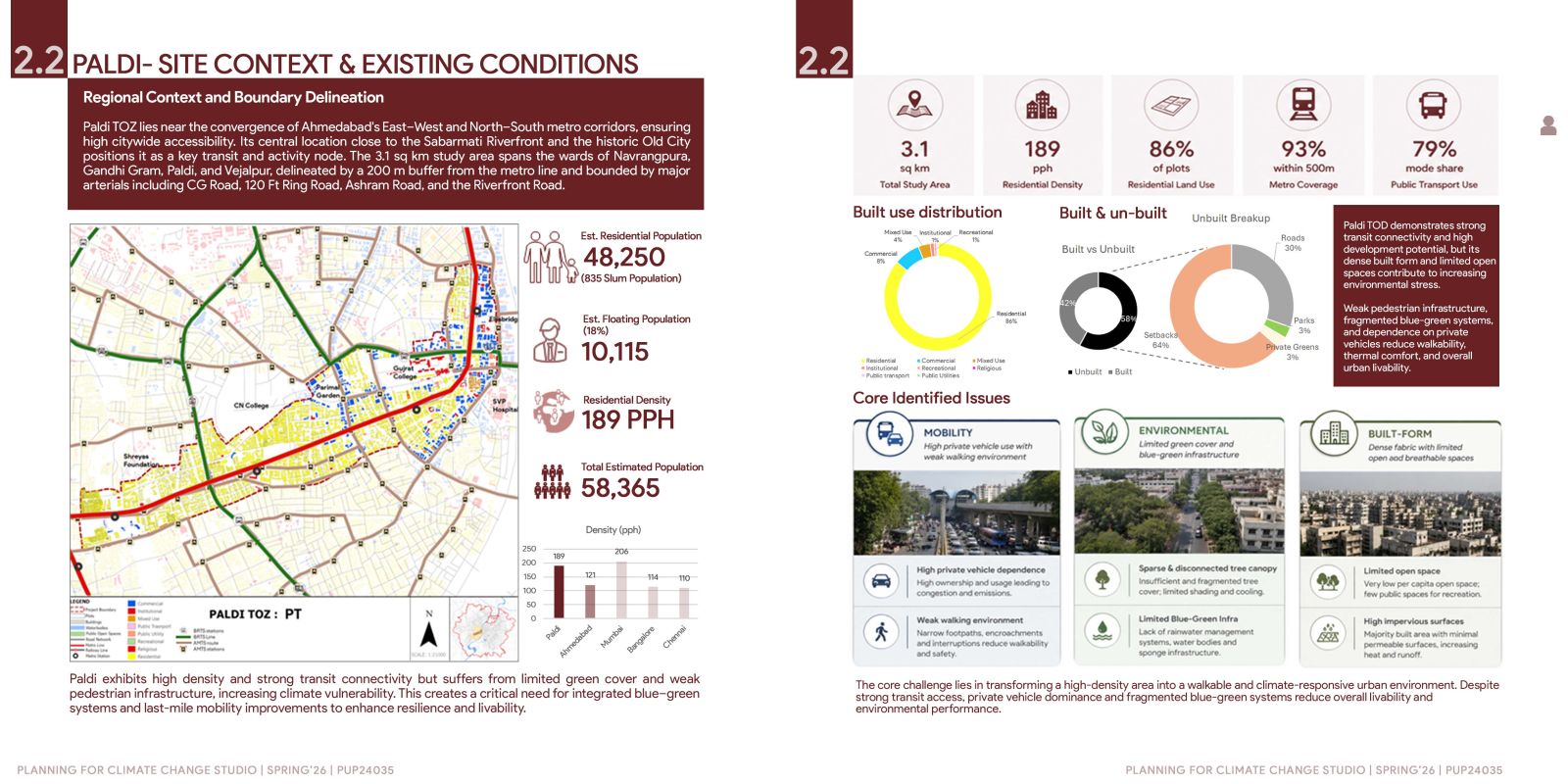
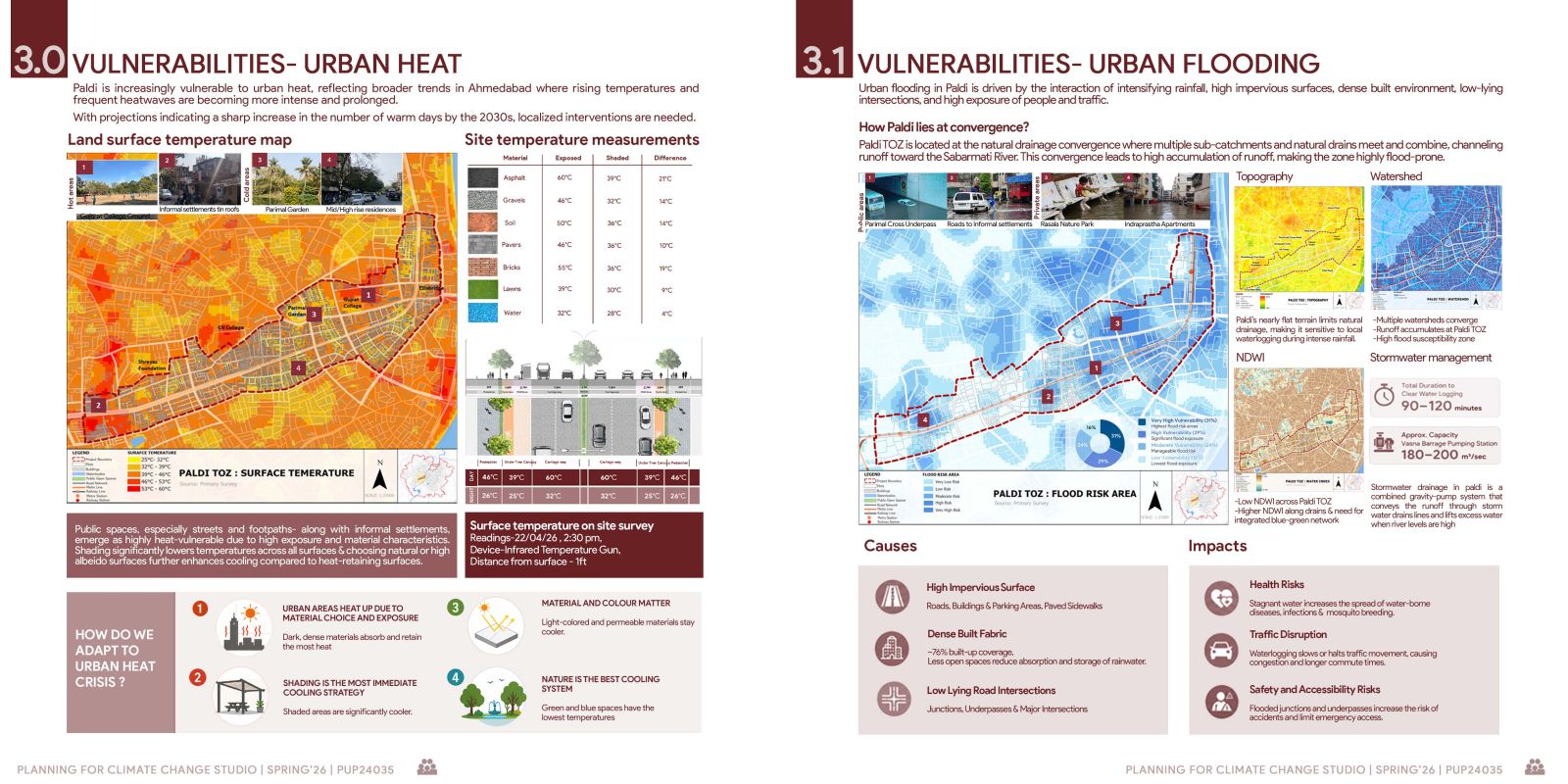
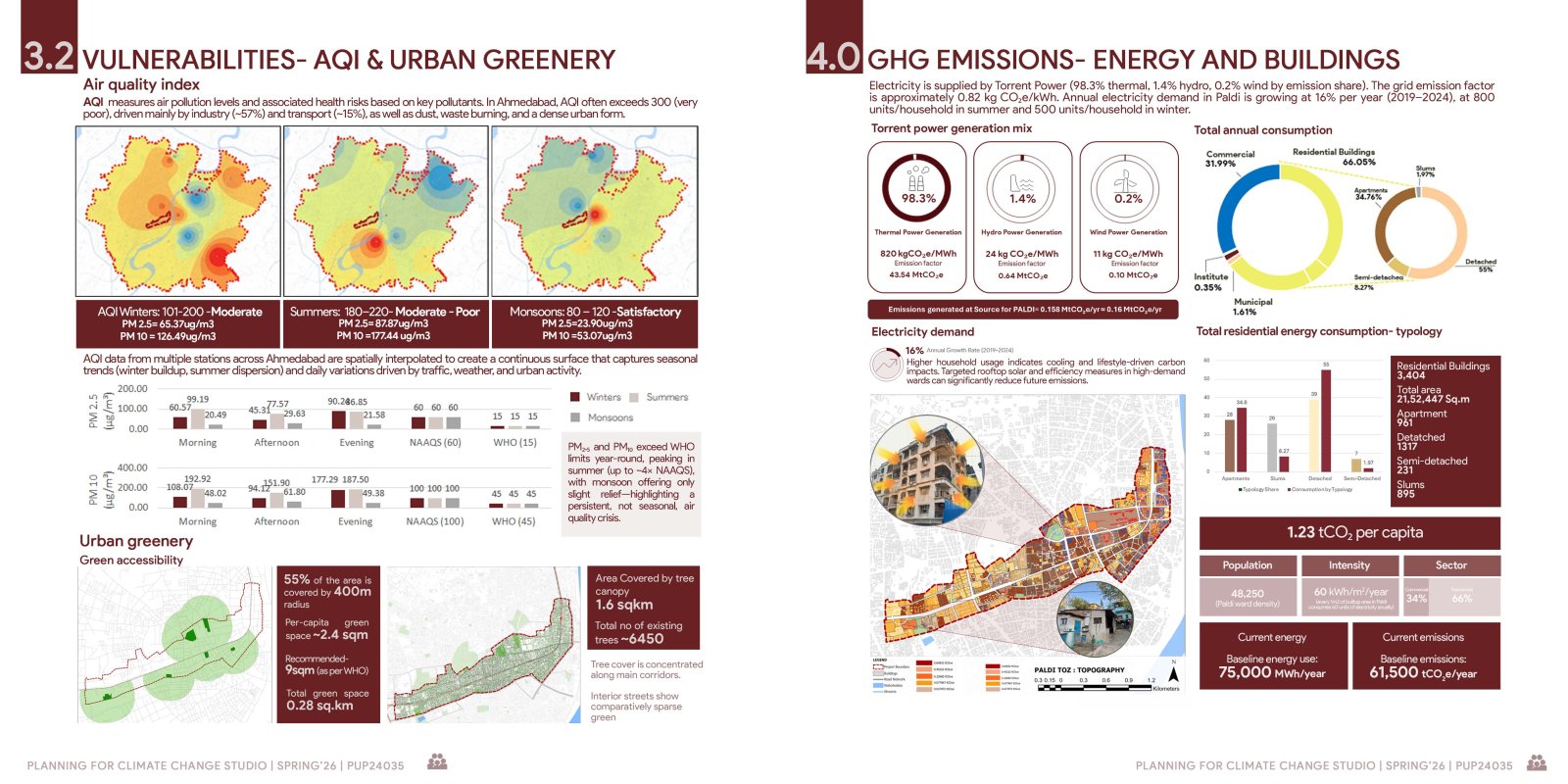
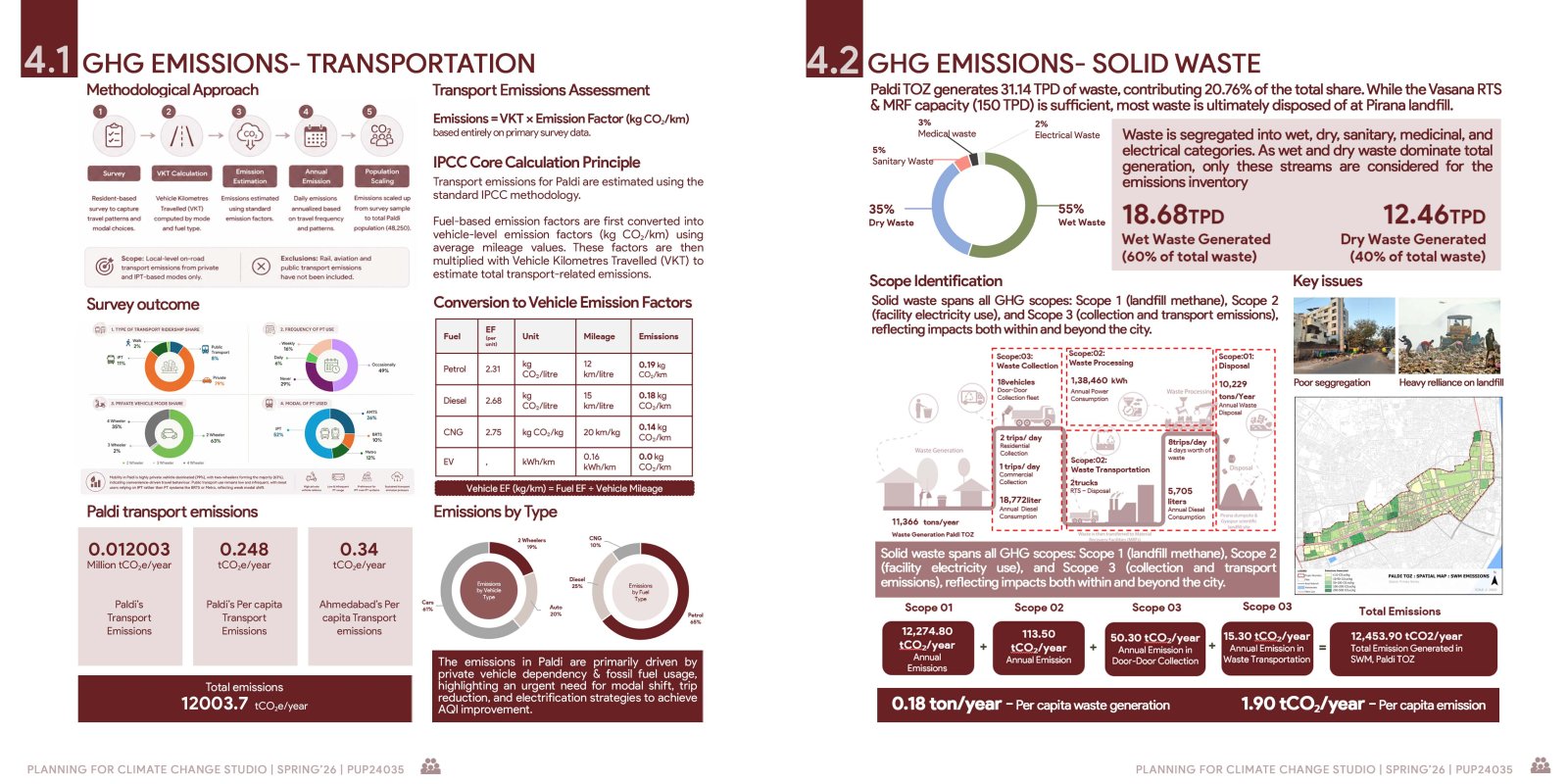
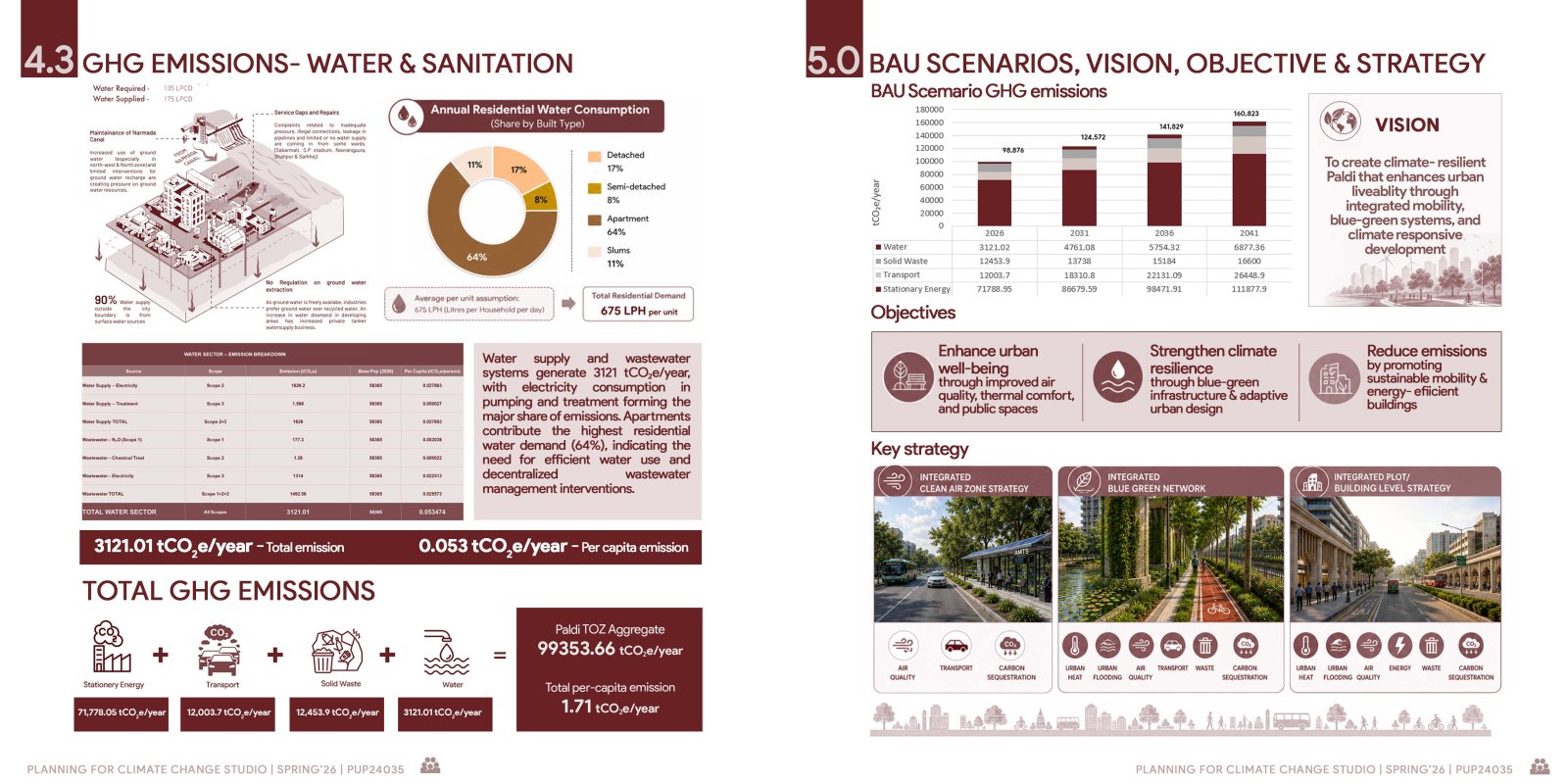
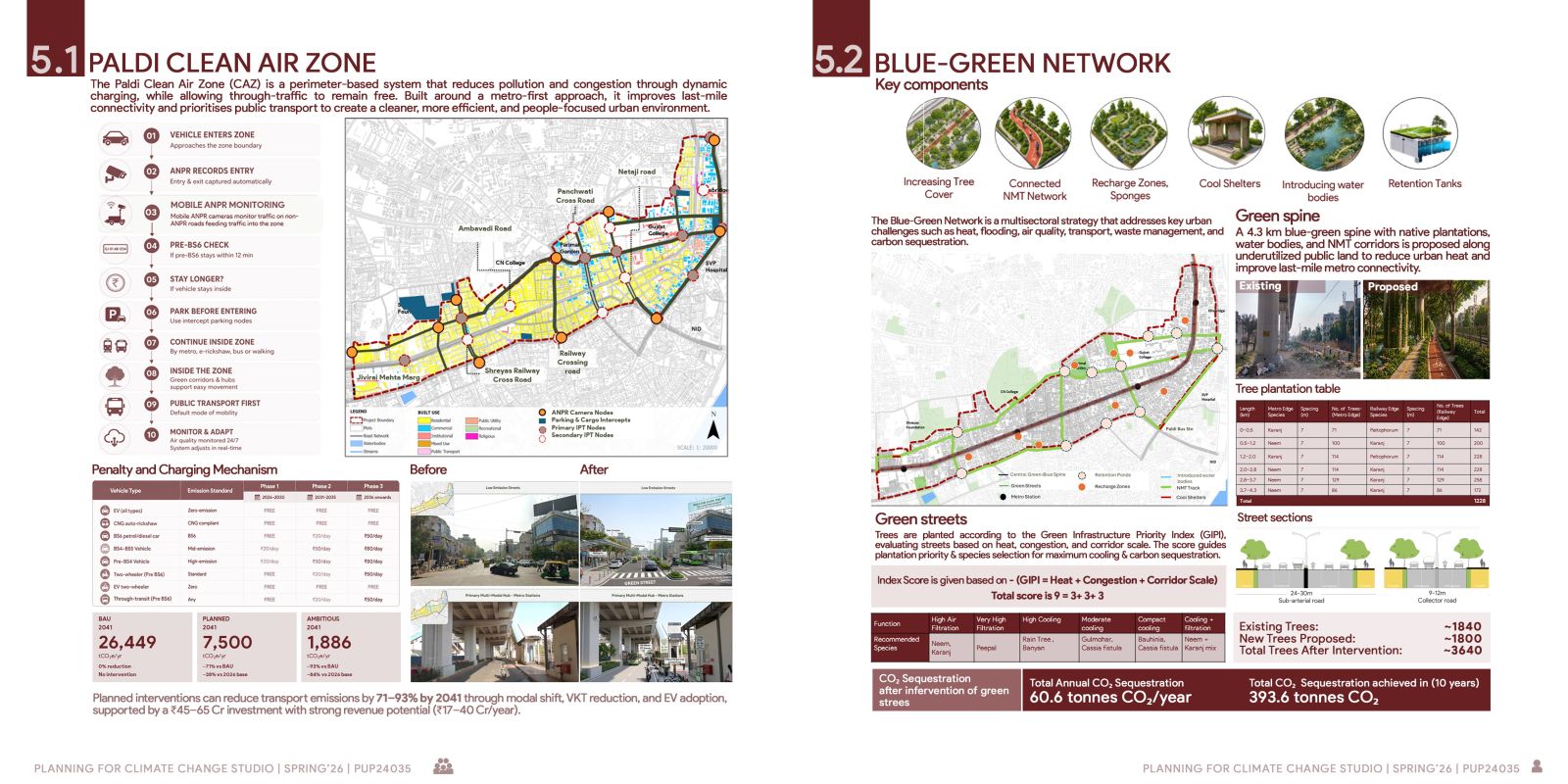
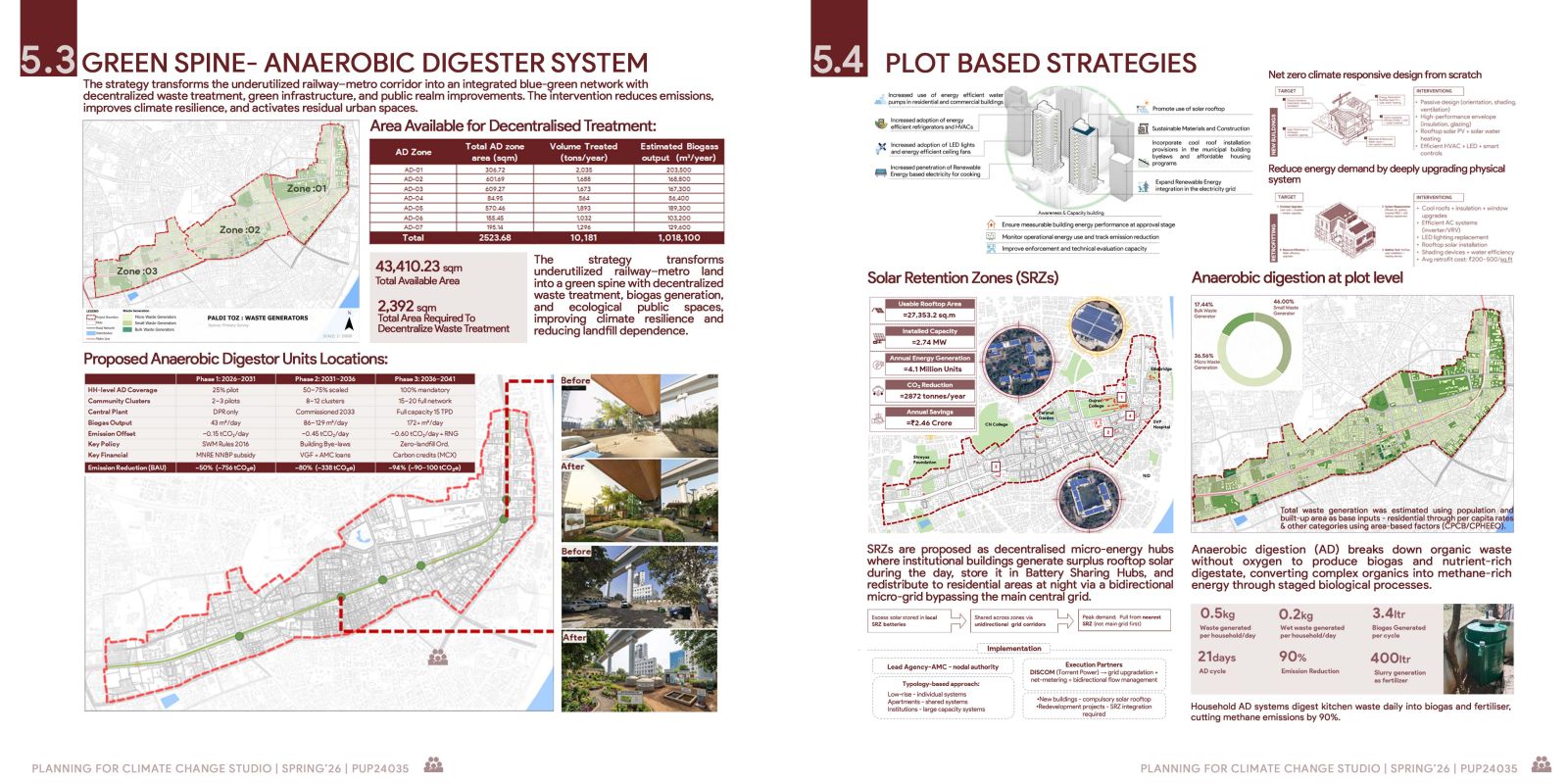
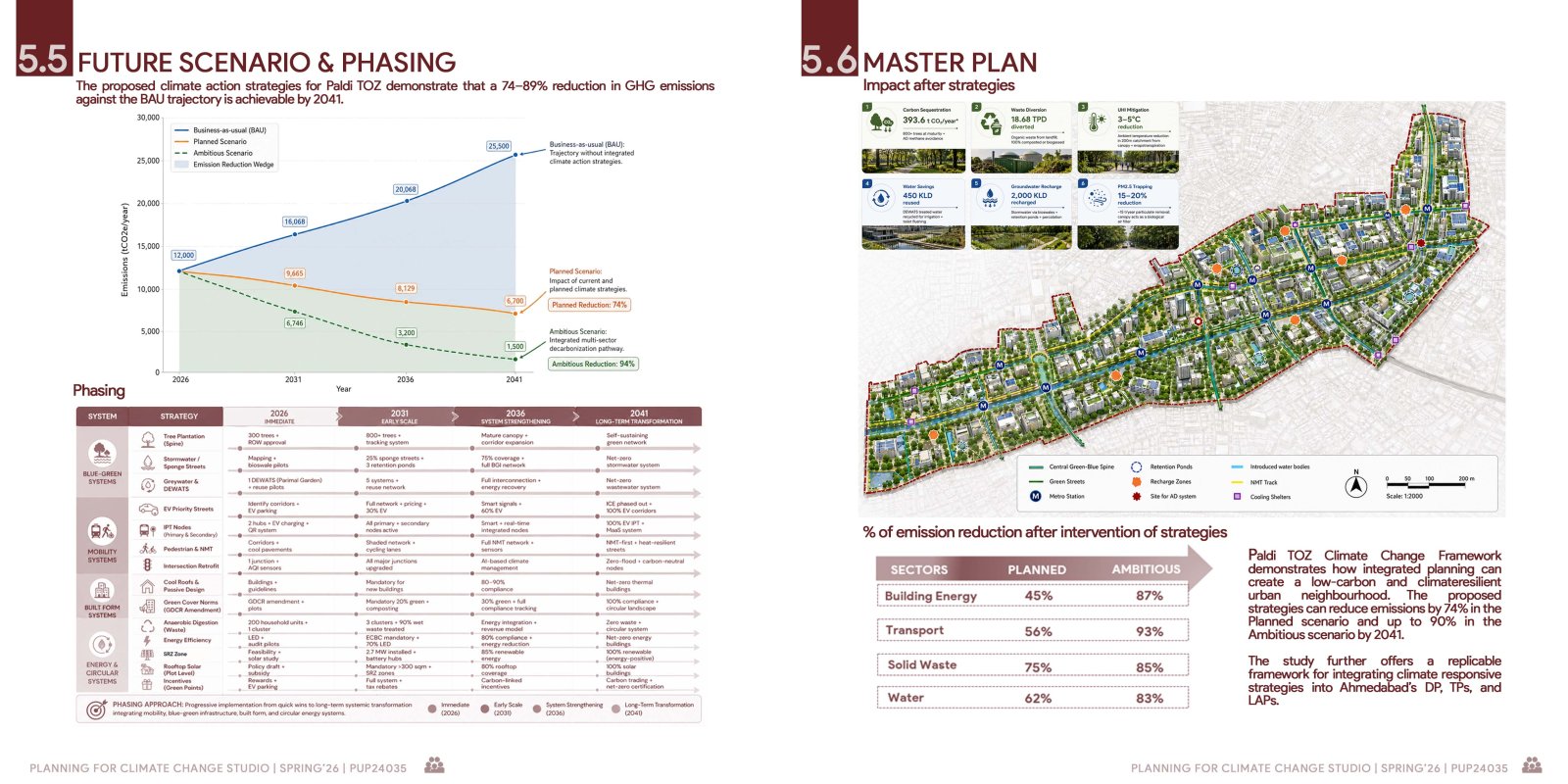
This project involved preparing a climate-responsive development framework for the Paldi Transit Oriented Zone (TOZ), a 3.1 sq km inner-city precinct in Ahmedabad, Gujarat, as part of CEPT University’s Planning for Climate Change Studio (Spring 2026). The study assessed key urban climate vulnerabilities including urban heat, flooding, and poor air quality, while developing a sector-wise greenhouse gas inventory and projecting future emissions under a Business-as-Usual (BAU) scenario. Using a phased planning approach, the project proposed integrated strategies across mobility, blue-green infrastructure, and building-level systems to transition the precinct toward a low-carbon and climate-resilient future. The framework focused on clean mobility networks, ecological and flood-resilient public spaces, renewable energy integration, energy-efficient buildings, and decentralized waste management systems. The proposal demonstrated how compact, transit-oriented neighbourhoods can significantly reduce emissions while improving urban livability, positioning Paldi TOZ as a scalable model for sustainable and climate-adaptive urban development in Indian cities.