Your browser is out-of-date!
For a richer surfing experience on our website, please update your browser. Update my browser now!
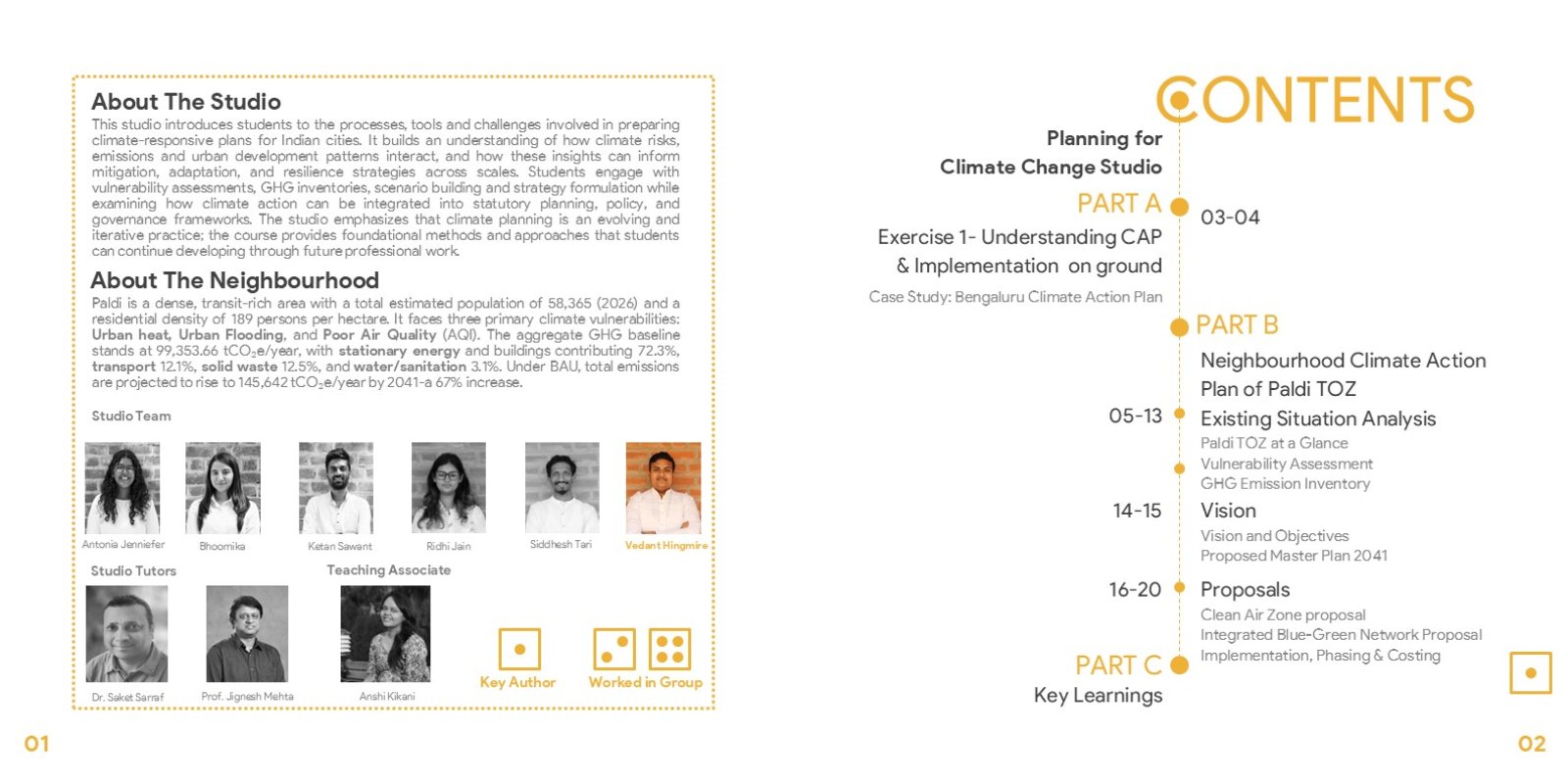
This report presents a comprehensive effort of planning for climate change for Paldi Transit Oriented Zone (TOZ), a 3.1 sq km inner-city neighborhood in Ahmedabad, Gujarat. Prepared as part of CEPT University's Planning for Climate Change studio (Spring 2026) under tutors Dr. Saket Sarraf and Prof. Jignesh Mehta, the study analyses climate vulnerabilities, develops a sectoral GHG inventory, projects a Business-as-Usual (BAU) emissions trajectory, and formulates phased mitigation and adaptation strategies for sectors.
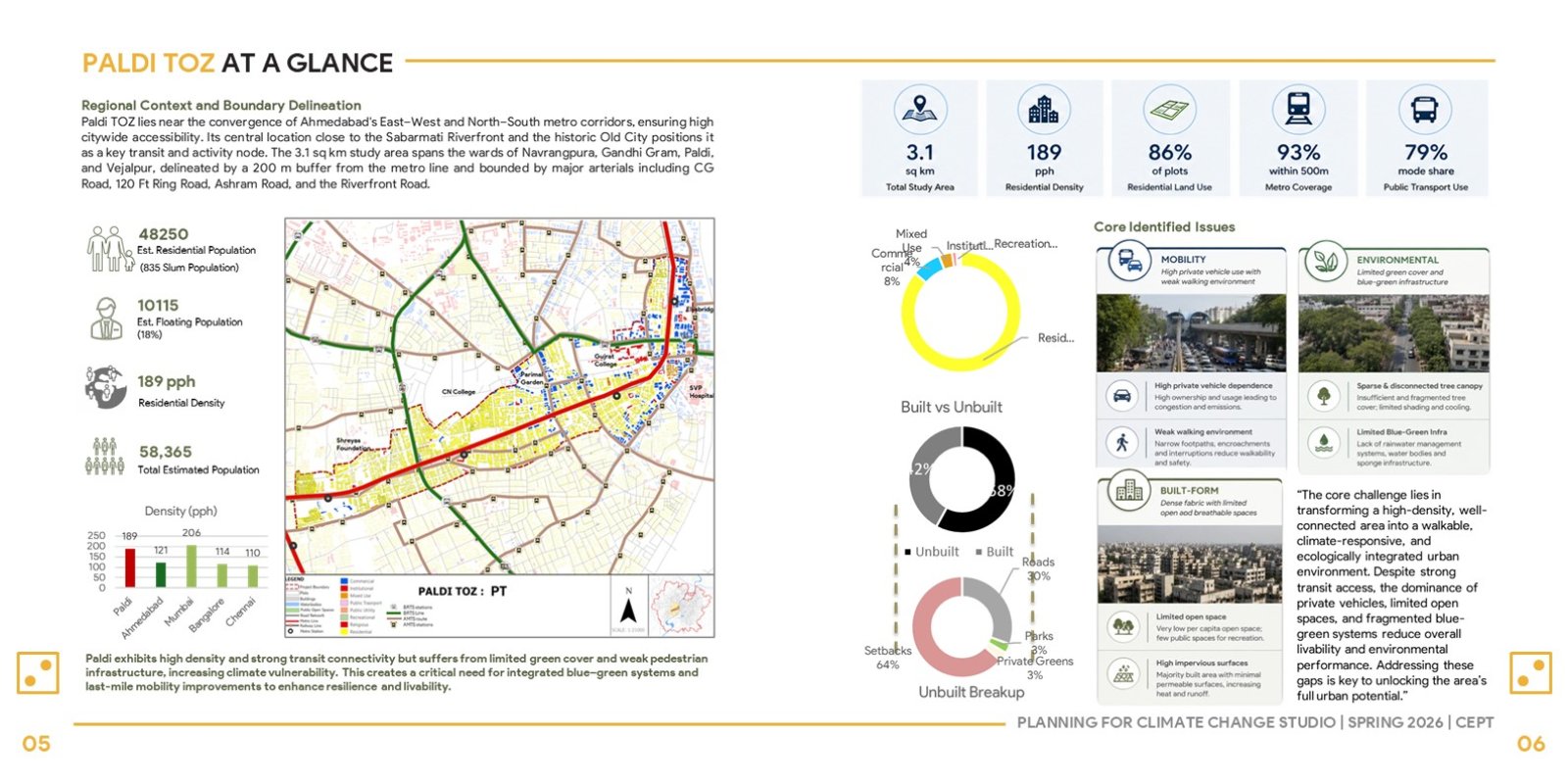
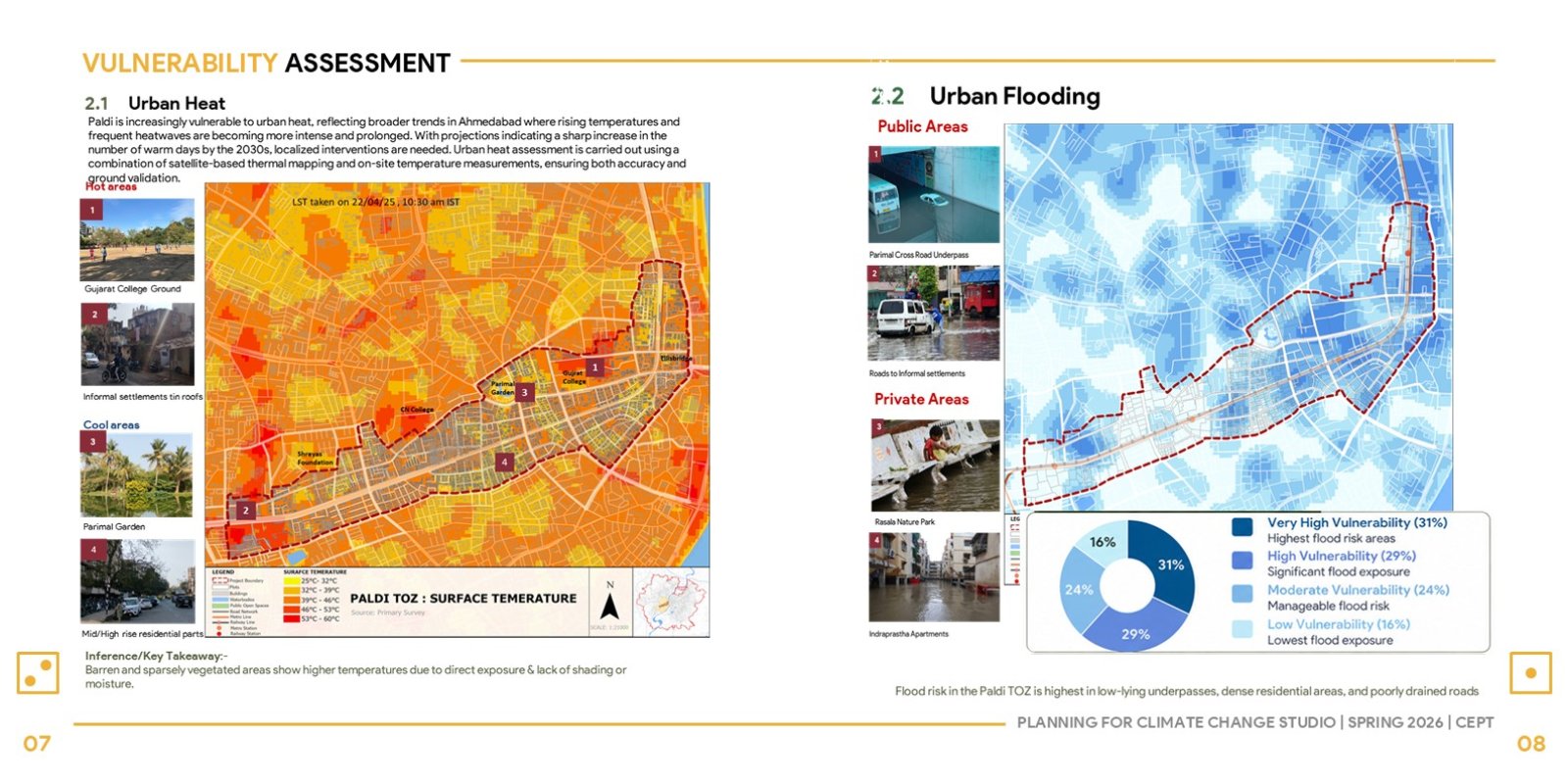
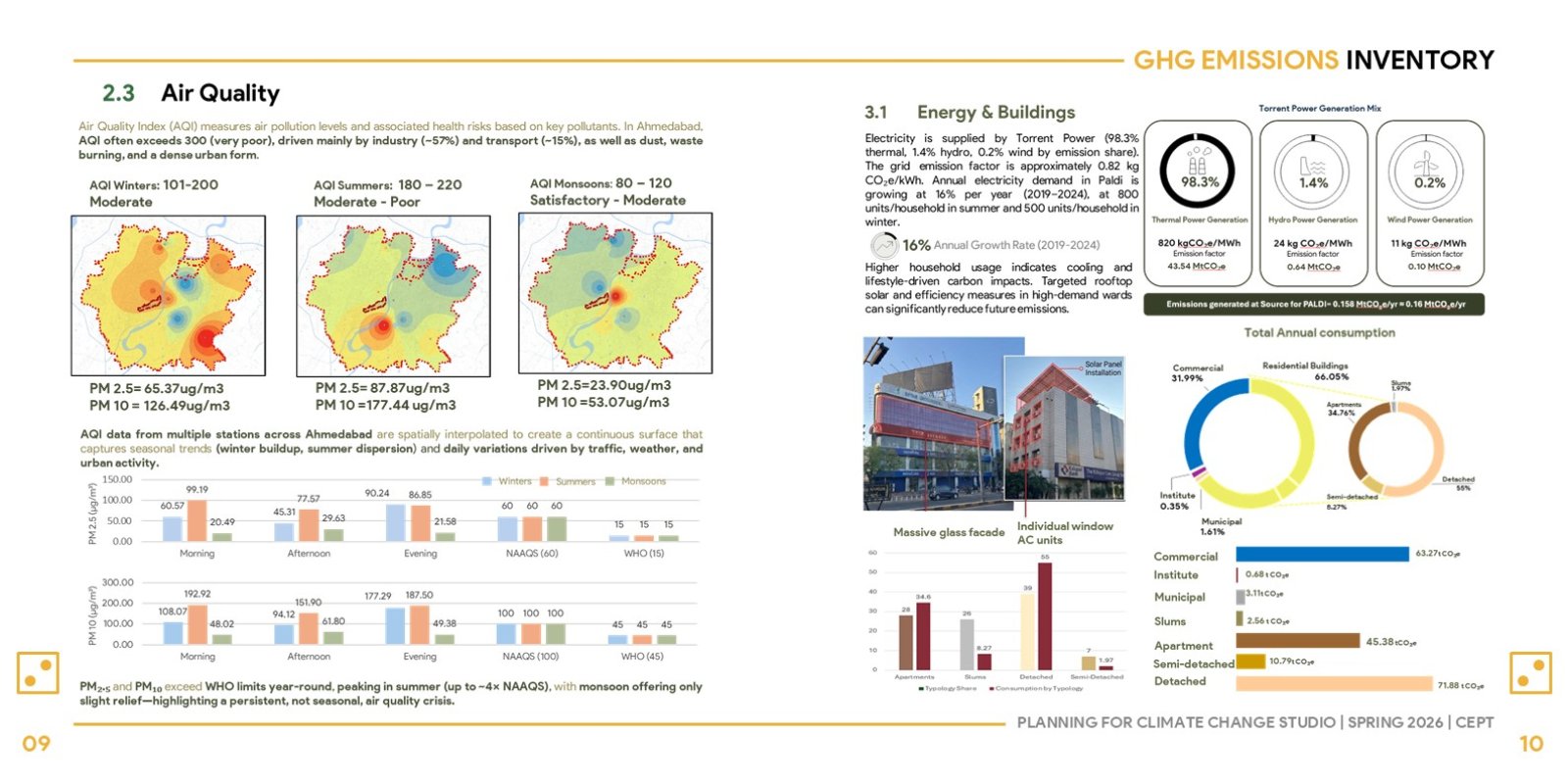
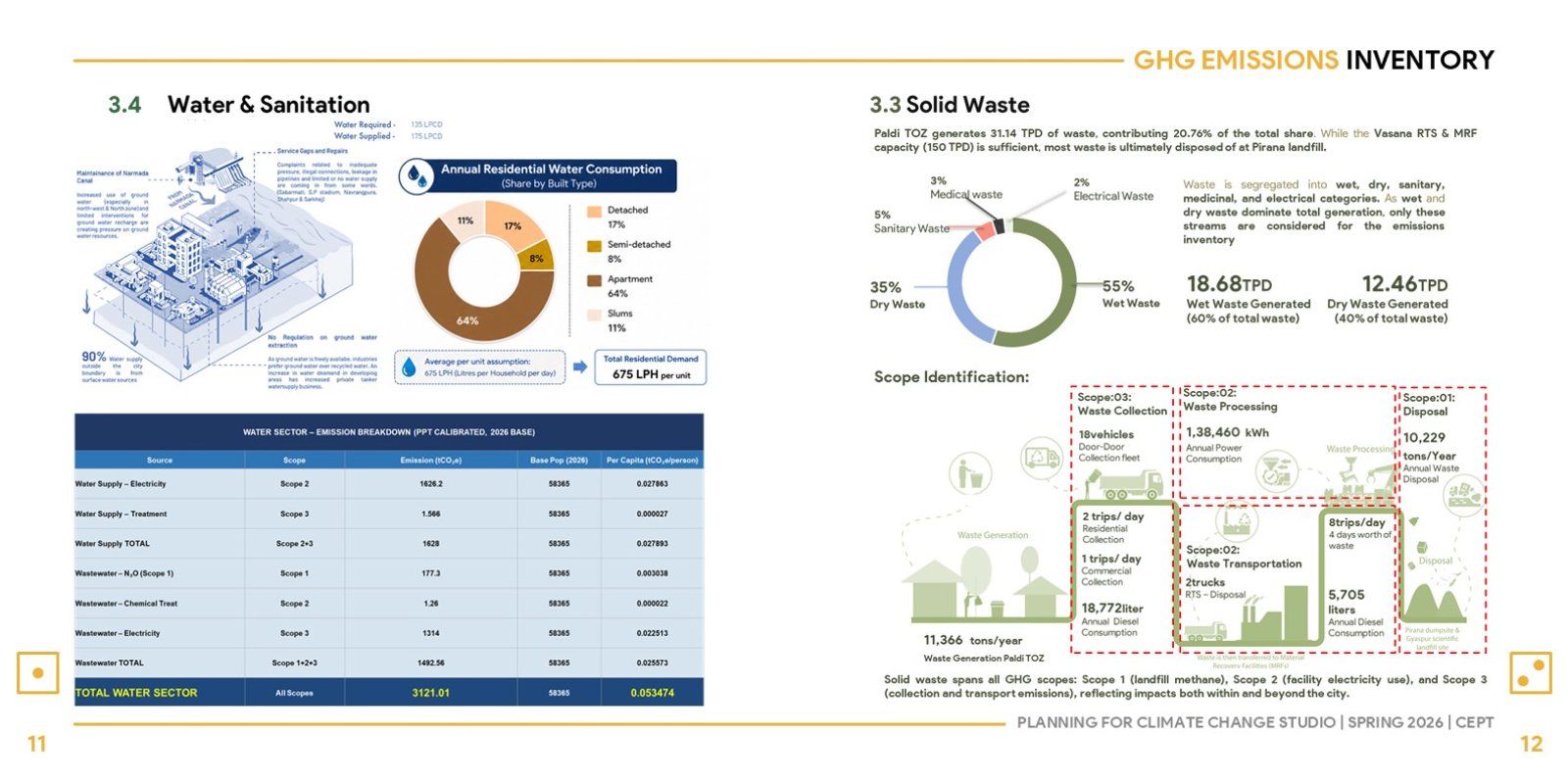
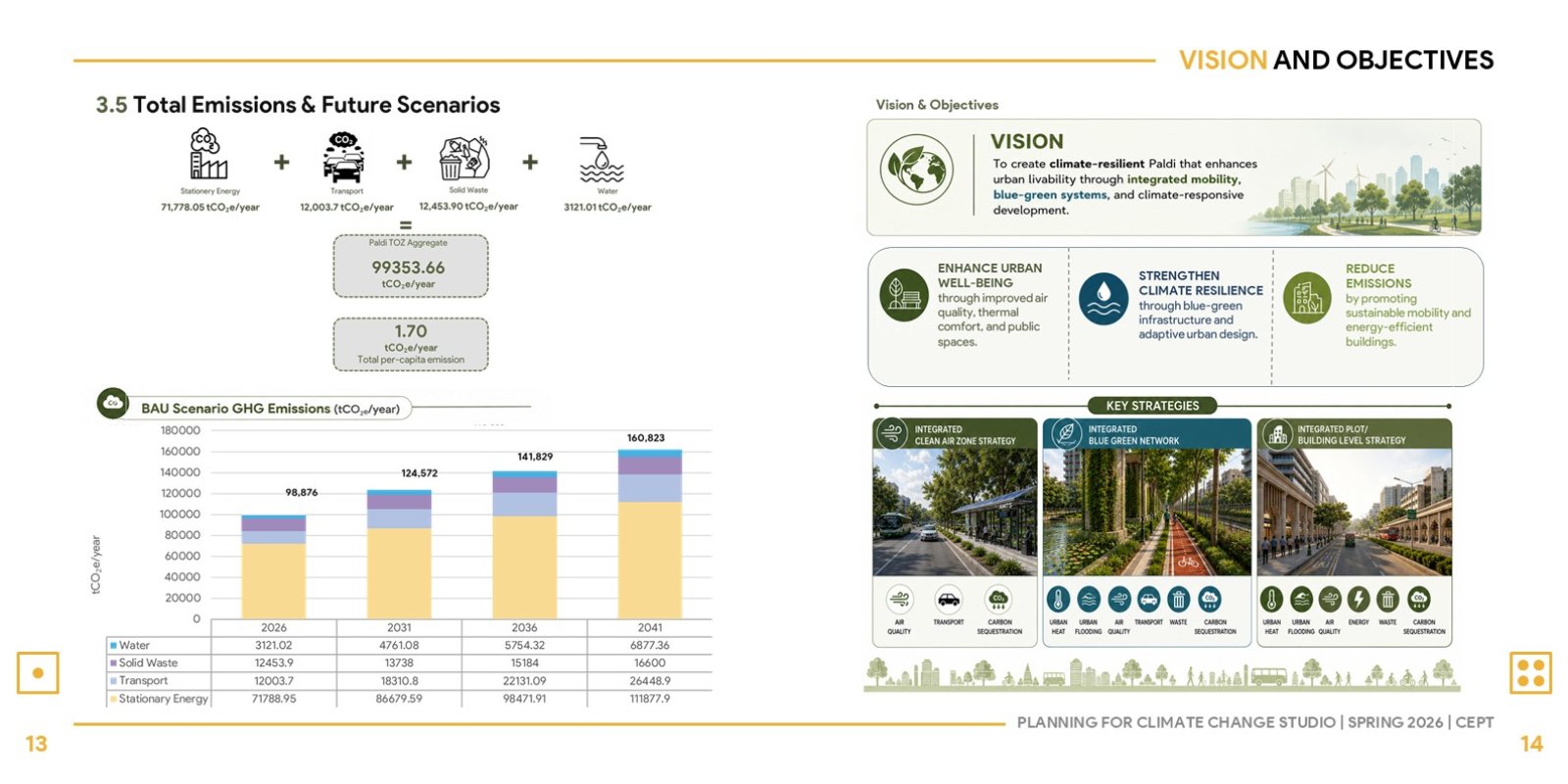
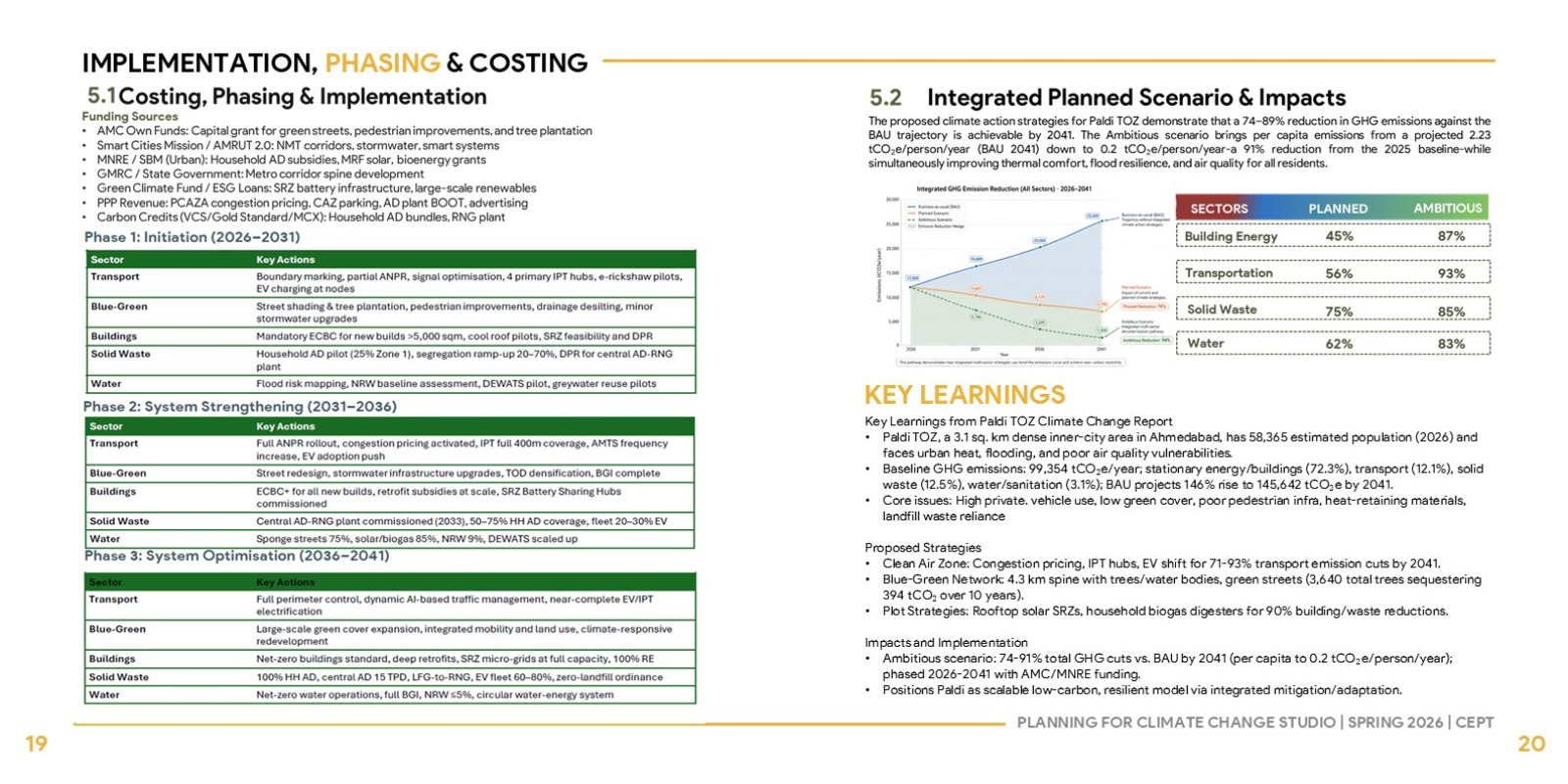
Paldi is a dense, transit-rich area with a total estimated population of 58,365 (2026) and a residential density of 189 persons per hectare. It faces three primary climate vulnerabilities: Urban heat, Urban Flooding, and Poor Air Quality (AQI). The aggregate GHG baseline stands at 99,353.66 tCO?e/year, with stationary energy and buildings contributing 72.3%, transport 12.1%, solid waste 12.5%, and water/sanitation 3.1%. Under BAU, total emissions are projected to rise to 145,642 tCOe/year by 2041-a 67% increase.
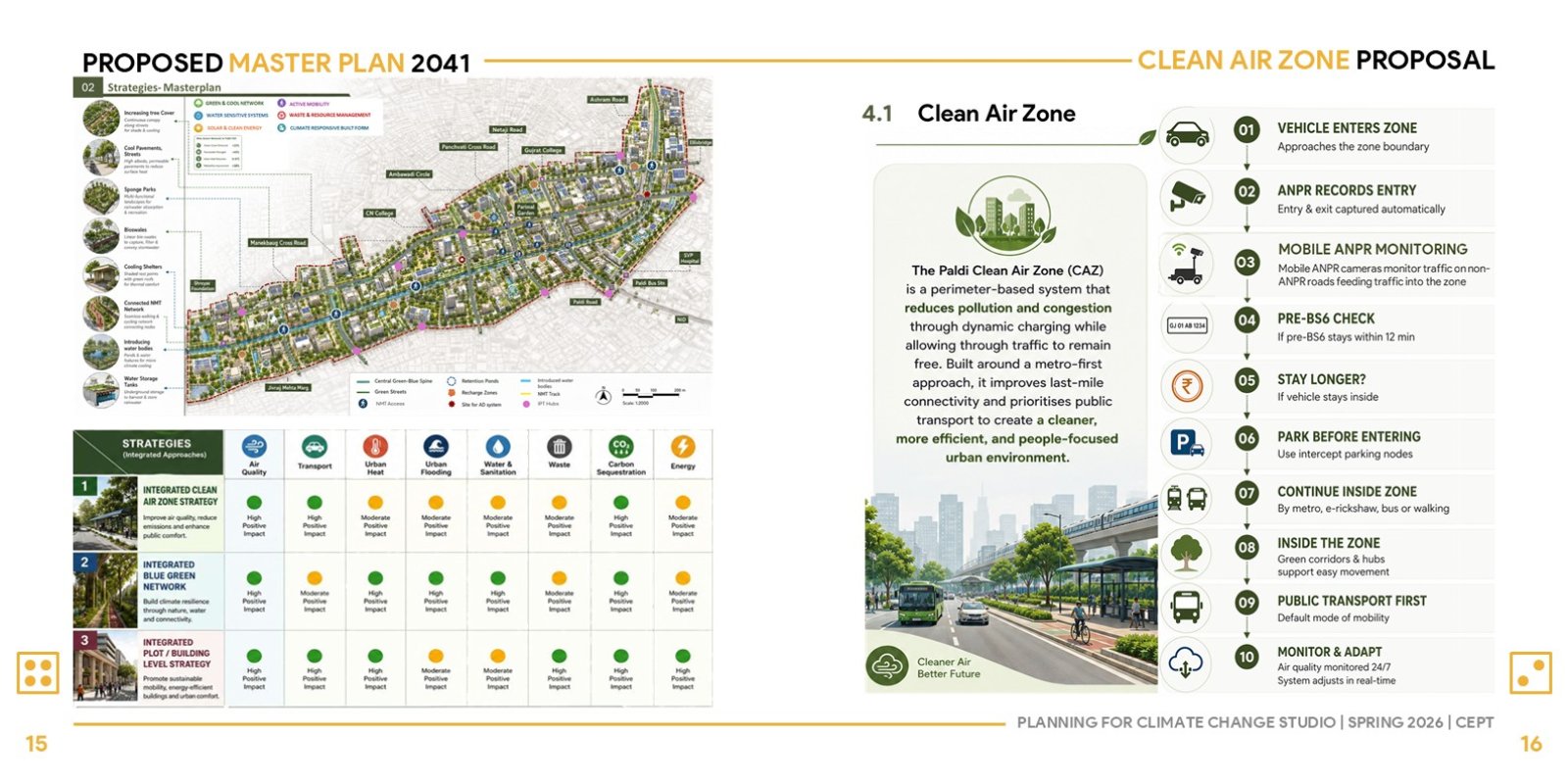
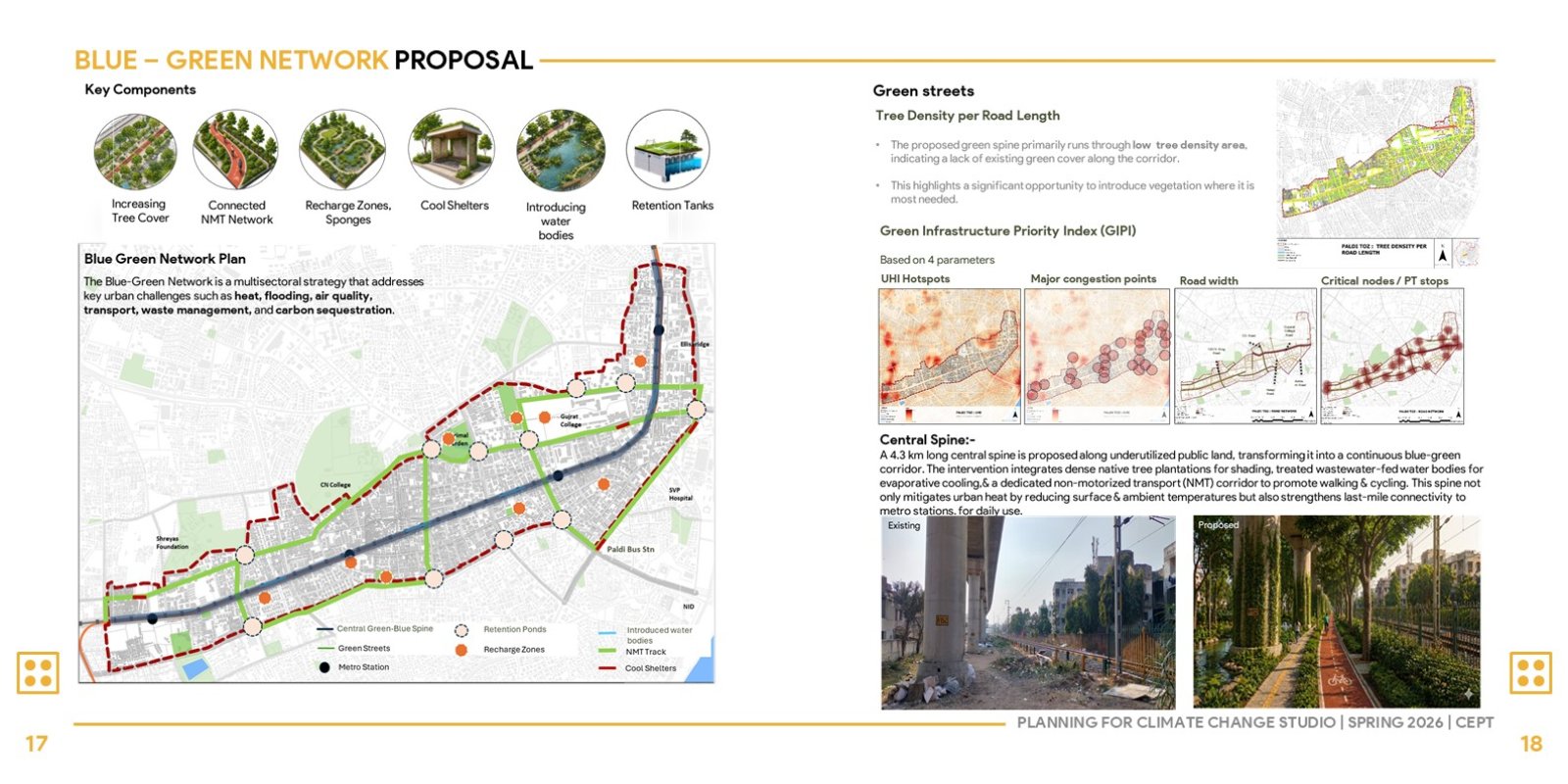
Three integrated strategies are proposed: (1) Integrated Clean Air Zone for transport and mobility, (2) Integrated Blue-Green Network for urban ecology and flood resilience, and (3) Integrated Plot/Building-Level Strategies for energy efficiency, renewable energy, and waste management. Through phased implementation (2026–2031 Initiation; 2031–2036 System Strengthening; 2036 2041 System Optimization), the Ambitious scenario targets a 90% reduction in building energy emissions, 93% in transport, 95% in solid waste, and 83% in water versus BAU by 2041, bringing per capita emissions to 0.2 tCOe/person/year. Together, these strategies position Paldi TOZ as a scalable, low-carbon and climate-resilient urban model, demonstrating how integrated planning can transform dense areas into sustainable and future-ready communities.