TA: Mugdha SavaliyaPublic Space Design, the Ecological Approach
Urbanization has reduced the resiliency of cities, leading to challenges such as urban flooding and rising temperatures. Ecologically designed public spaces can play a crucial role in addressing these issues. This studio focuses on designing resilient urban spaces following an ecological approach that integrates programmatic and project execution requirements for a functioning urban space in Ahmedabad.
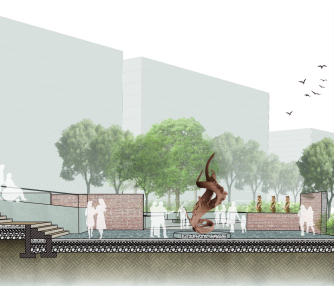
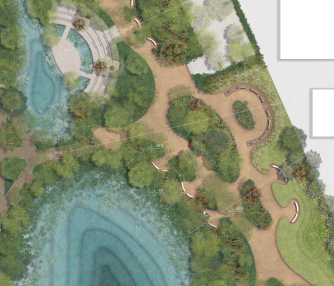
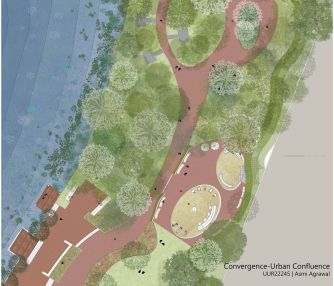
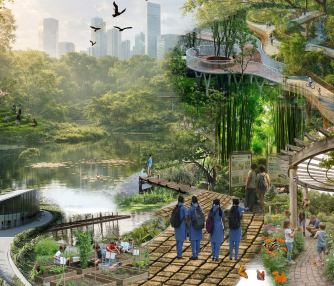
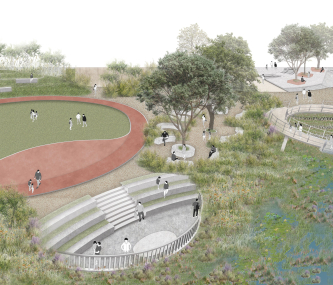
Students will design a public space along a waterbody, harmonizing natural and urban environments by analyzing key ecological factors—hydrology, topography, flora, and fauna—and overlapping them with urban processes to guide design decisions. Recognizing users and their activities as integral to the urban ecosystem, the design will blend social programs with ecological functions.
As urban designers operate within existing planning frameworks, the studio will introduce students to Development Plans and Town Planning Schemes, highlighting both their constraints and opportunities. Learnings of this studio can be employed in both urban and peri-urban contexts. Through GIS-based drone data analysis, students will study ground profiles, topography, and hydrology, assess waterbody capacity, and develop design strategies to mitigate flooding and climate extremes. The studio covers three scales, from masterplan to zone design to detailing a portion for construction purpose.
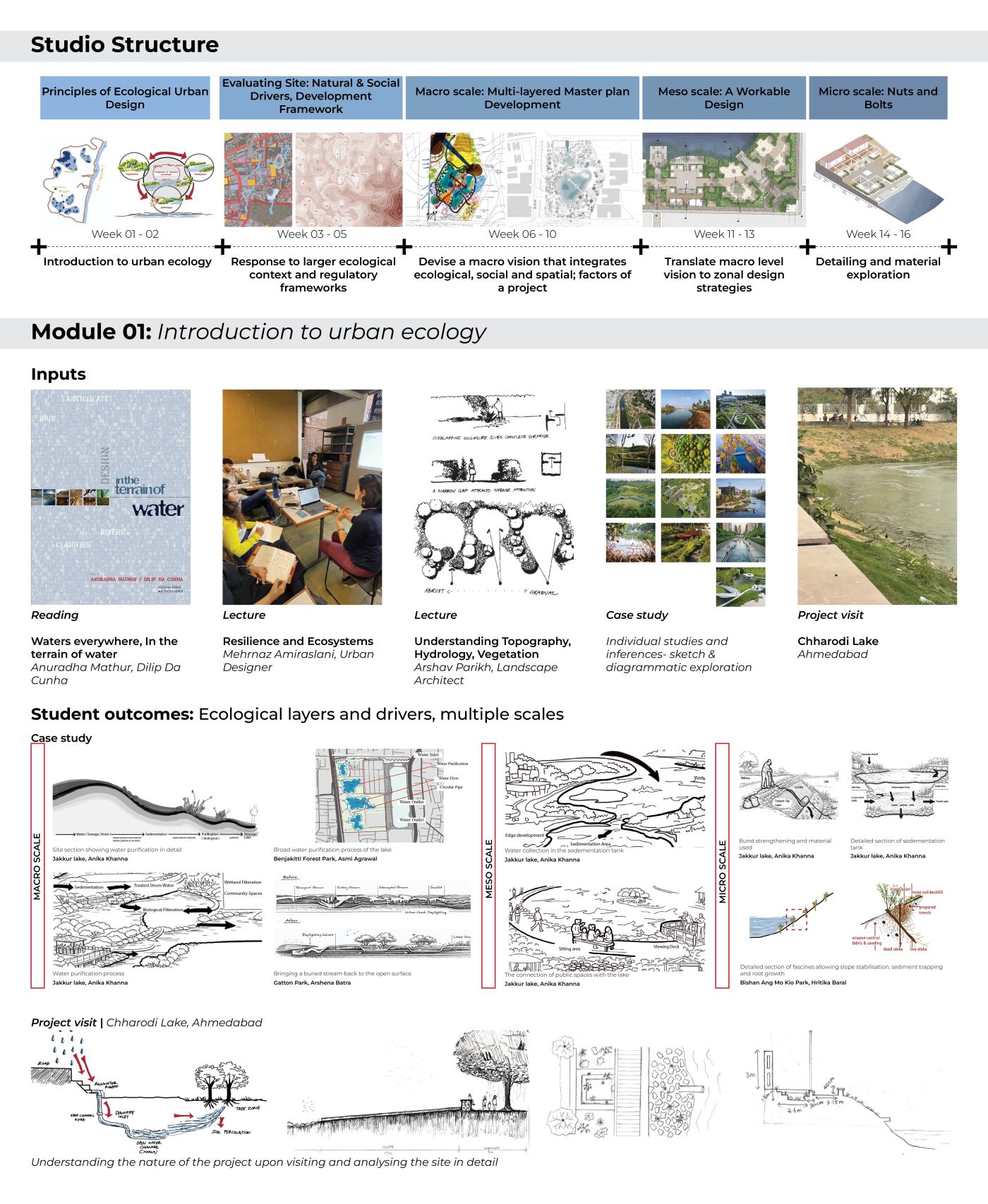
Principles of Ecological Urban Design, Ecological Thinking
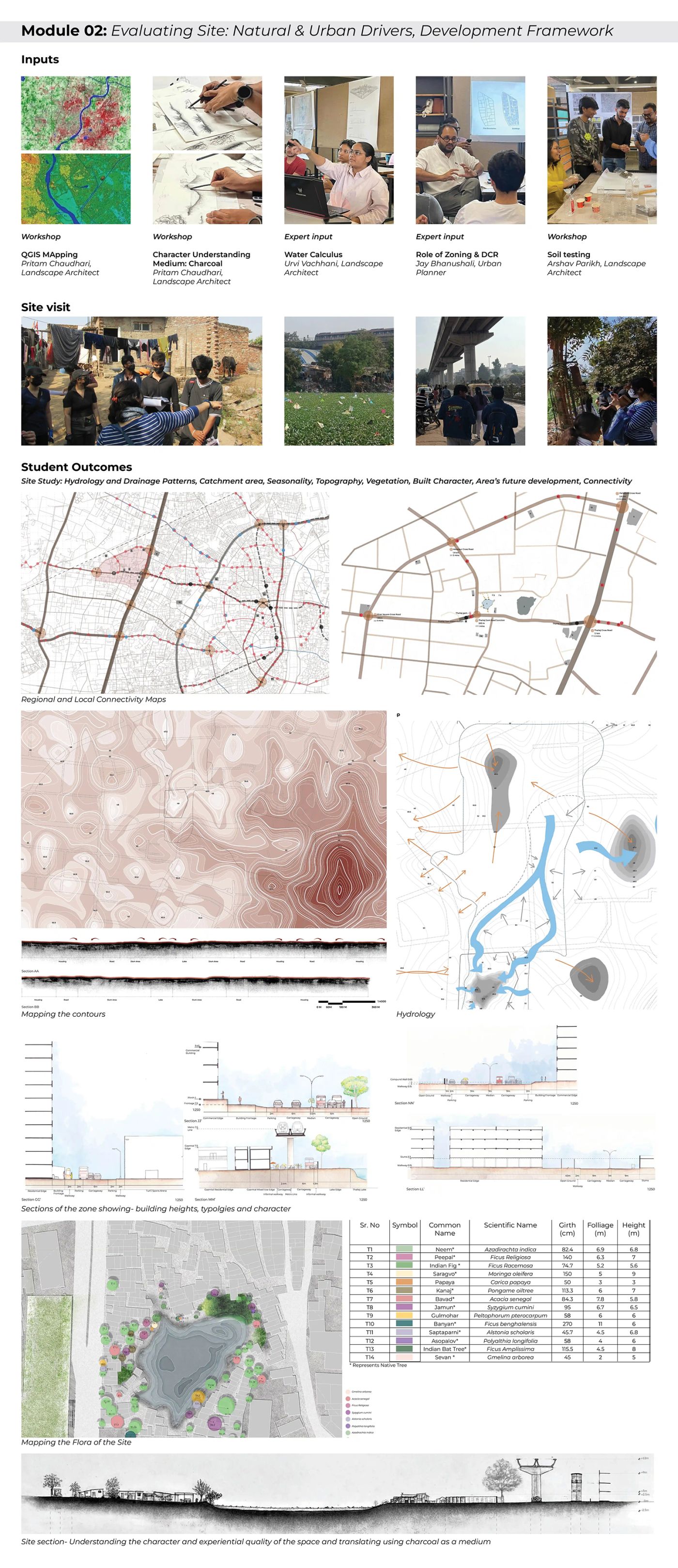
Larger area studies & Inferences: Terrain, Hydrology, Flora, Street Network, Built Profile, Climate, Dynamics between Natural and Urban Drivers, Developmental Framework
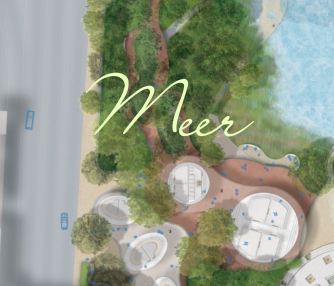
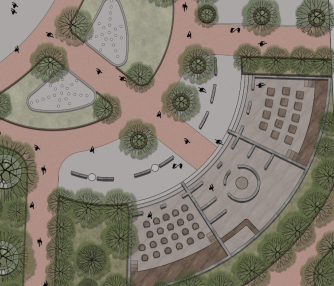
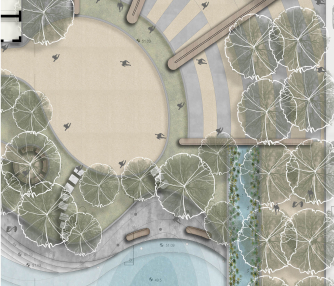
Ecological and programmatic intents in layered manner, Integrating hydrology, topography, vegetation systems, circulation, and zones into a cohesive framework
Grounding design with spatial clarity, Experiential and Ecological qualities, Layered Process driven by ecological concerns
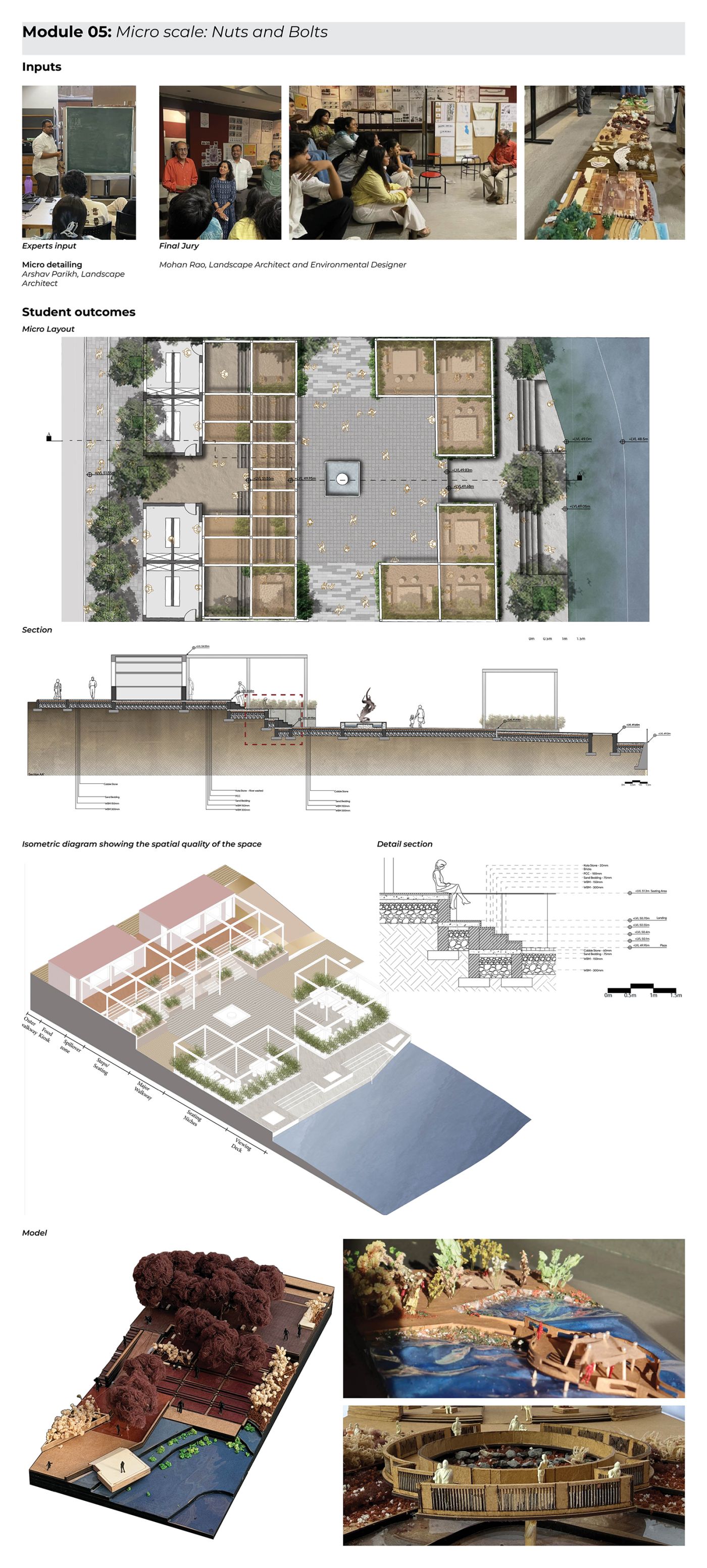
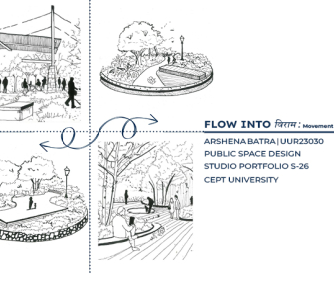
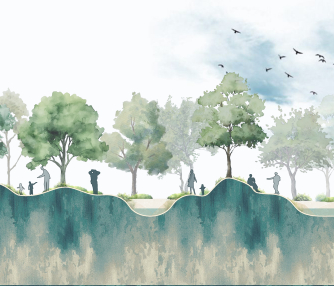
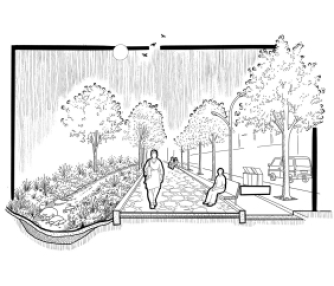
Design for technically precise and materially grounded, Detailing the levels, materials, urban furniture, Plant materials, Anthropometrics