Anagha S

UT4002

Connecting the City : Surat

This project explores an integrated public transport strategy for Surat, a rapidly growing city expected to nearly double in population by 2057. As part of the Semester 3 Transportation Project Studio, the study examines the city's future mobility requirements through precedent studies of Kochi and Ho Chi Minh City, followed by a detailed assessment of the Bhesan–Adajan corridor. Five transit alternatives were evaluated through qualitative and quantitative assessments, leading to Medium Metro as the preferred system. The study further examines metro alignment and structural design in response to Surat's ground conditions and road constraints, along with multimodal interchange proposals connecting Metro, High-Speed Rail (HSR) and BRTS. Capital expenditure was also estimated at 2026 price levels, with a total of approximately ?17,352 crore for Metro and ?5,295 crore for BRTS. The project highlights the need to move beyond individual transport corridors towards an integrated public transport network, supported by efficient interchanges and better connectivity, to make public transport a more attractive alternative to private two-wheelers.
Report Content

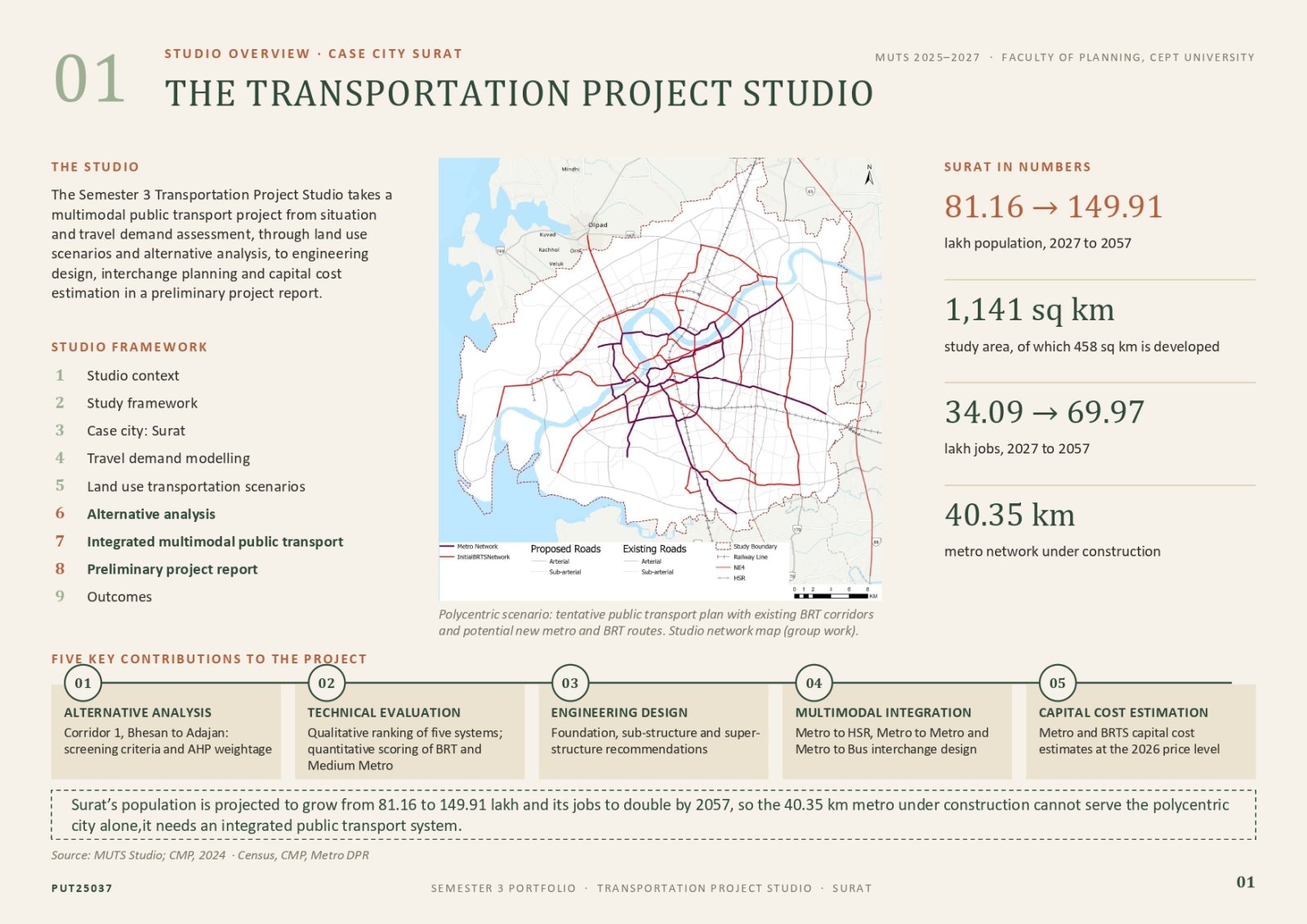
Surat’s population is projected to grow from 81.16 to 149.91 lakh and its jobs to double by 2057, so the 40.35 km metro under construction cannot serve the polycentric city alone,it needs an integrated public transport system.

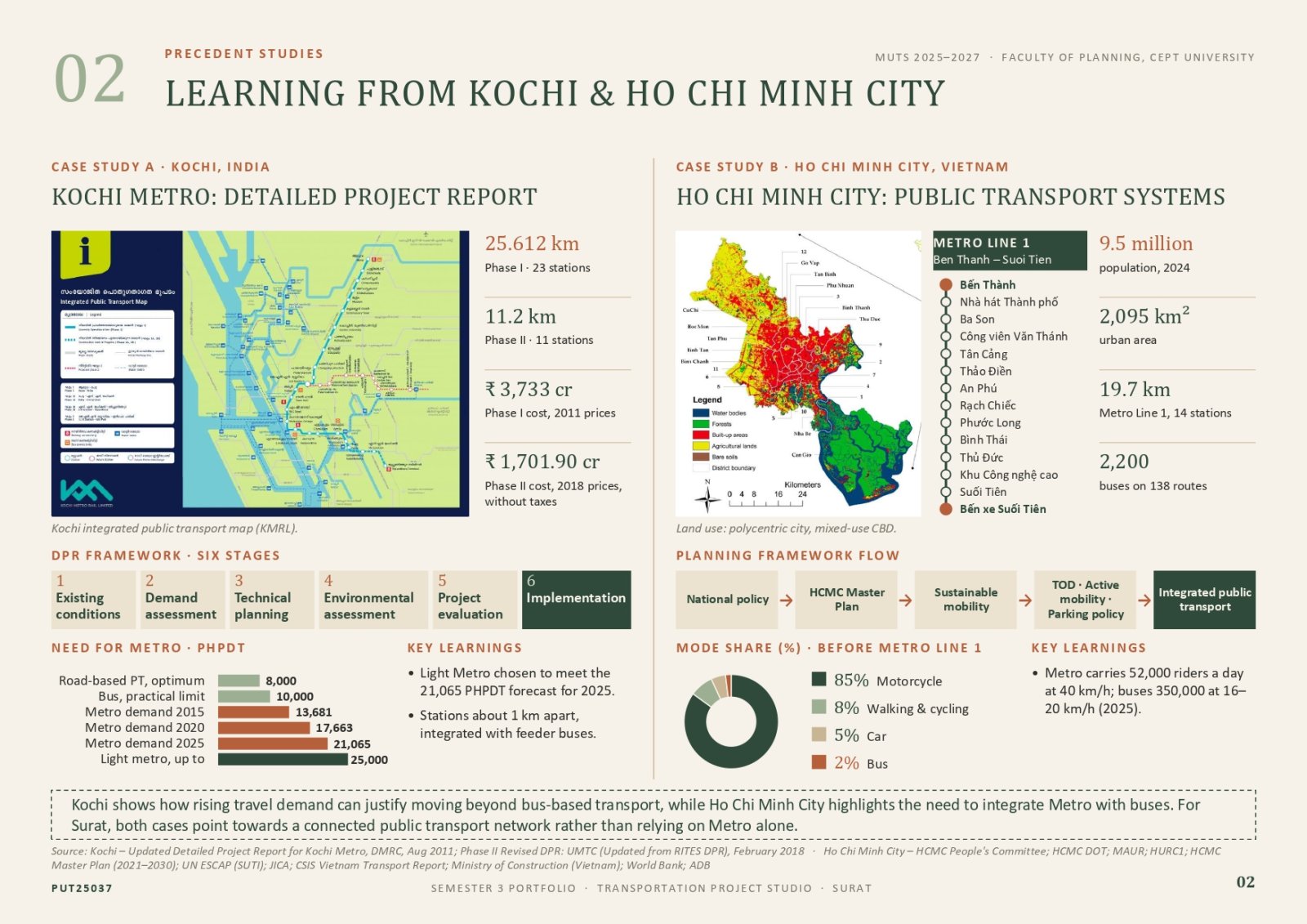
Kochi shows how rising travel demand can justify moving beyond bus-based transport, while Ho Chi Minh City highlights the need to integrate Metro with buses. For Surat, both cases point towards a connected public transport network rather than relying on Metro alone.

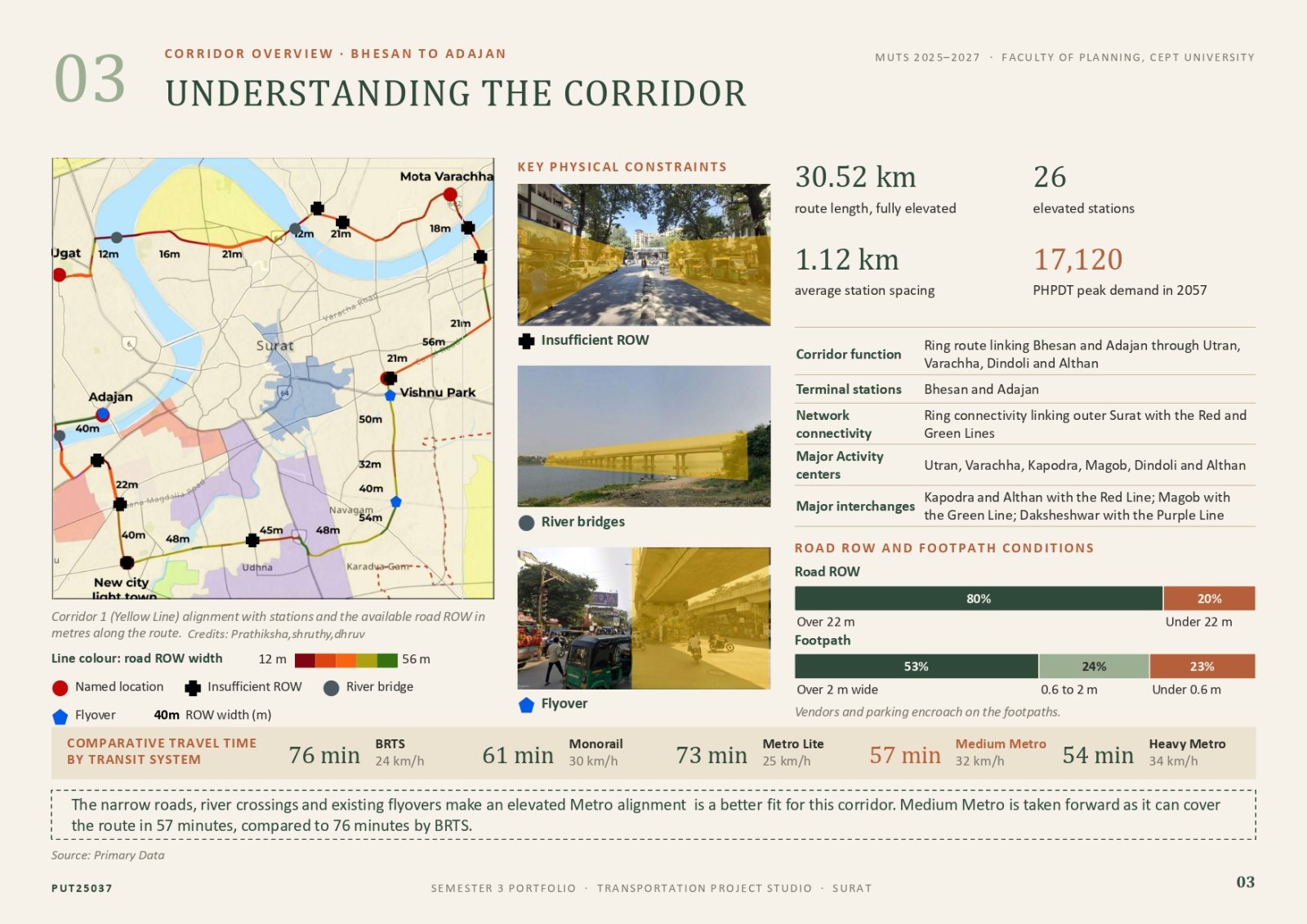
The narrow roads, river crossings and existing flyovers make an elevated Metro alignment is a better fit for this corridor. Medium Metro is taken forward as it can cover the route in 57 minutes, compared to 76 minutes by BRTS.

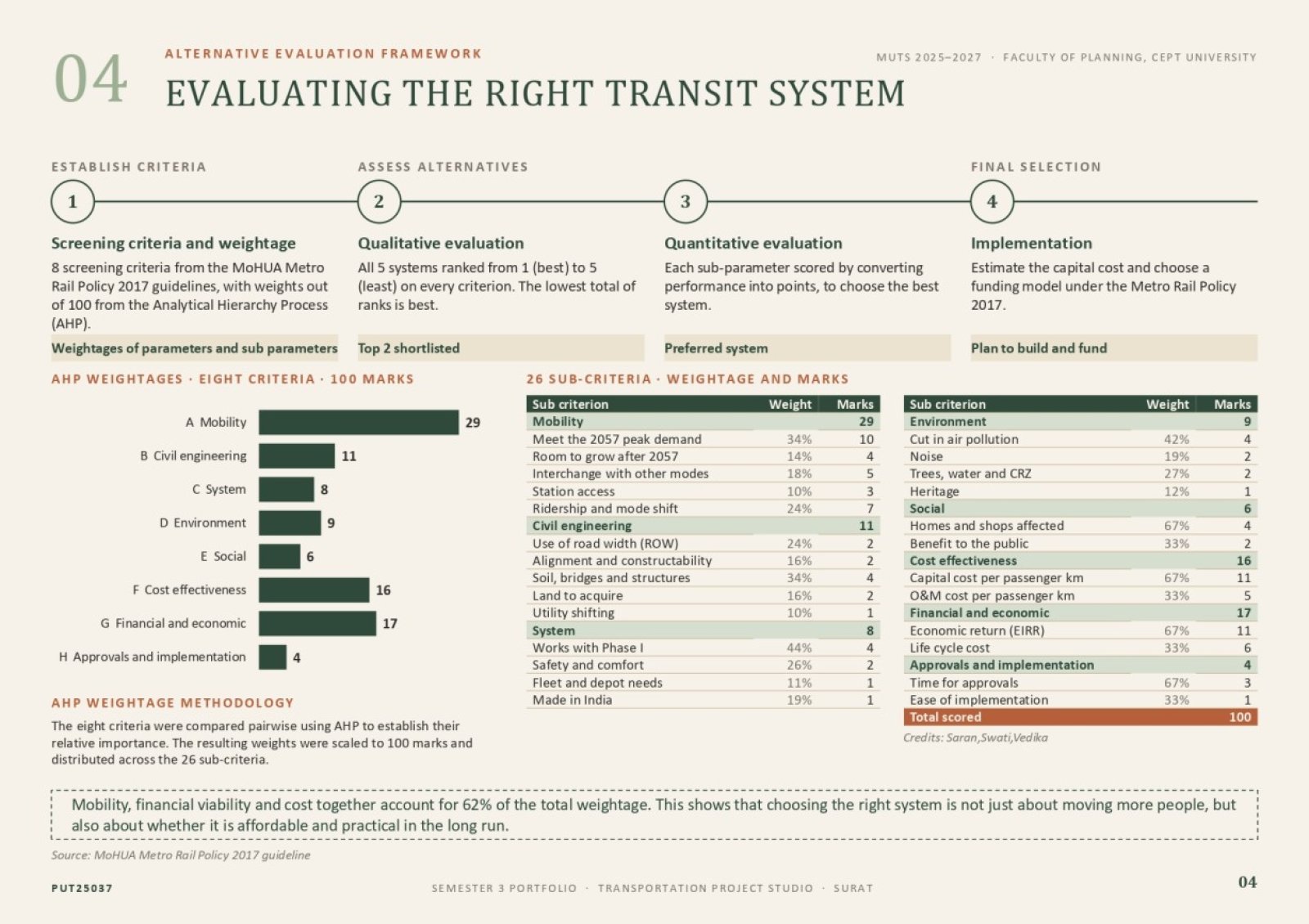
Mobility, financial viability and cost together account for 62% of the total weightage. This shows that choosing the right system is not just about moving more people, but also about whether it is affordable and practical in the long run.

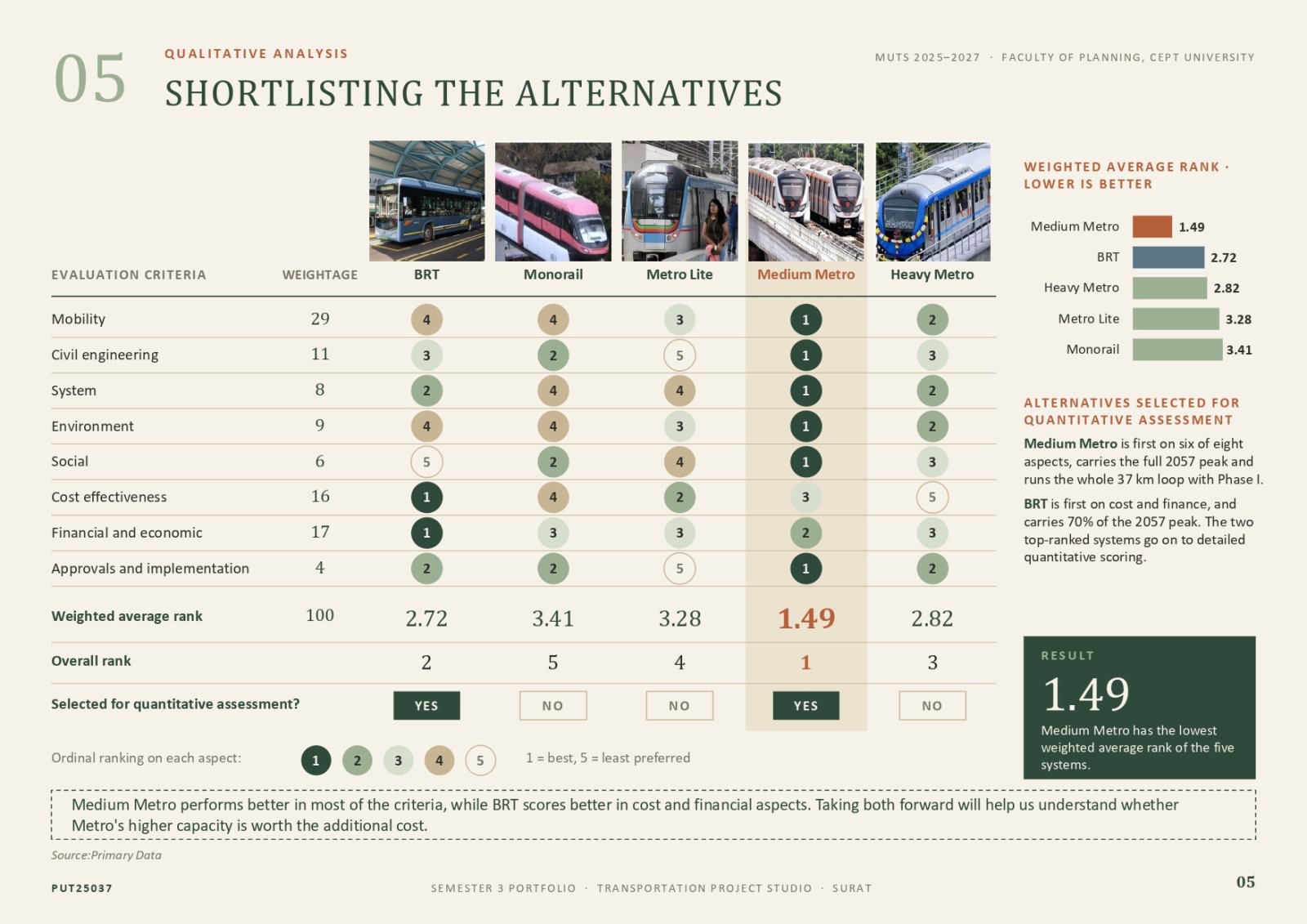
Medium Metro performs better in most of the criteria, while BRT scores better in cost and financial aspects. Taking both forward will help us understand whether Metro's higher capacity is worth the additional cost.

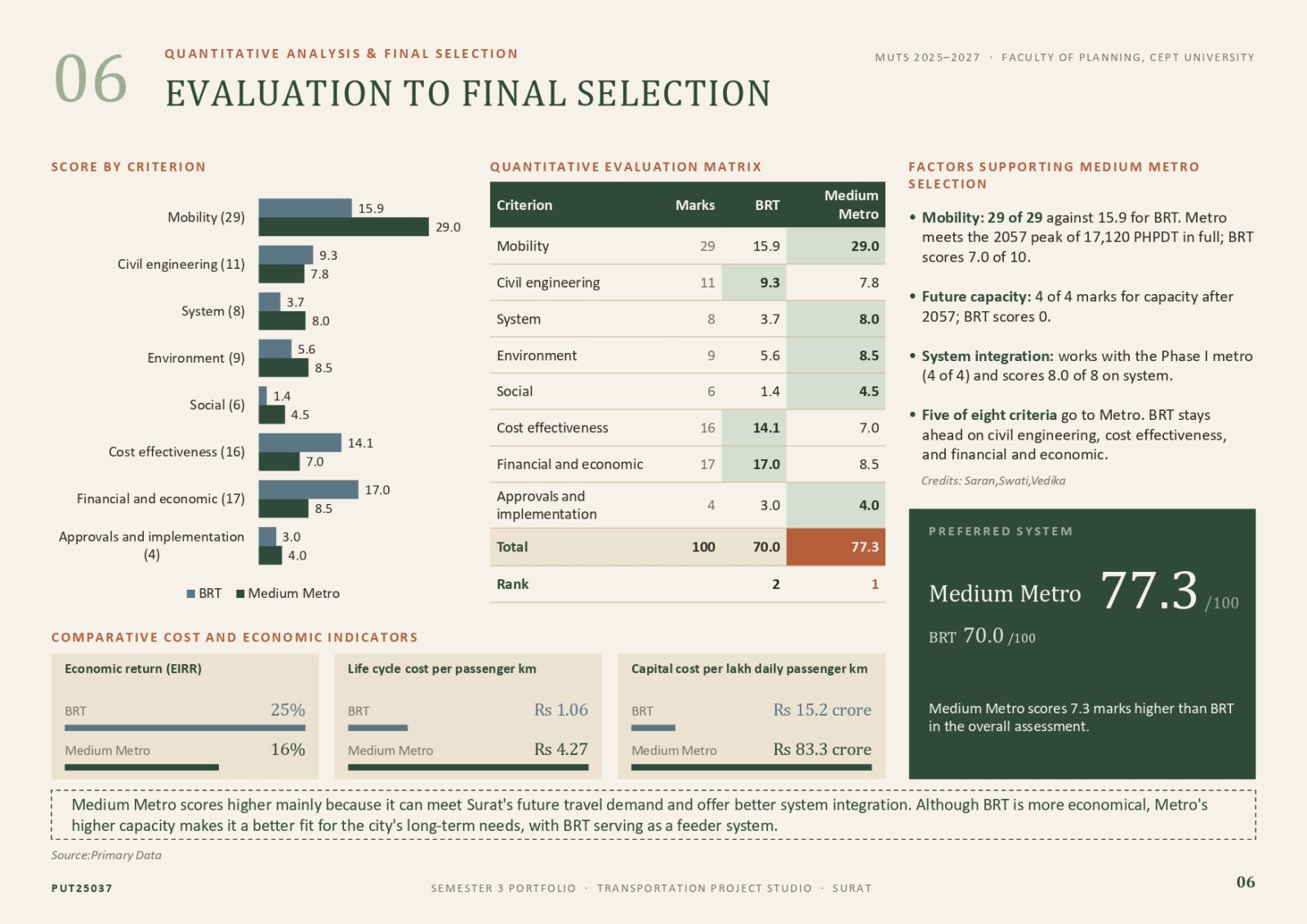
Medium Metro scores higher mainly because it can meet Surat's future travel demand and offer better system integration. Although BRT is more economical, Metro's higher capacity makes it a better fit for the city's long-term needs, with BRT serving as a feeder system.

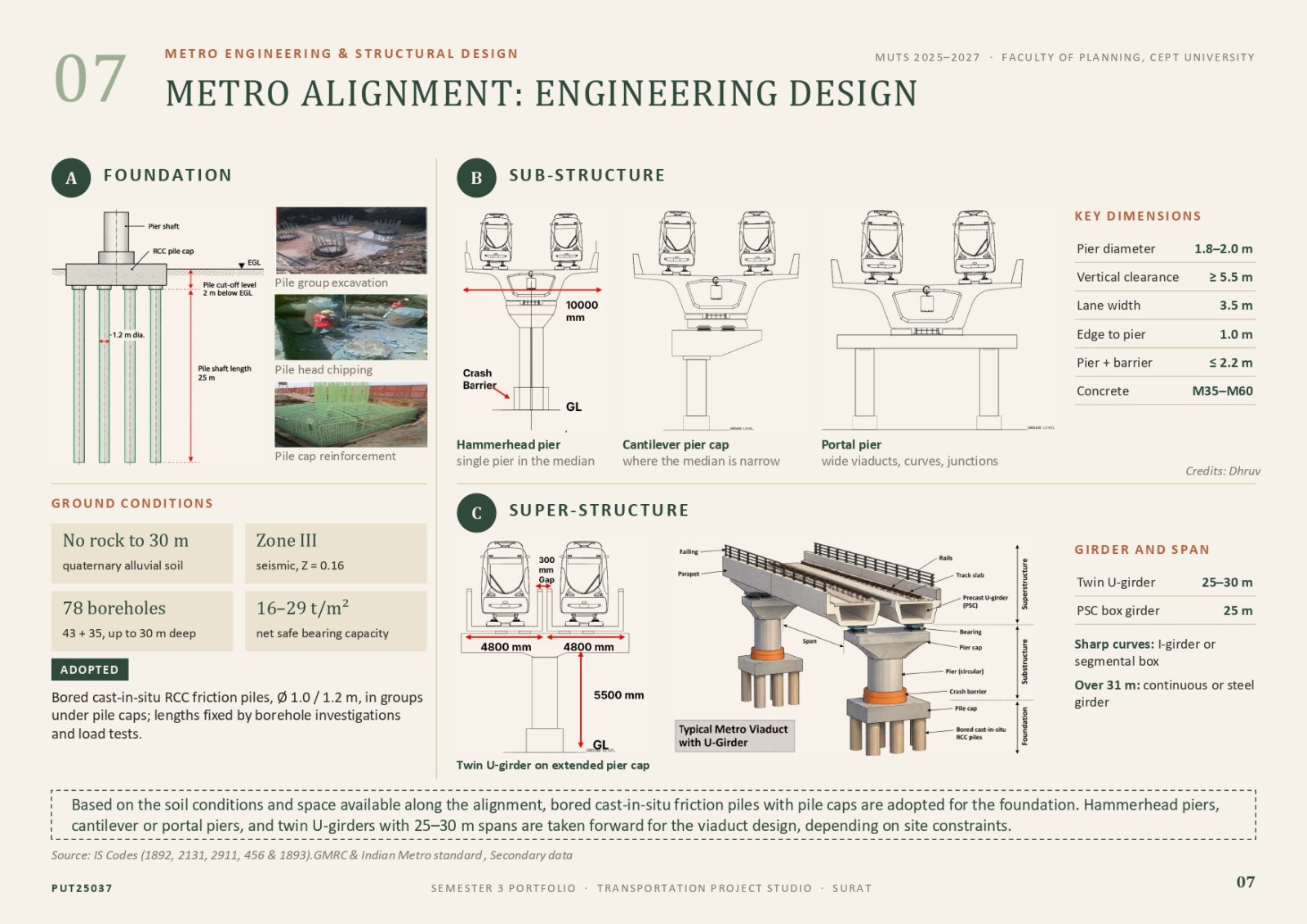
Based on the soil conditions and space available along the alignment, bored cast-in-situ friction piles with pile caps are adopted for the foundation. Hammerhead piers, cantilever or portal piers, and twin U-girders with 25–30 m spans are taken forward for the viaduct design, depending on site constraints.

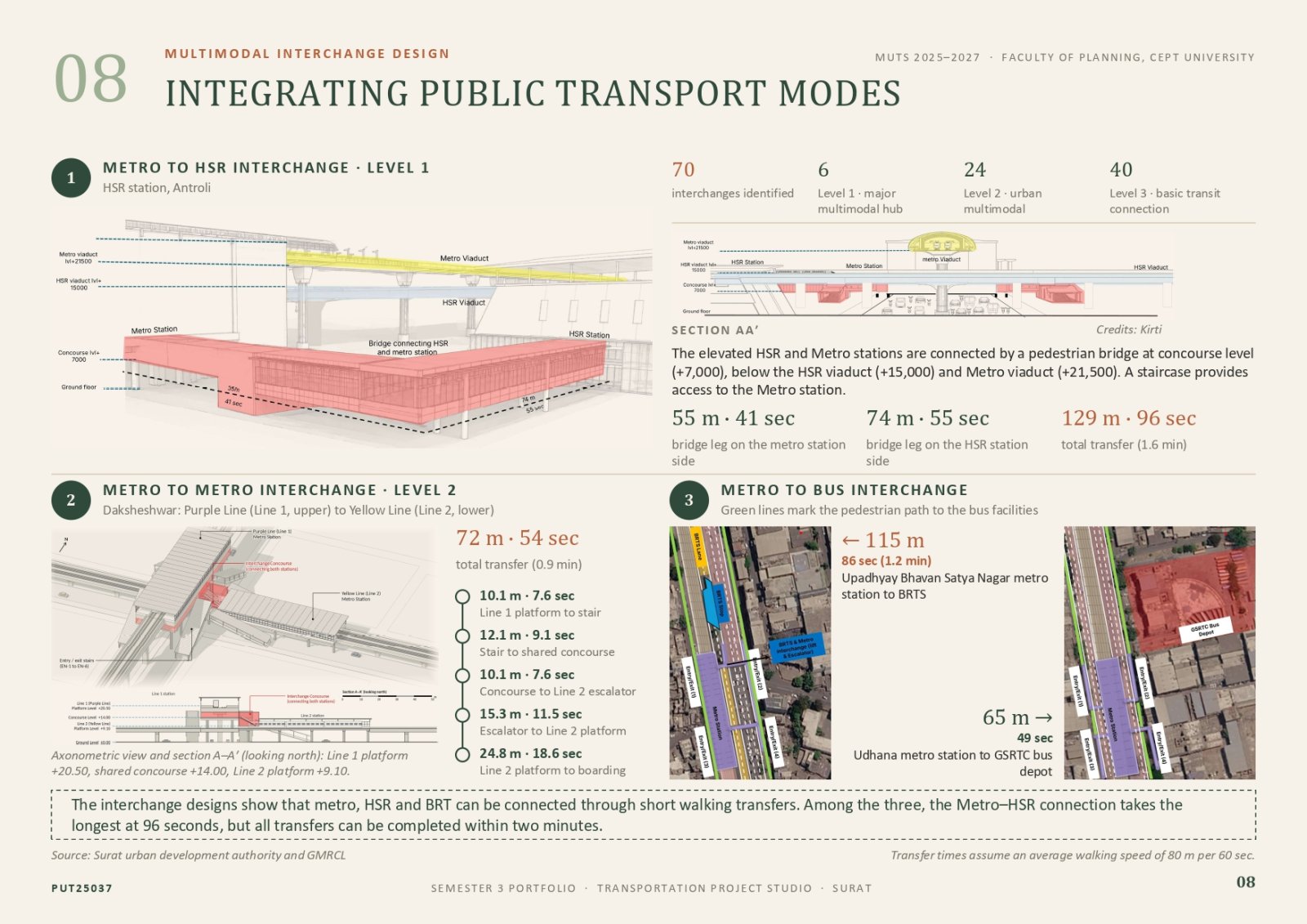
The interchange designs show that metro, HSR and BRT can be connected through short walking transfers. Among the three, the Metro–HSR connection takes the longest at 96 seconds, but all transfers can be completed within two minutes.

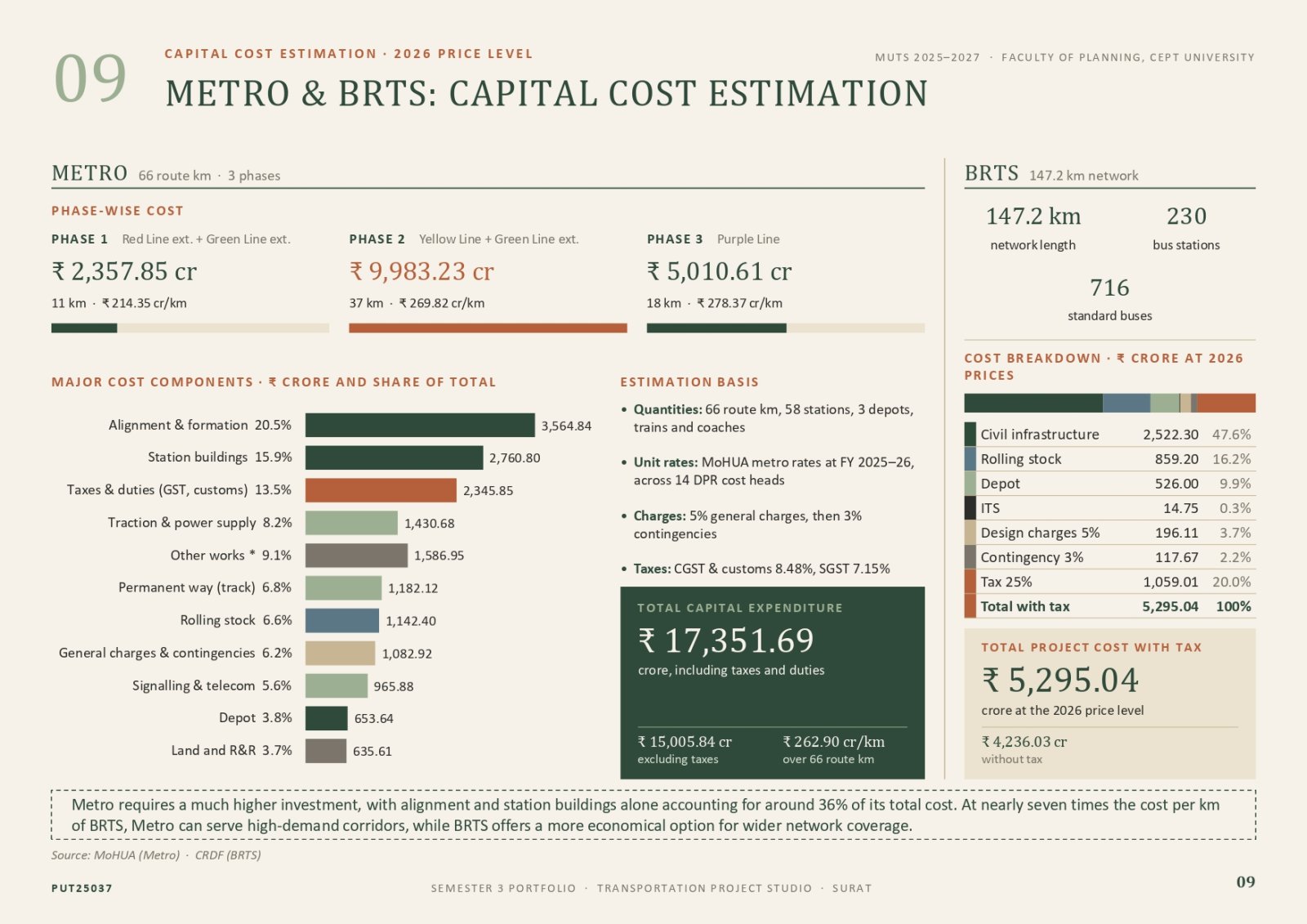
Metro requires a much higher investment, with alignment and station buildings alone accounting for around 36% of its total cost. At nearly seven times the cost per km of BRTS, Metro can serve high-demand corridors, while BRTS offers a more economical option for wider network coverage.

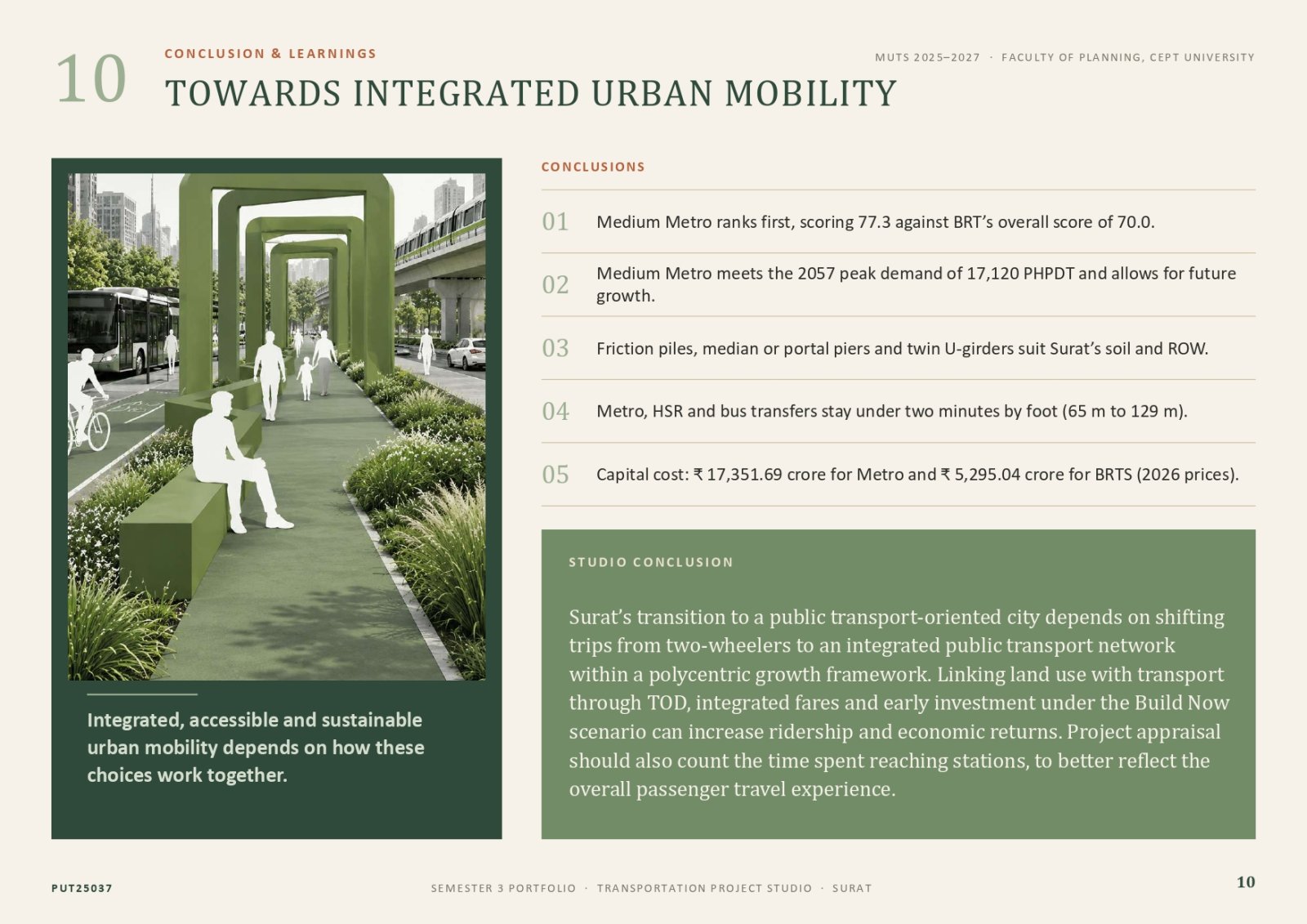
Surat’s transition to a public transport-oriented city depends on shifting trips from two-wheelers to an integrated public transport network within a polycentric growth framework. Linking land use with transport through TOD, integrated fares and early investment under the Build Now scenario can increase ridership and economic returns. Project appraisal should also count the time spent reaching stations, to better reflect the overall passenger travel experience.