Your browser is out-of-date!
For a richer surfing experience on our website, please update your browser. Update my browser now!
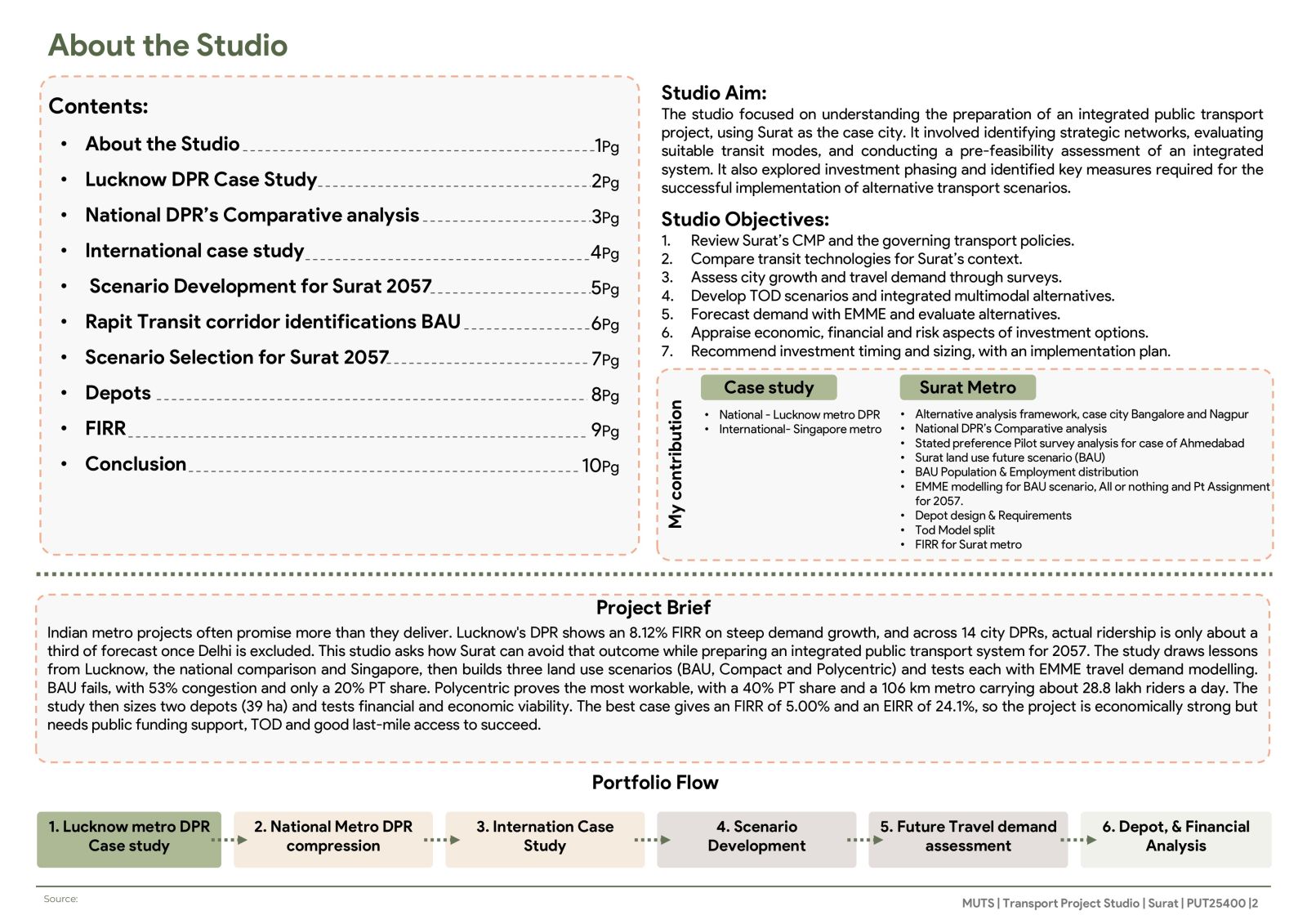
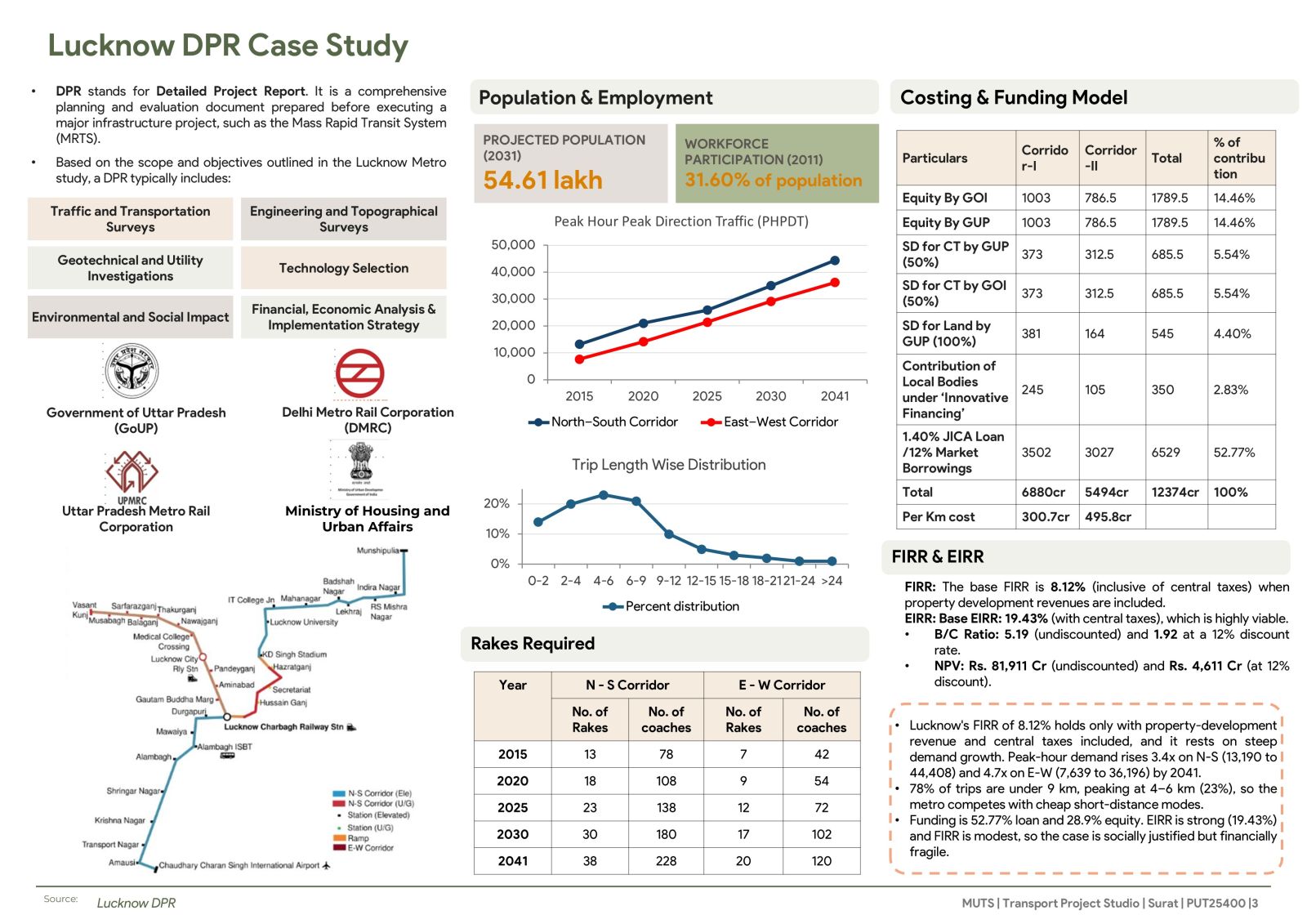
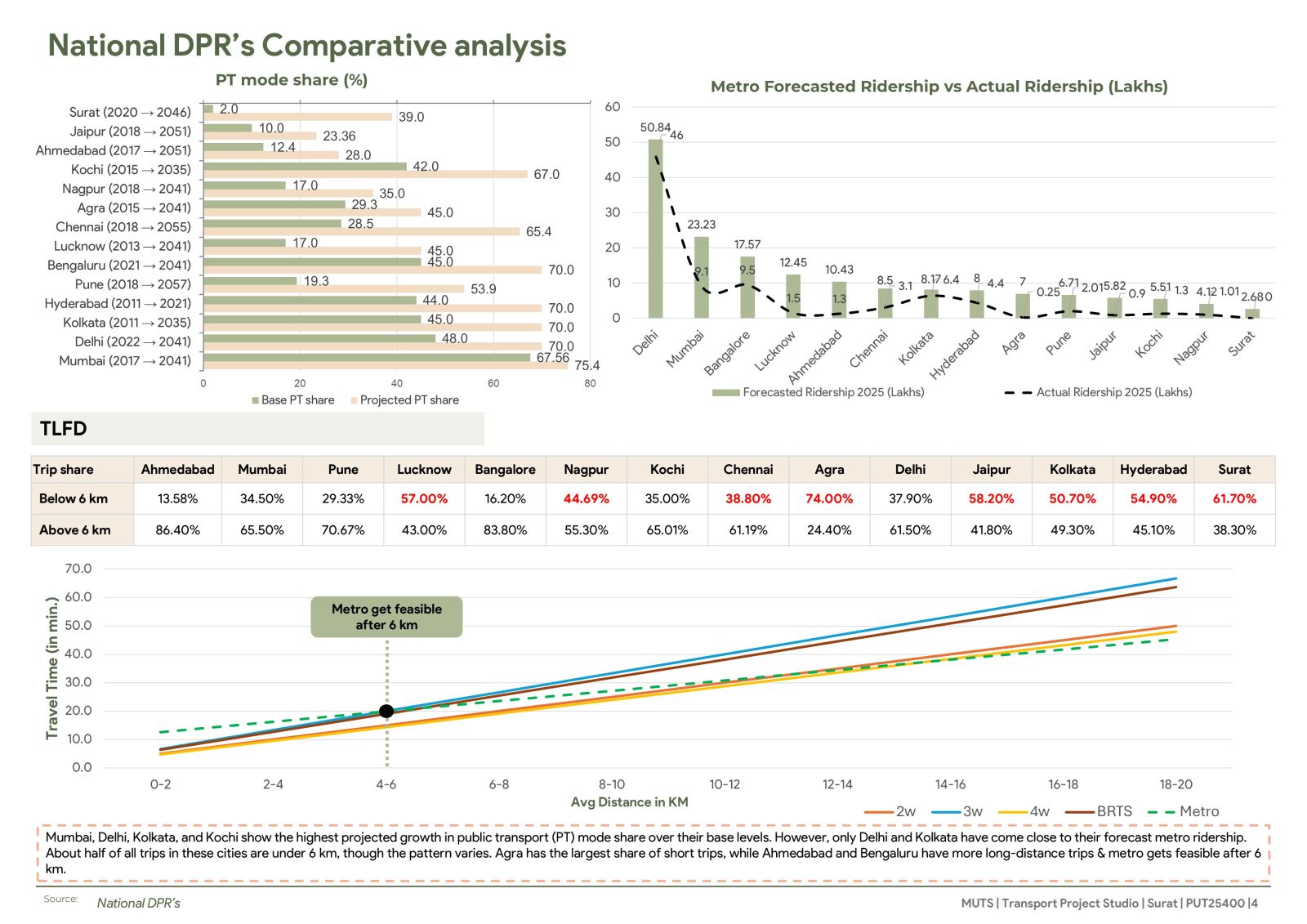
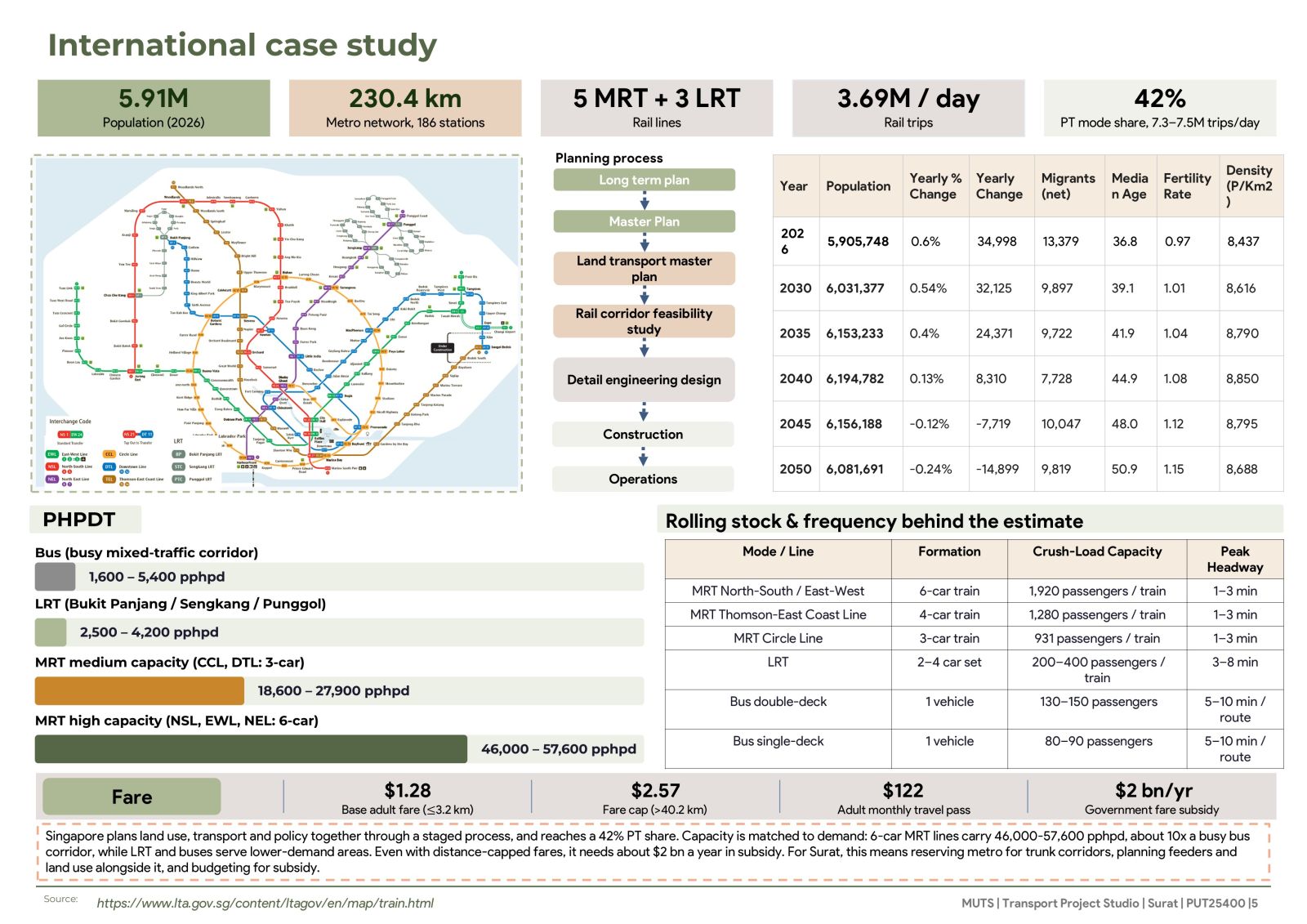
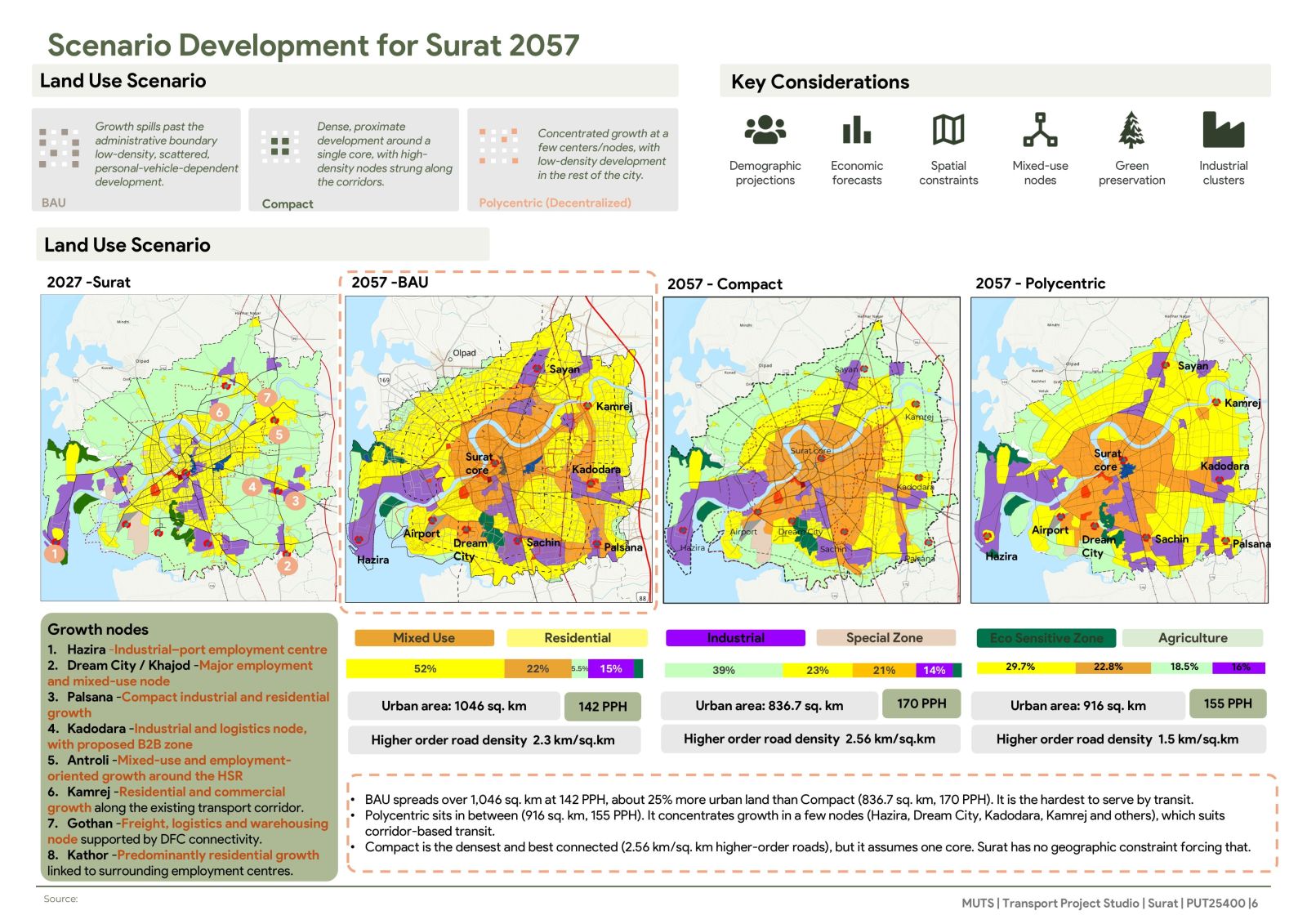
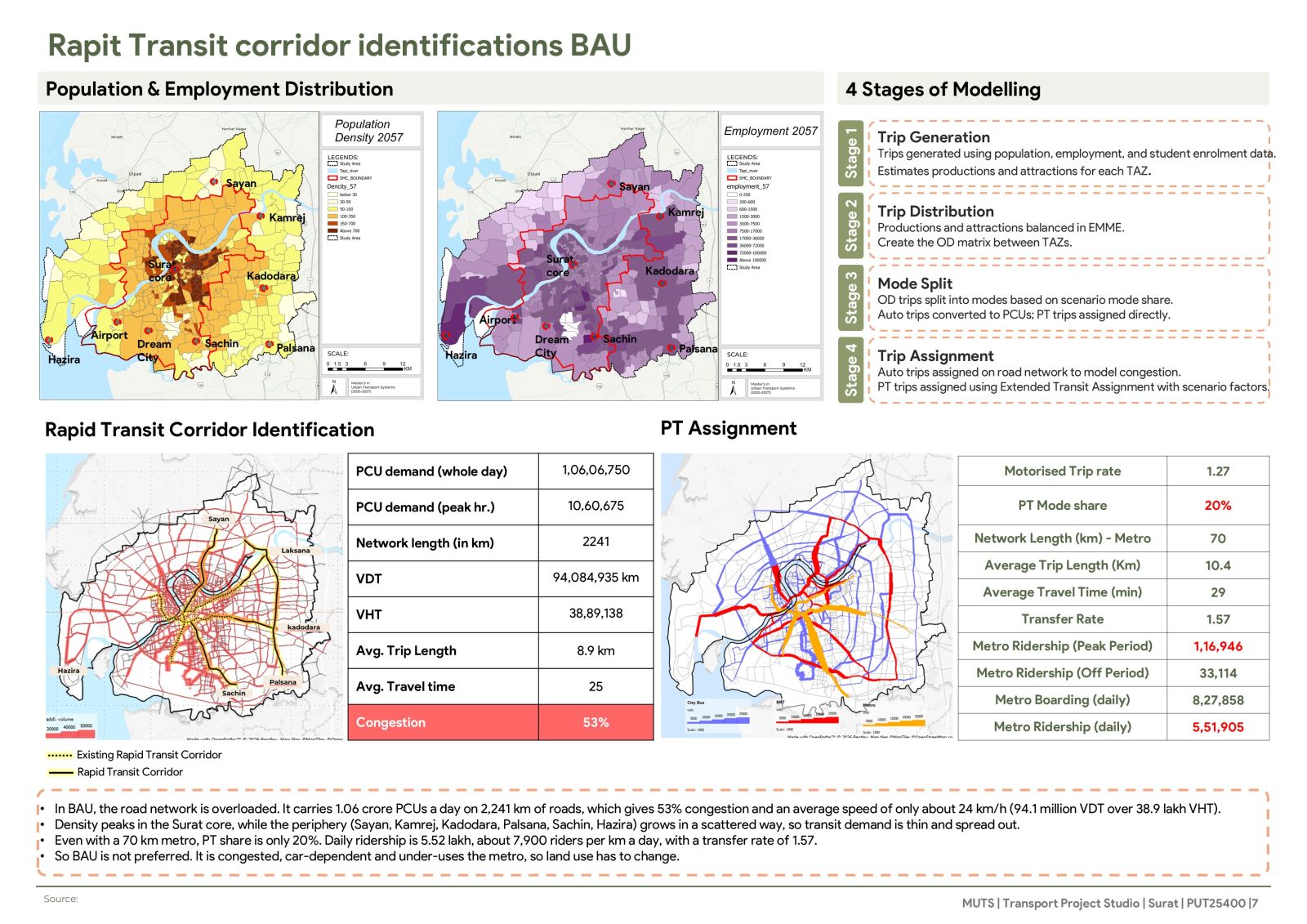
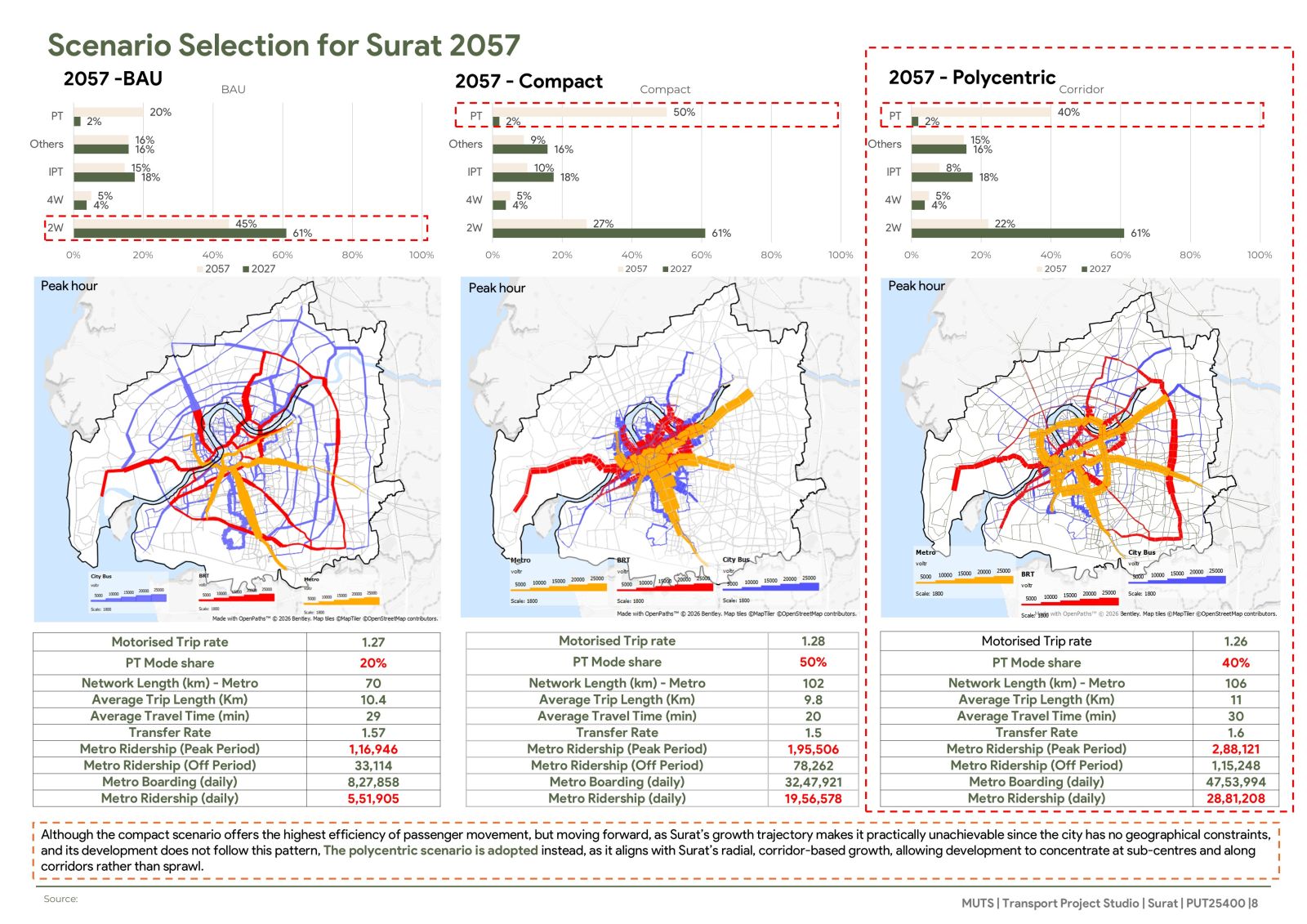
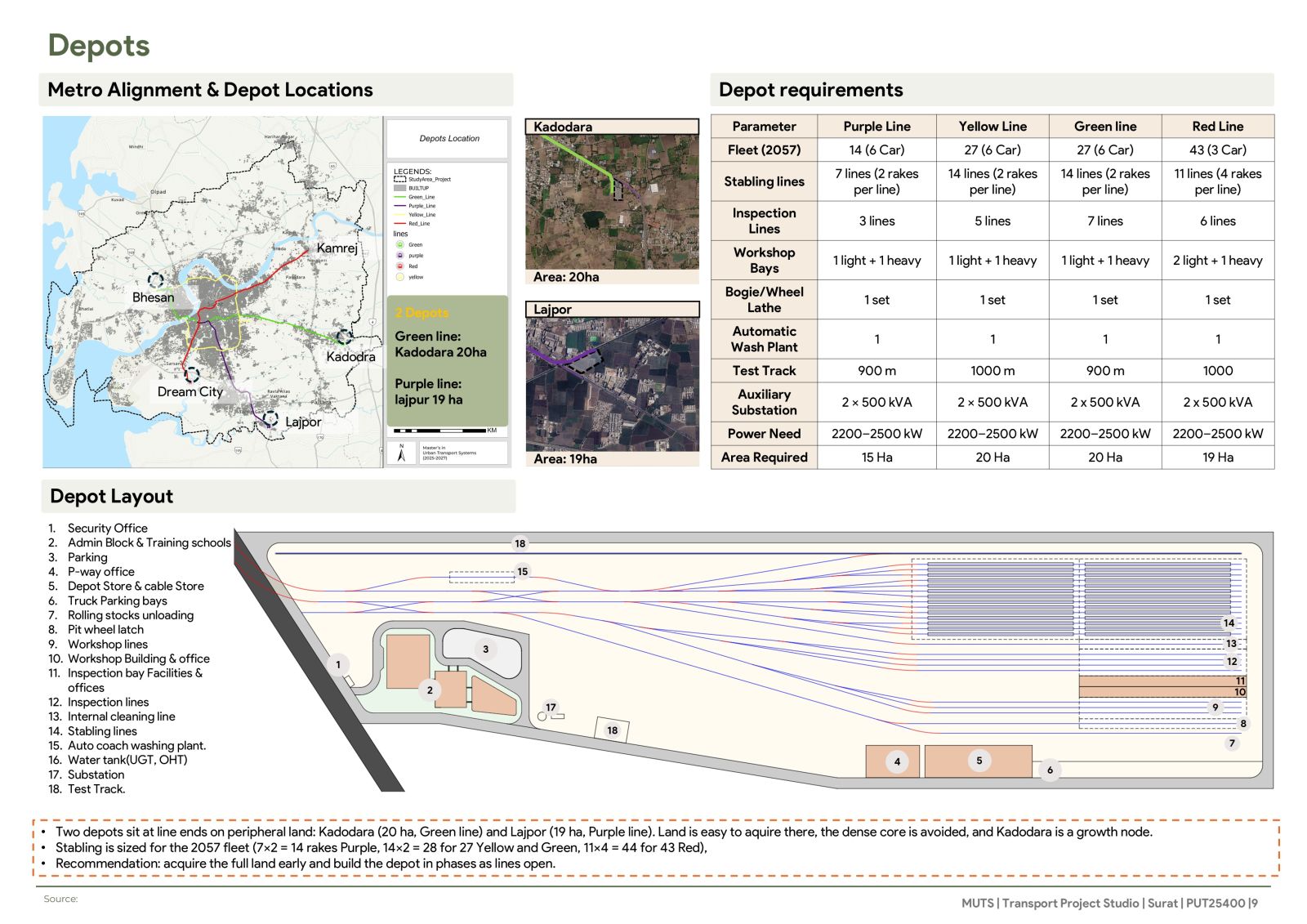
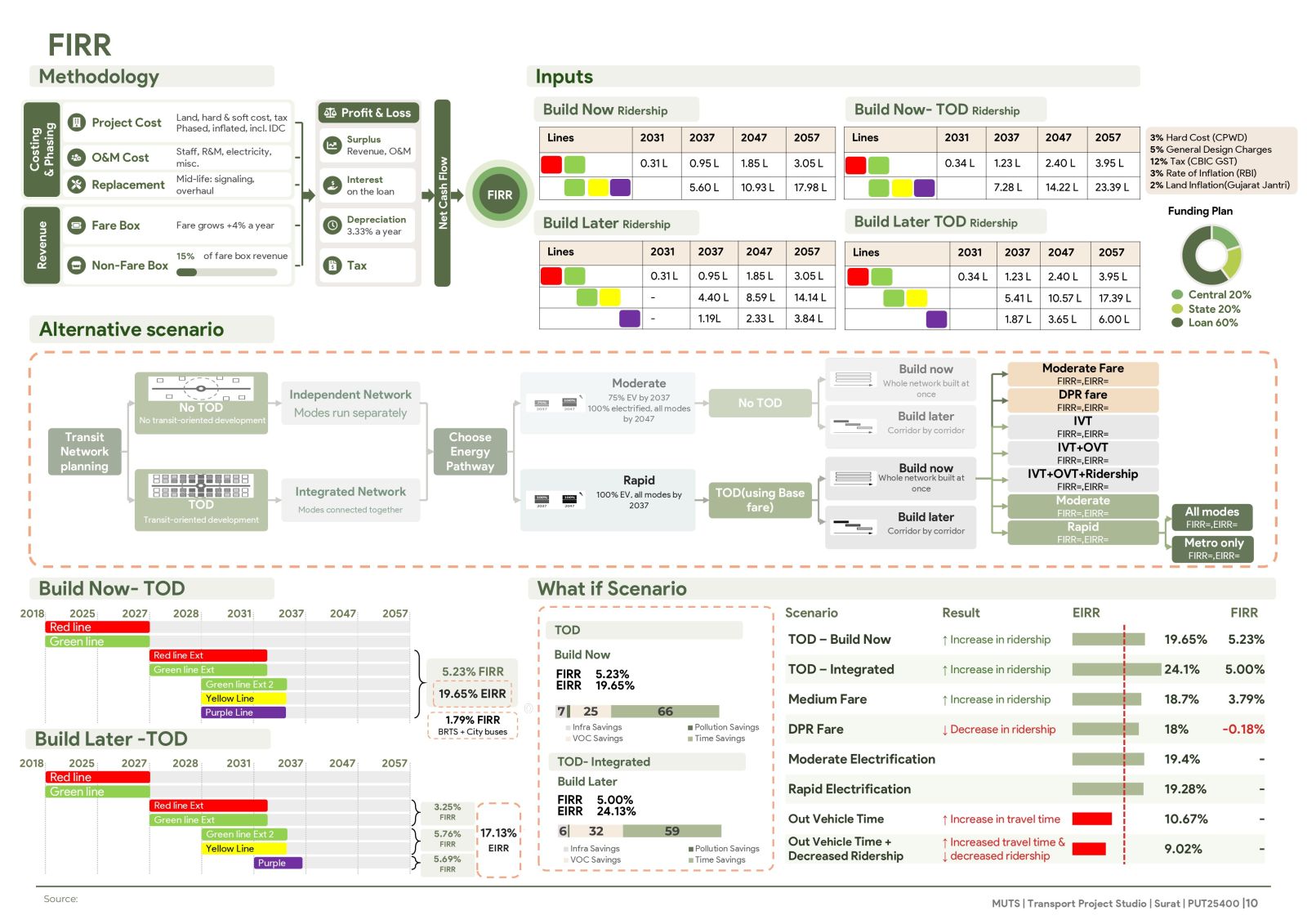
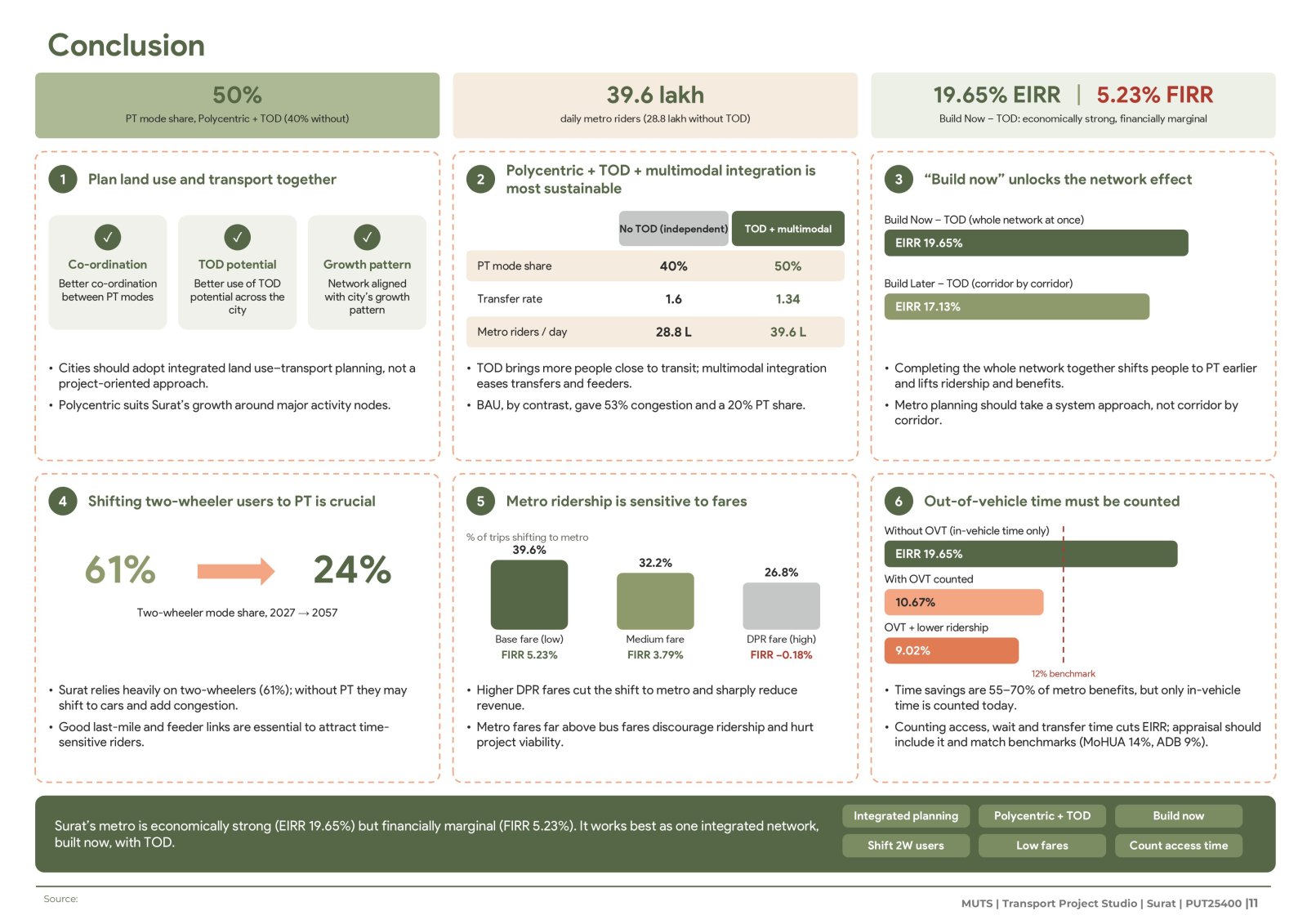
Indian metro projects often promise more than they deliver. Lucknow's DPR shows an 8.12% FIRR on steep demand growth, and across 14 city DPRs, actual ridership is only about a third of forecast once Delhi is excluded. This studio asks how Surat can avoid that outcome while preparing an integrated public transport system for 2057. The study draws lessons from Lucknow, the national comparison and Singapore, then builds three land use scenarios (BAU, Compact and Polycentric) and tests each with EMME travel demand modelling. BAU fails, with 53% congestion and only a 20% PT share. Polycentric proves the most workable, with a 40% PT share and a 106 km metro carrying about 28.8 lakh riders a day. The study then sizes two depots (39 ha) and tests financial and economic viability. The best case gives an FIRR of 5.00% and an EIRR of 24.1%, so the project is economically strong but needs public funding support, TOD and good last-mile access to succeed.