Swati Sharma

UT4002

Surat Metro - From Demand to Fare

The project examines what would encourage commuters to shift from their existing travel modes to Metro and how fare integration could support this shift. Using employment projections up to 2057 and a stated-preference survey, the study analyses how travel time, accessibility, waiting time, comfort and fares influence Metro adoption. The findings highlight the importance of service quality alongside affordability. Building on these results, the study proposes a unified fare for Metro, BRTS and city buses to reduce transfer costs and make public transport a more attractive travel option.
Report Content

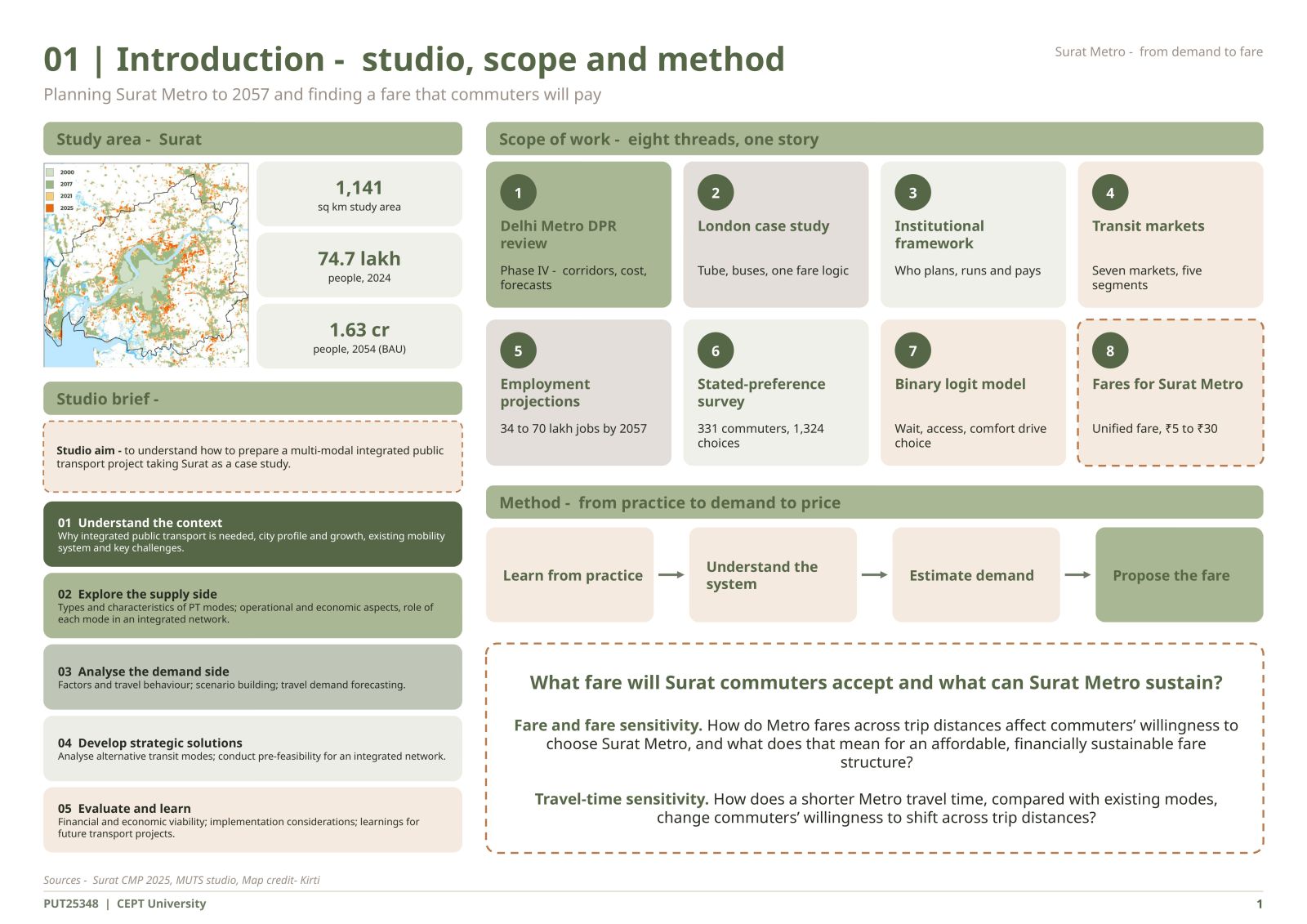
Understanding Surat's future transport needs through urban growth, commuter behaviour and fare planning, with the aim of developing a more integrated and accessible public transport network.

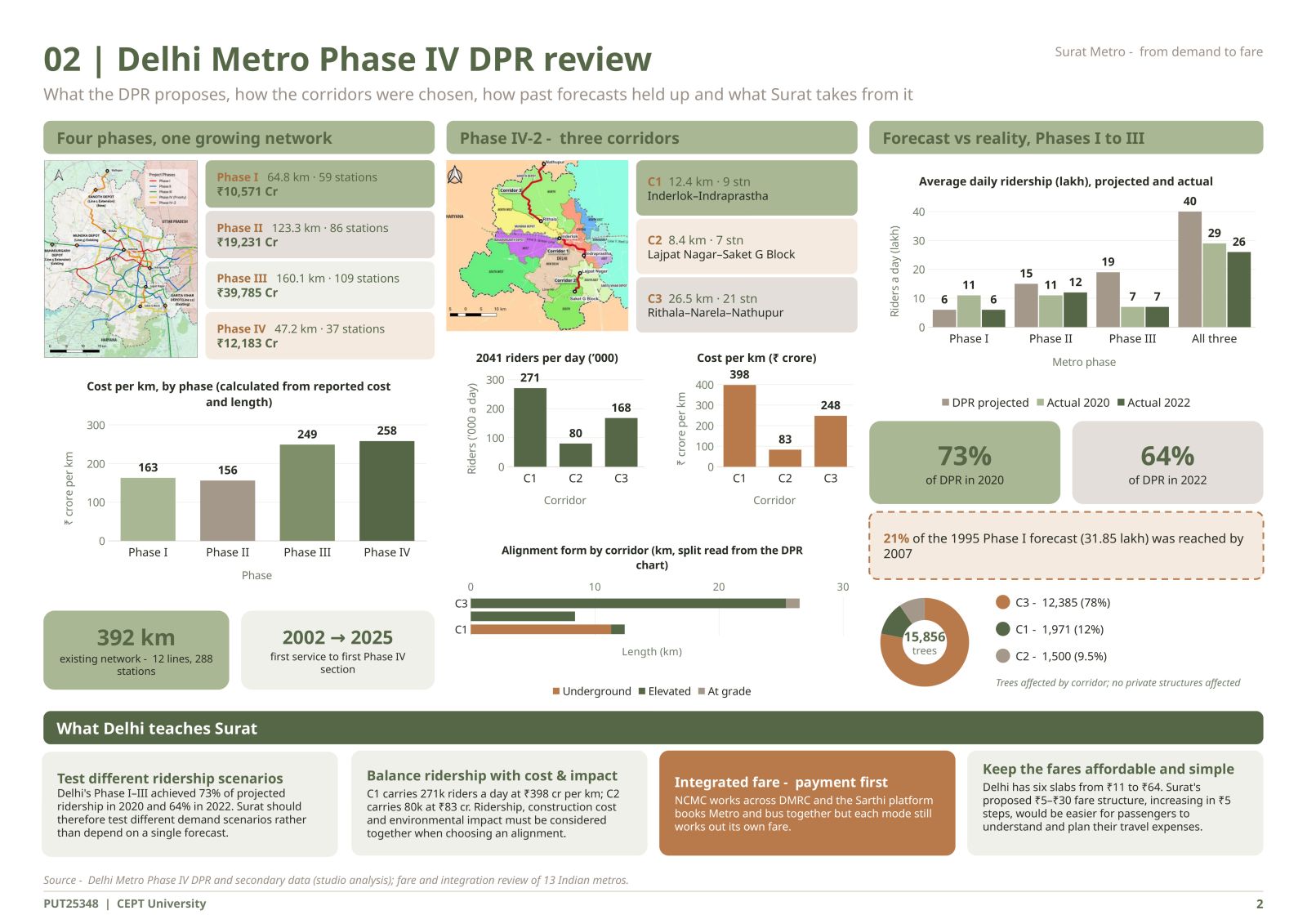
Reviewing Delhi Metro's network expansion, corridor selection, project costs and ridership forecasts to understand the challenges of planning and evaluating future Metro investments.

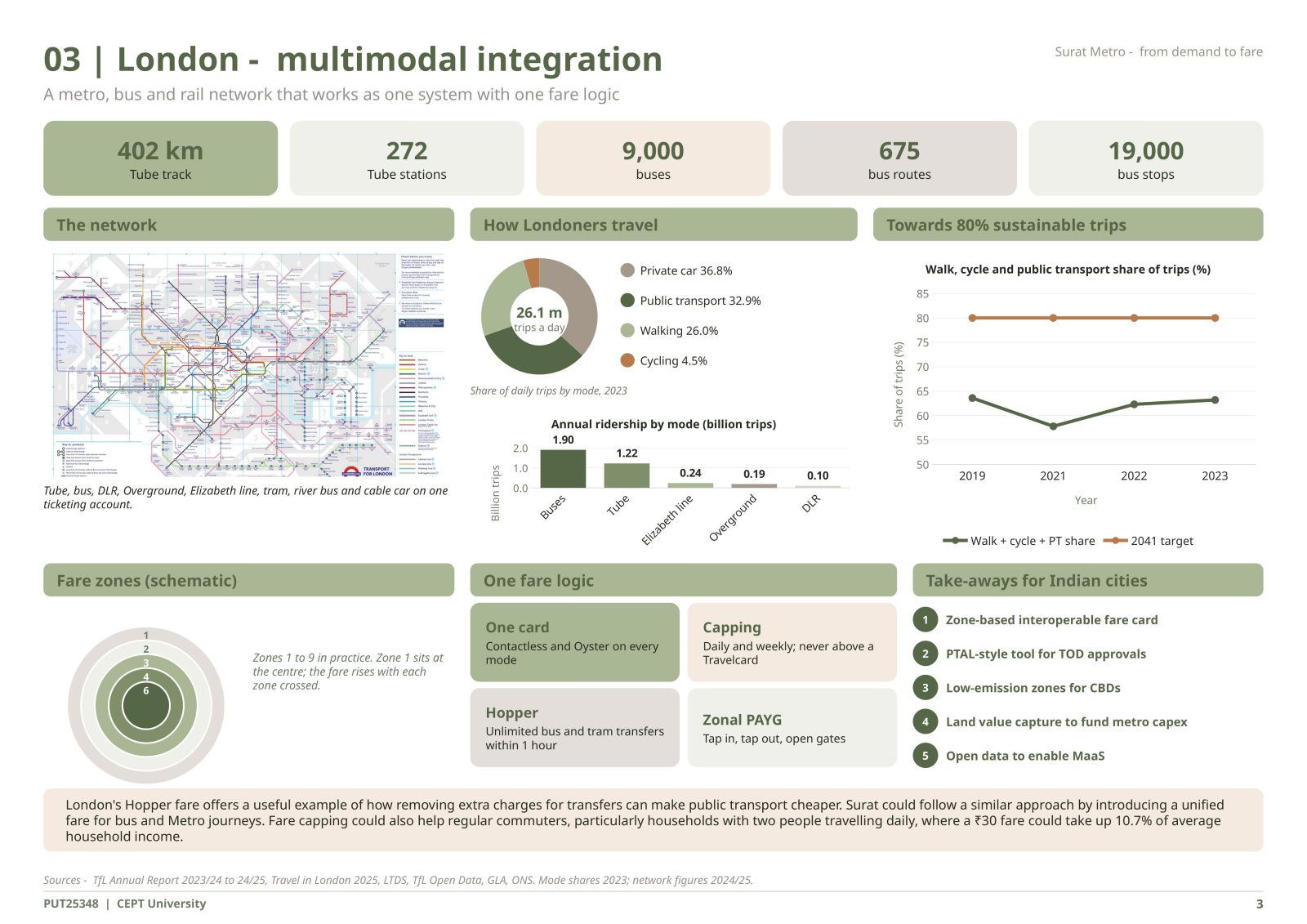
Learning from London's integrated transport network, where common payment systems, free bus transfers and fare capping make public transport more convenient and affordable.

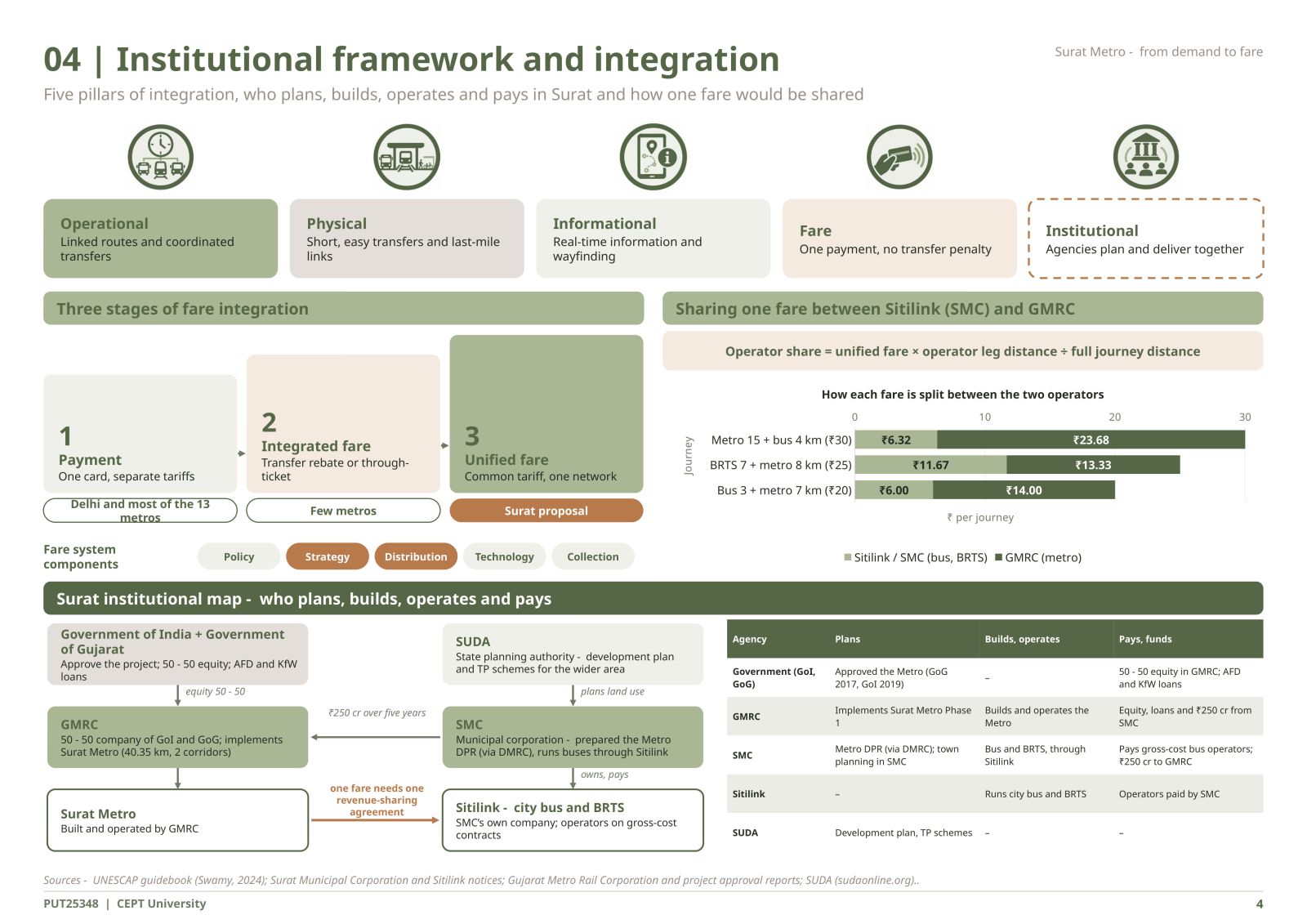
Examining the roles of GMRC, SMC, Sitilink and other agencies in Surat's transport system, and the institutional coordination required to introduce a unified bus–Metro fare.

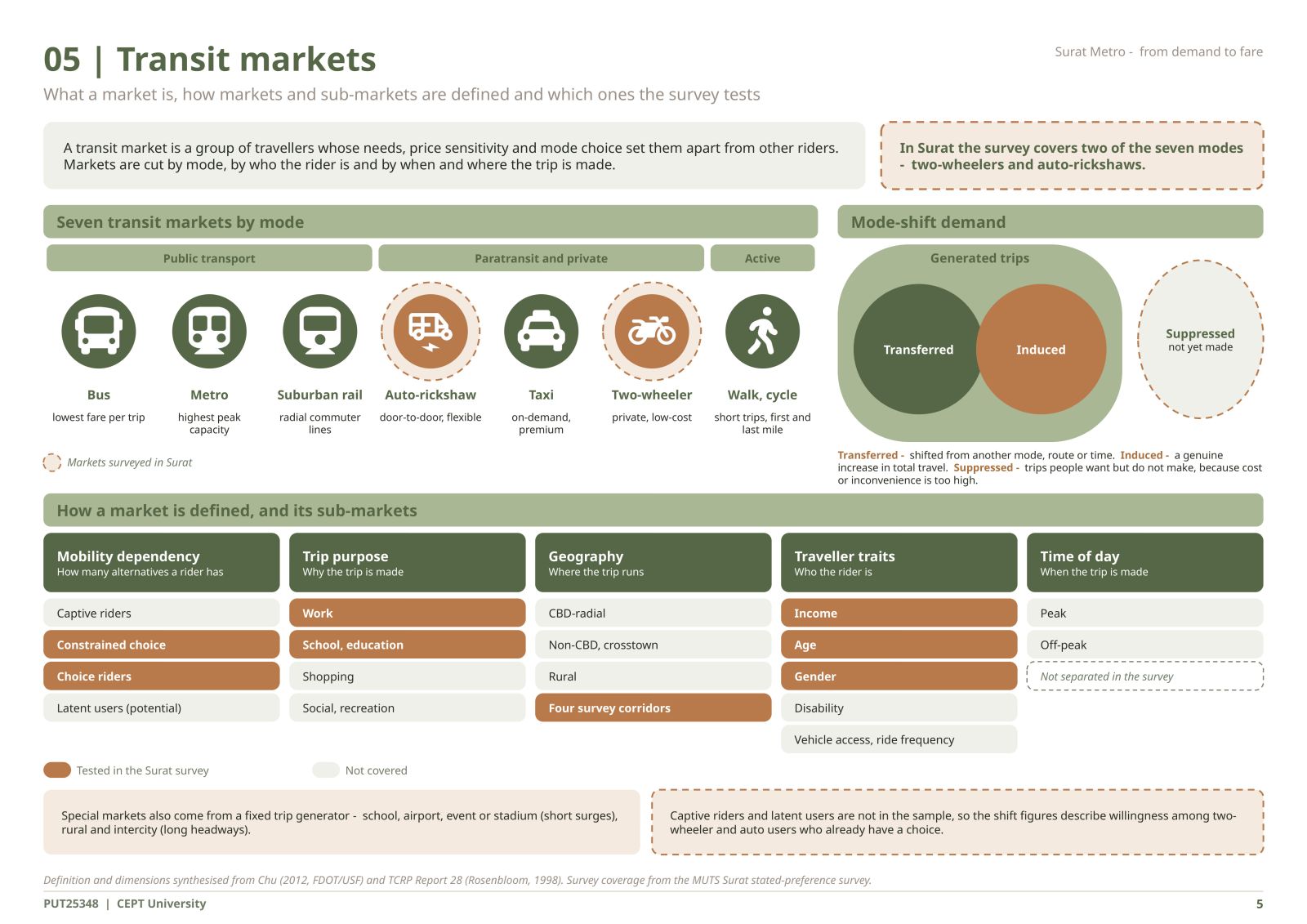
Identifying different commuter groups based on travel mode, income, trip purpose and mobility needs to understand which markets the proposed Metro can serve.

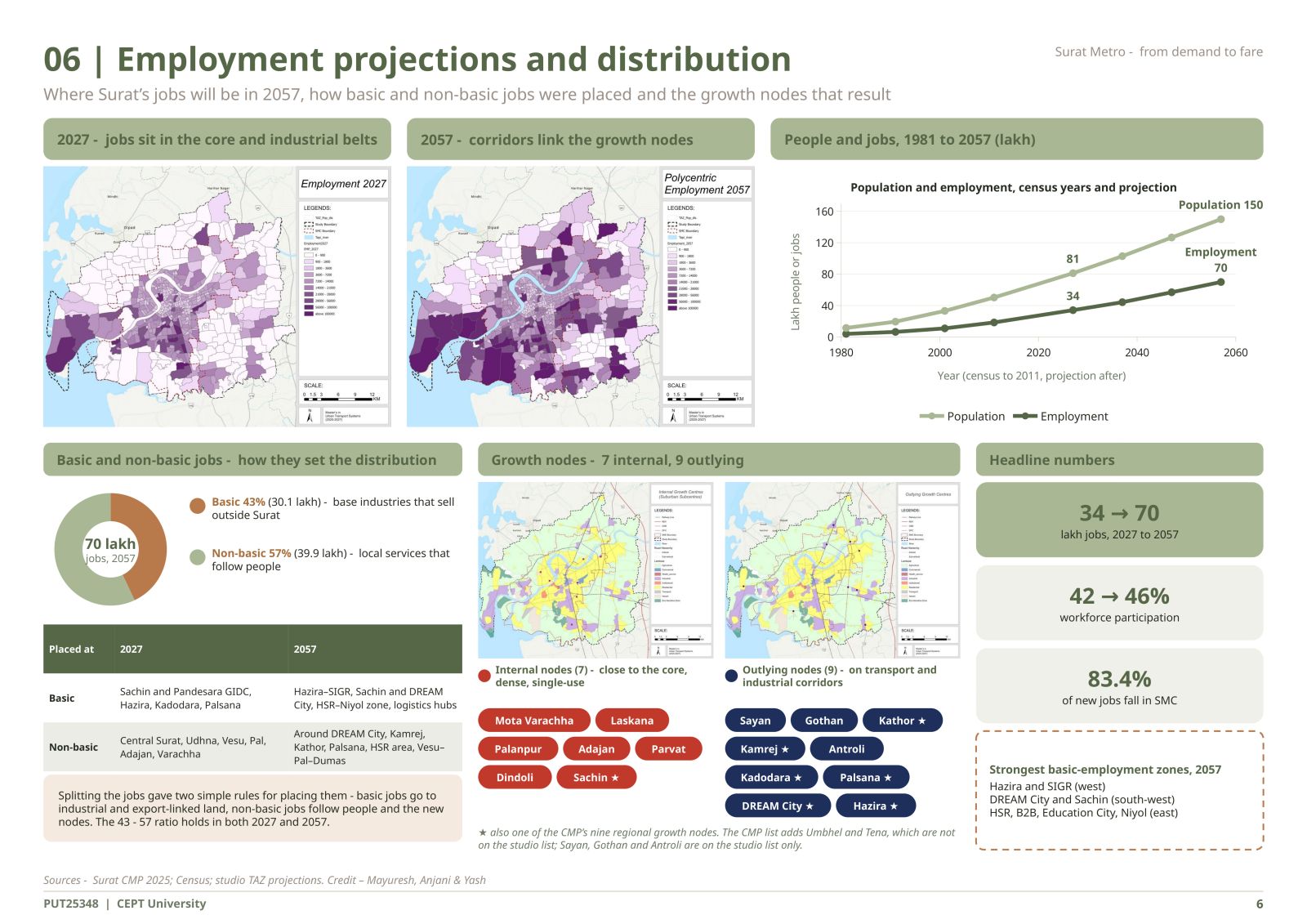
Projecting Surat's employment growth from 34 lakh jobs in 2027 to nearly 70 lakh by 2057, and identifying the emerging growth centres likely to influence future travel demand.

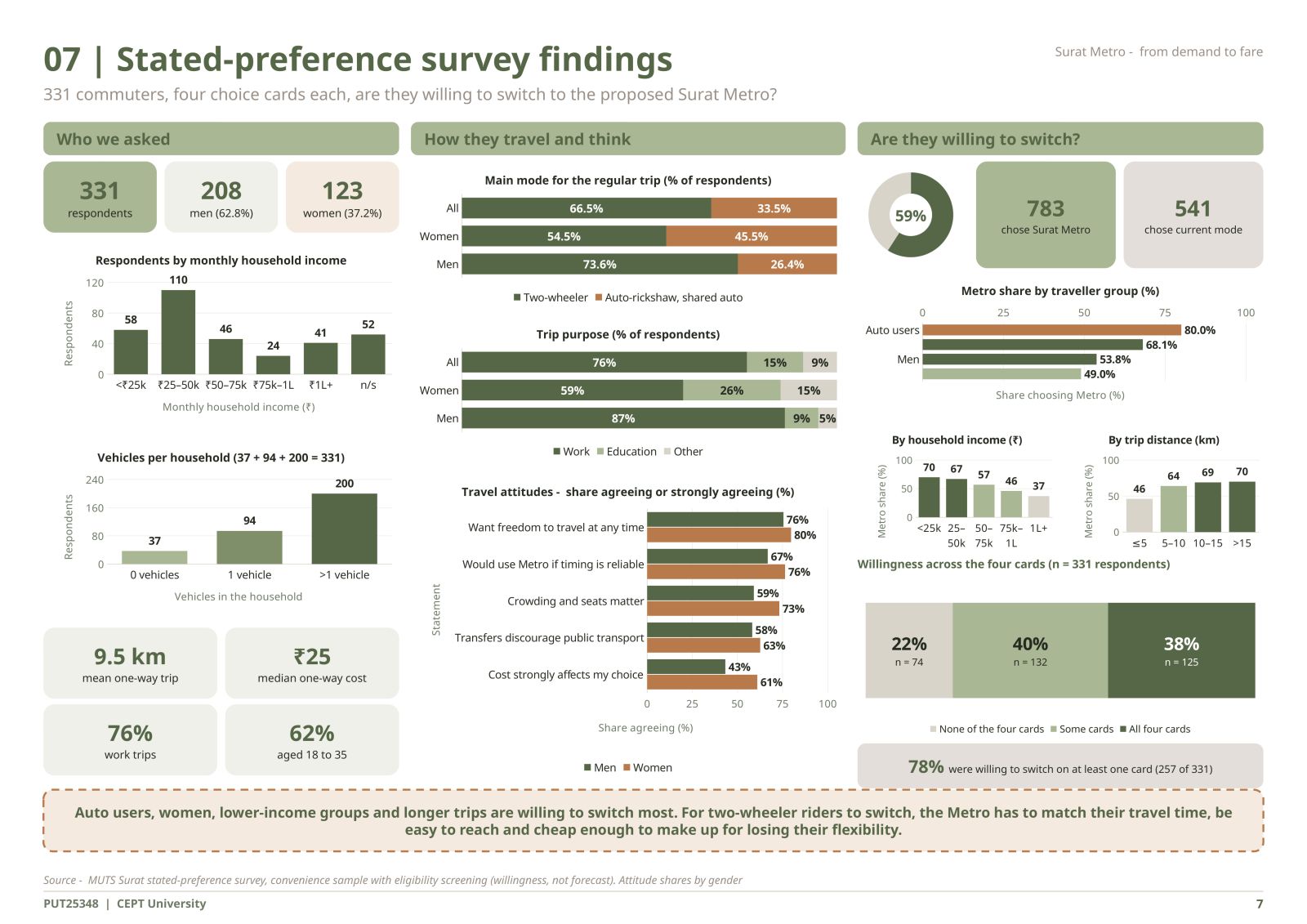
Analysing 1,324 travel choices from 331 commuters to understand willingness to shift to Metro and how this varies across existing modes, income groups and trip distances.

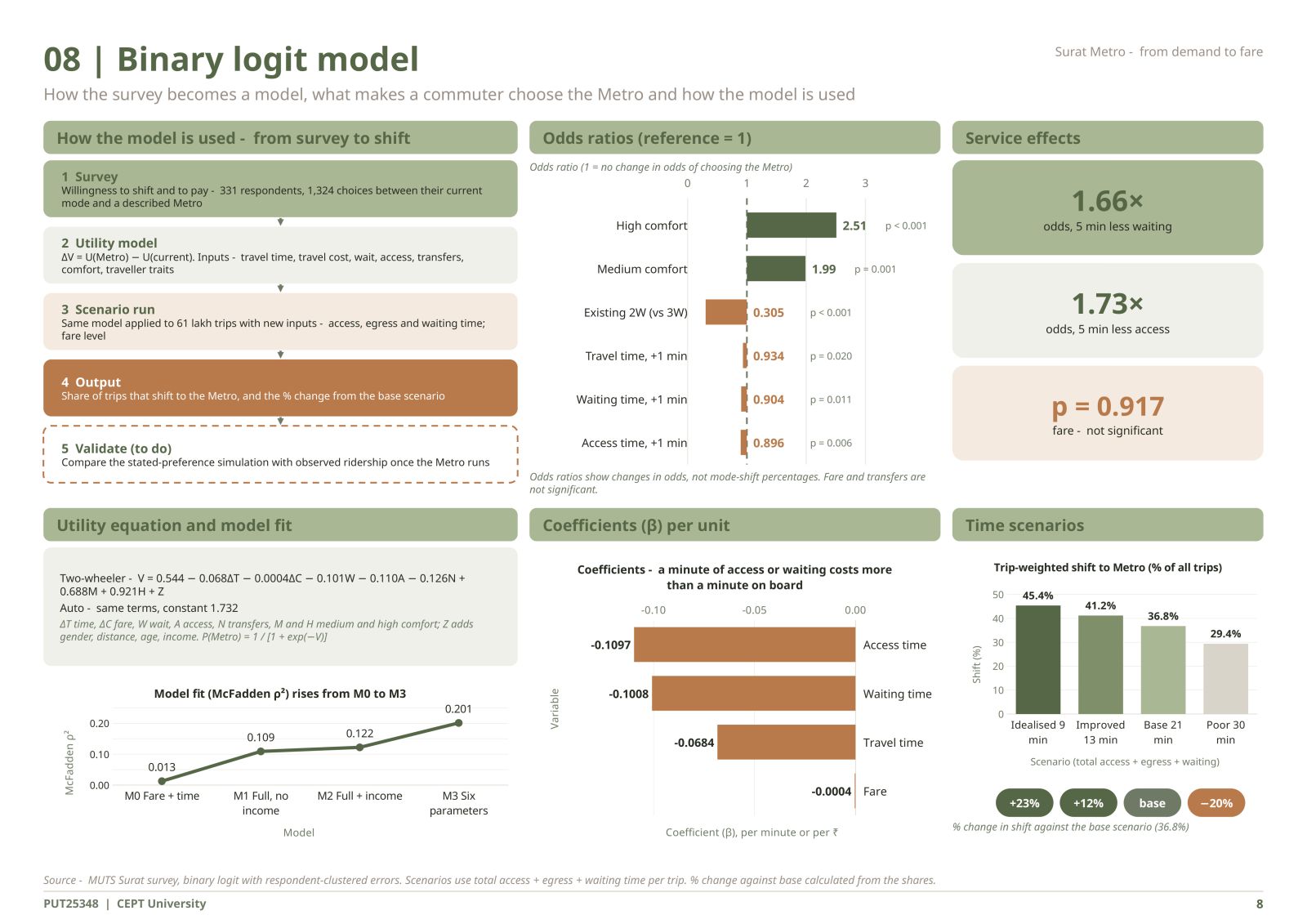
Using discrete choice modelling to examine how travel time, waiting time, station access, comfort and fares influence commuters' decisions to choose Metro over their existing modes.

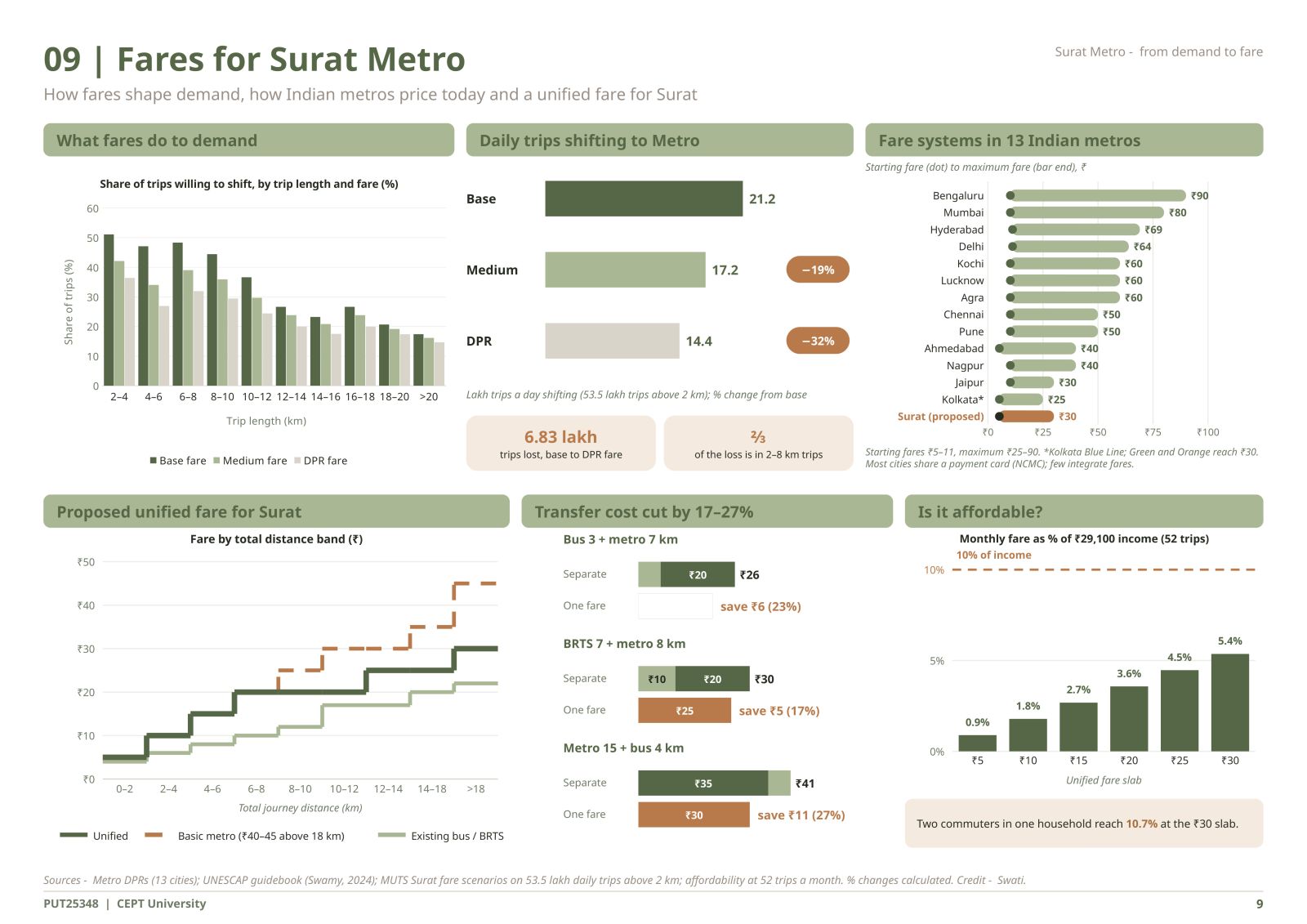
Comparing fare structures across 13 Indian Metro systems and evaluating how different fare levels affect potential ridership, affordability and the benefits of a unified bus–Metro fare.

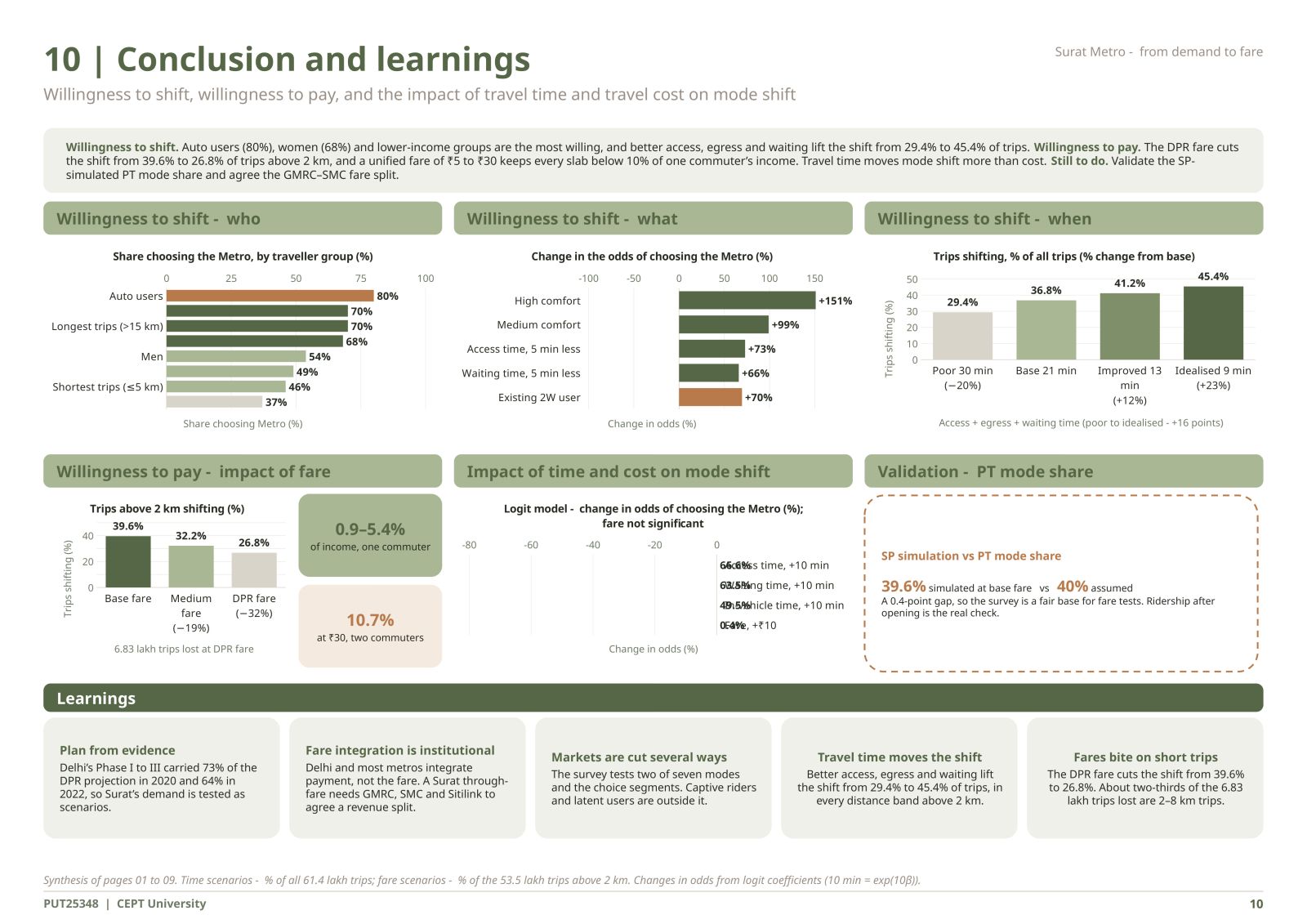
Bringing together the study's findings to show that Metro adoption depends not only on fares, but also on reliable service, convenient access, seamless transfers and coordination between transport agencies.