Your browser is out-of-date!
For a richer surfing experience on our website, please update your browser. Update my browser now!
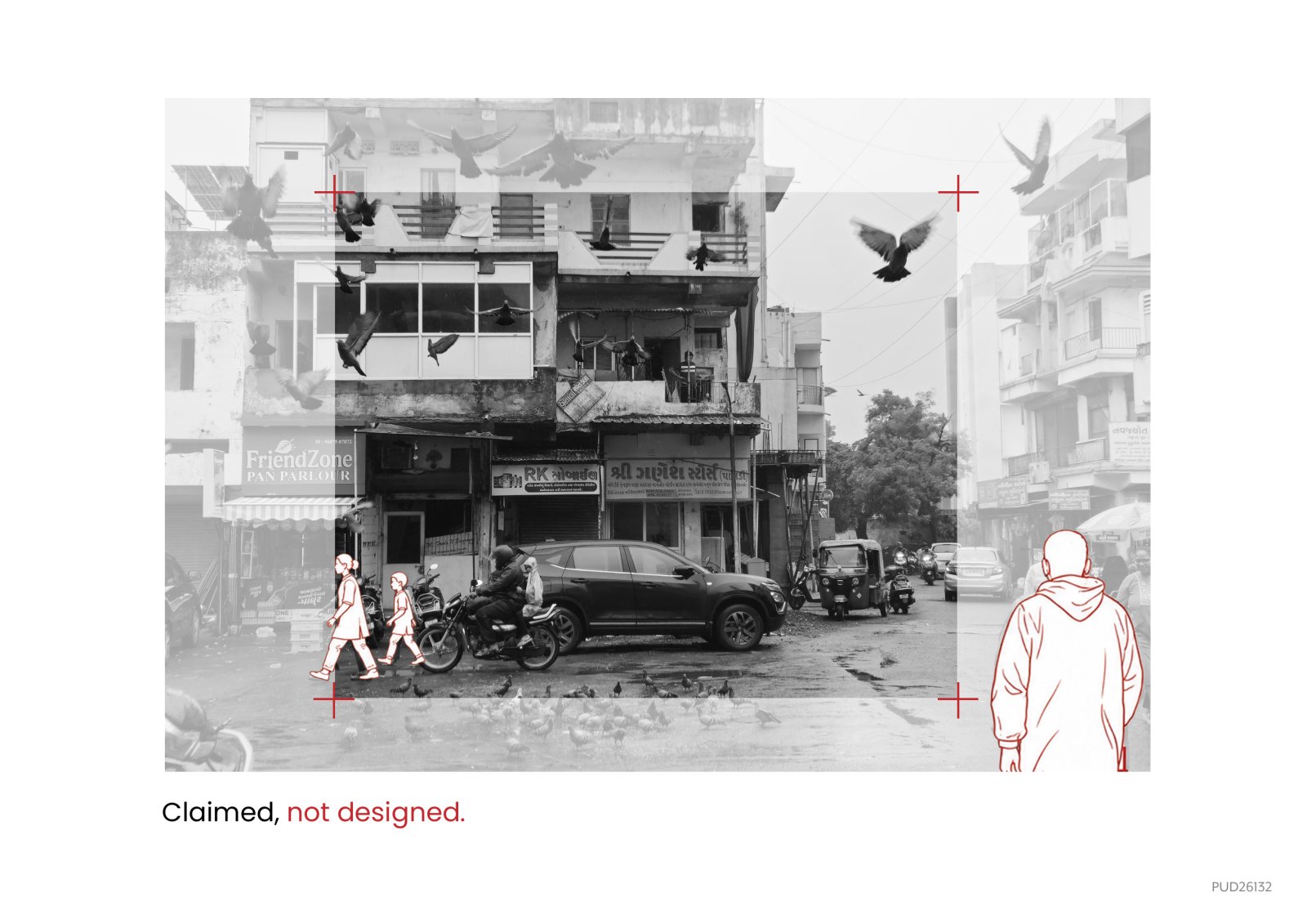
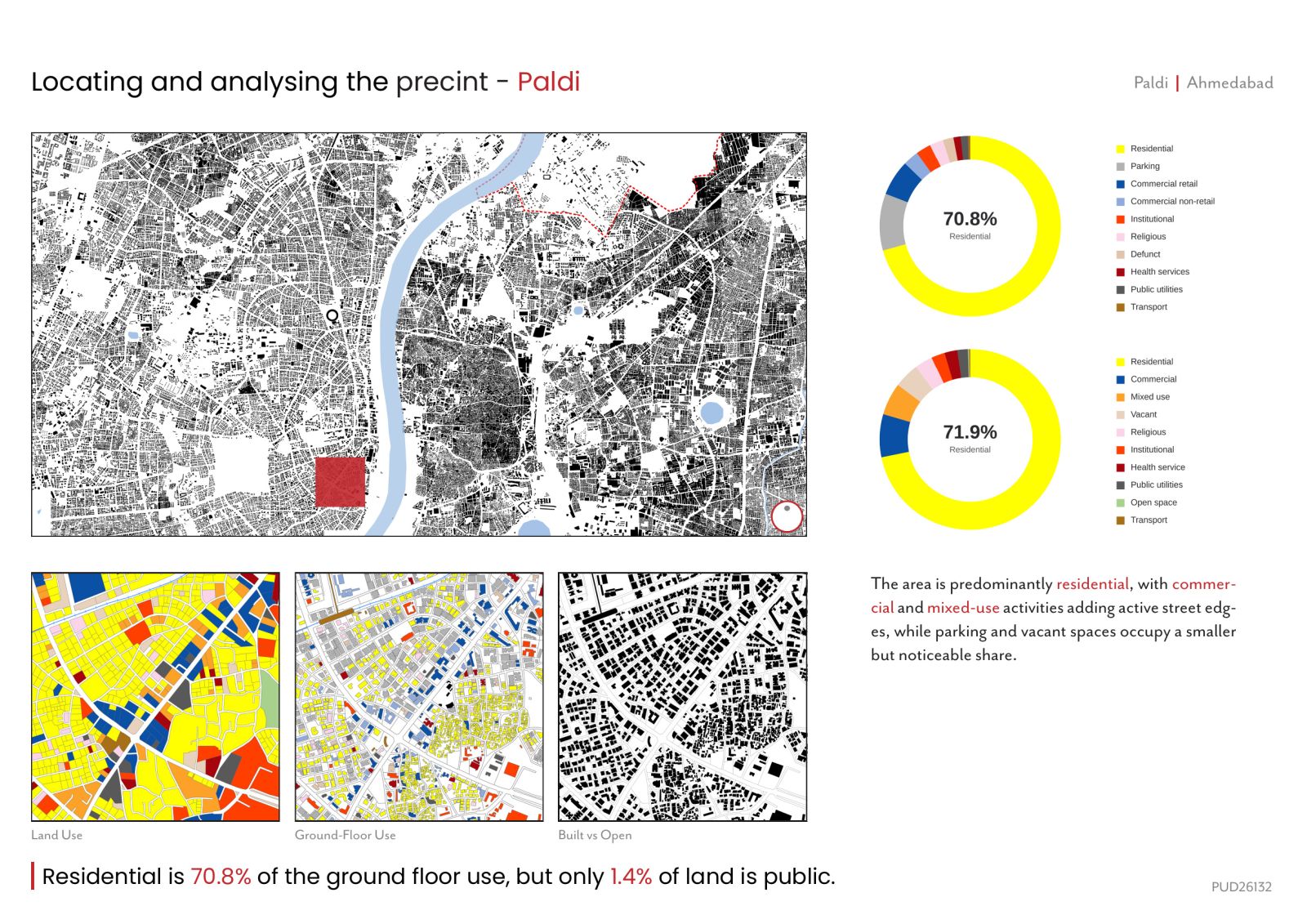
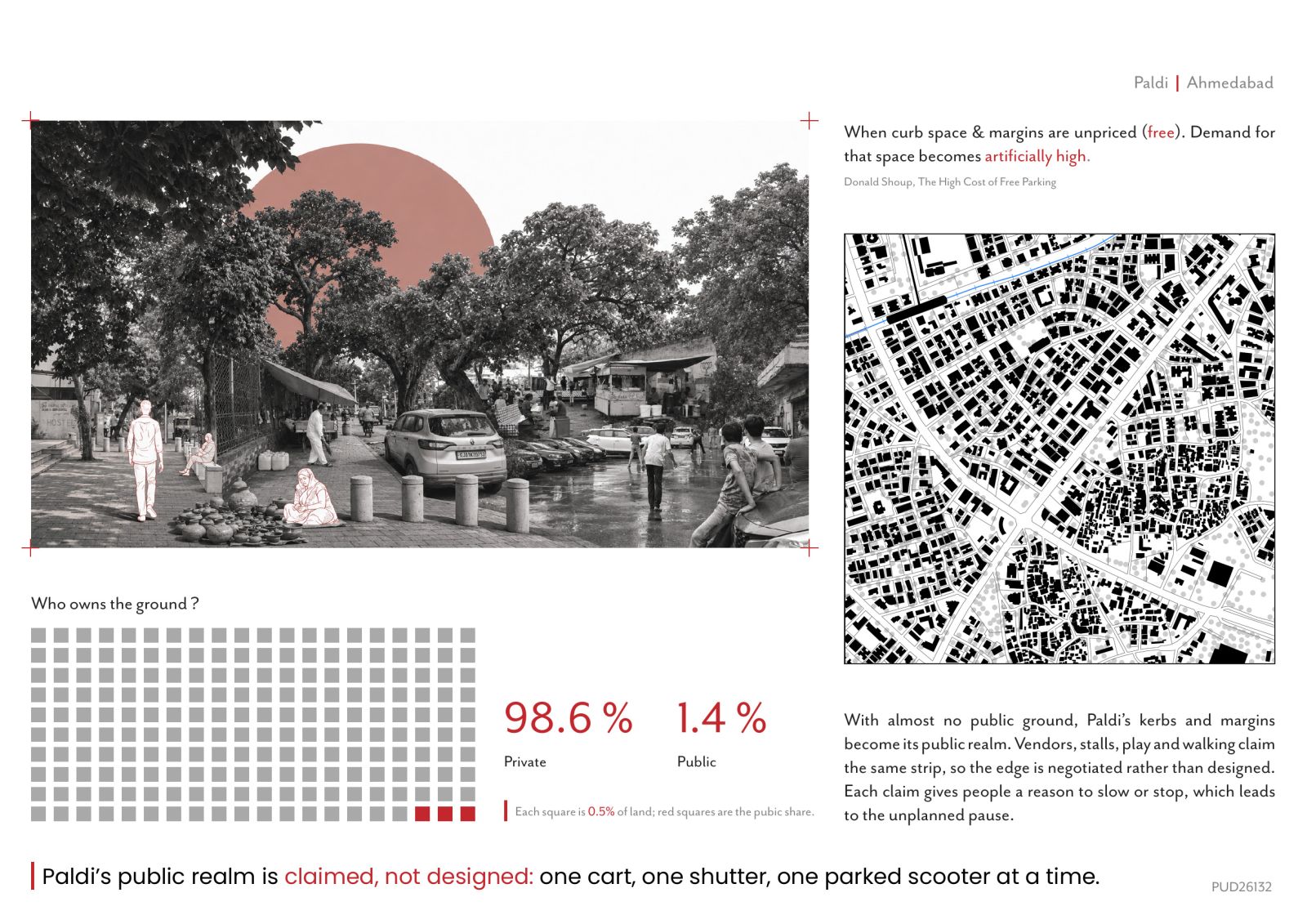
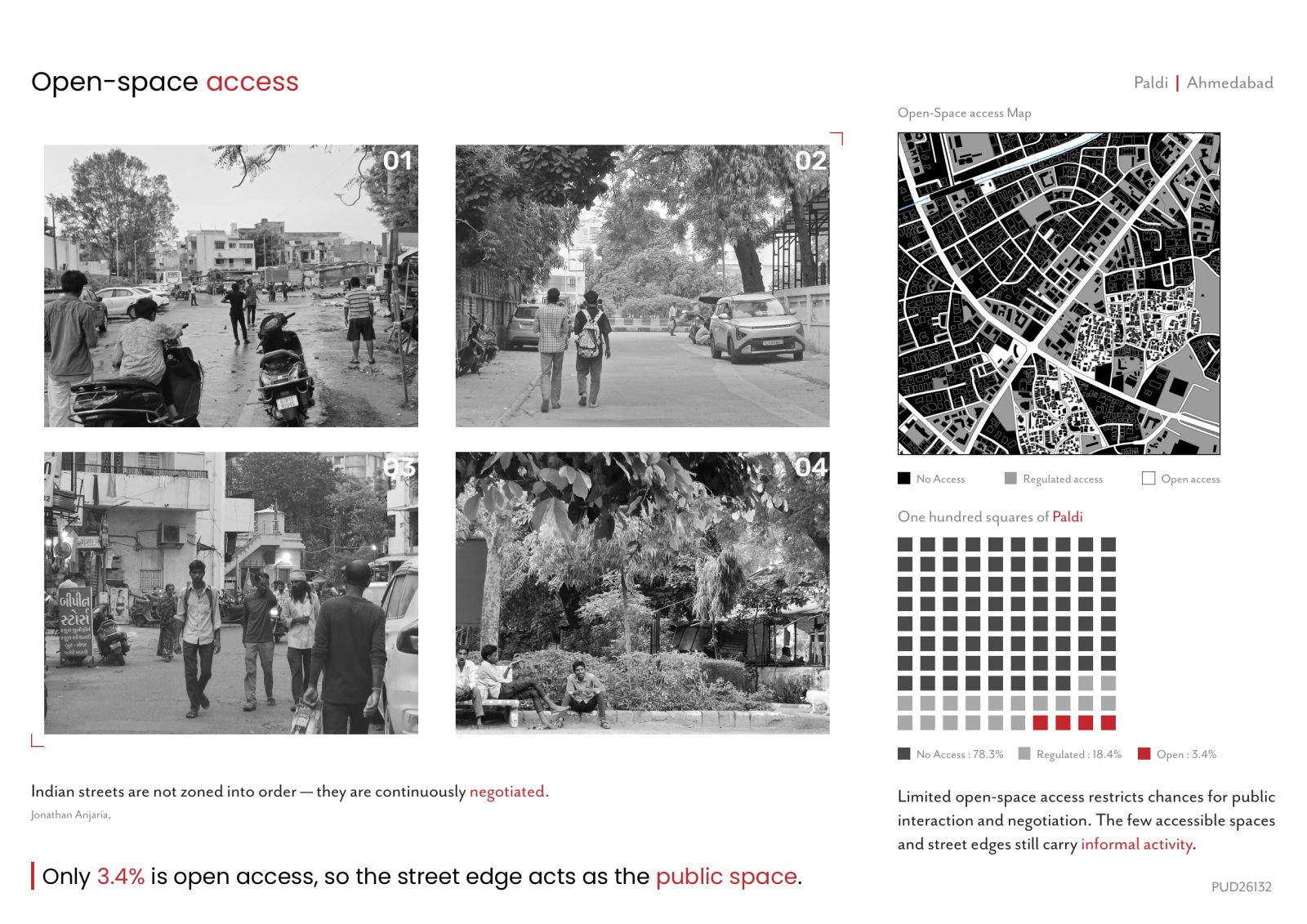
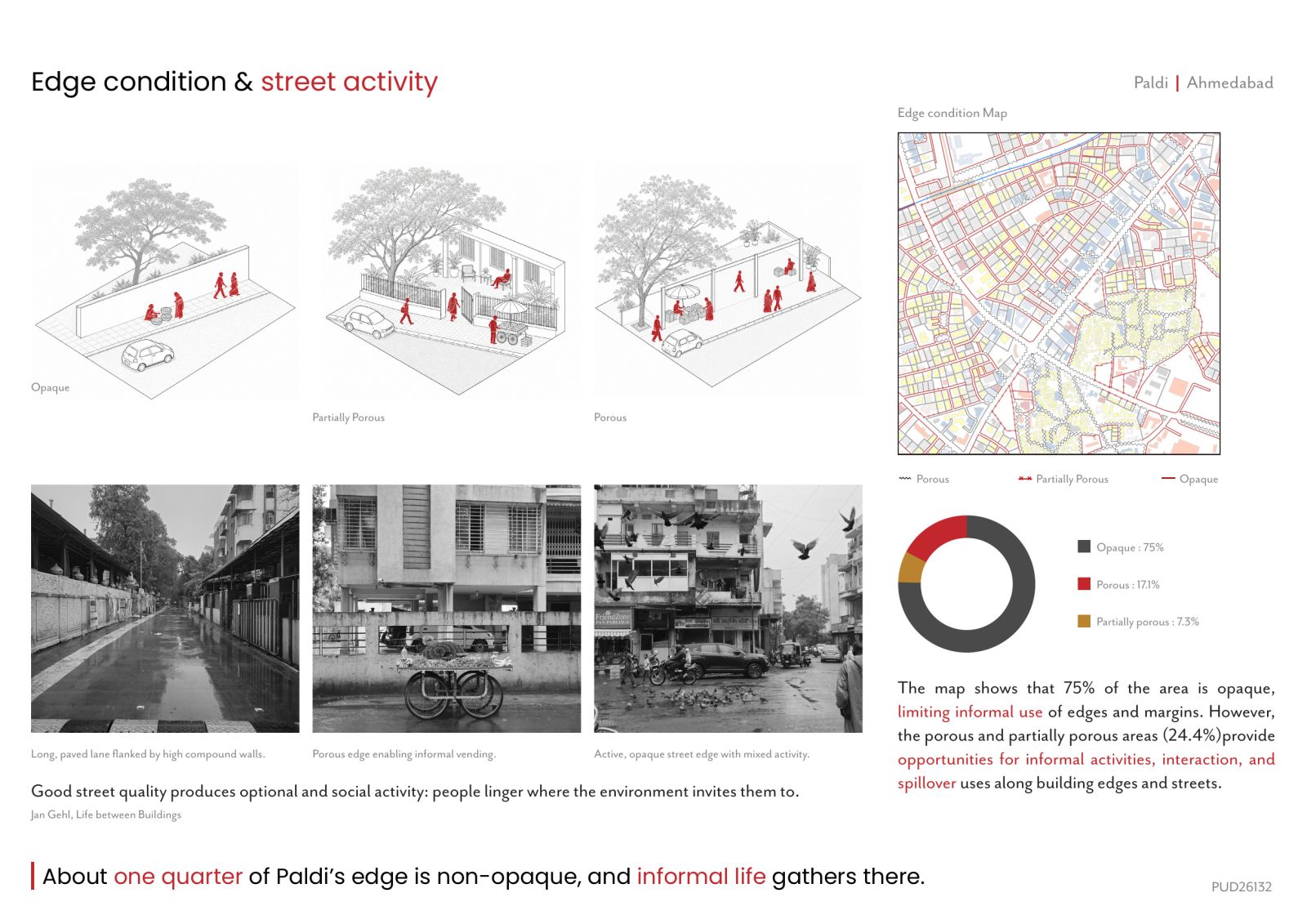
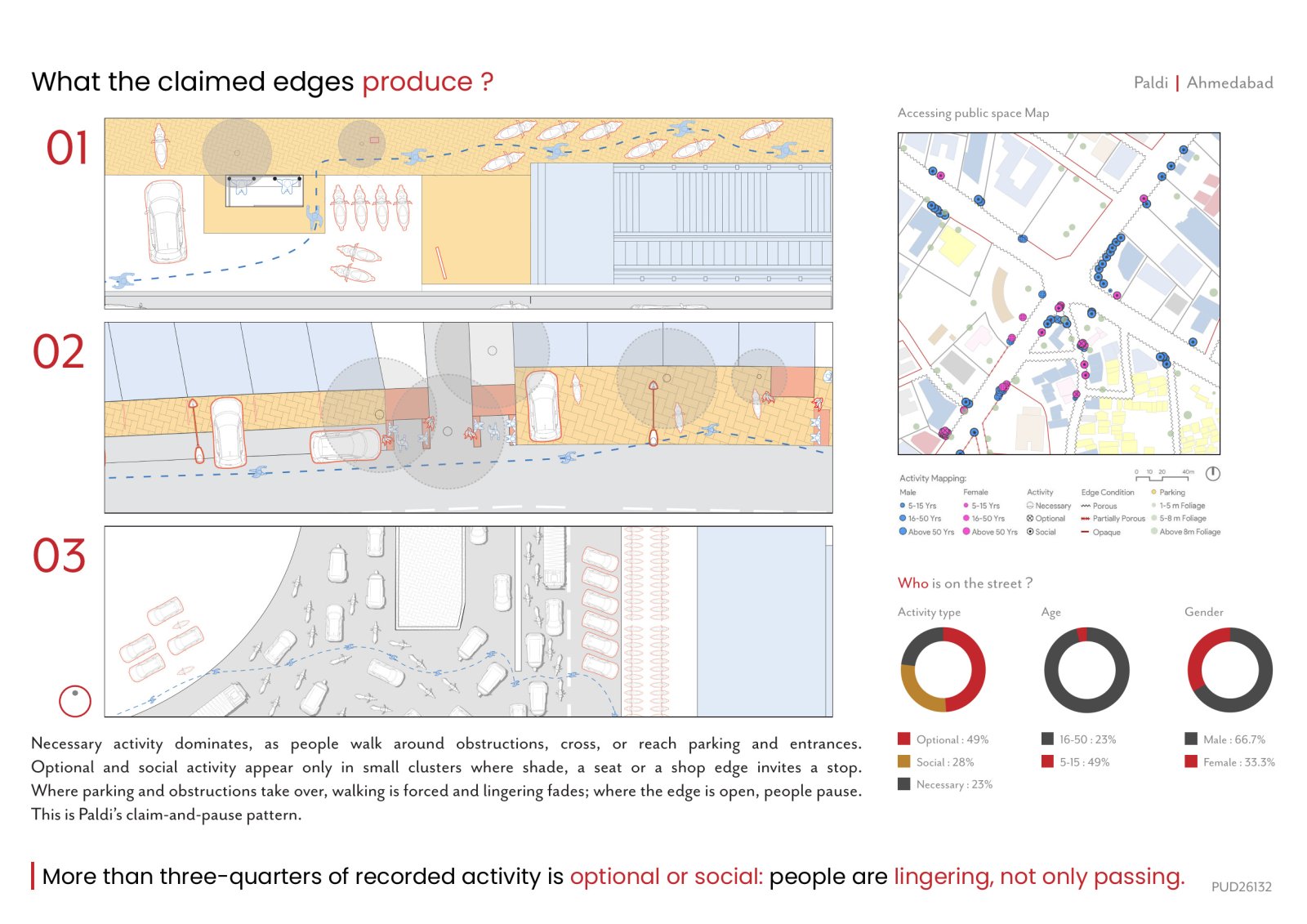
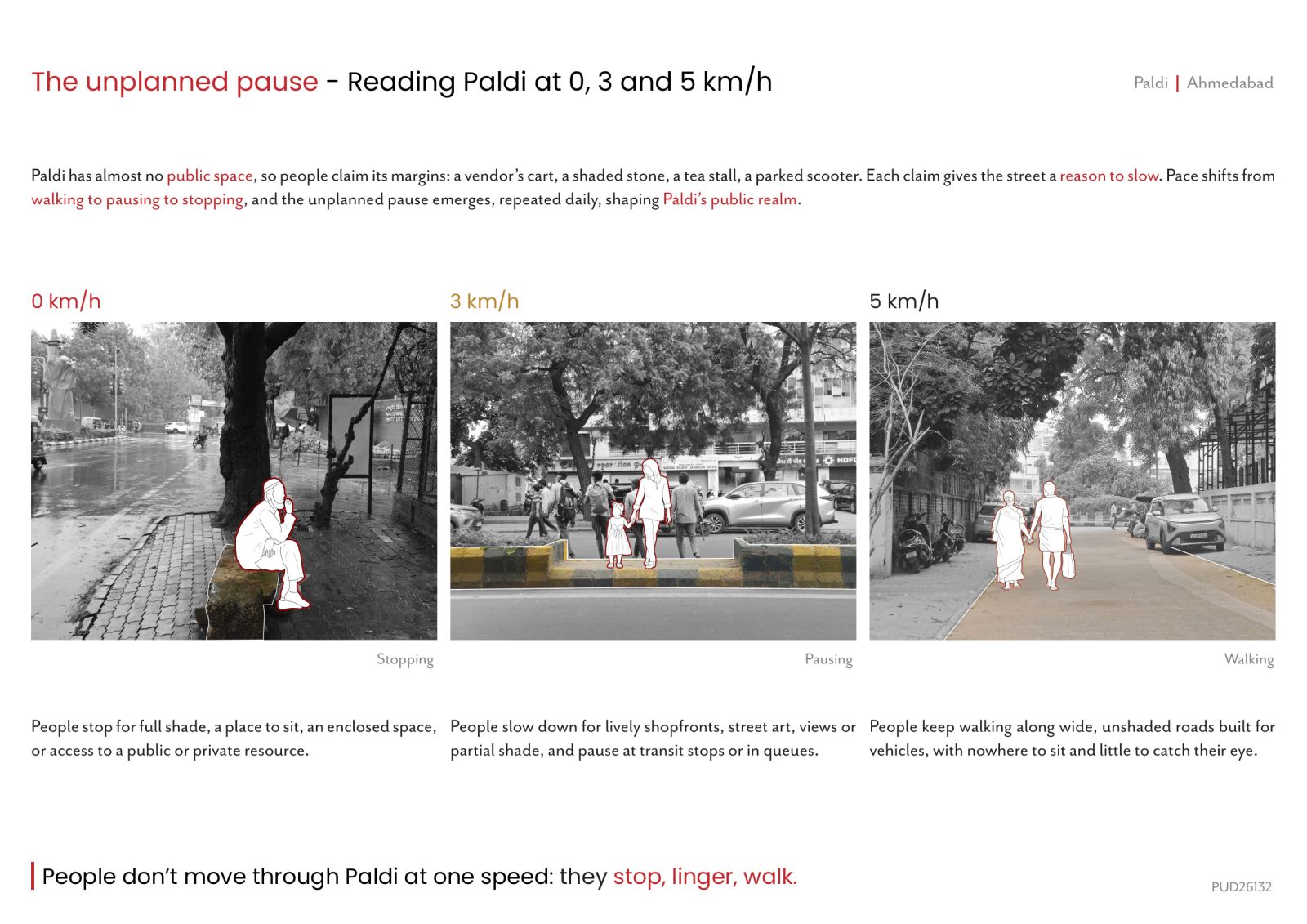
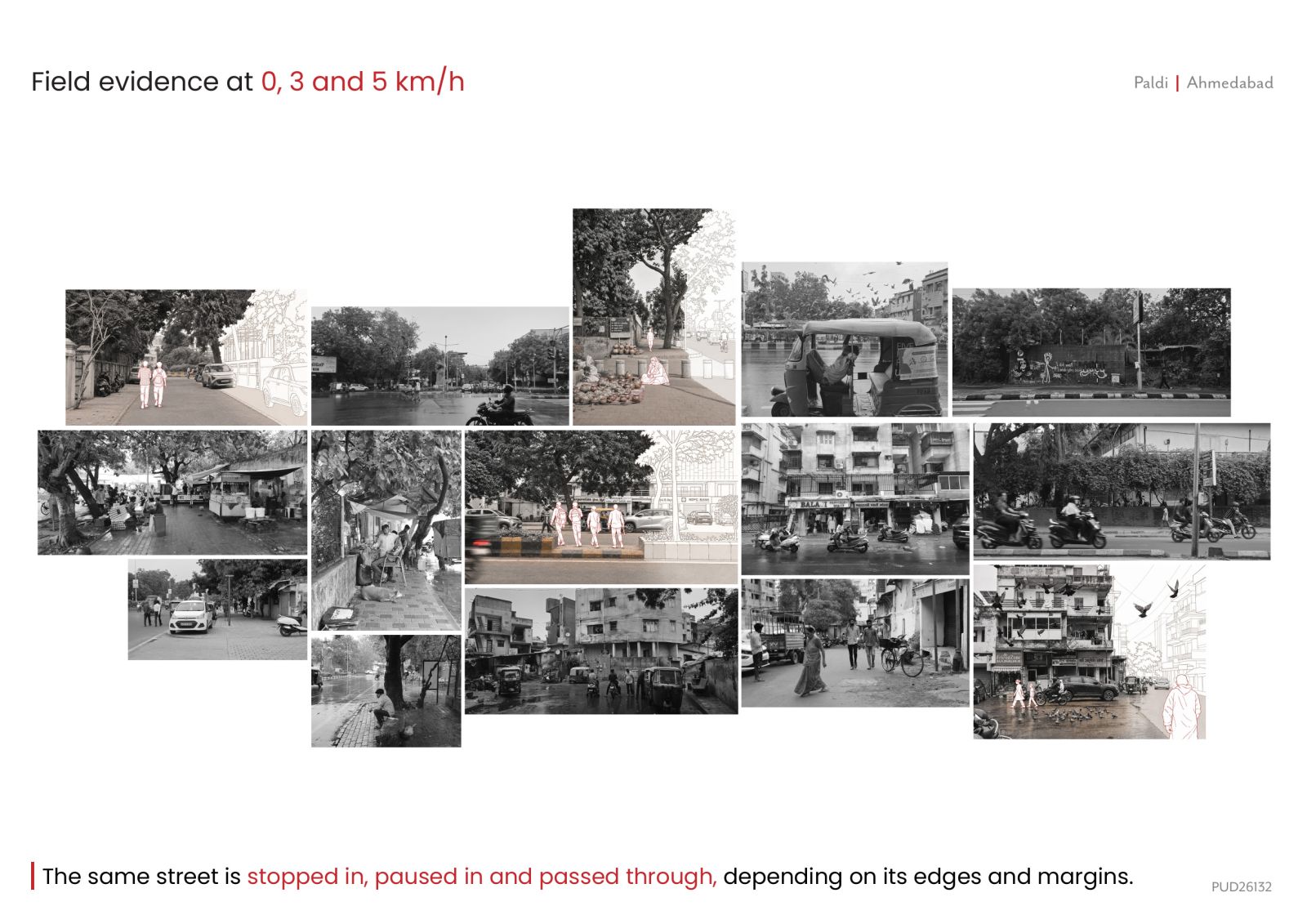
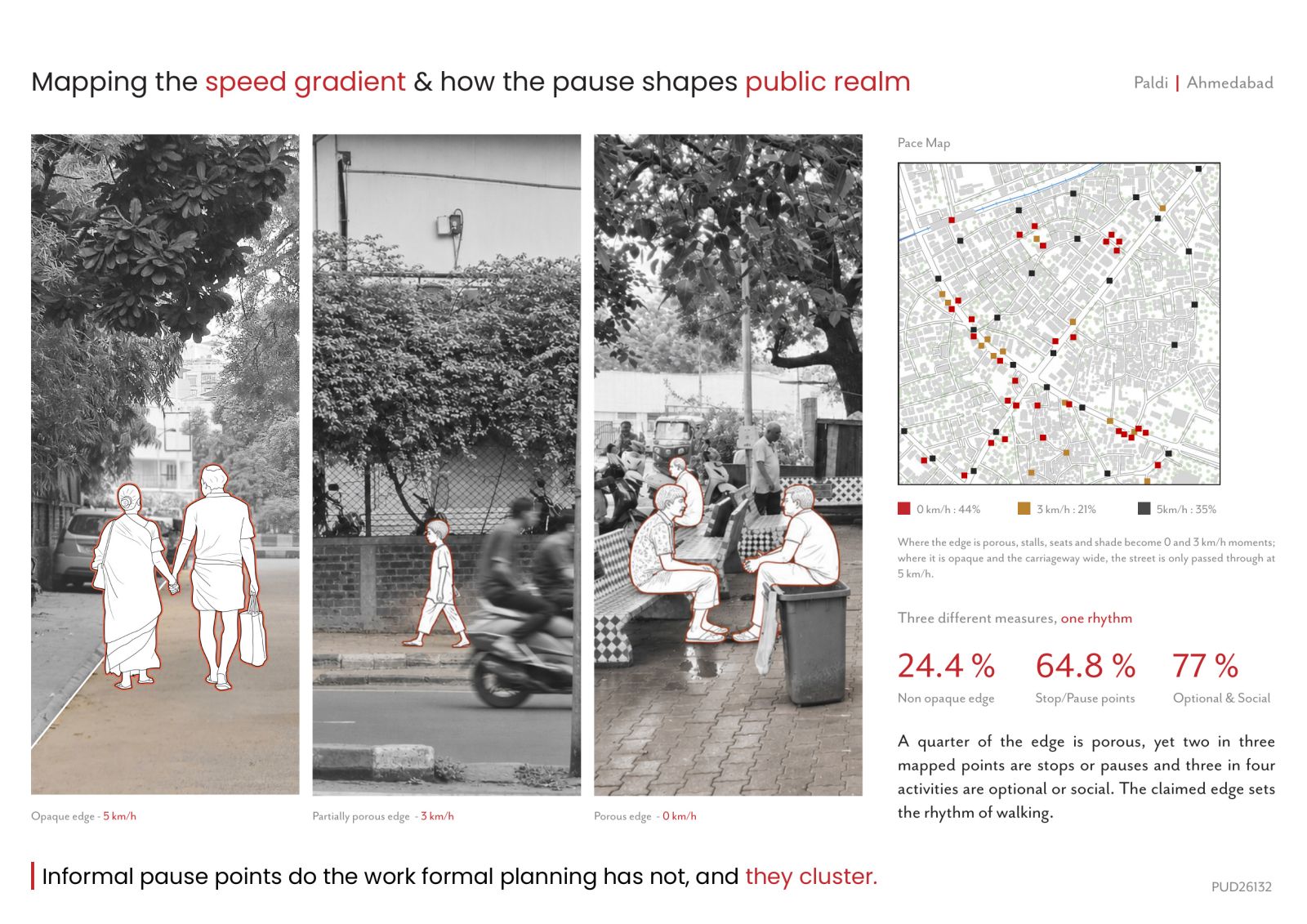
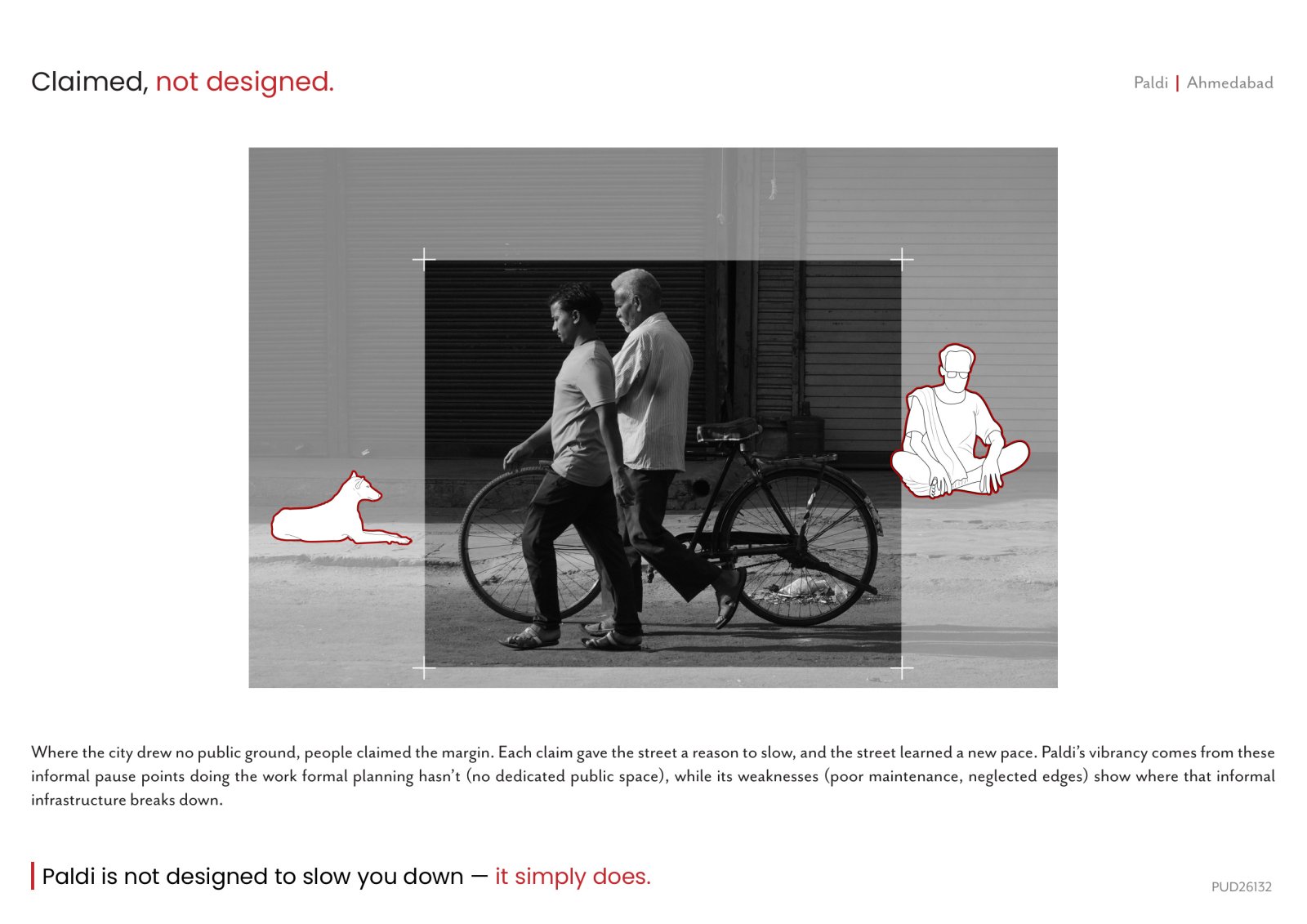
Claimed, Not Designed studies how informal use shapes public life in Paldi, Ahmedabad. With 98.6% of land private and only 1.4% public, people claim kerbs, margins and edges for vending, seating, play and parking. These claims create unplanned pauses, mapped across 71 points as stopping, pausing and walking at 0, 3 and 5 km/h. Through maps, photographs and activity data, the portfolio shows how porous edges slow movement, cluster social life and shape walkability in a realm negotiated, not designed.