• Home
  • FP
  • UP4005-2
  • Beyond Plots: Enabling Private Housing Redevelopment

Parmar Krupa Amitkumar

UP4005-2

Beyond Plots: Enabling Private Housing Redevelopment

Many neighbourhoods in Ahmedabad contain ageing, congested and underutilised private housing, yet redevelopment remains selective. This project examines why, exploring how building condition, land value, development regulations, ownership structures, resident expectations and developer feasibility shape redevelopment decisions. Through spatial analysis, policy review, case studies and comparisons with Pune and Singapore, it maps redevelopment patterns and identifies areas where potential remains unrealised. It then explores cluster-based redevelopment, land readjustment and targeted policy reforms as ways to improve housing, shared amenities and public spaces. The project aims to show how redevelopment can become more feasible, coordinated and beneficial for residents and neighbourhoods.
Report Content

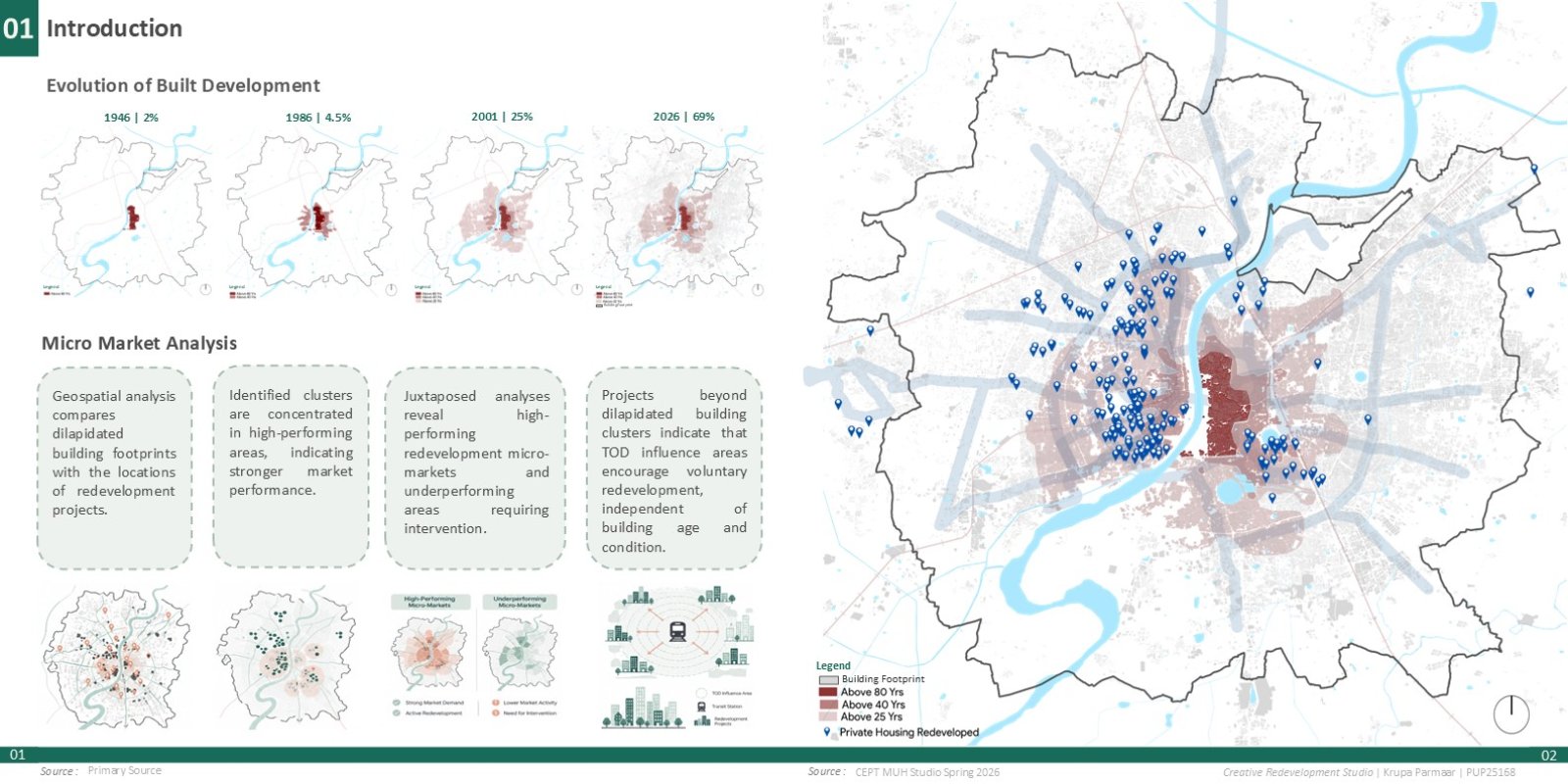
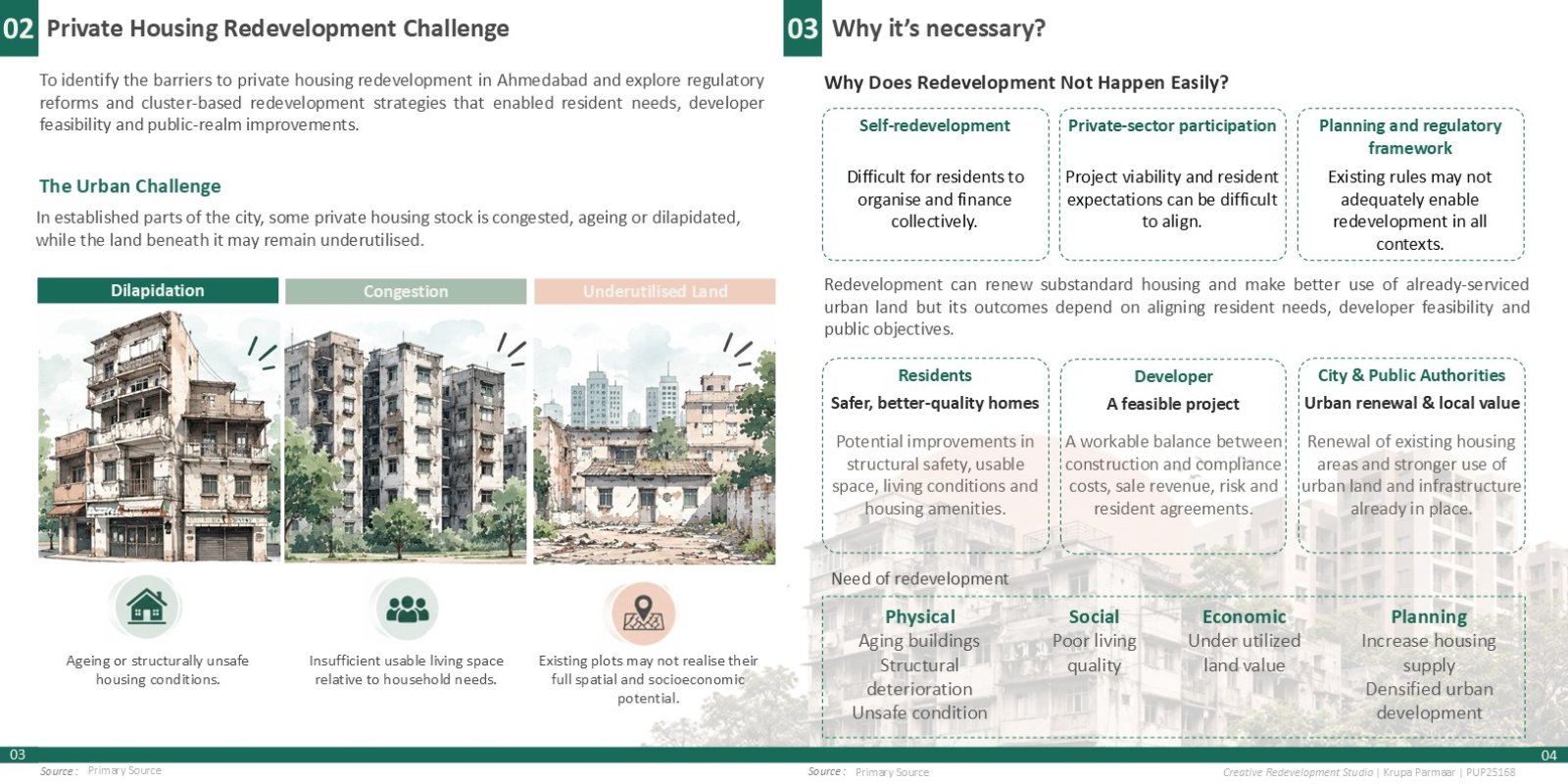
Examines Ahmedabad’s urban growth and the emerging challenges of ageing, congested and underutilised private housing.

Establishes why redevelopment is necessary by connecting housing conditions, stakeholder interests and broader urban benefits.

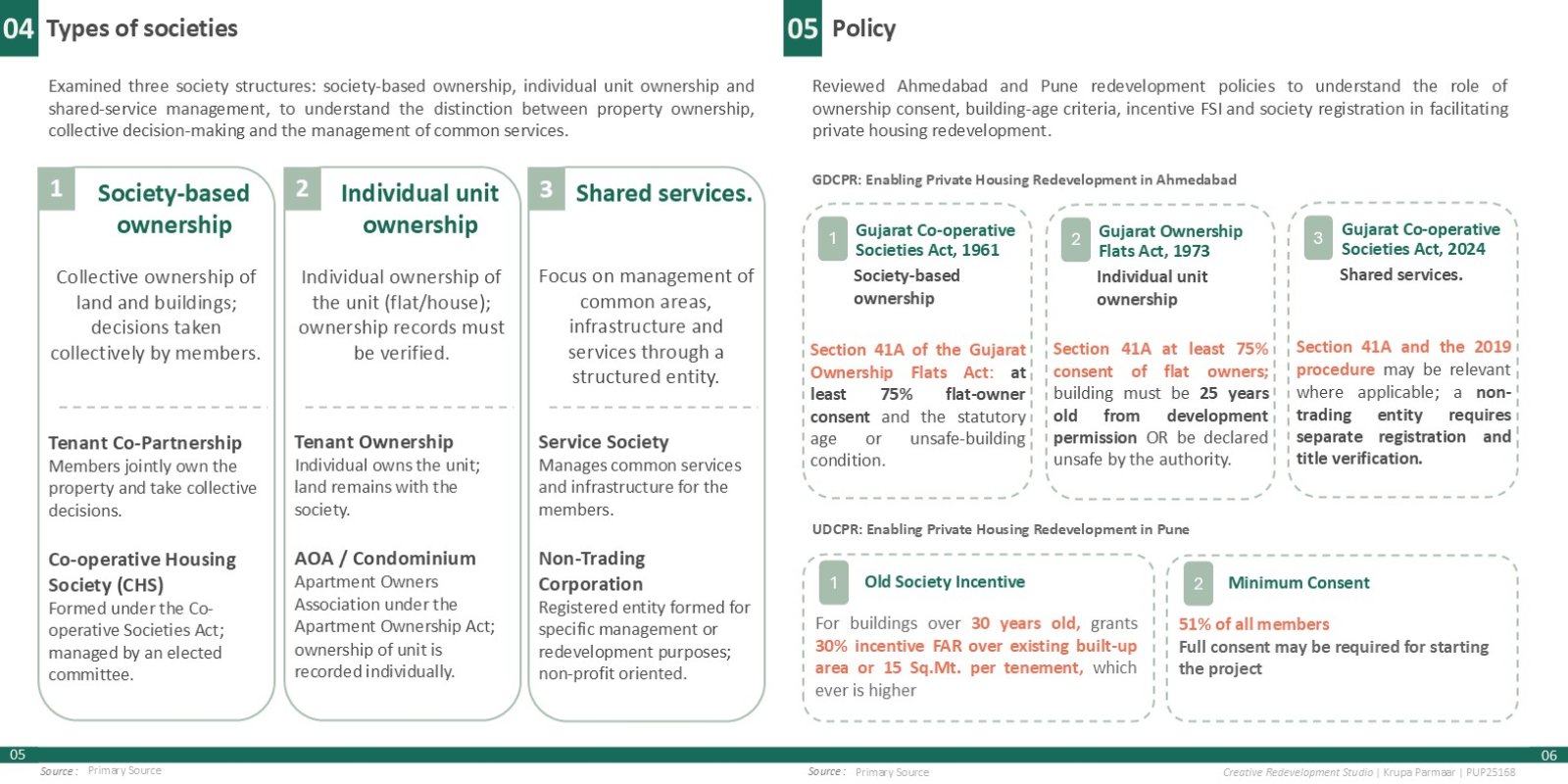
Explores society ownership structures and policy frameworks shaping the process of private housing redevelopment.

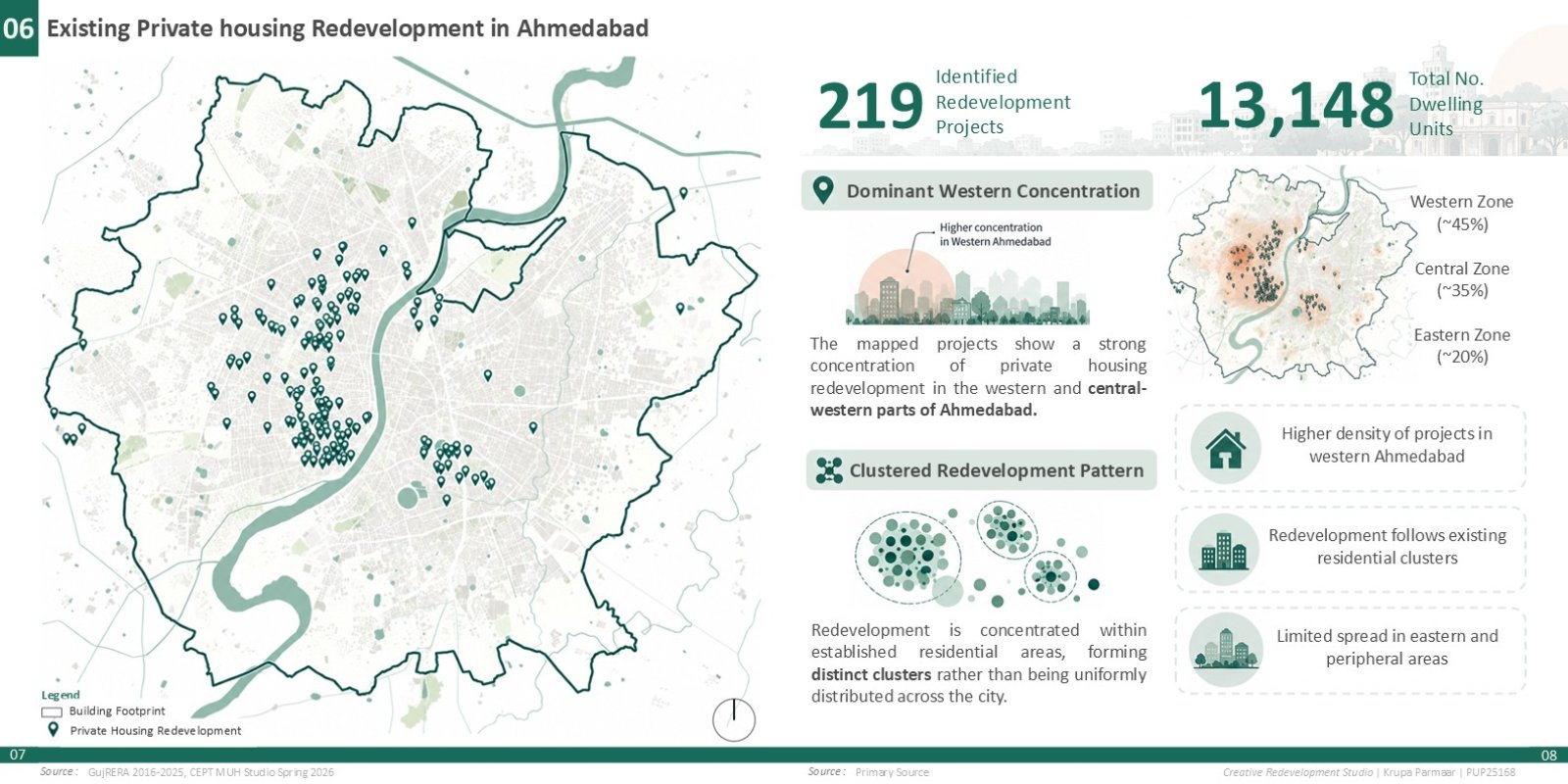
Maps Ahmedabad’s redevelopment landscape, revealing project concentrations, dwelling units and emerging spatial clusters.

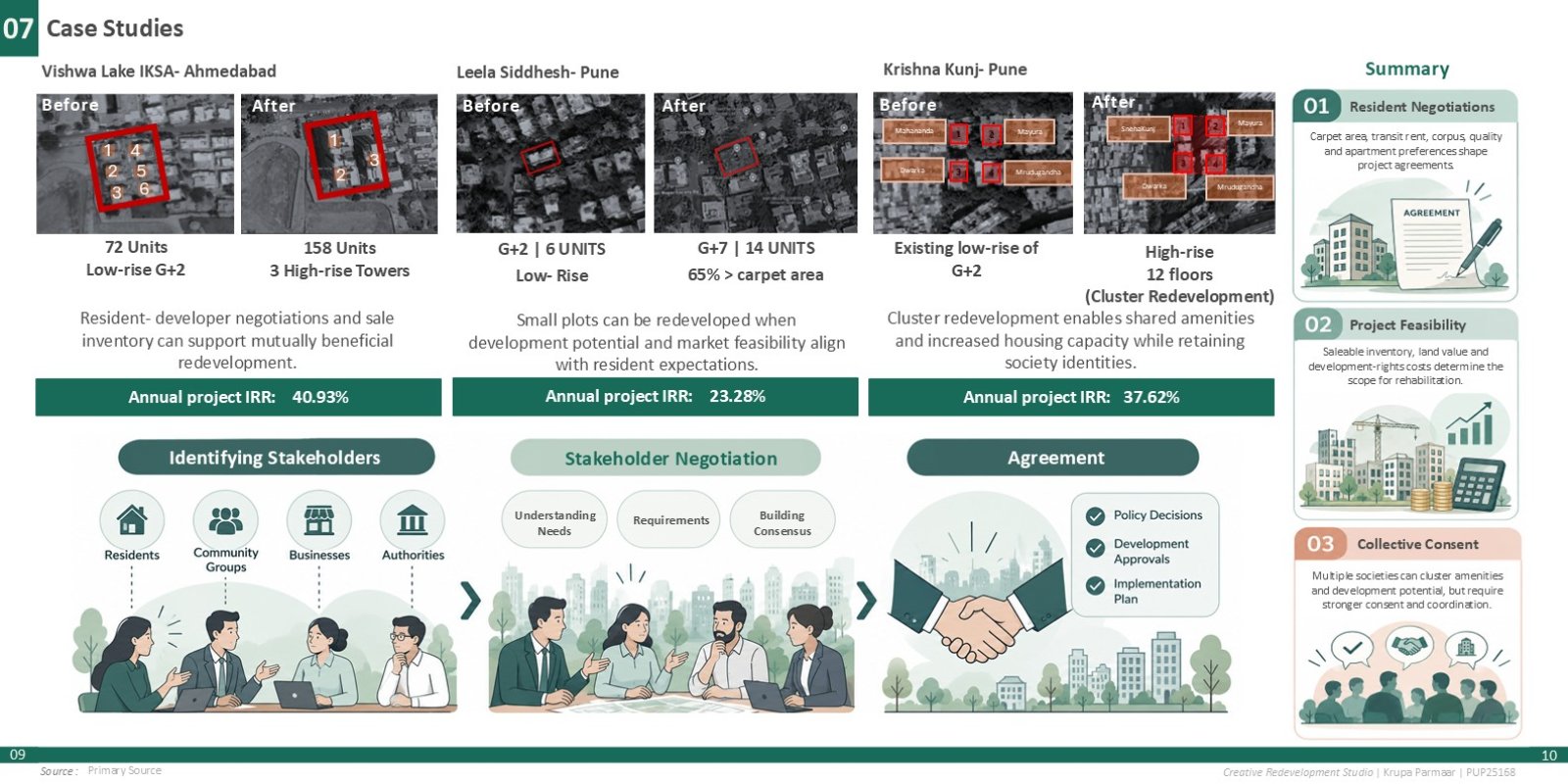
Evaluates redevelopment through case studies, highlighting the role of feasibility, resident negotiations and collective consensus.

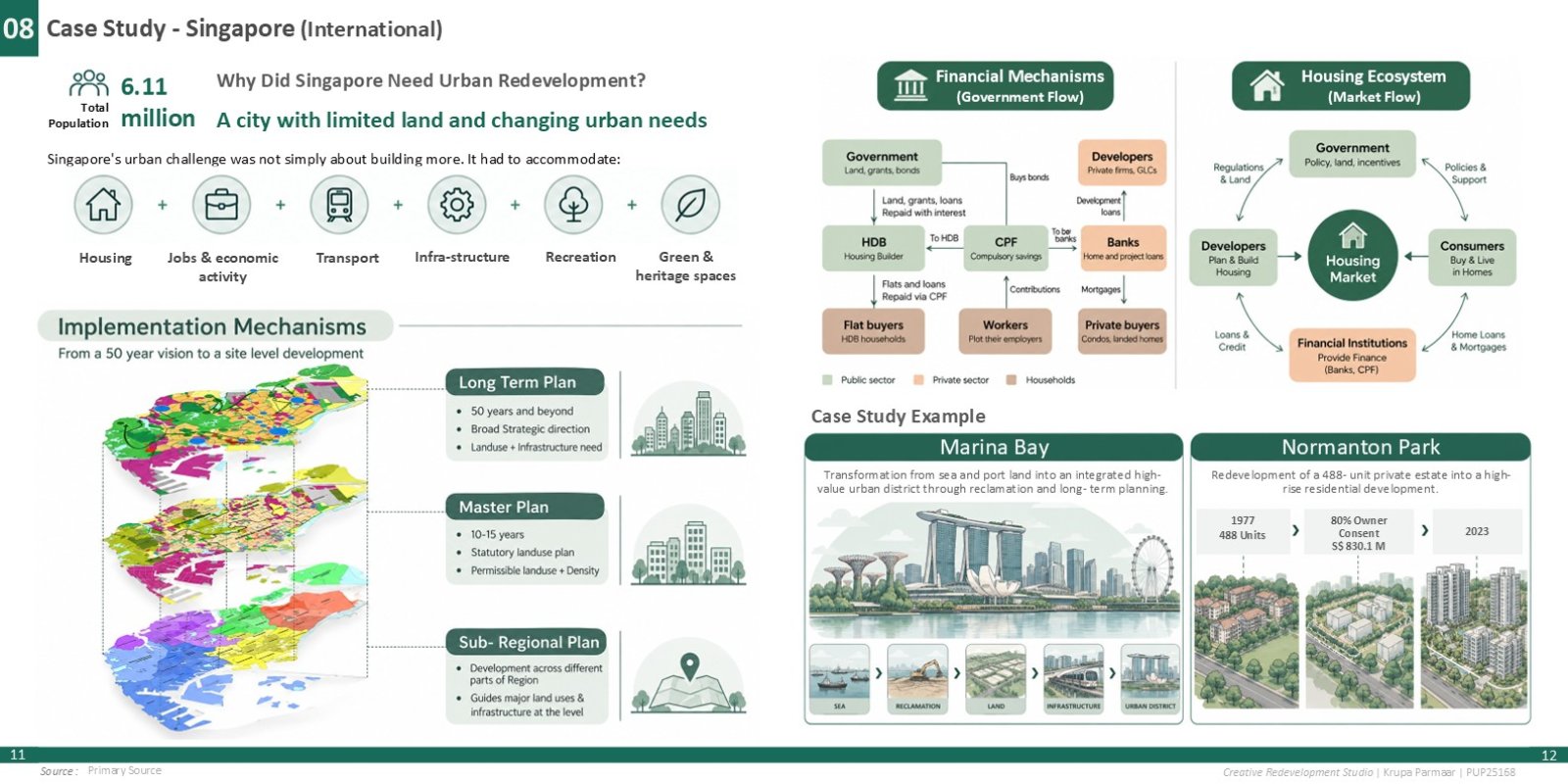
Examines Singapore’s integrated urban redevelopment approach, focusing on planning mechanisms, financial systems and housing transformation.

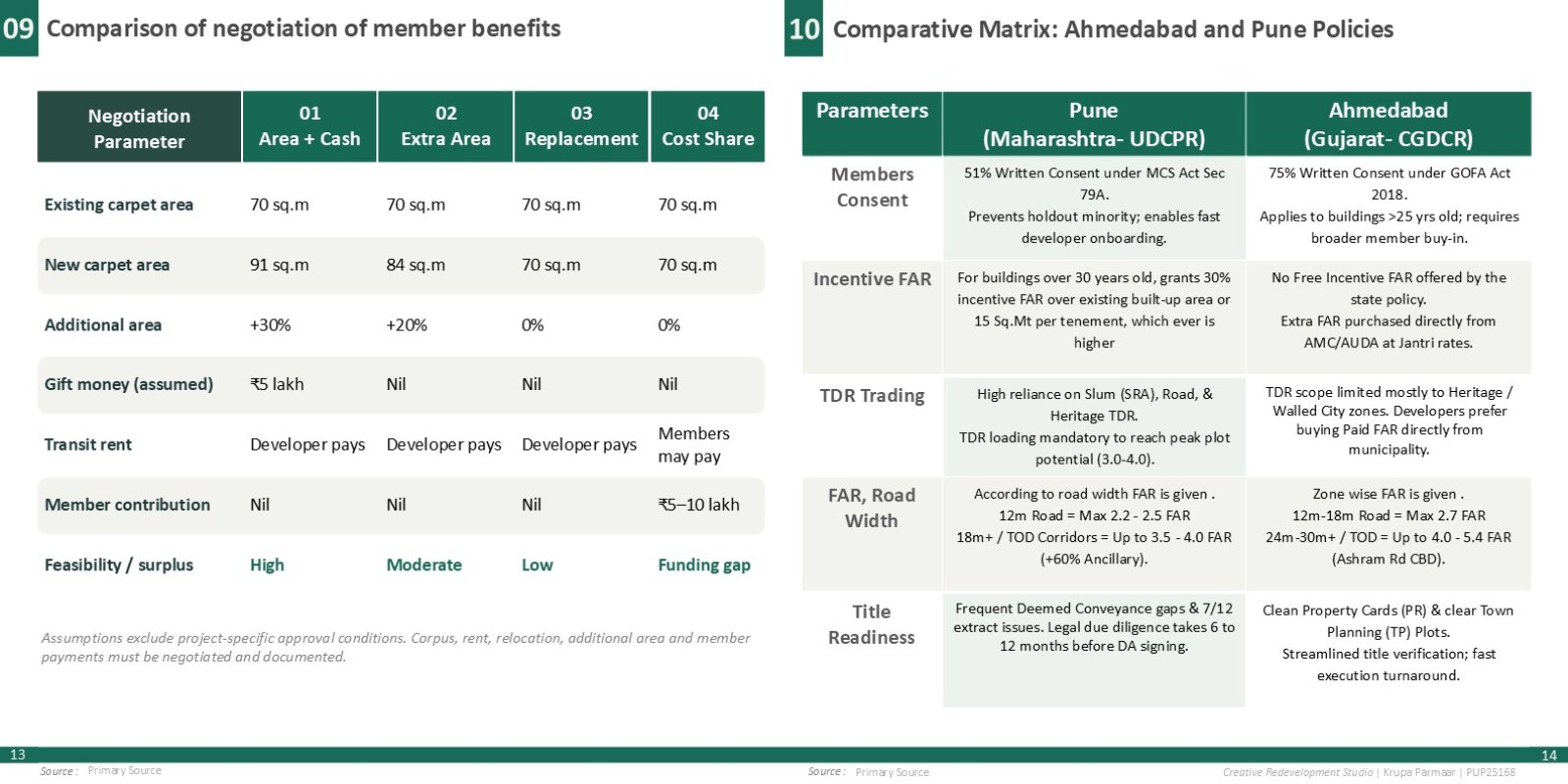
Compares resident benefit-sharing models and Ahmedabad–Pune policies to understand their implications for redevelopment feasibility.

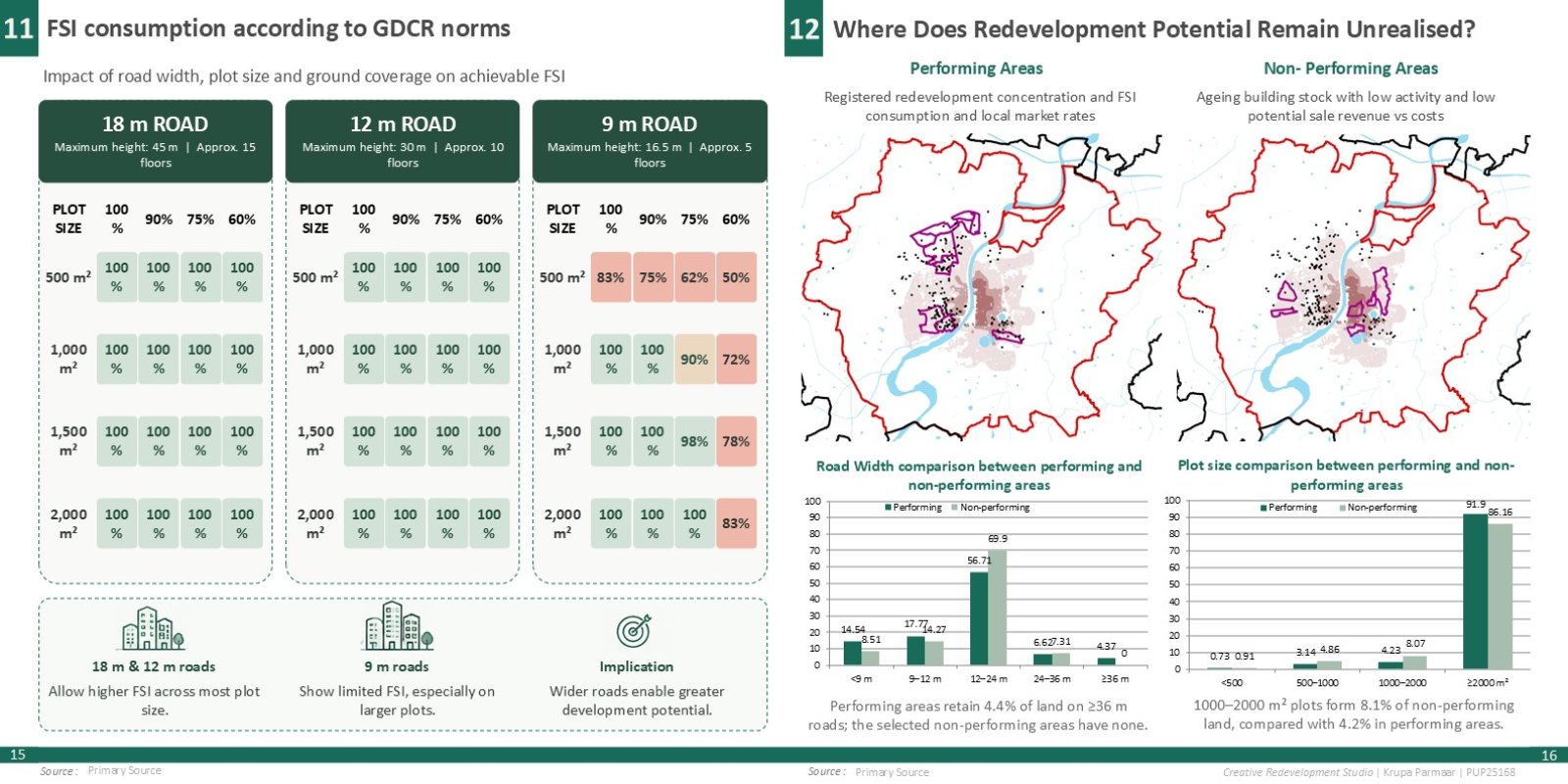
Assesses development potential through FSI regulations and identifies why redevelopment remains unrealised in certain areas.

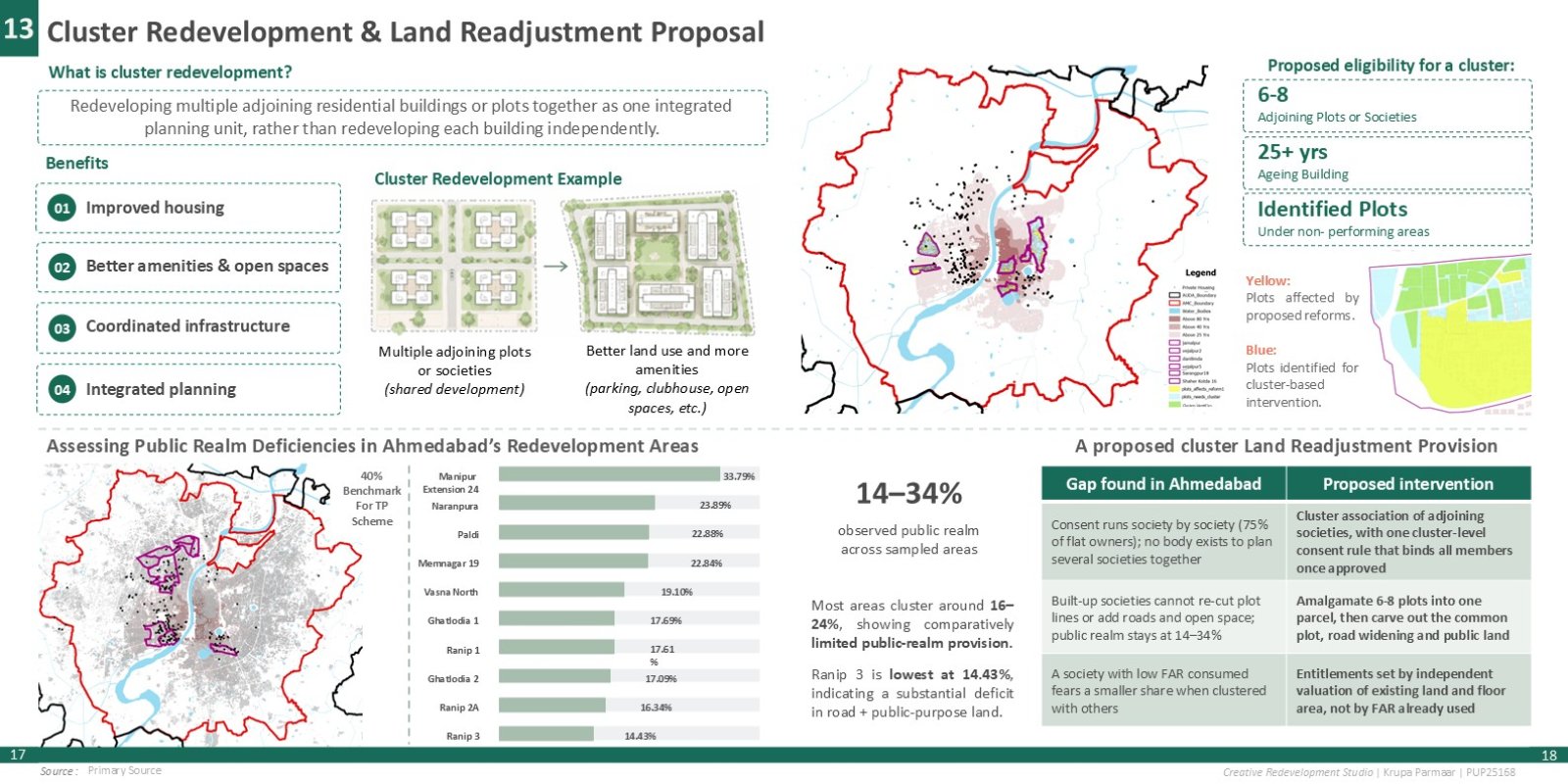
Proposes cluster-based redevelopment and land readjustment to address fragmented plots and inadequate public realm.

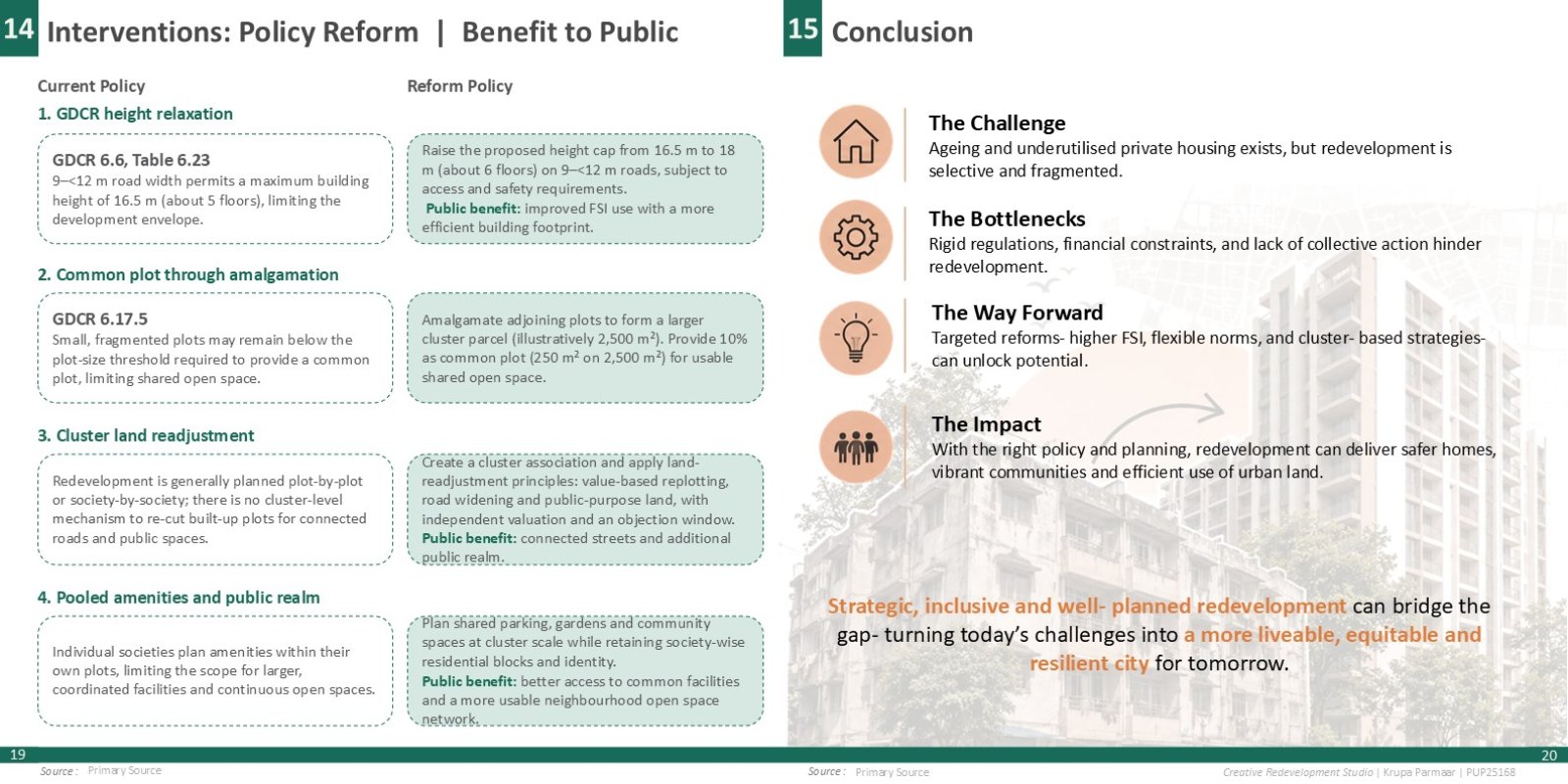
Presents targeted policy reforms and concludes with a framework for inclusive and feasible urban redevelopment.