Jon Mcklein S

UP4005-2

Creative Redevelopment of Bus Terminal Facility

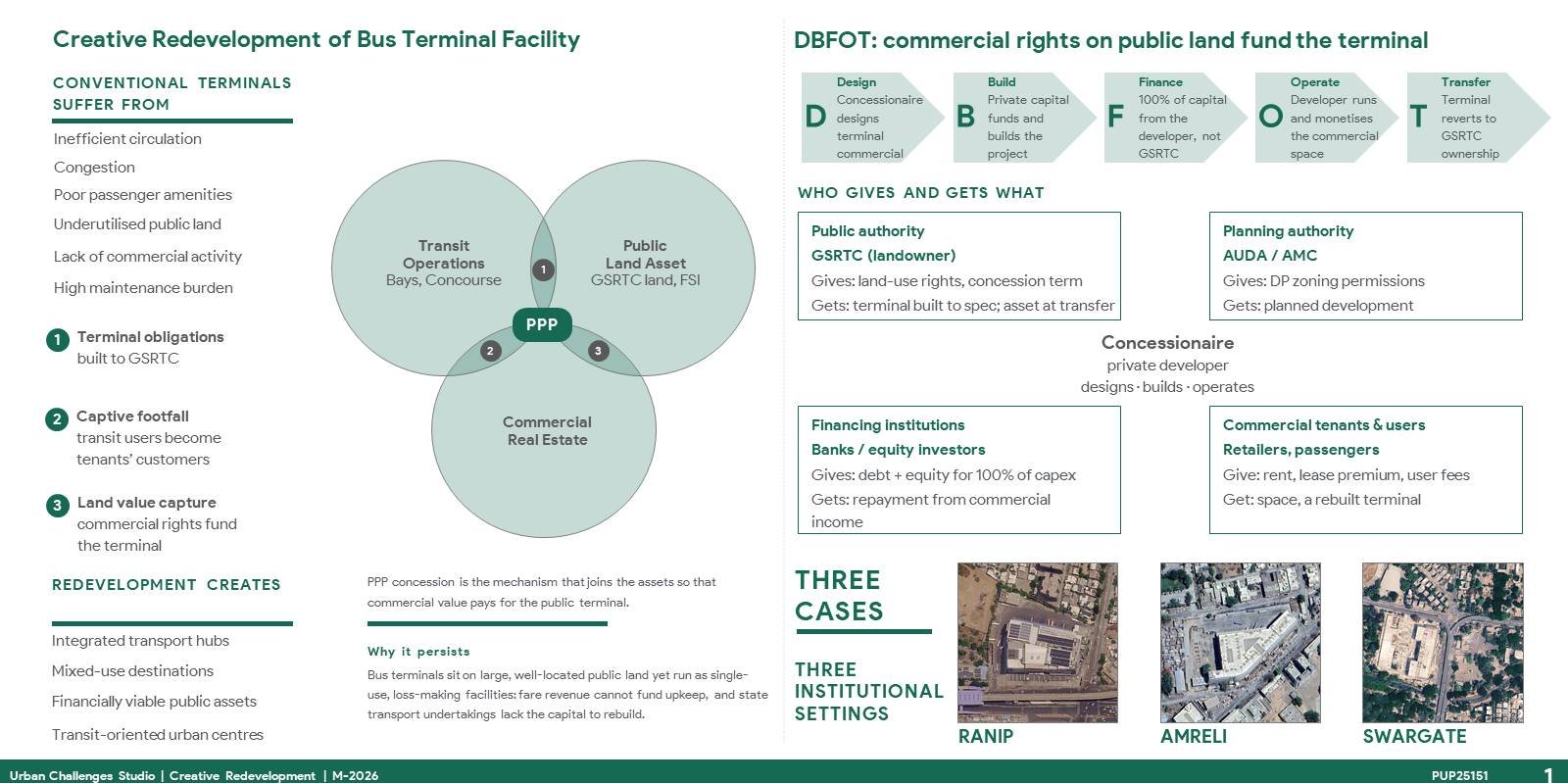
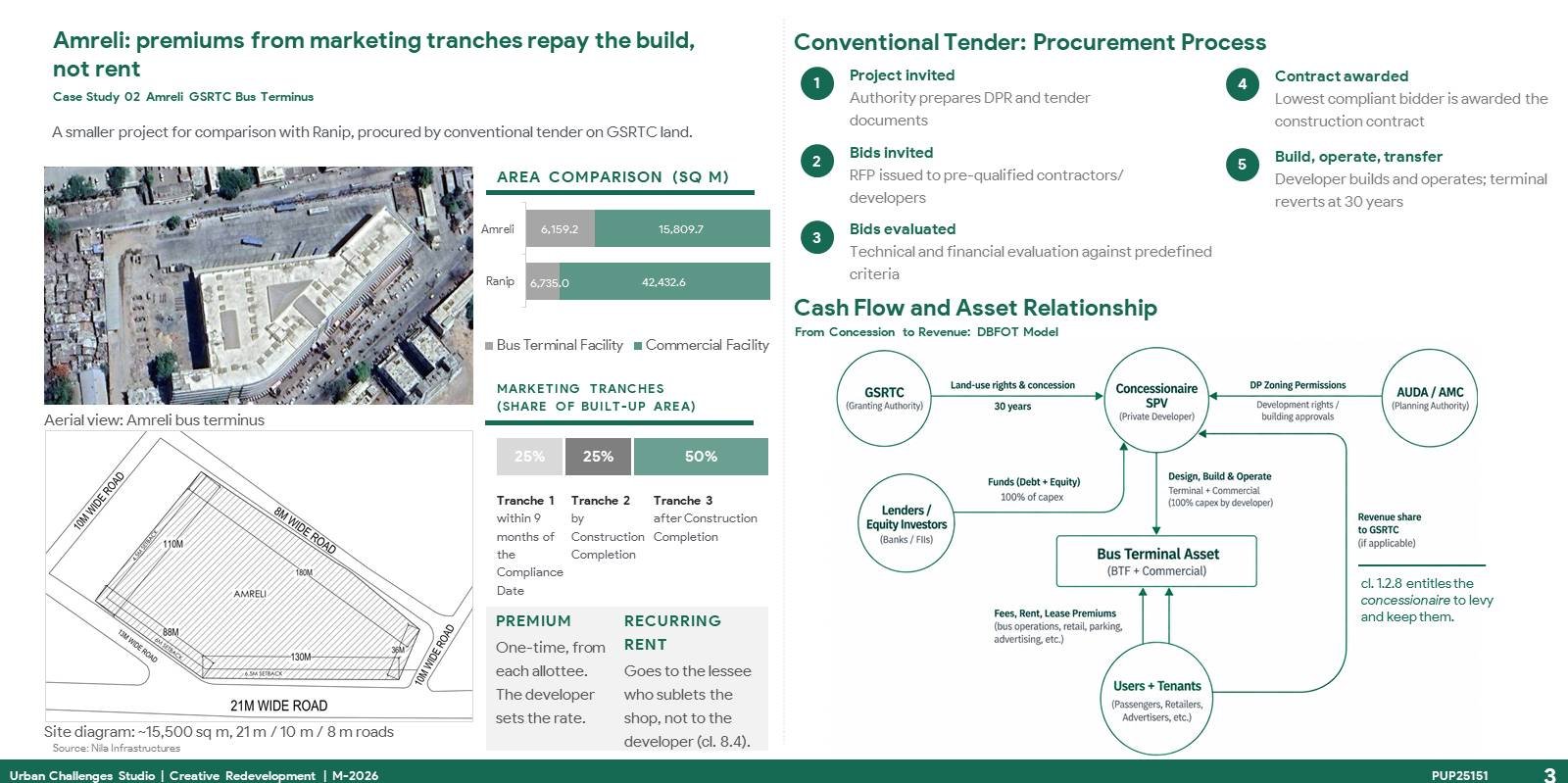
Bus terminals sit on large, well-located public land but run as single-use, loss-making facilities that burden public authorities and cannot fund their own upkeep or rebuilding. This project asks whether commercial demand can pay for their redevelopment. Using DBFOT, a private developer builds the terminal and recovers its cost from commercial space on the same land, then hands the terminal back to the public authority. We studied Ranip, Amreli and Swargate as precedents, then tested every Ahmedabad depot for planning capacity and financial viability, and matched each to the delivery route that suits it.
Report Content

Concept : Bus terminals sit on large public land but lose money as single-use facilities. Under DBFOT, a private developer builds the terminal and recovers its cost from commercial space on the same land, and the terminal reverts to GSRTC.

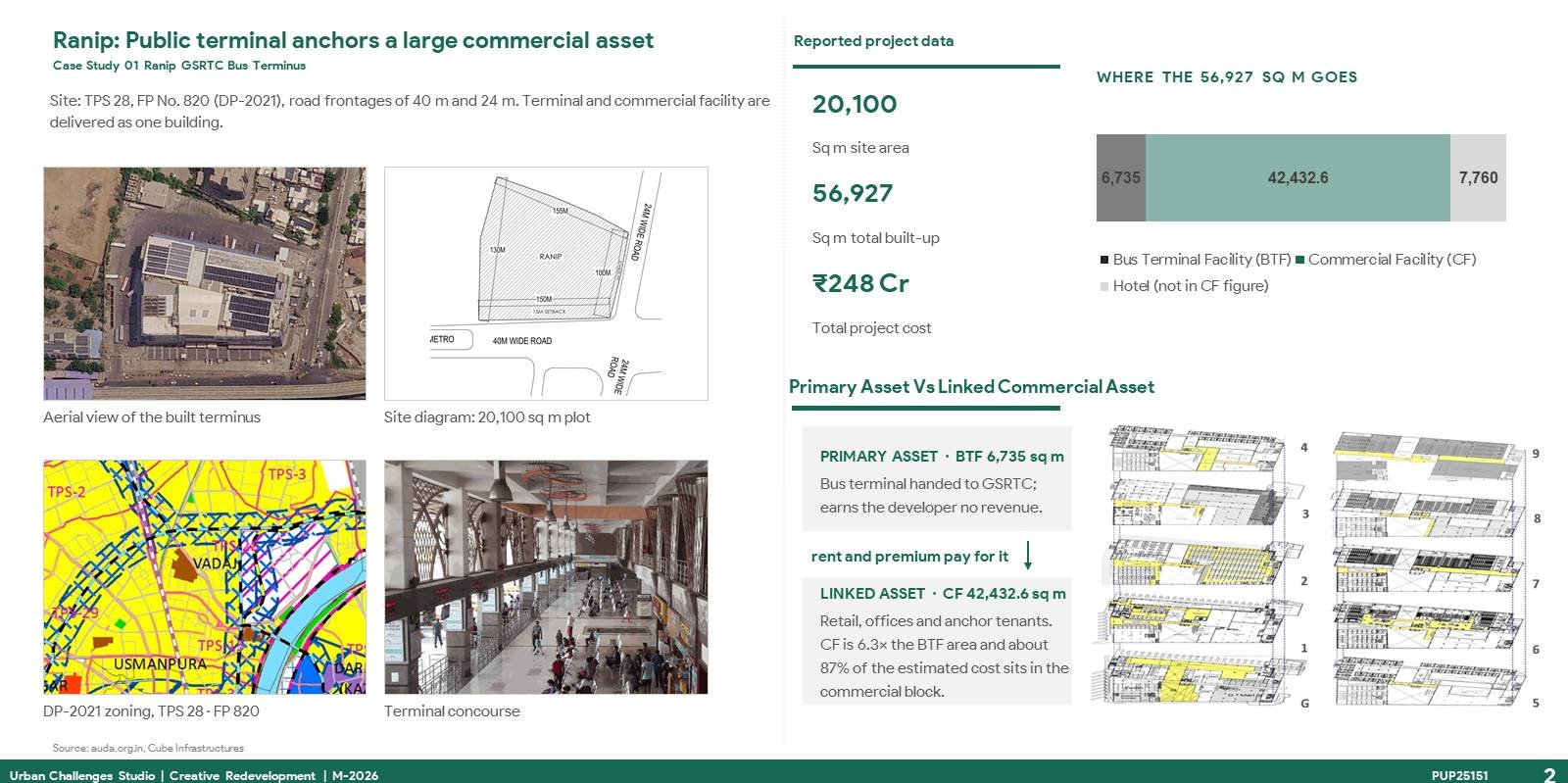
Ranip case : At Ranip, GSRTC receives a rebuilt terminal while a much larger commercial block pays for it. The commercial floor area is 6.3 times the bus terminal's, so the terminal is the anchor and the commercial space is the earner.

Amreli case : This smaller GSRTC terminal is built on a conventional tender. The developer repays the build through one-time premiums on marketed space in three tranches, not through rent.

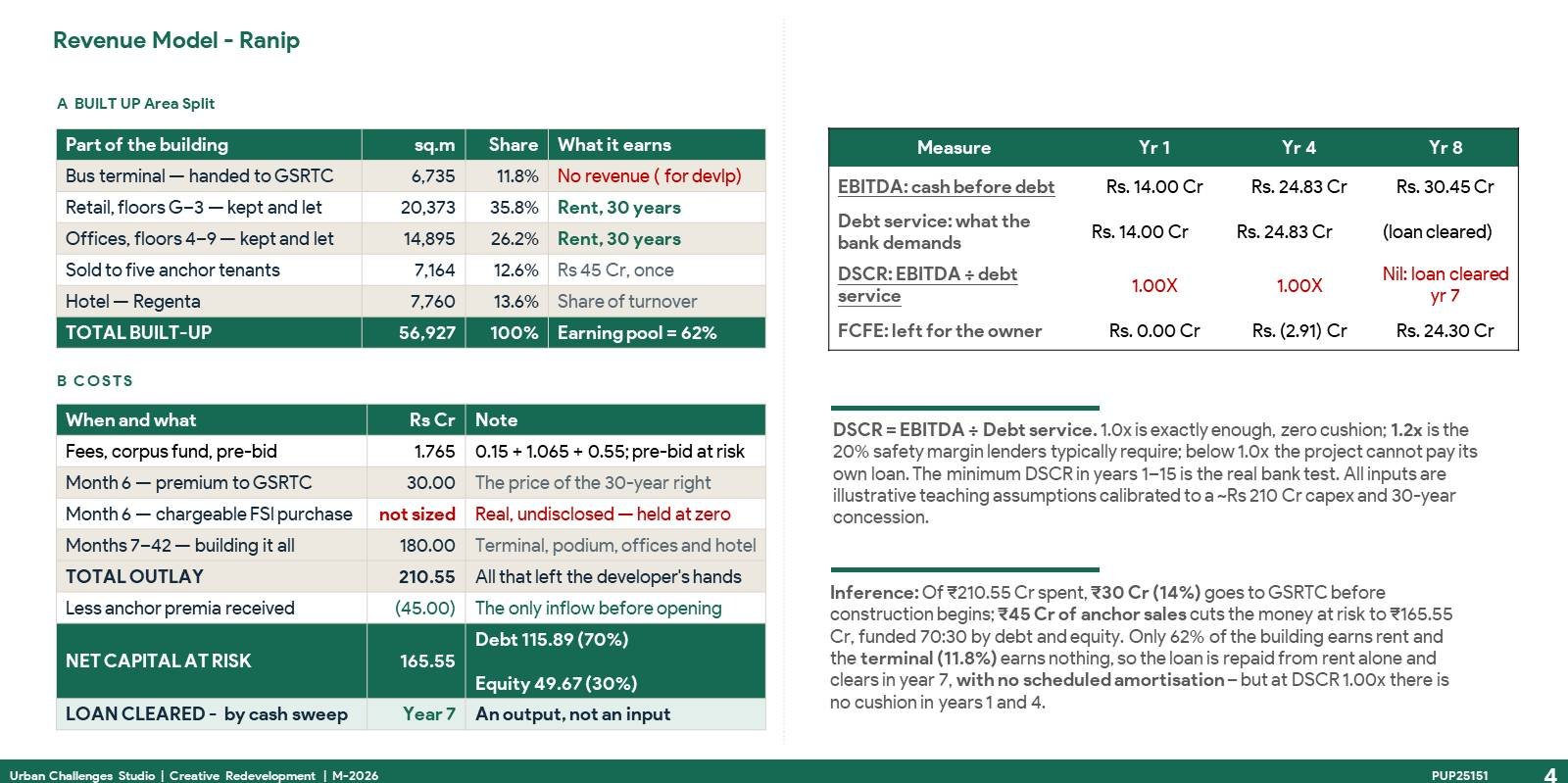
Ranip revenue model : Of 210.55 Cr spent, anchor-tenant sales cut the money at risk to 165.55 Cr. Only 62% of the building earns rent, yet that rent alone clears the loan in year 7.

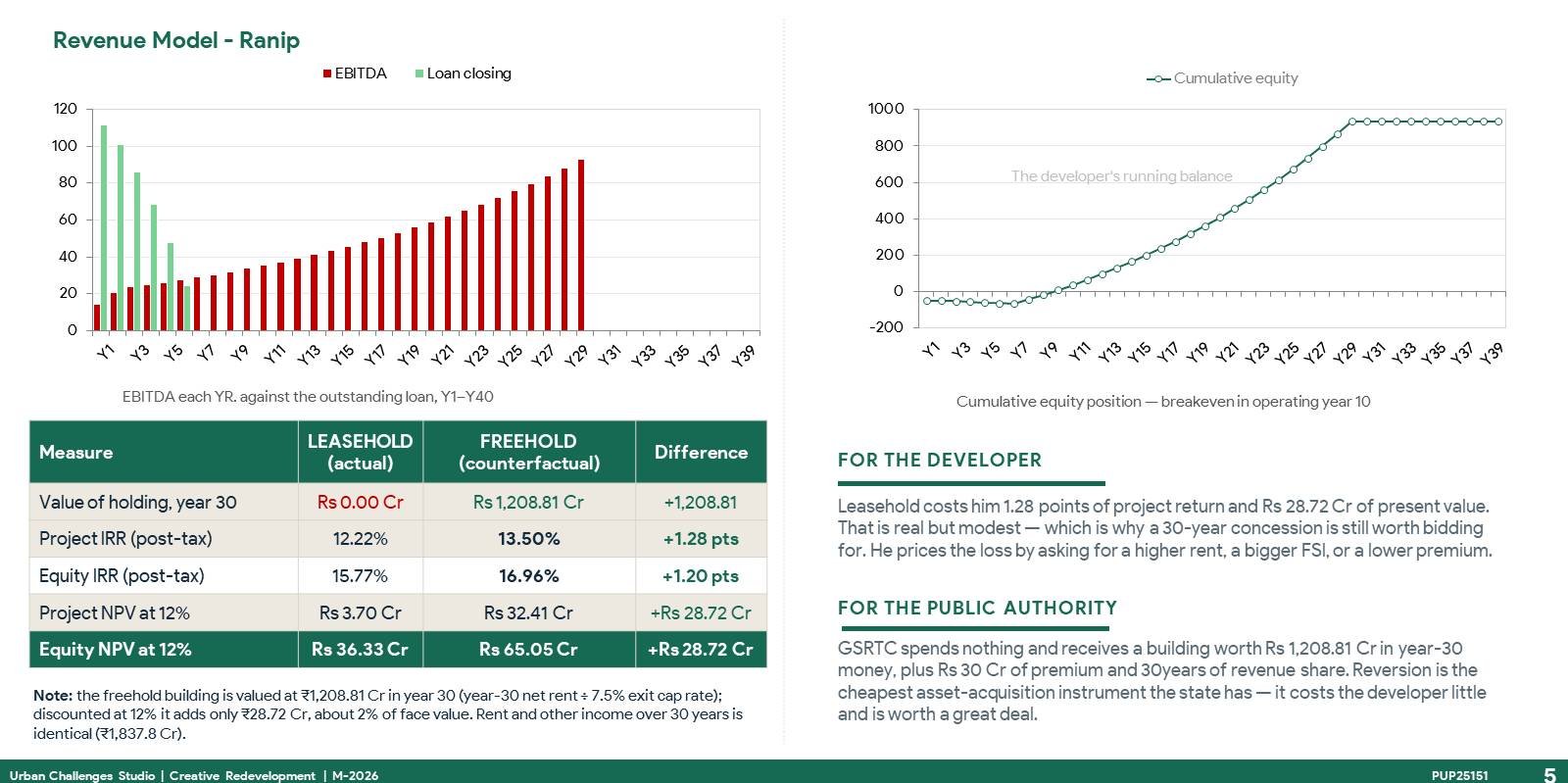
Ranip long-term returns : Over a 30-year concession the developer breaks even in operating year 10. Handing the building back costs him only about 1.3 points of return, while GSRTC gets a building worth ?1,208.81 Cr in year-30 money, so the concession is still worth bidding for.

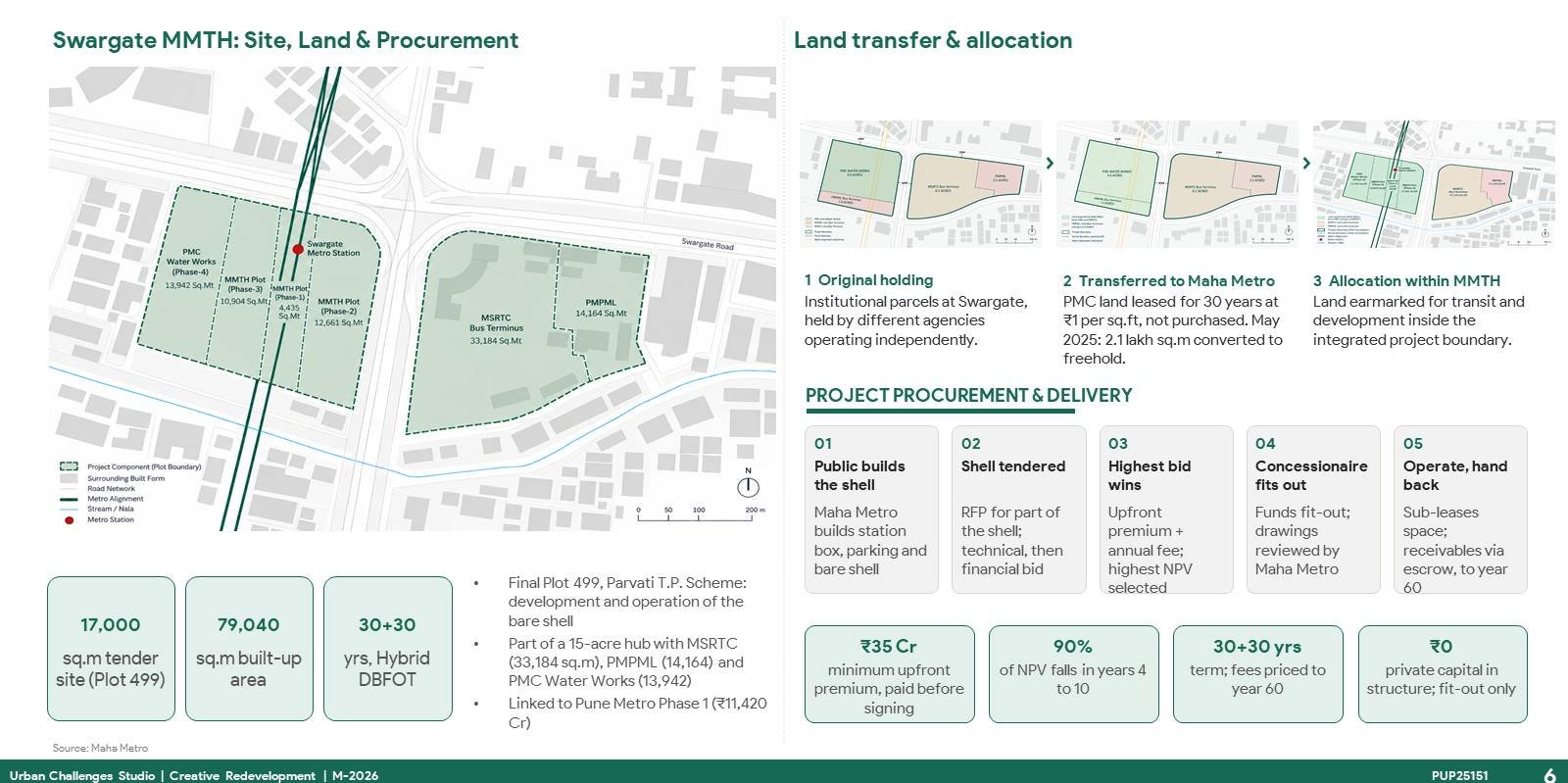
Swargate site and procurement : Swargate's MMTH is built on public land leased from PMC and transferred to Maha Metro. The private bidder pays an upfront premium plus an annual fee, and its fit-out is the only private capital in the structure.

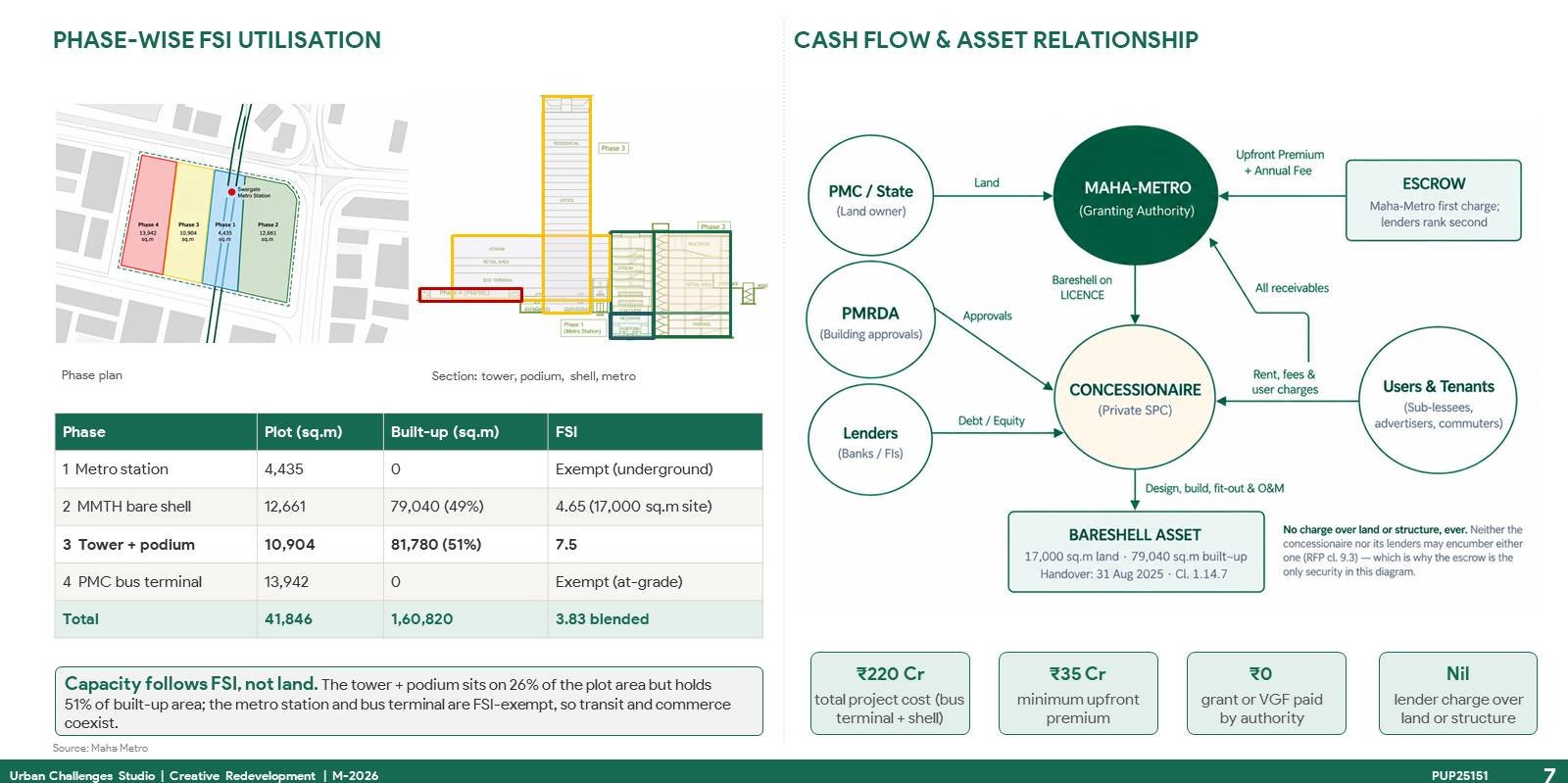
Swargate phase-wise FSI : The tower and podium take 26% of the plot but hold 51% of the built-up area. The metro station and bus terminal are FSI-exempt, so transit and commerce share one site.

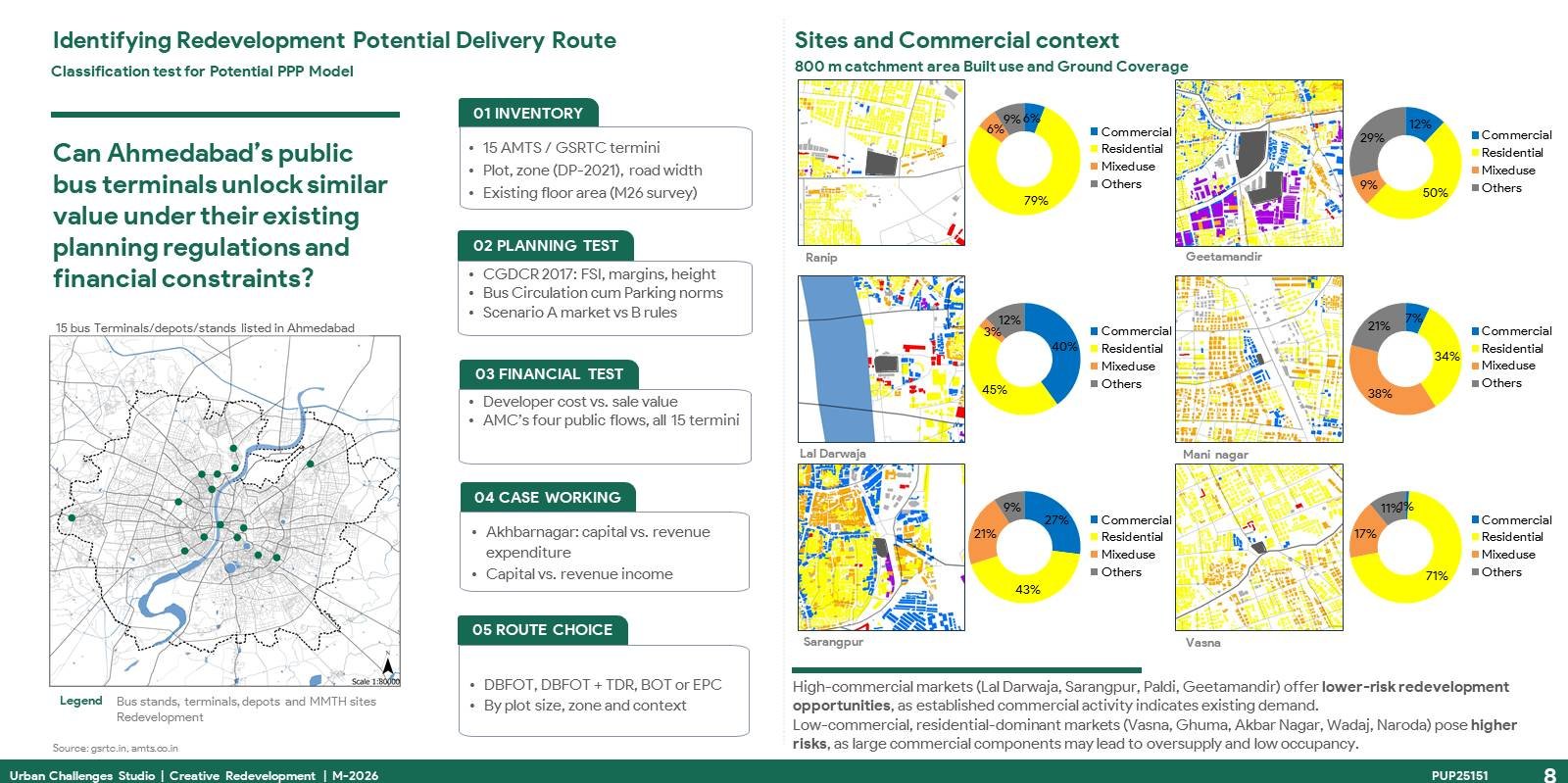
Screening Ahmedabad's depots : This slide tests 15 Ahmedabad bus terminals, depots and stands against zoning rules, bus-area norms and market context. The question is whether Ahmedabad's terminals can unlock the same value as Ranip and Swargate.

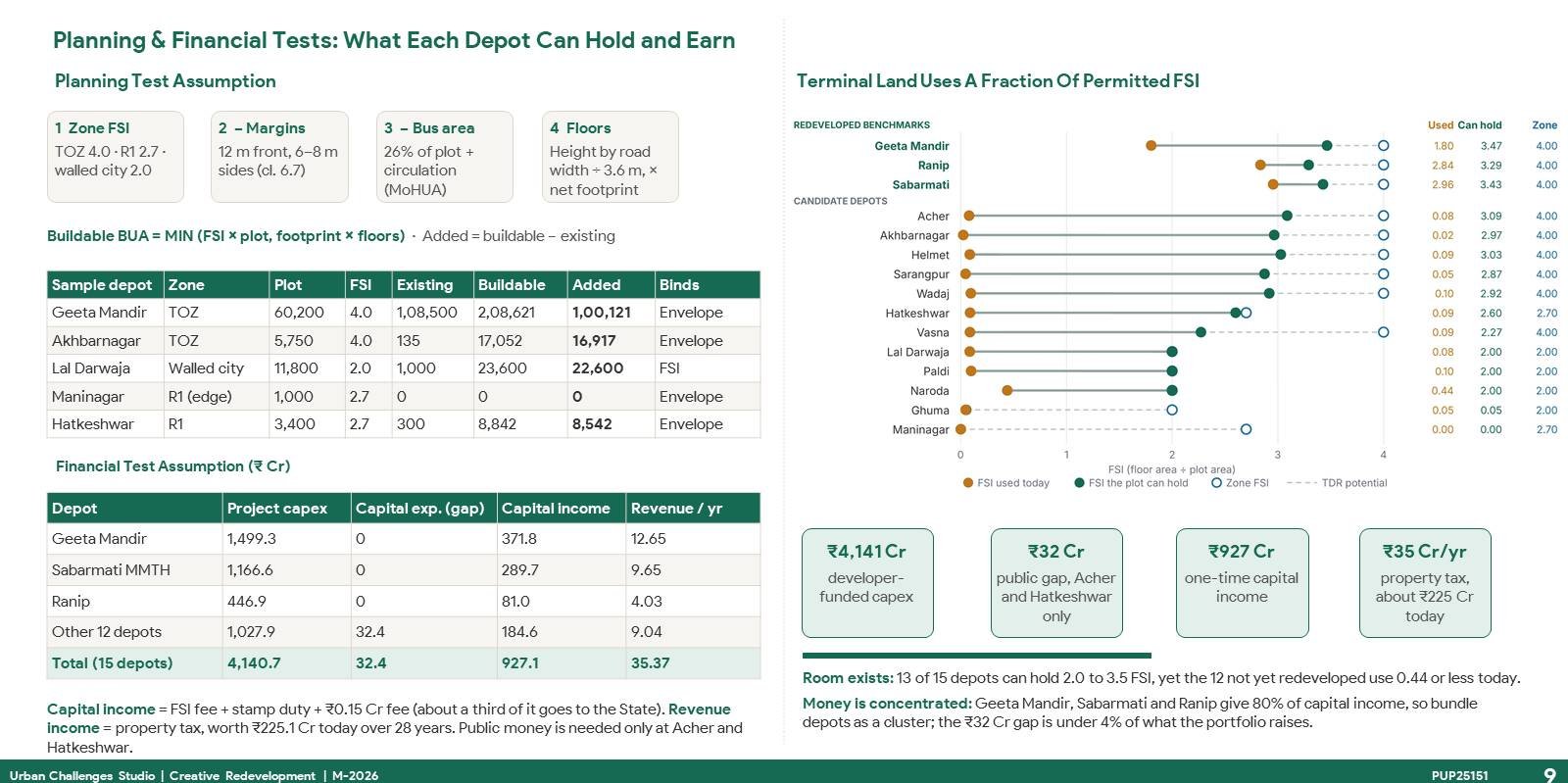
Planning and financial tests : Thirteen of the 15 depots can hold more floor area than today, and the 12 not yet redeveloped use 0.44 FSI or less. Developers fund 4,141 Cr of the 4,141 Cr in project capex, leaving a public gap of only 32 Cr at Acher and Hatkeshwar.

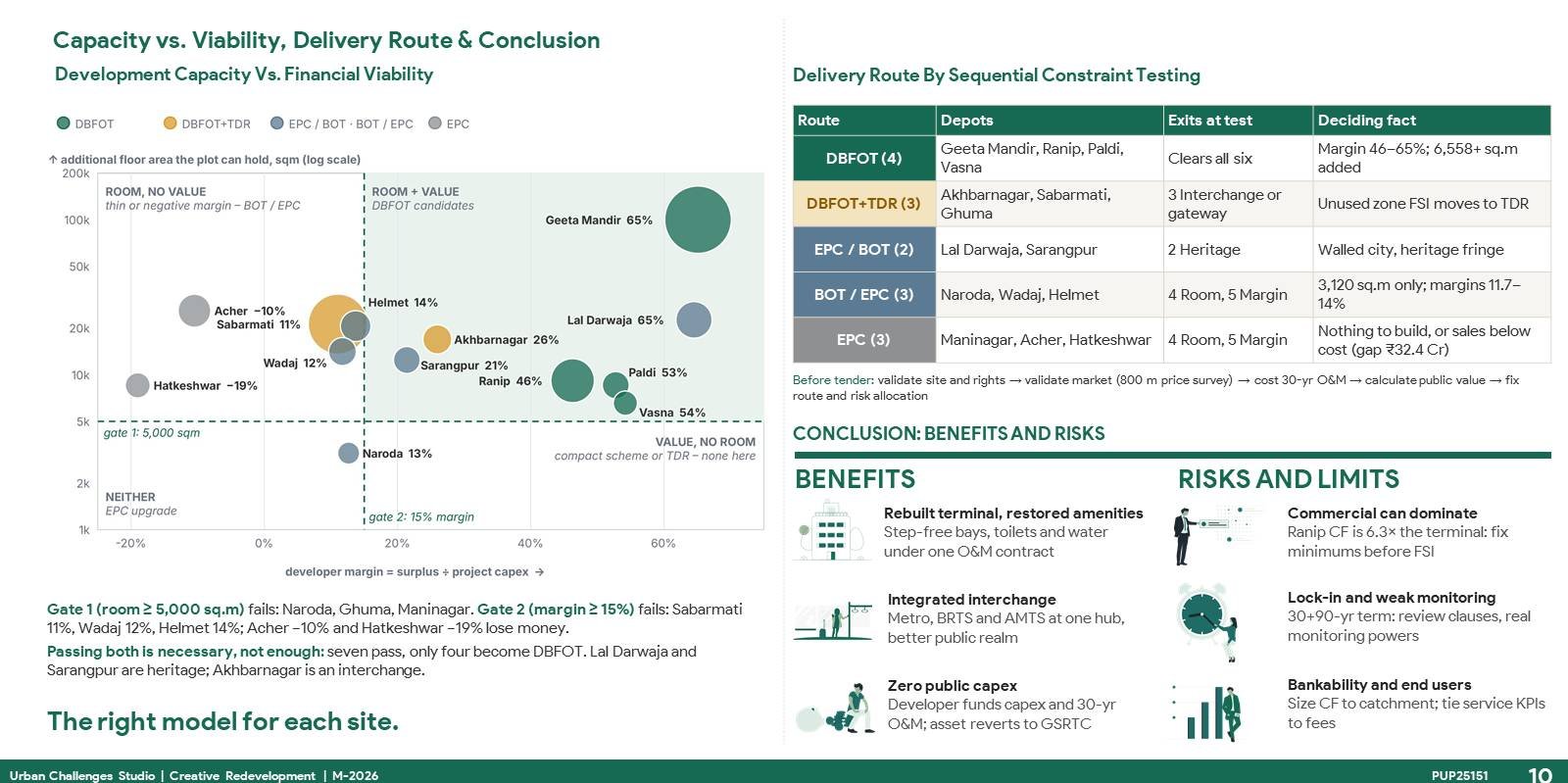
Delivery route and conclusion : Seven depots have both enough room and enough margin, but only four suit full DBFOT. The rest are routed to DBFOT with TDR, or to BOT or EPC, because of heritage, interchange or weak returns. The result is a rebuilt terminal at no public capital cost, but with risks of commercial dominance, lock-in and weak monitoring.