• Home
  • FP
  • UP4005-2
  • Monetising Land Value Capture for Riverfront Development

Isha Bansal

UP4005-2

Monetising Land Value Capture for Riverfront Development

The Sabarmati Riverfront redevelopment has significantly enhanced the surrounding urban environment, improving land values, development potential and investment attractiveness. However, the financial benefits generated by this transformation are not adequately translated into public revenue. Despite substantial land-value appreciation, existing mechanisms for capturing and monetising these gains remain limited and fragmented. The dependence on municipal and institutional loans further increases the financial burden, while revenue from development rights, premium FSI, betterment levies and land transactions remains underutilised. This project examines the gap between value creation and value capture, exploring how strategic Land Value Capture (LVC) mechanisms can strengthen financial sustainability and enable future urban redevelopment.
Report Content

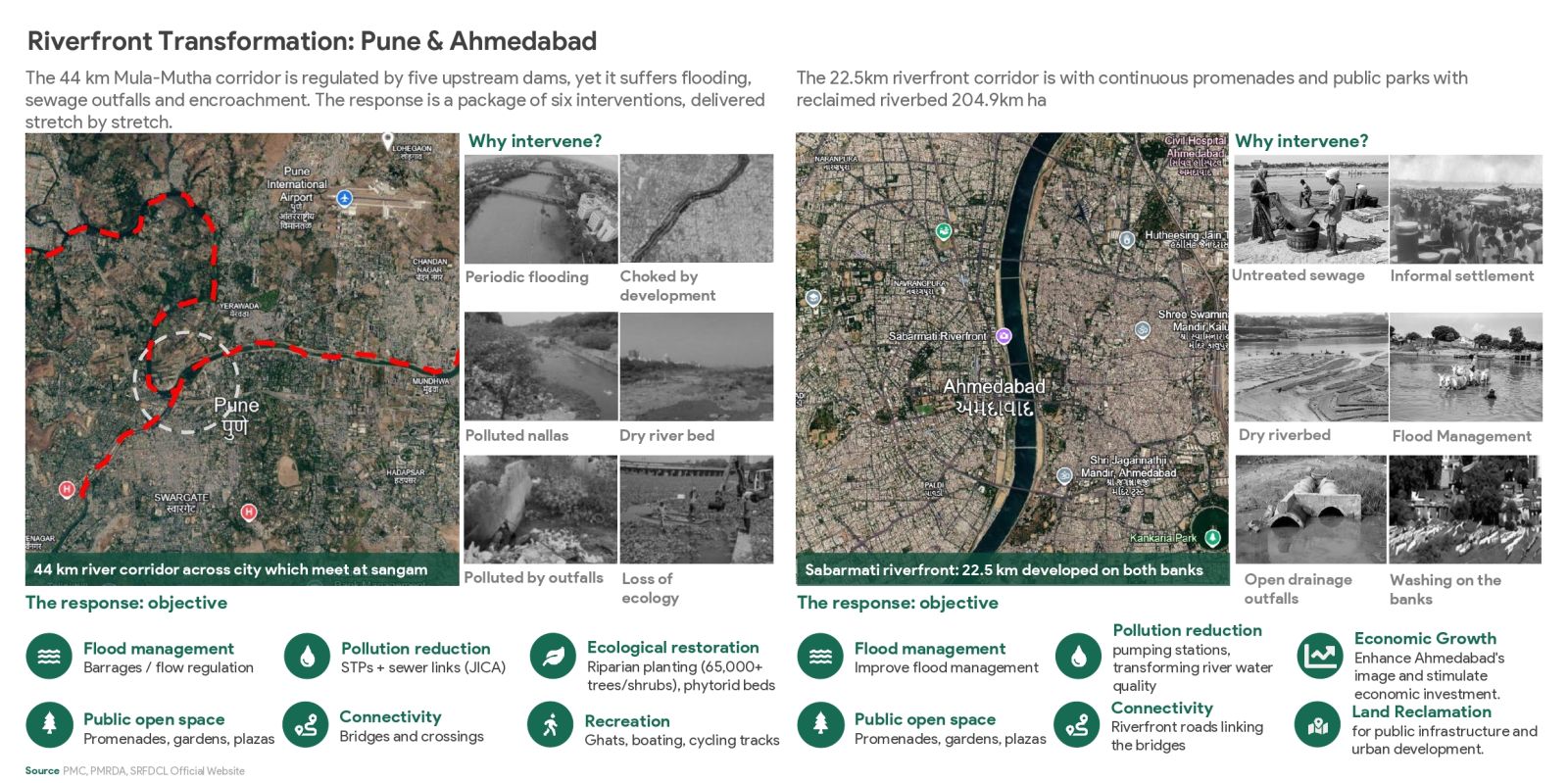
Two riverfronts adopt different development approaches to address environmental challenges, improve urban connectivity and generate economic value.

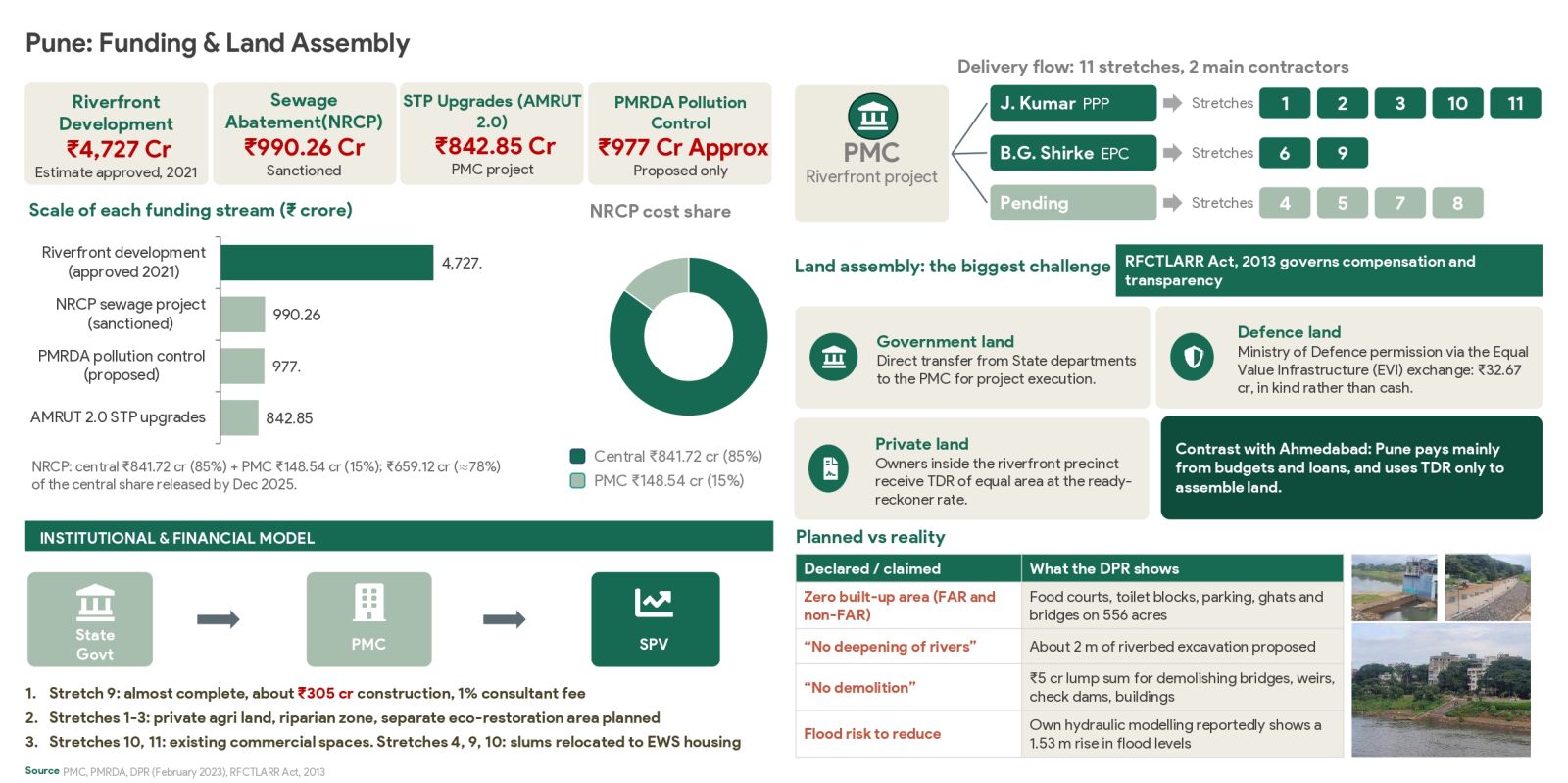
Pune relies on multiple public funding streams, institutional coordination and land acquisition mechanisms to deliver its 44 km riverfront project.

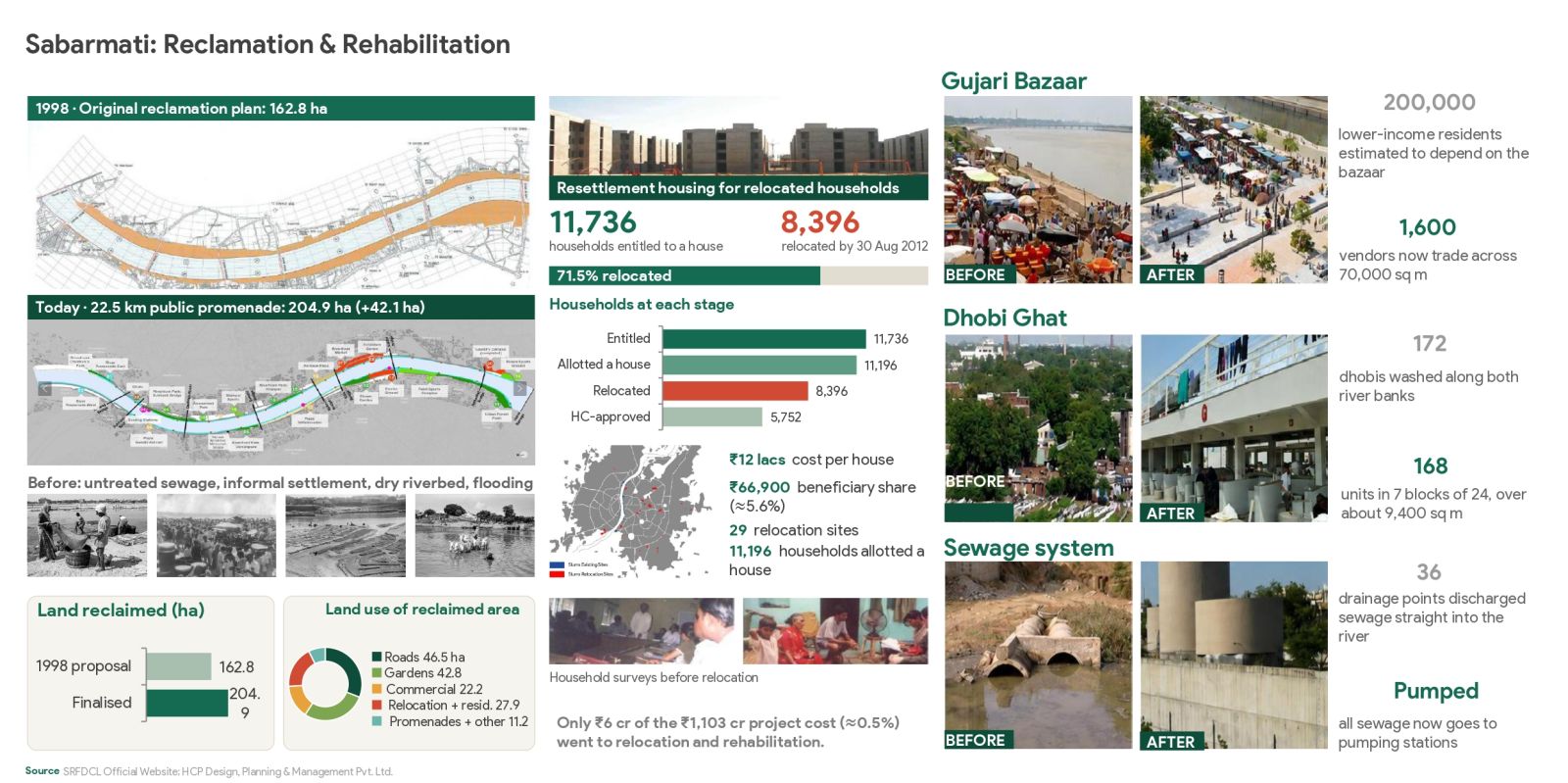
Riverfront reclamation transformed the physical landscape while requiring large-scale resettlement and the reorganisation of traditional river-based livelihoods

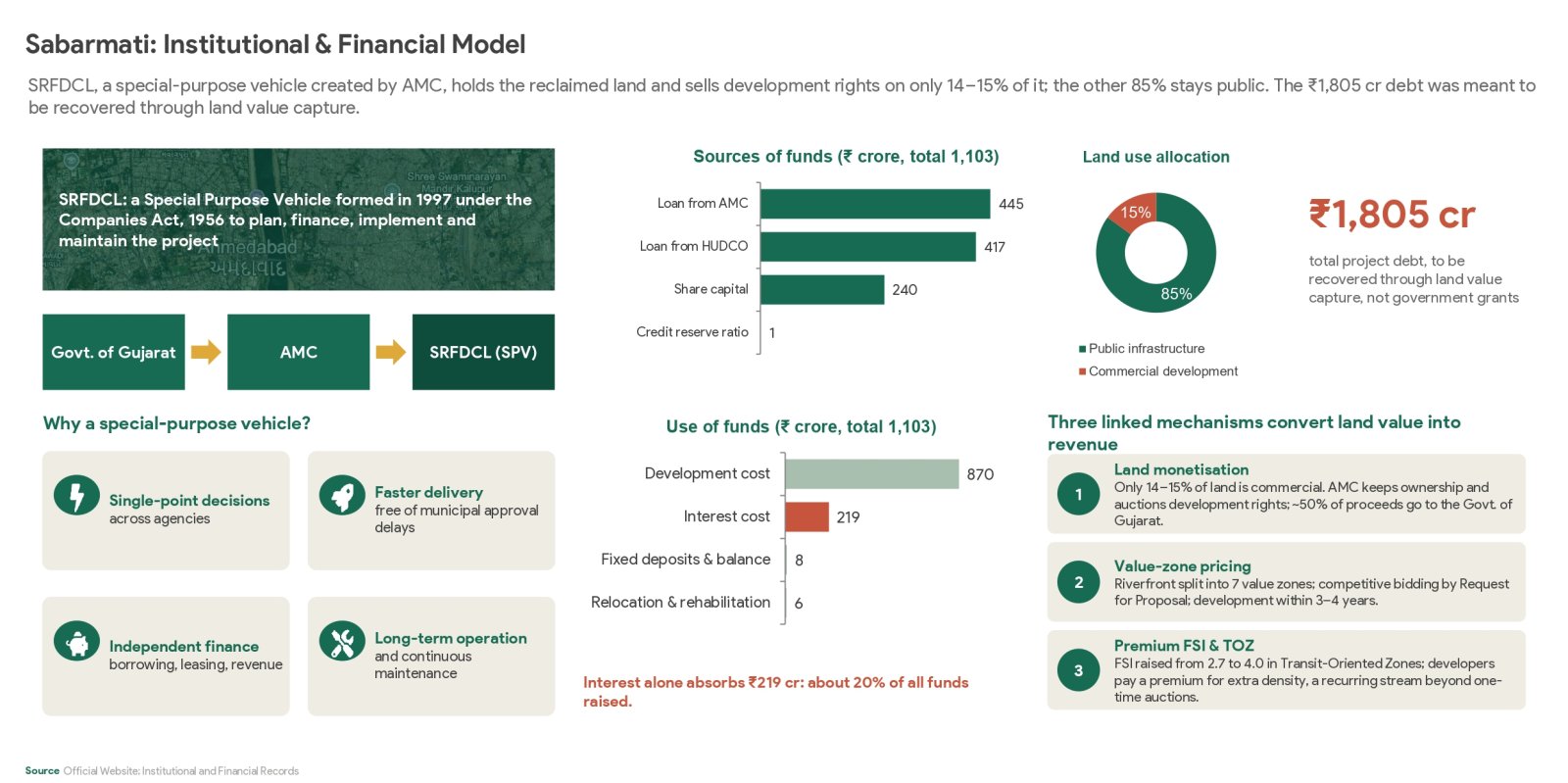
SRFDCL was established to manage project financing, land monetisation and long-term operations, with land-value capture intended to recover project debt.

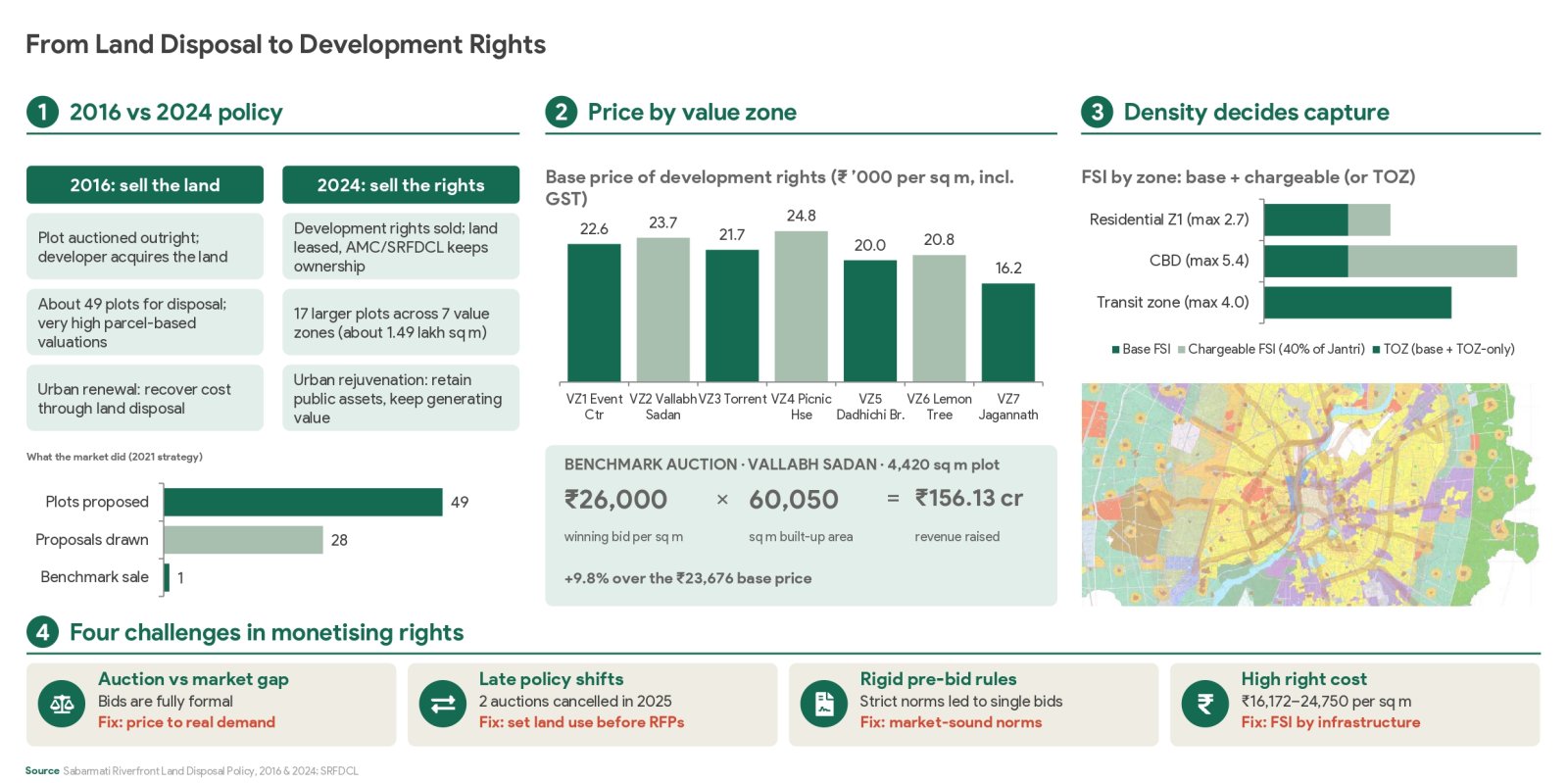
The shift from outright land disposal to development-rights leasing aims to retain public ownership while unlocking the economic potential of reclaimed land.

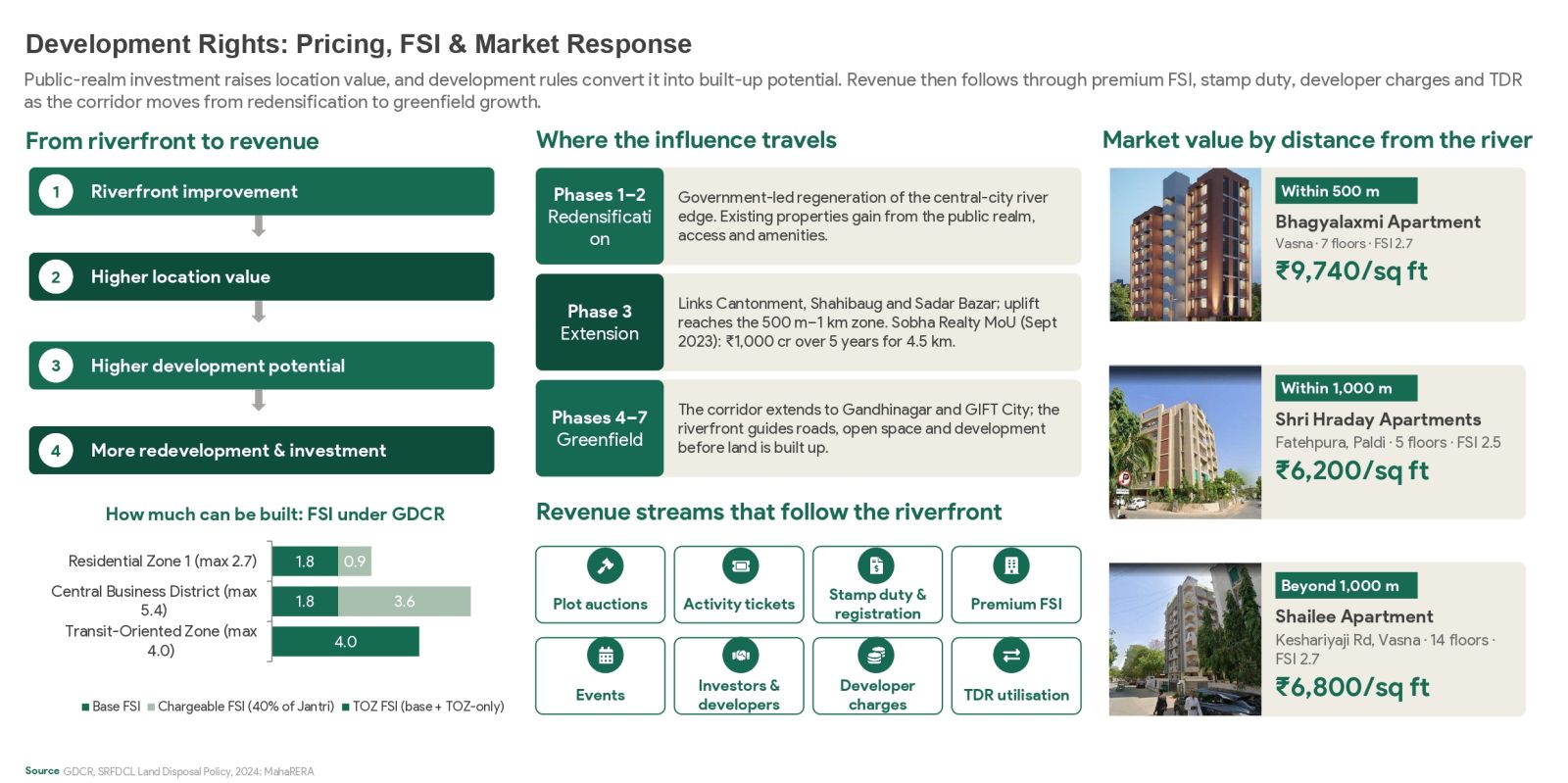
Riverfront investments generate surrounding land-value appreciation, while development regulations and additional FSI create opportunities for revenue capture.

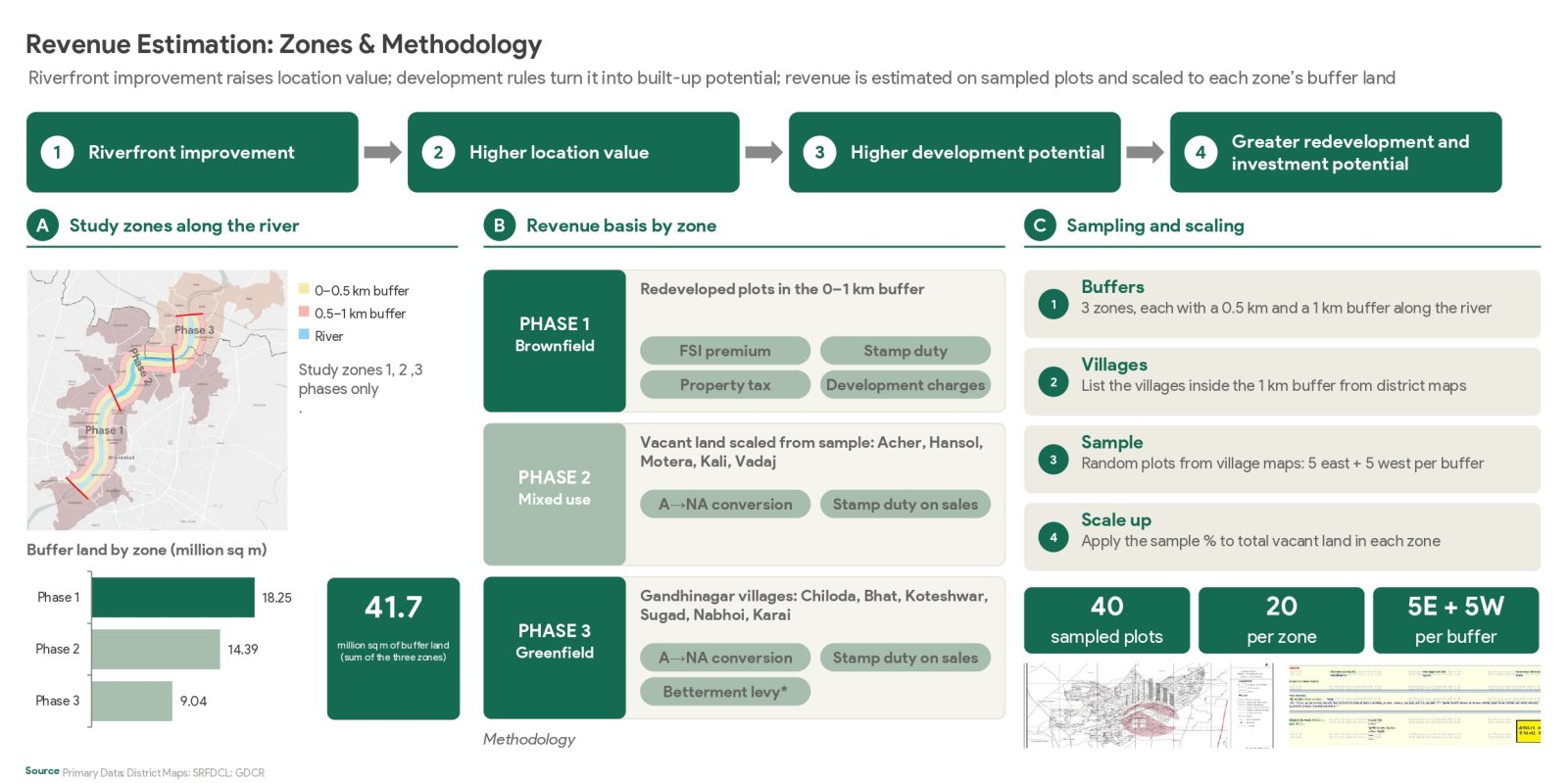
A phase-wise and buffer-based methodology estimates potential revenue by combining redevelopment opportunities, land conversion and property transactions.

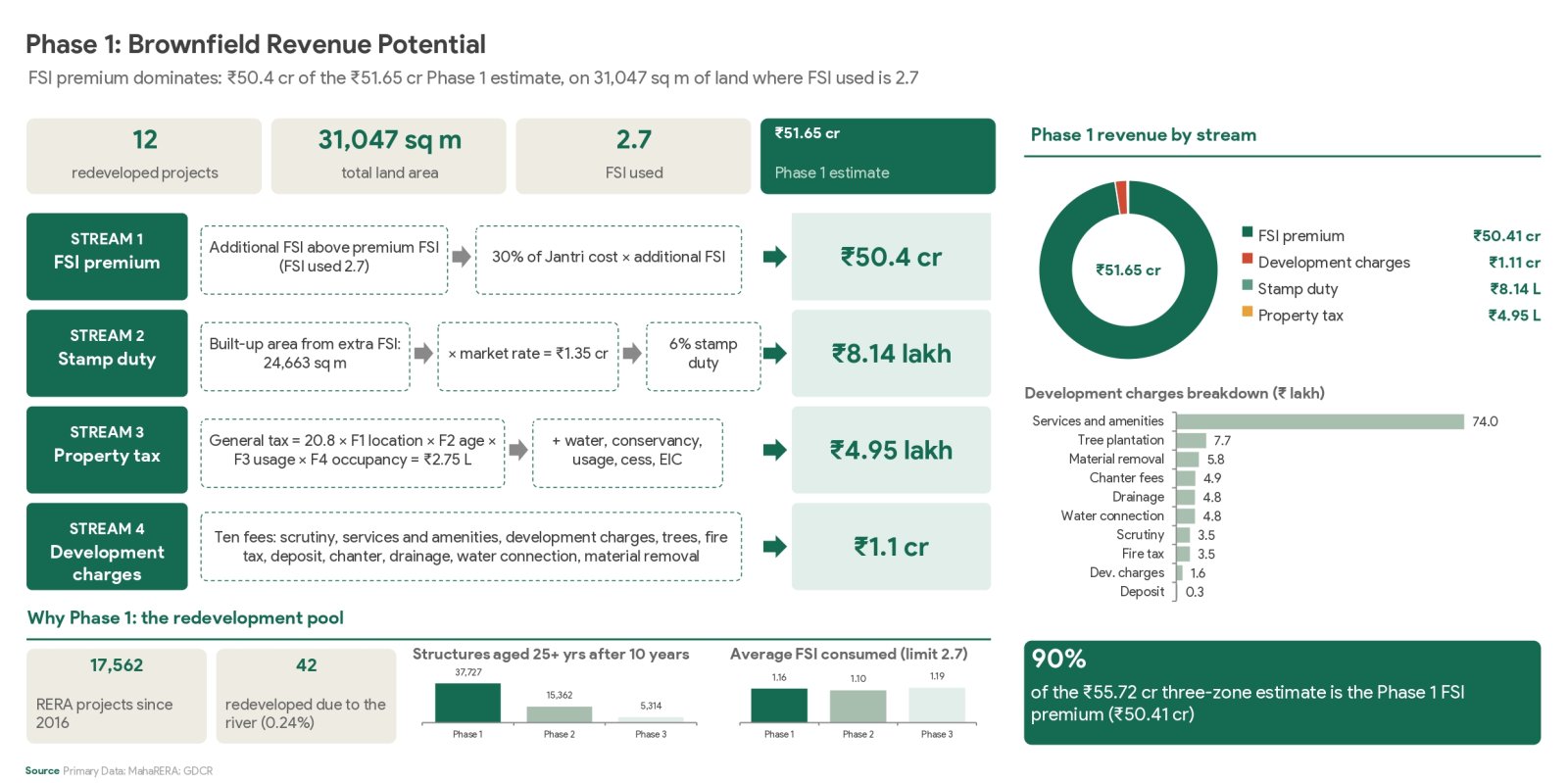
and property transactions. 08 Phase 1: Brownfield Revenue Potential Existing redevelopment activity offers the strongest revenue opportunity, with premium FSI accounting for the majority of the estimated collections.

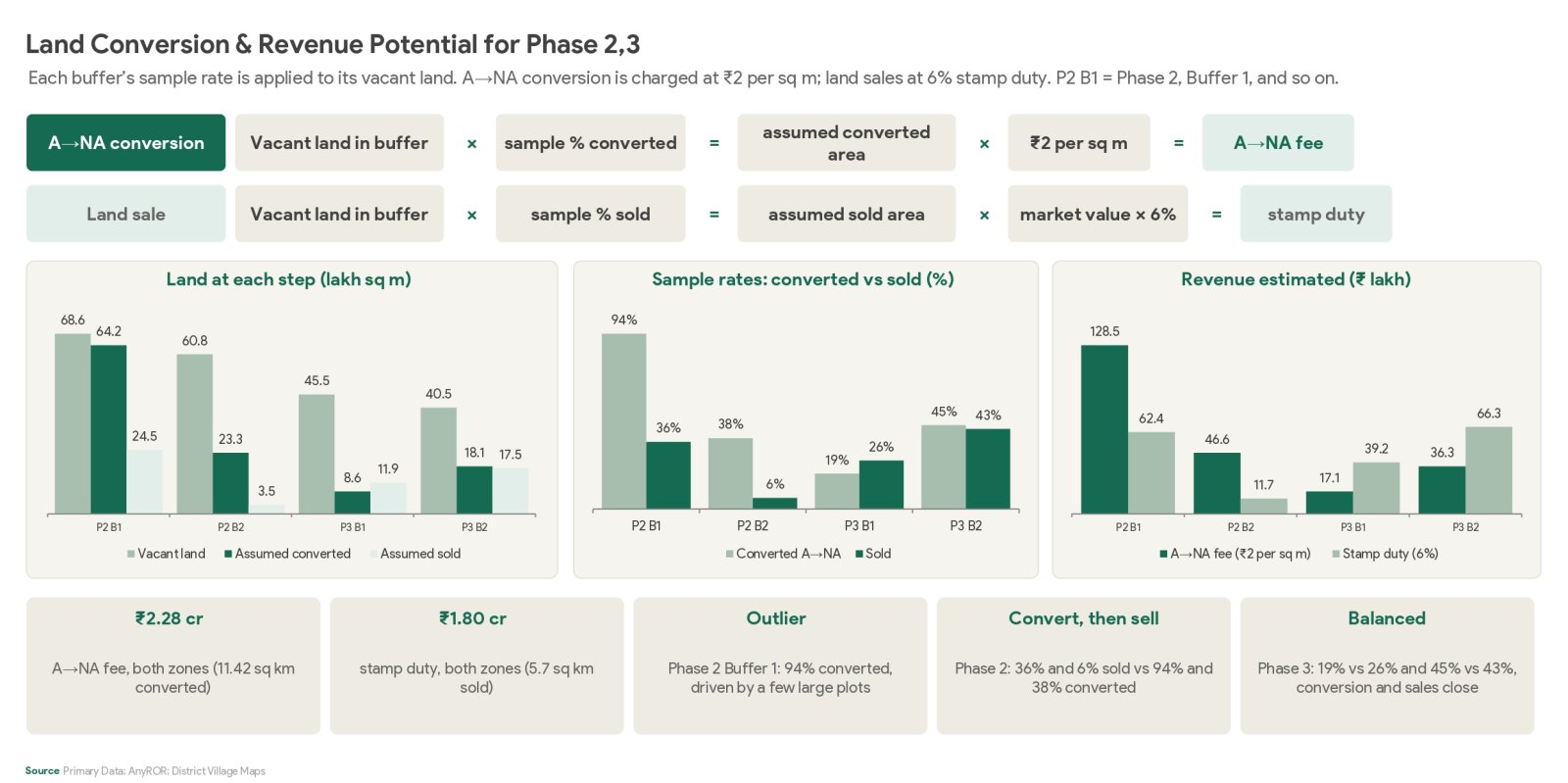
Peripheral growth areas offer additional revenue through agricultural-to-non-agricultural conversion and land-sale transactions, estimated through sampled plots.

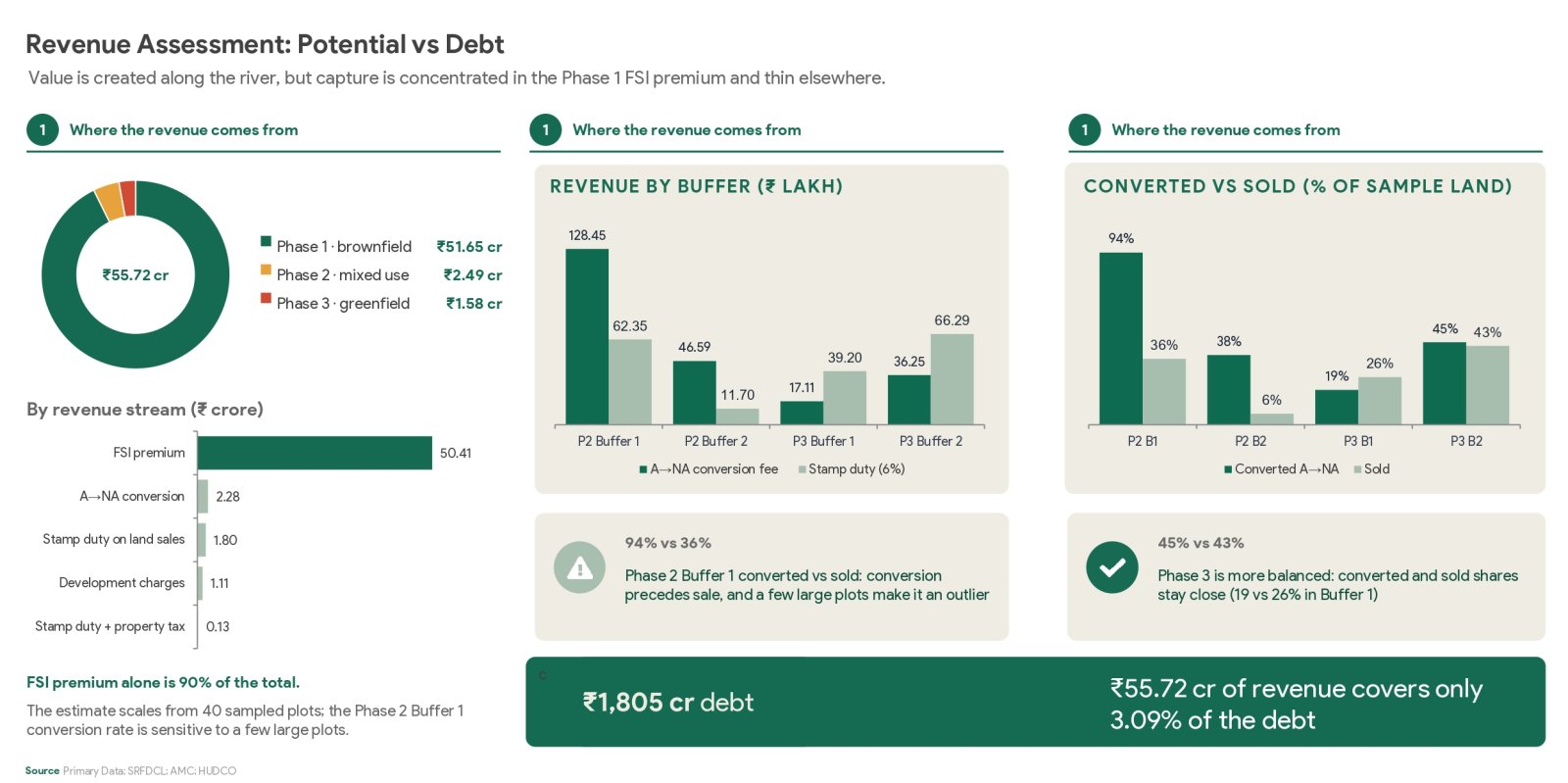
Despite substantial value creation, estimated revenue captures only a fraction of the outstanding project debt, exposing the gap between economic appreciation and financial recovery.