• Home
  • FP
  • UP4005-2
  • Unlocking the Existing : Private Housing Redevelopment

Prarthana Pg

UP4005-2

Unlocking the Existing : Private Housing Redevelopment

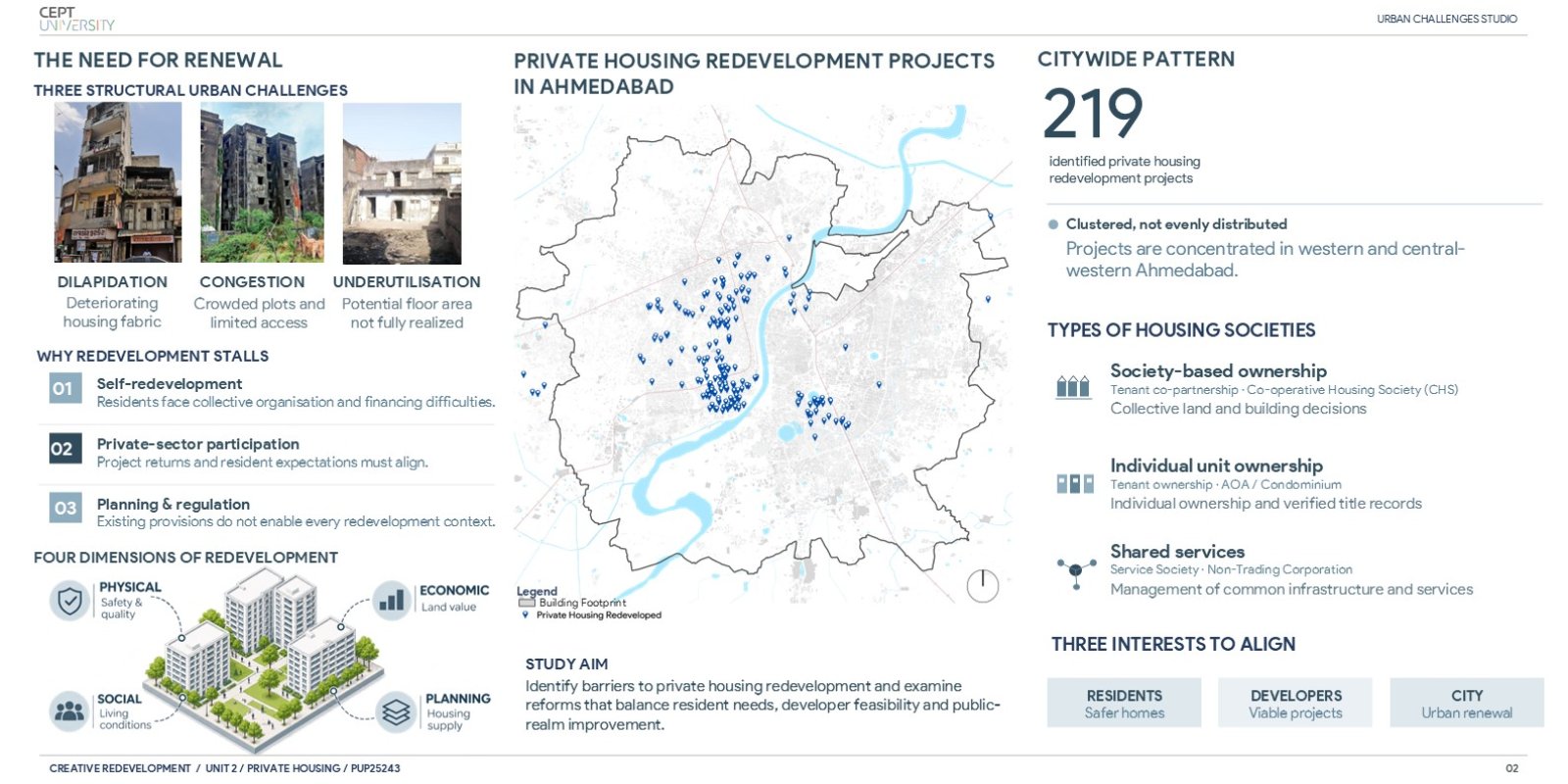
Private housing redevelopment offers an opportunity to renew ageing neighbourhoods, yet redevelopment remains uneven across Ahmedabad. This urban planning study maps 219 private housing redevelopment projects and examines why redevelopment succeeds in some micro-markets but struggles in others. Through spatial analysis, GDCR and FSI simulations, financial feasibility testing, and case studies from Ahmedabad and Pune, it investigates the role of physical conditions, regulatory constraints and resident negotiations. The project proposes targeted height flexibility, plot amalgamation and coordinated cluster redevelopment to improve housing outcomes, development viability and the public realm.
Report Content

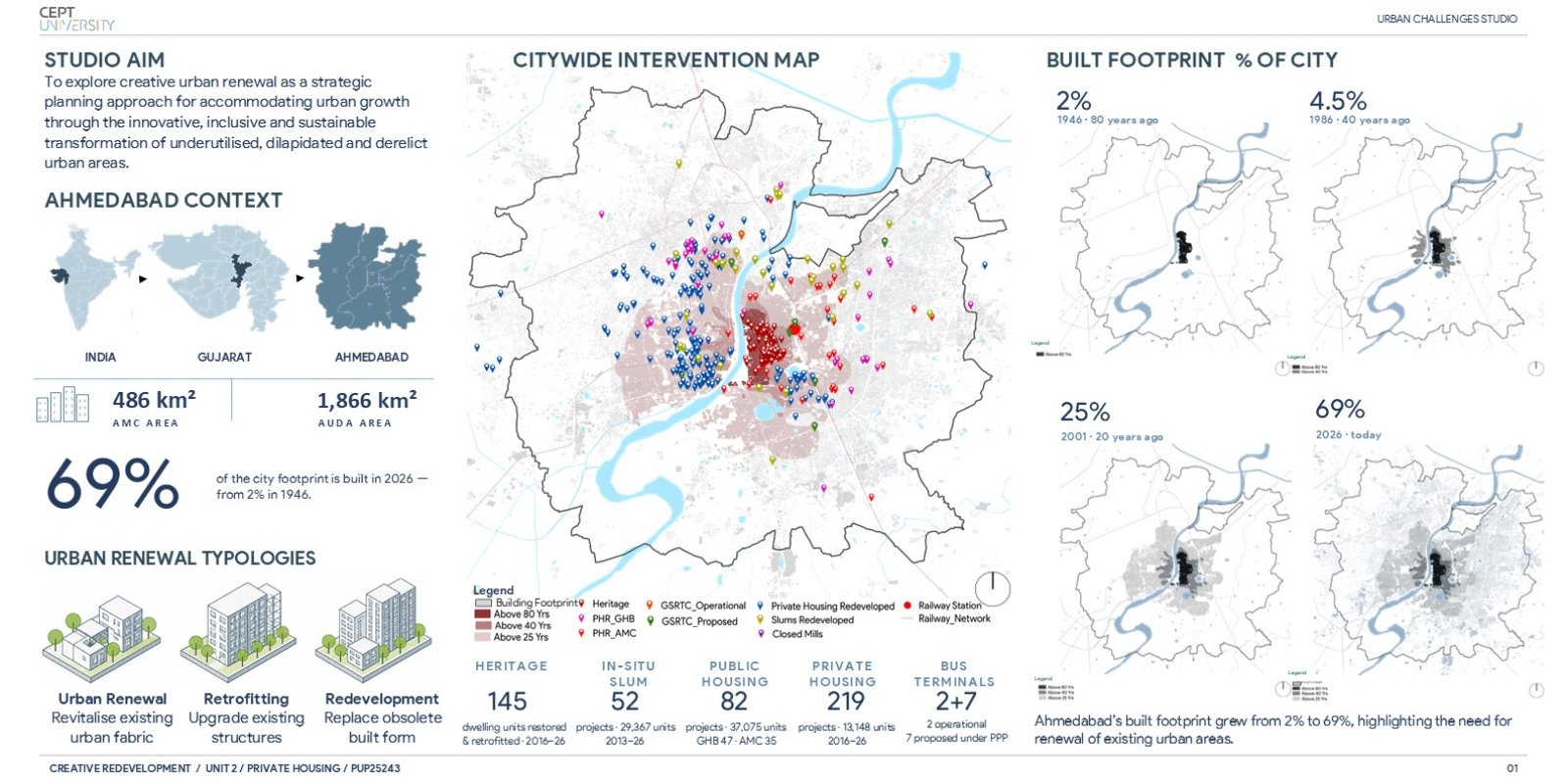
Introduction to the studio’s vision, Ahmedabad’s urban growth, citywide interventions and approaches to sustainable urban renewal.

Understanding the need for renewal through ageing housing, ownership structures, redevelopment barriers and citywide project mapping.

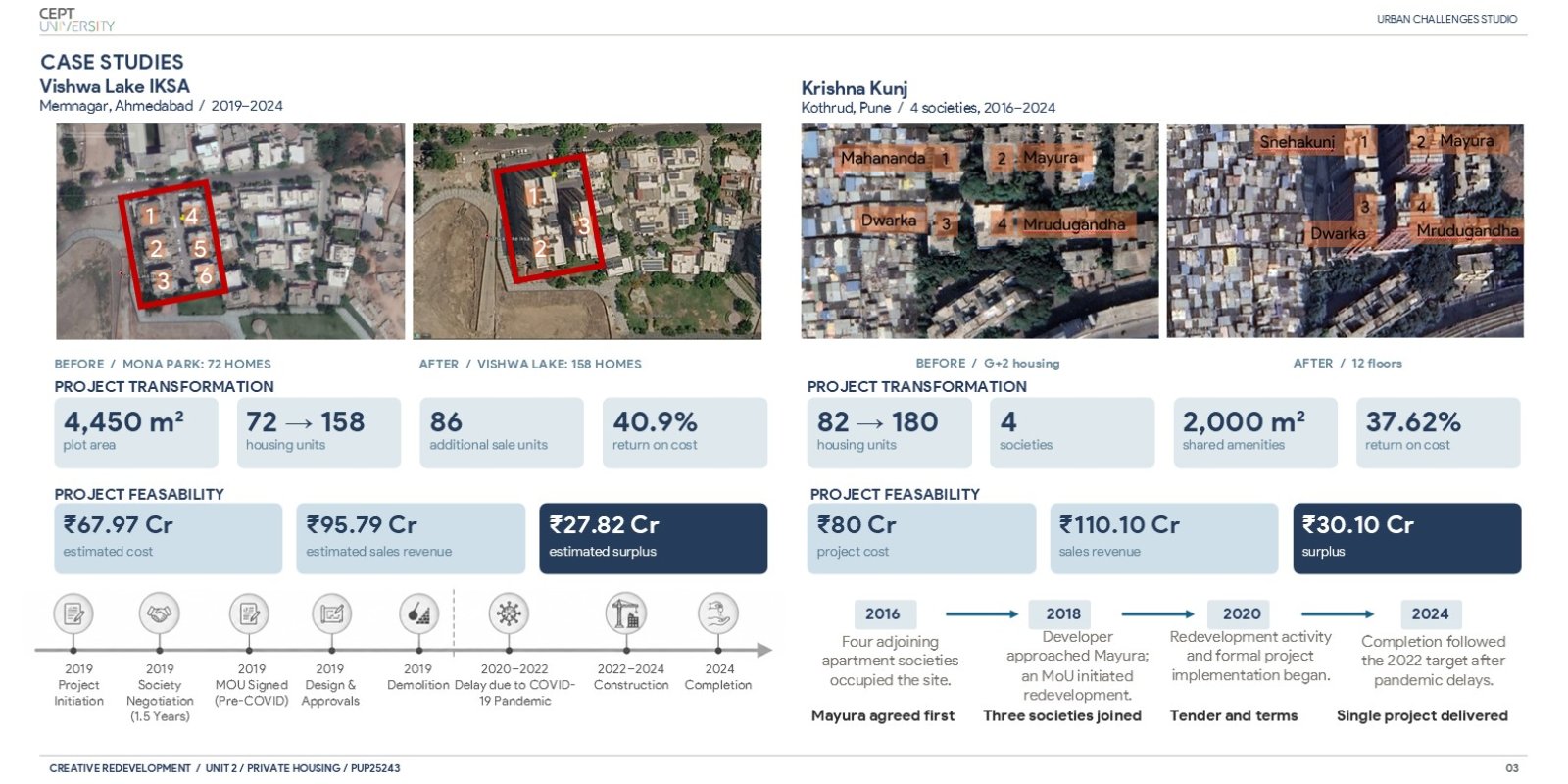
Examining housing transformation, project timelines and financial outcomes through Vishwa Lake IKSA in Ahmedabad and Krishna Kunj in Pune.

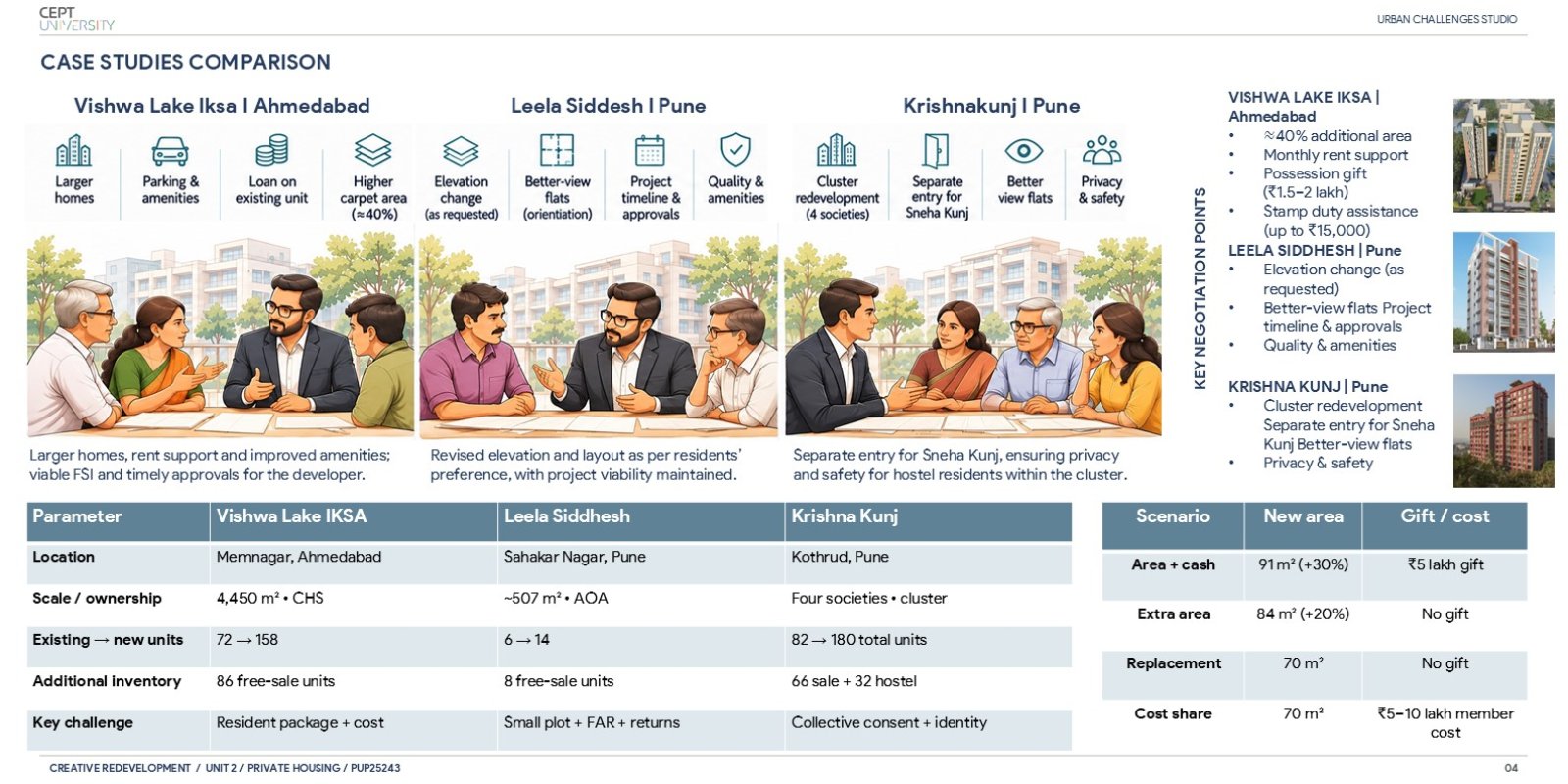
Highlights key negotiation challenges, stakeholder demands, compromises, and agreed outcomes across three private housing redevelopment case studies—Vishwa Lake IKSA, Leela Siddhesh, and Krishna Kunj.

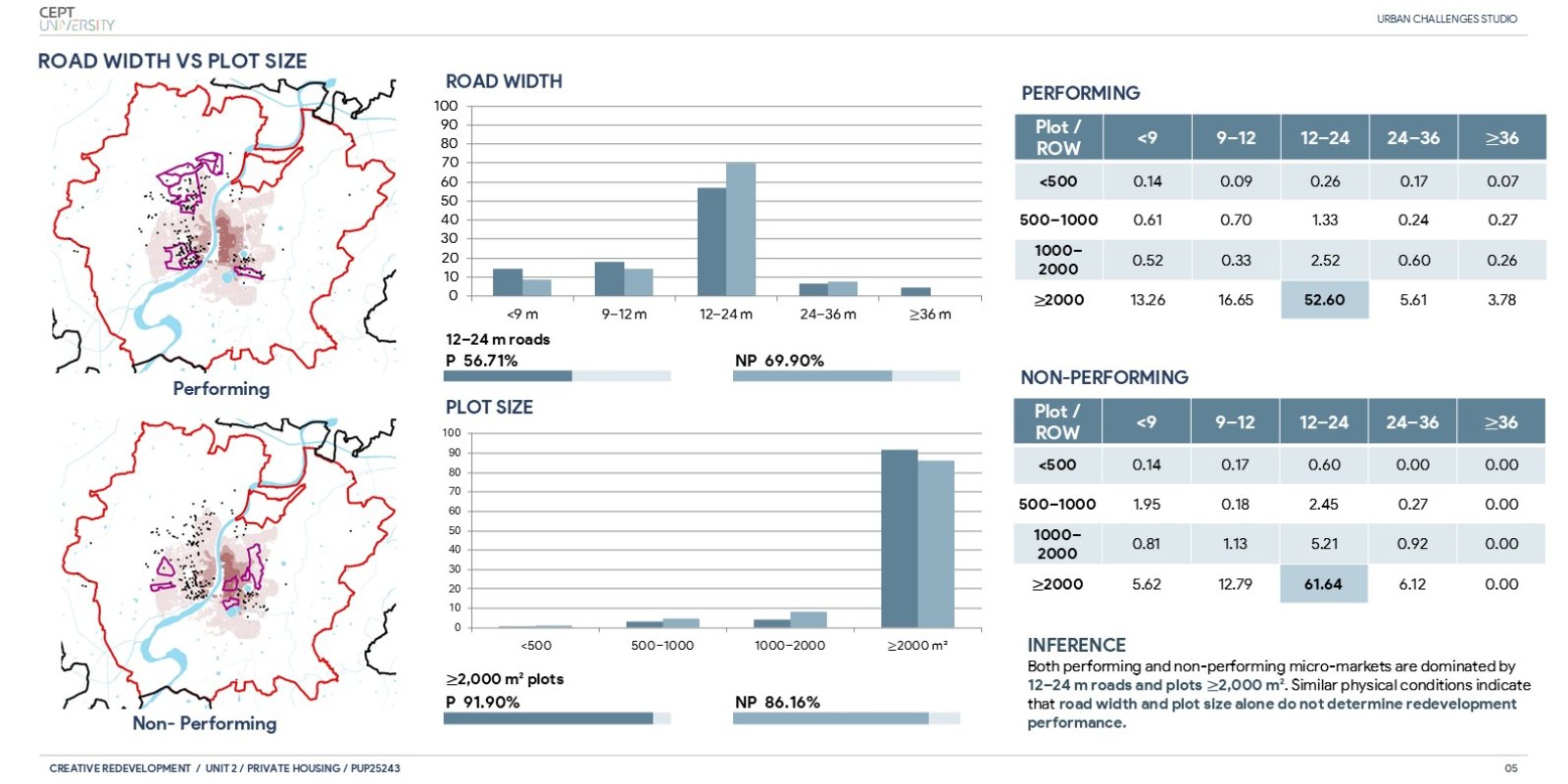
Comparative spatial analysis of performing and non-performing micro-markets to understand how road widths and plot sizes influence redevelopment.

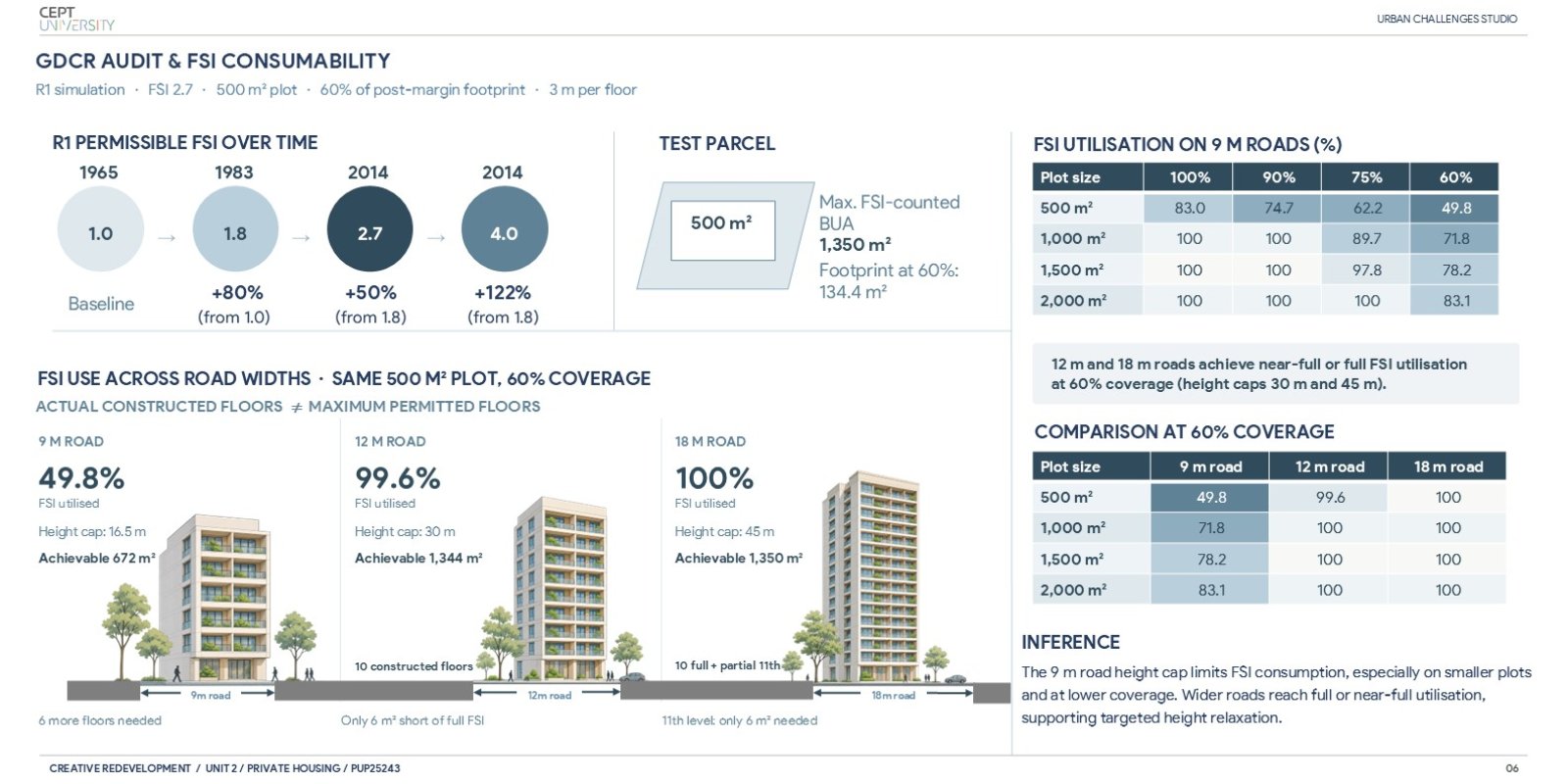
Assessing the impact of road width, building height and plot coverage on the utilisation of permissible FSI.

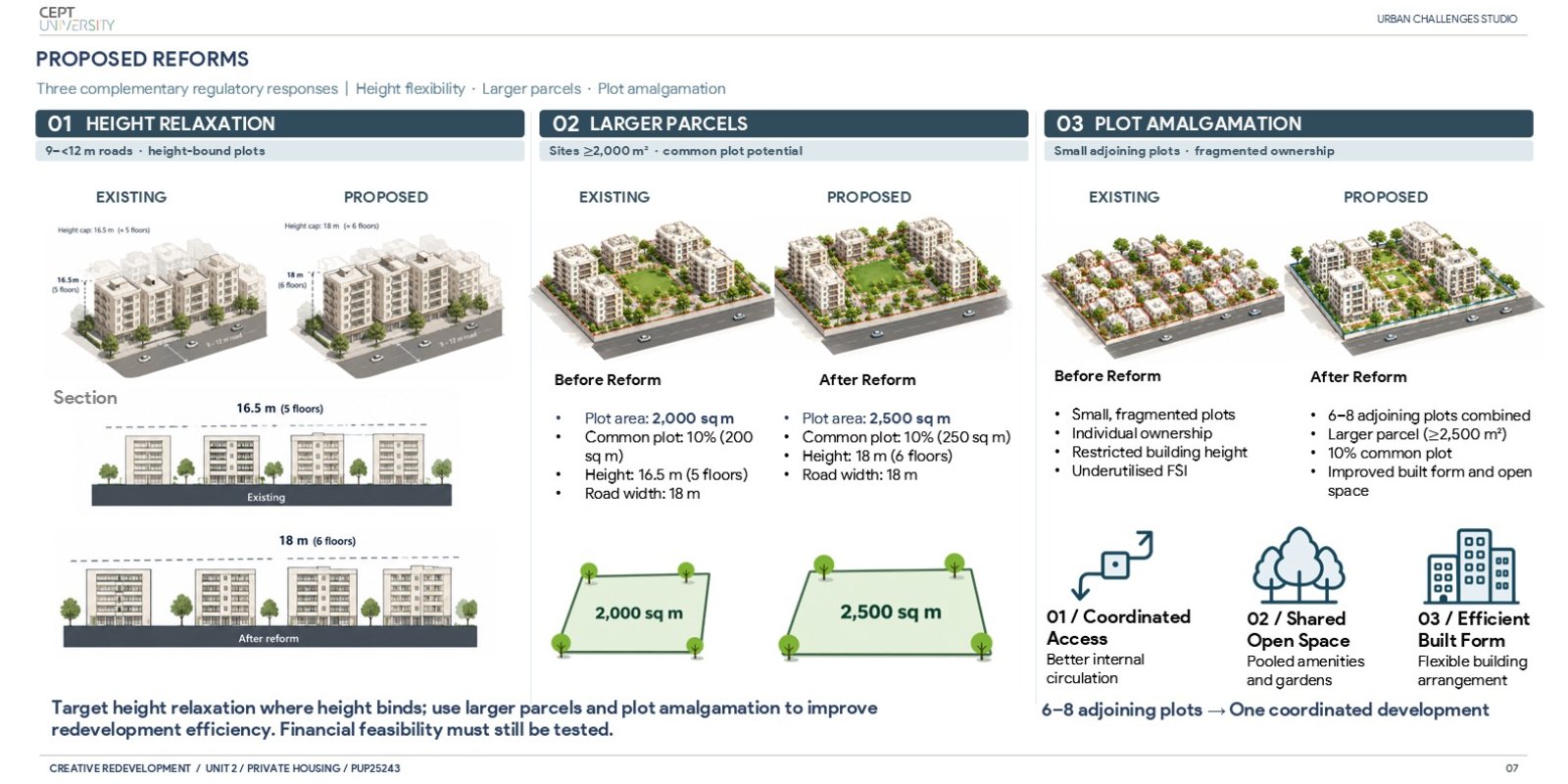
Exploring height relaxation, larger development parcels and plot amalgamation as strategies to unlock redevelopment potential.

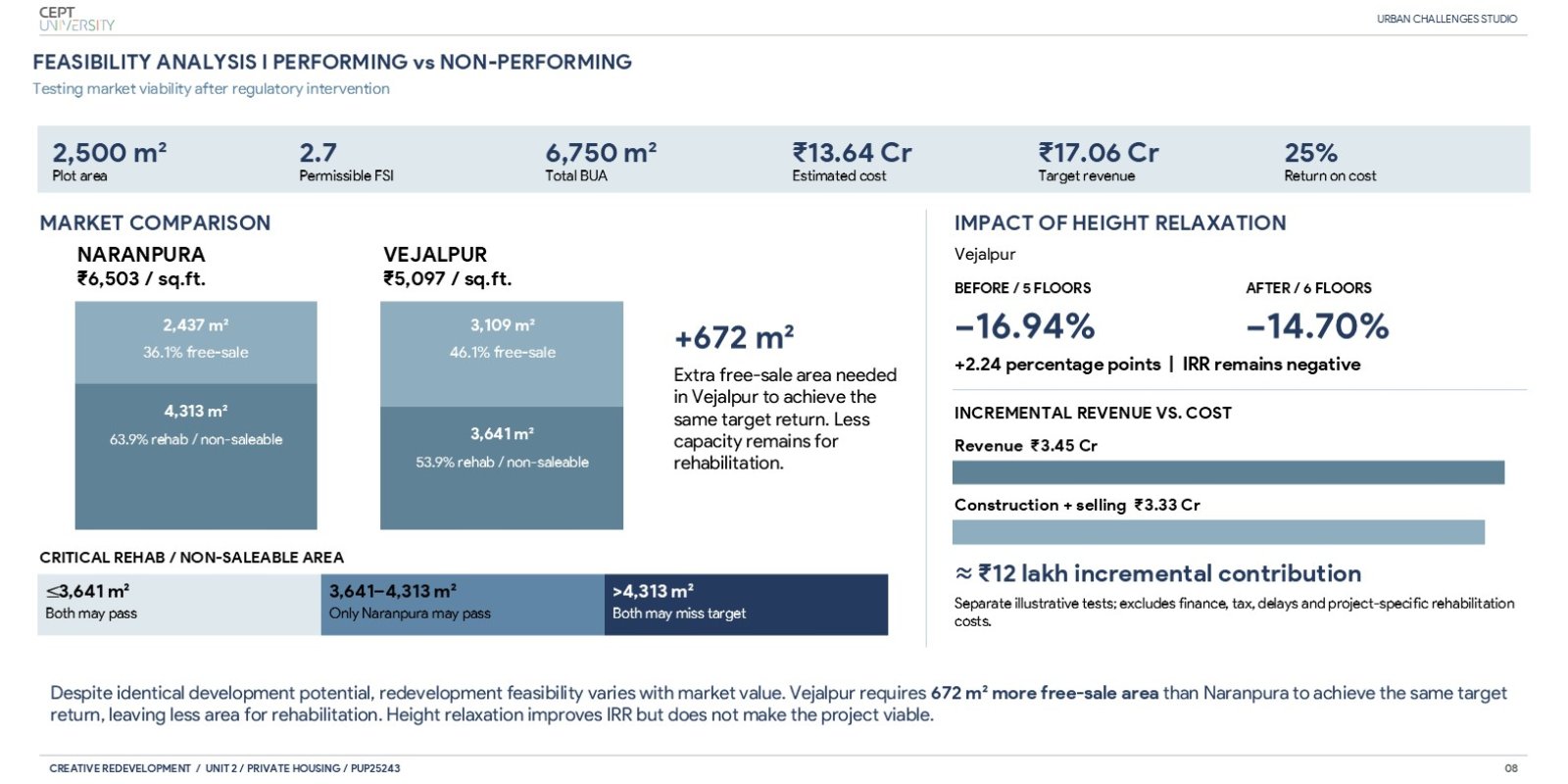
Comparing redevelopment viability in Naranpura and Vejalpur to understand the impact of market values and regulatory interventions.

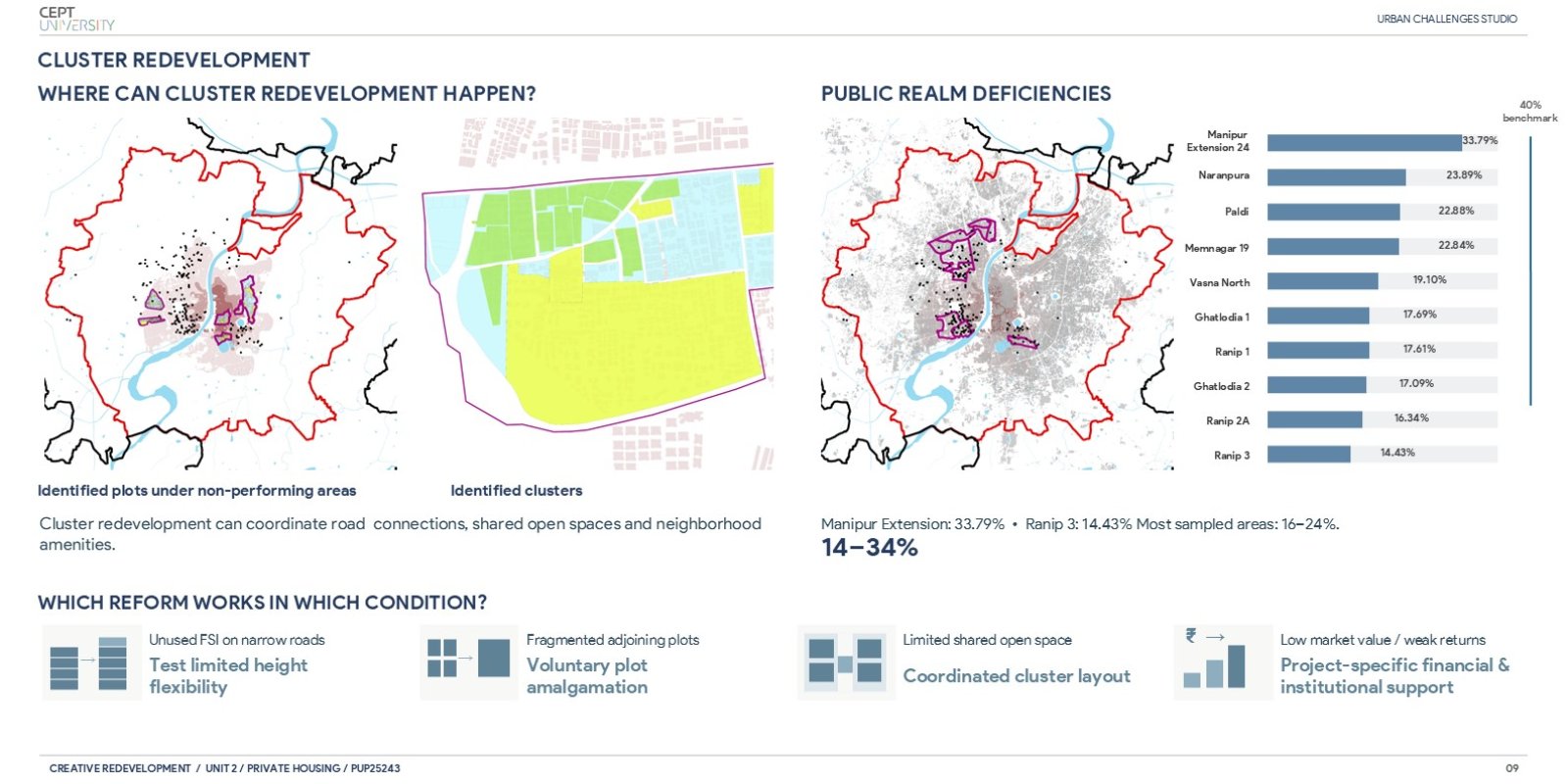
Identifying potential redevelopment clusters and public realm deficiencies to explore coordinated neighbourhood-level interventions.

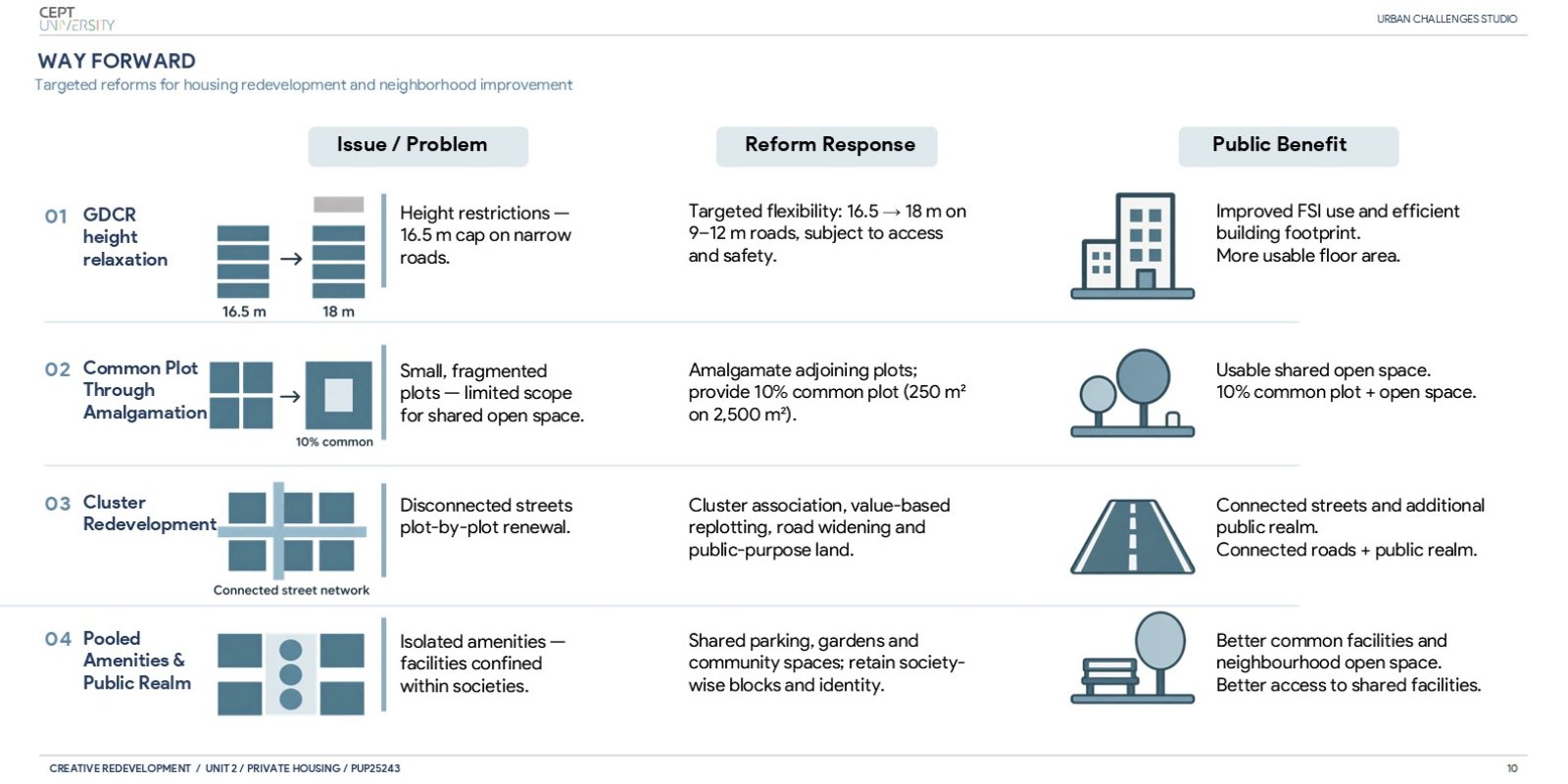
Presenting targeted planning and regulatory reforms to improve redevelopment feasibility, housing conditions, shared amenities and public spaces.