Your browser is out-of-date!
For a richer surfing experience on our website, please update your browser. Update my browser now!
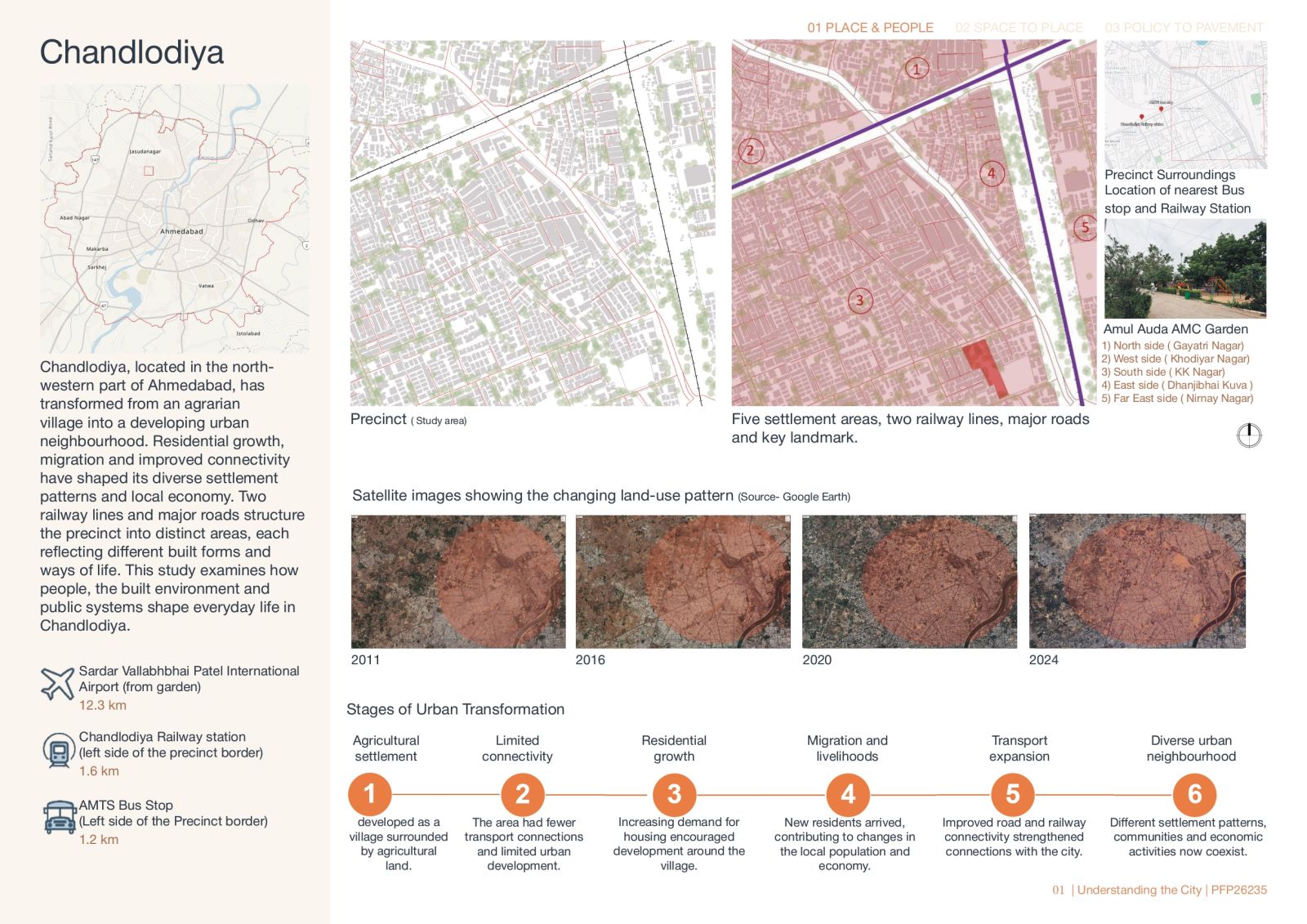
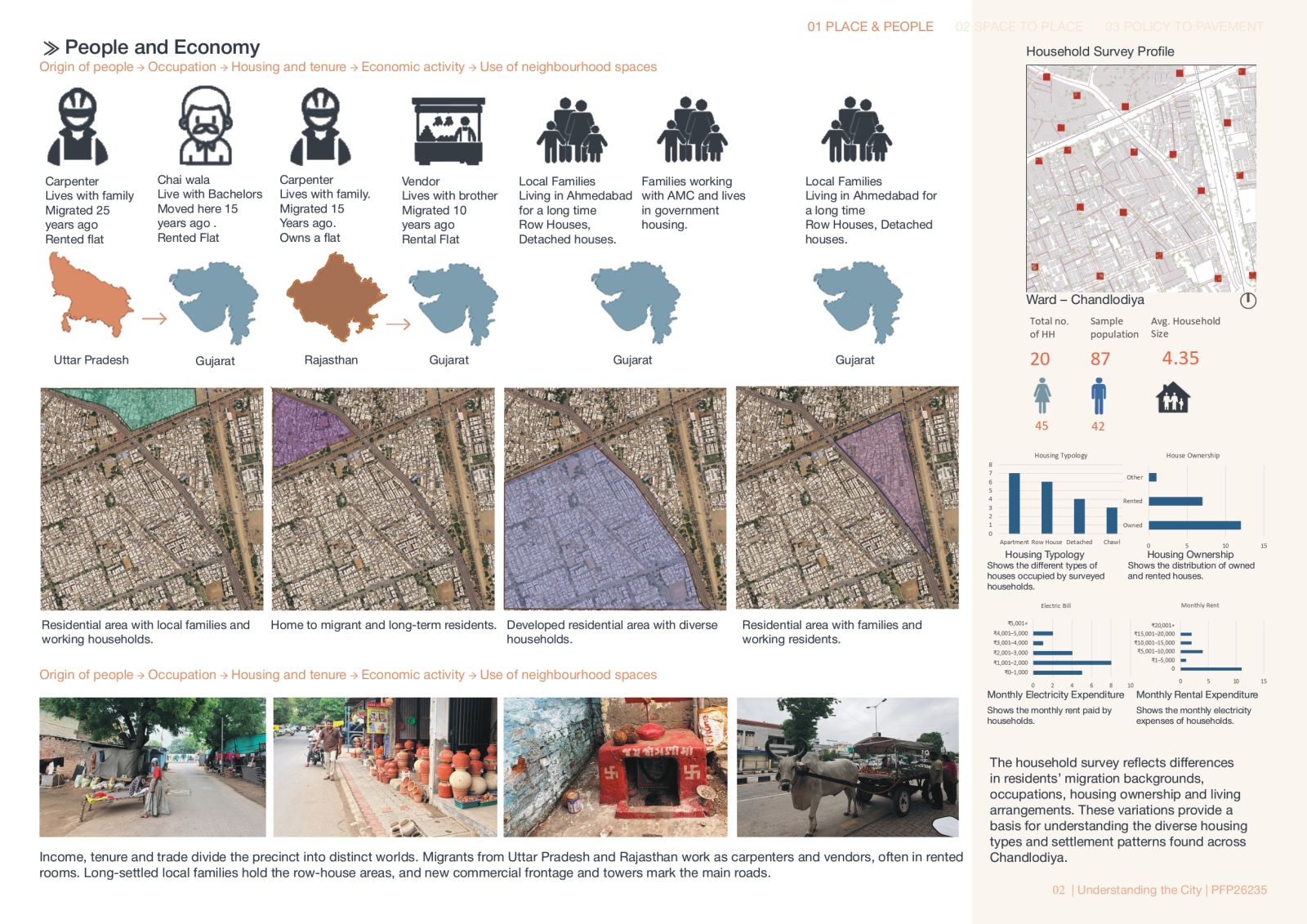
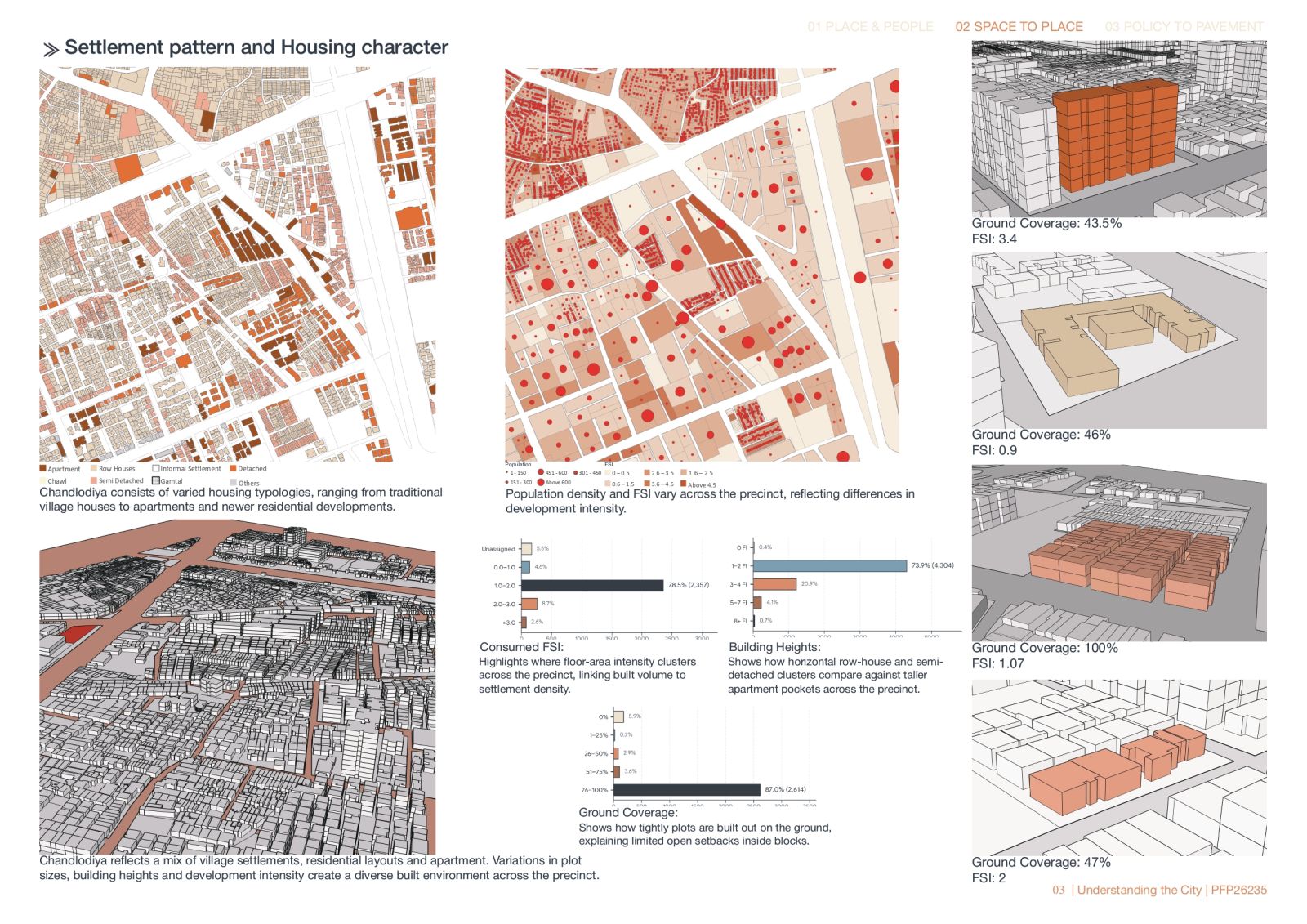
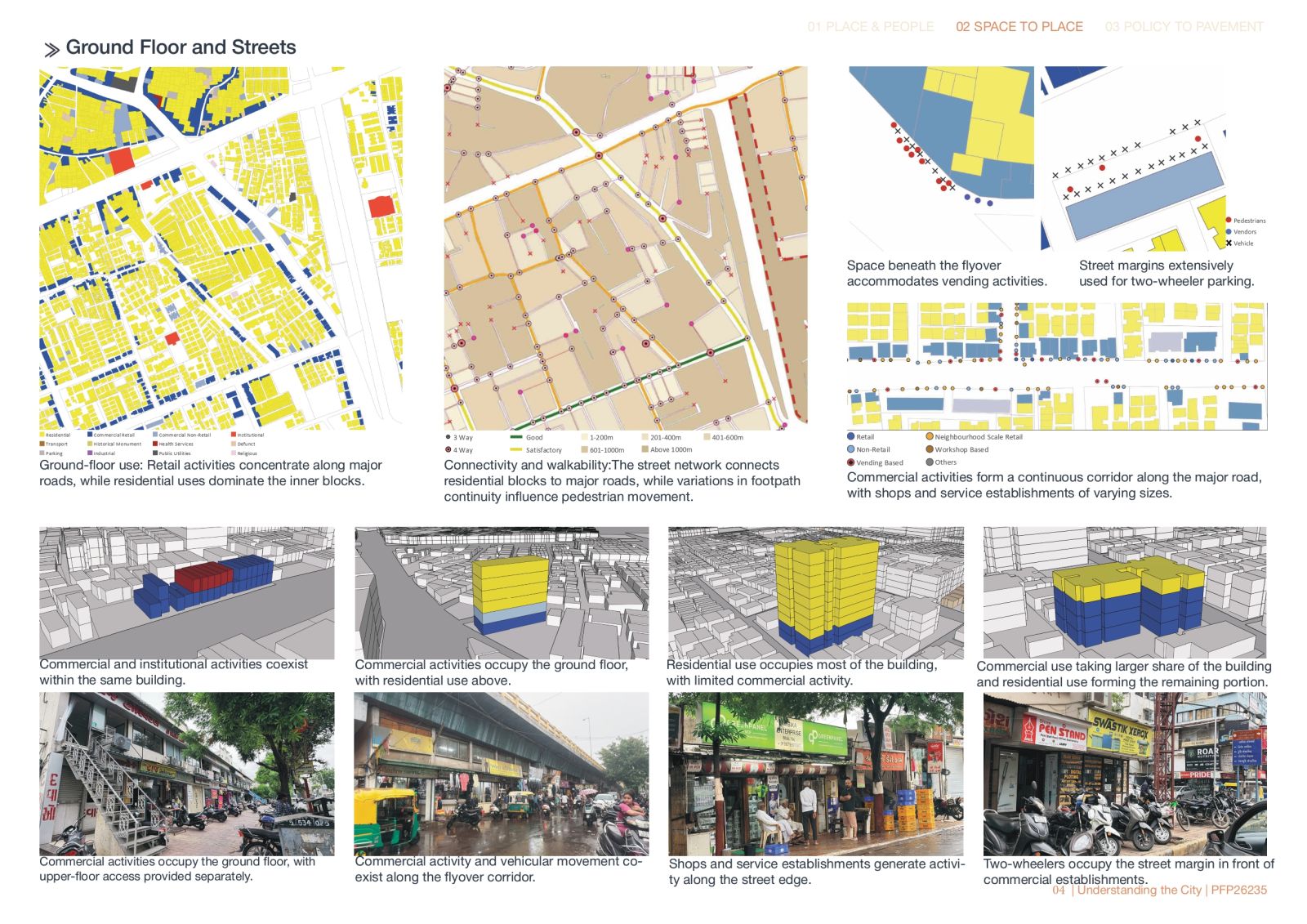
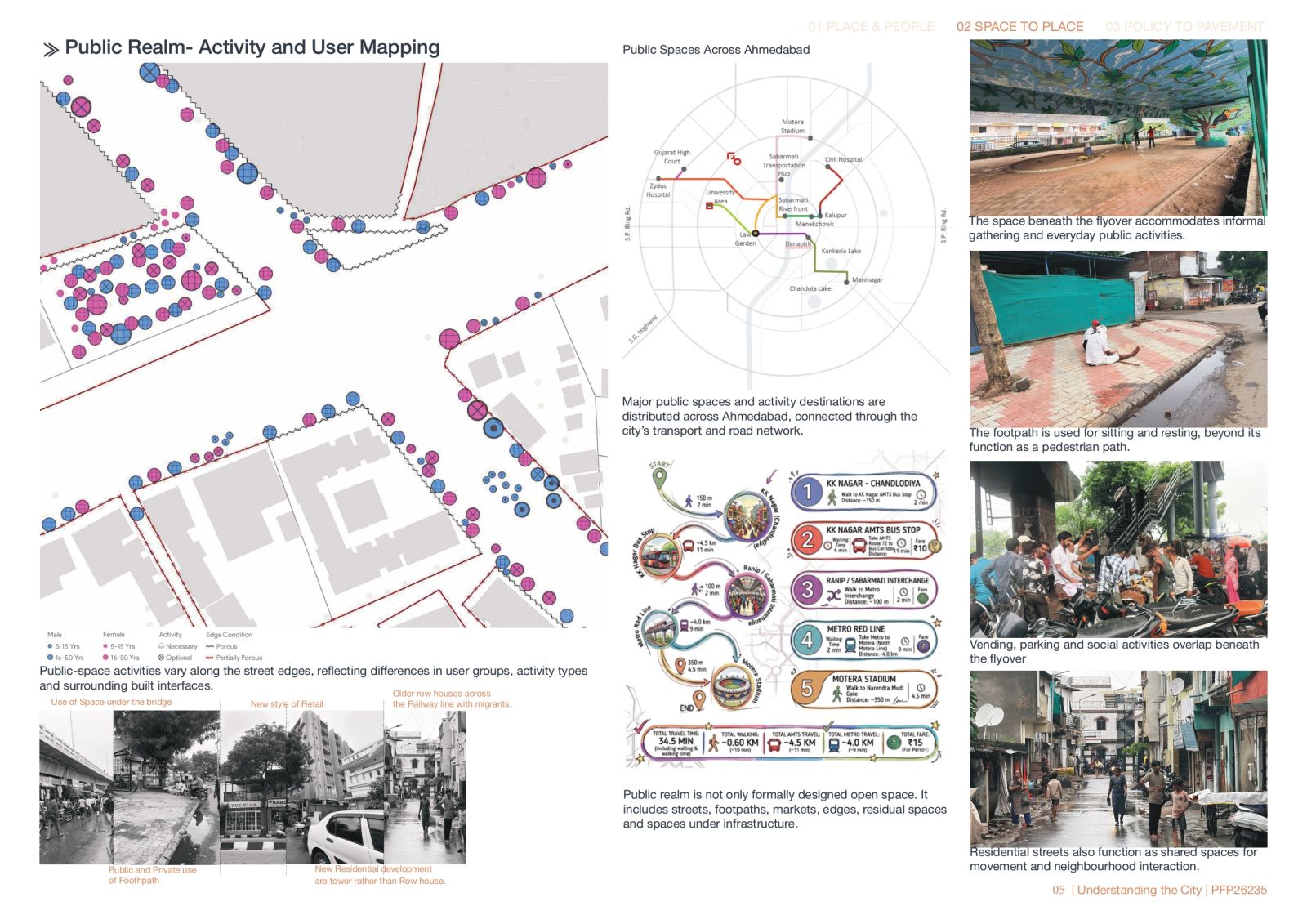
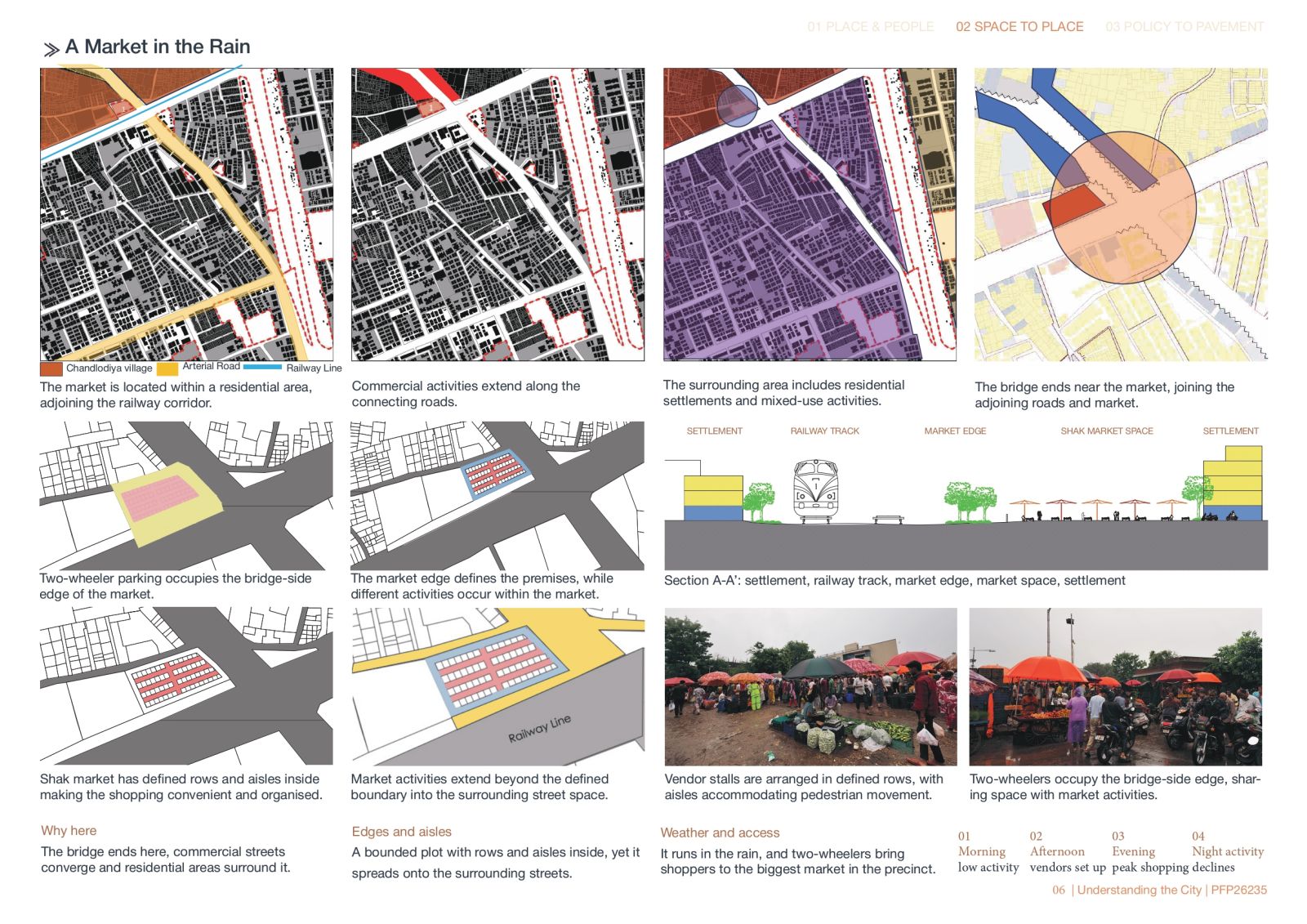
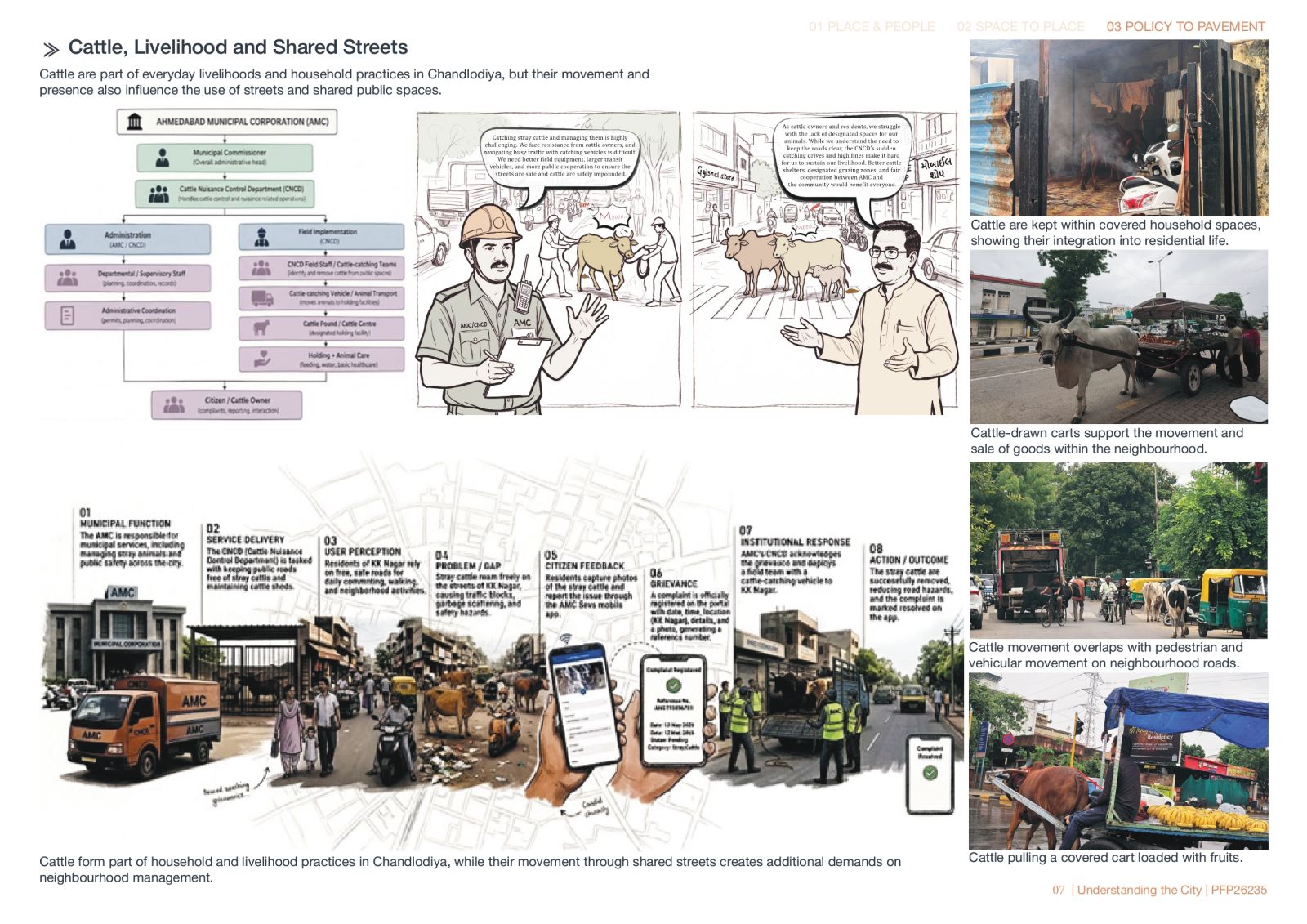
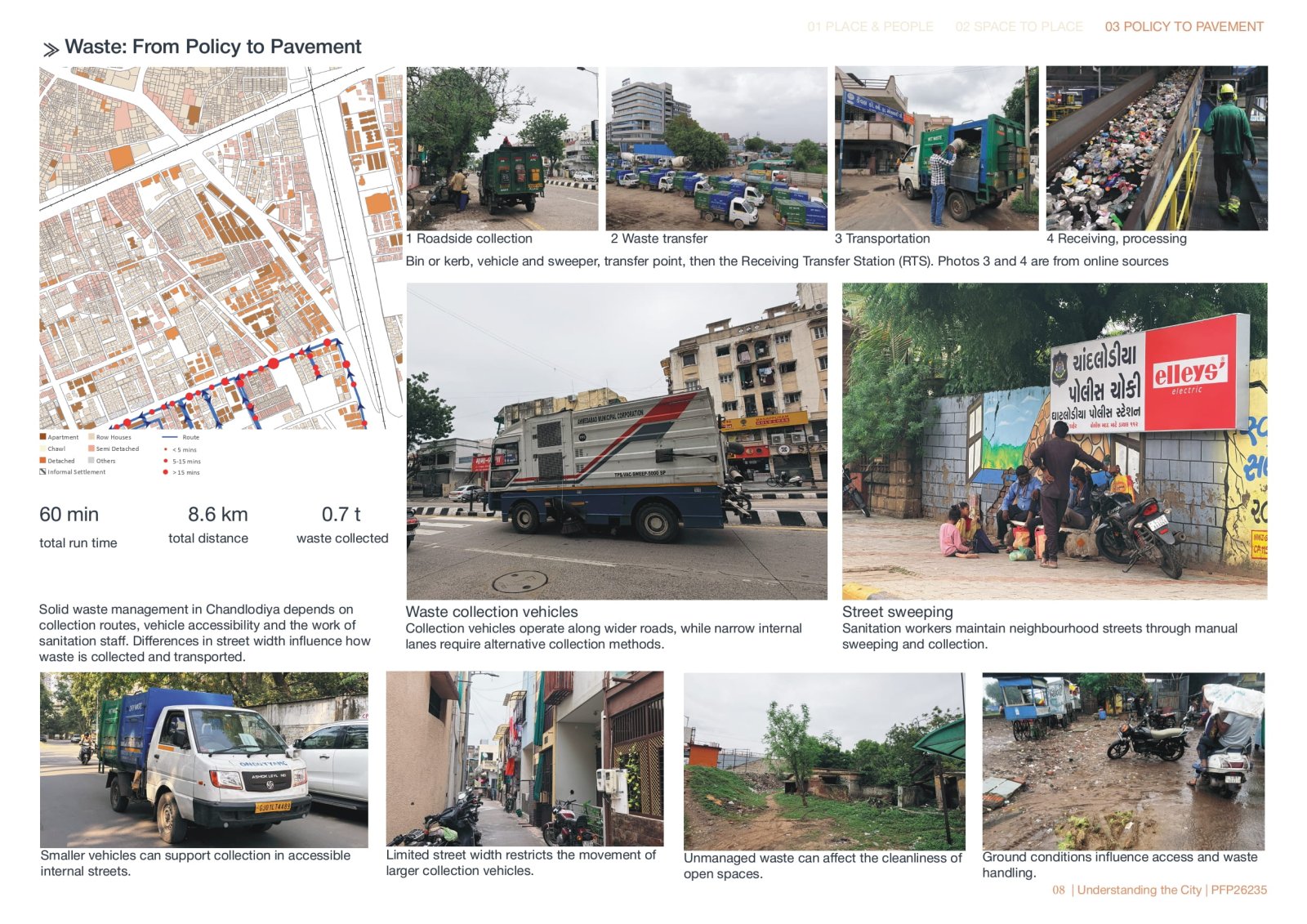
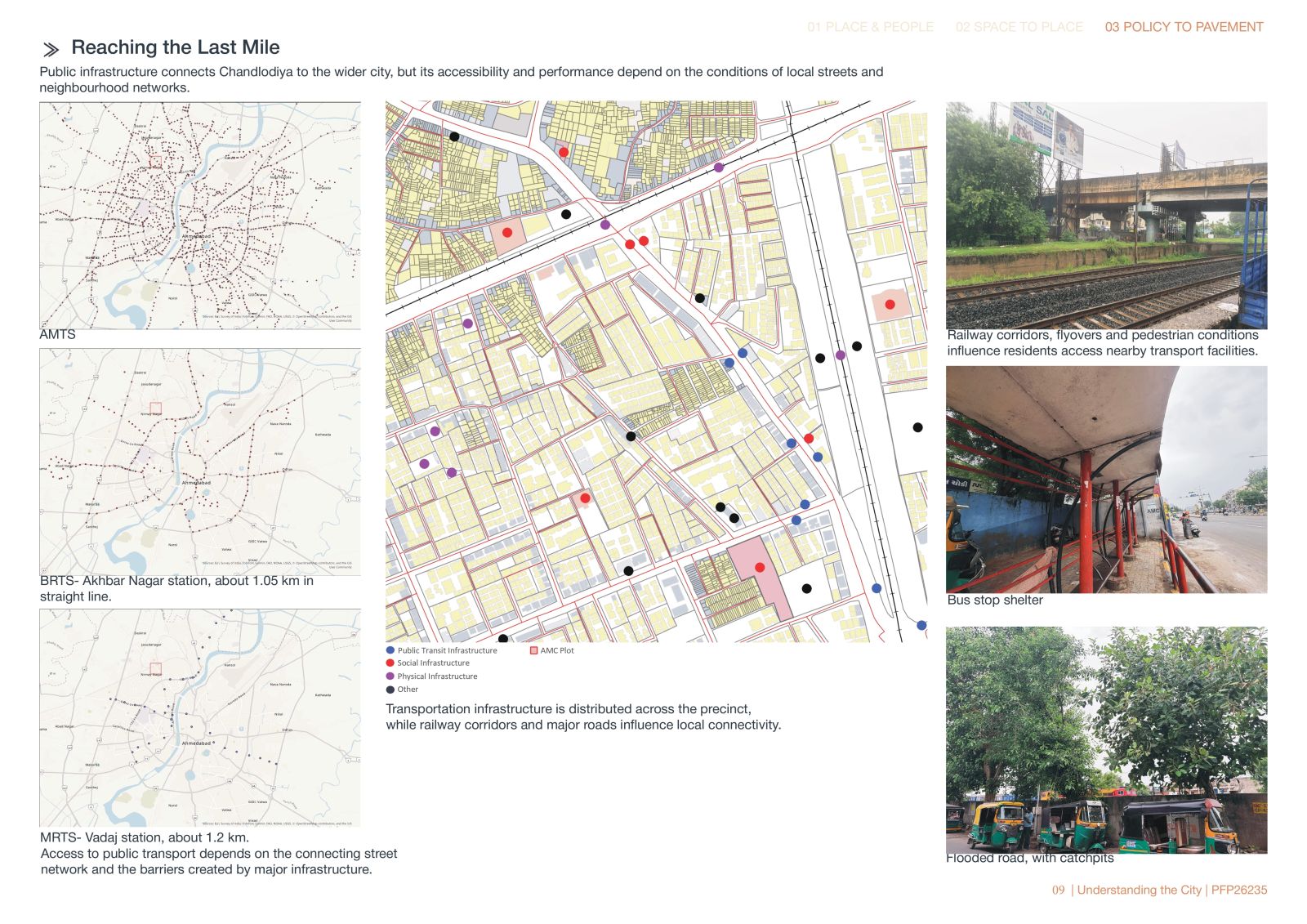
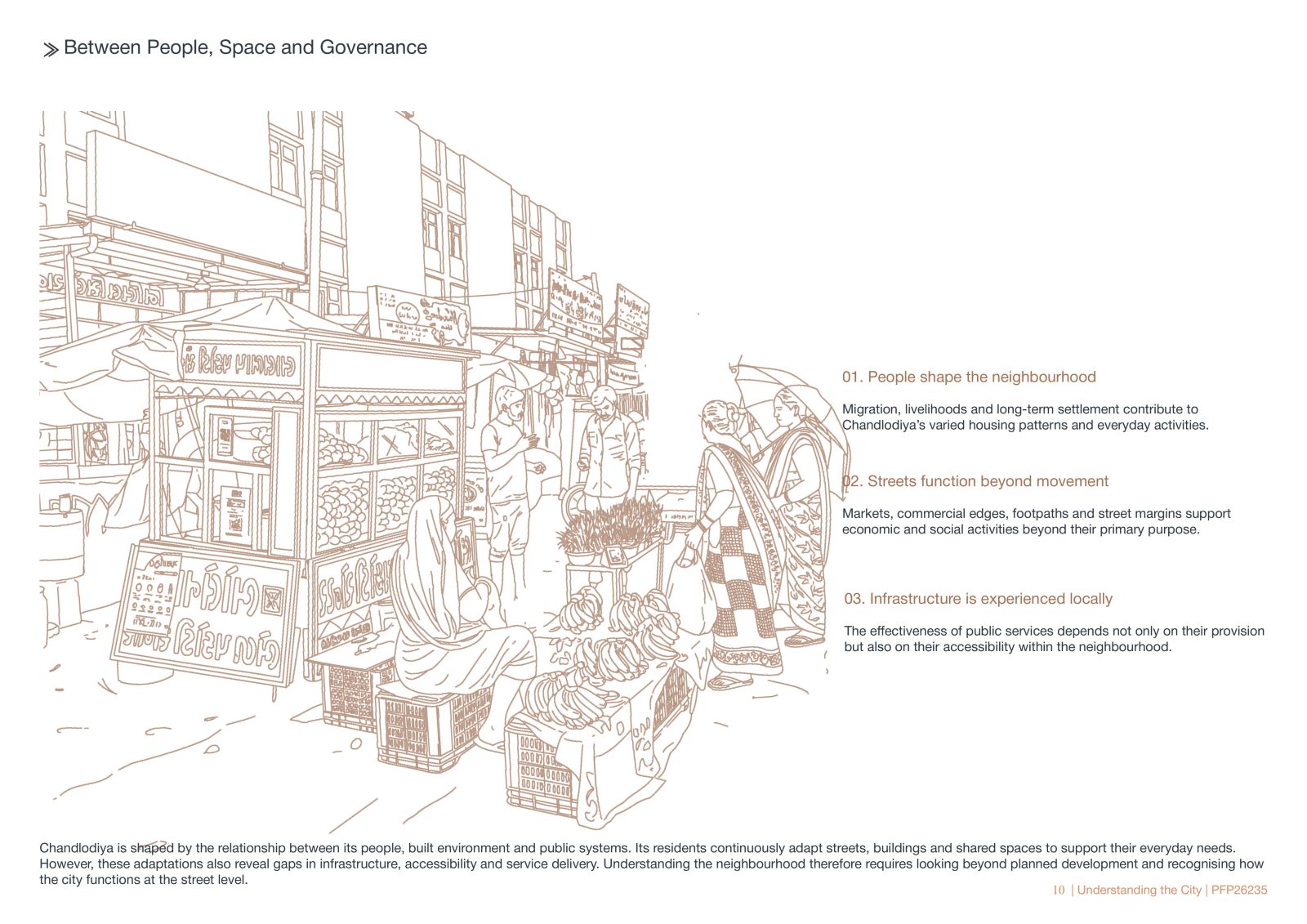
The Chandlodiya precinct, located in the northern part of Ahmedabad, represents a neighbourhood shaped by the gradual transformation of an older settlement into a diverse urban area. The precinct brings together village housing, planned residential layouts, apartment developments and informal settlements, creating distinct patterns of built form and everyday life. Its urban structure is influenced by major roads and railway corridors, which divide the area into different residential pockets while connecting it to the wider city. The presence of long-term residents and migrant households has contributed to a varied social and economic character. Residential streets, commercial edges, local markets and shared spaces support everyday activities, while infrastructure and public services influence how these spaces function. Through the study of people and livelihoods, settlement patterns and the built environment, and public systems and governance, the precinct is examined to understand how Chandlodiya has evolved and how its residents shape and adapt the neighbourhood through everyday practices.