Your browser is out-of-date!
For a richer surfing experience on our website, please update your browser. Update my browser now!
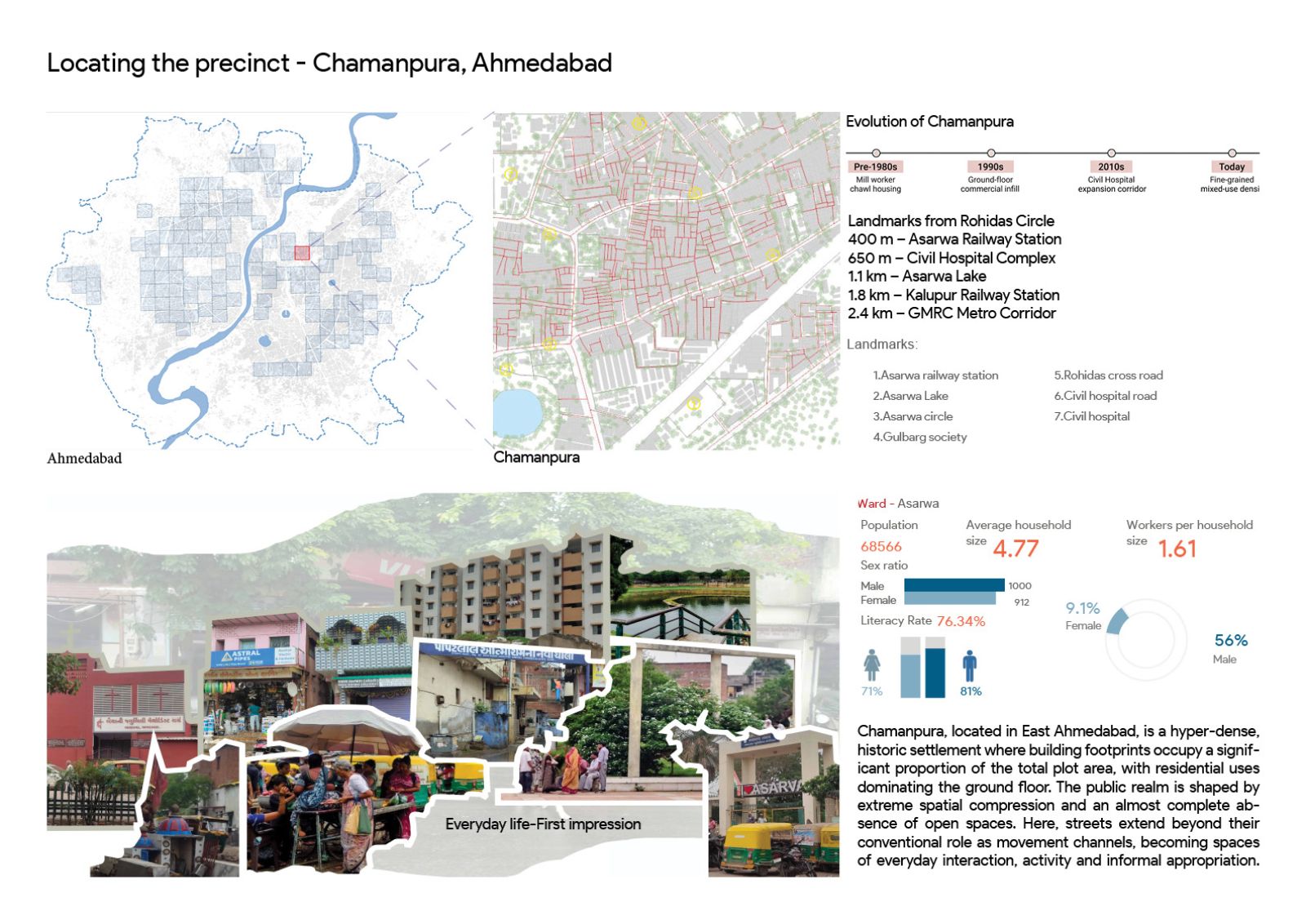
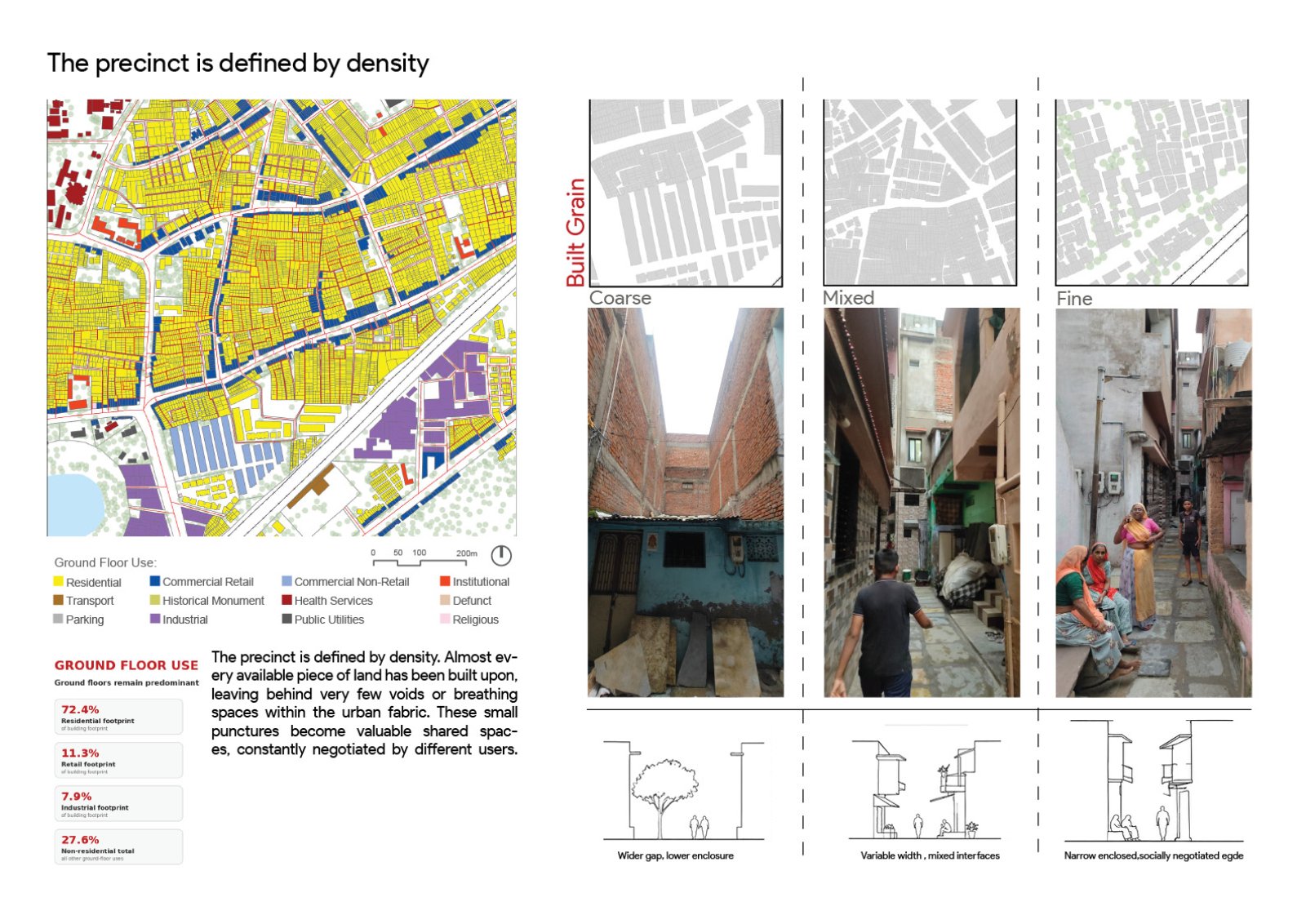
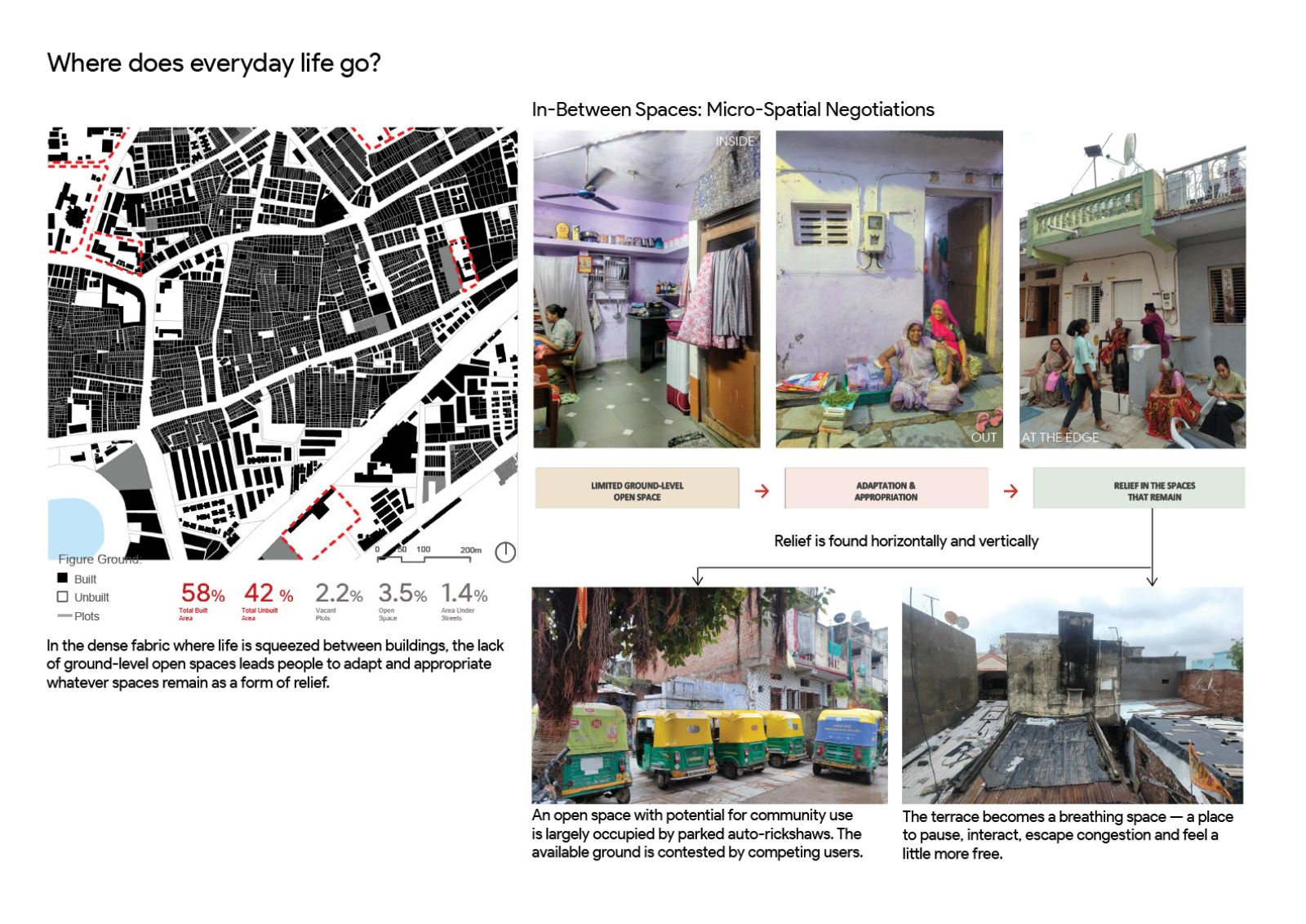
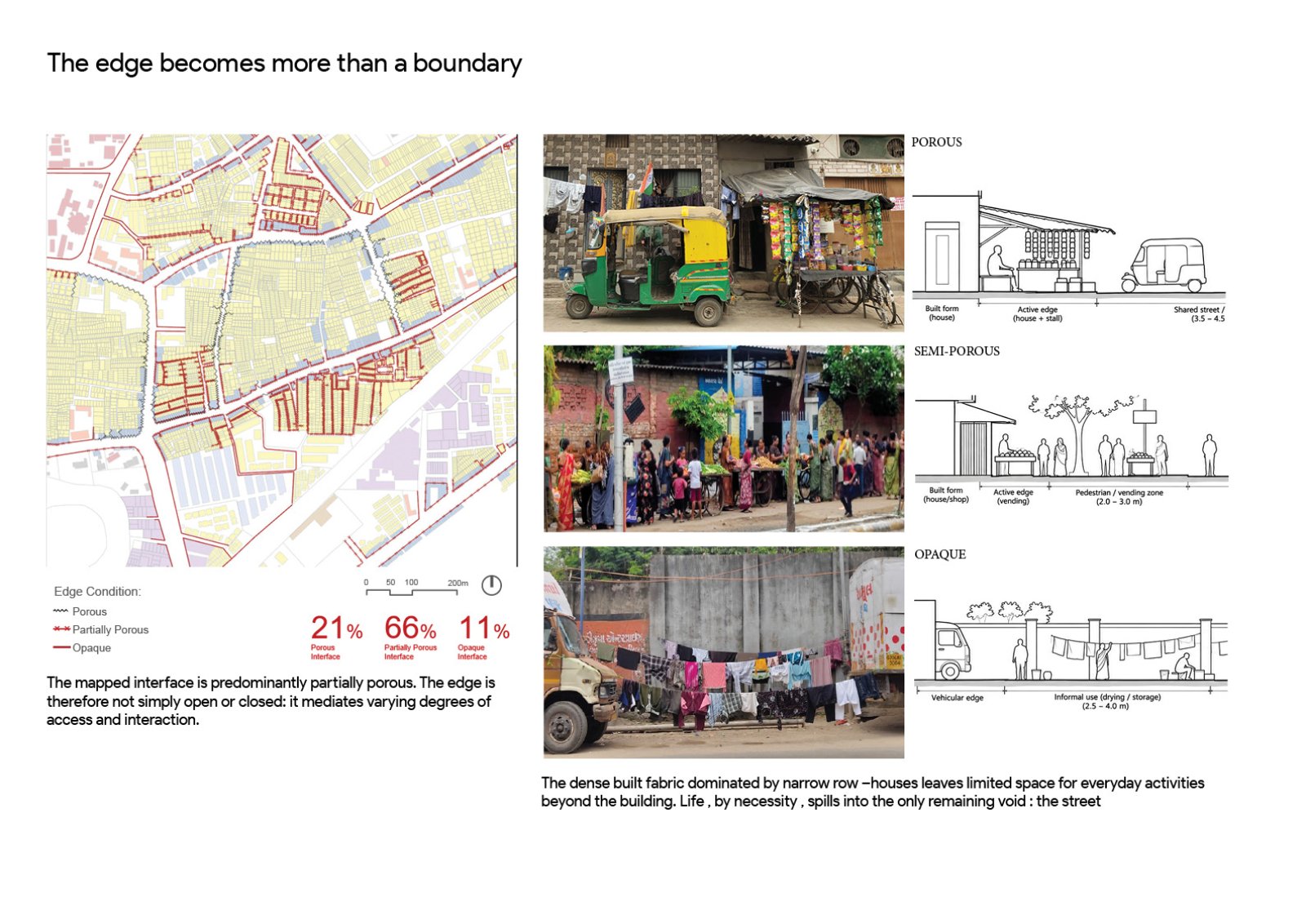
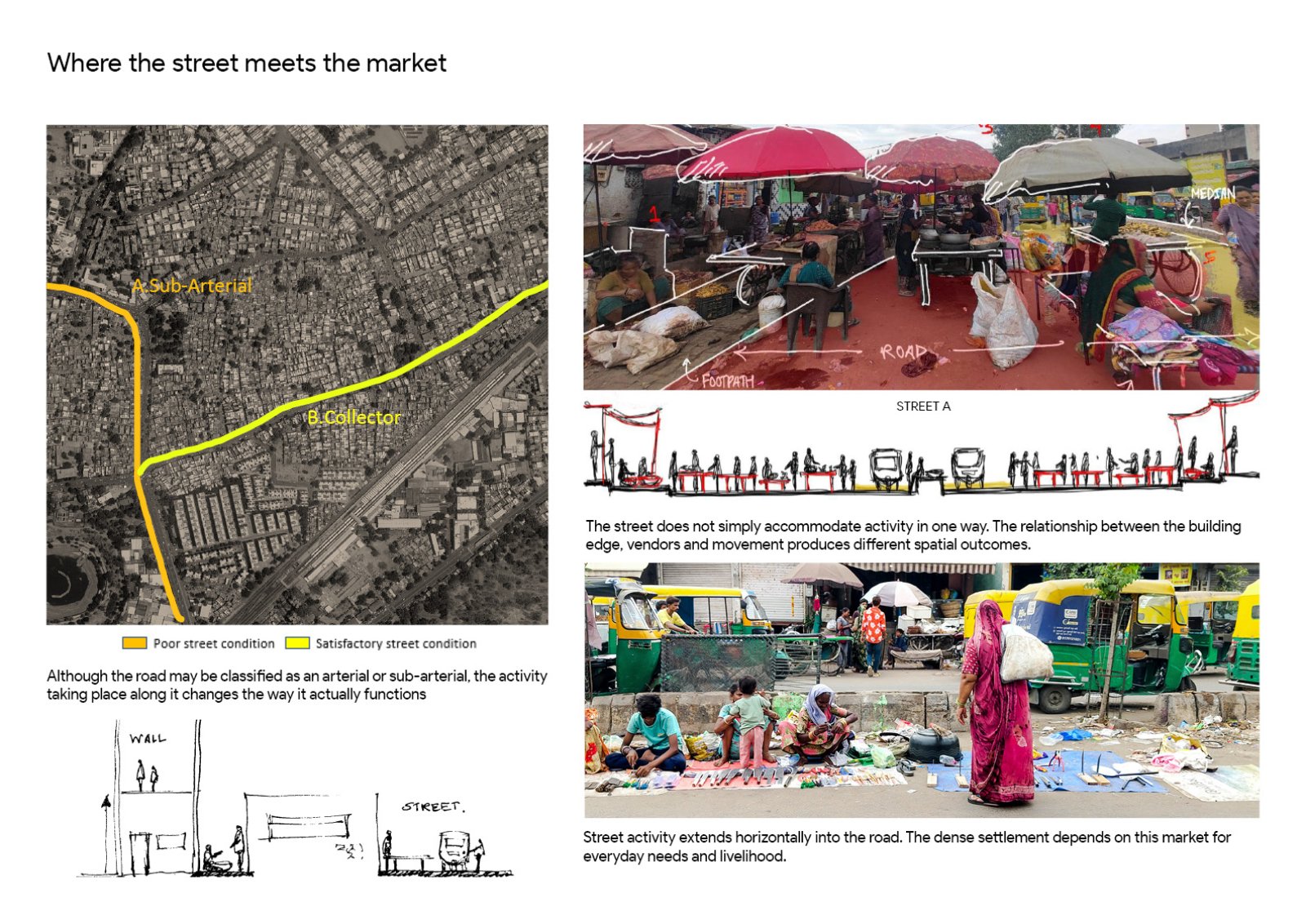
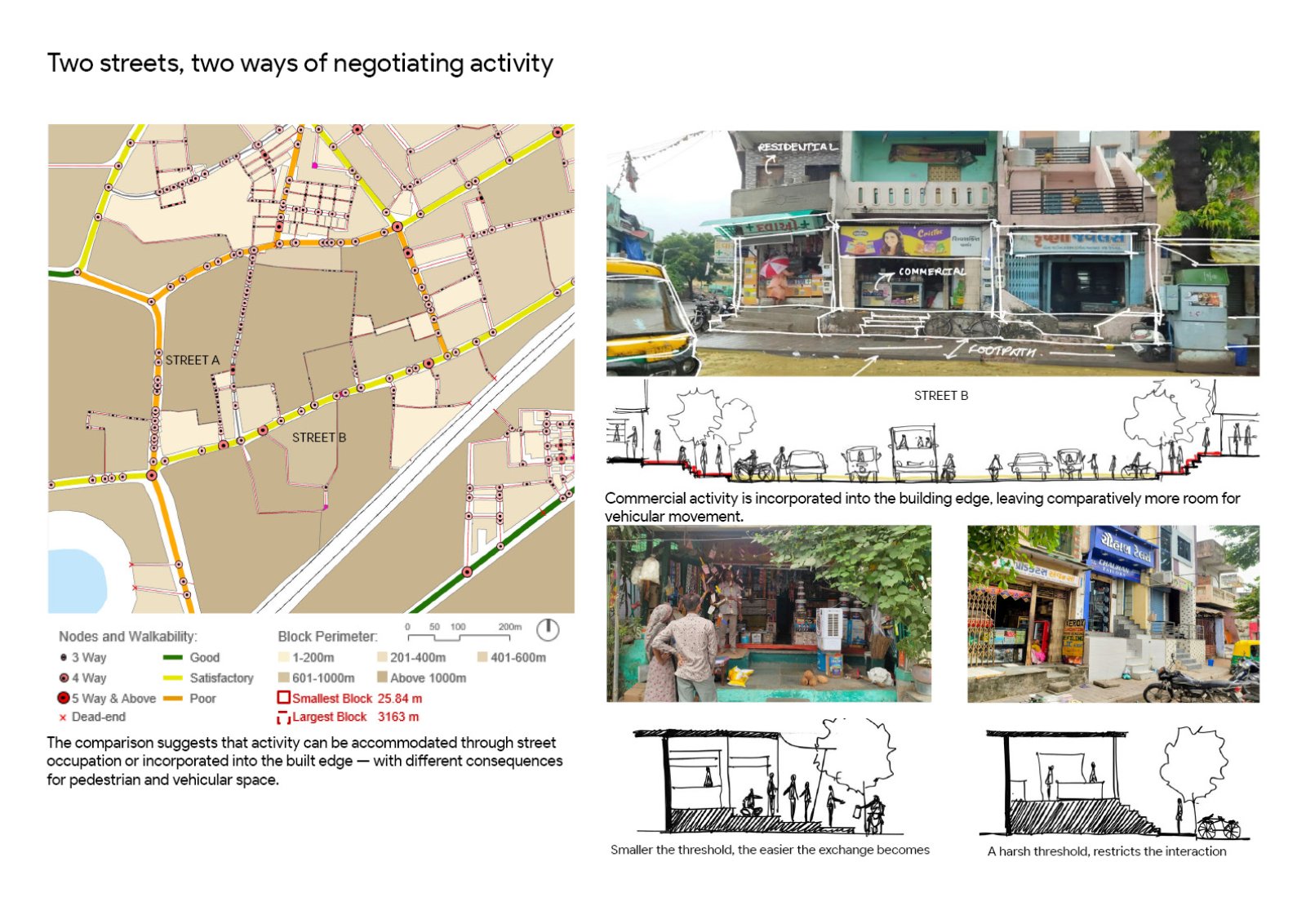
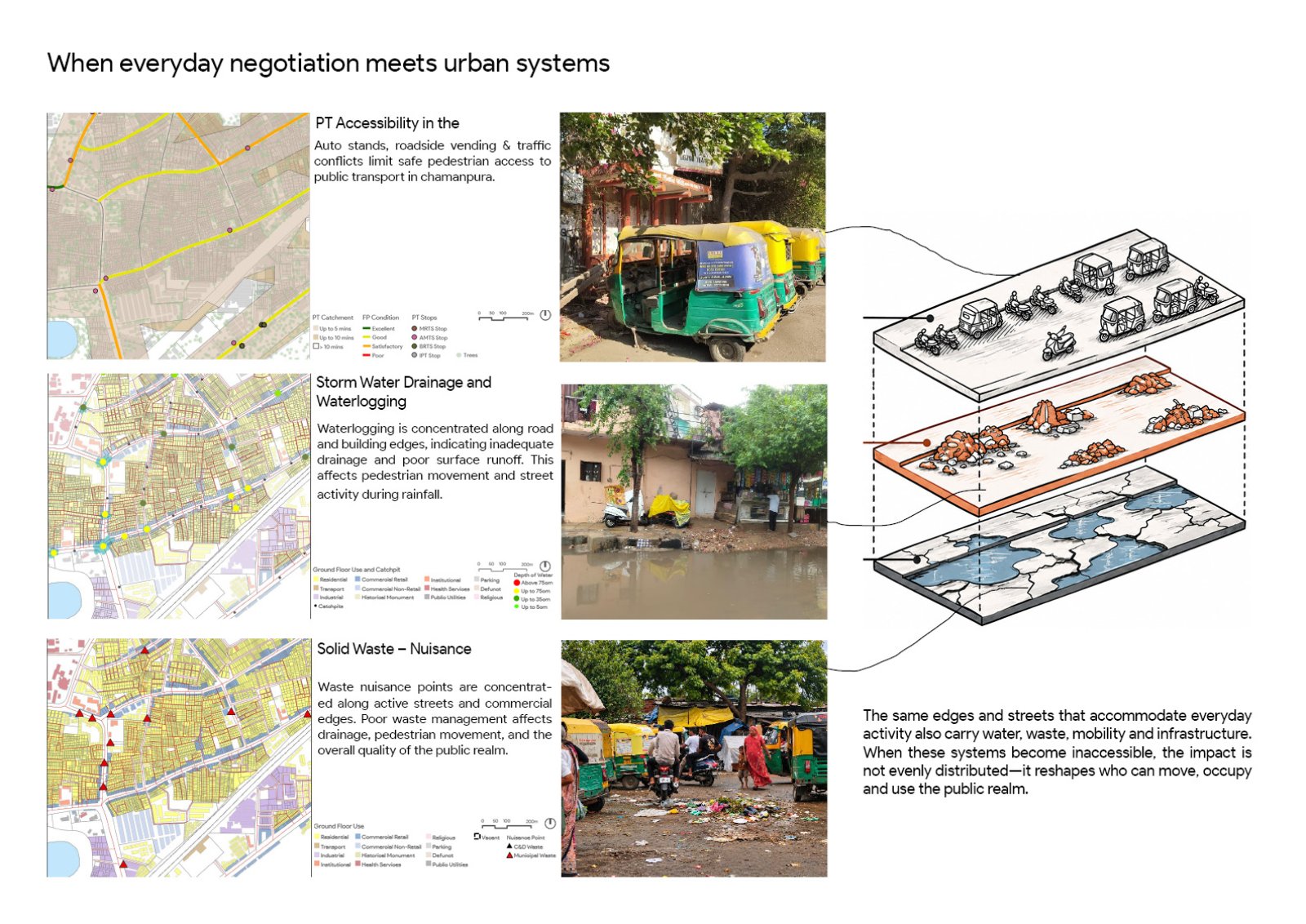
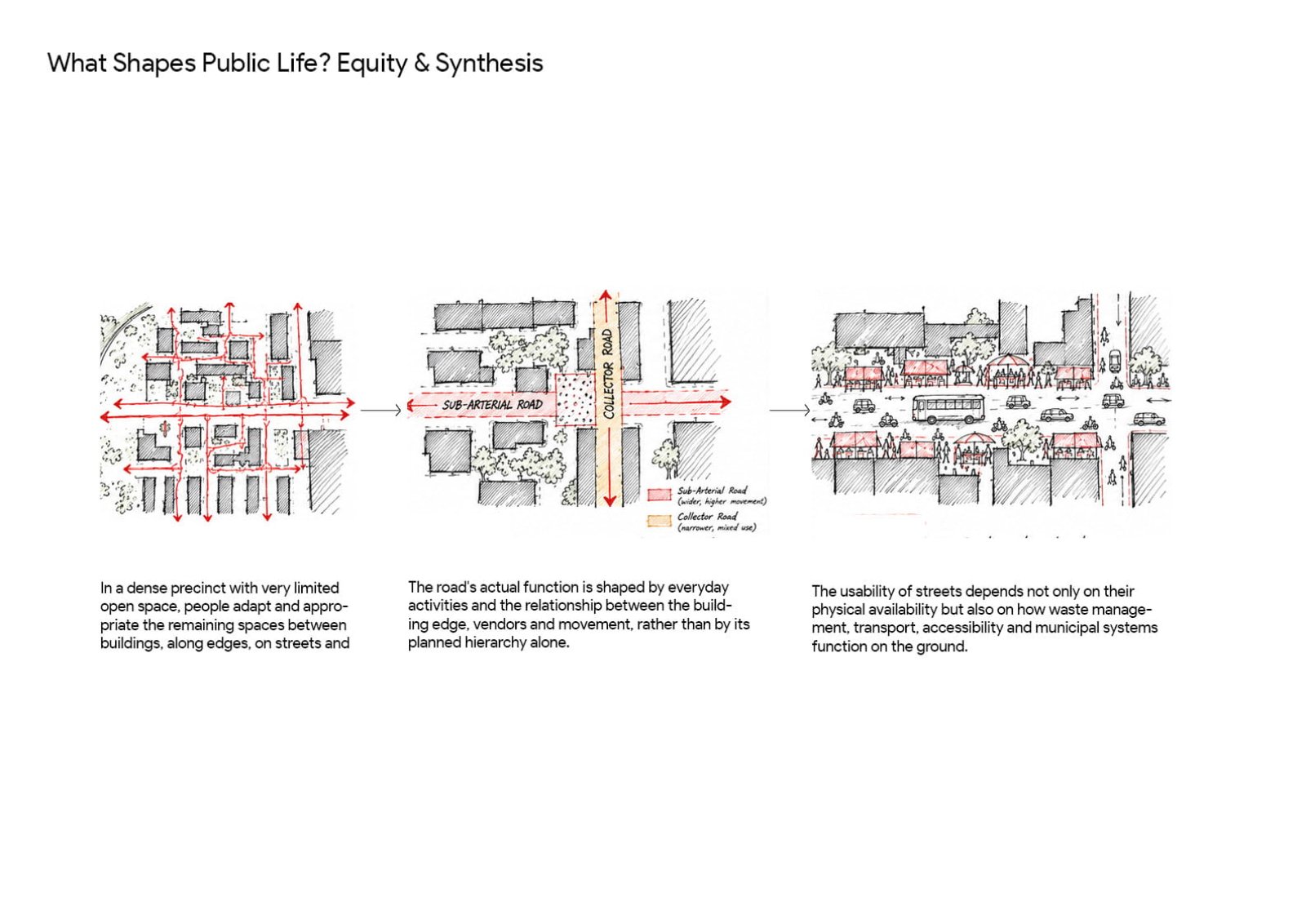
Our cities are not merely abstract infrastructural grids; their physical forms and street patterns shapes daily urban life. In hyper-dense, historic settlements like Chamanpura in east Ahmedabad where building footprints occupy maximum number of the total plot area and ground-floor land use is residential then the public realm is defined by extreme spatial compression and an almost total absence of open voids. This density produces an ongoing tension between the formal "Road on Paper" laid out by master plans and the lived "Road on Ground” shaped by daily practice. In Chamanpura, the public realm is not defined by municipal classifications or planned road widths; rather, it is shaped through continuous socio-spatial negotiation between built edges, ground-floor typologies, and everyday informal appropriation, causing streets to operate far beyond their designated municipal role as mere movement channels.