• Home
  • FP
  • UP4005-3
  • Anand–Nadiad HSR : An Integrated Station Hinterland Plan

Monisha Kurothe

UP4005-3

Anand–Nadiad HSR : An Integrated Station Hinterland Plan

The Urban Challenge Studio explored the transformative potential of High-Speed Rail (HSR) as a catalyst for regional development, focusing on the Anand–Nadiad station along the Mumbai–Ahmedabad HSR corridor. Moving beyond the station as a transport node, the studio examined regional connectivity, land dynamics, infrastructure gaps and institutional challenges to propose an integrated spatial, governance and financial framework for planned, sustainable and economically viable station-area development. 

Report Content

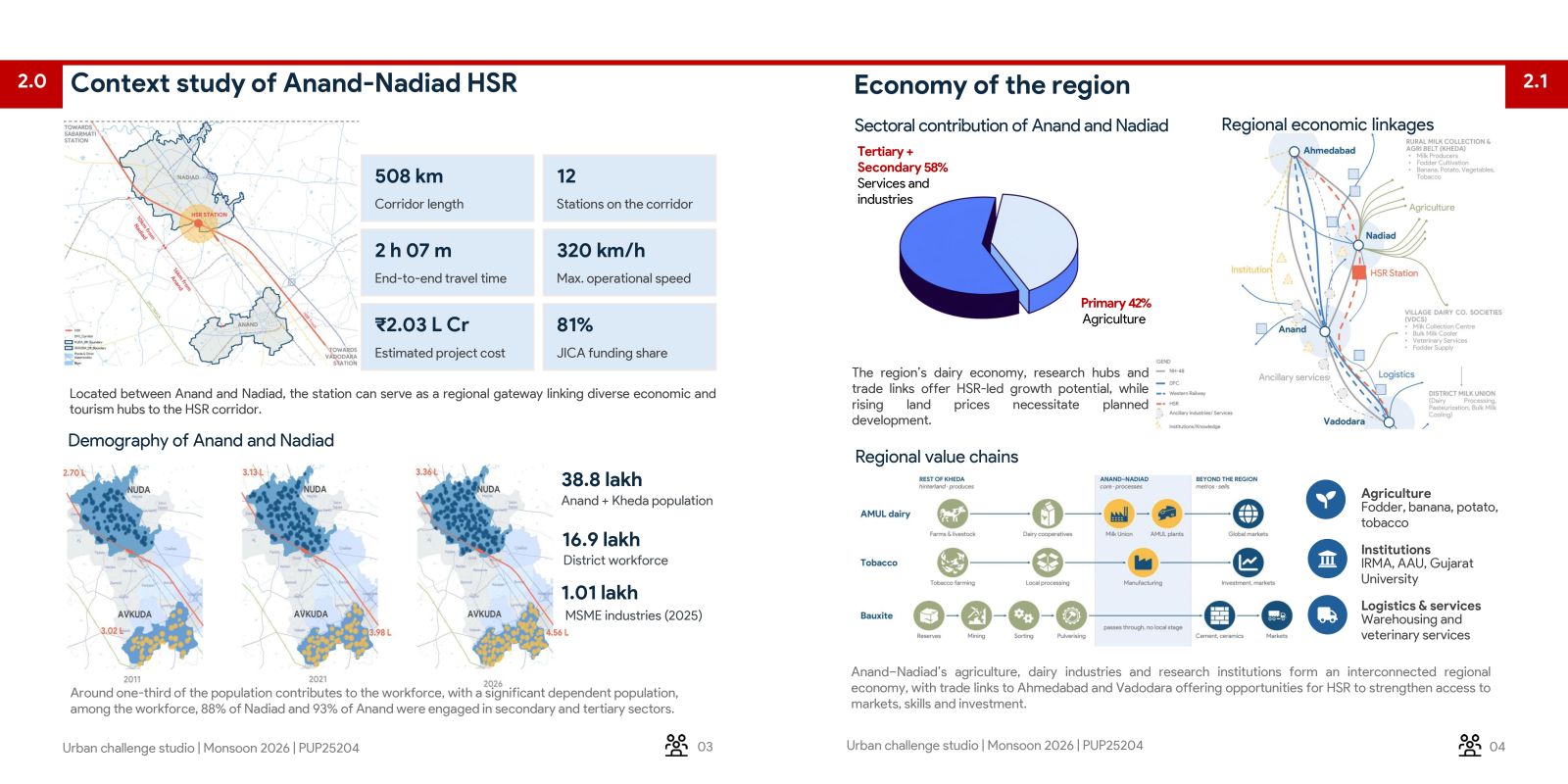
Introducing the Anand–Nadiad HSR project and its potential for integrated regional development.

The HSR station connects two growing urban centres supported by strong economic and regional linkages.

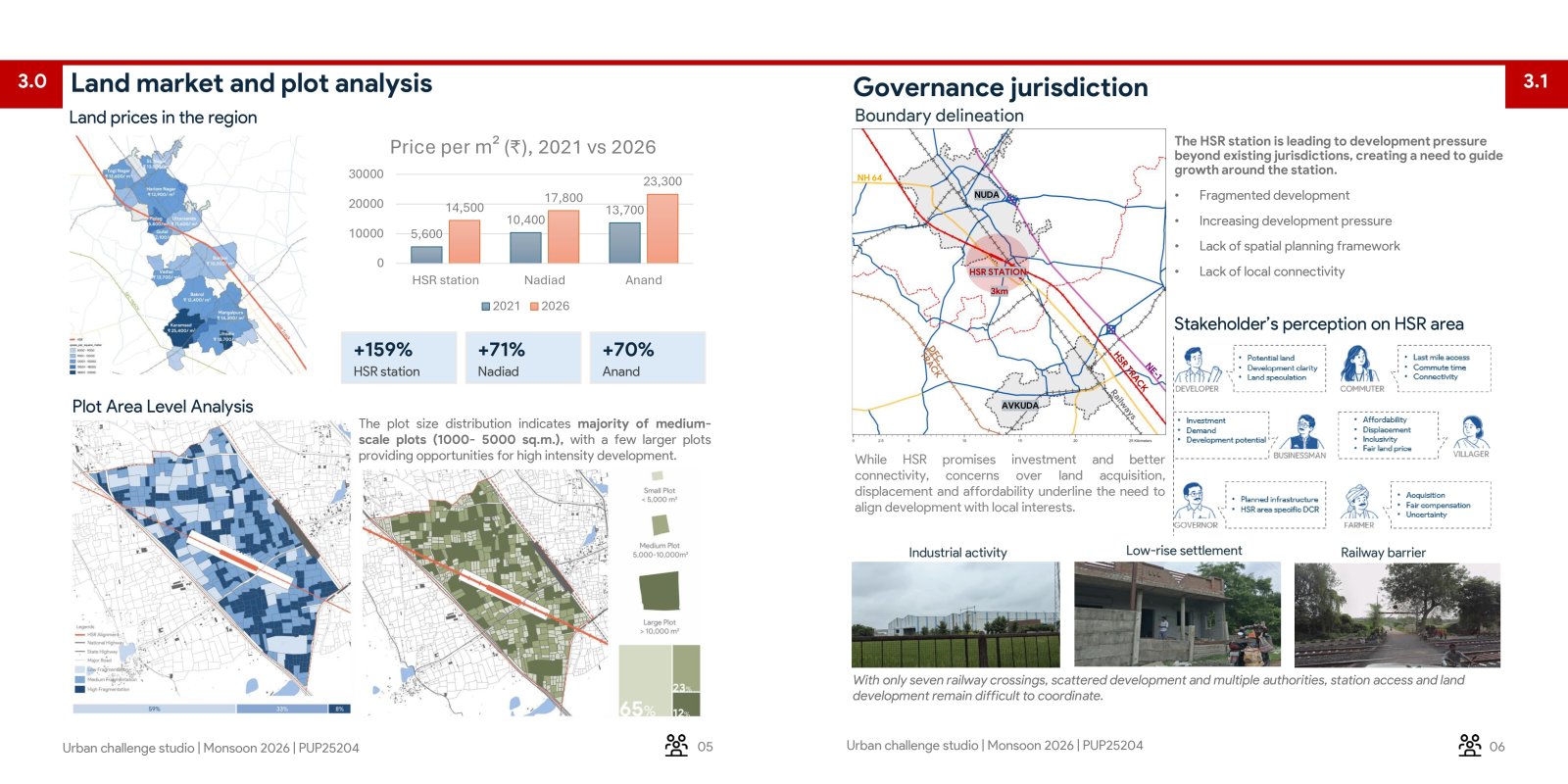
Rising land prices, fragmented jurisdictions and connectivity gaps create an urgent need for planned development.

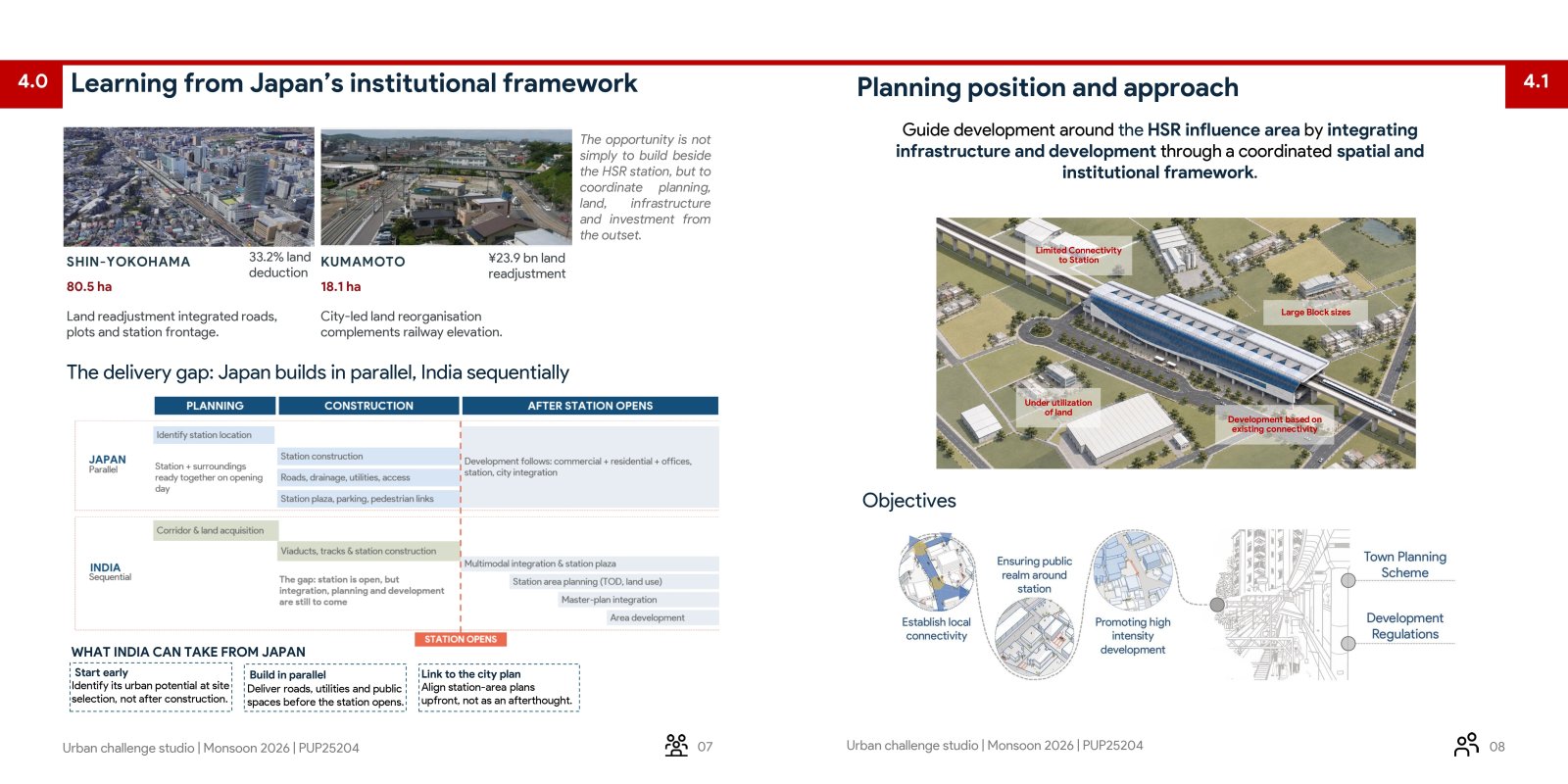
Lessons from Japan inform a coordinated approach to station-area planning, infrastructure and development.

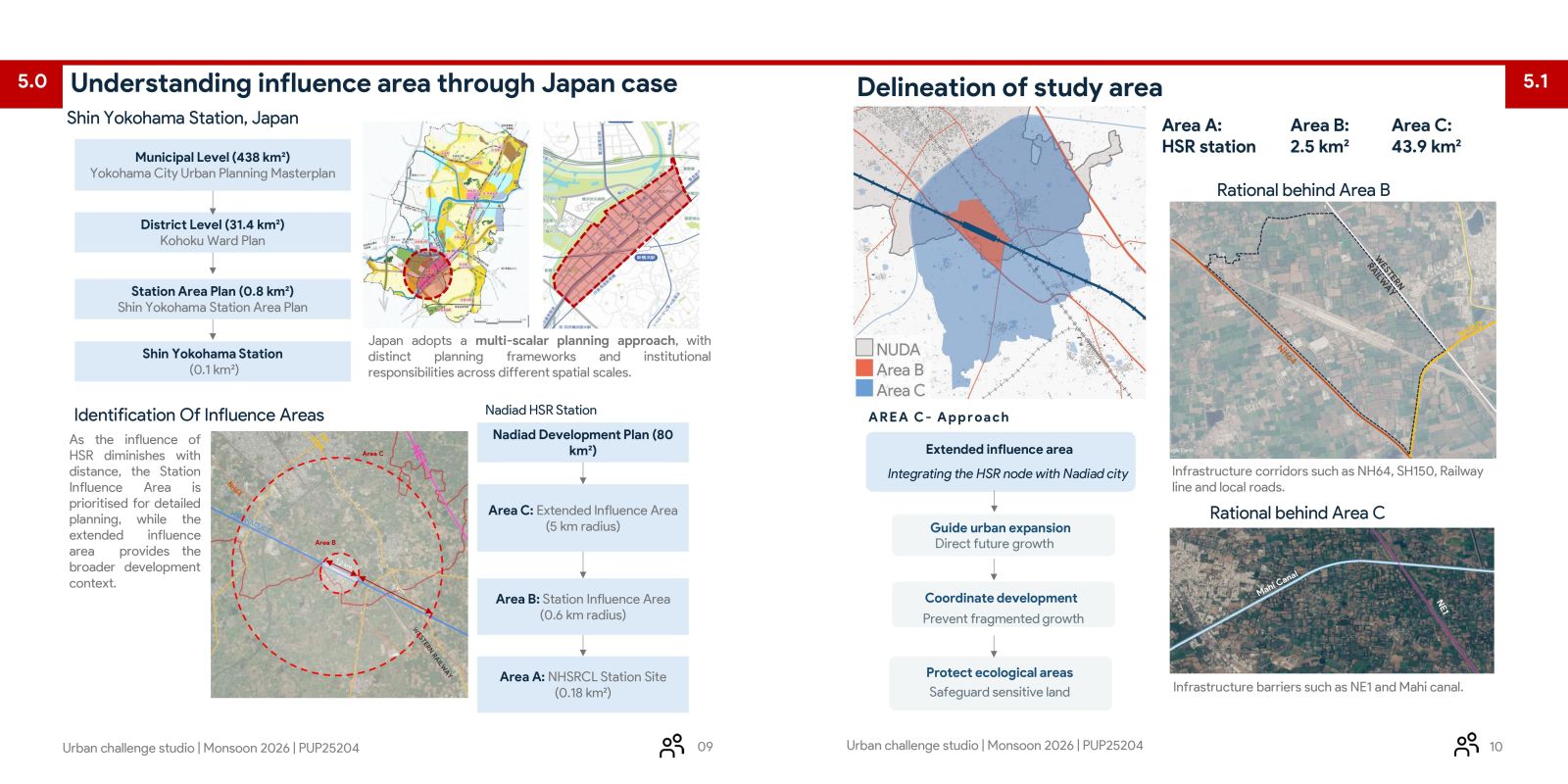
A multi-scalar planning framework defines station, urban and regional influence areas for targeted interventions.

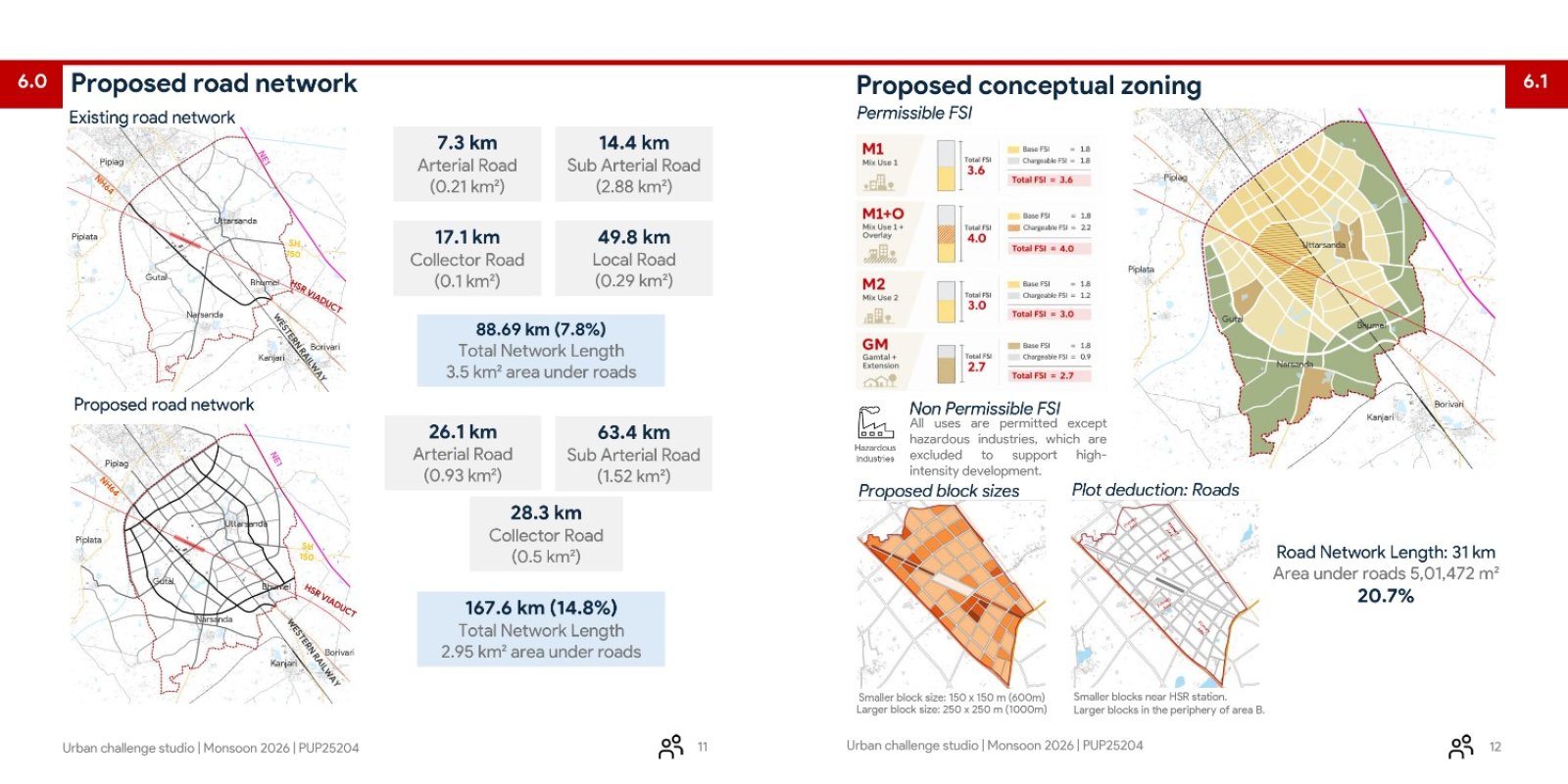
An improved road network and conceptual zoning framework guide accessibility and high-intensity development.

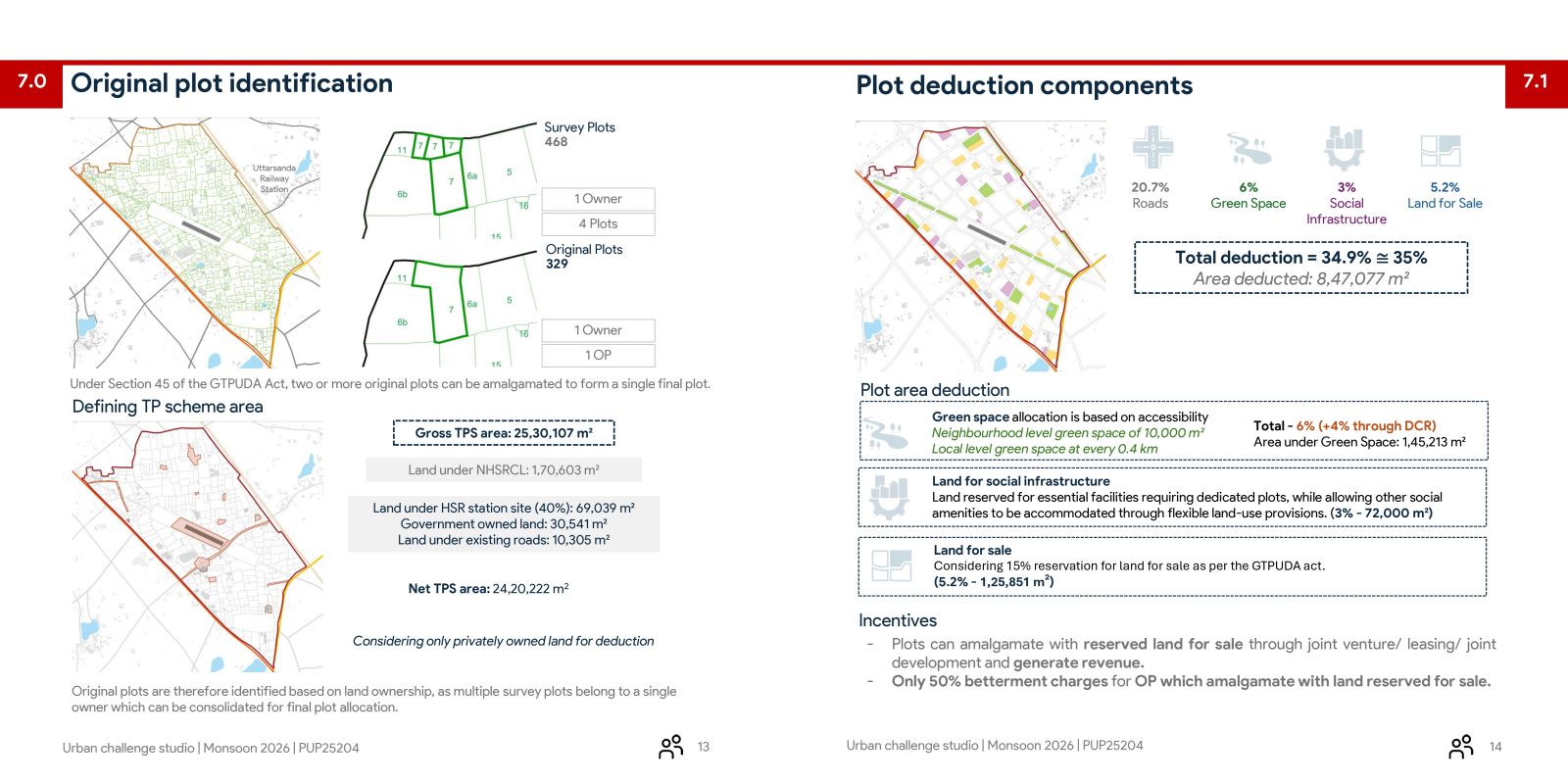
Land reconstitution and strategic plot deductions enable infrastructure provision through the Town Planning Scheme.

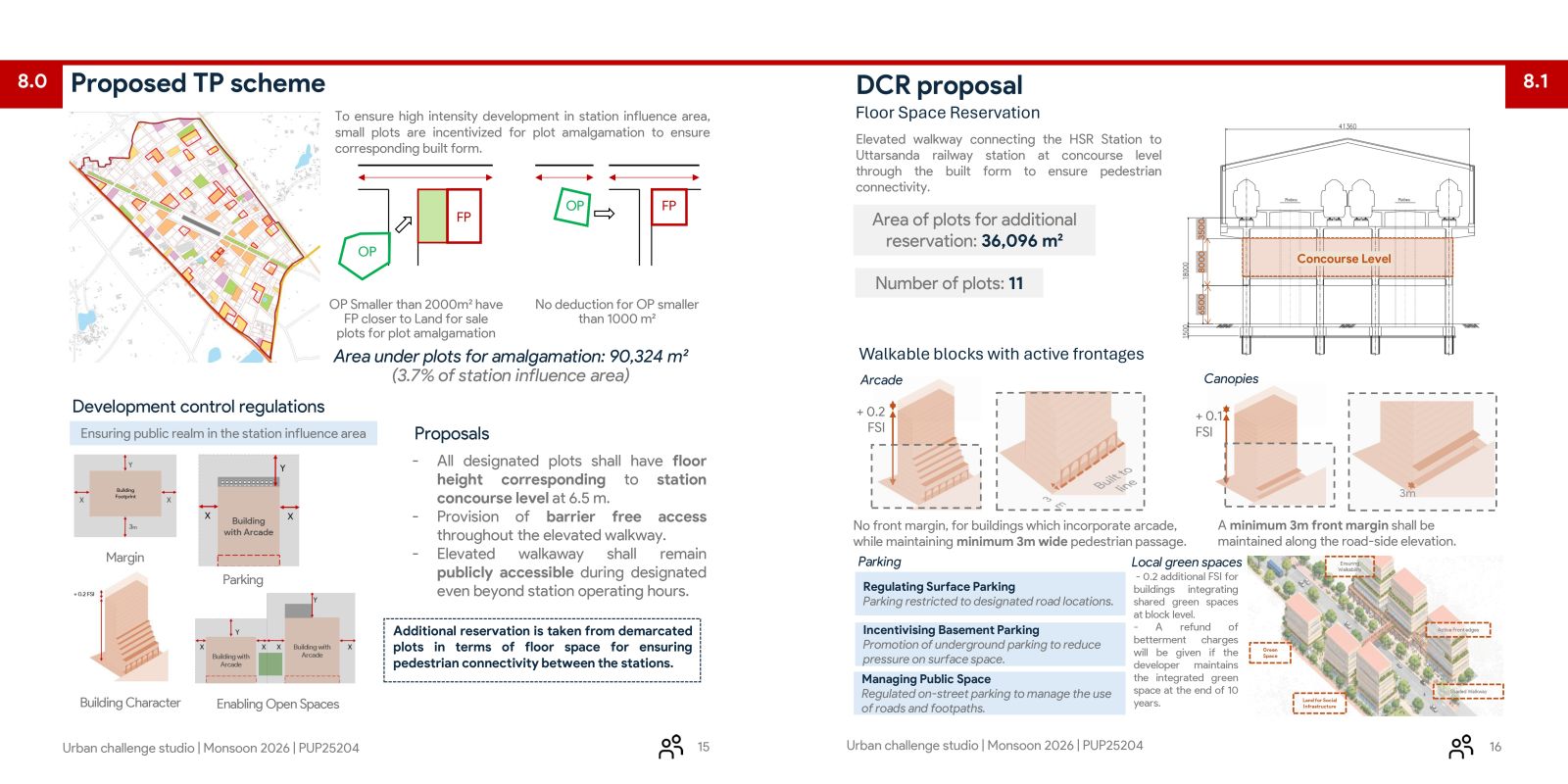
Plot amalgamation, FSI incentives and development regulations promote compact, walkable station-area development.
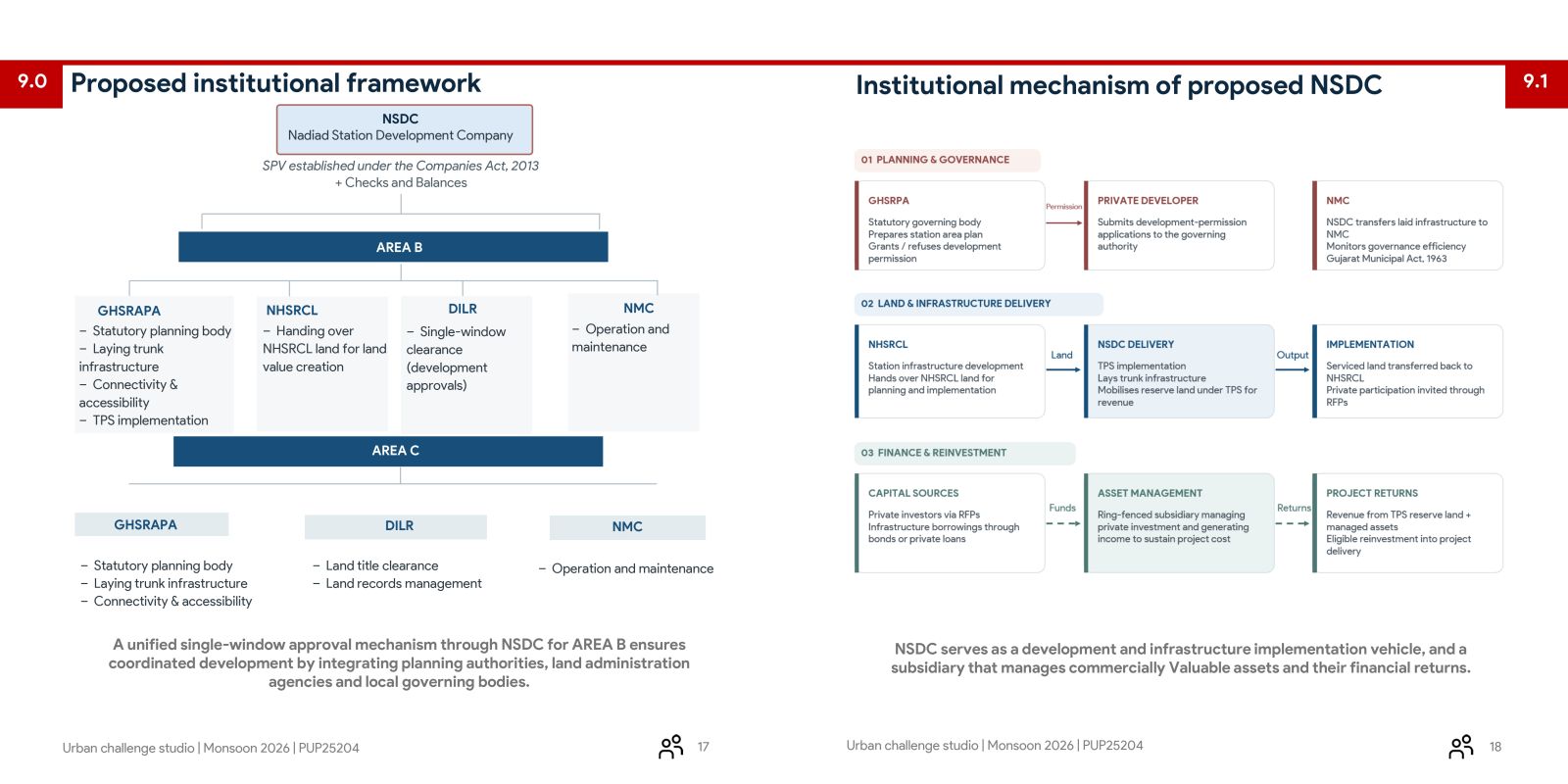
A unified institutional mechanism integrates planning, infrastructure delivery, approvals and asset management.

Land-based financing and coordinated implementation support the long-term viability of HSR-led development.