• Home
  • FP
  • UP4005-3
  • Institution-First Plan for the Anand–Nadiad HSR Node

Tanaya Tanasmita Sahu

UP4005-3

Institution-First Plan for the Anand–Nadiad HSR Node

A greenfield High-Speed Rail station between Anand and Nadiad will not create a new economy. It will reorganise one that already exists, linked by the Amul value chain, industrial estates, institutions and daily commuting. That economy works as one functional region, yet two development authorities, three municipalities and many gram panchayats each plan only within their own limits. The gap is institutional, not physical. Coordinated regional planning therefore starts with one shared framework: an extended GHSRSAPA and a regional development corporation that set the regional vision, sequence infrastructure and pool finance, while each authority keeps its statutory role. Planning then follows how the region actually works.
Report Content

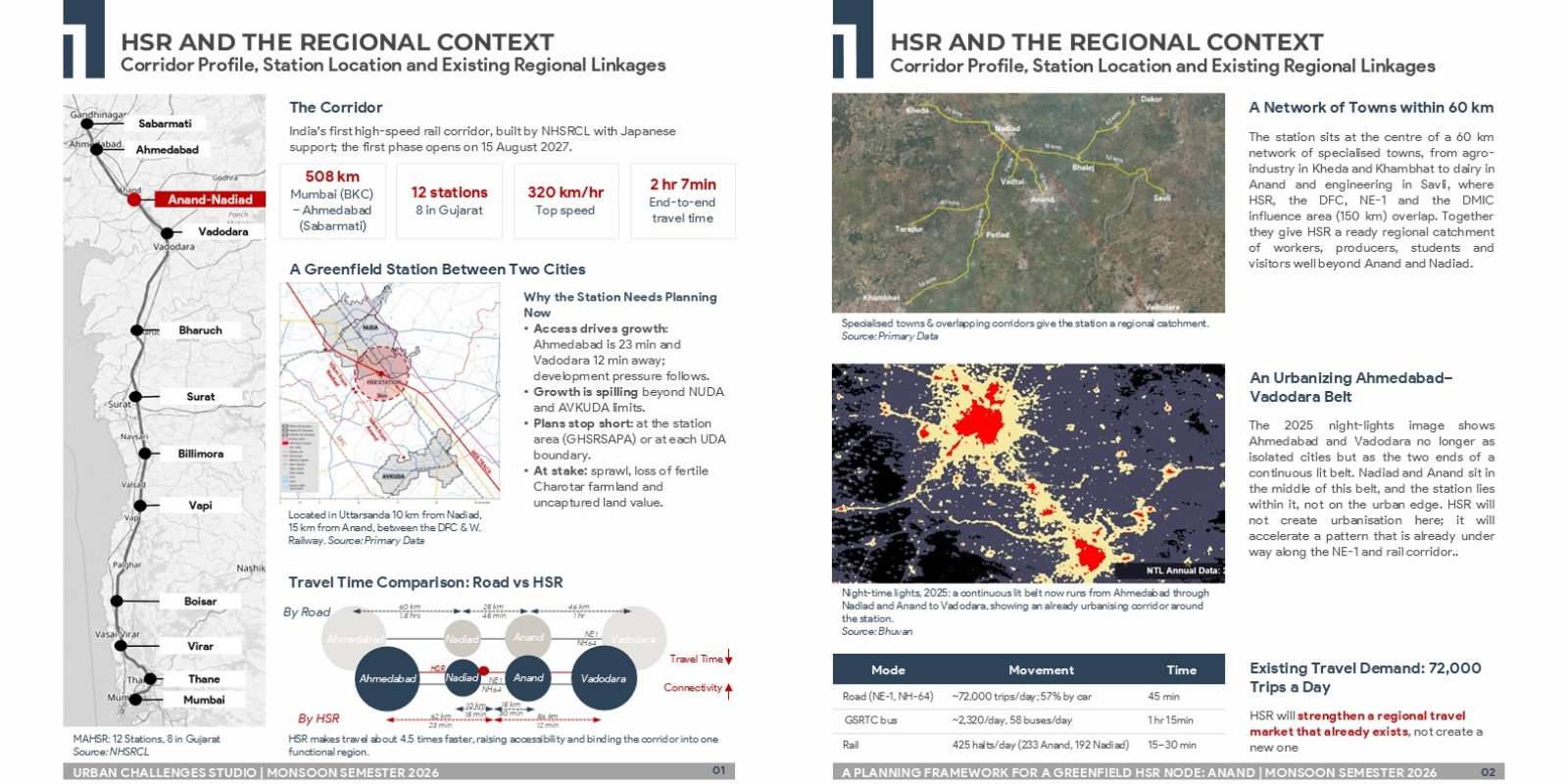
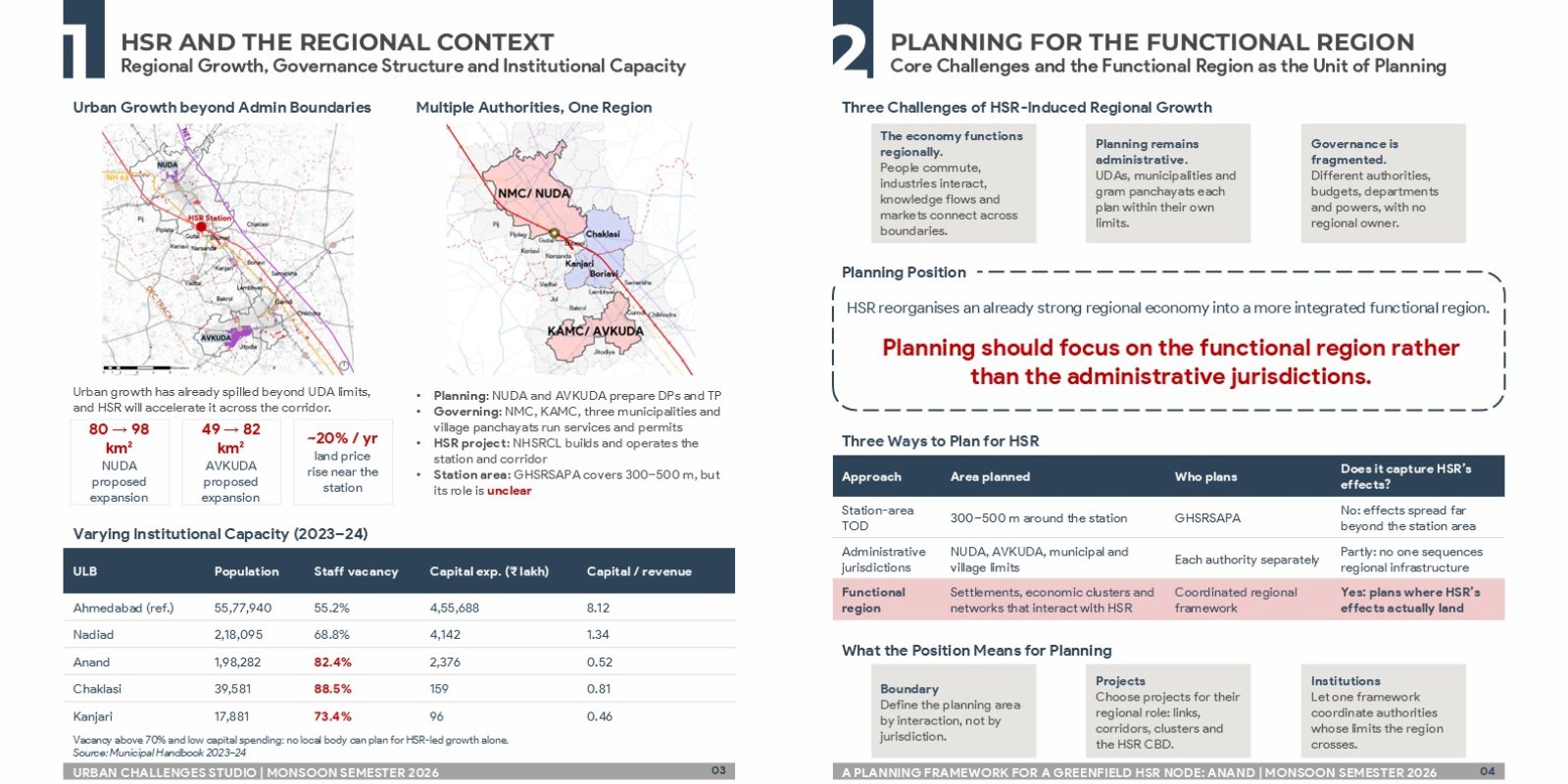
HSR and the Regional Context: The station sits in an Ahmedabad–Vadodara belt that is already urbanising, so HSR will speed up regional movement that already happens rather than create new demand.

Regional Growth and the Planning Position: Growth has already spread beyond UDA limits while local bodies lack staff and capital, so planning must follow the functional region, not administrative boundaries.

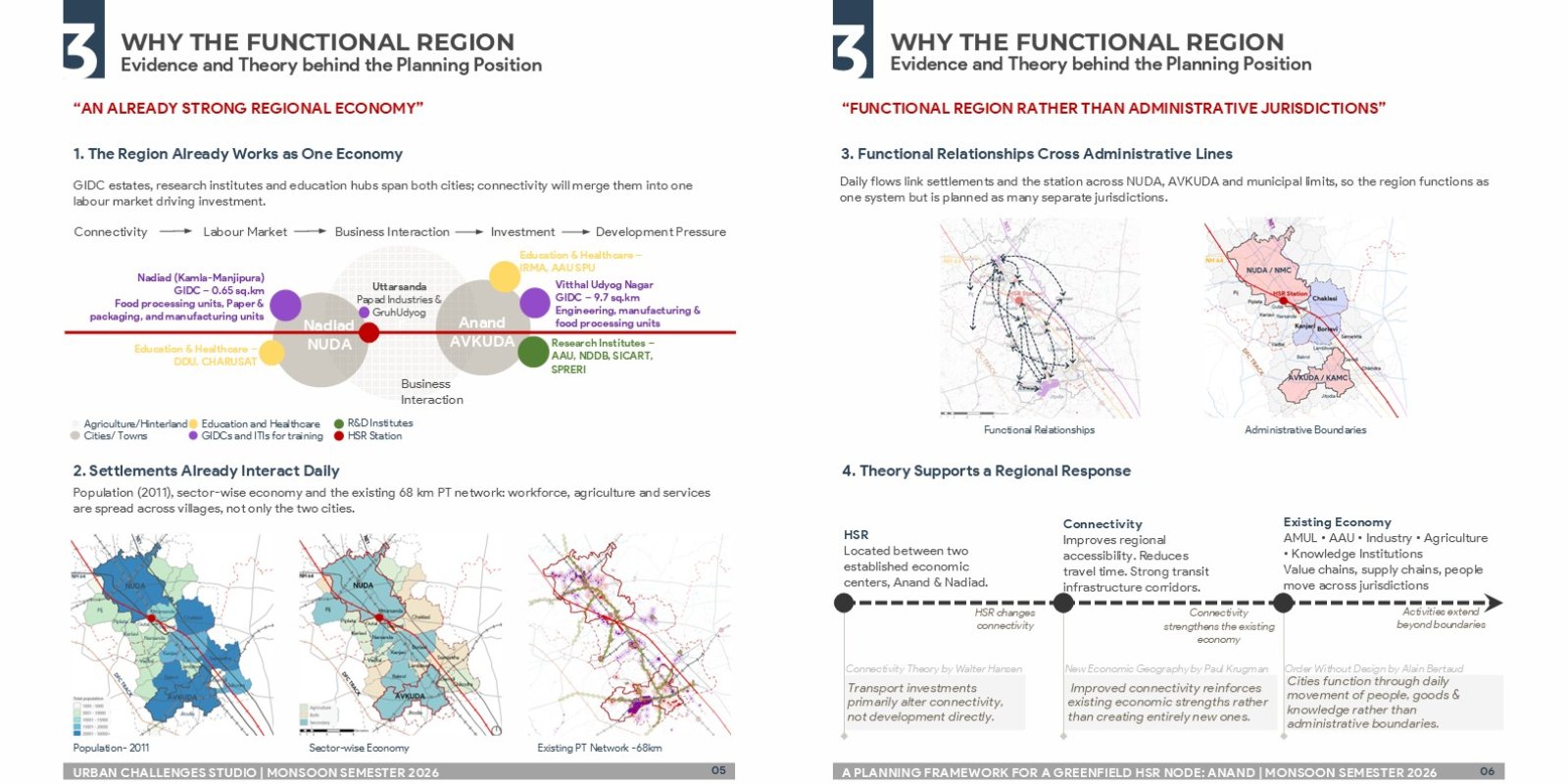
Why the Functional Region: Settlements, value chains and daily movement already tie Nadiad and Anand into one economy, and connectivity theory shows that HSR will strengthen these links, not replace them.

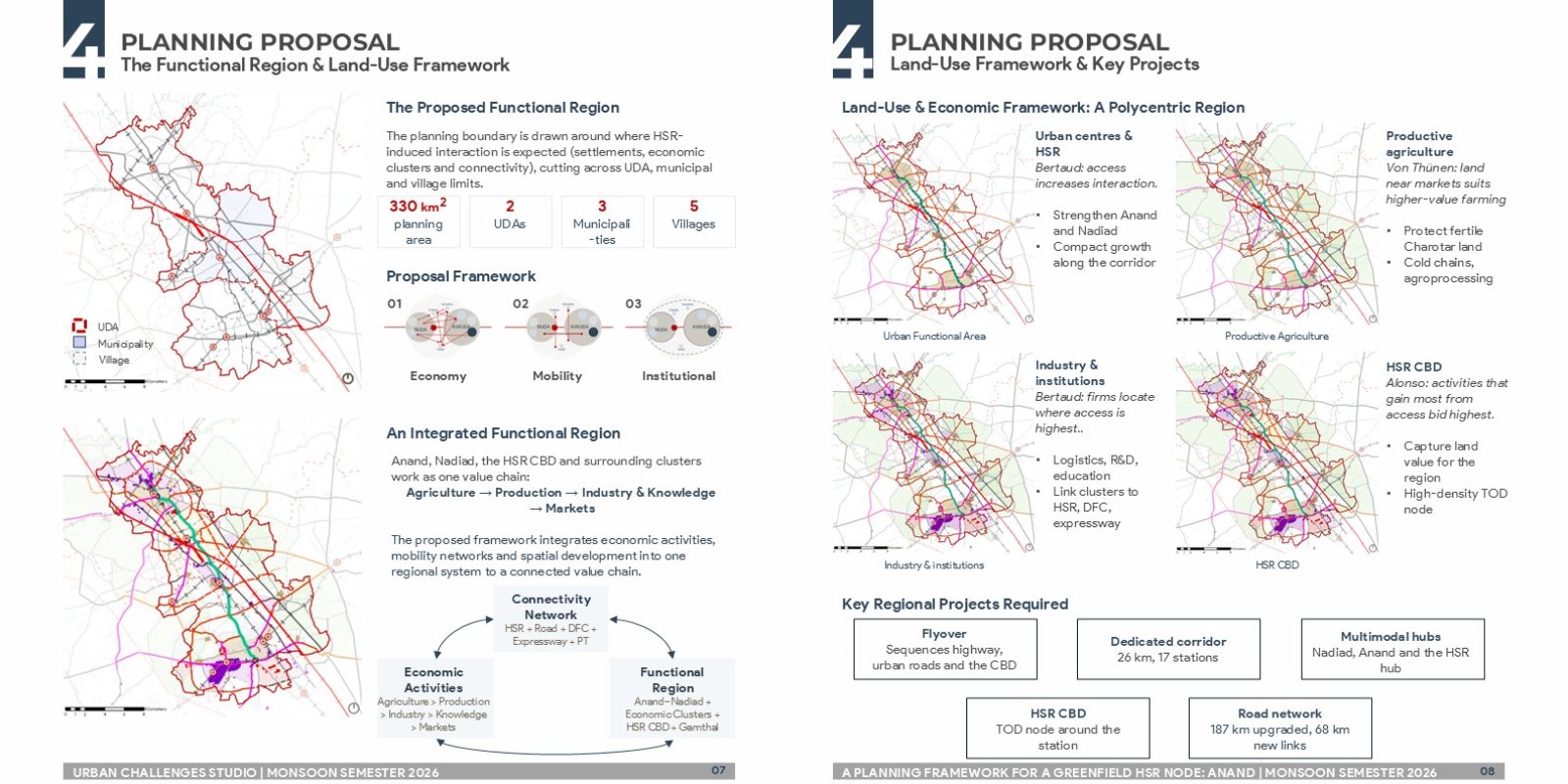
Functional Region and Land-Use Framework: A 330 km² polycentric region links the two cities, the HSR CBD, the industrial clusters and protected farmland into one connected value chain.

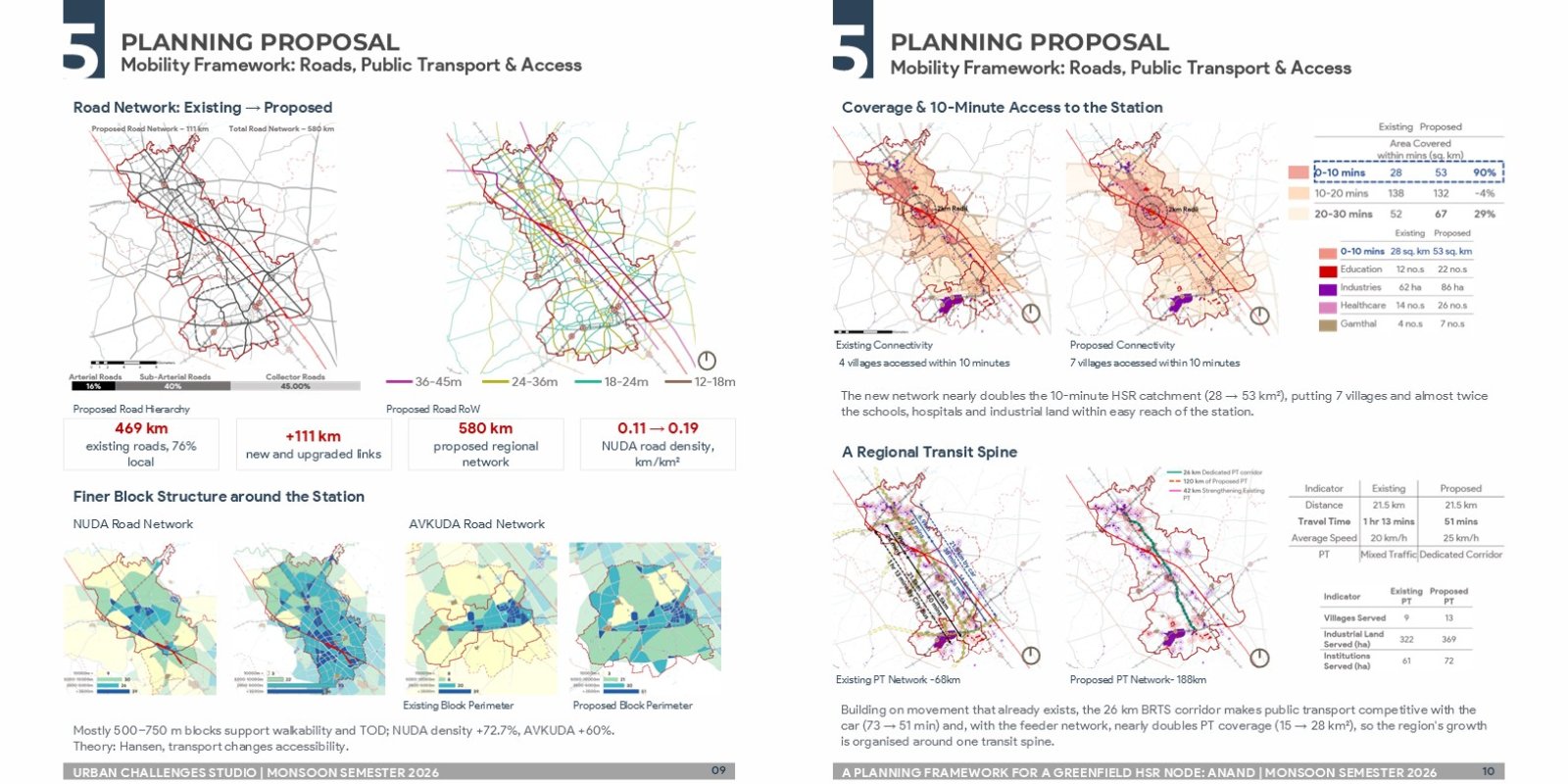
Mobility Framework: A finer road grid and a 26 km BRTS spine nearly double the 10-minute catchment of the station and bring public transport down from 73 to 51 minutes, making it a real choice.

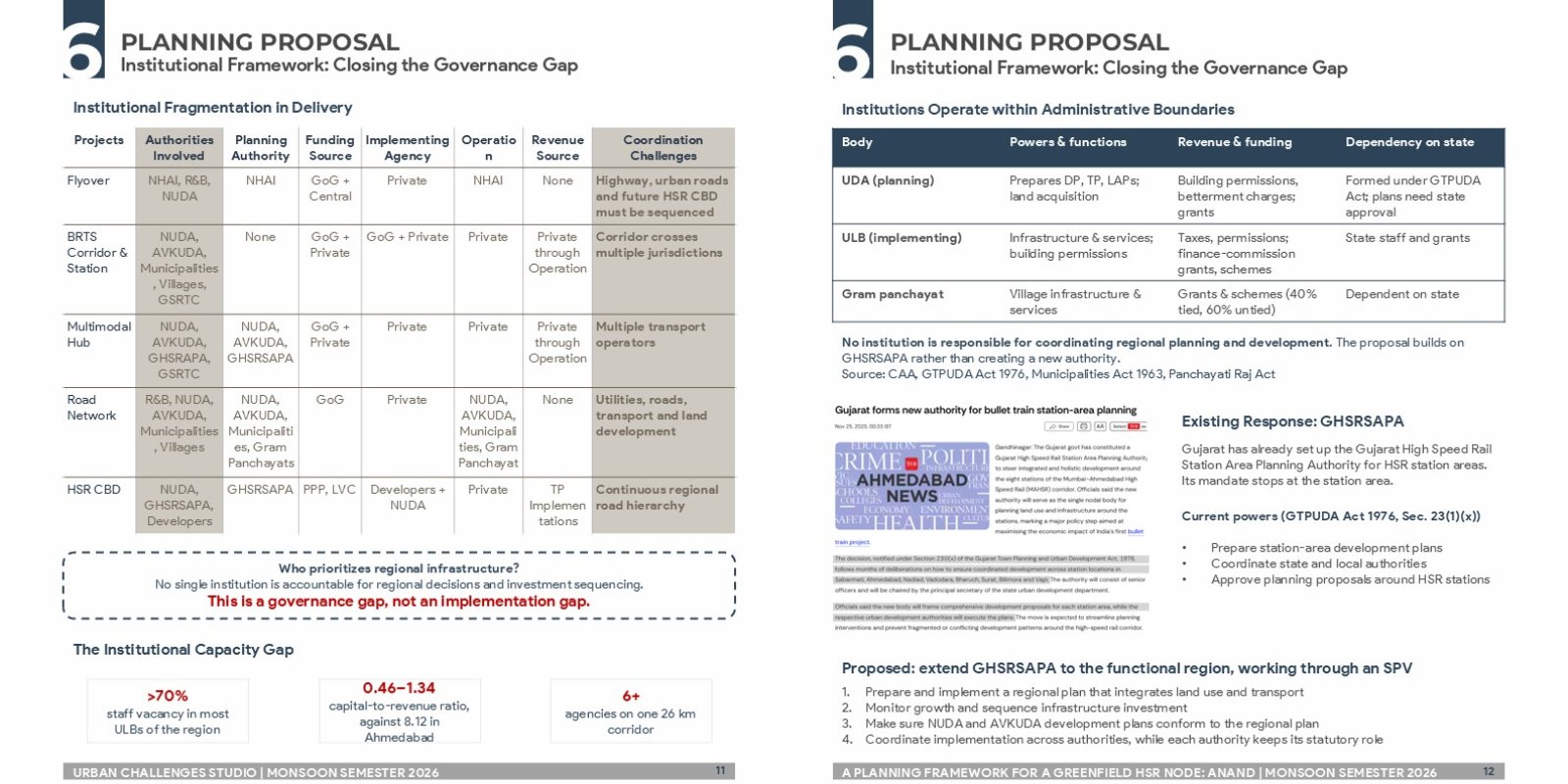
Closing the Governance Gap: Every authority can build within its own limits, but none owns regional priorities, so the answer is to extend GHSRSAPA rather than create another body.

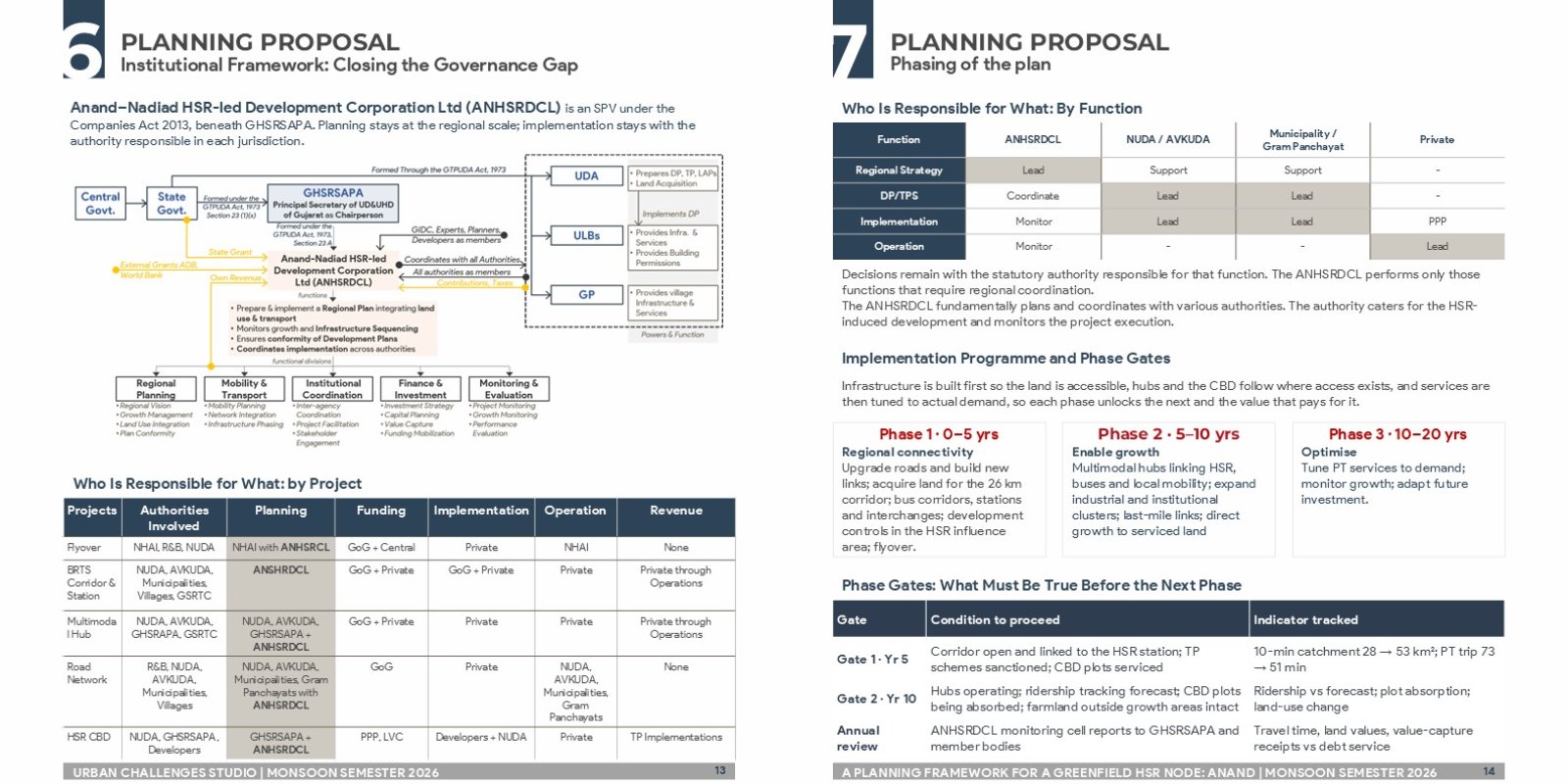
ANHSRDCL and Phasing: A regional SPV takes only the decisions that need a regional view, while phase gates release each stage of investment only when the previous stage has delivered access and demand.

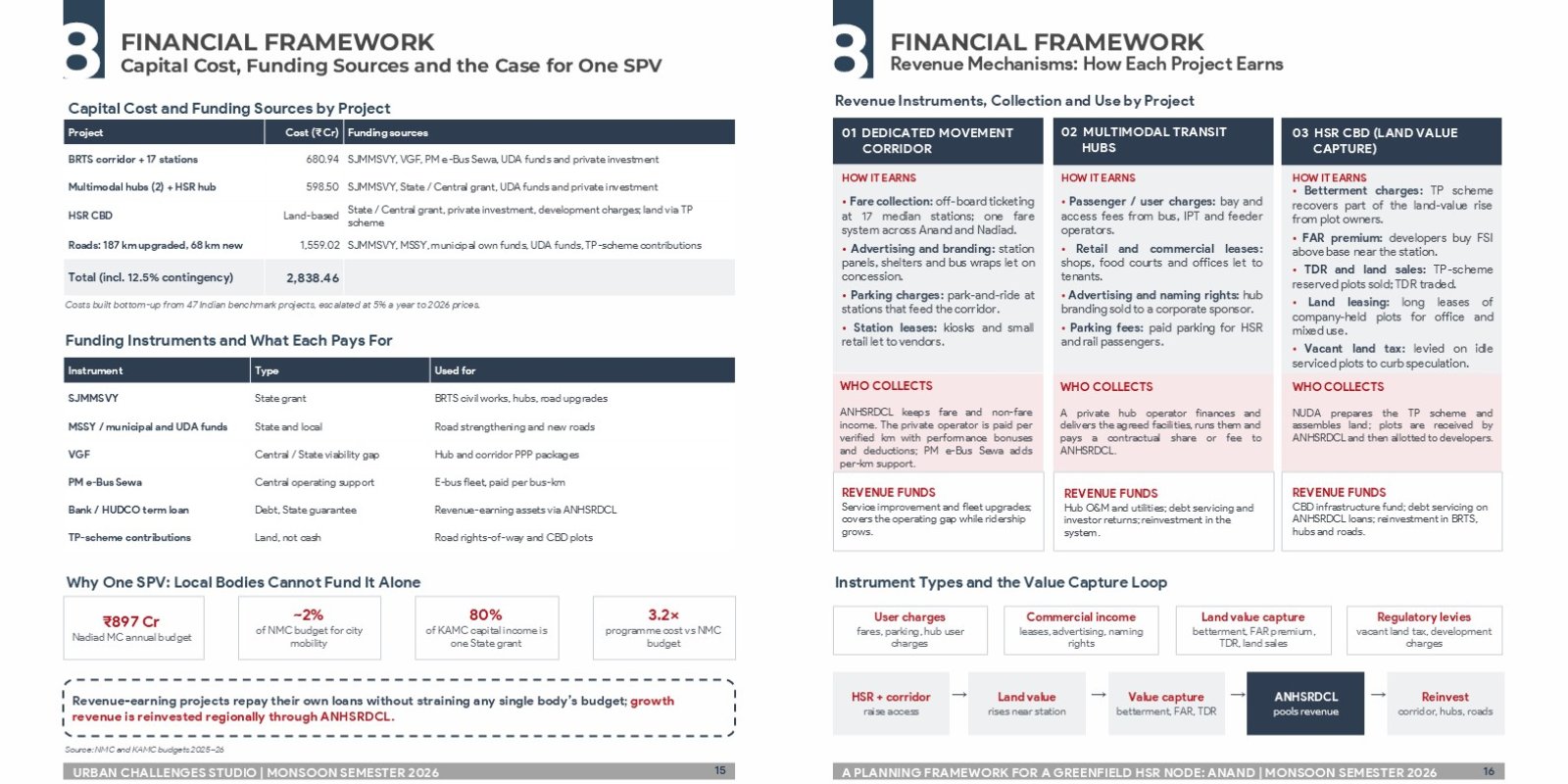
Financial Framework: A ?2,838 crore programme exceeds what any single local body can carry, so one company pools the grants, debt and land-value income, and each project earns through its own revenue mechanisms.

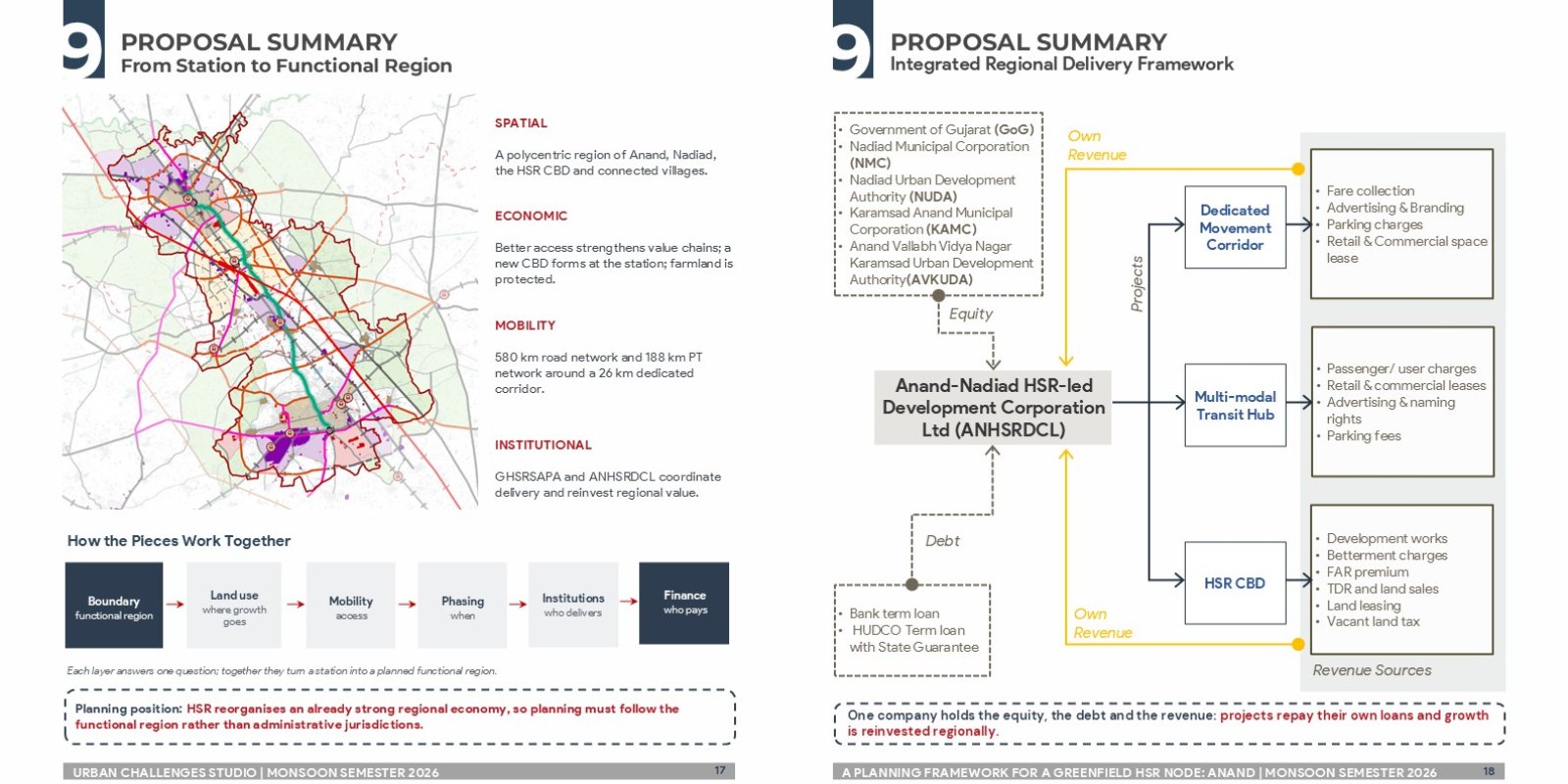
Proposal Summary and Delivery Framework: Equity and debt flow into one corporation, and project revenue flows back to it to repay loans and reinvest in the region.

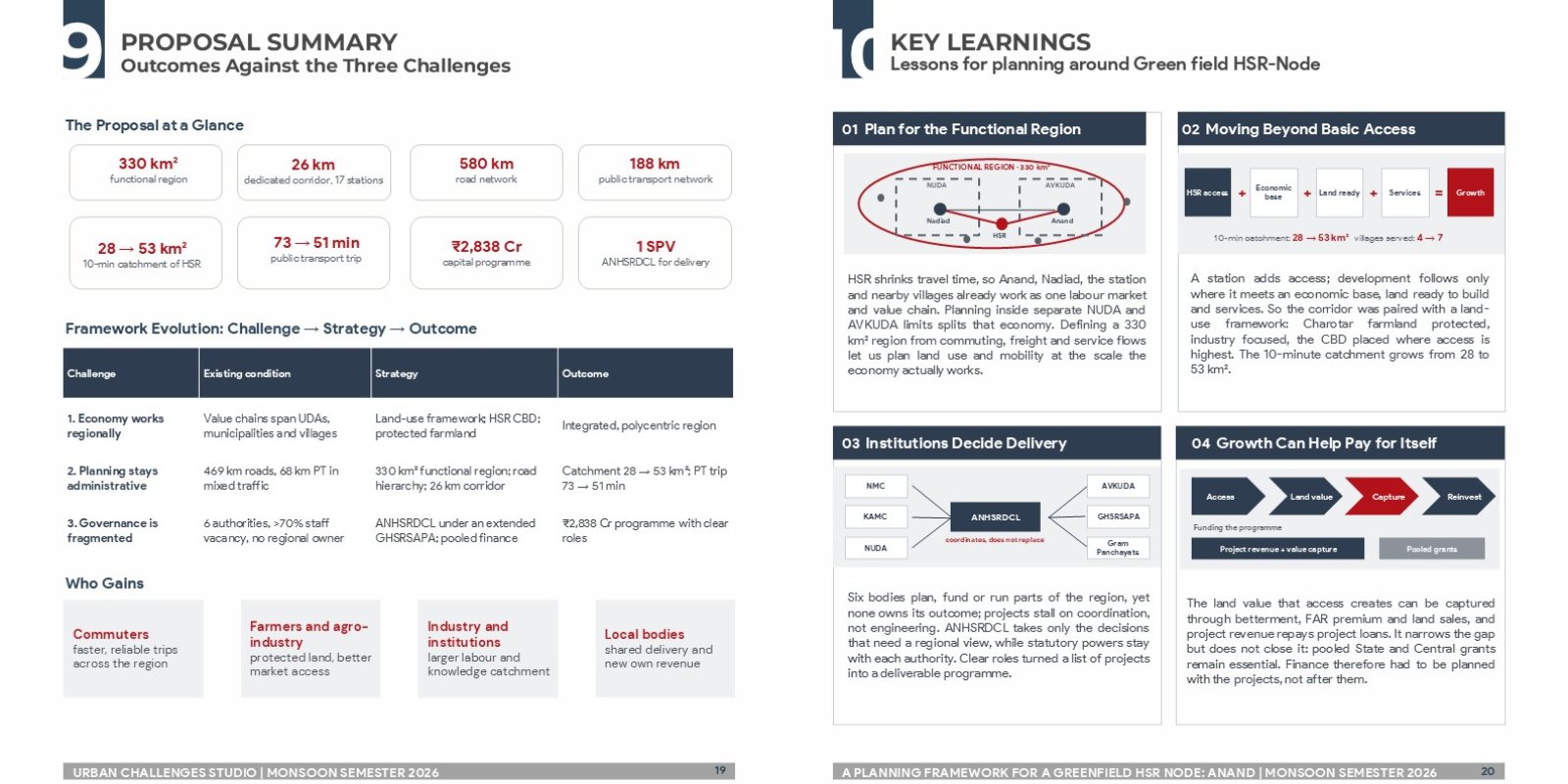
Outcomes and Key Learnings: Each of the three challenges is answered with a measurable outcome, and the main lesson is that institutions, not infrastructure alone, decide whether an HSR region gets delivered.