Your browser is out-of-date!
For a richer surfing experience on our website, please update your browser. Update my browser now!
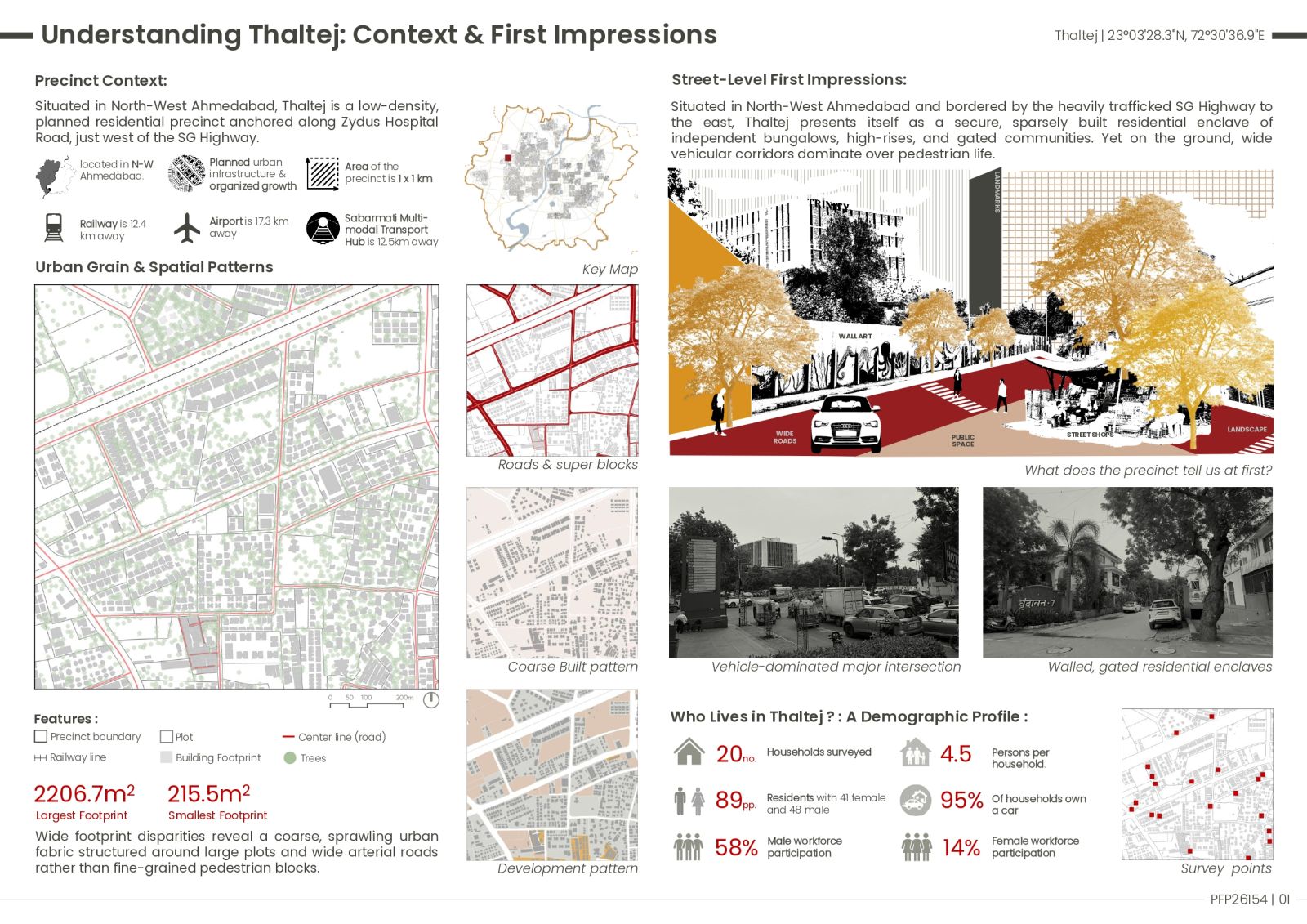
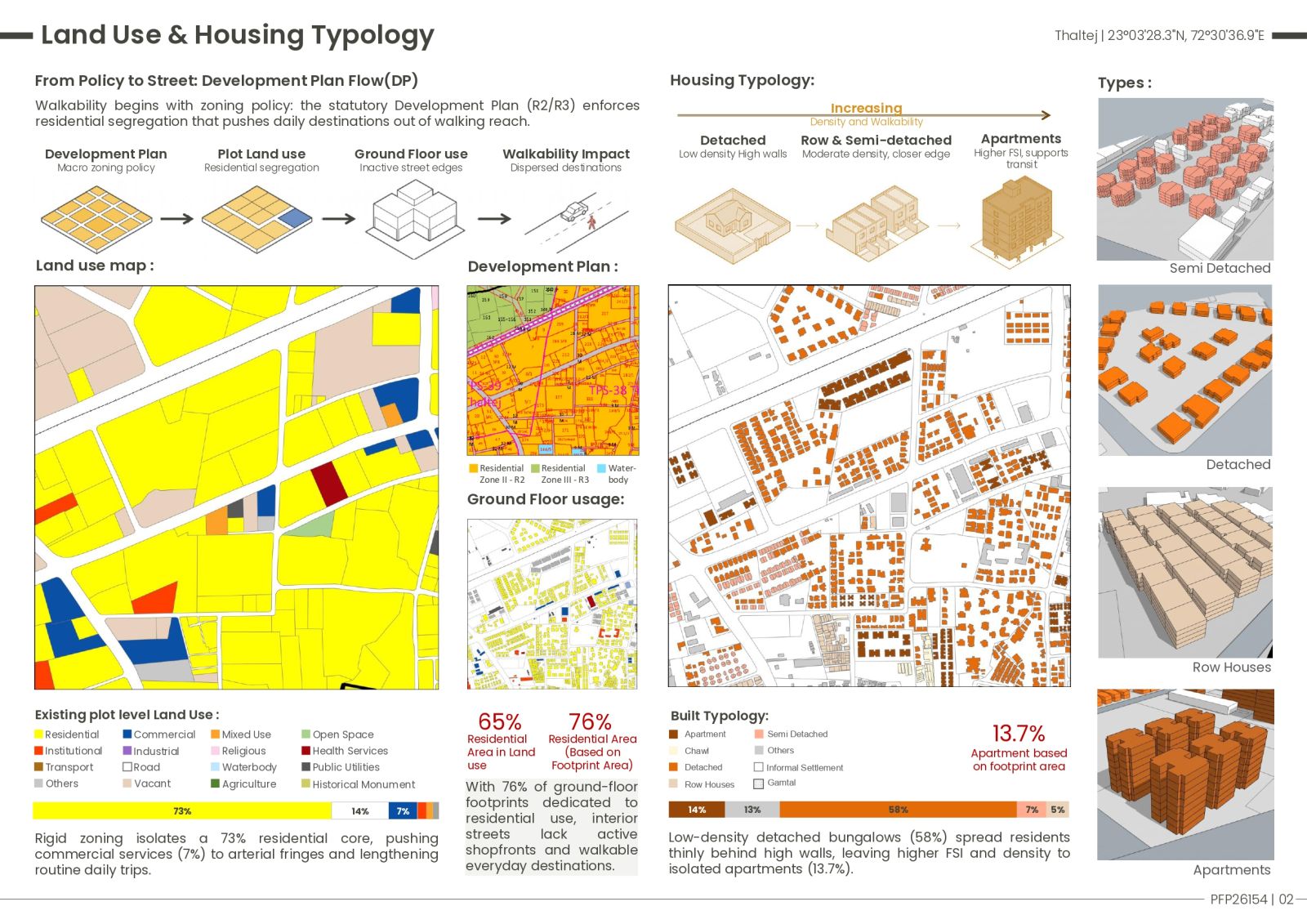
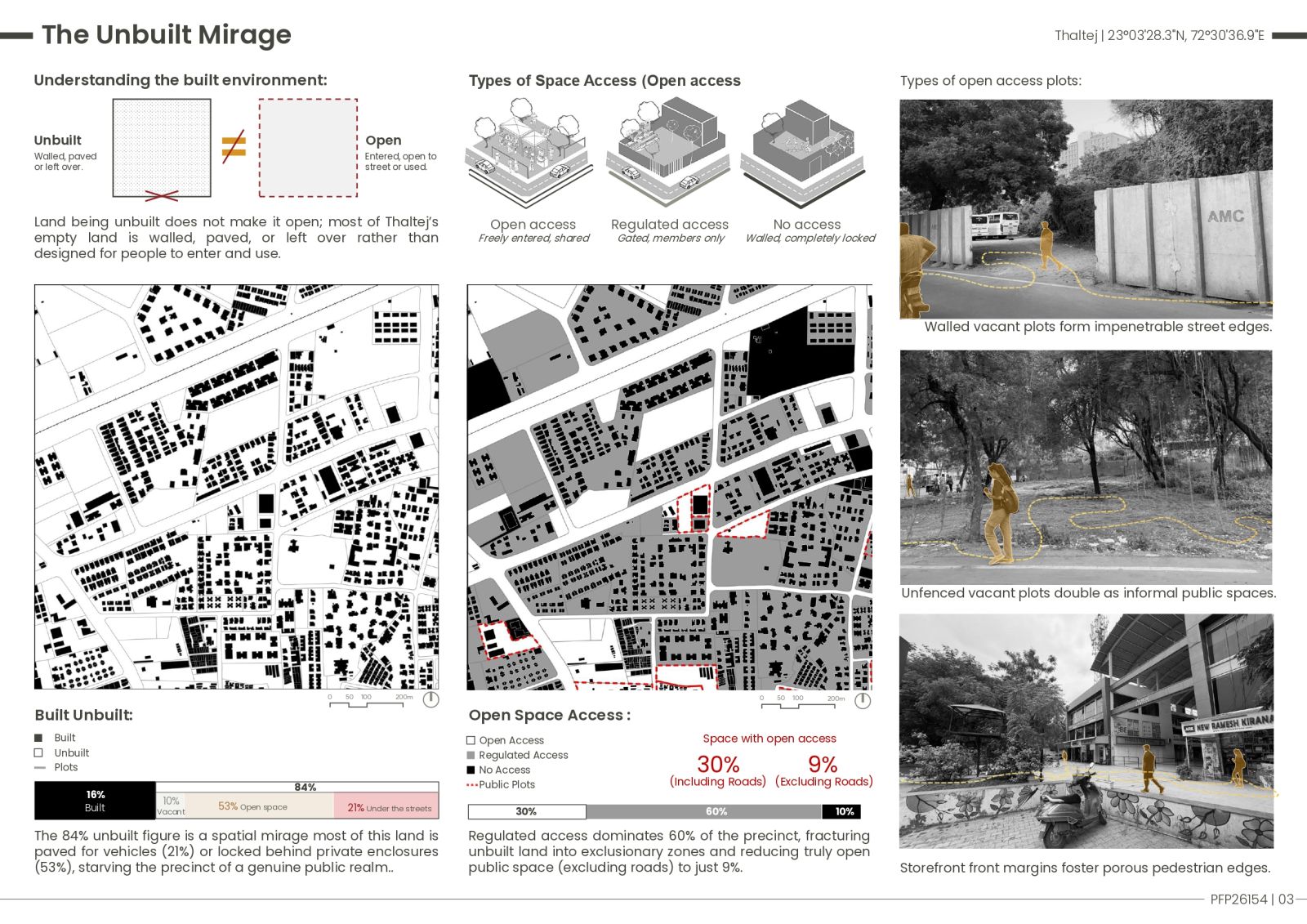
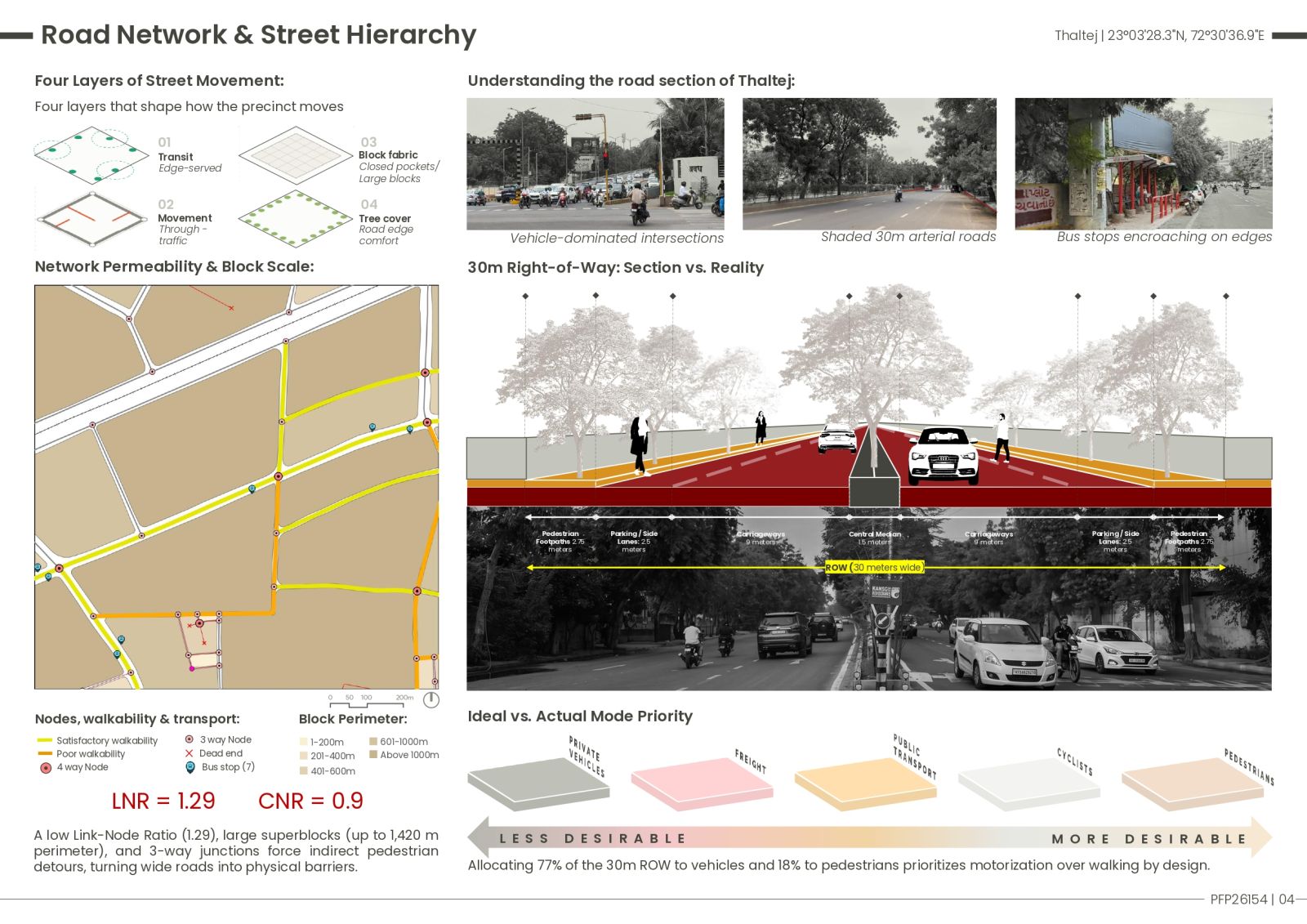
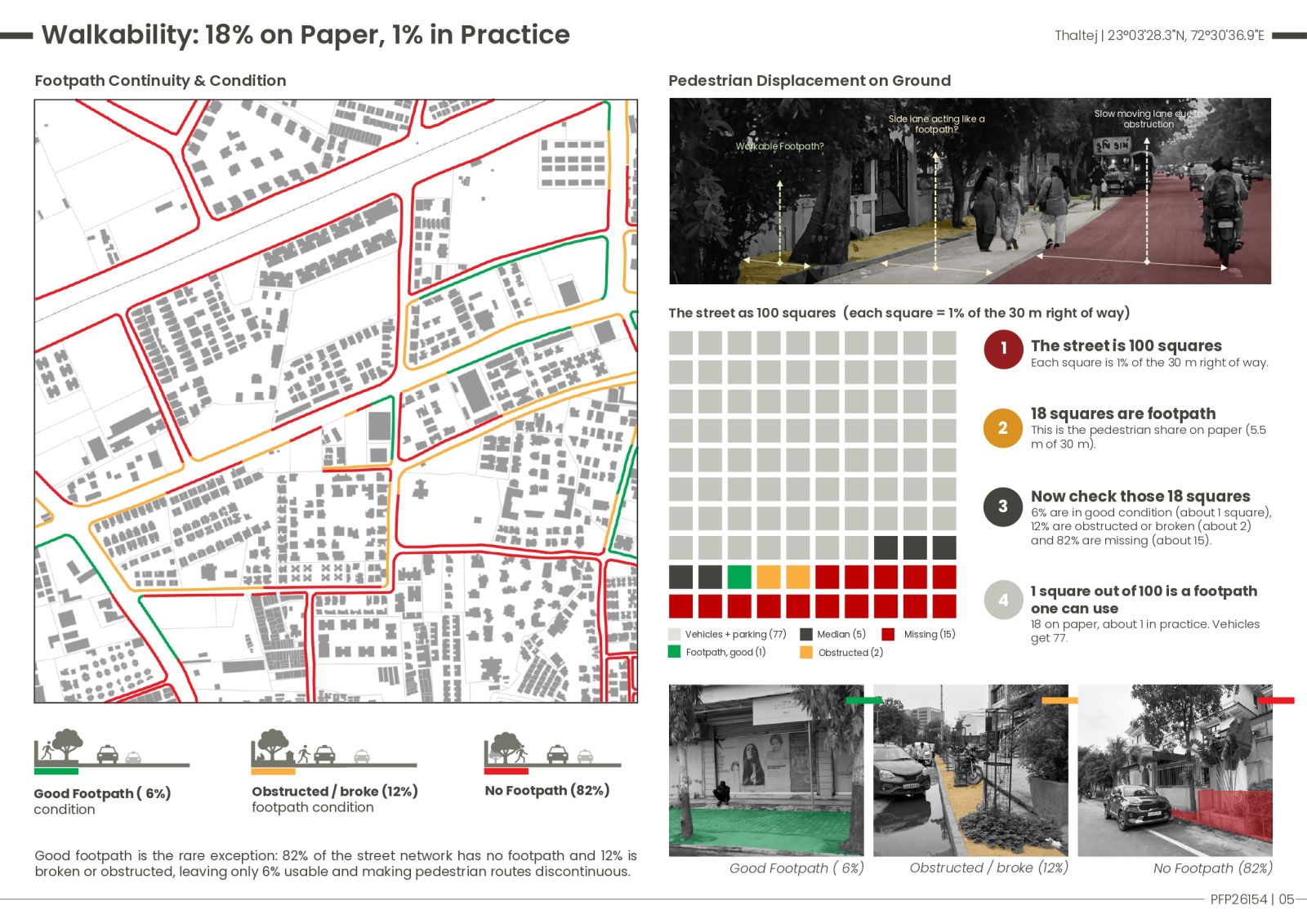
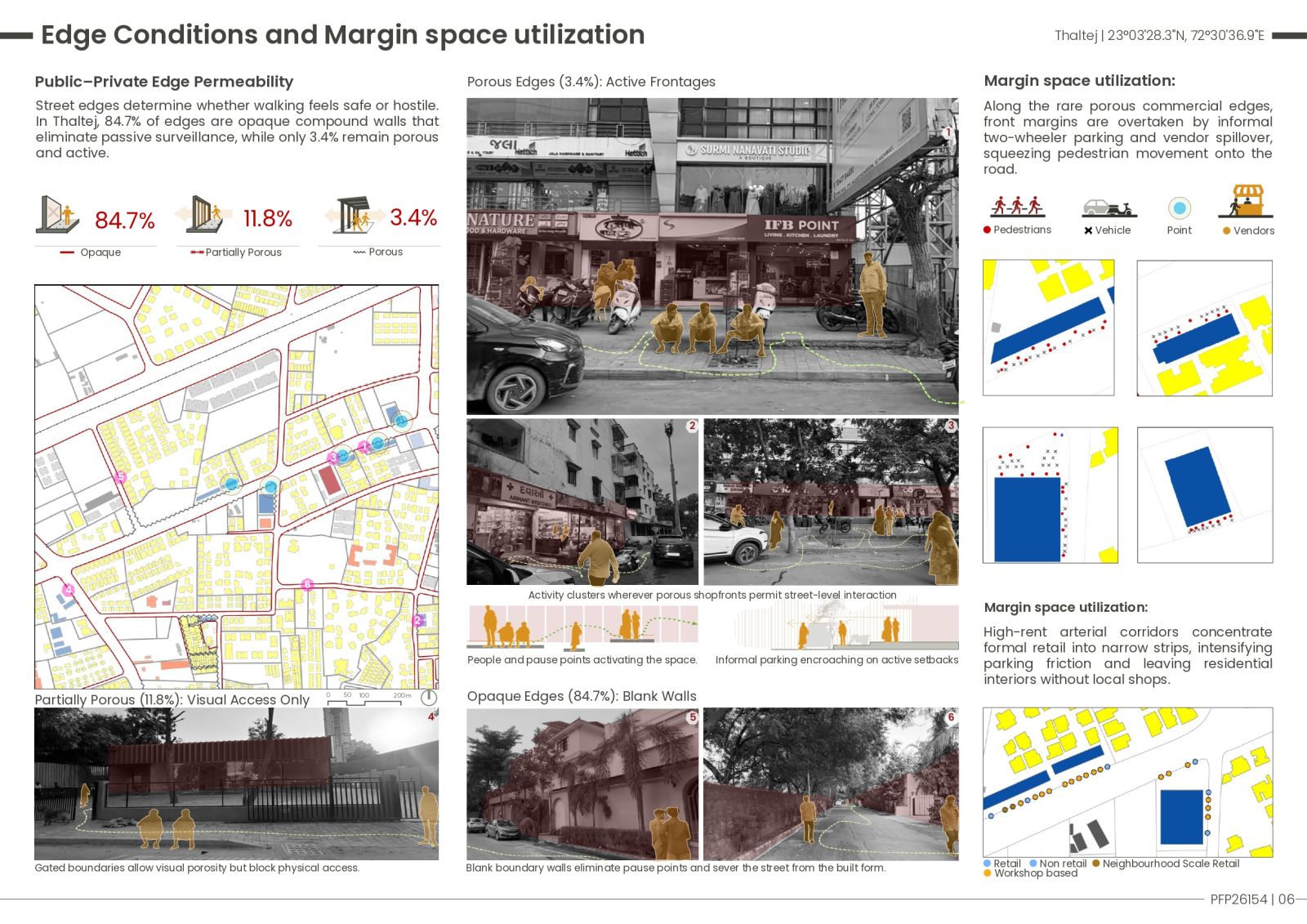
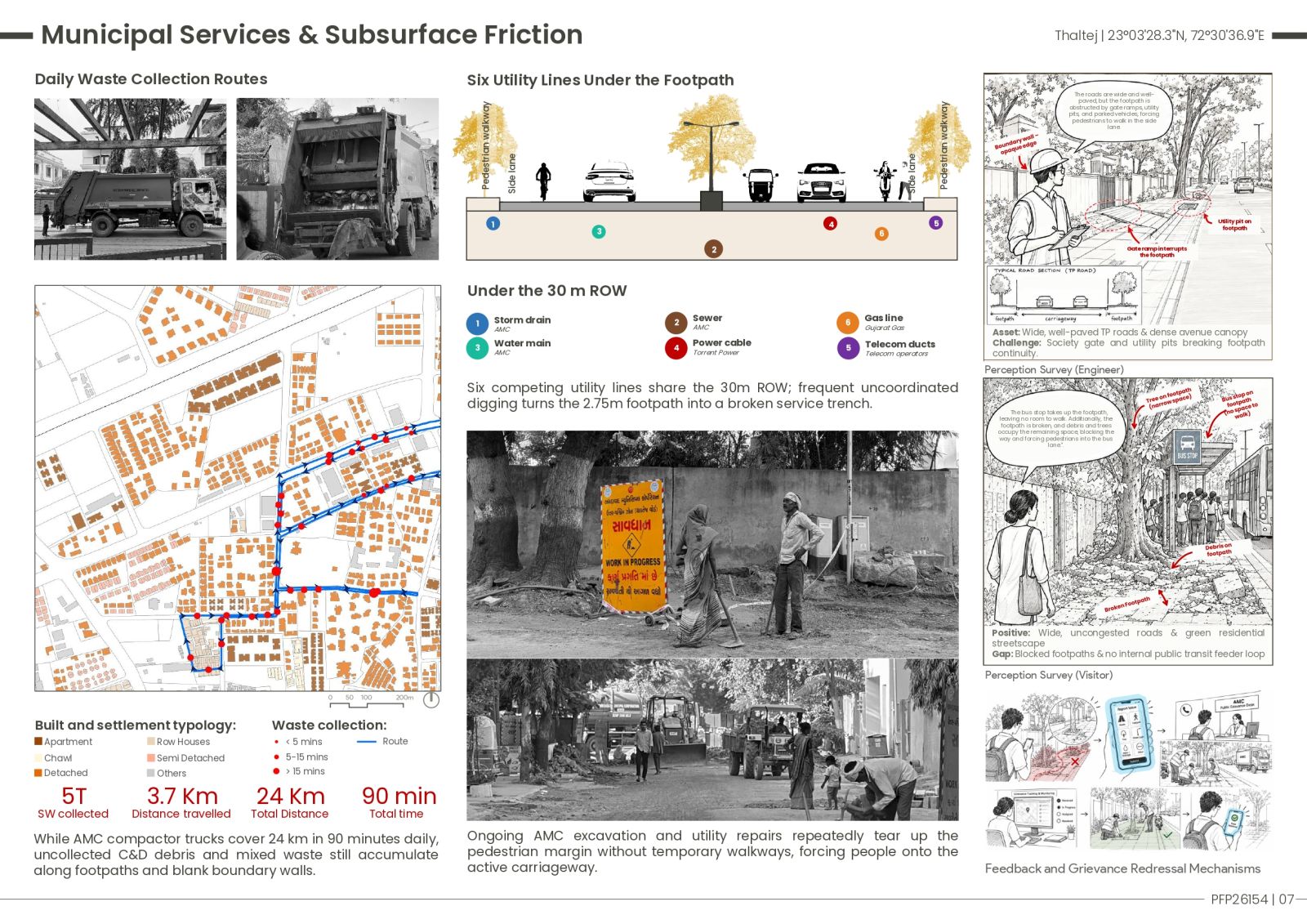
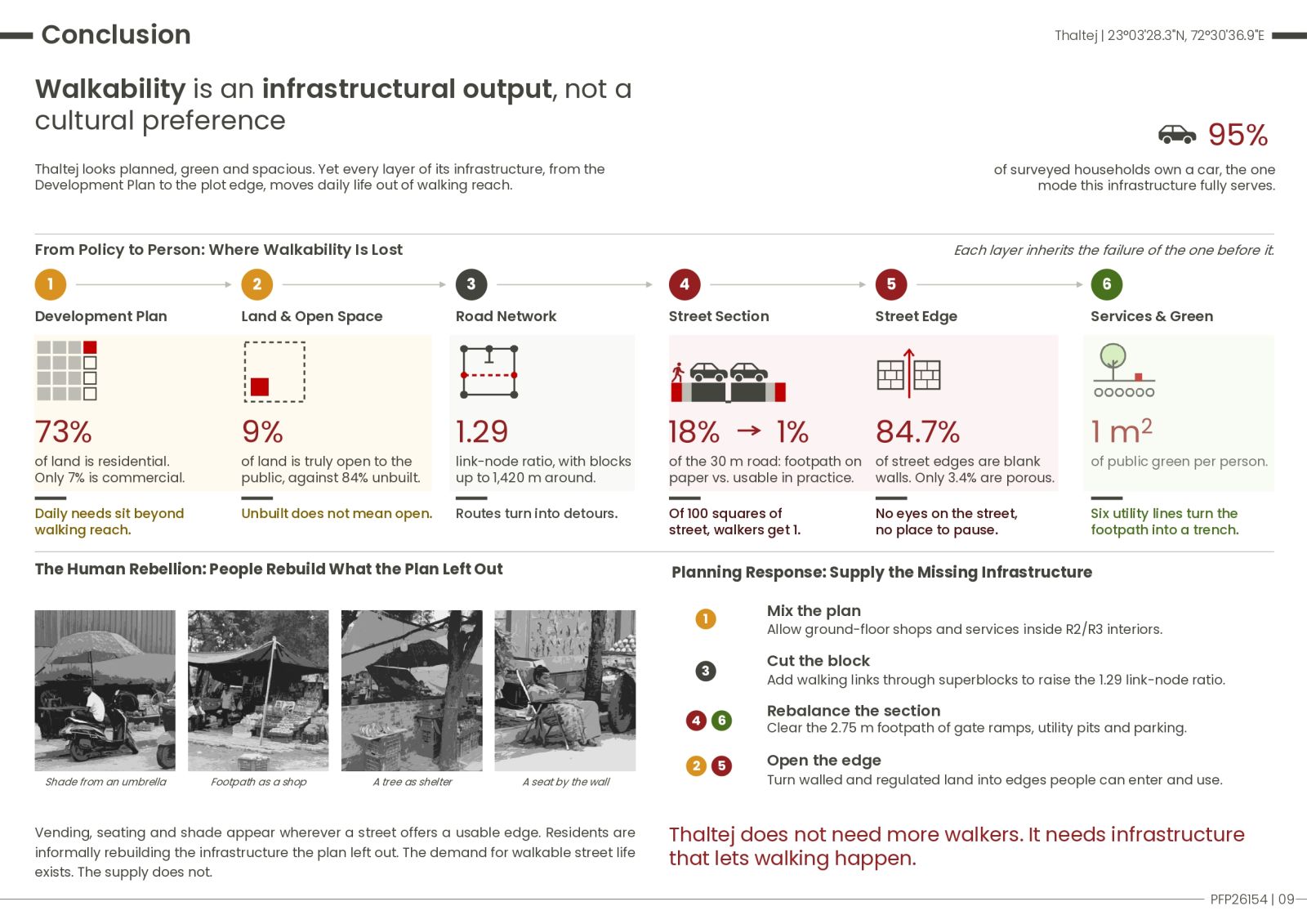
This study examines walkability and street custodianship across a 1×1 km residential precinct in Thaltej, North-West Ahmedabad. By mapping zoning, open-space access, road connectivity, edge permeability, and municipal utilities, it uncovers a sharp divide between plan and reality: 84.7% opaque walls, 82% missing footpaths, and fragmented agency accountability reduce an 18% planned pedestrian share to just 1% usable space. The findings prove that Thaltej’s auto-dependency is engineered by its built form, not by cultural preference.