Chikane Mayur Ramchandra

UP4002-7

Living Inside the Industrial - Saraspur

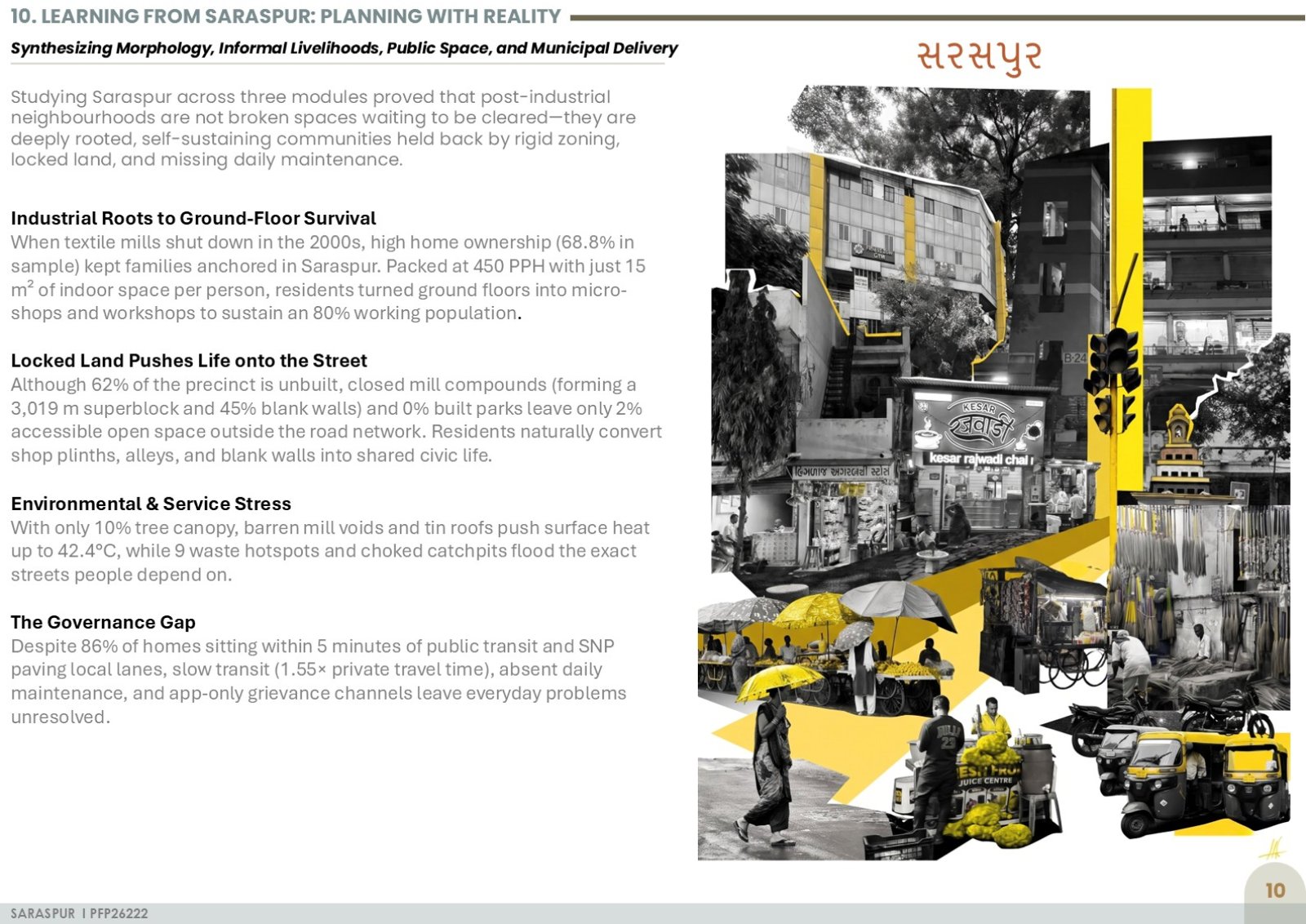
Situated east of Ahmedabad’s Walled City, Saraspur is a rooted working class precinct thriving inside a post industrial shell. Shaped by nineteenth century railways and textile mills, the neighbourhood anchored its community after mill closures through high home ownership, evolving into a dense, low-rise fabric of 450 persons per hectare. This urban study examines how residents convert ground floors into micro-economies and claim street edges as civic spaces despite rigid zoning, a 3,019m superblock, and zero built public parks across 62% unbuilt land. Synthesizing morphology, informal livelihoods, environmental stress, and municipal governance, the project advocates planning with, rather than against, lived urban reality. 

Report Content

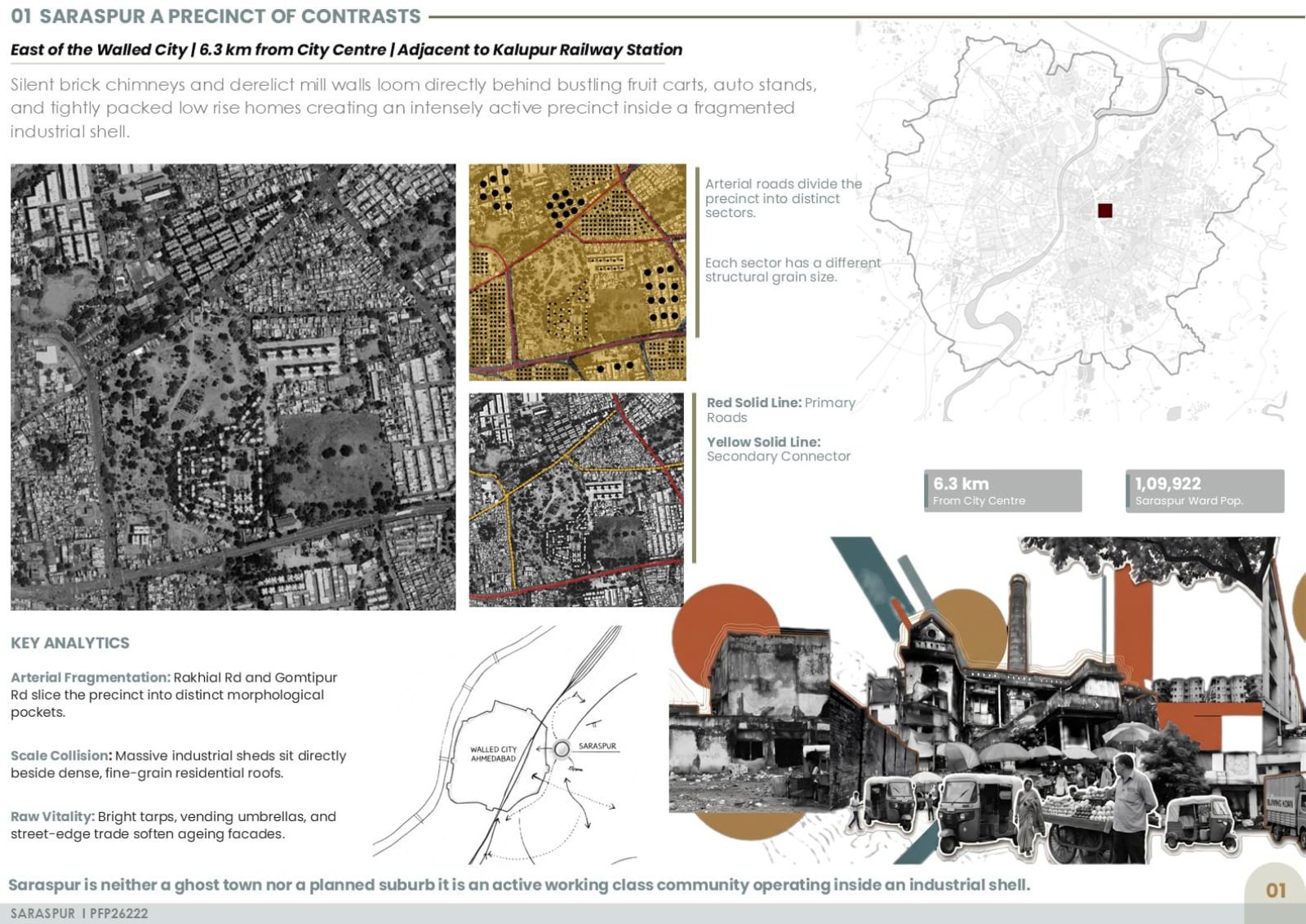
Mapping Saraspur’s location east of the Walled City, where bustling working class street life operates beside derelict mill walls and arterial divides.

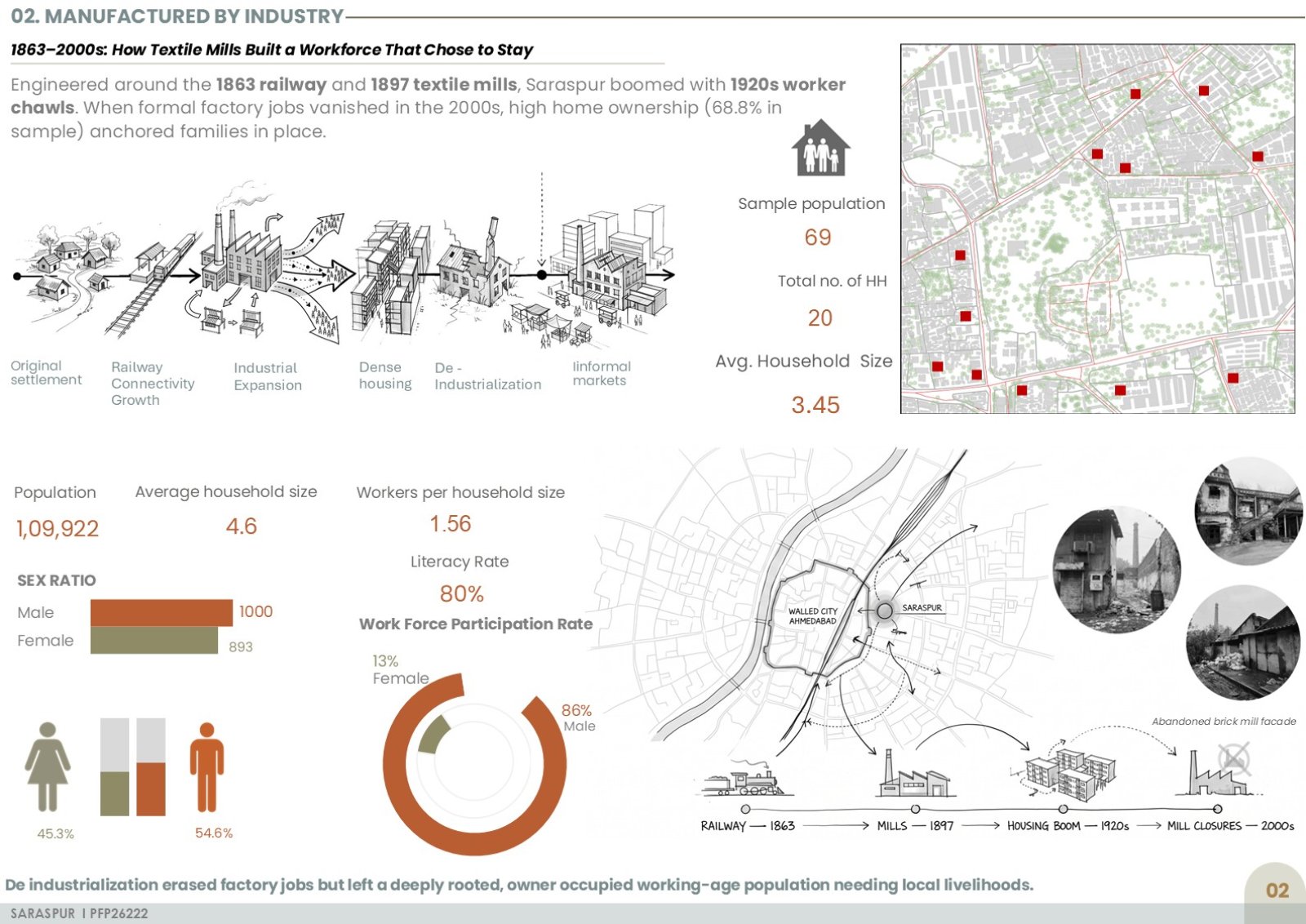
Tracing Saraspur’s evolution from 1863 railways and 1897 textile mills to post closure resilience anchored by 68.8% home ownership.

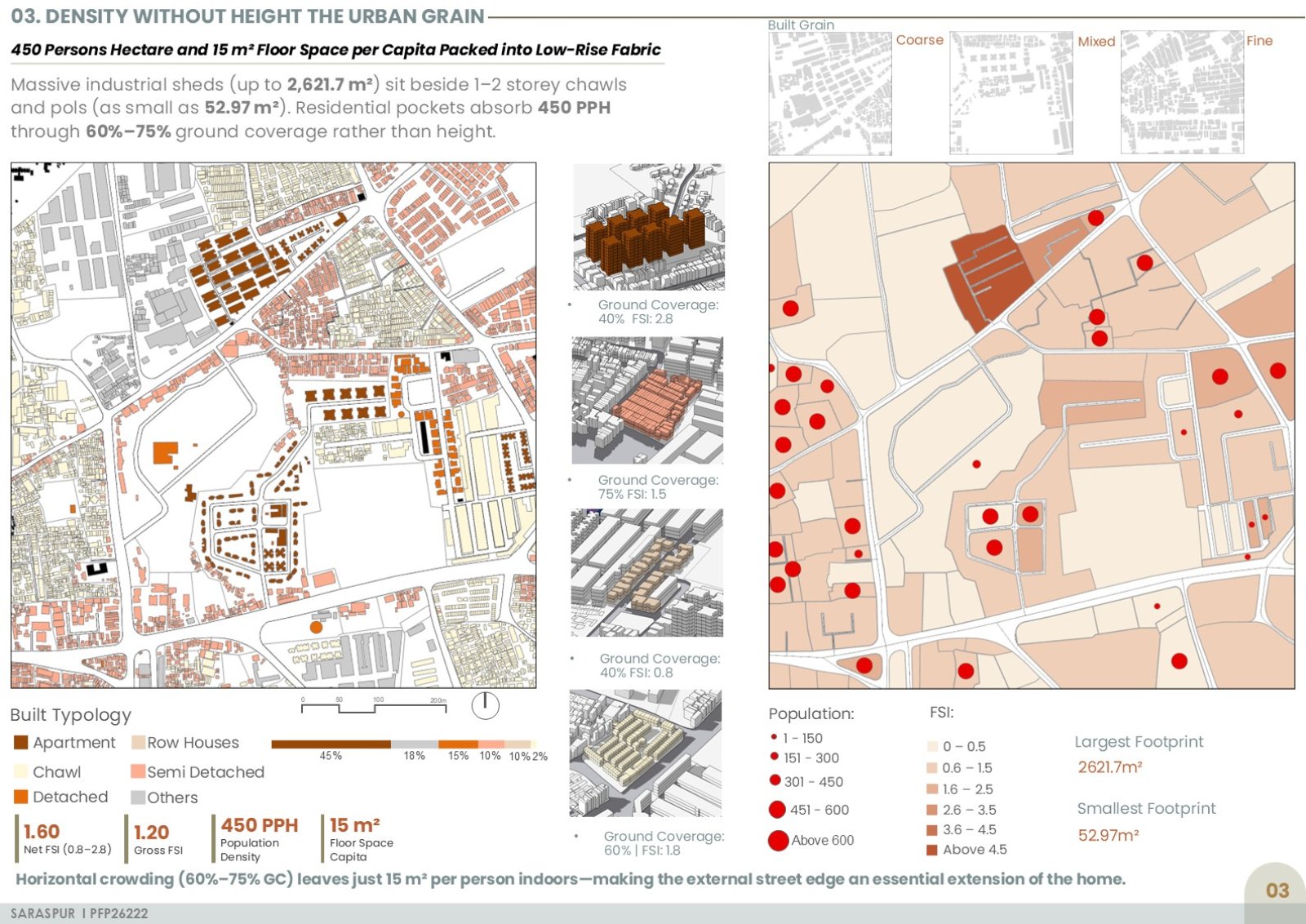
Analyzing Saraspur’s low rise urban grain, where 450 persons per hectare and 60% – 75% ground coverage compress indoor space to 15 m² per capita.

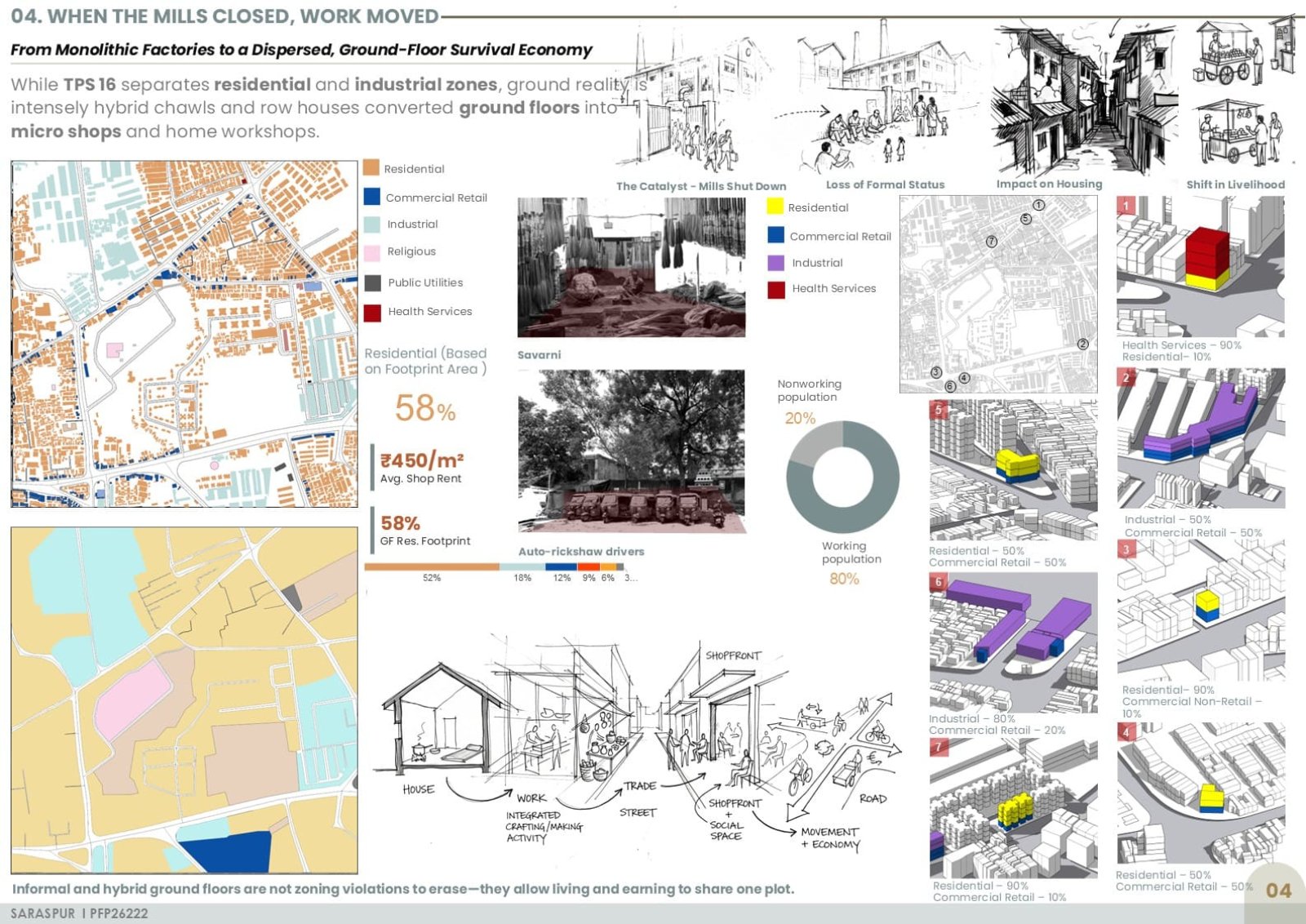
Documenting how chawls and row houses bypass rigid zoning by turning ground floors into hybrid micro shops and home workshops.

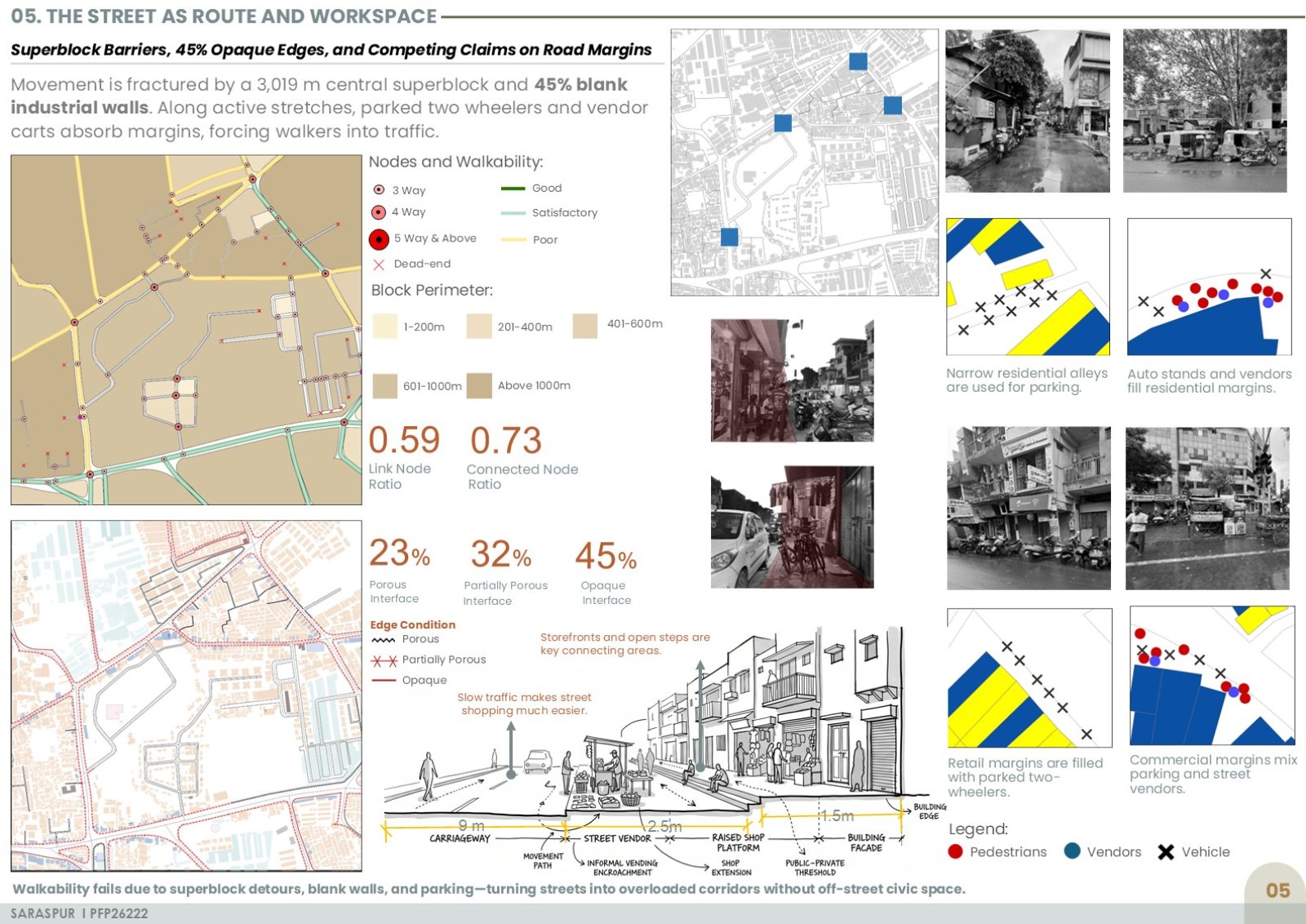
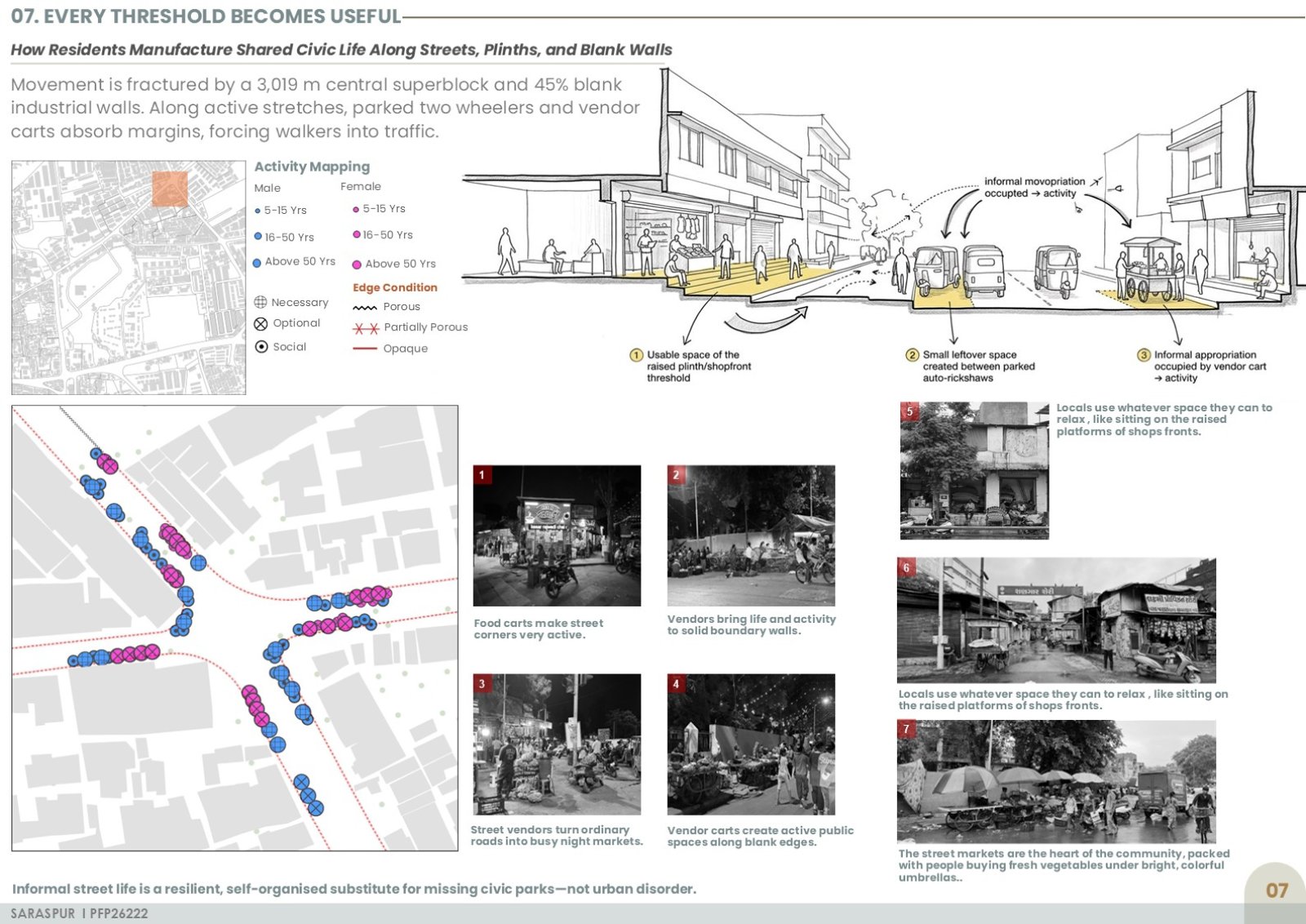
Examining walkability breakdowns caused by a 3,019 m central superblock, 45% opaque industrial edges, and competing street margin claims.

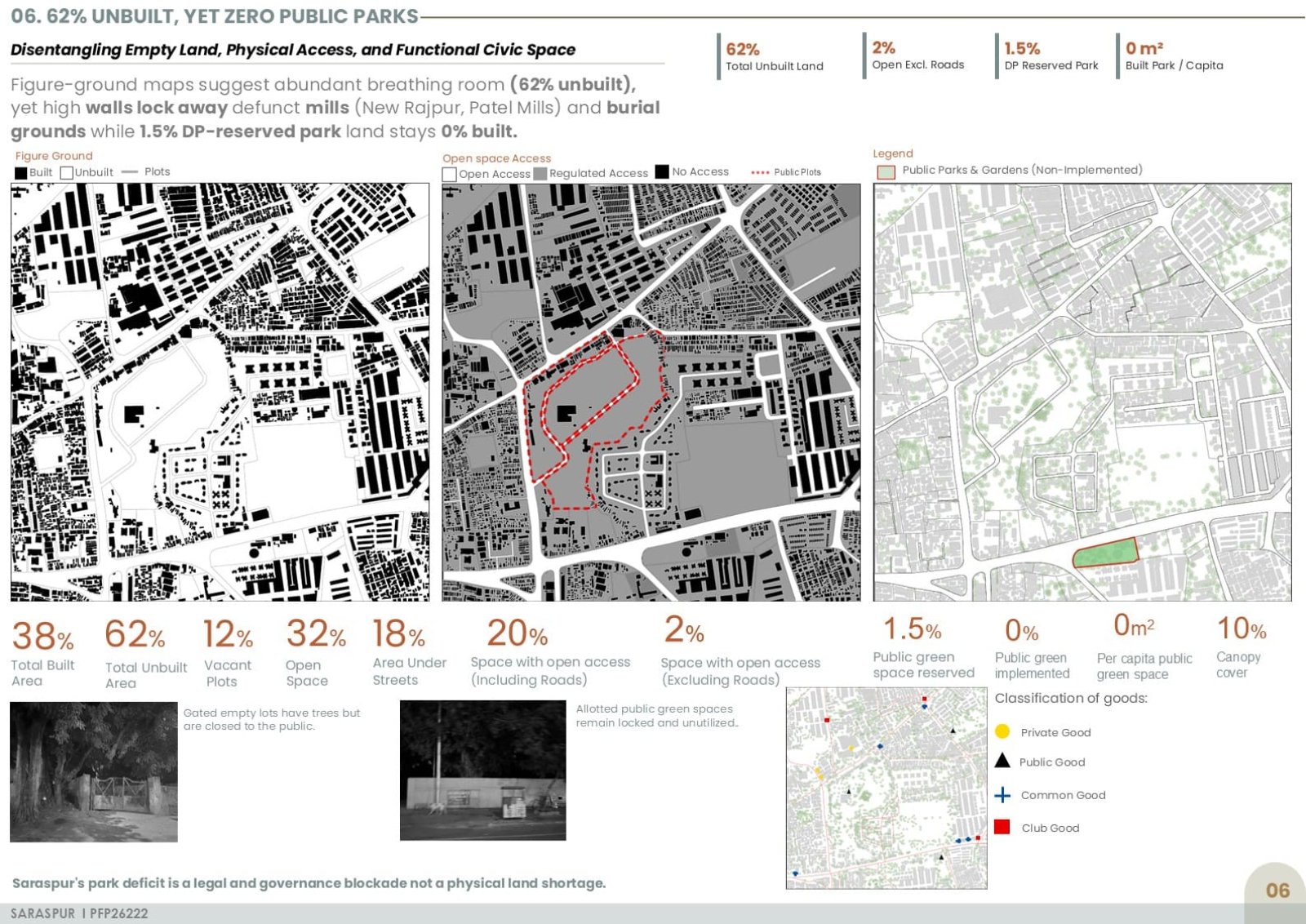
Unpacking the paradox of abundant unbuilt mill land locked behind high walls, leaving 0% implemented parks and 2% accessible open space.

Mapping how residents self-organize everyday civic life across shop plinths, street corners, and vendor lined boundary walls.

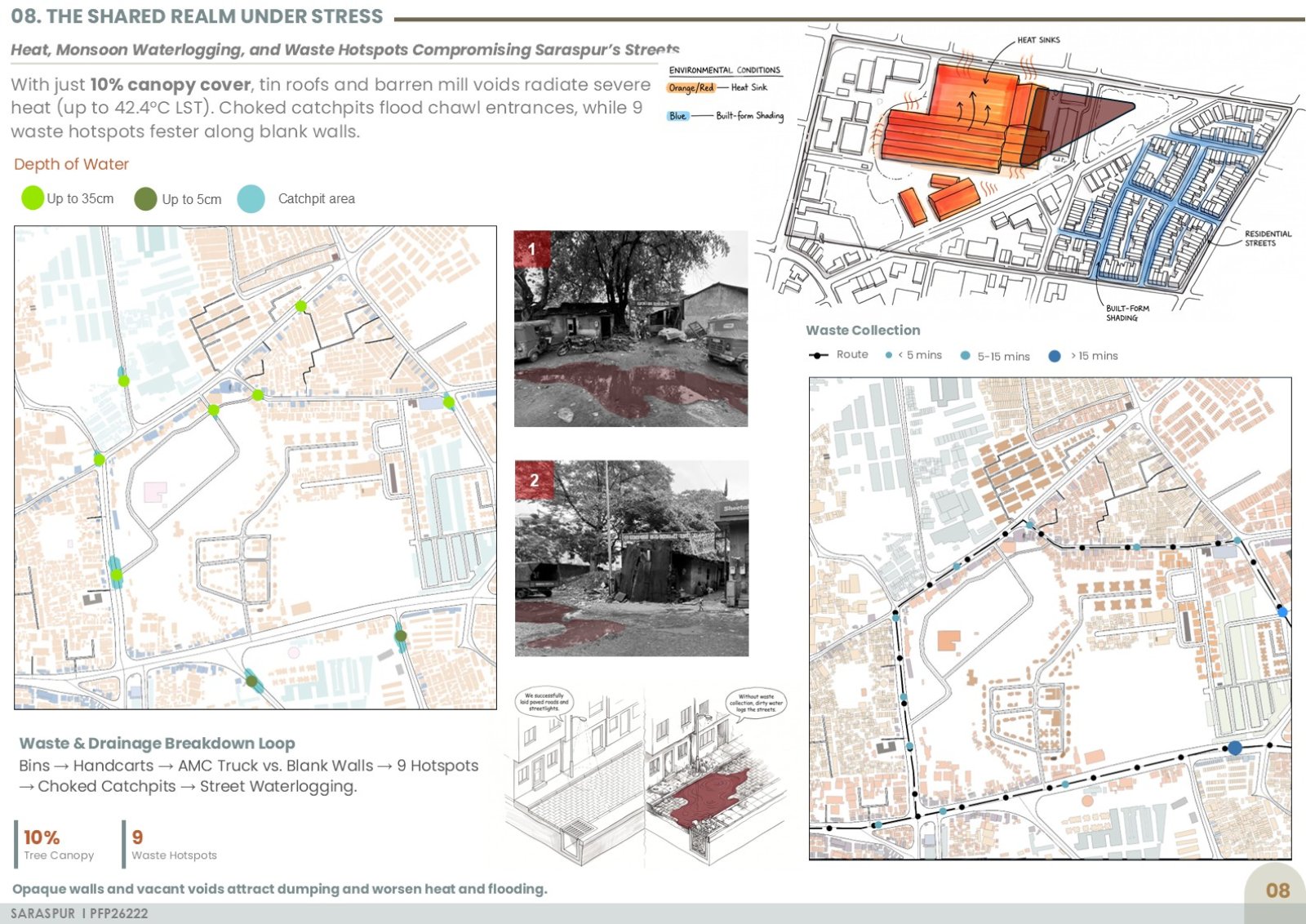
Highlighting compounding environmental pressures 10% tree canopy, 42.4°C surface heat, nine waste hotspots, and monsoon waterlogging.

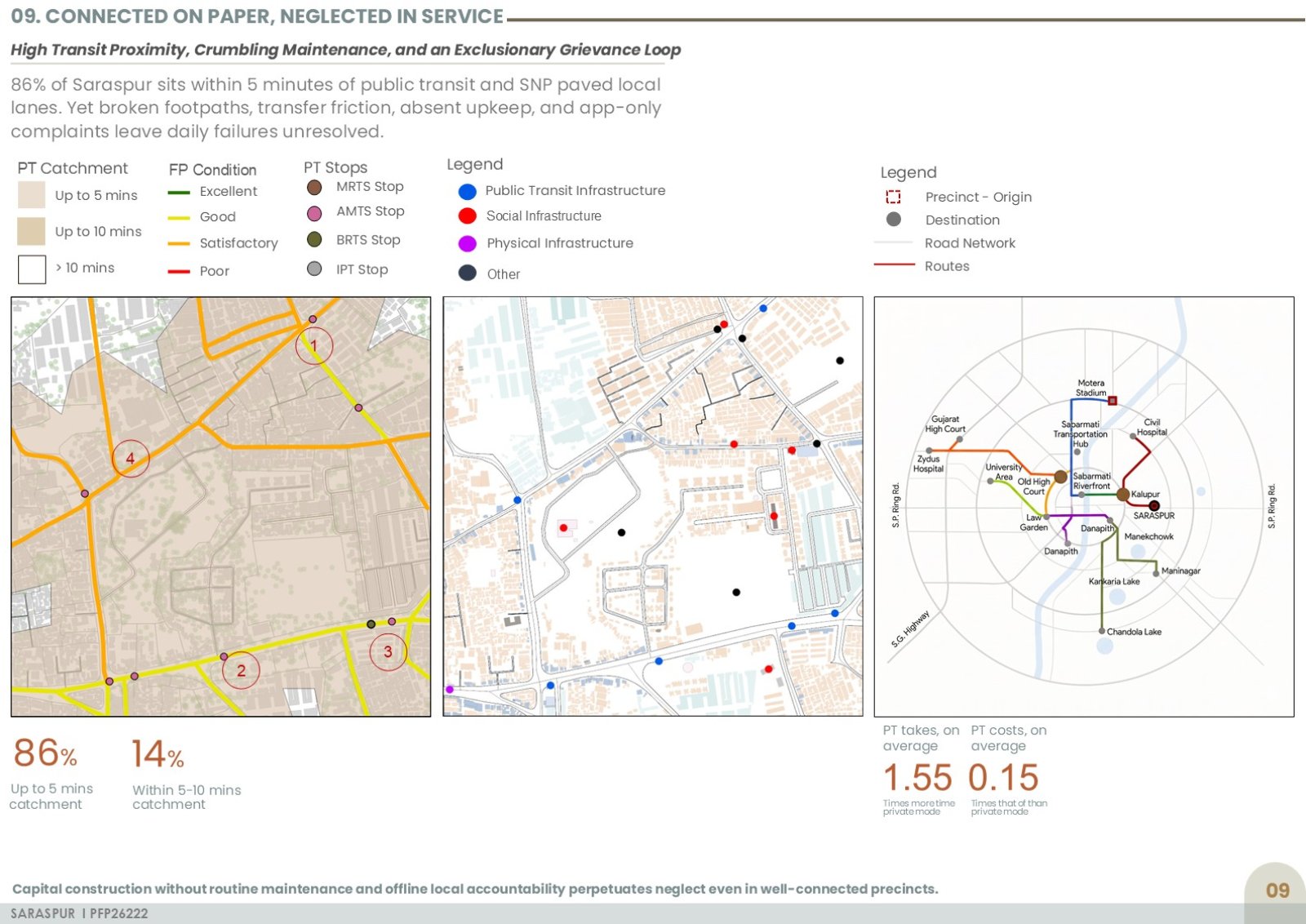
Contrasting high public transit proximity (86% within five minutes) against crumbling footpaths, absent maintenance, and exclusionary app only grievance systems.

Synthesizing spatial, economic, ecological, and governance findings to reframe post industrial Saraspur as a resilient community needing responsive planning.