Your browser is out-of-date!
For a richer surfing experience on our website, please update your browser. Update my browser now!
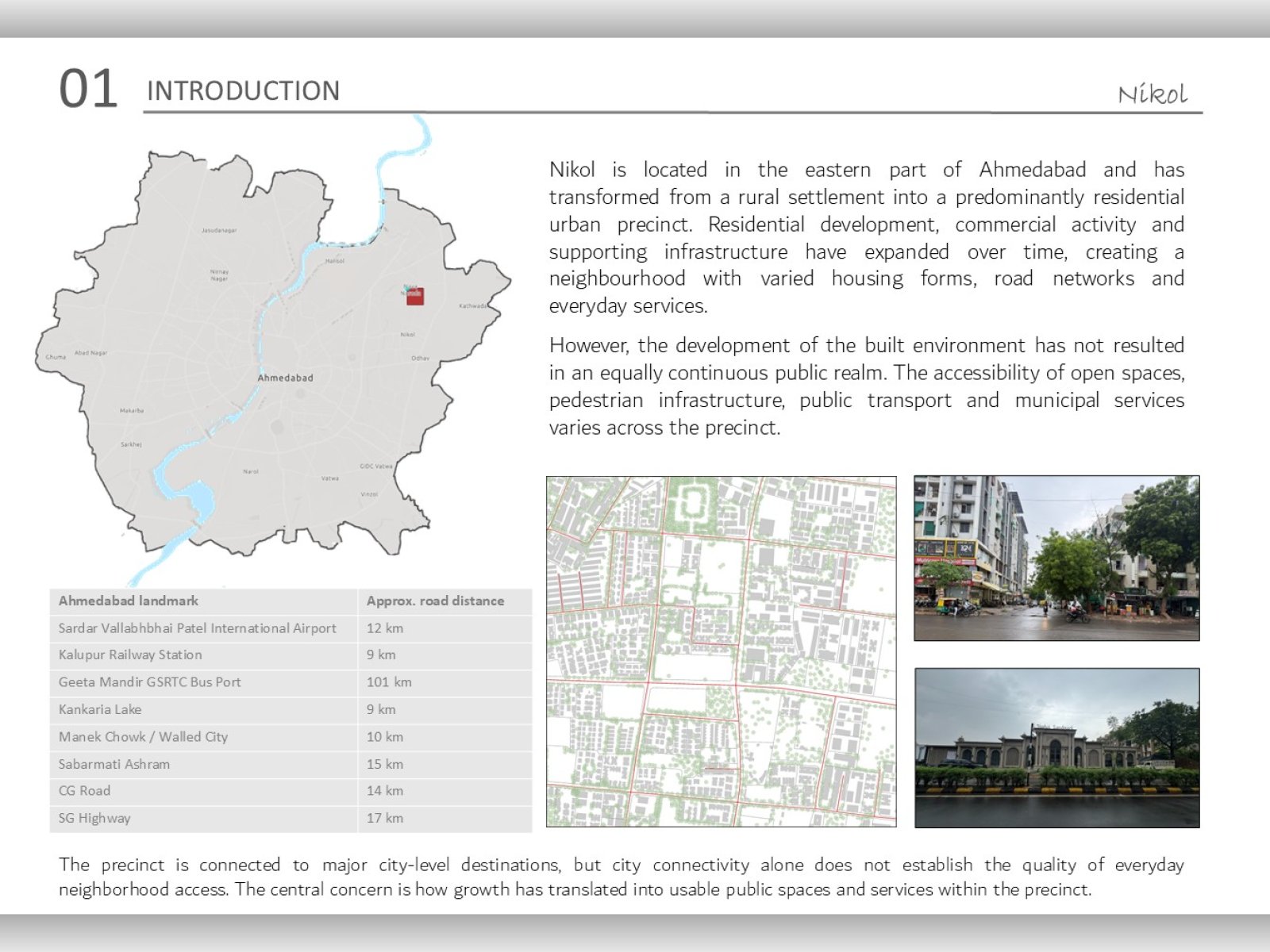
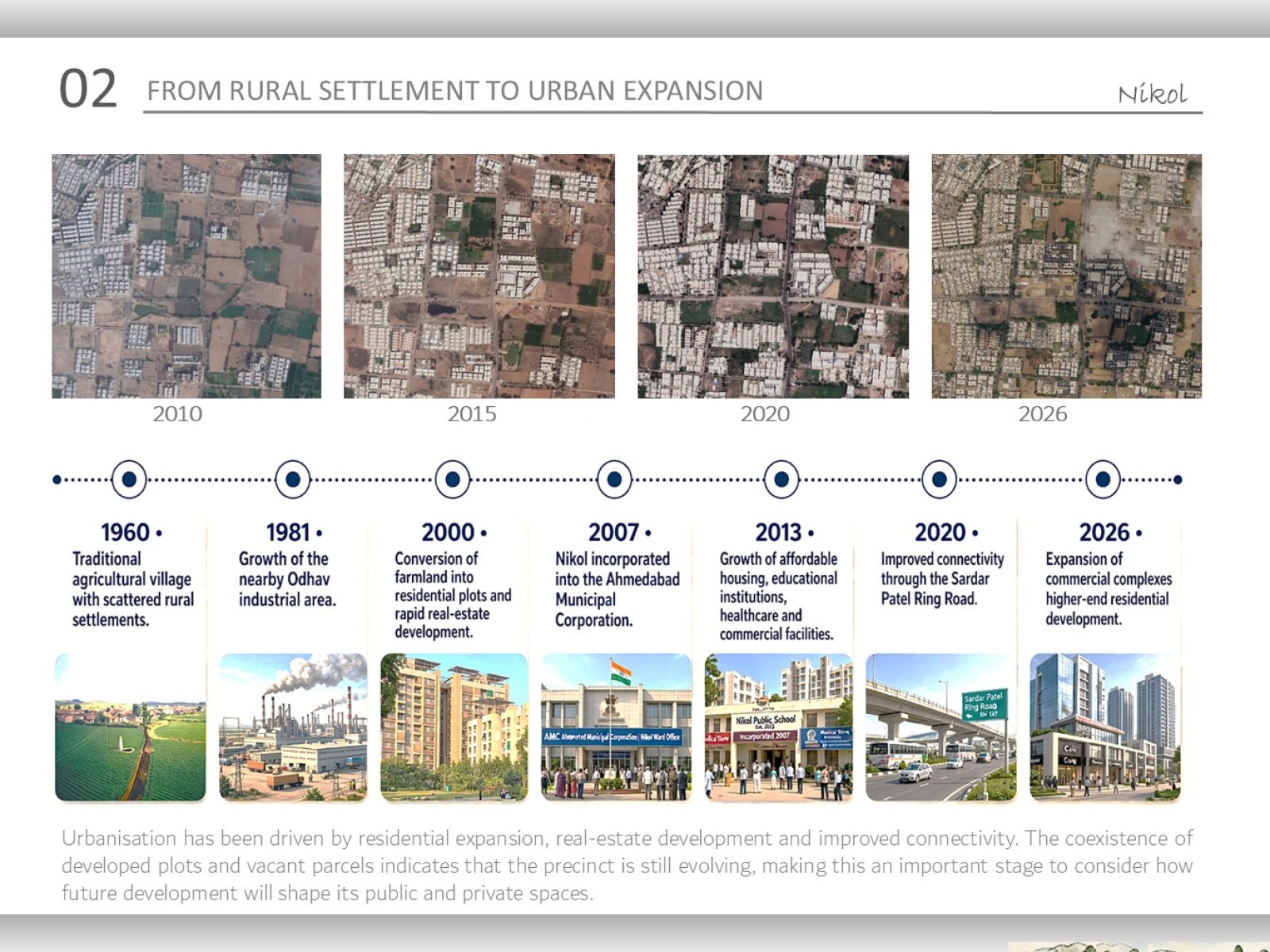
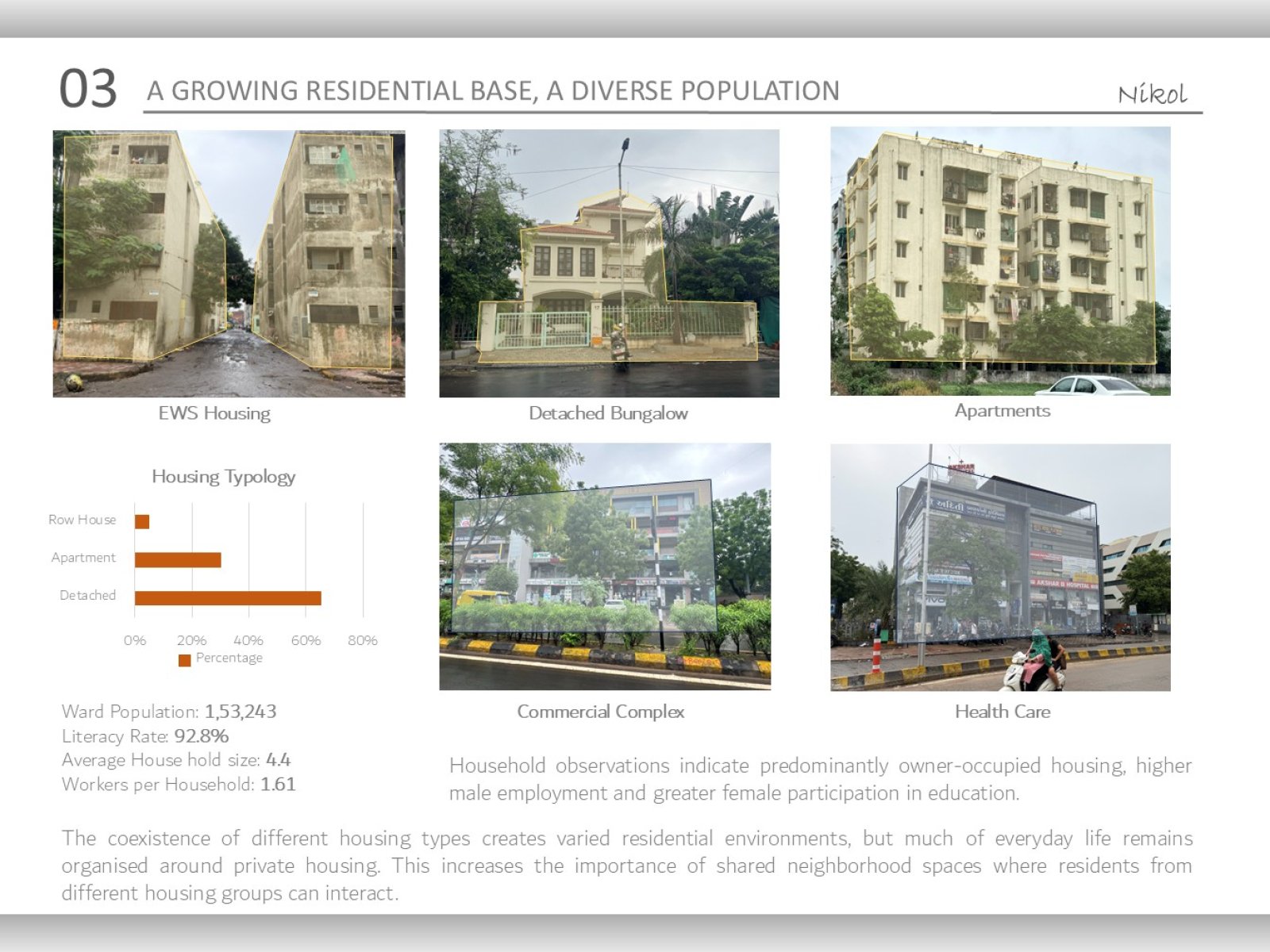
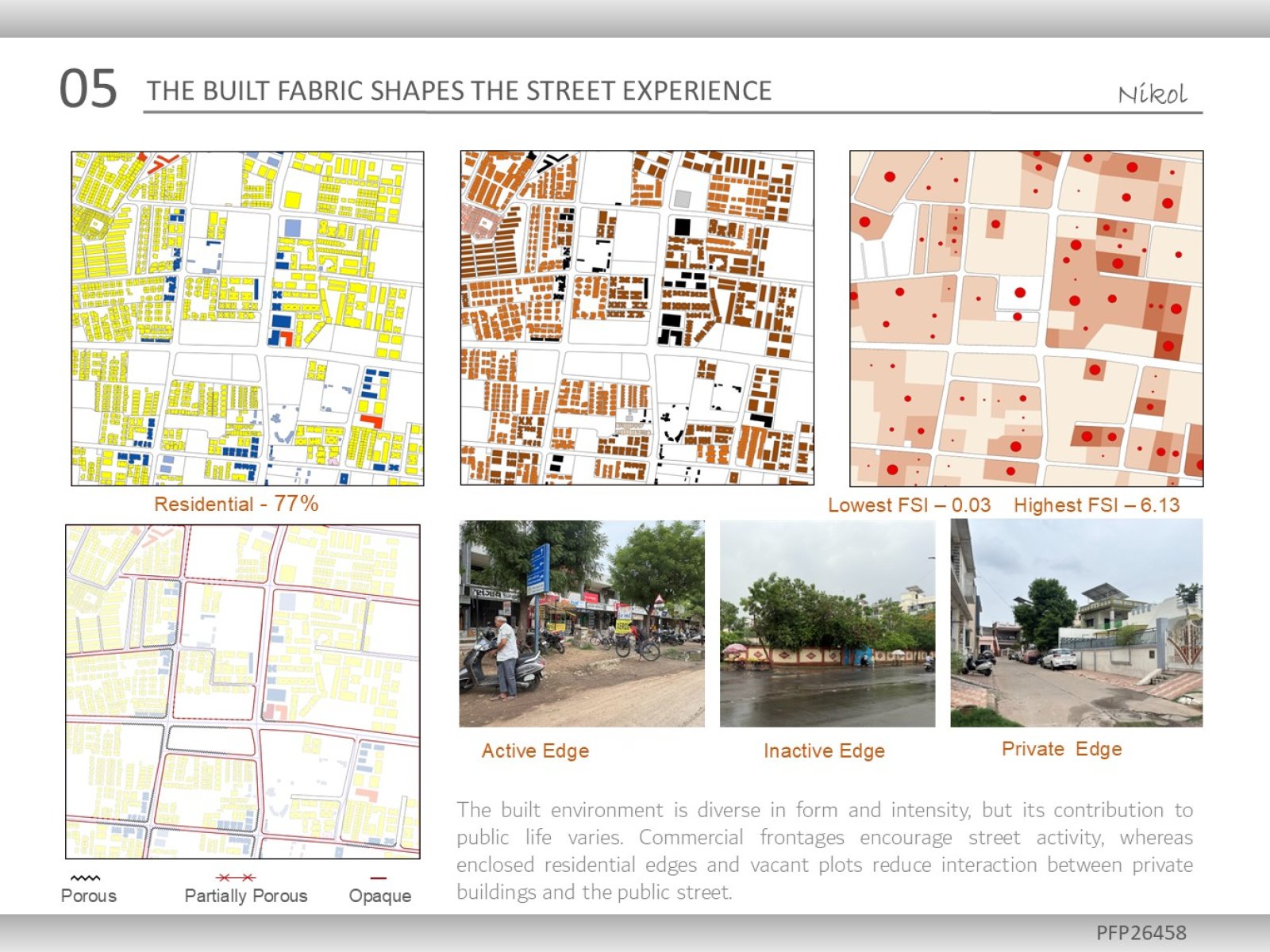
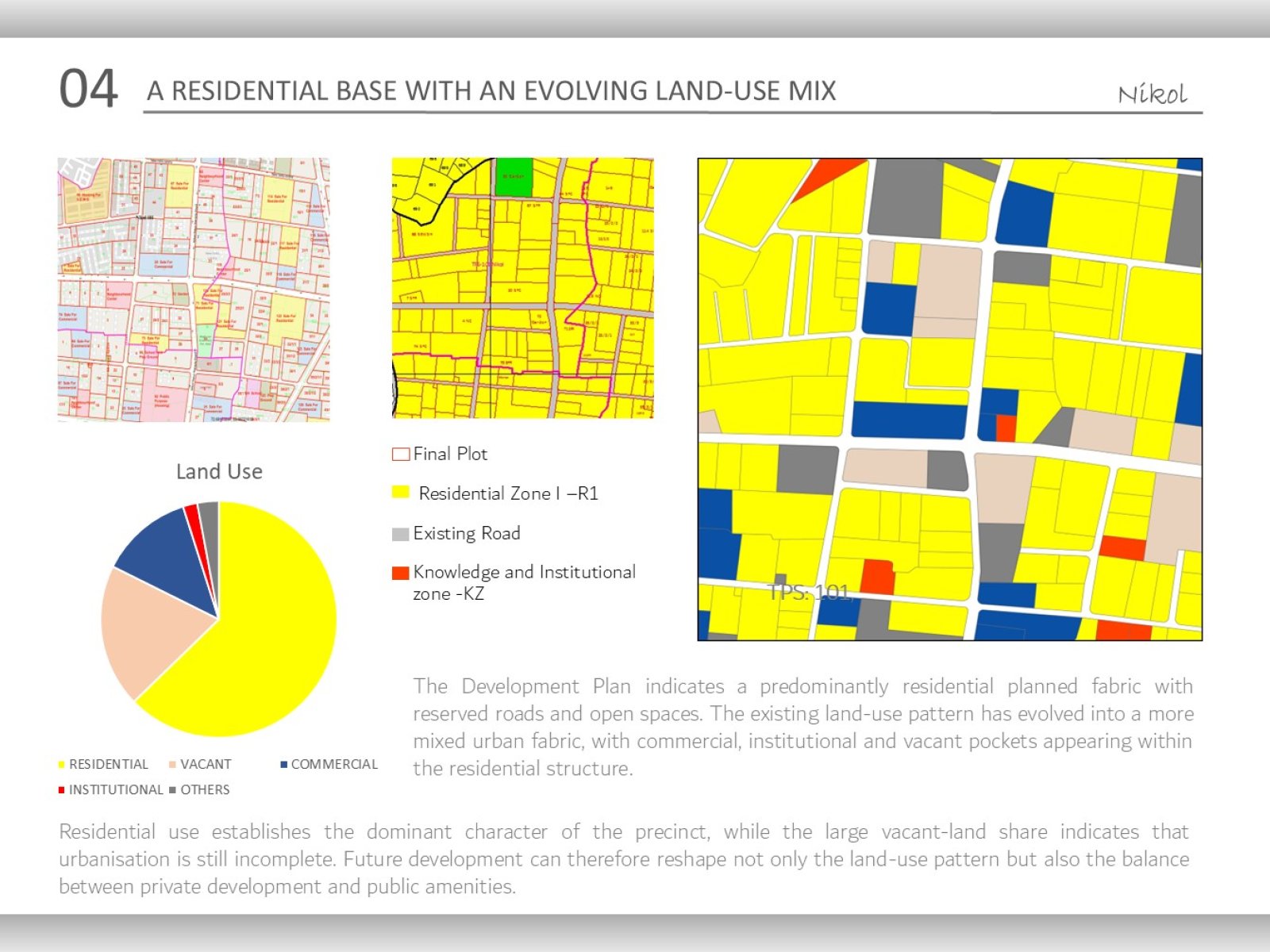
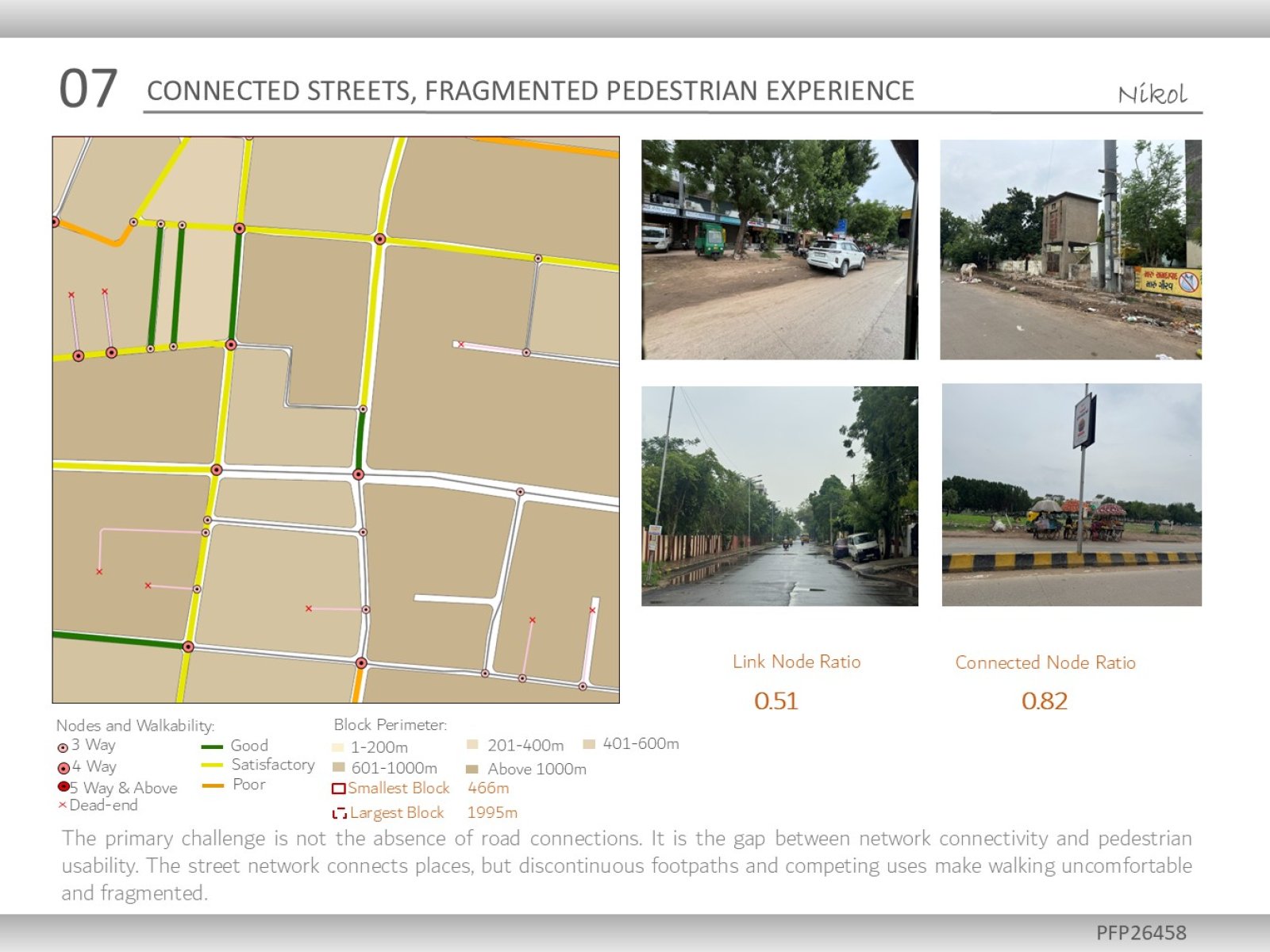
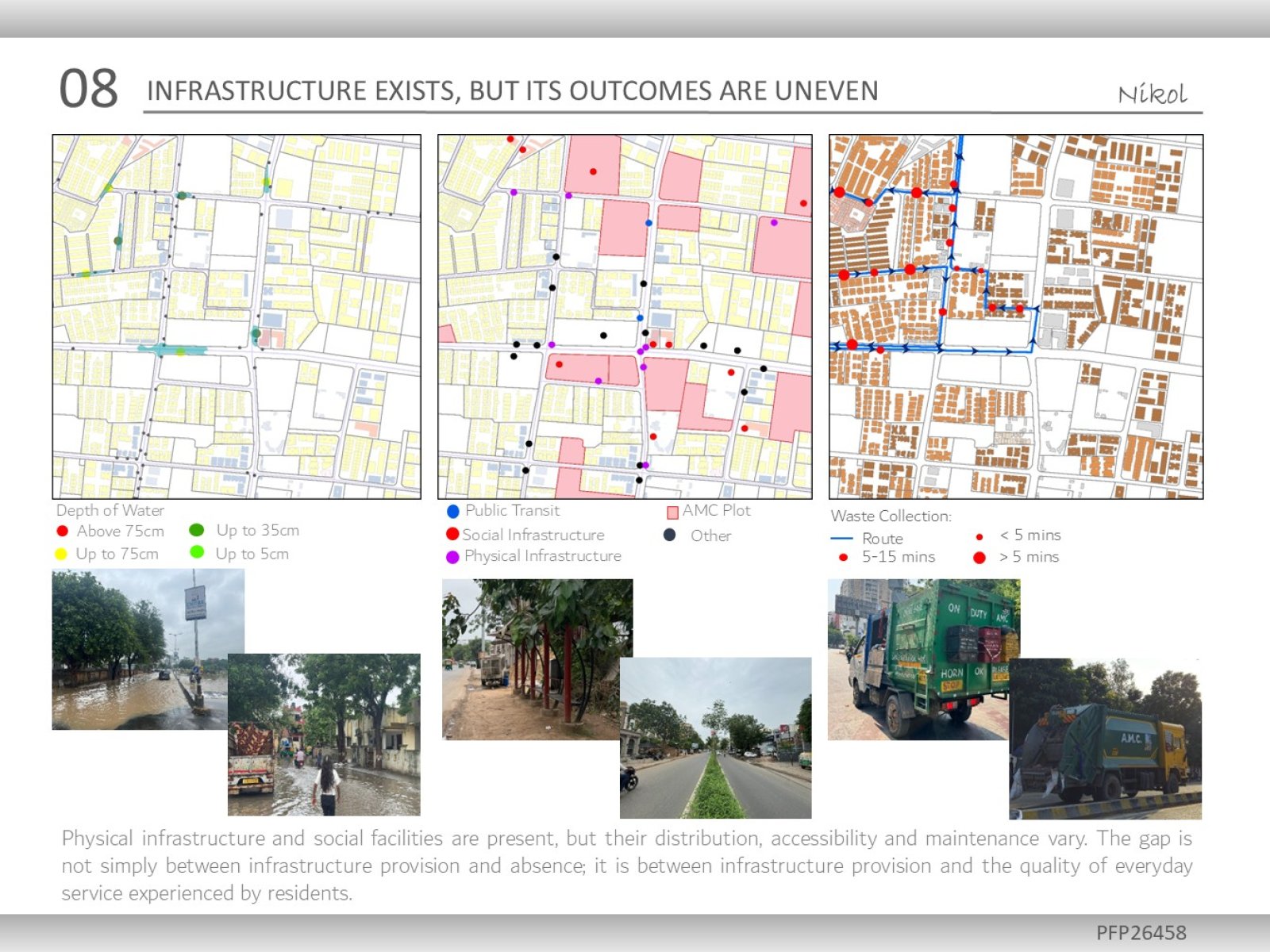
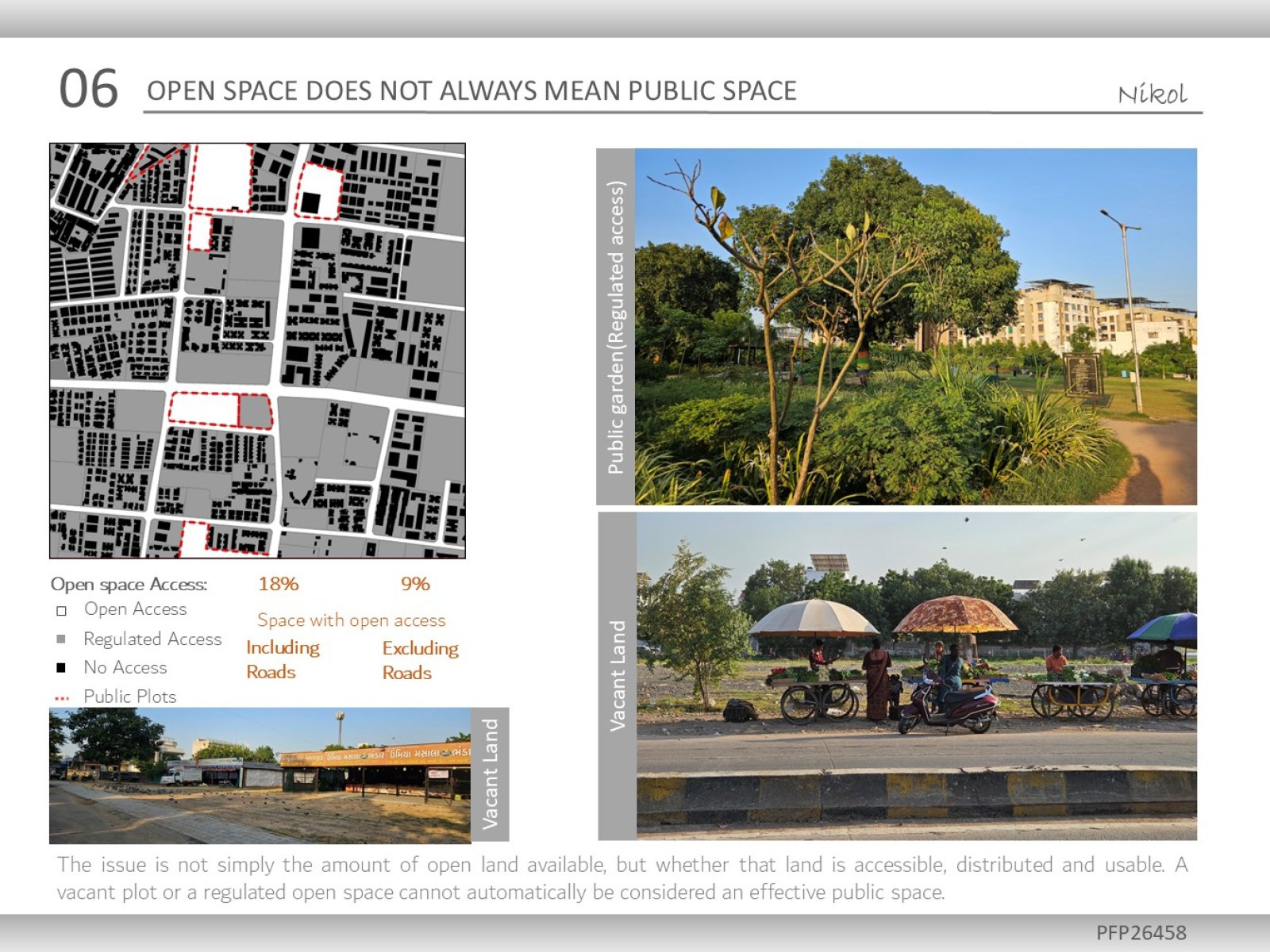
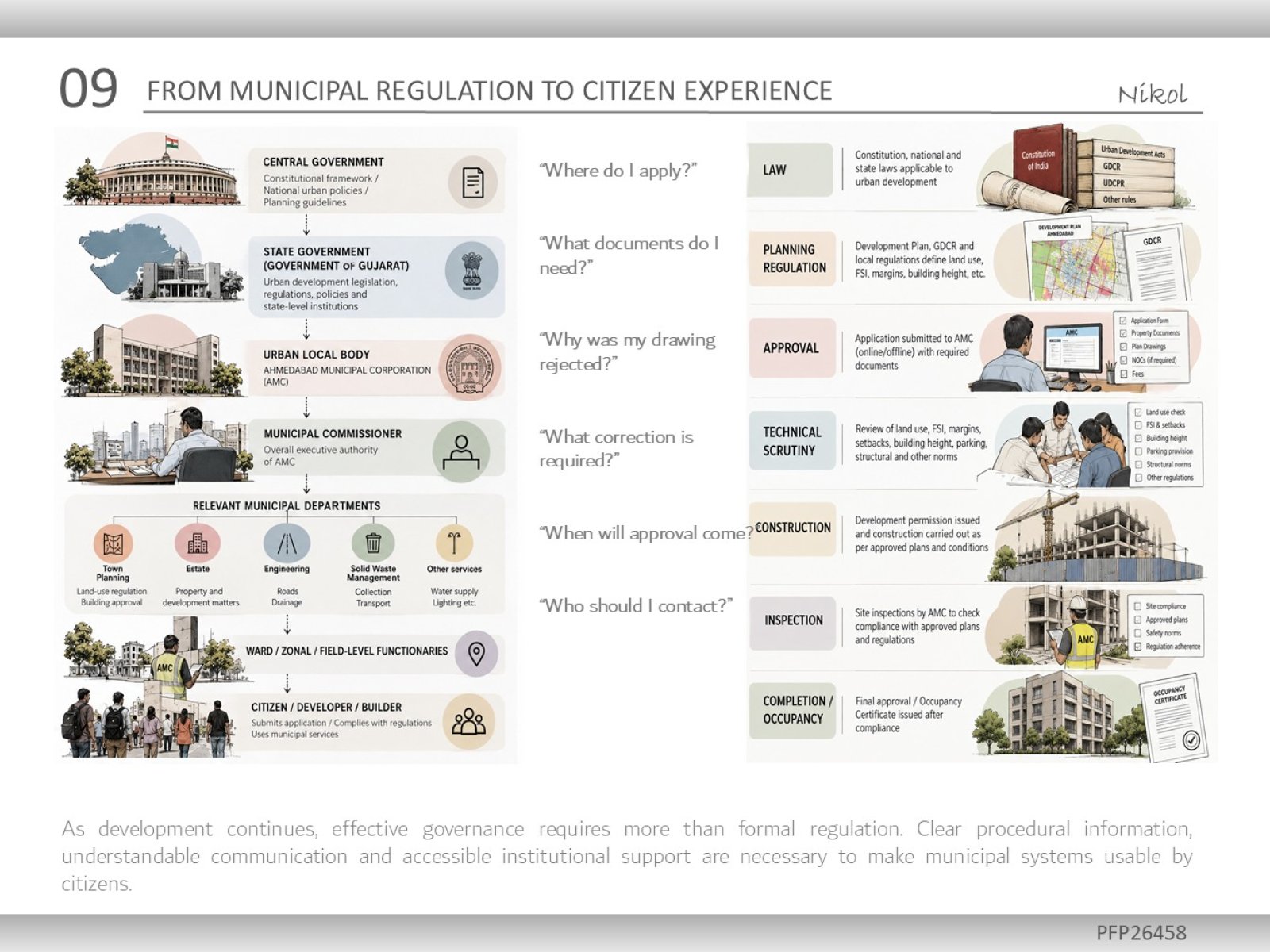
Nikol, located in the eastern part of Ahmedabad, has transformed from a rural settlement into a rapidly developing residential precinct. The expansion of housing, commercial activities and urban infrastructure has reshaped its physical and social character. However, this growth has also revealed an uneven relationship between private development and the provision of public spaces and urban services. This portfolio examines the transformation through three interconnected dimensions: people and places, the public-private realm, and infrastructure and governance. It explores how changing demographics, housing typologies and land-use patterns influence the built environment and the relationship between buildings and streets. It further investigates the accessibility of open spaces, pedestrian conditions, infrastructure provision and the functioning of municipal systems. Through spatial mapping, field observations, household surveys and institutional analysis, the study identifies the gaps between physical development and everyday urban experience. It argues that the challenge for Nikol is no longer limited to accommodating urban growth, but ensuring that public spaces, infrastructure and governance systems evolve alongside it.