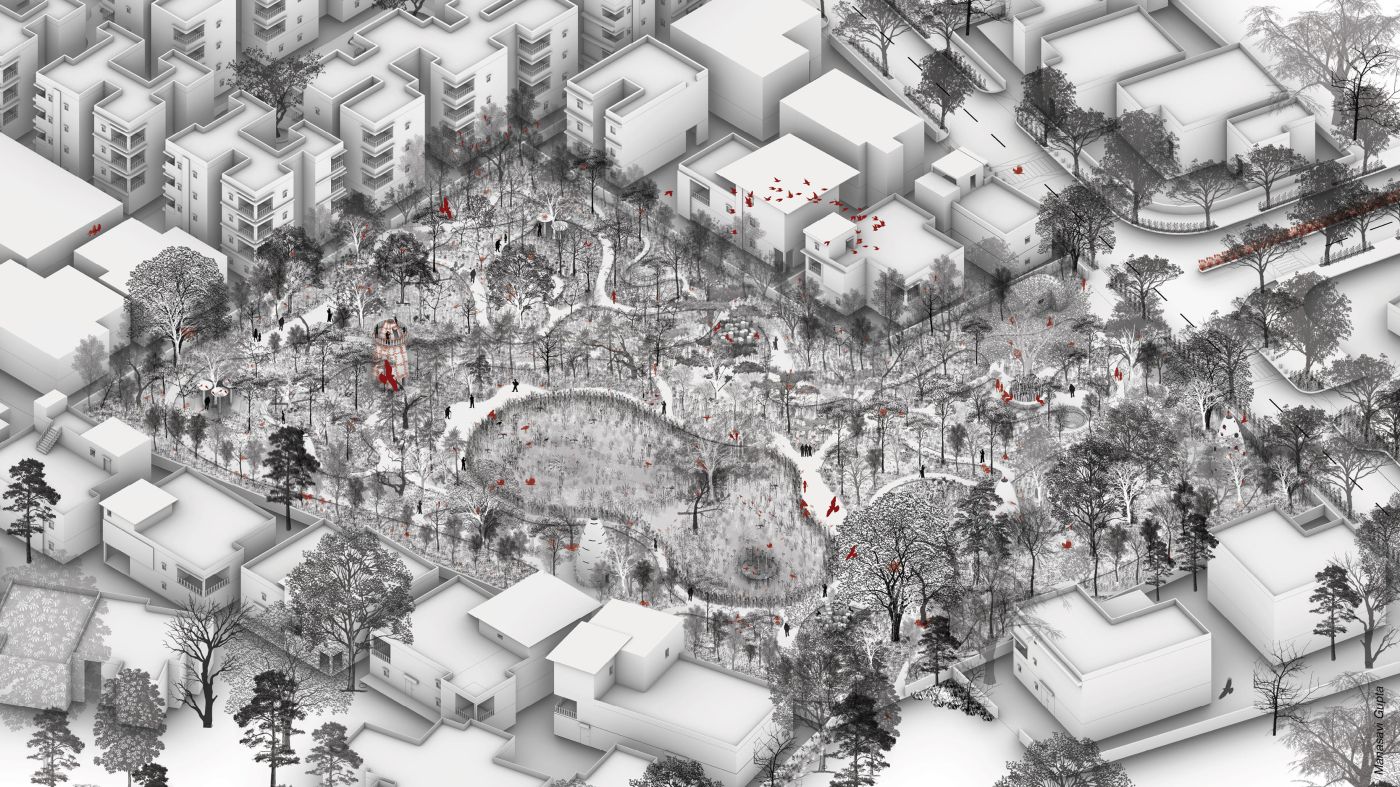
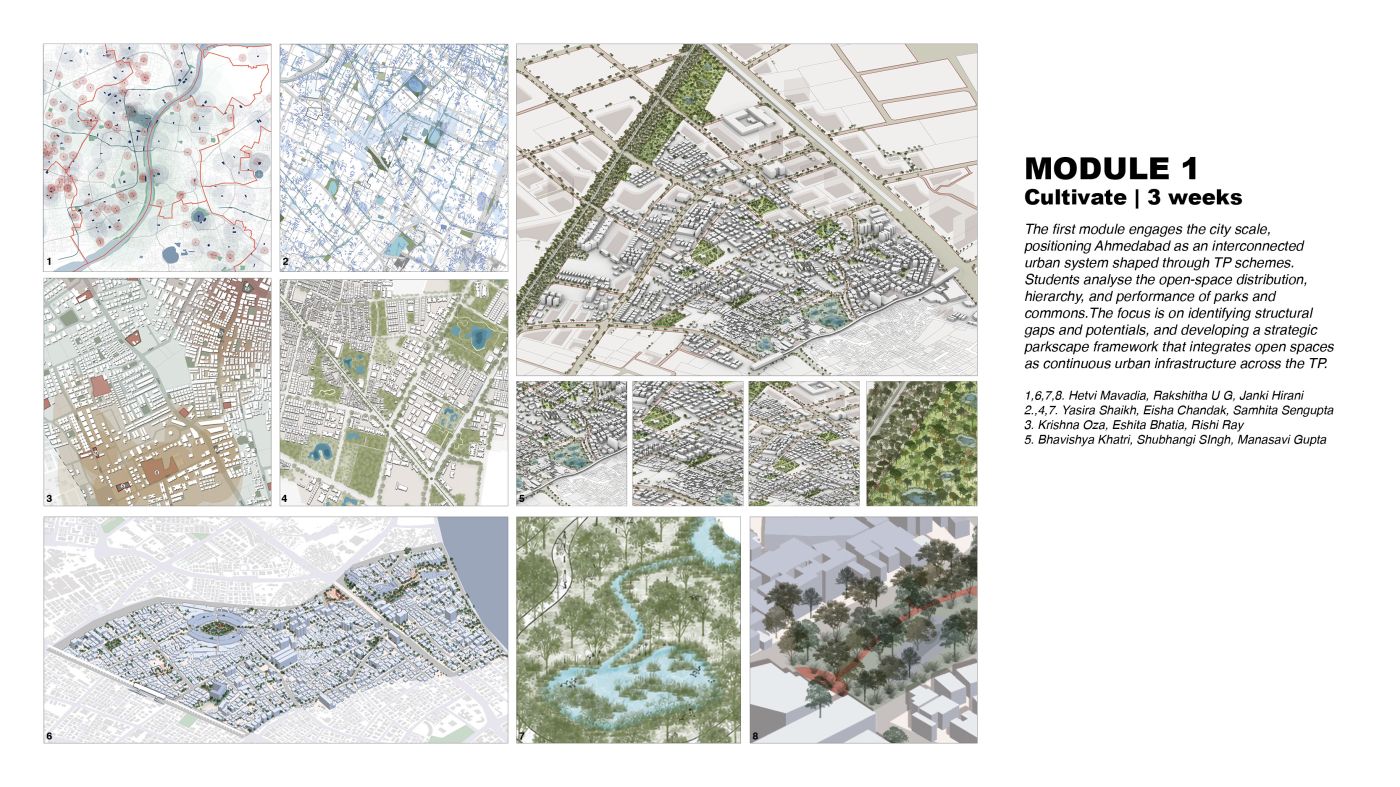
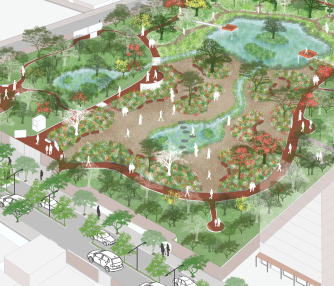
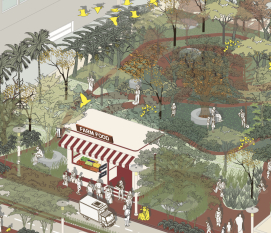
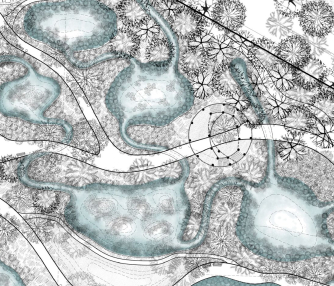
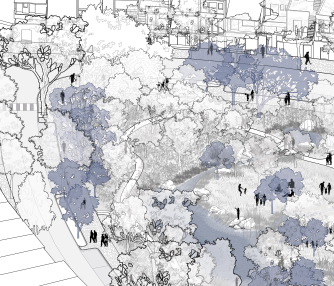
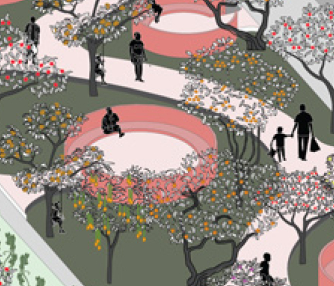
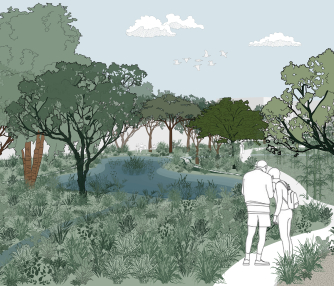
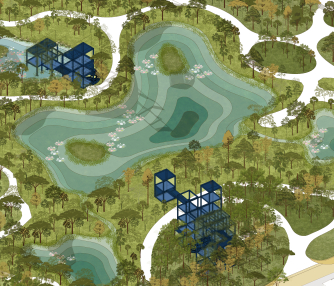
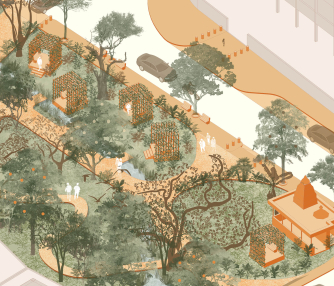
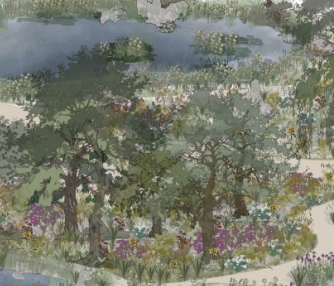
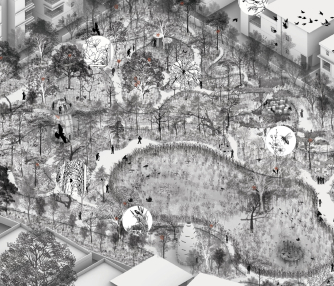
In the context of growing cities, parks and open spaces are crucial nodes linking social well-being with ecological resilience. In Ahmedabad, while vegetation has declined by nearly 78% over the past two decades, this presents opportunities to reimagine parks and open spaces as social anchors, ecological lungs, and productive urban infrastructure.
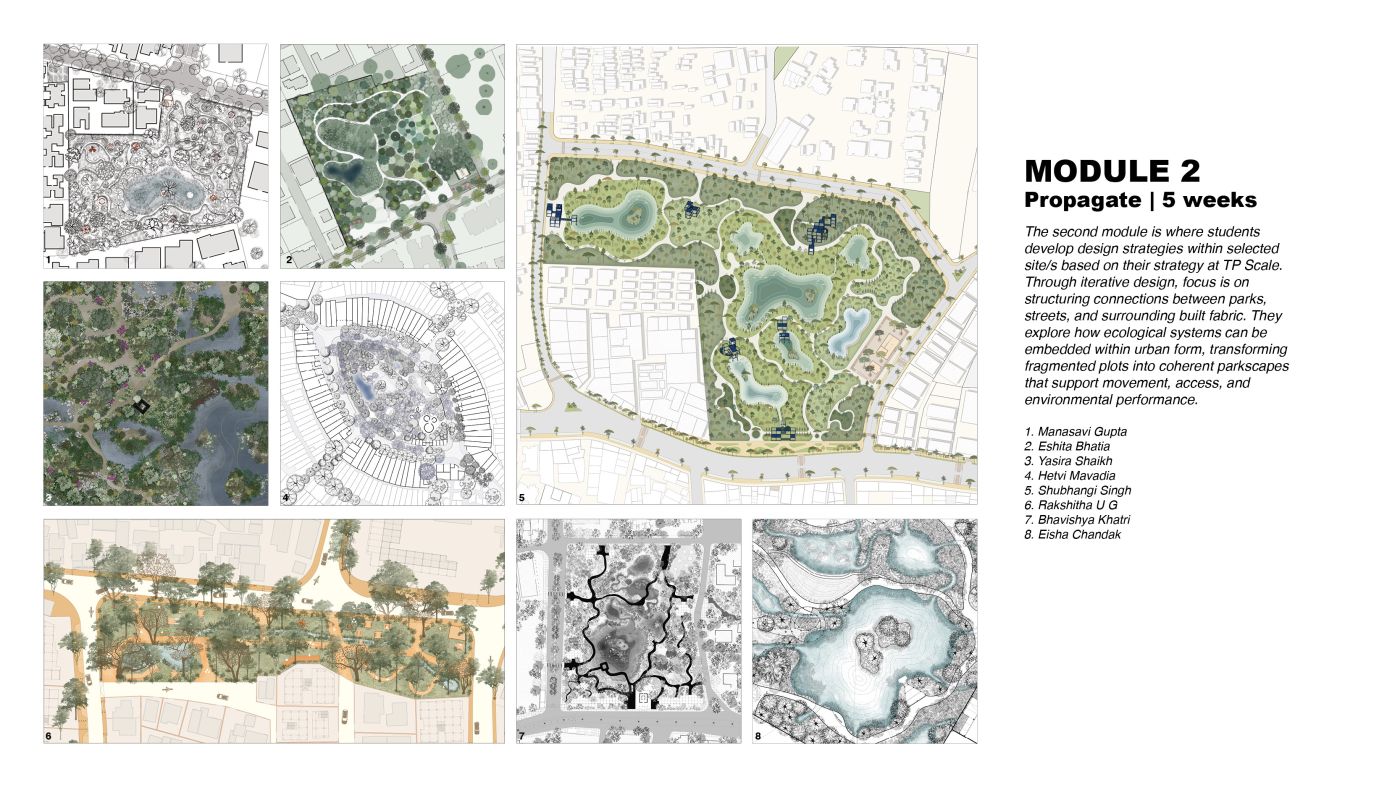
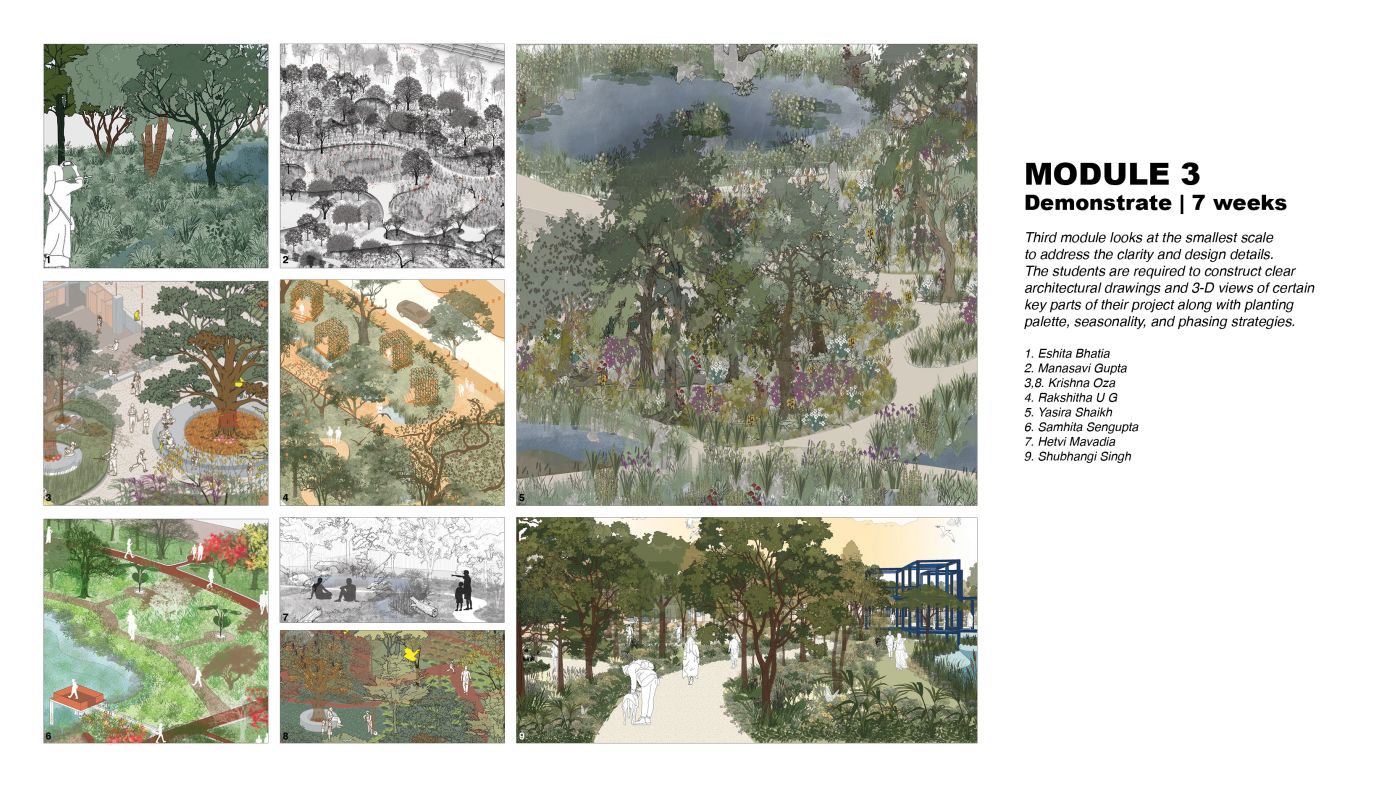
This Level 3 studio invites urban design students to engage with the design of parks as integrated systems. Drawing on urban theory and landscape studies, participants will explore how parks mediate between natural processes and the built environment. Analysis of vegetation, landform, and the movement of water and soil alongside roads, edges, utilities, and adjacent buildings will form the basis for design interventions, enabling students to experiment with reconfiguring these elements as productive infrastructure and informing design decisions.
Building on this foundation, students will develop design strategies for proposed sites as multifunctional, adaptive landscapes, integrating habitat restoration, stormwater management, and social spaces. The studio emphasizes systemic thinking and experimentation, encouraging students to see parks as active agents within urban ecologies. By situating design at the intersection of ecology, infrastructure, and civic life, the studio positions urban parks as catalysts for more resilient, inclusive, and vibrant cities.