Your browser is out-of-date!
For a richer surfing experience on our website, please update your browser. Update my browser now!
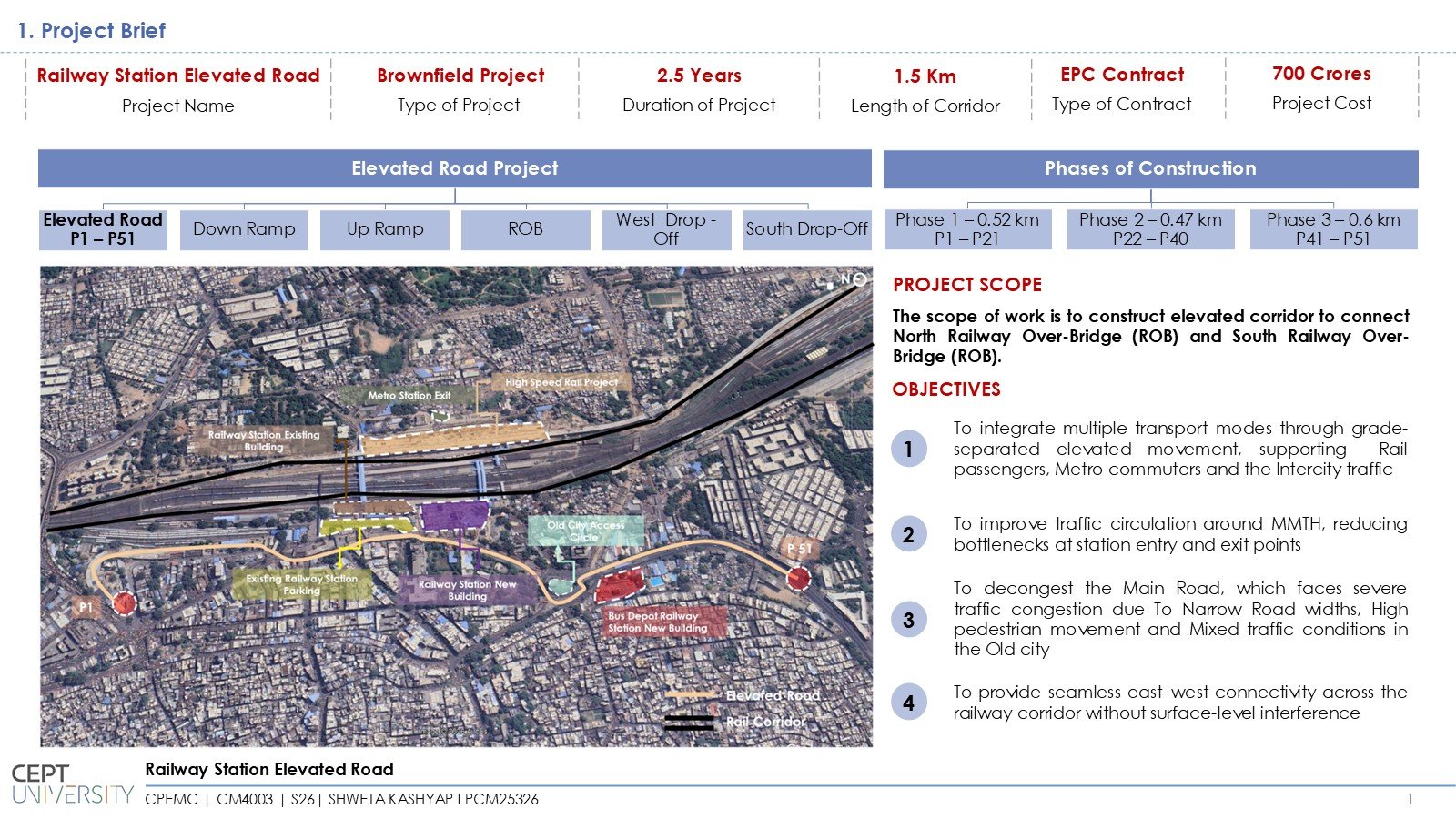
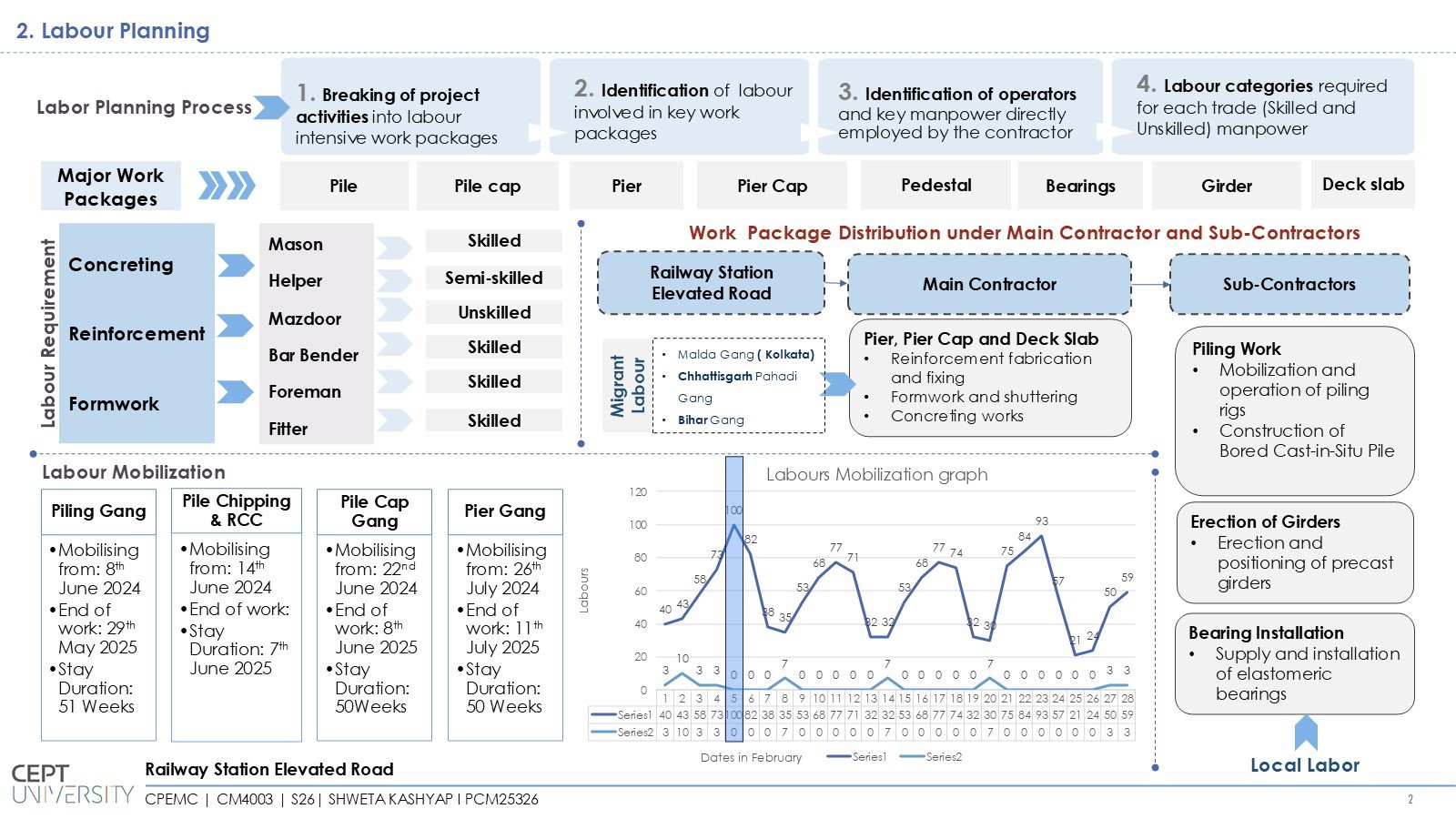
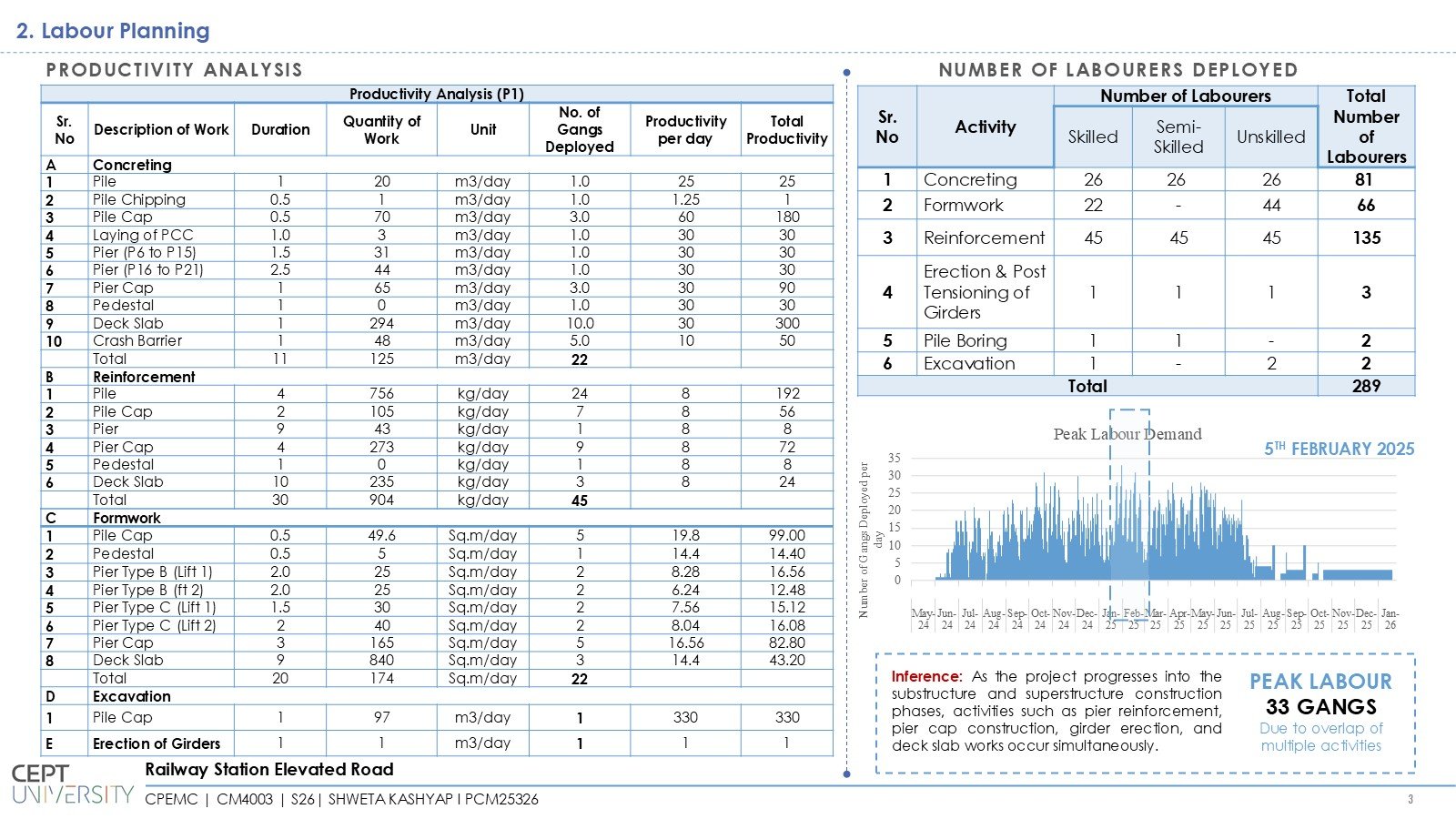
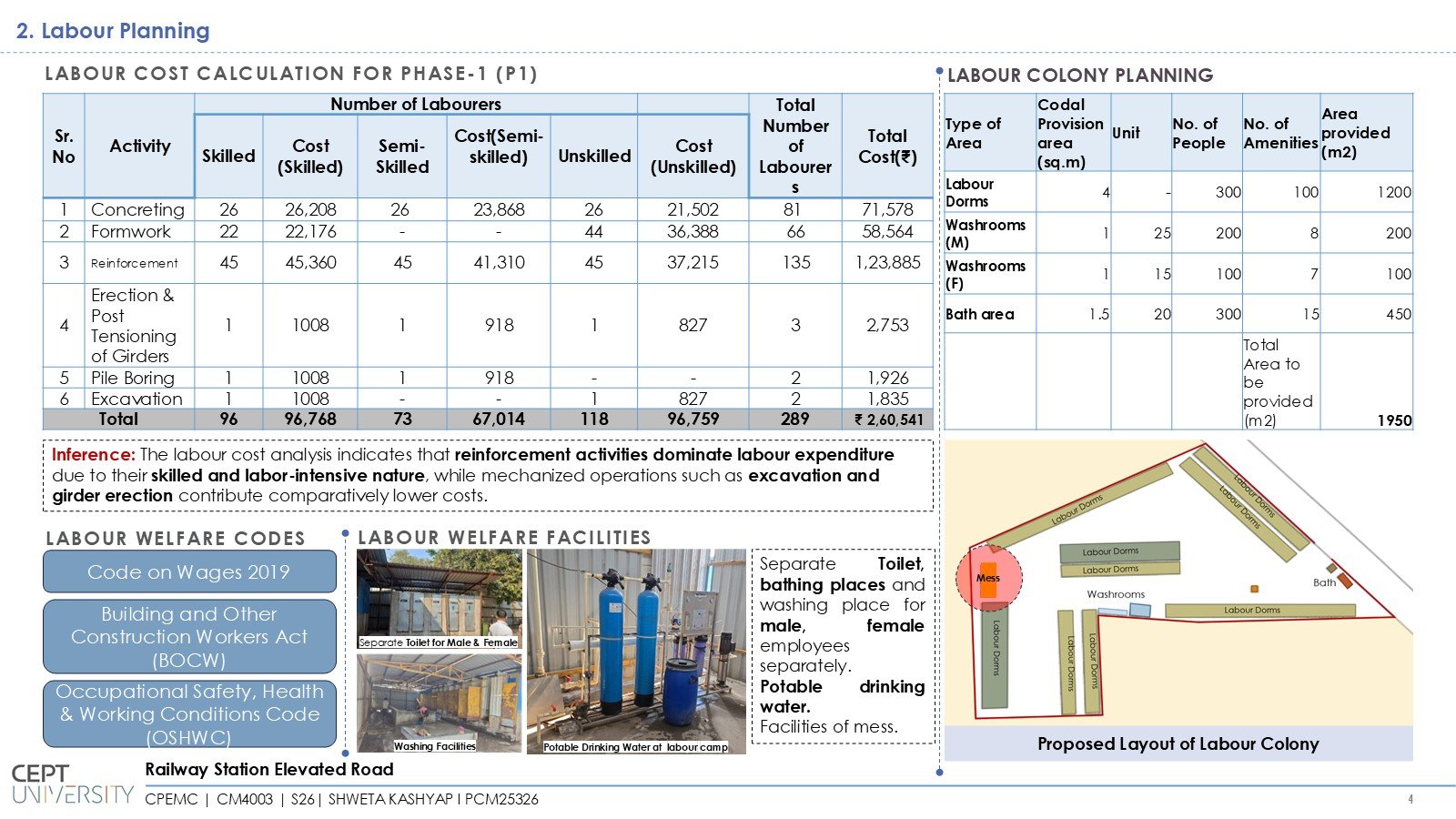
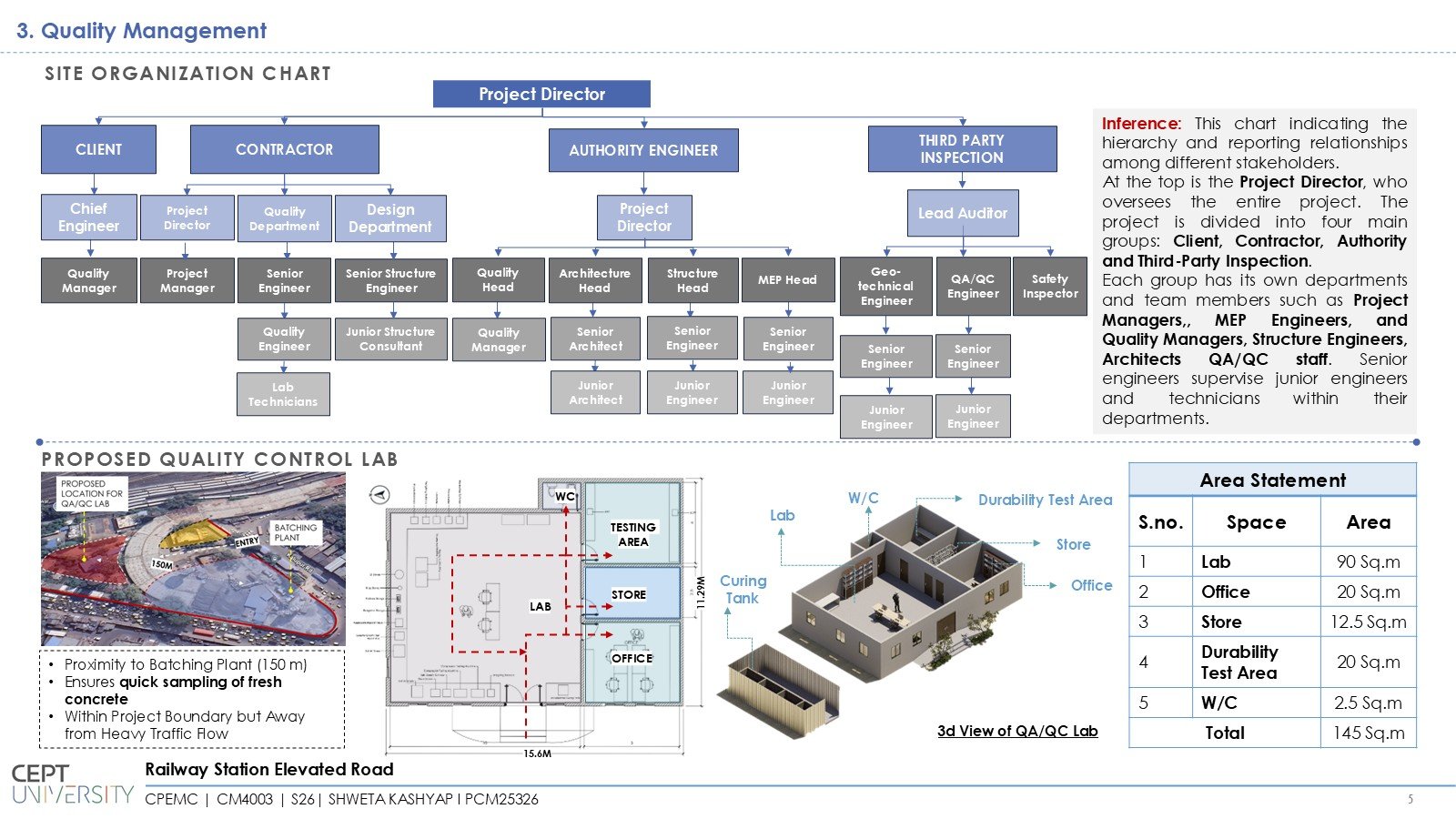
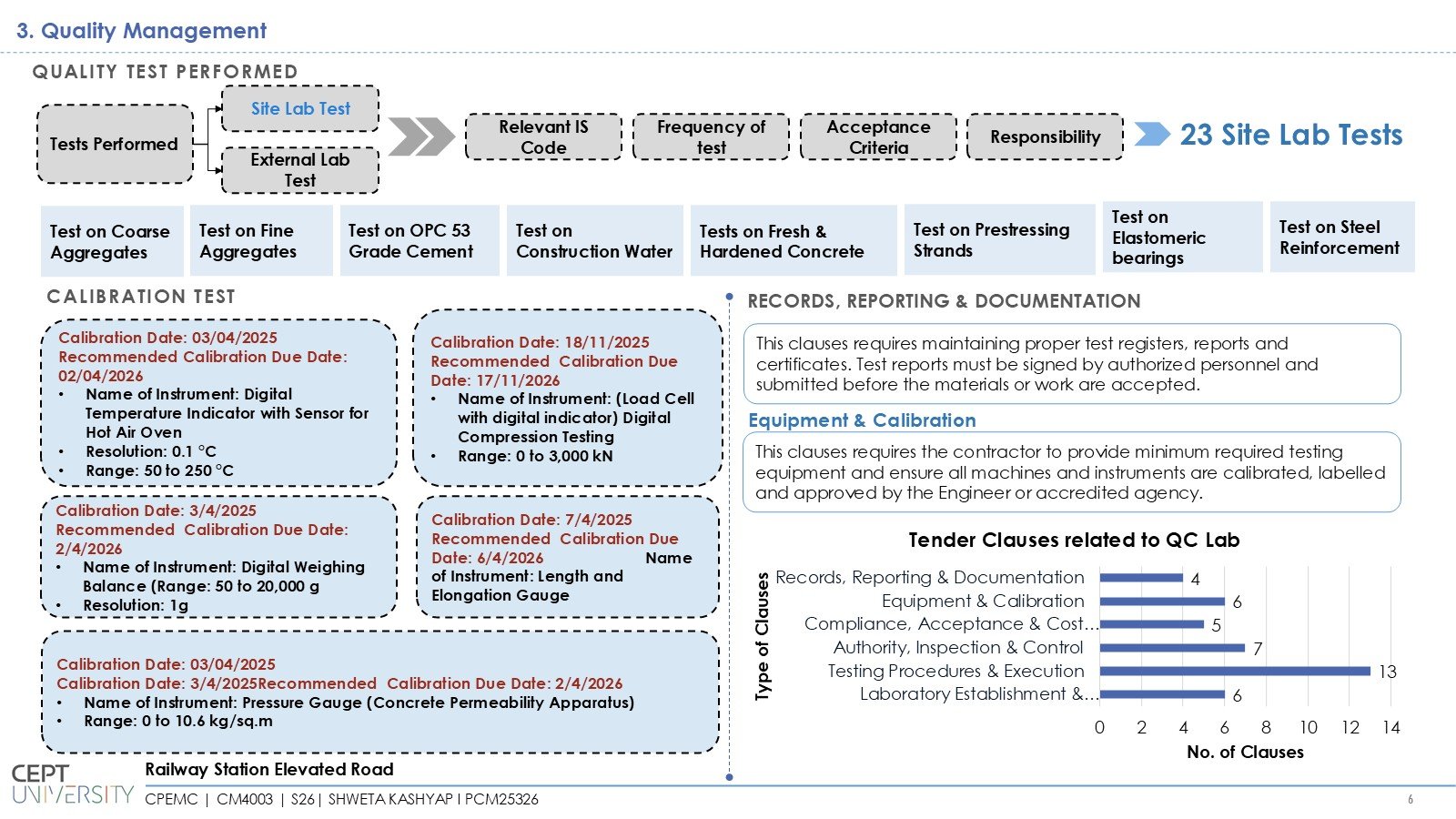
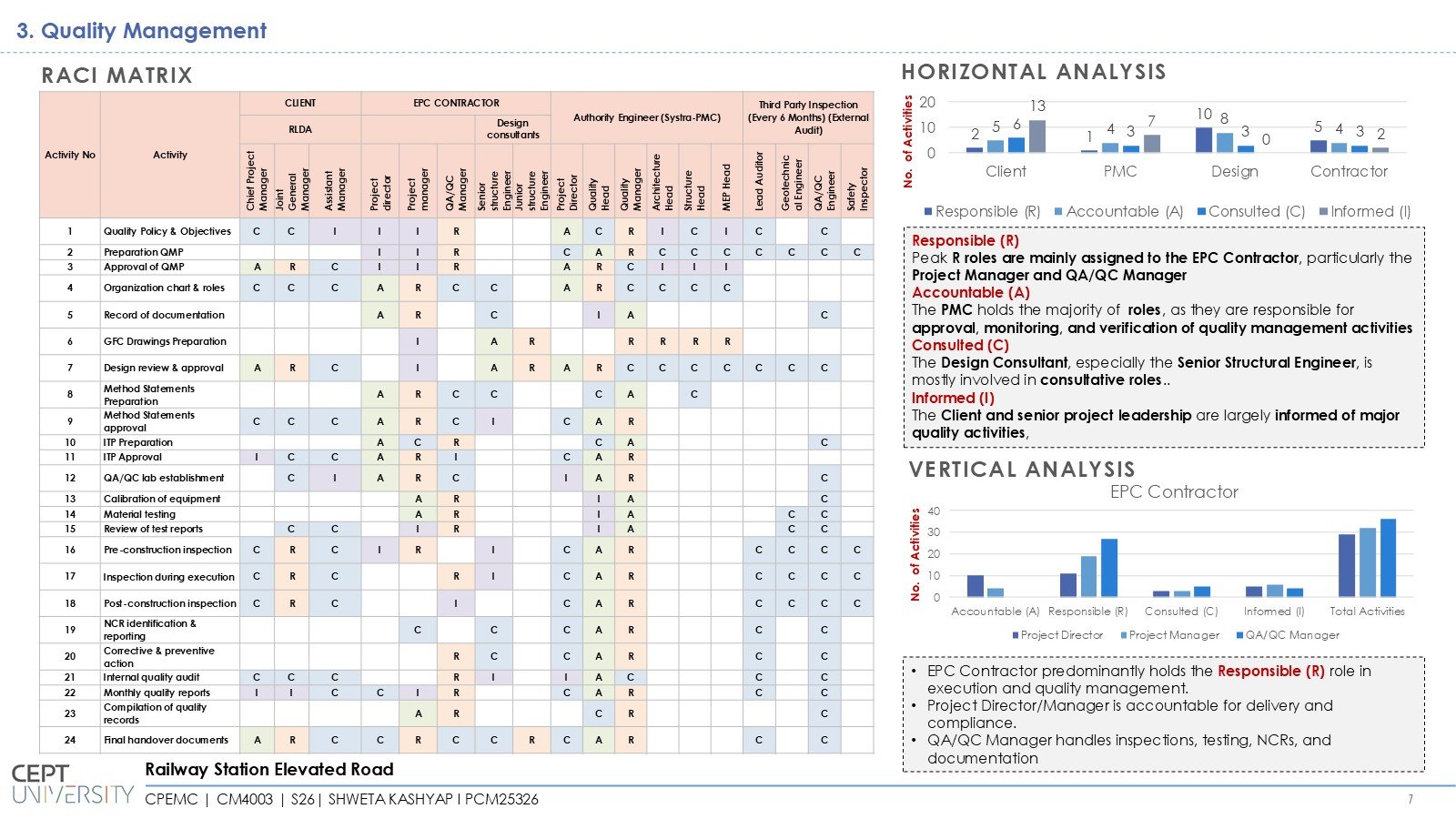
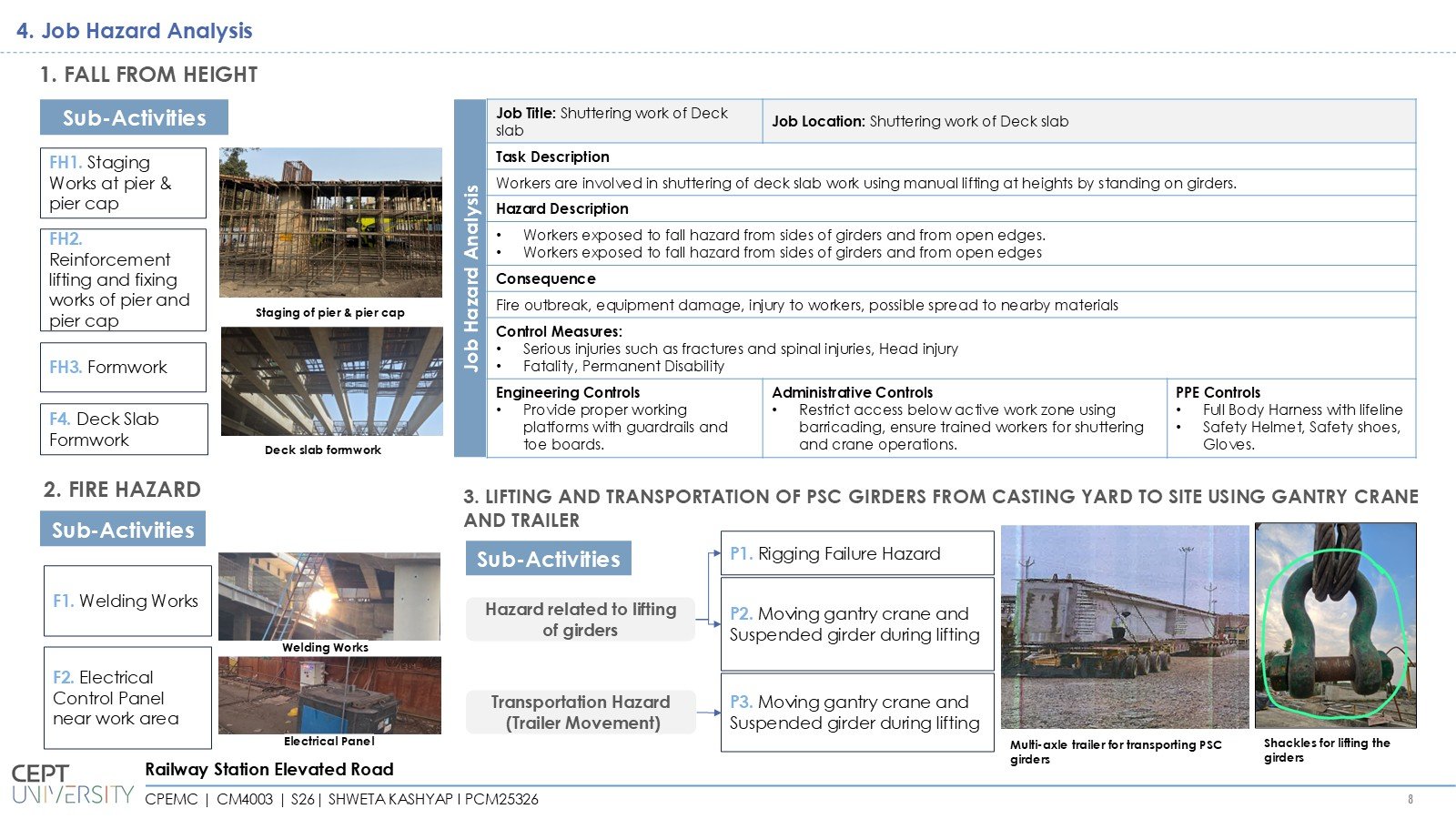
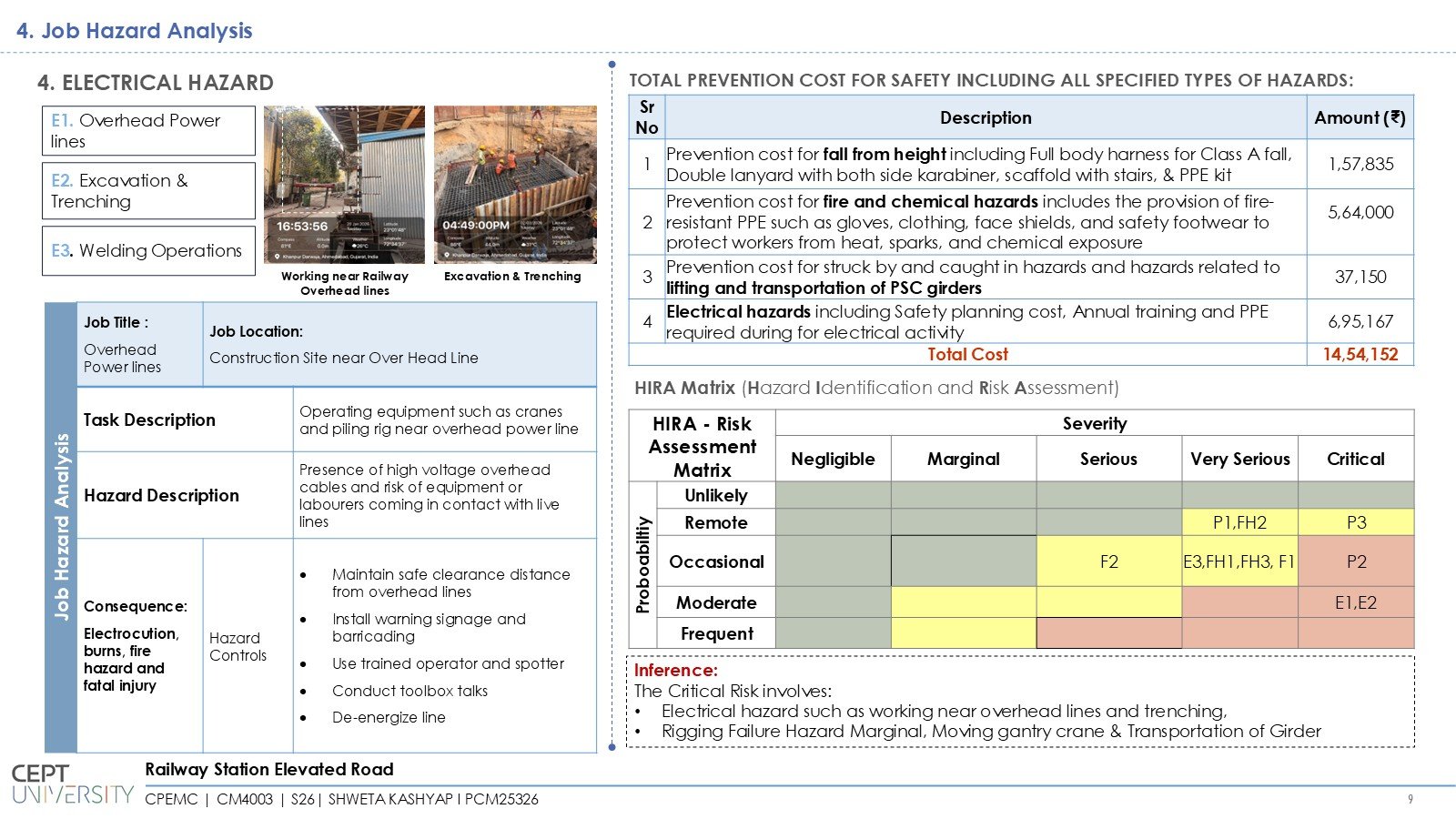
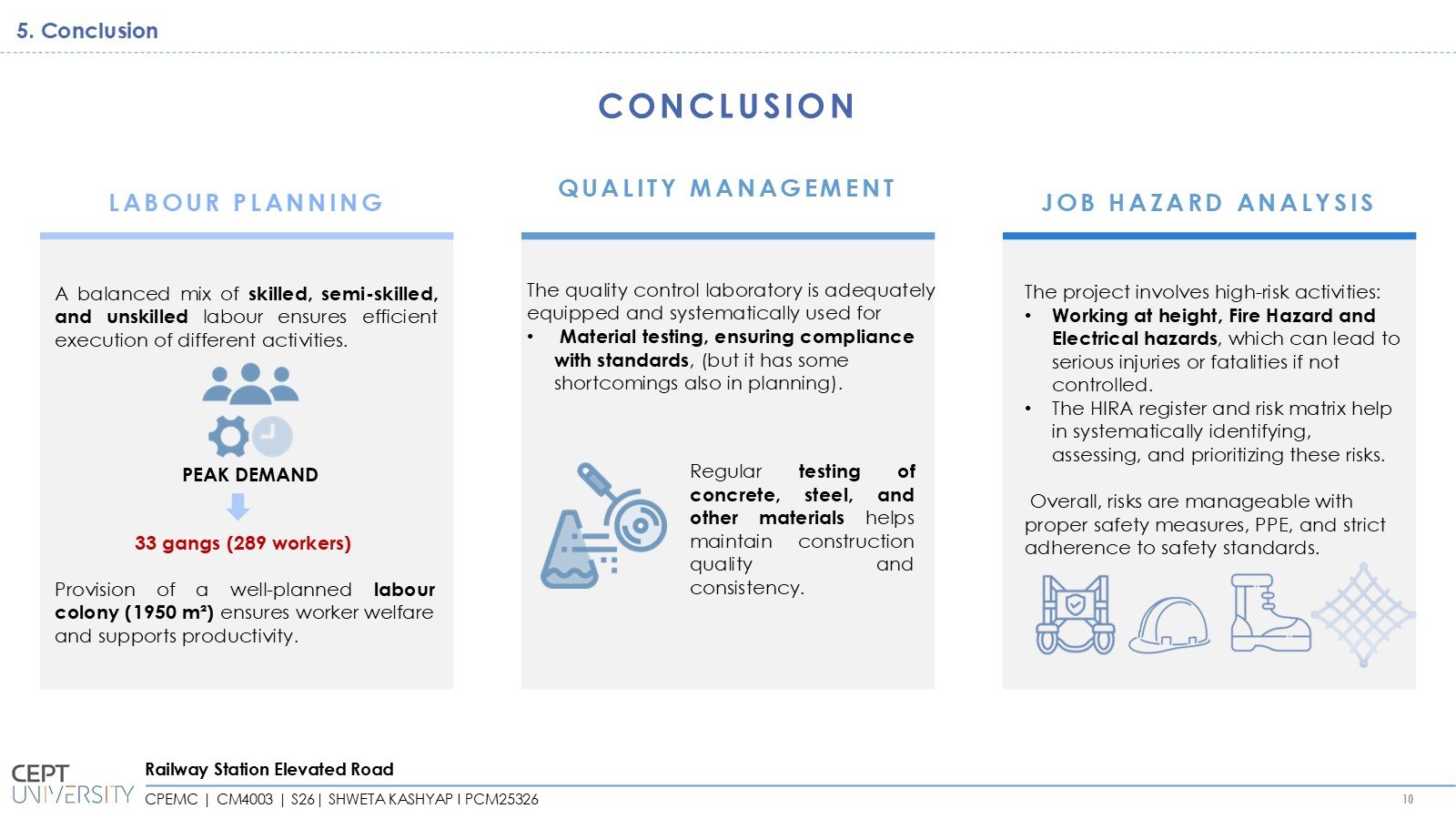
The Construction Project Execution Monitoring and Control studio focused on the execution phase of the Railway Station Elevated Road Project, a brownfield infrastructure intervention aimed at improving multimodal connectivity and decongesting traffic around the railway station precinct. The project involves the development of a 1.5 km long elevated corridor divided into three phases (51 piers), connecting the North to the South Railway Over-Bridge. With an estimated cost of 700 crores and executed under EPC mode. Over the course of the four-month studio, a comprehensive execution-level analysis was carried out, encompassing Pre-construction planning, Construction Pour Planning , Labour and Equipment planning, Material management using ERP systems, Contract administration, Earned Value Management, Quality management, Cost of quality, Job hazard analysis, Value stream mapping, EVM and Sustainability assessment. The study included detailed evaluation of site establishments such as batching plants, labour colonies, casting yards, and utility planning, along with optimization proposals to address congestion, inefficient material flow, and safety concerns. Through systematic monitoring, several critical challenges were identified, including delays due to right-of-way issues, uncharted utilities, demolition constraints, and regulatory restrictions near heritage structures . Significant inefficiencies were also observed in site layout, equipment utilization clashes, and labour deployment during overlapping activities. In response, targeted interventions were proposed, including revised site layout plans, optimized pour cycles, equipment scheduling strategies, barcode-based material tracking systems, EOQ-based procurement models, and structured contract management procedures. Additionally, practical tools such as material handling checklists, non-conformance reporting systems, labour monitoring frameworks (including biometric integration), and safety compliance measures were developed to enhance on-site execution efficiency, quality control, and worker welfare. The study ultimately provides a data-driven framework to support informed decision-making, minimize delays, and improve overall project performance during the execution phase.