Parmar Chaitanya Sureshbhai

CT2039

Built in Compression

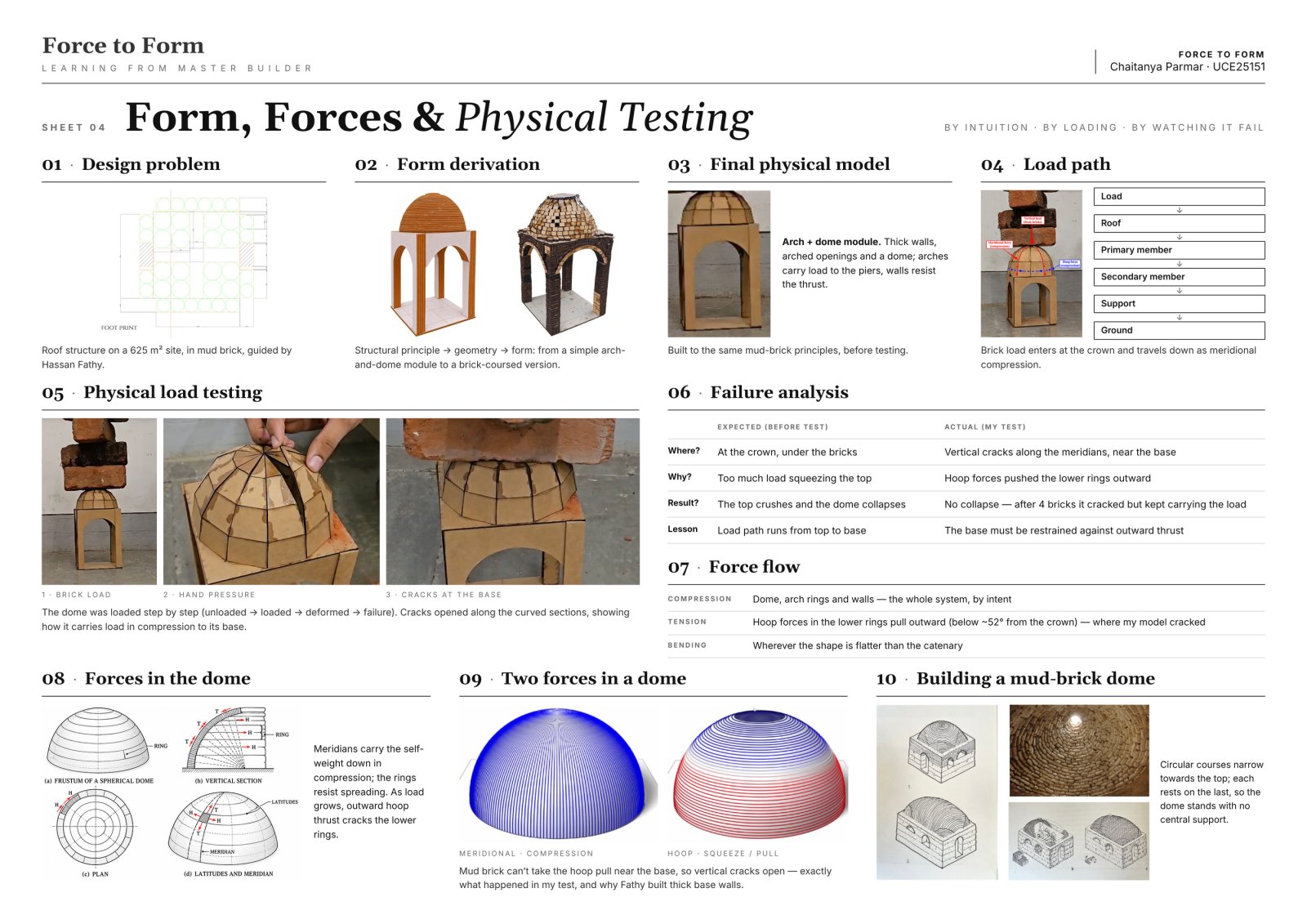
Can the weakest material carry a roof? Mud brick cannot resist pulling, so every part must be pushed. Starting from the honeycomb, where thin shared walls create strength through geometry, I studied Hassan Fathy's formwork-free Nubian vaults and domes. A dome model loaded with bricks did not crush at the crown; it cracked near the base, where hoop forces pull outward, showing why Fathy's walls are thick. This shaped Gumbad Kunj, a 625 m² roof of mud-brick domes, vaults and arches around a courtyard. STAAD.Pro analysis, technical drawings and hand load calculations complete the work.
Report Content

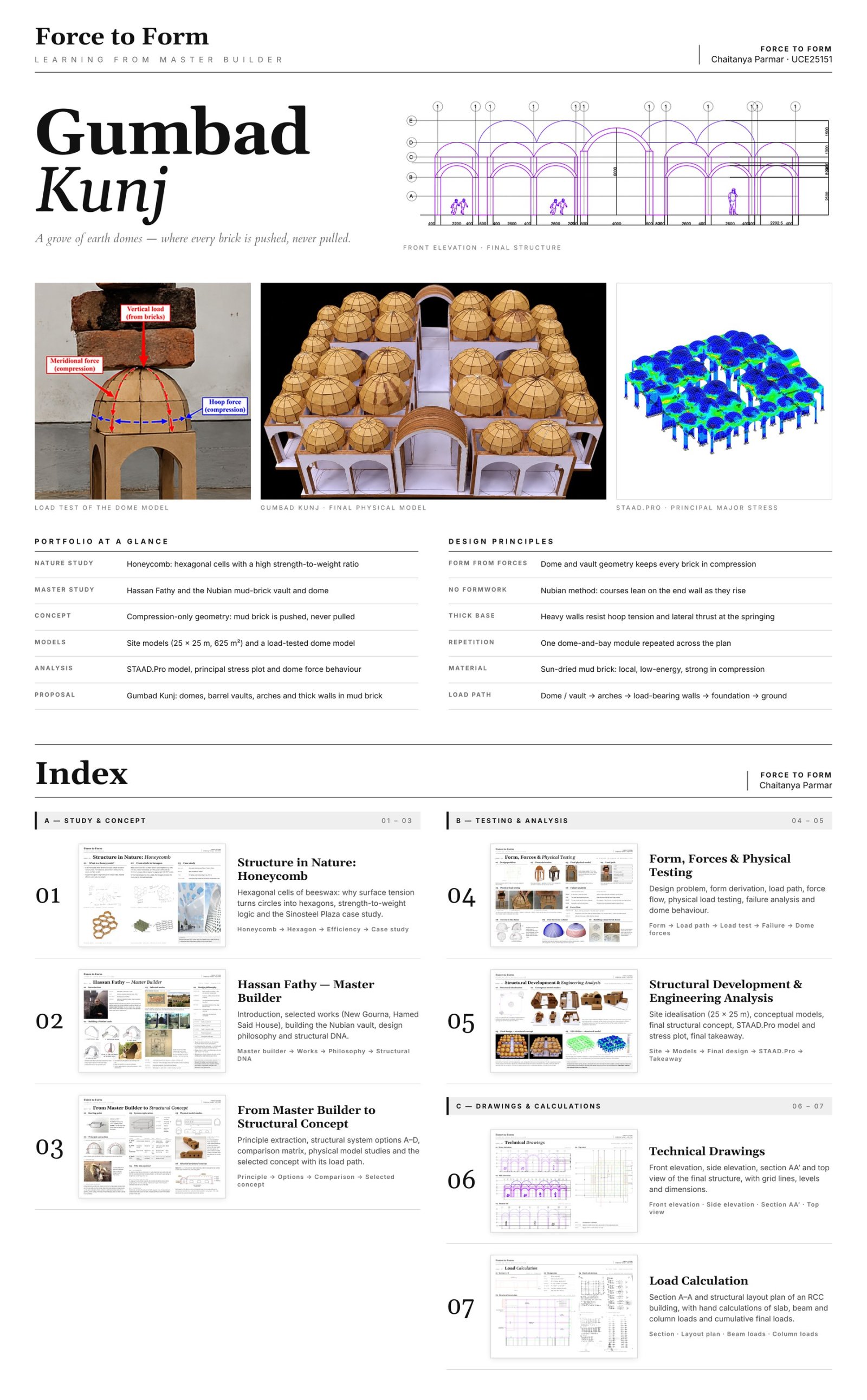
Gumbad Kunj: a mud-brick structure where every brick is pushed, never pulled. The portfolio at a glance, from nature study to load calculation

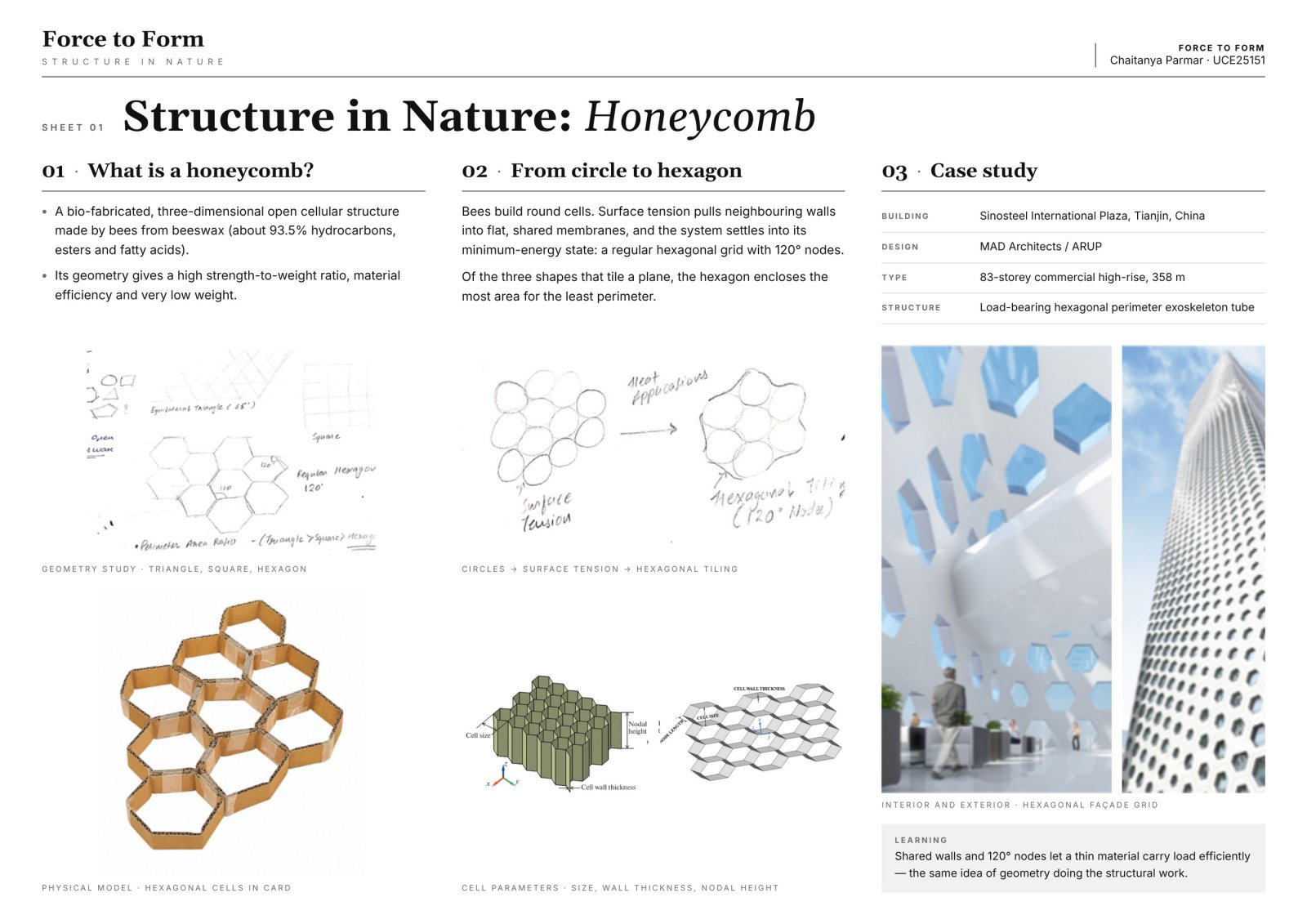
The honeycomb shows how thin shared walls and 120° nodes create strength with minimum material, linked to the hexagonal exoskeleton of Sinosteel International Plaza.

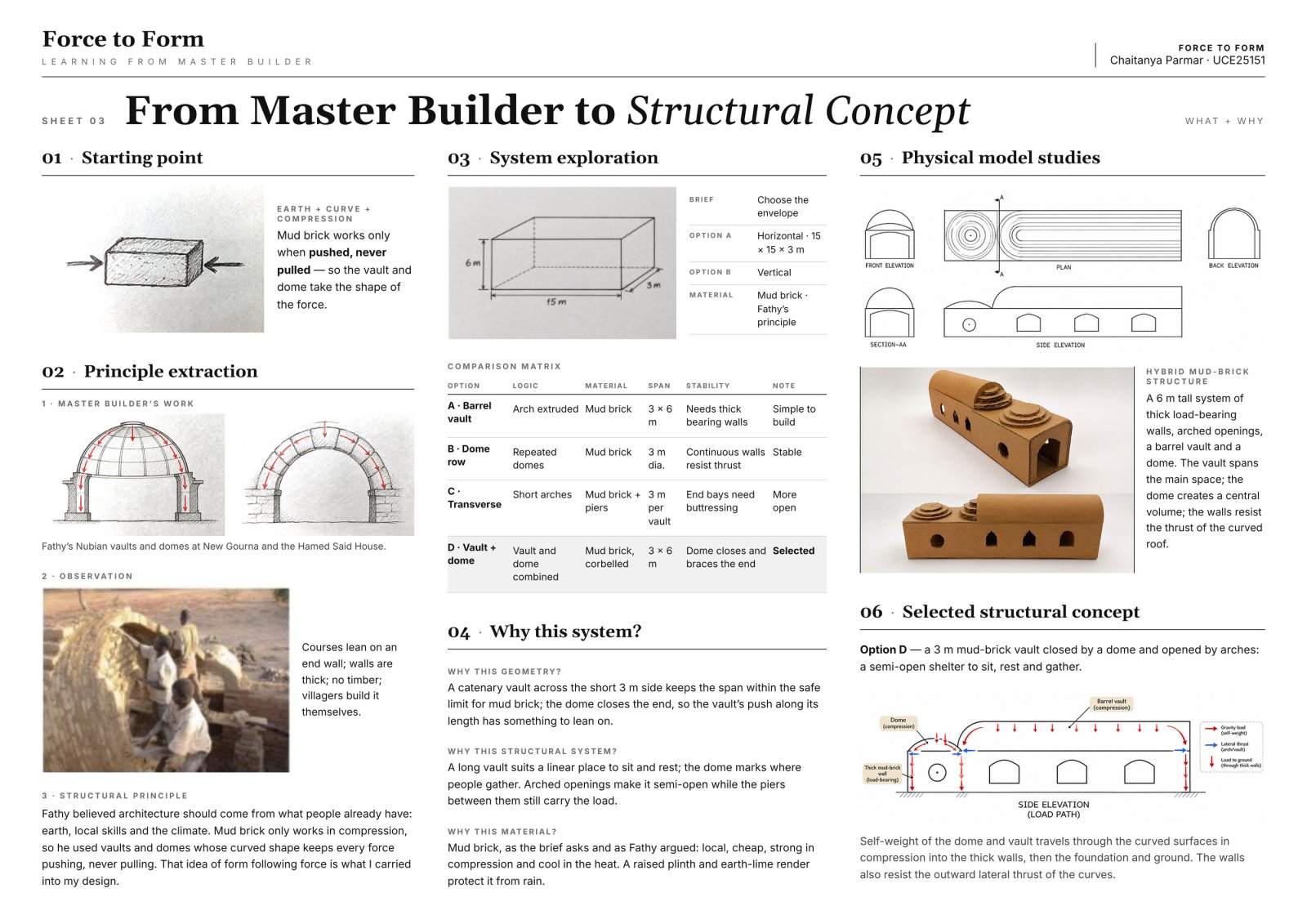
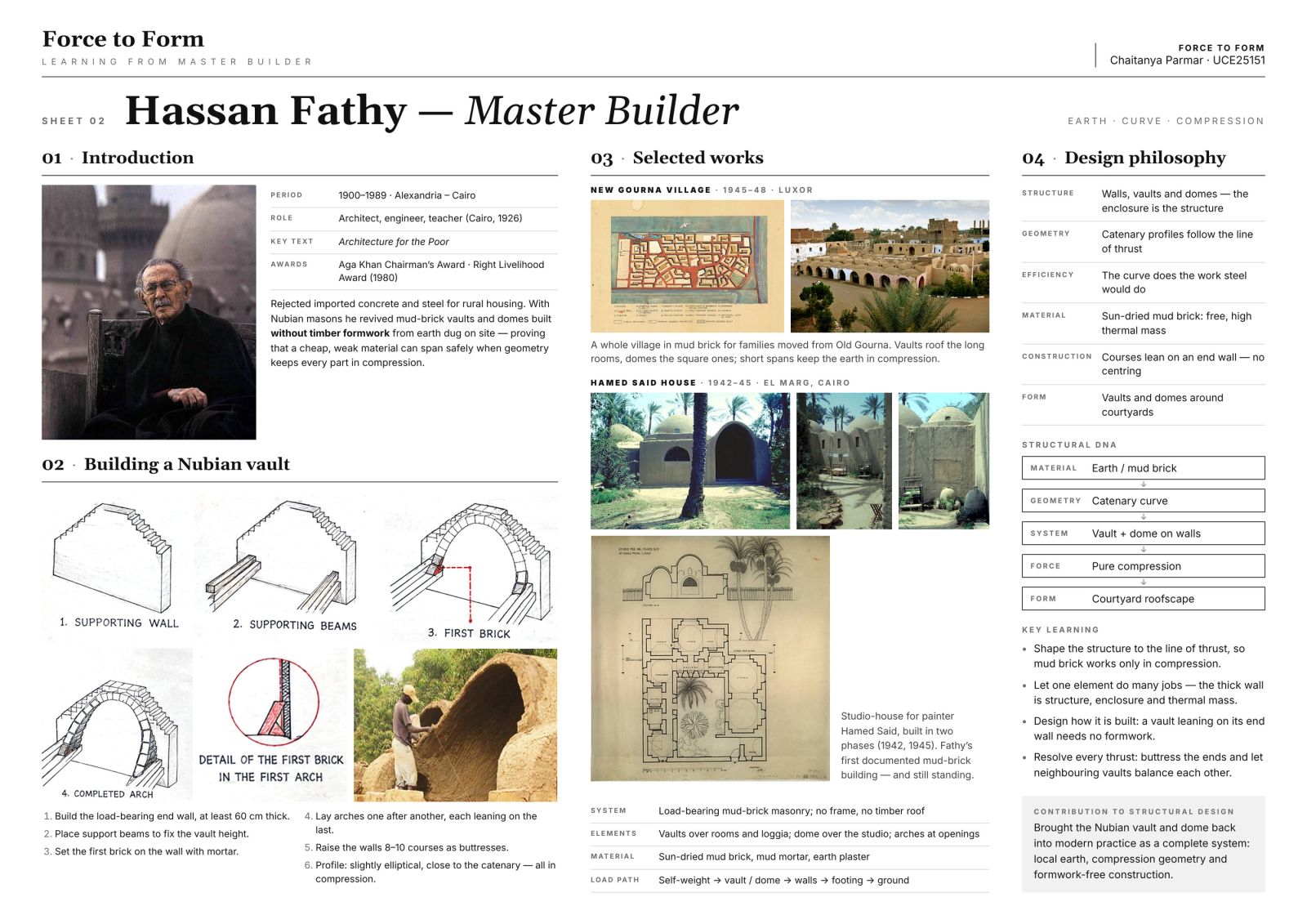
Fathy revived Nubian mud-brick vaults and domes built without formwork. His work proves that geometry, not strength of material, makes earth stand.

Fathy's compression principle tested through four structural options. A vault closed by a dome (Option D) was selected for stability and shelter.

The dome model was loaded with bricks. Instead of crushing at the crown, it cracked near the base under hoop tension, revealing why thick base walls are essential.

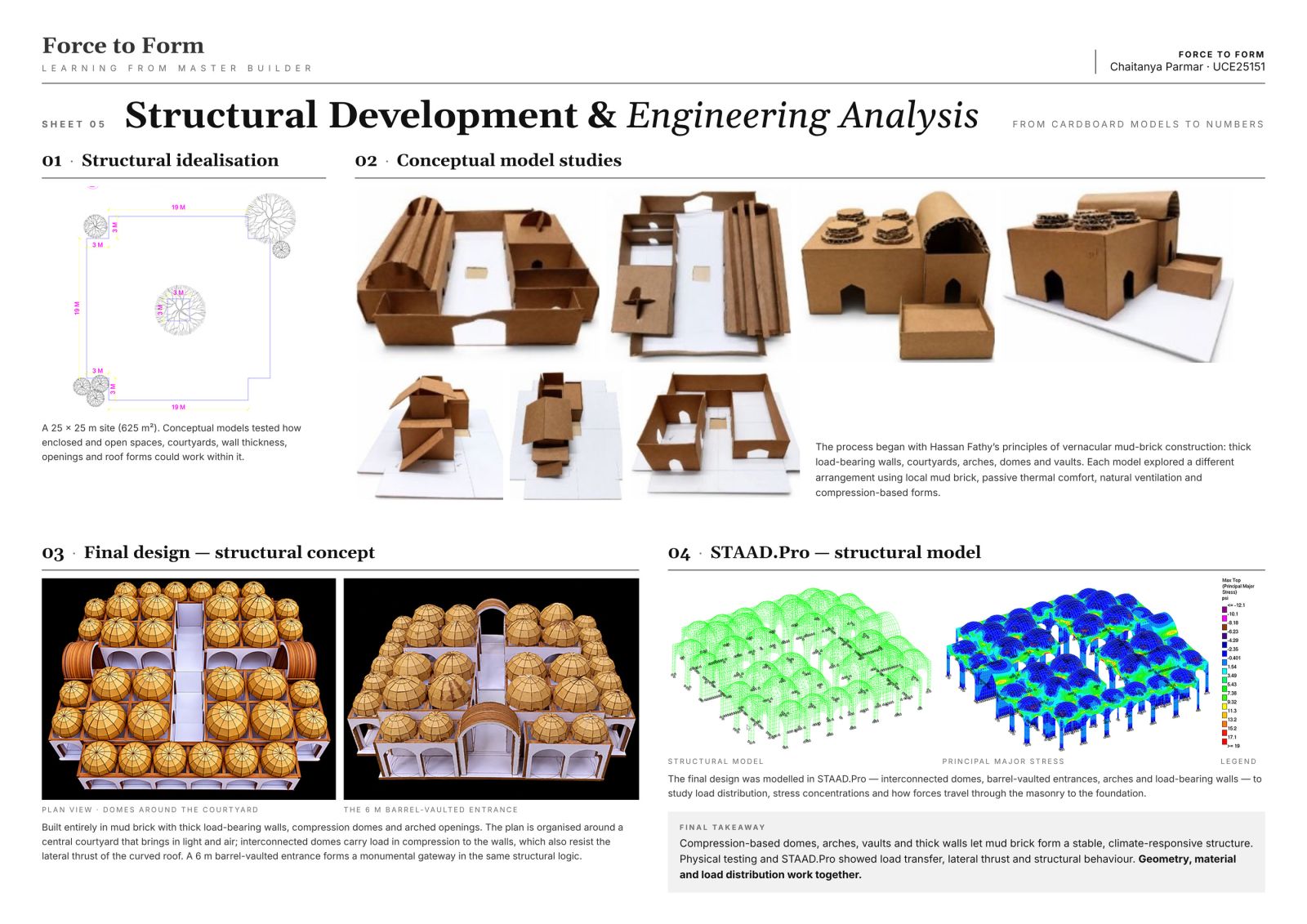
Conceptual models led to Gumbad Kunj, a 625 m² roof of domes and vaults around a courtyard. STAAD.Pro was used to study load distribution and stress.

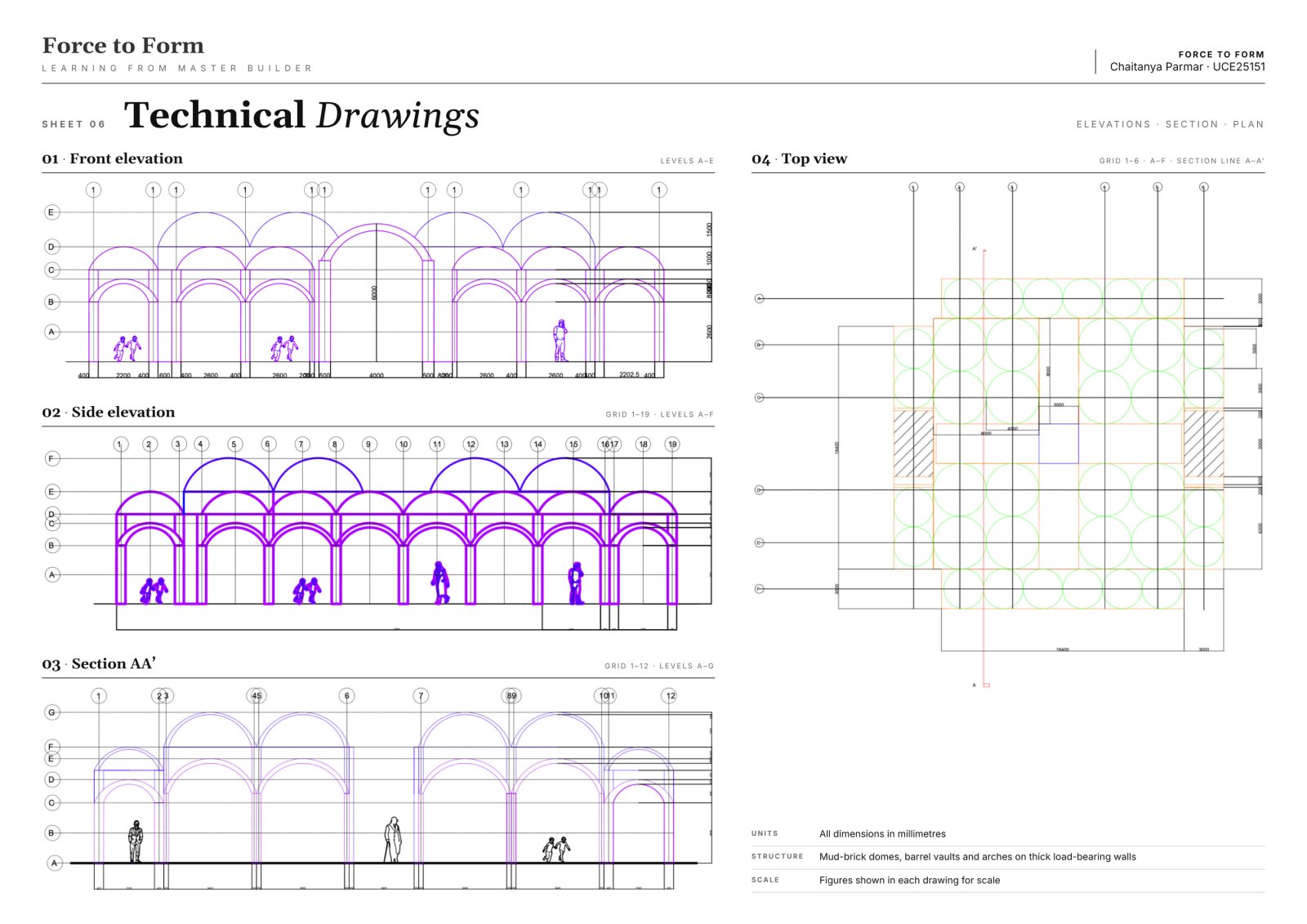
Front and side elevations, section AA' and top view of Gumbad Kunj, with grid lines and levels.

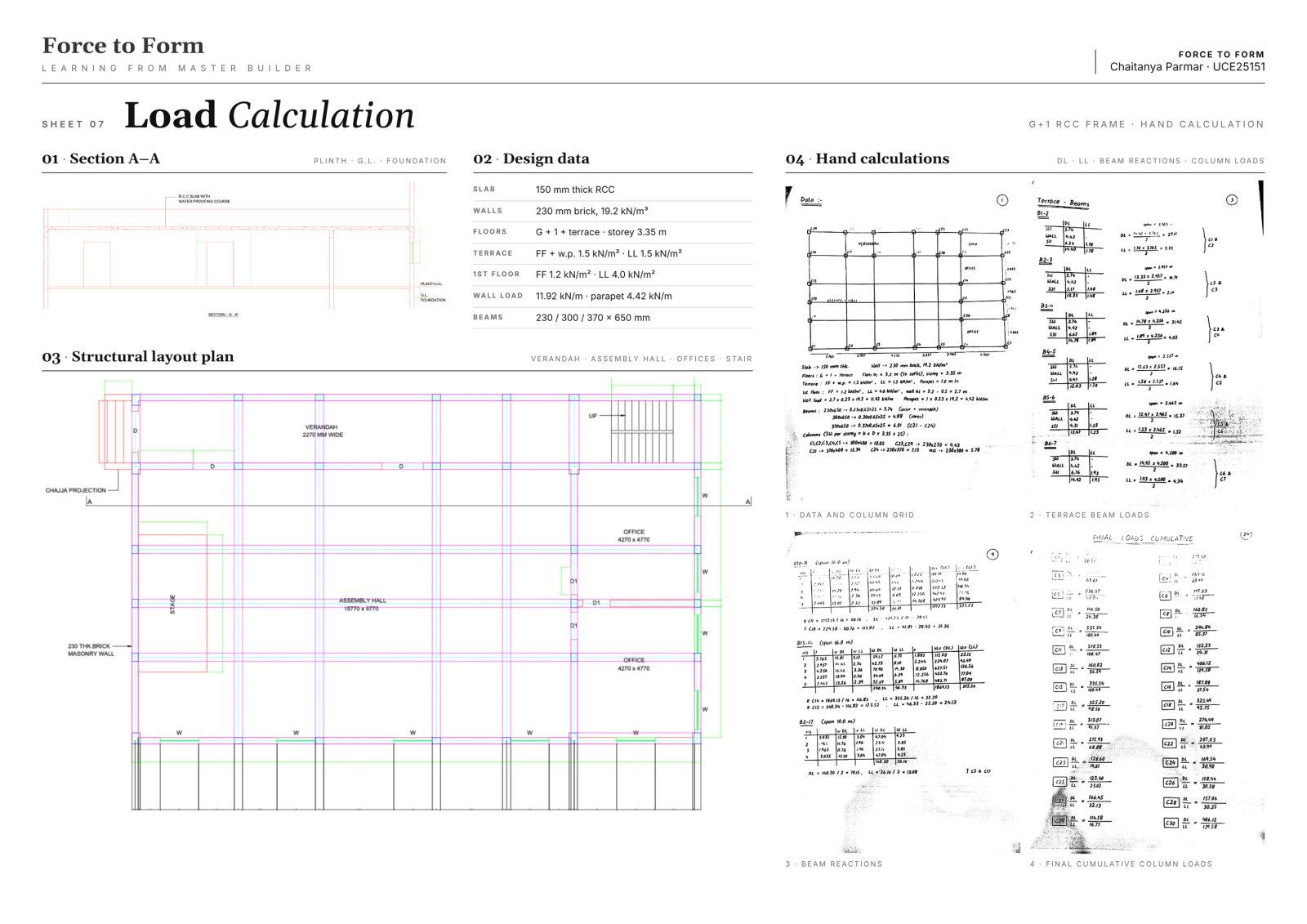
Hand calculation of dead and live loads for a G+1 RCC frame, from slab and beam loads to final cumulative column loads.