Nikitha Dileep

BE4000

Spring Semester 2026 | HVAC Lab

The HVAC Lab studio provided an in-depth understanding of Heating, Ventilation, and Air Conditioning systems through a combination of theoretical learning, hands-on experimentation, field measurements, and simulation-based analysis. This semester focused on understanding HVAC systems within the context of thermal comfort, indoor air quality, and building energy efficiency. Throughout the semester, I developed a strong foundation in psychrometrics, refrigeration cycles, ventilation standards, airflow analysis, and HVAC system components.  A significant part of the semester involved simulation studies and system optimization exercises, where I explored mixed-mode ventilation strategies, chiller optimization, HVAC schematics, and energy-efficient cooling approaches.  

Report Content

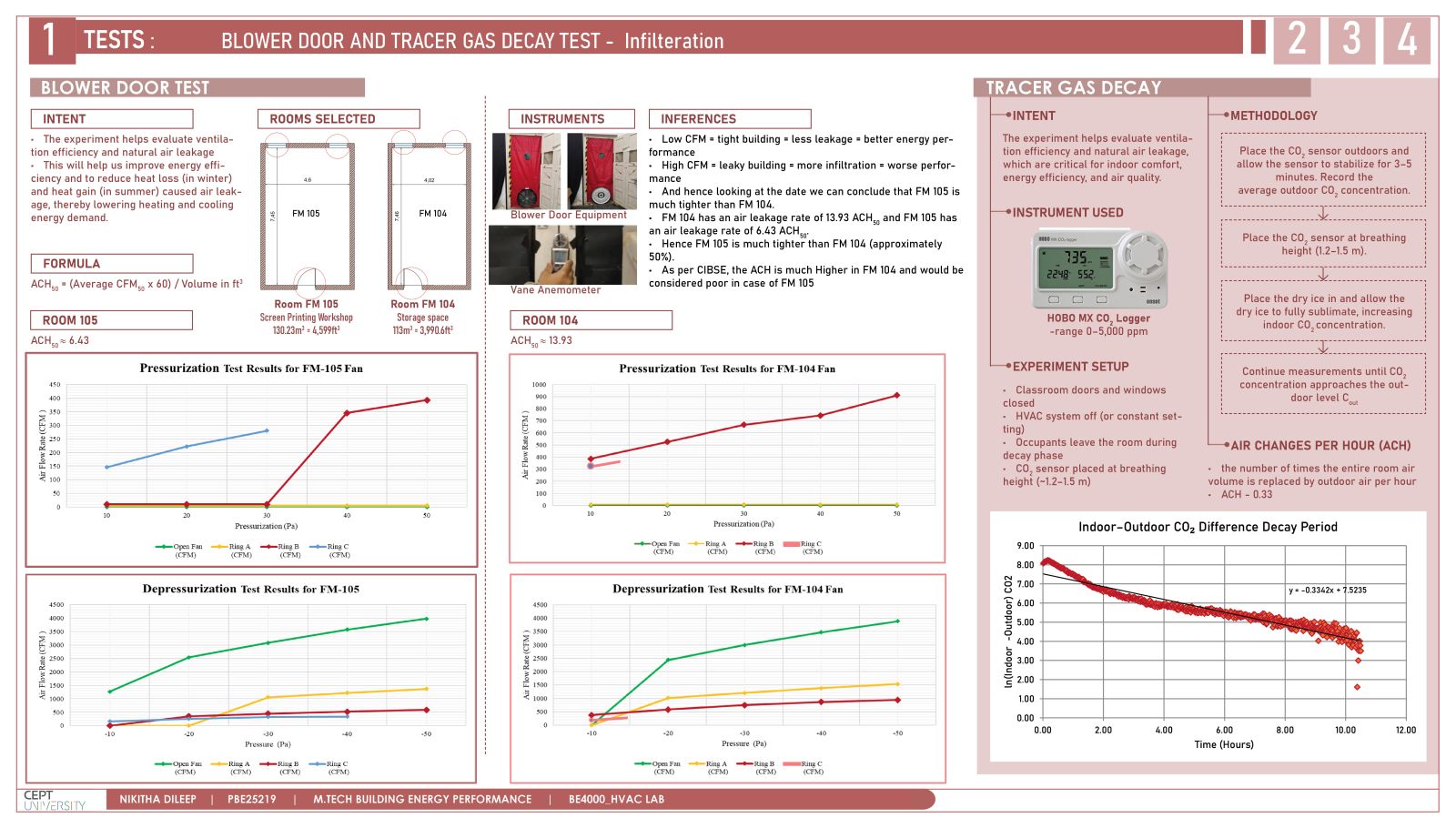
Evaluation of building airtightness and ventilation performance using blower door testing and tracer gas decay.

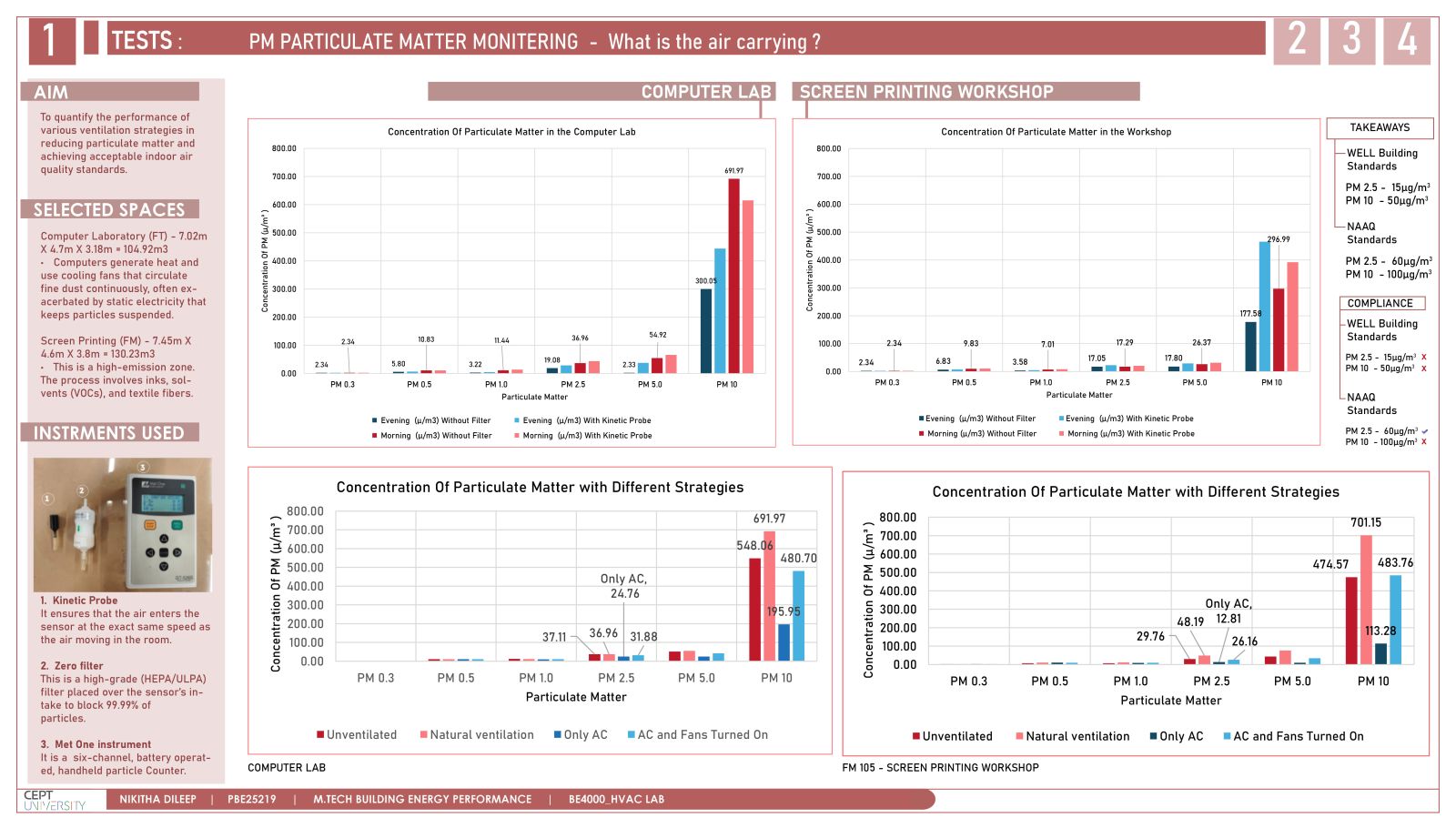
Assessment of indoor air quality through PM concentration analysis in different spaces, highlighting the impact of ventilation strategies.

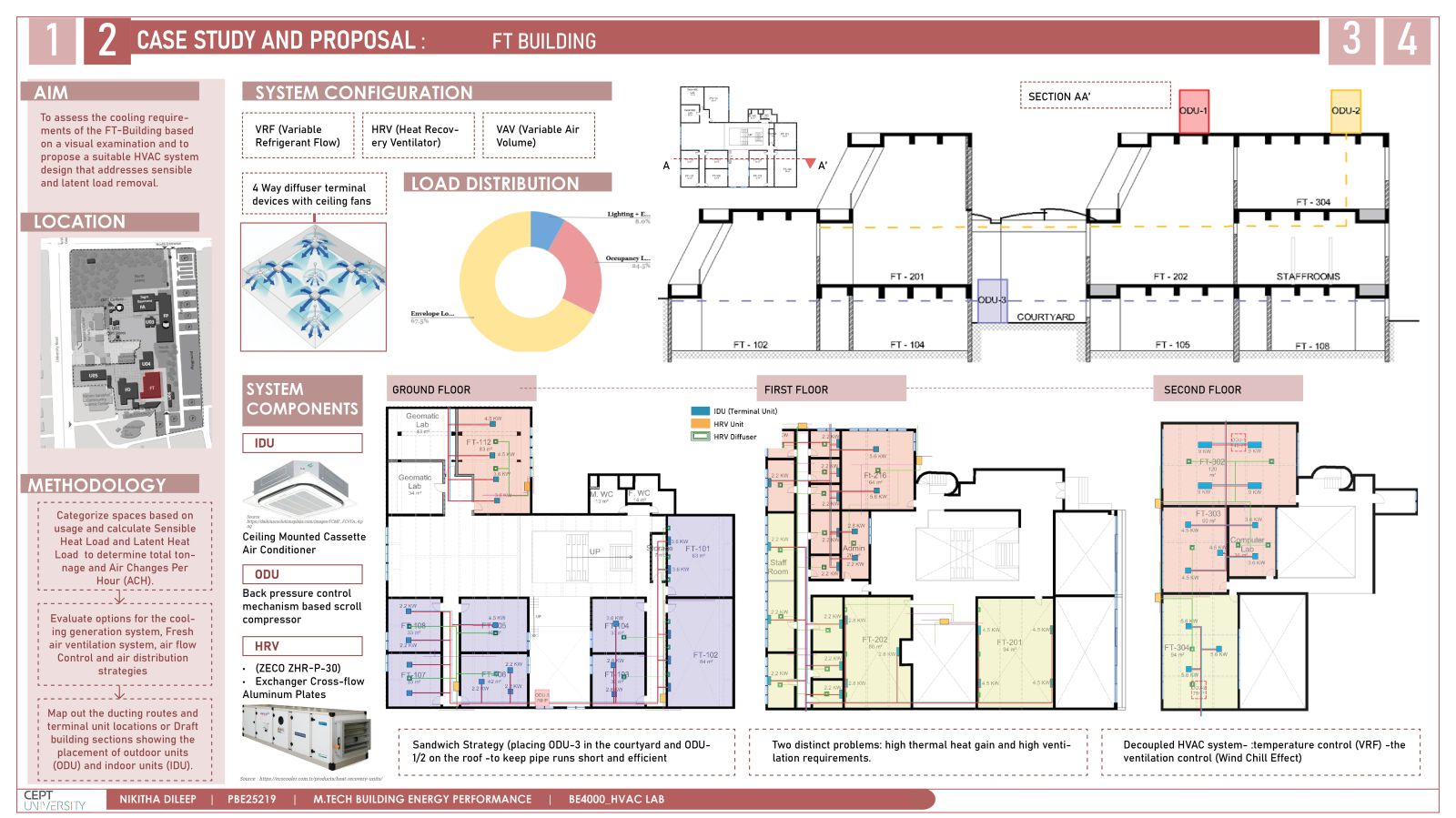
Development of an optimized HVAC system design for the FT Building, integrating VRF, HRV, and VAV systems based on spatial load distribution and ventilation requirements.

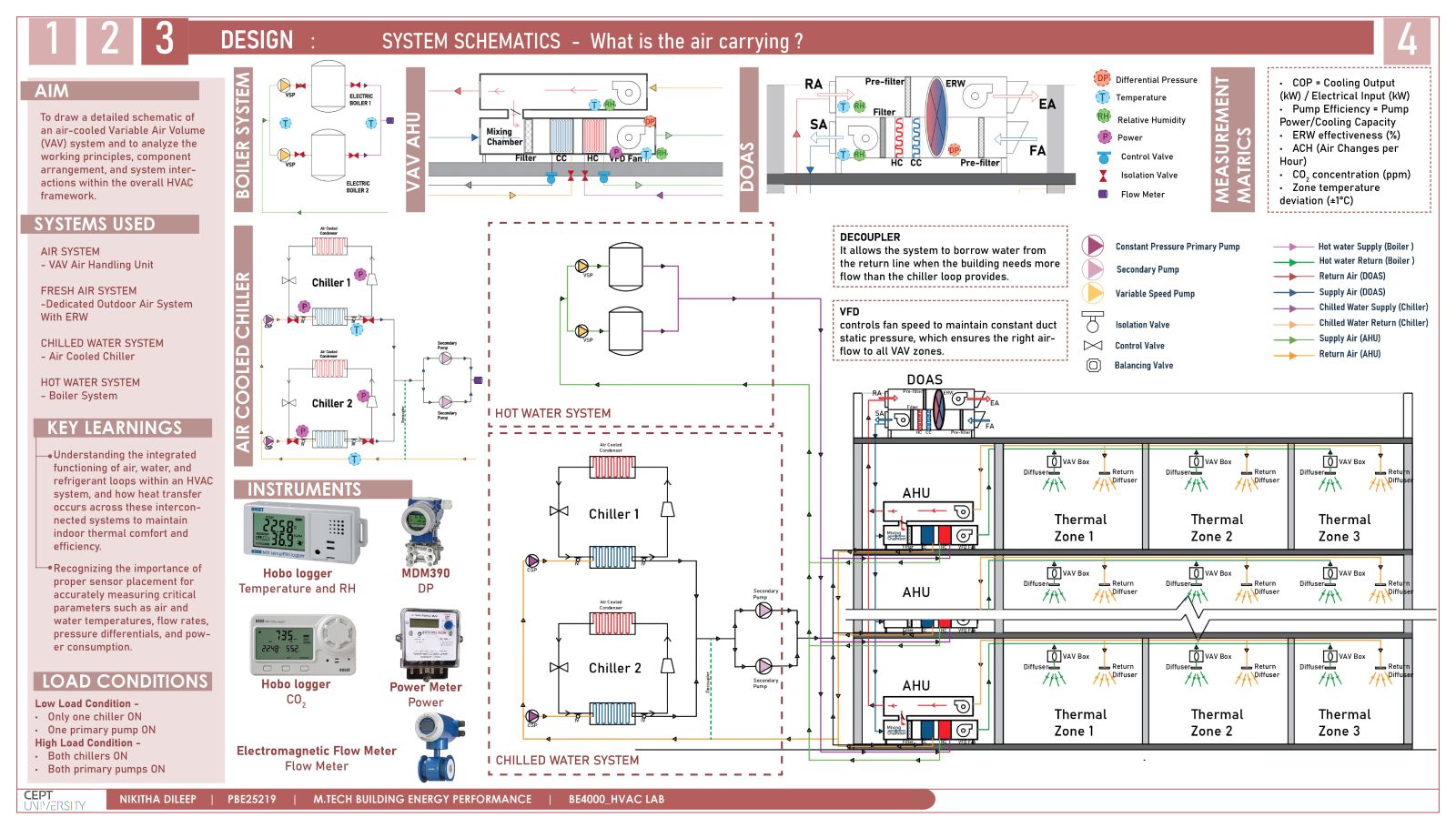
Detailed schematic of integrated HVAC systems illustrating airflow, chilled and hot water loops, DOAS, and control strategies.

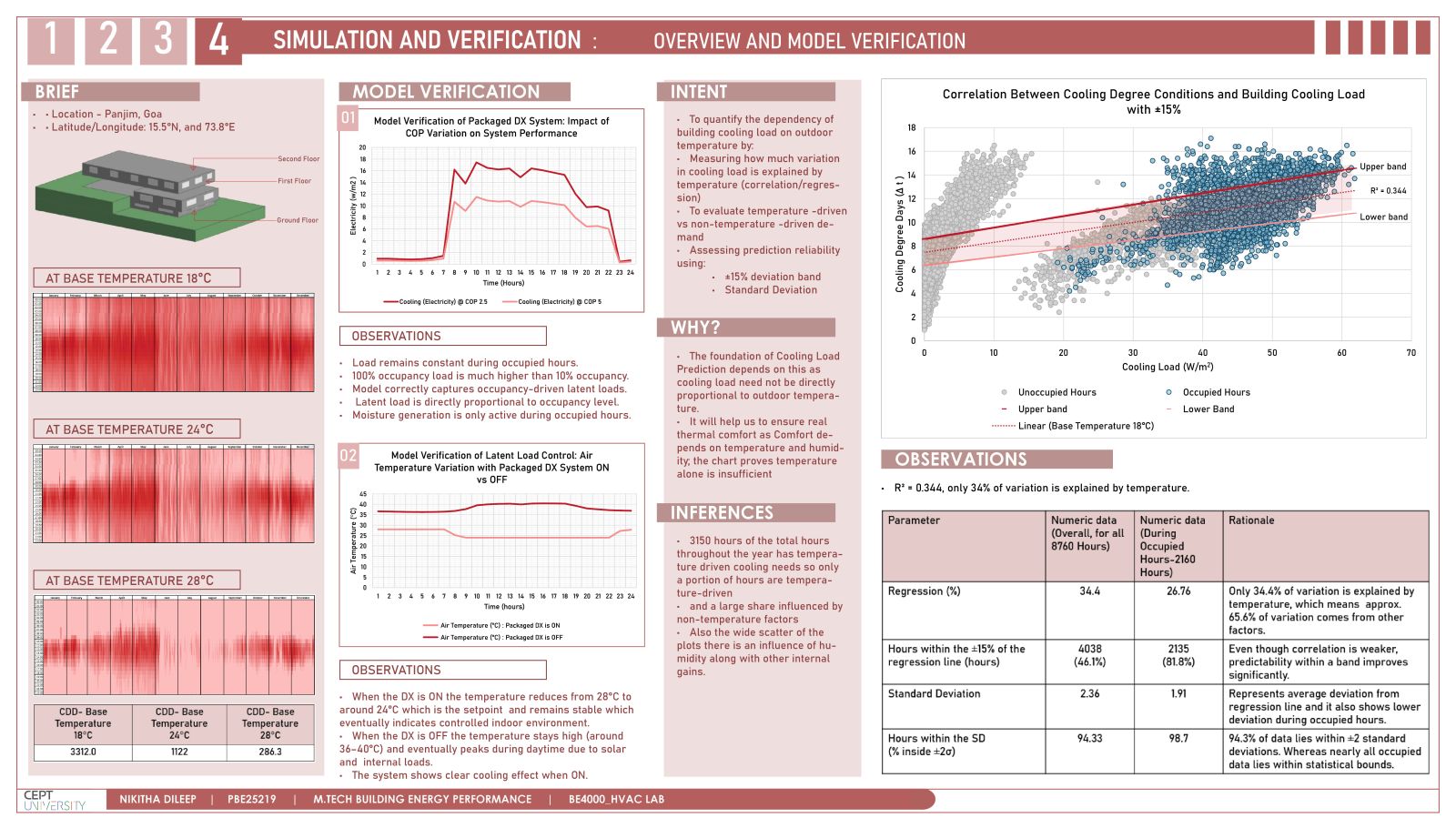
Simulation-based validation of building cooling loads and system performance, analyzing temperature-driven demand.

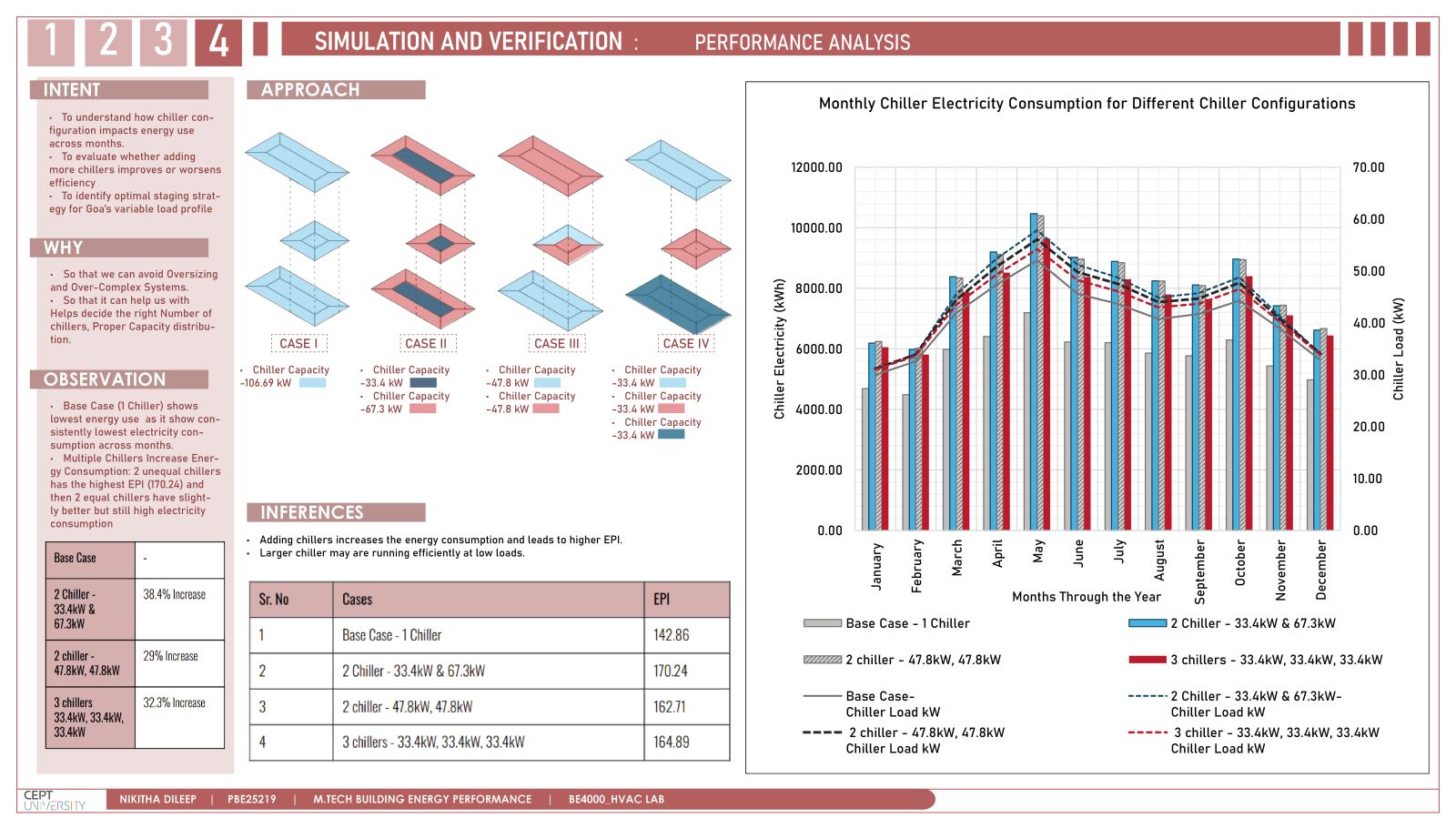
Comparative evaluation of multiple chiller configurations to assess the impact of chiller capacity distribution.

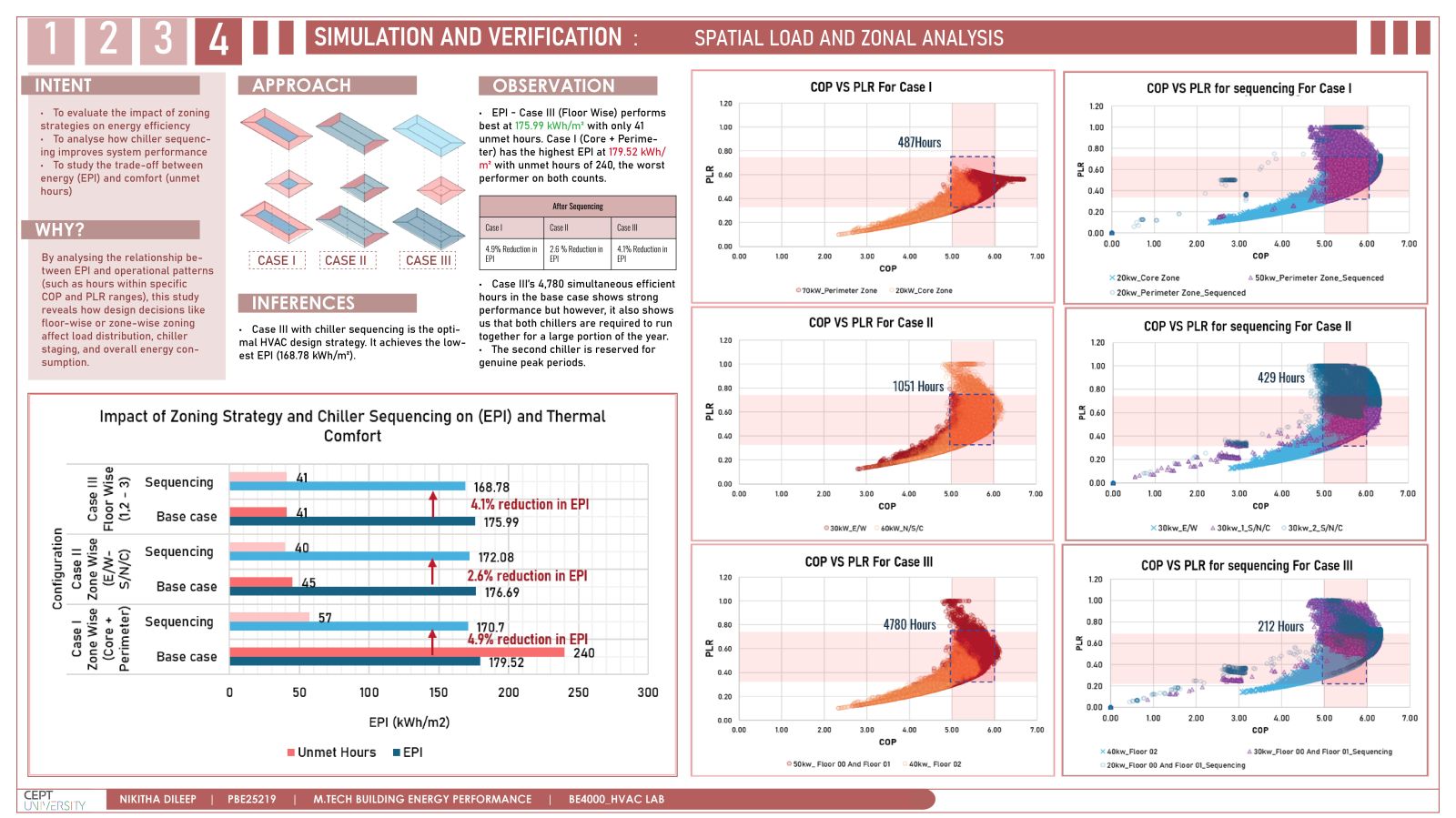
Assessment of zoning strategies and chiller sequencing across core, perimeter, and floor-wise thermal zones to optimize energy performance.

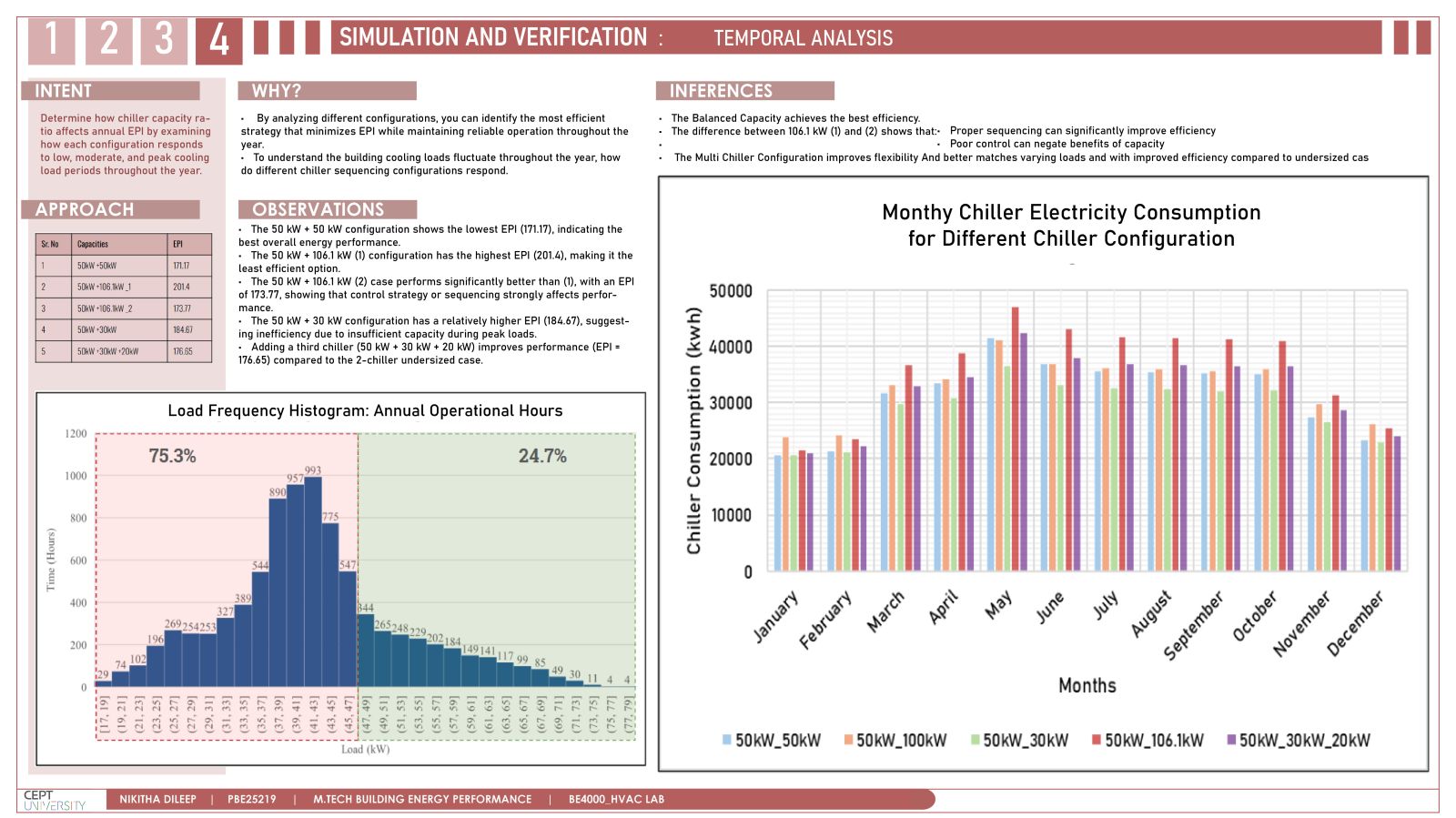
Investigation of annual load variation and temporal chiller performance under different capacity combinations.

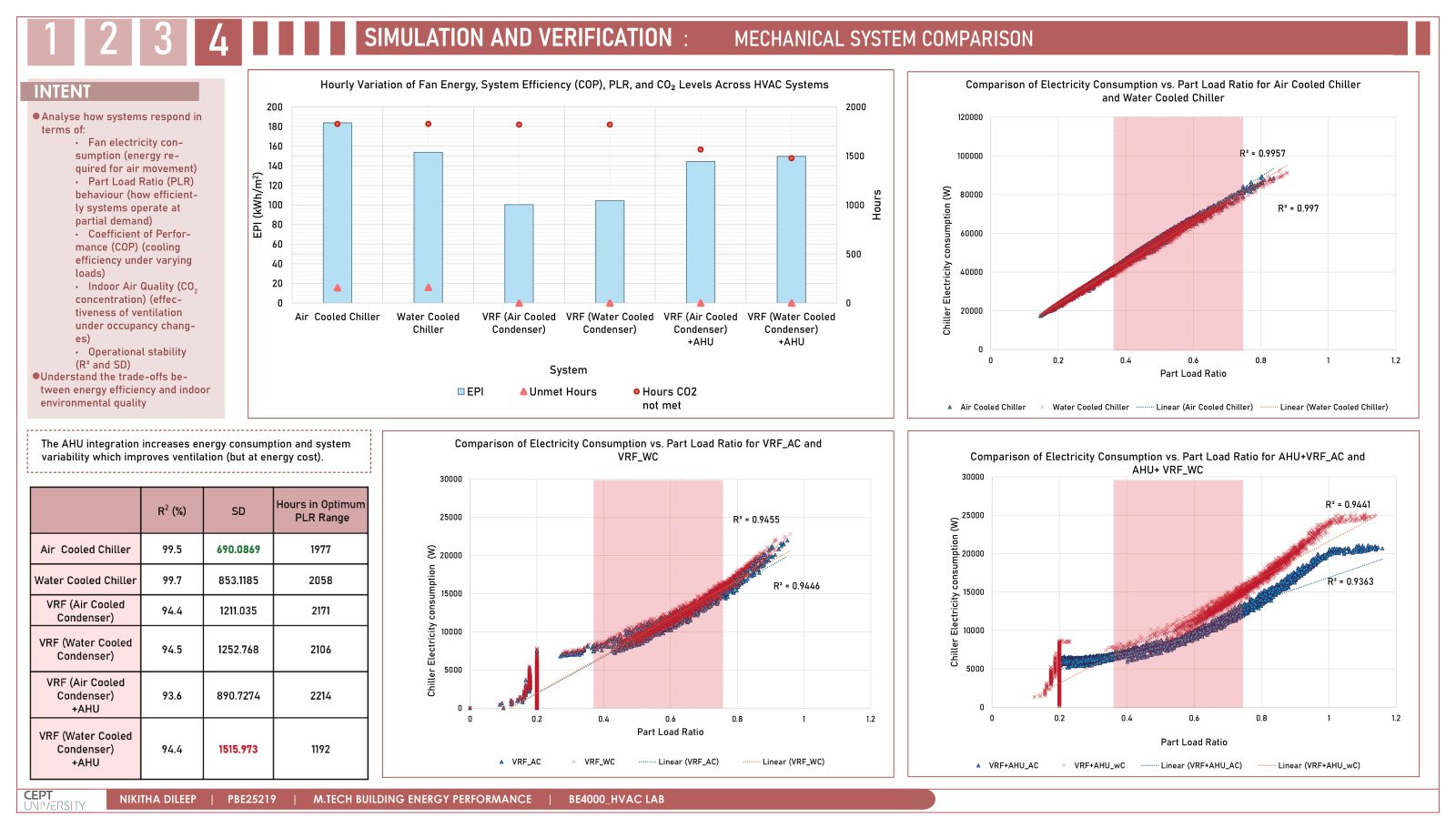
Comparative analysis of HVAC system typologies—including air-cooled chillers, water-cooled chillers, and VRF systems.

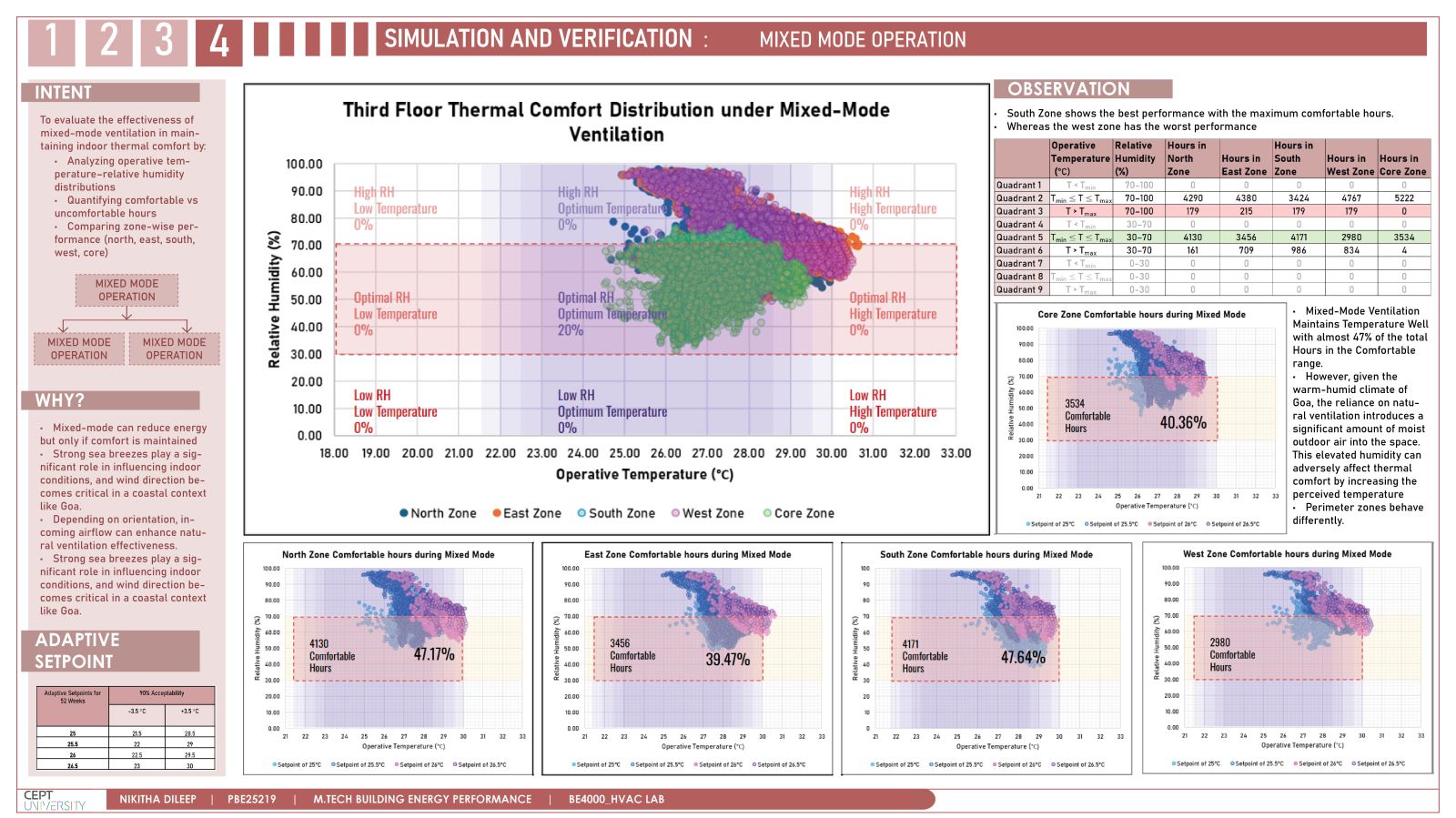
Evaluation of mixed-mode operation effectiveness through adaptive thermal comfort analysis.