Your browser is out-of-date!
For a richer surfing experience on our website, please update your browser. Update my browser now!
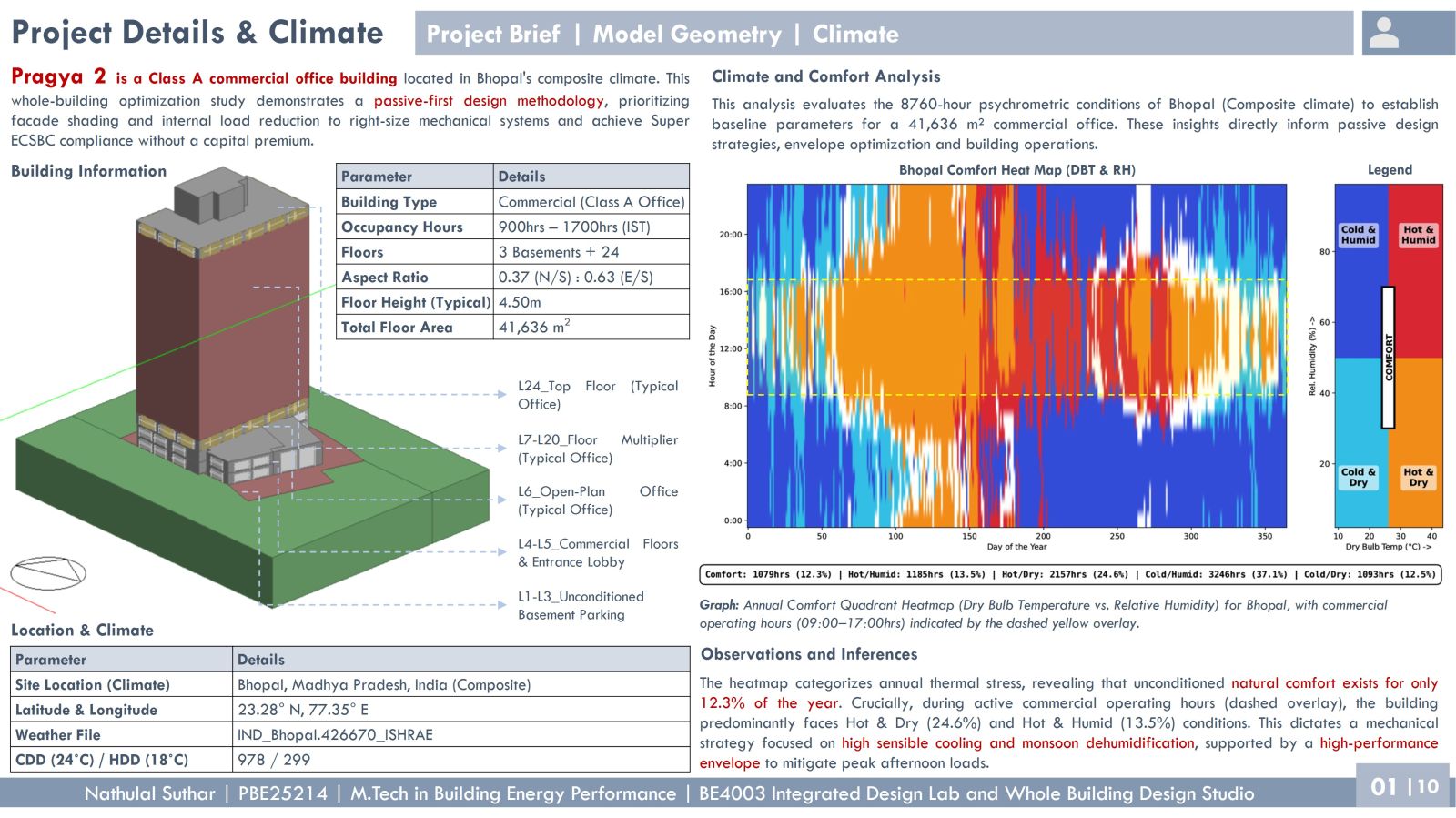
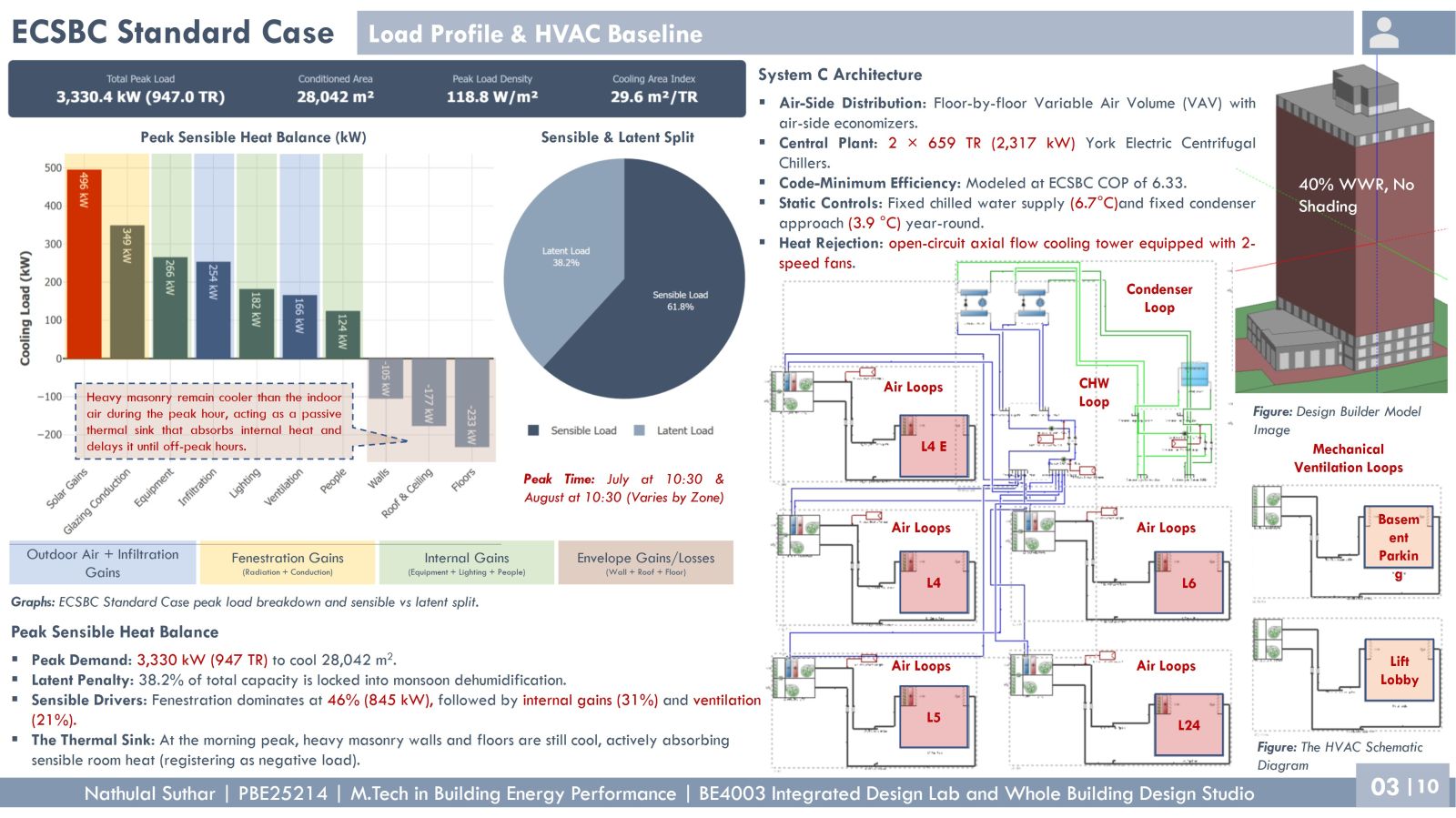
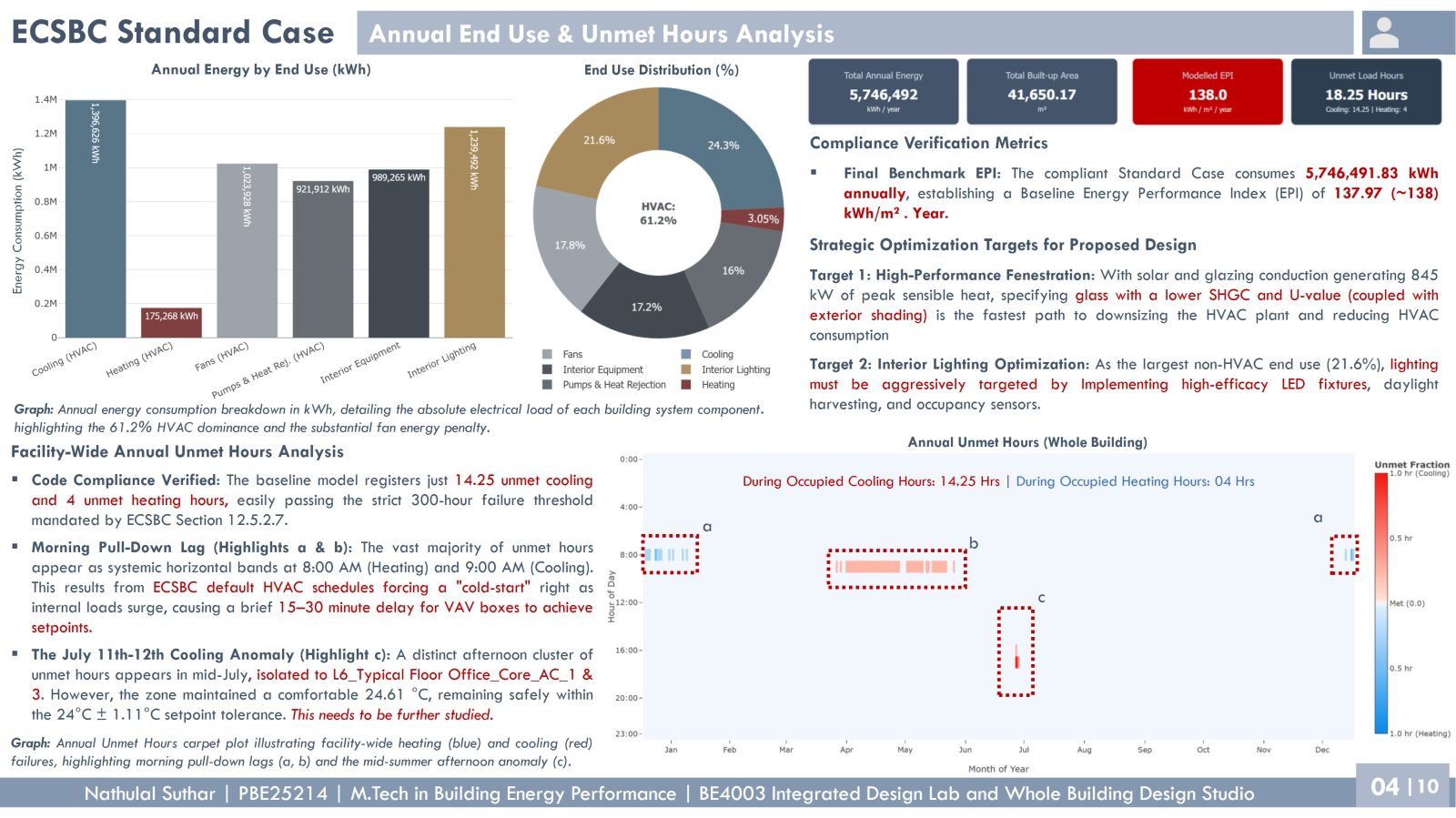
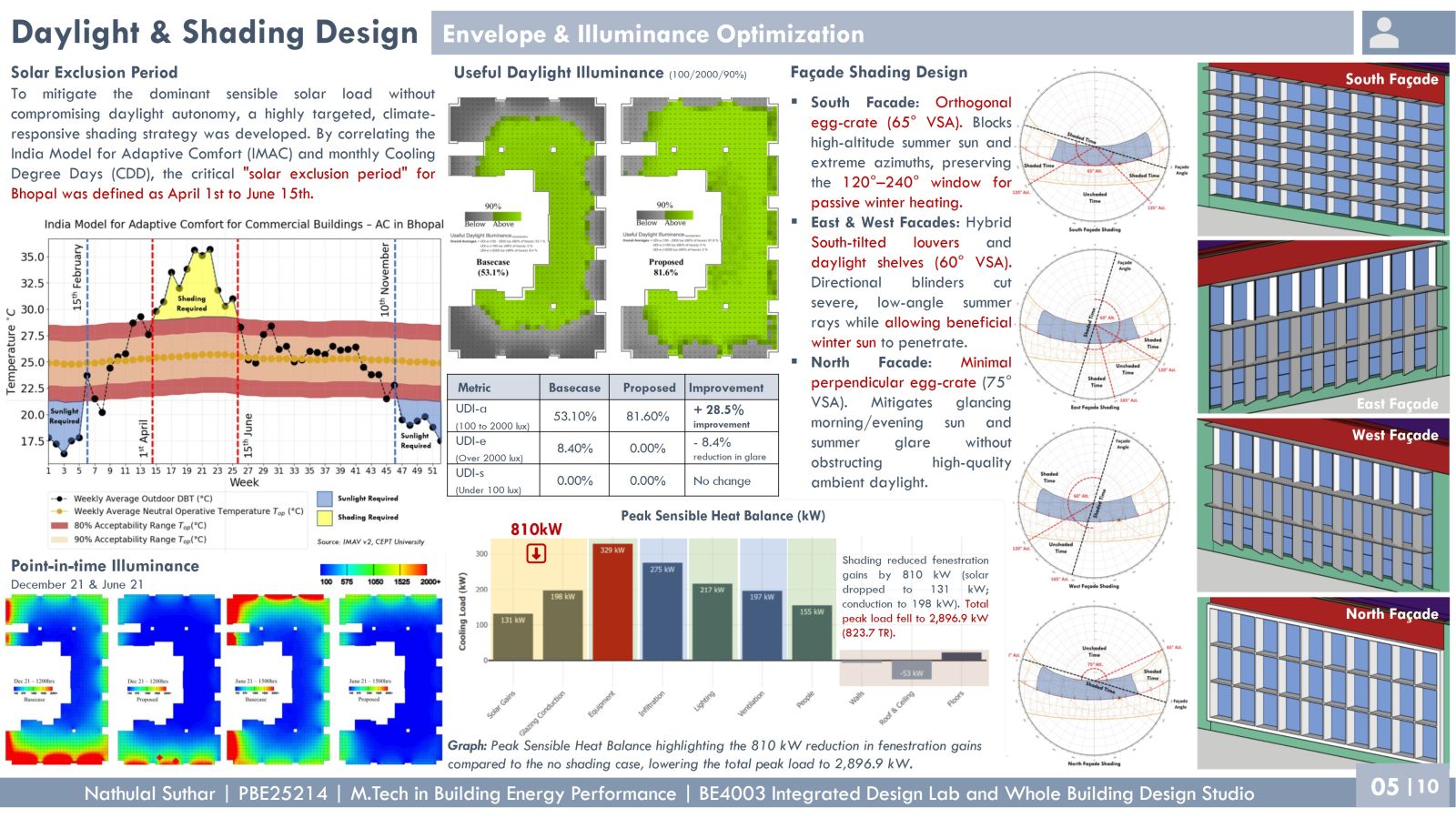
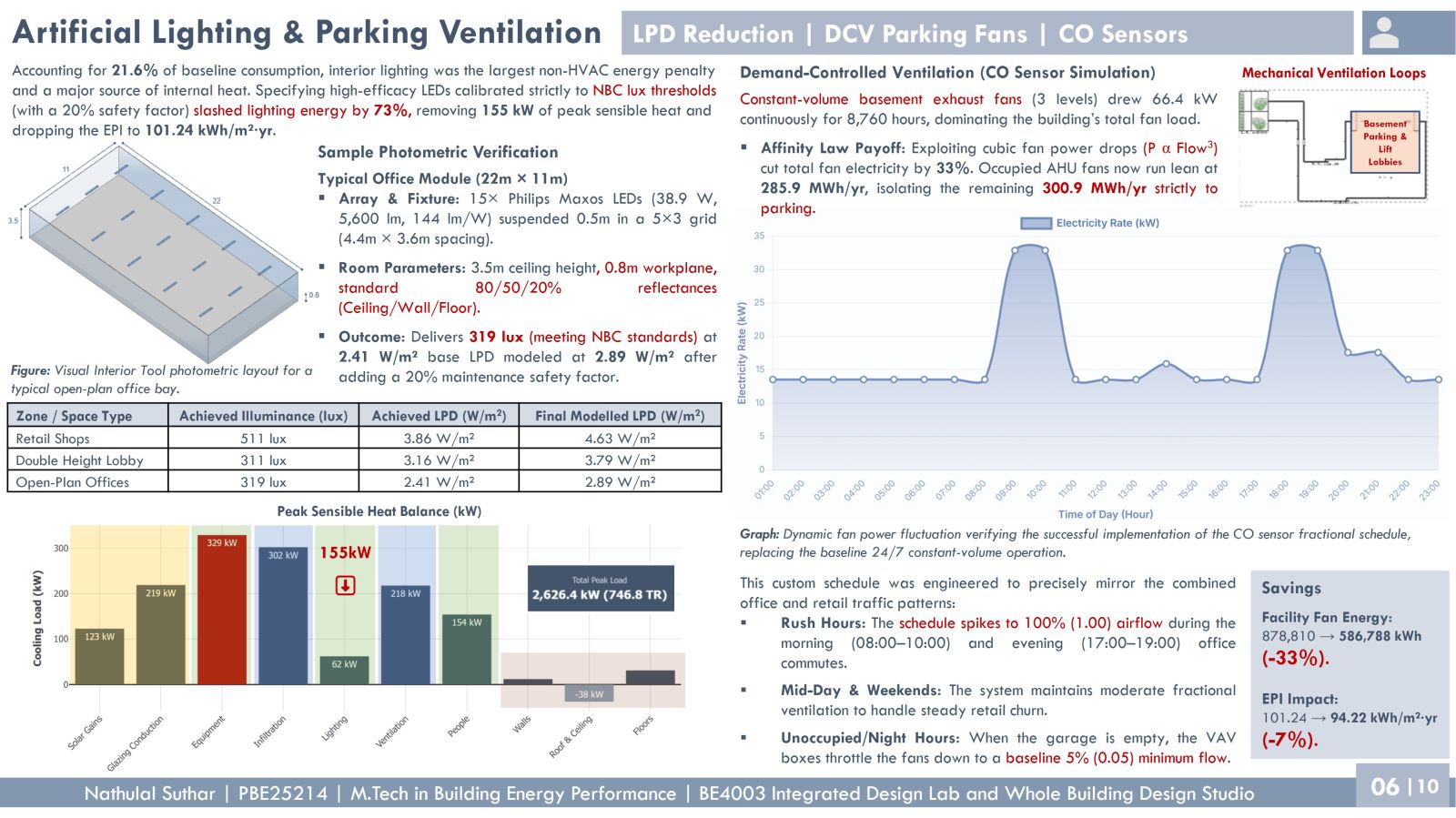
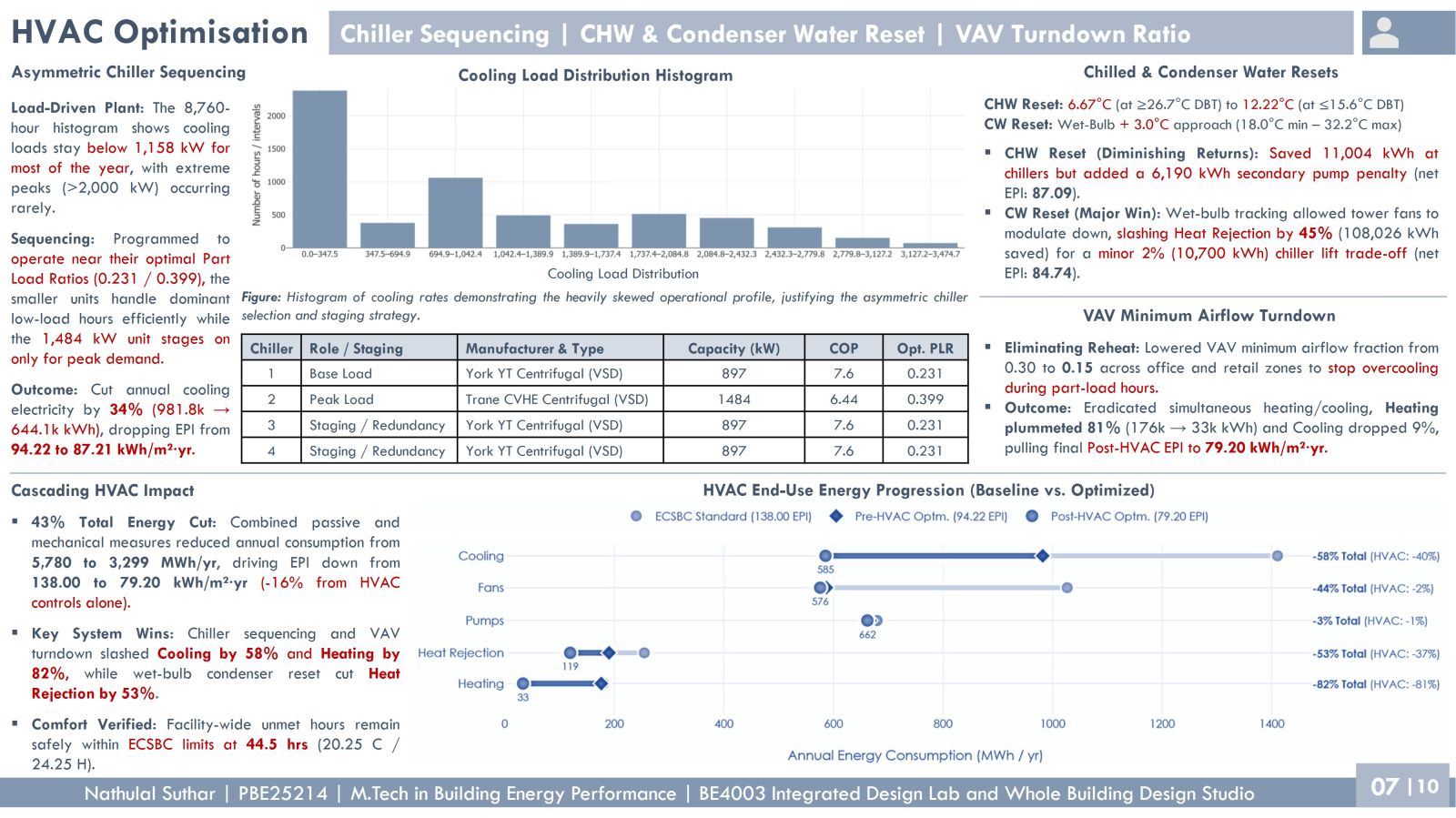
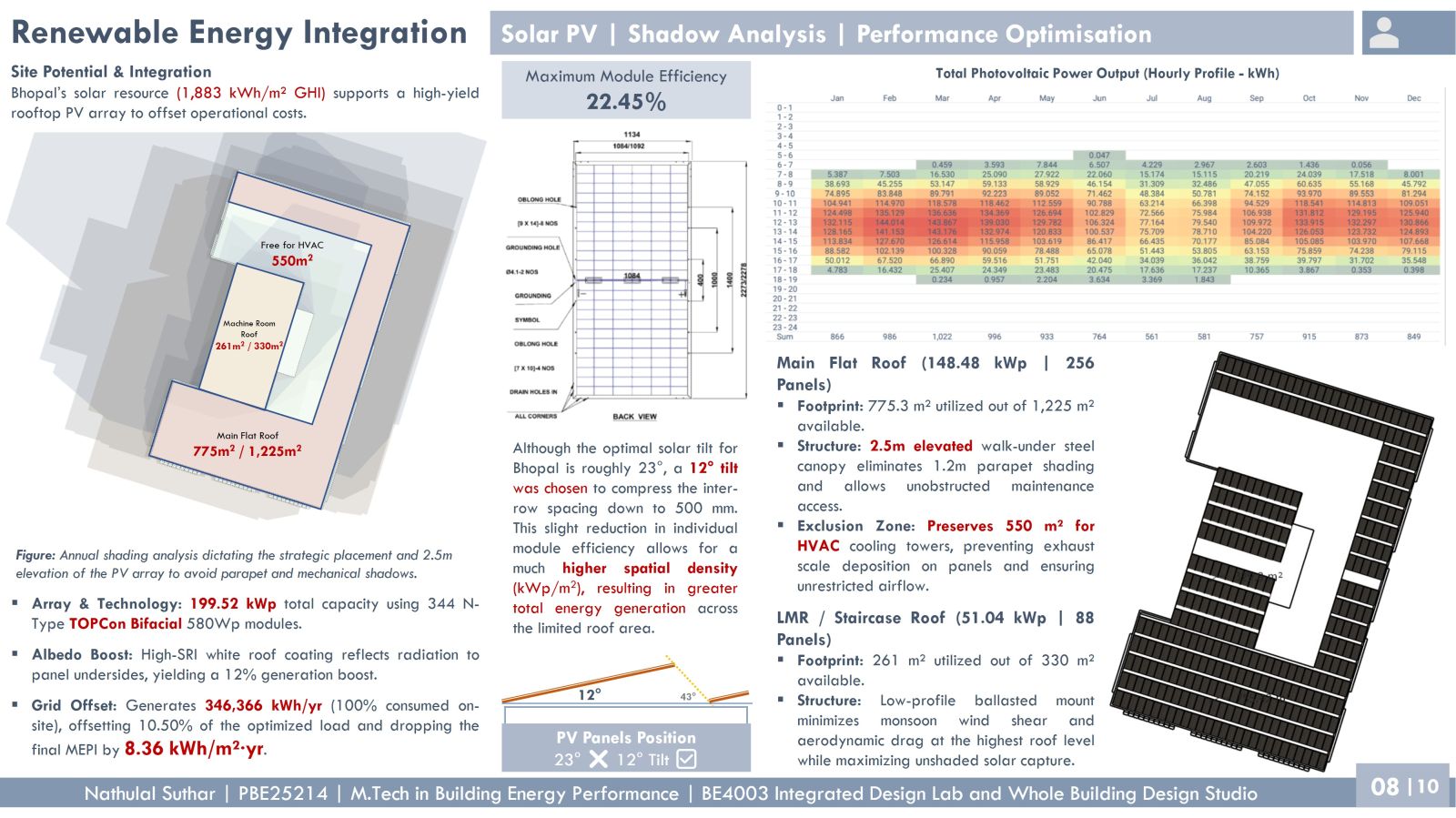
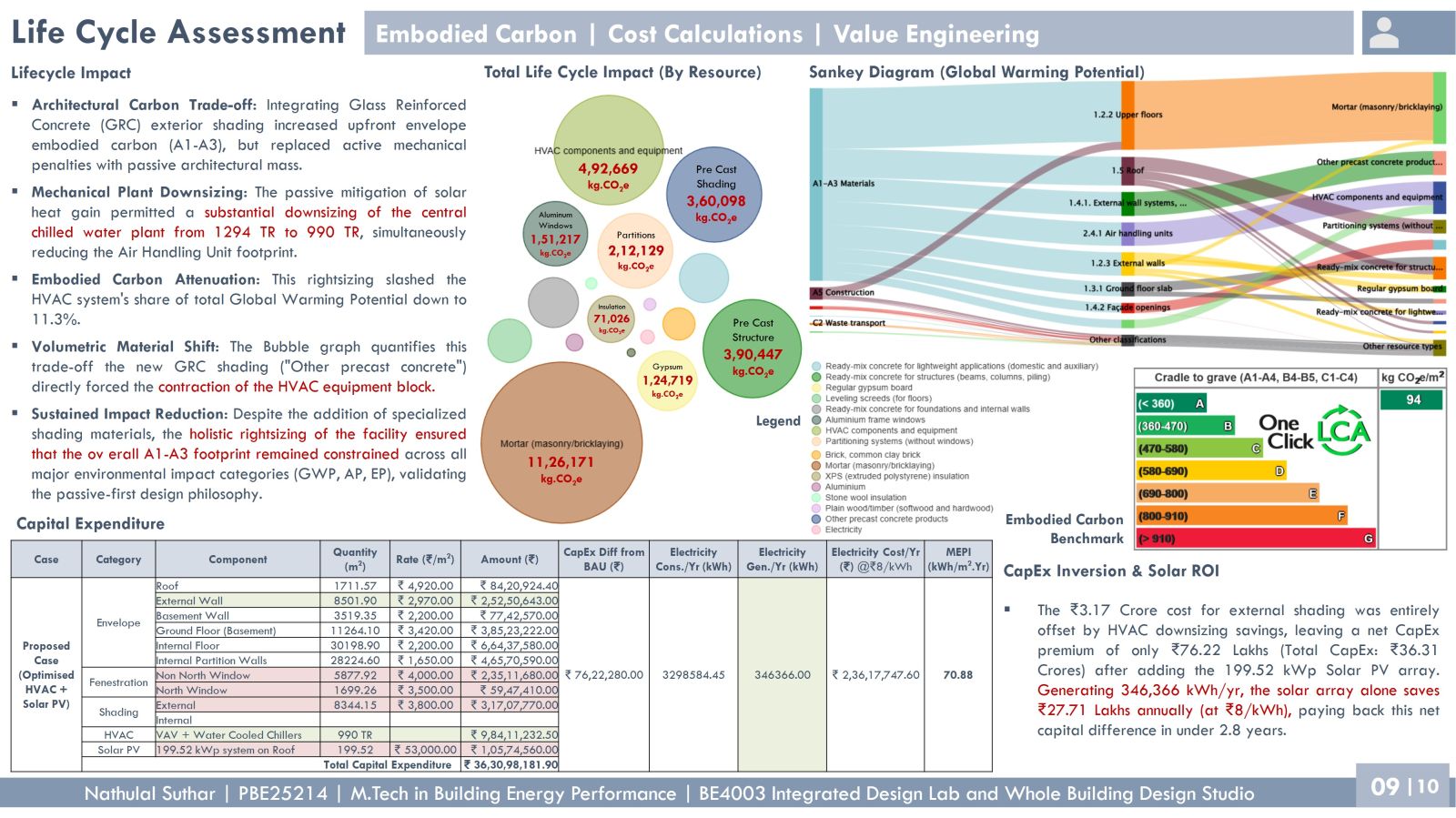
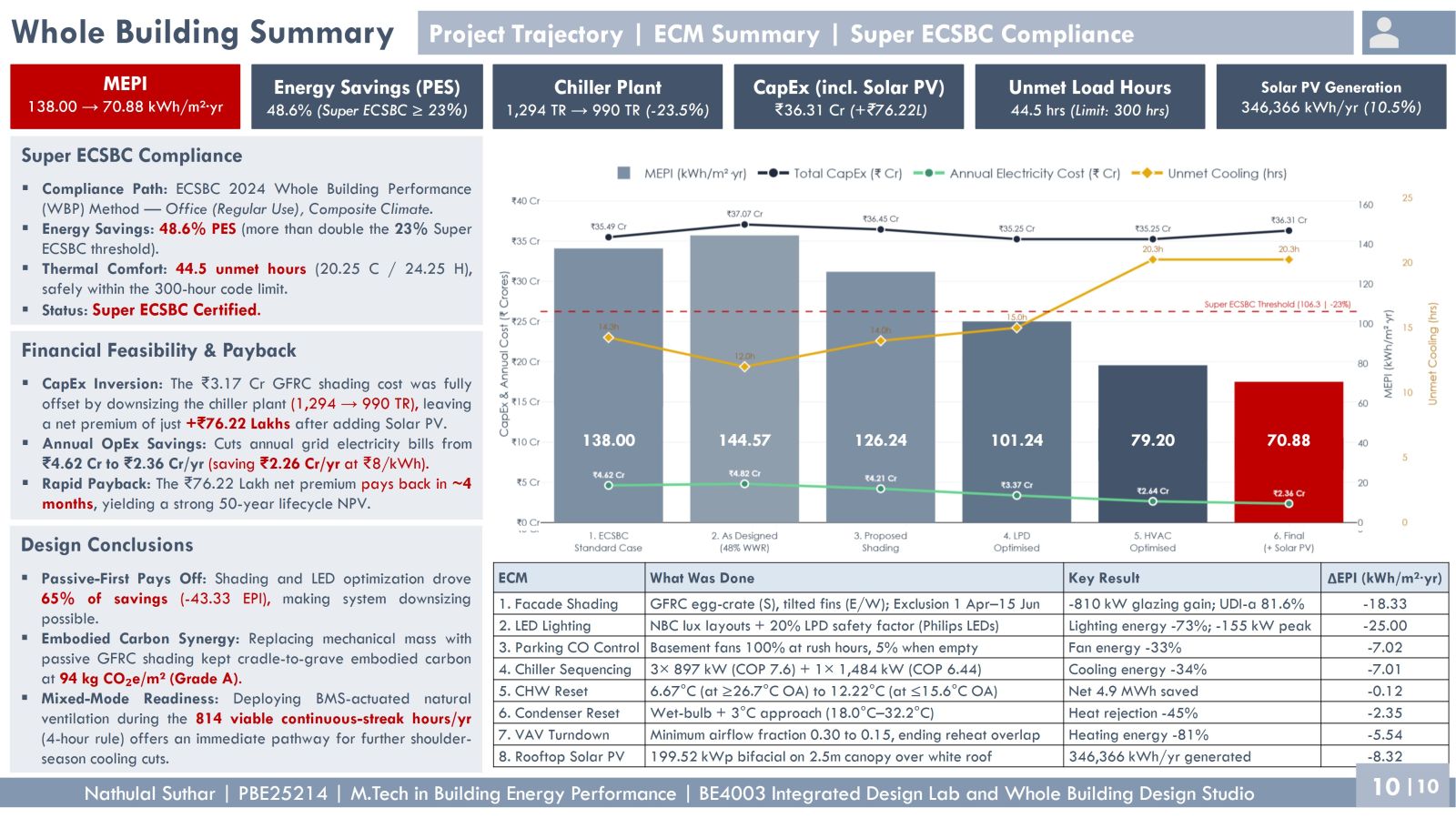
This whole-building energy optimization study for Pragya 2,a 41,636 m² Class A commercial office in Bhopal’s composite climate—demonstrates a passive-first methodology to achieve Super ECSBC compliance. By deploying orientation-specific GFRC facade shading and NBC-calibrated LED lighting, peak solar and internal loads dropped substantially, boosting daylight autonomy (UDI-a) to 81.6% and downsizing the chiller plant from 1,294 TR to 990 TR. Subsequent mechanical optimizations—asymmetric chiller sequencing, wet-bulb condenser reset, CO-sensor parking DCV, and 0.15 VAV turndown—paired with a 199.52 kWp bifacial solar array cut MEPI by 48.6% (138.00 to 70.88 kWh/m²·yr), delivering Grade A embodied carbon and 2.26 Cr annual savings.