Mantra Ravat

CT3022

Rainwater Harvesting Potential Zones

This project uses GIS-based multi-criteria analysis to identify and compare Rainwater Harvesting (RWH) potential zones in Singapore and Chennai. Five spatial factors — rainfall, land use/land cover, runoff coefficient, drainage density and slope — are integrated through weighted overlay to classify urban areas into five suitability levels. The study further examines building footprints within Very High suitability zones to estimate rooftop harvesting potential. By comparing both cities and studying Singapore's water management practices, the project proposes context-specific strategies for Chennai, focusing on rooftop harvesting, community storage, industrial runoff reuse and groundwater recharge.

View Additional Work
Report Content

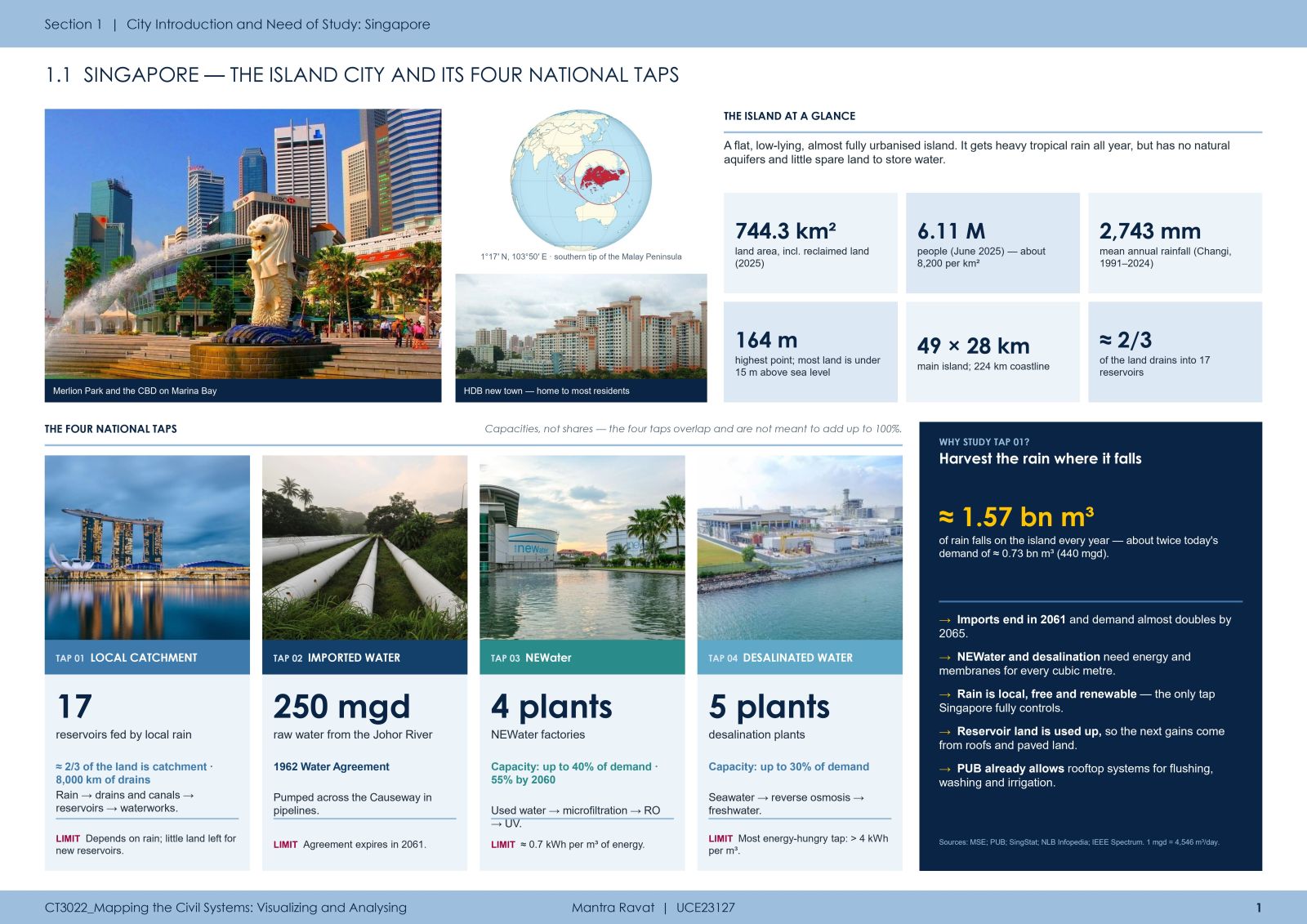
Despite receiving abundant tropical rainfall, Singapore's limited land and dependence on multiple water sources make efficient local rainwater harvesting increasingly important.

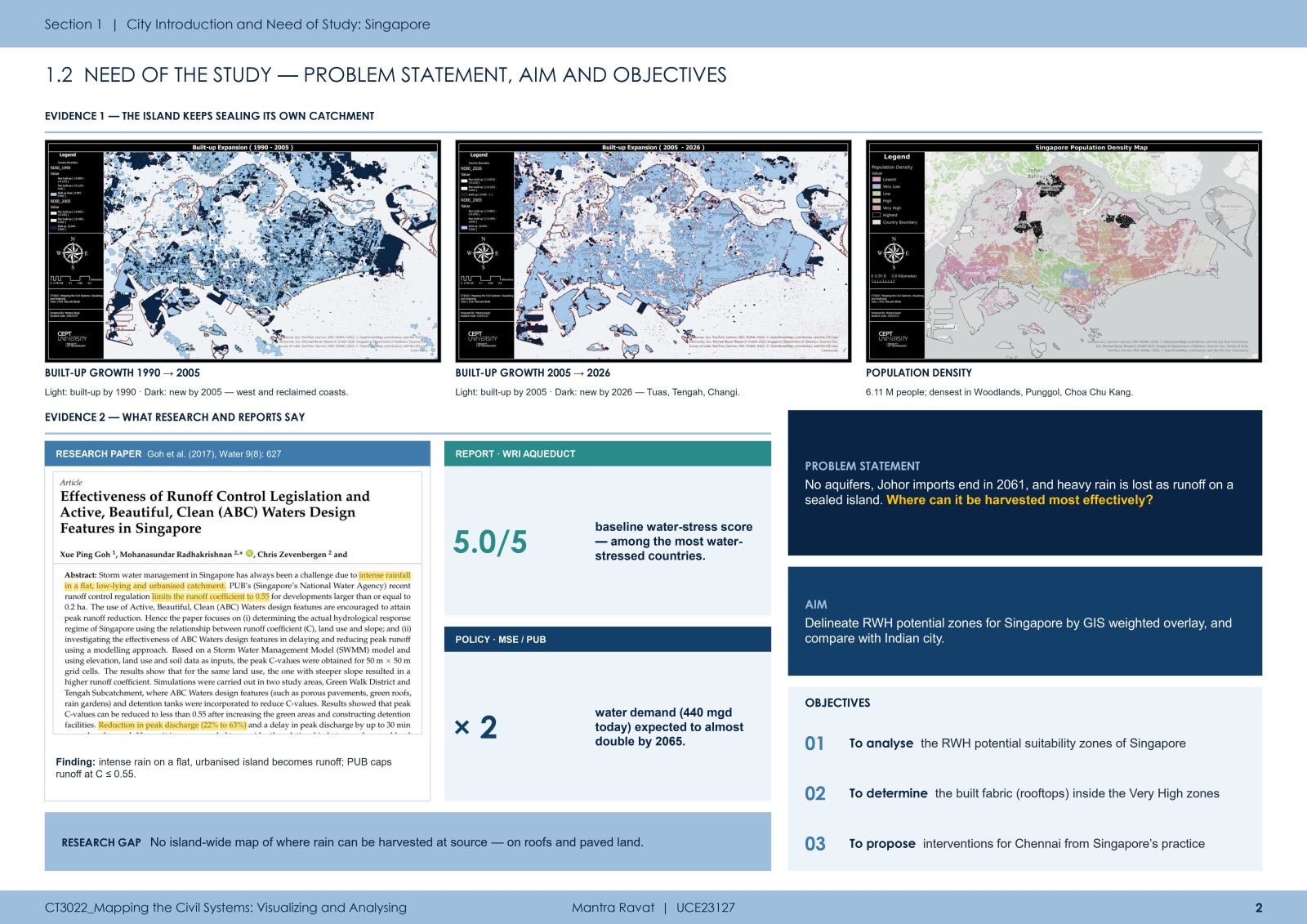
Rapid urbanisation continues to seal natural catchments, increasing surface runoff and highlighting the need to identify strategic locations for rainwater harvesting.

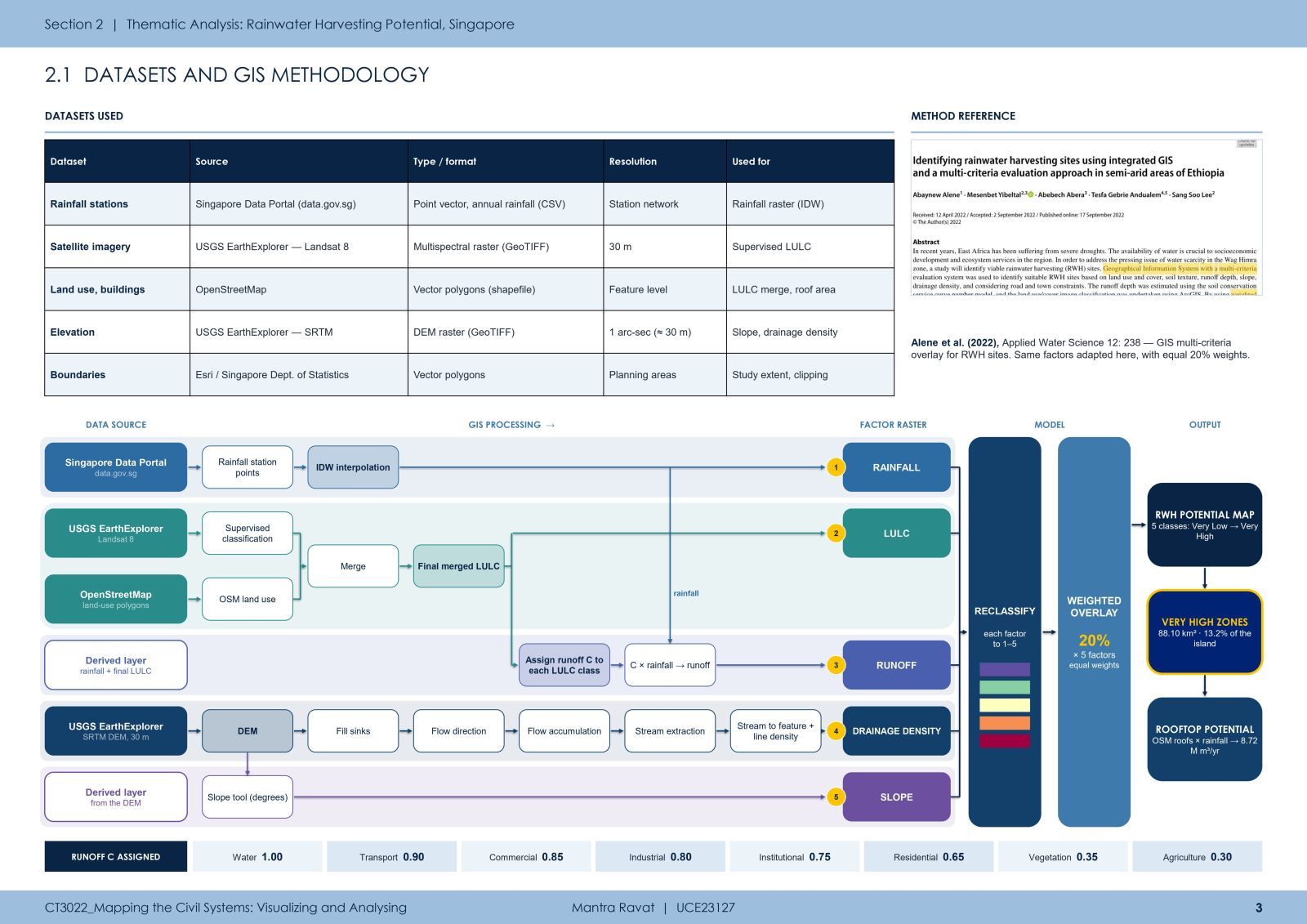
An integrated GIS-based multi-criteria approach combines rainfall, land use, runoff, drainage density and slope to delineate potential rainwater harvesting zones.

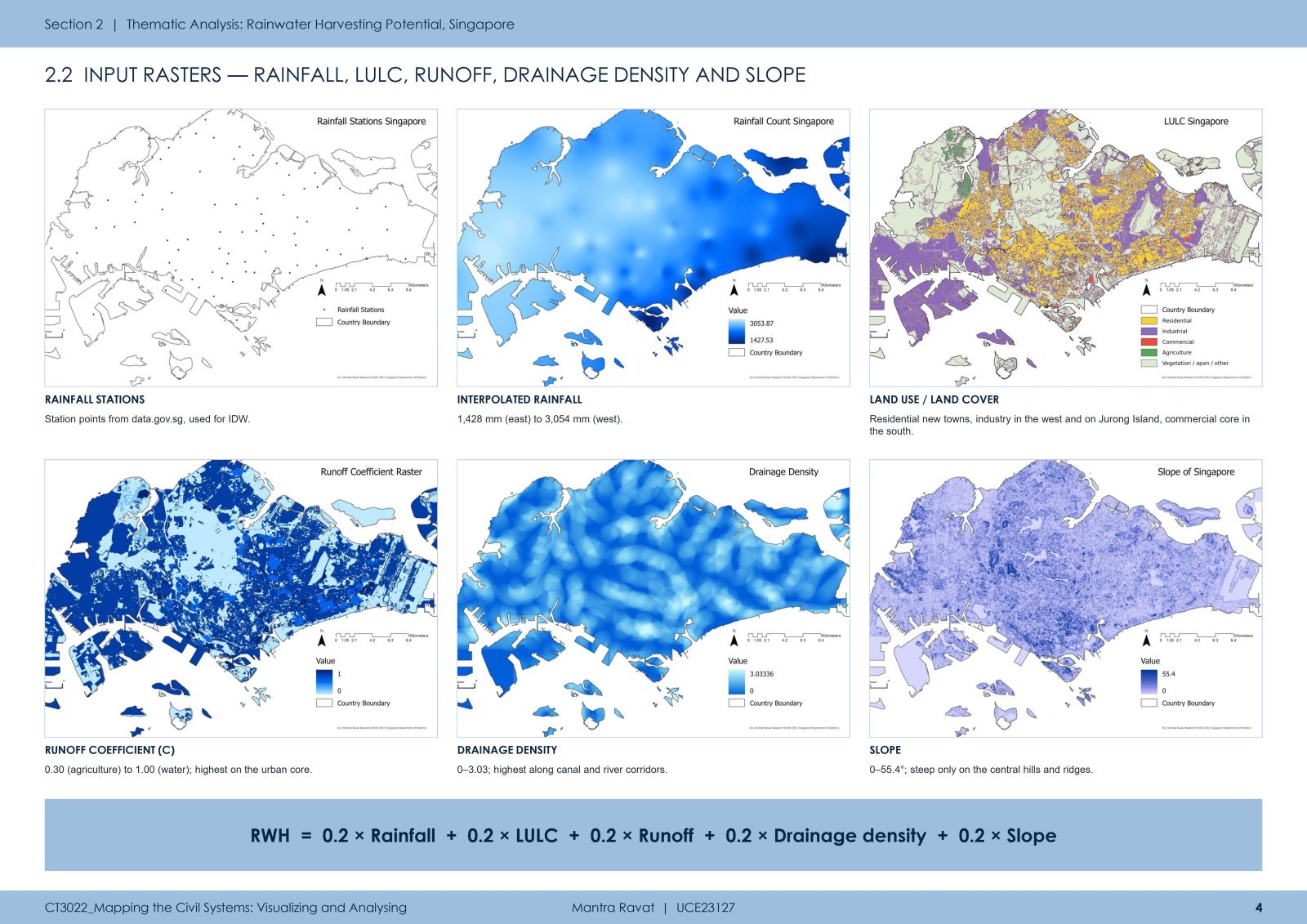
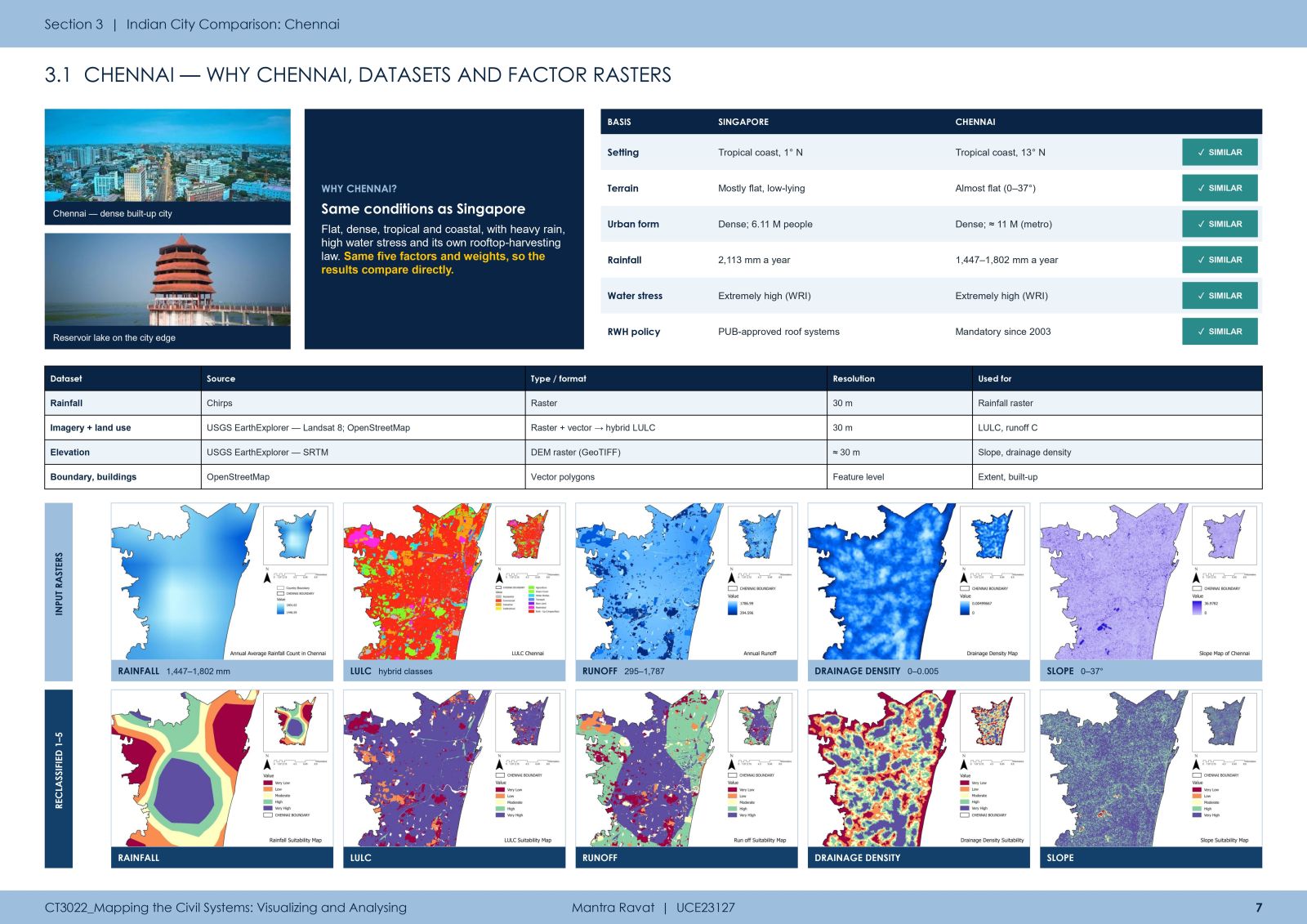
Spatial variations in rainfall, urban land cover, runoff characteristics, drainage density and terrain establish the five key factors influencing rainwater harvesting suitability.

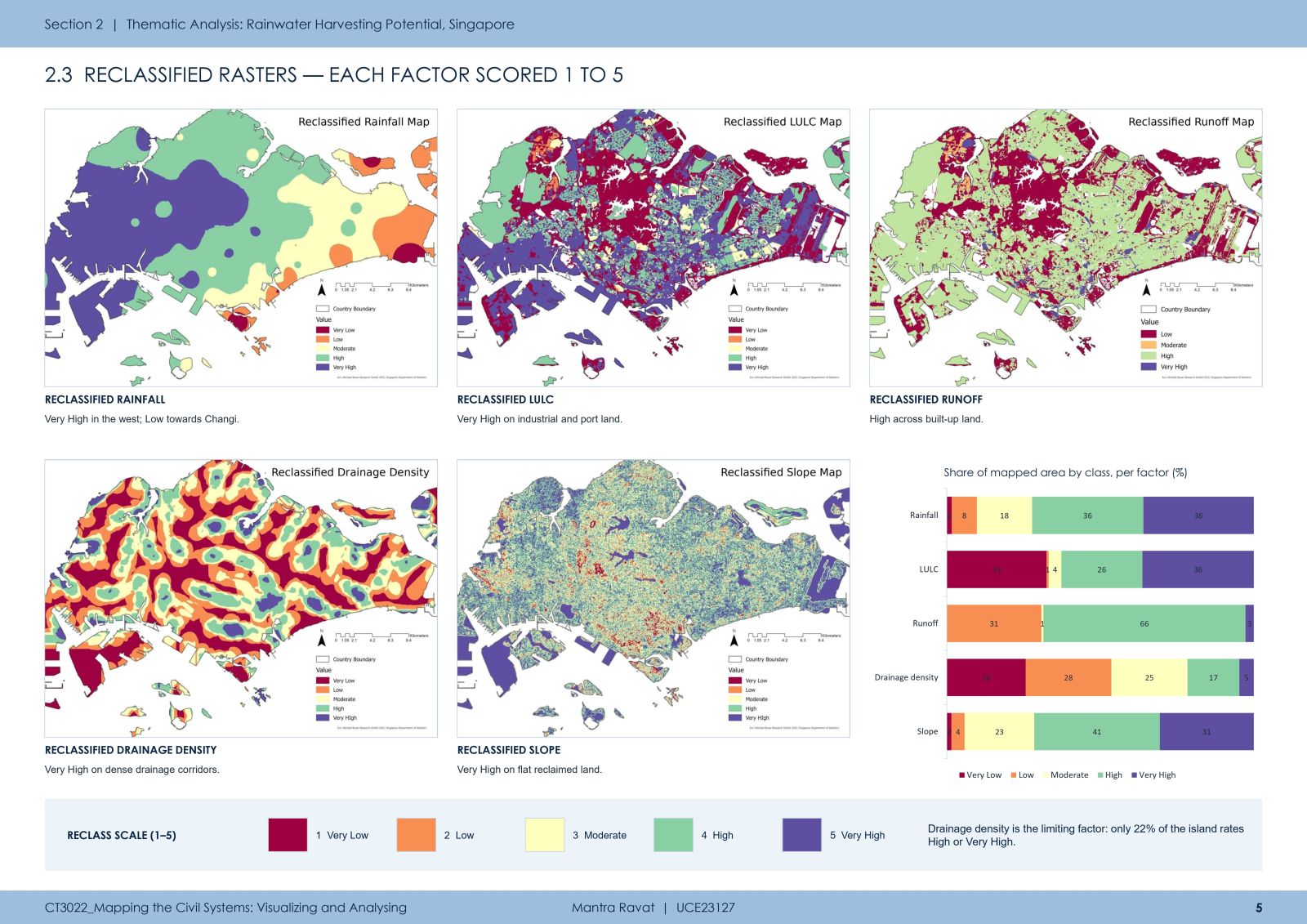
Standardising the five thematic factors into a common suitability scale enables spatial comparison and identification of areas with favourable harvesting conditions.

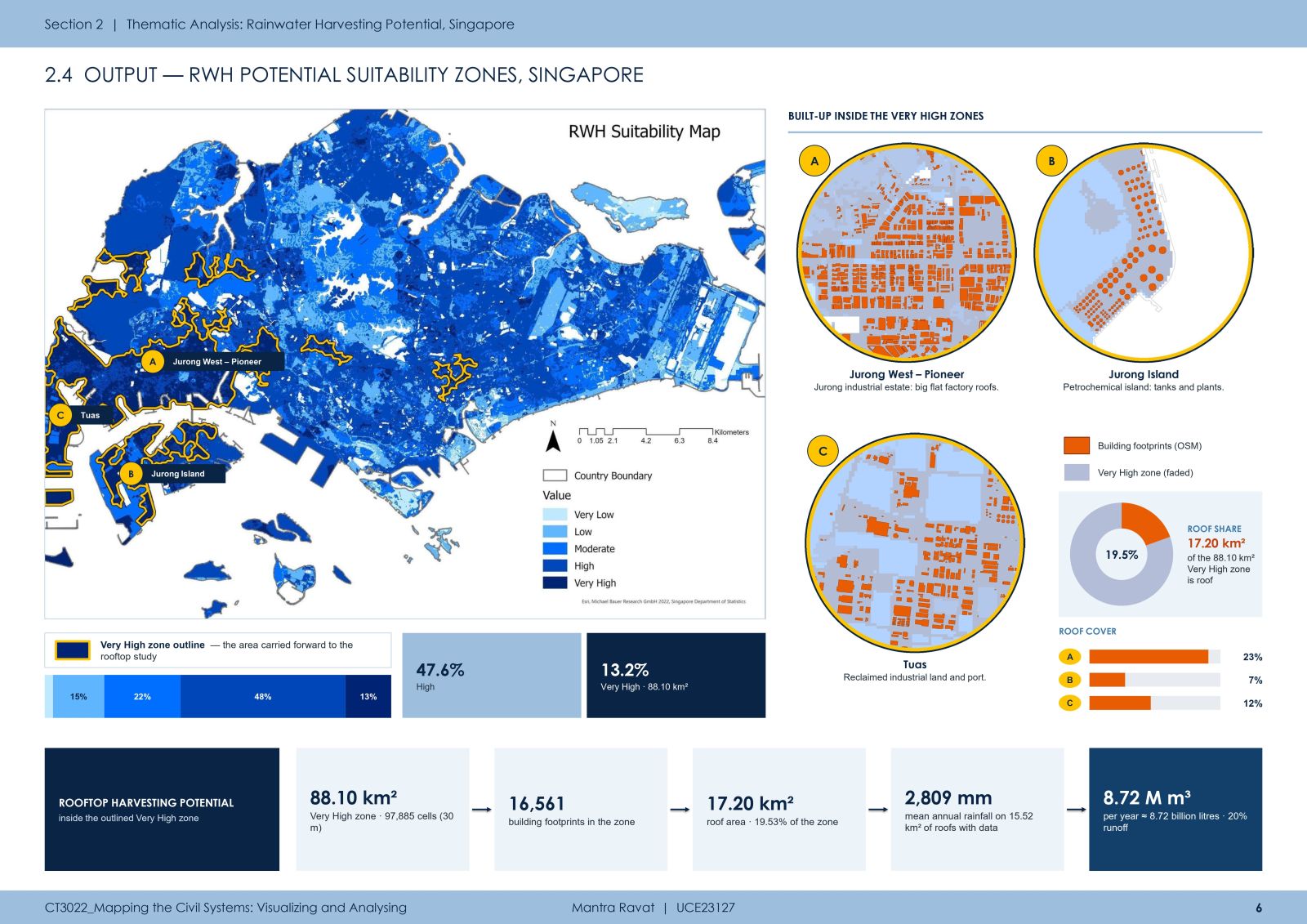
Singapore's Very High suitability zones cover 88.10 km², with 16,561 mapped buildings and 17.20 km² of rooftop area offering an estimated harvesting potential of 8.72 million m³ annually.

Chennai provides a comparative urban context, sharing Singapore's coastal setting, dense development and rainwater management challenges while exhibiting distinct spatial patterns across the five suitability factors.

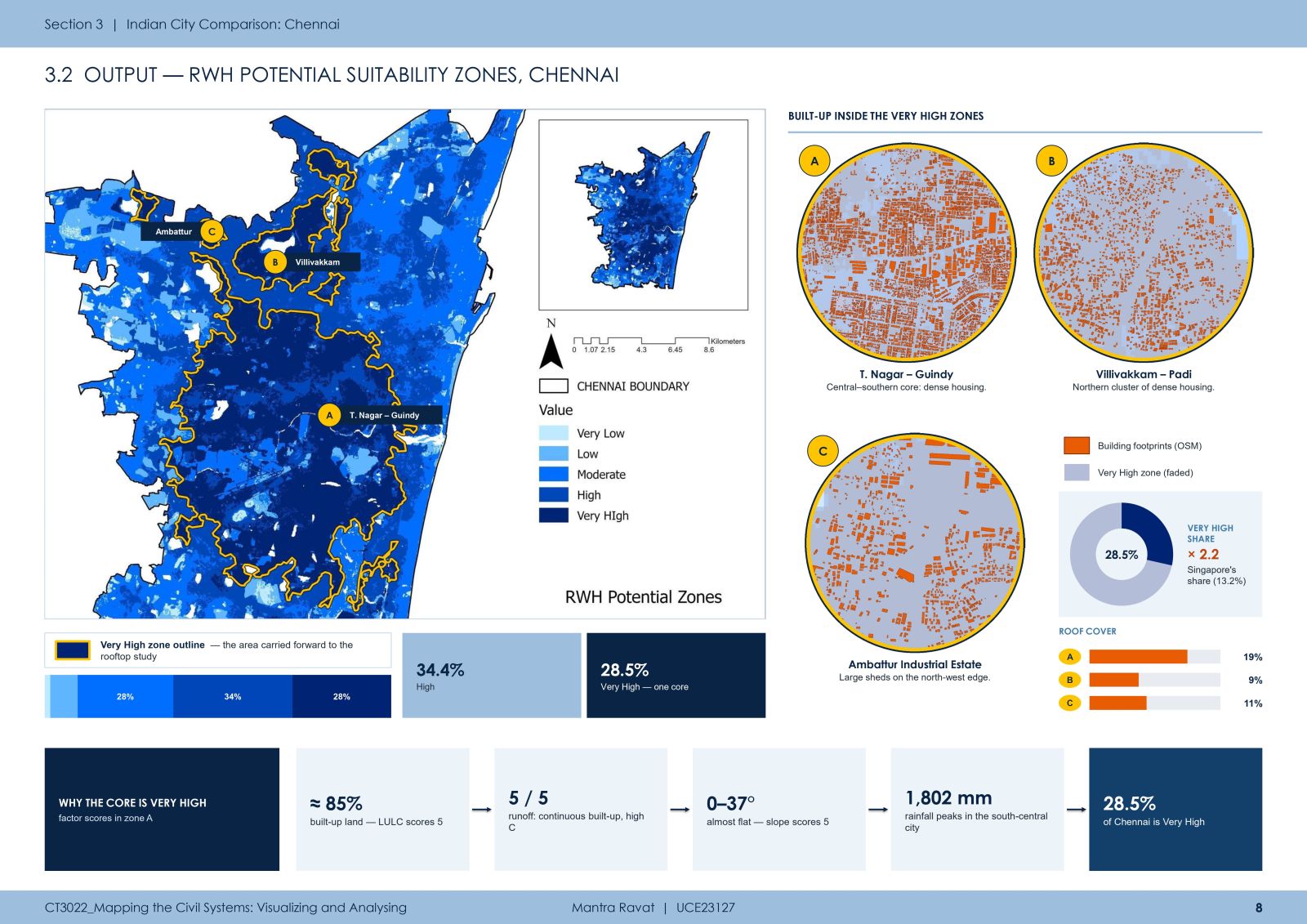
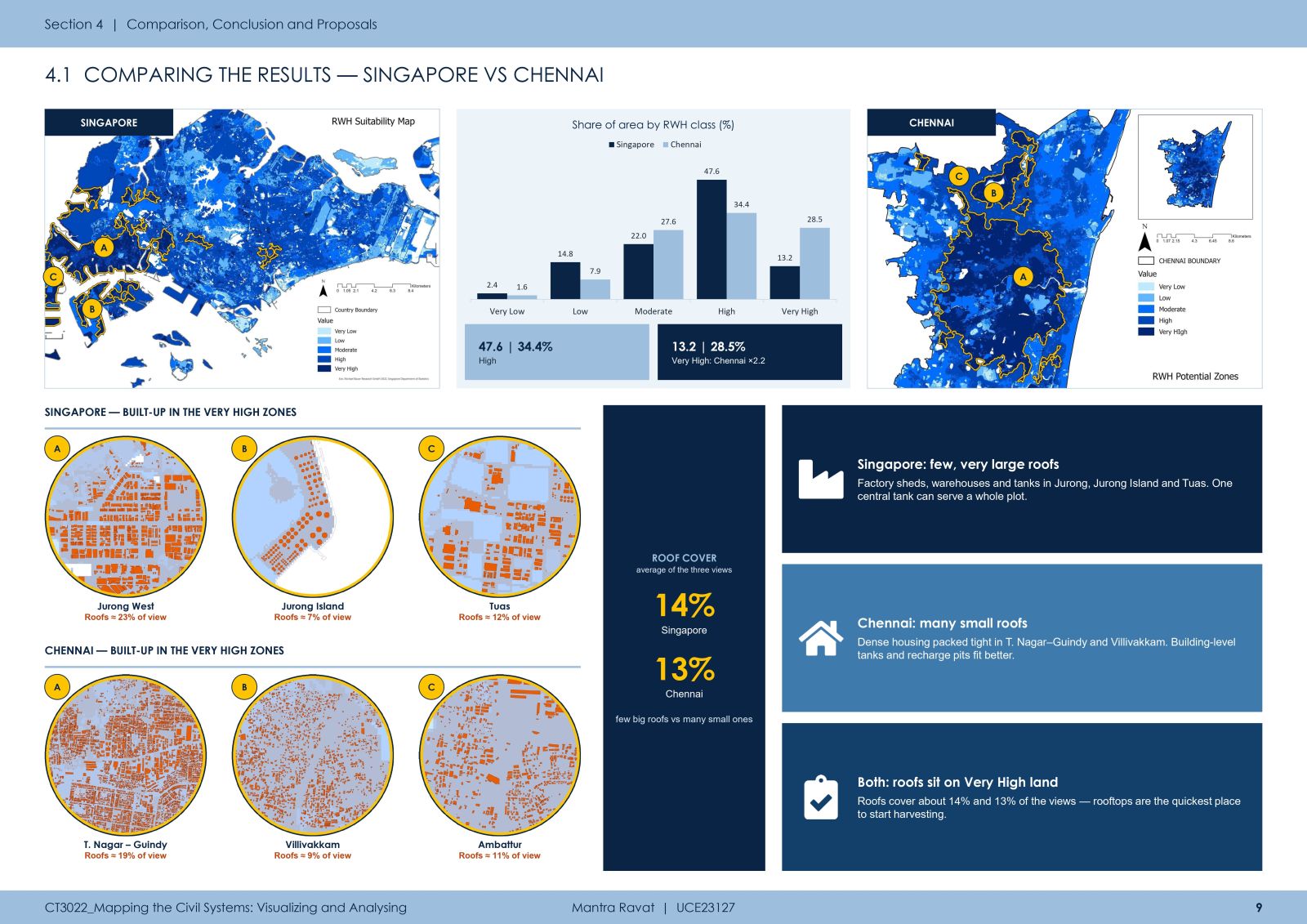
Chennai records a larger Very High suitability share of 28.5%, concentrated around T. Nagar–Guindy, Villivakkam and Ambattur, indicating significant opportunities for targeted rainwater harvesting.

While Singapore's Very High zones are concentrated around large industrial rooftops, Chennai's potential is distributed across dense residential and industrial areas, suggesting different approaches to rooftop harvesting.

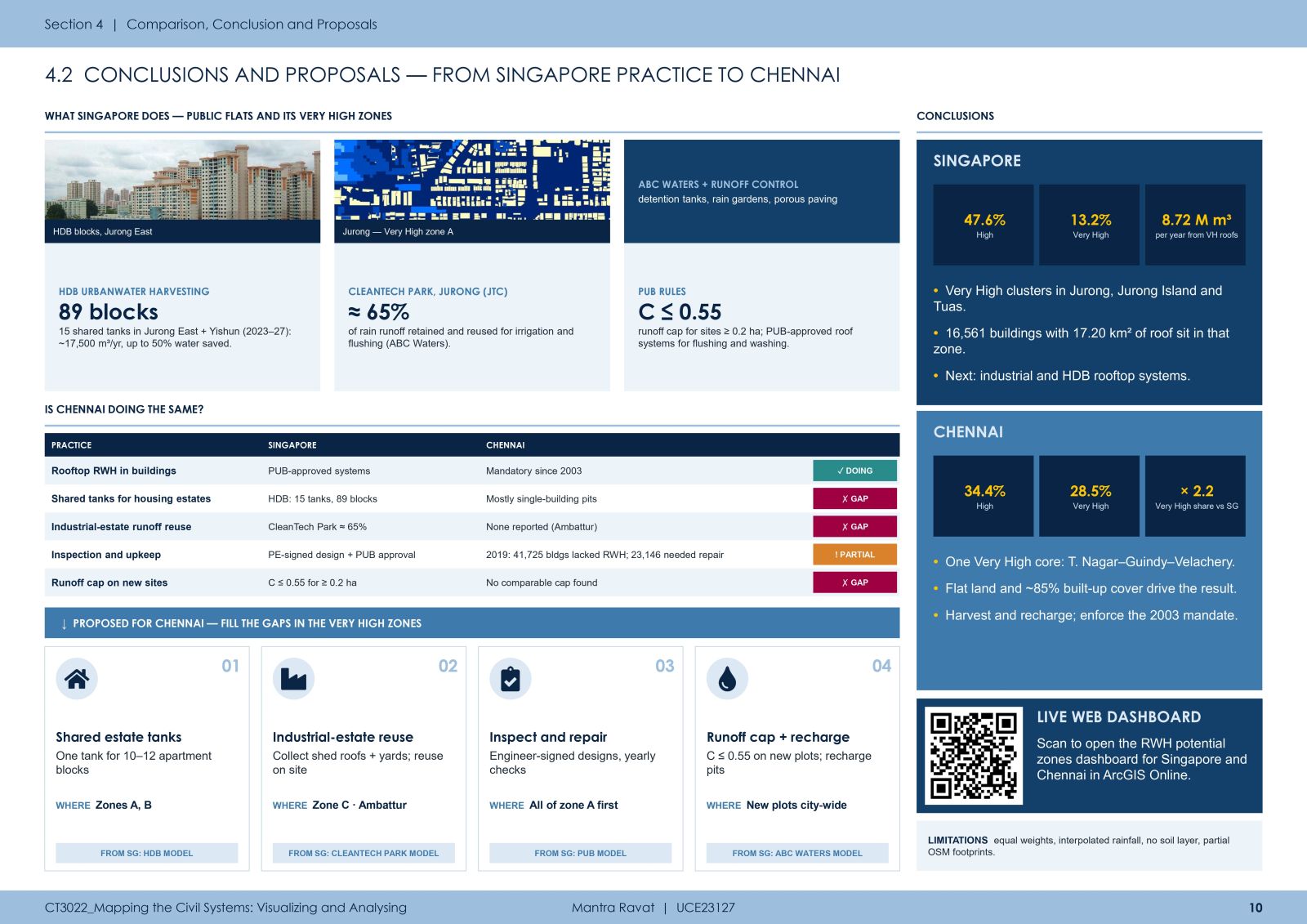
Translating Singapore's integrated water management practices into context-specific interventions can help Chennai strengthen rooftop harvesting, community-level storage, industrial runoff reuse and groundwater recharge.

Project Video