Your browser is out-of-date!
For a richer surfing experience on our website, please update your browser. Update my browser now!
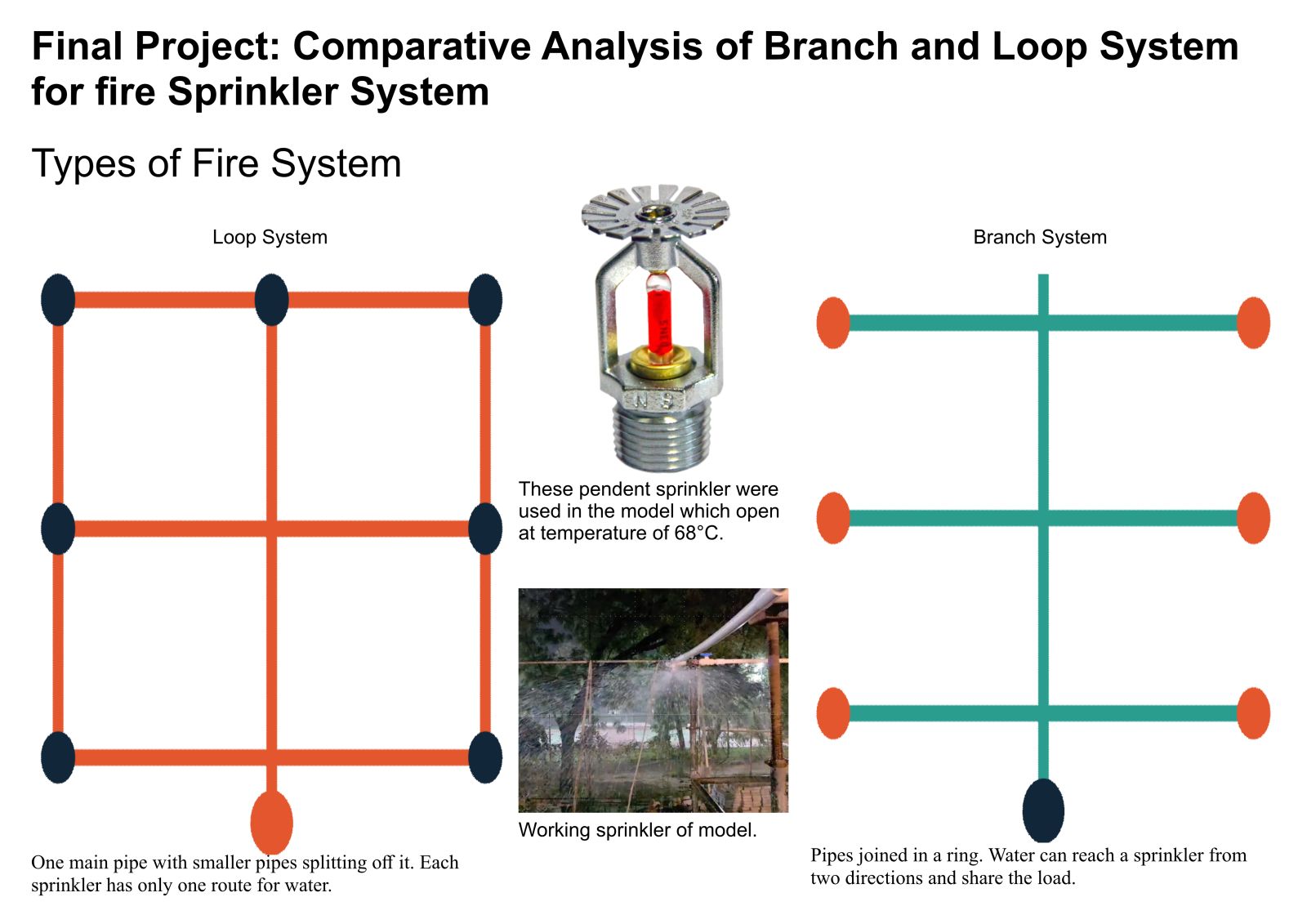
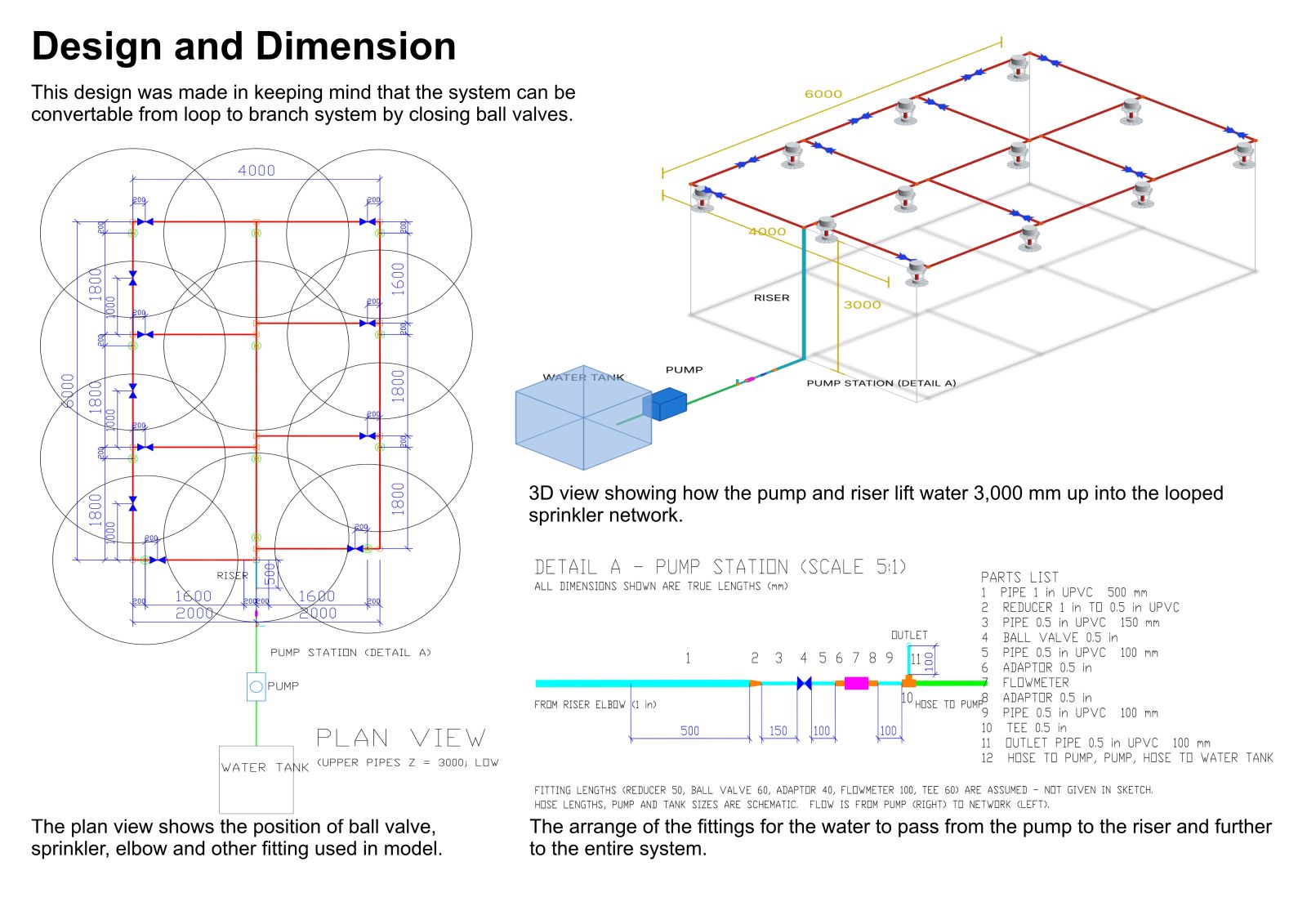
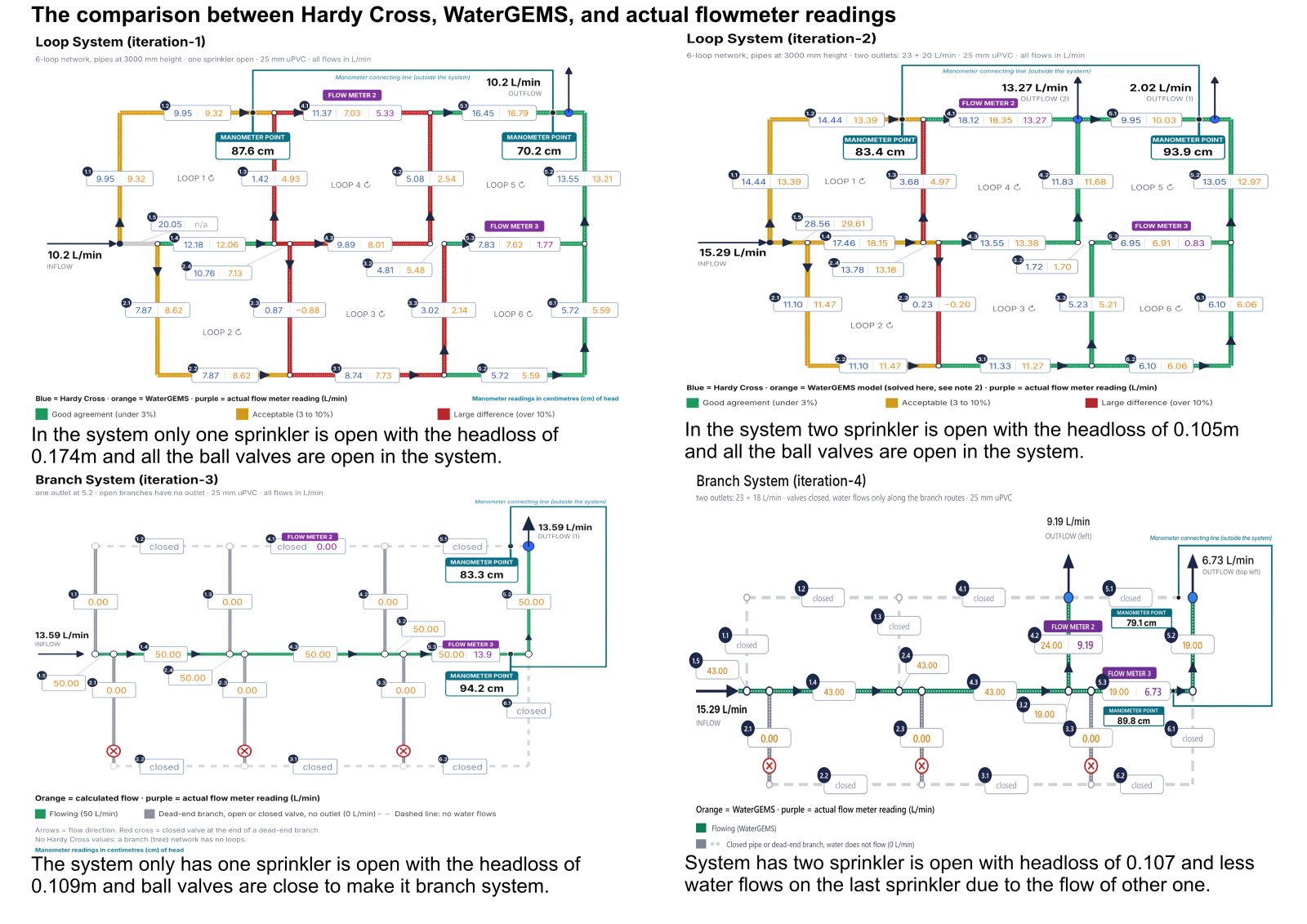
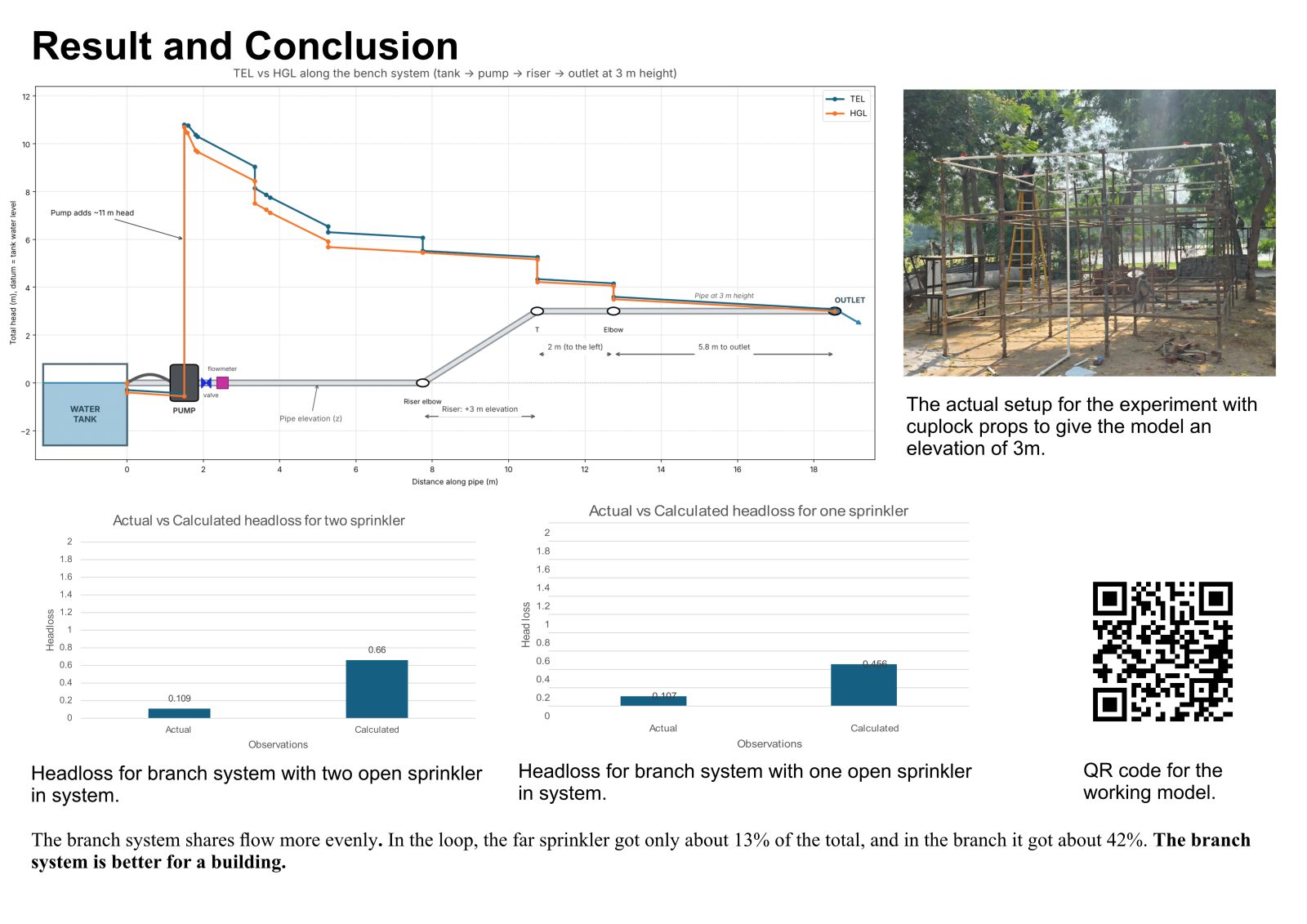
This project studies how water behaves in branch and loop pipe networks used for fire sprinkler systems. A physical model of 25 mm uPVC pipe, raised to 3 m height, was built in both layouts and tested with one and two pendent sprinklers open. In the loop part, flow distribution is analysed using the Hardy Cross method and validated with WaterGEMS software. The experimental setup combines flowmeters, an Arduino-based data system and a manometer for head loss. Together, the two layouts show how flow and pressure are shared and how well theory and simulation match real conditions.
View Additional Work