• Home
  • FT
  • CT2016
  • From Channel To Network : An Integrated Hybrid System

Het Pratik Odedra

CT2016

From Channel To Network : An Integrated Hybrid System

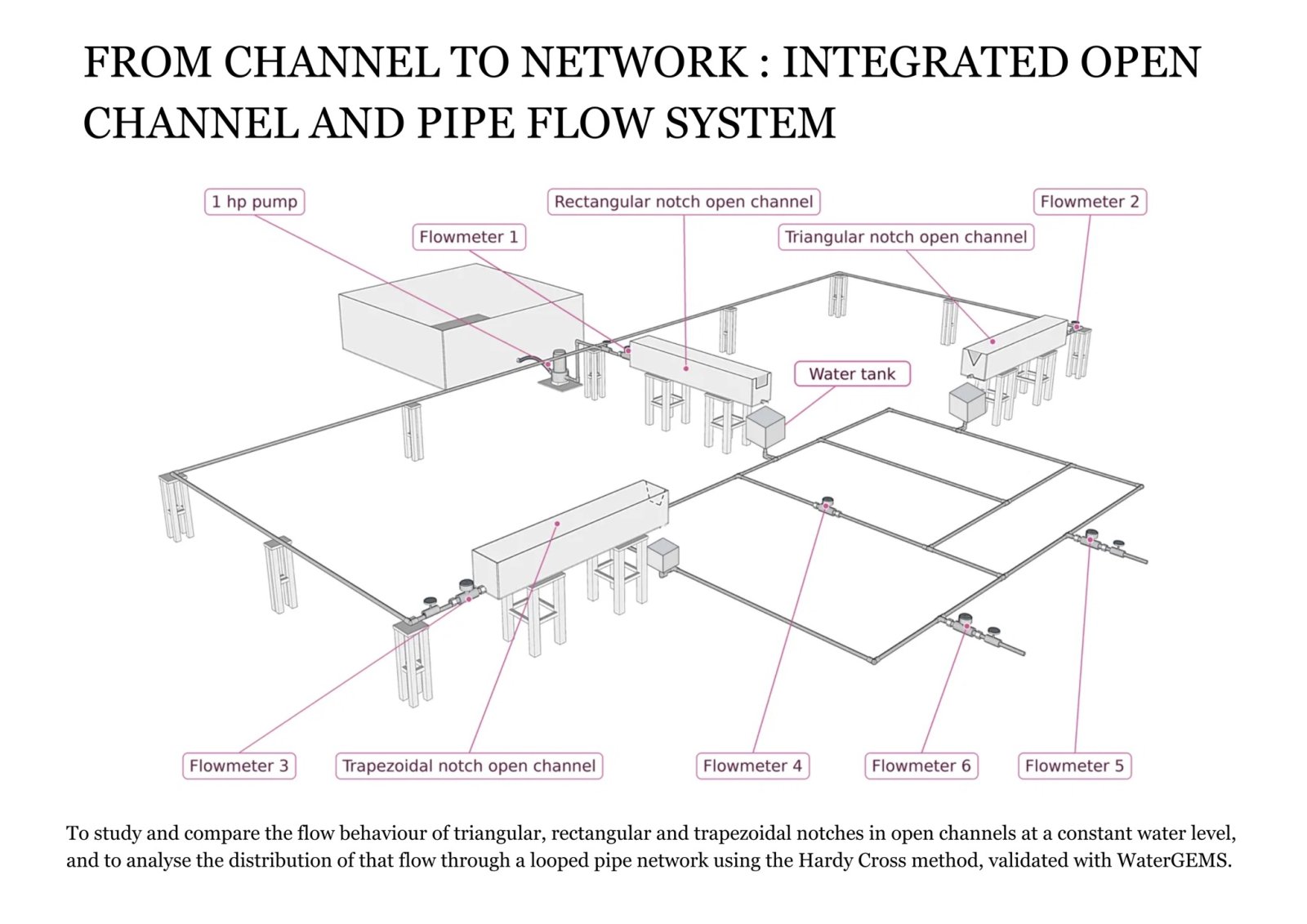
This project studies how water behaves in open channels and in pipe networks. In the open channel part, triangular, rectangular and trapezoidal notches are compared at a constant water level to understand how each notch shape affects flow. In the pipe network part, flow distribution through a looped system is analysed using the Hardy Cross method and validated with WaterGEMS software. The experimental setup combines three notch channels, six flowmeters, a bypass tank and an Arduino-based data system. Together, the two parts link channel flow to network flow and show how well theoretical calculations and simulation match real field conditions. 

Report Content

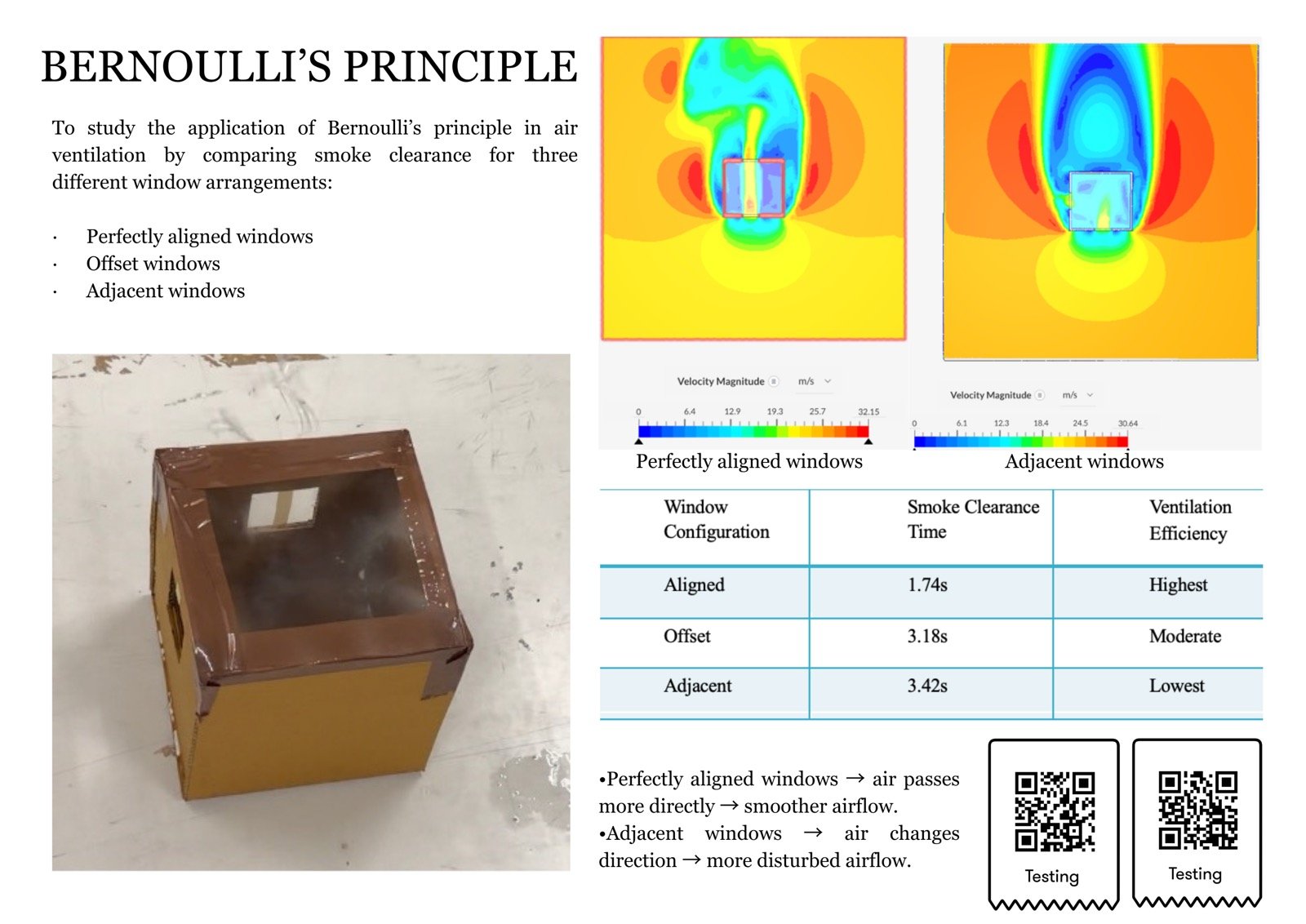
Aligned windows cleared smoke fastest (1.74 s); adjacent windows were slowest (3.42 s).

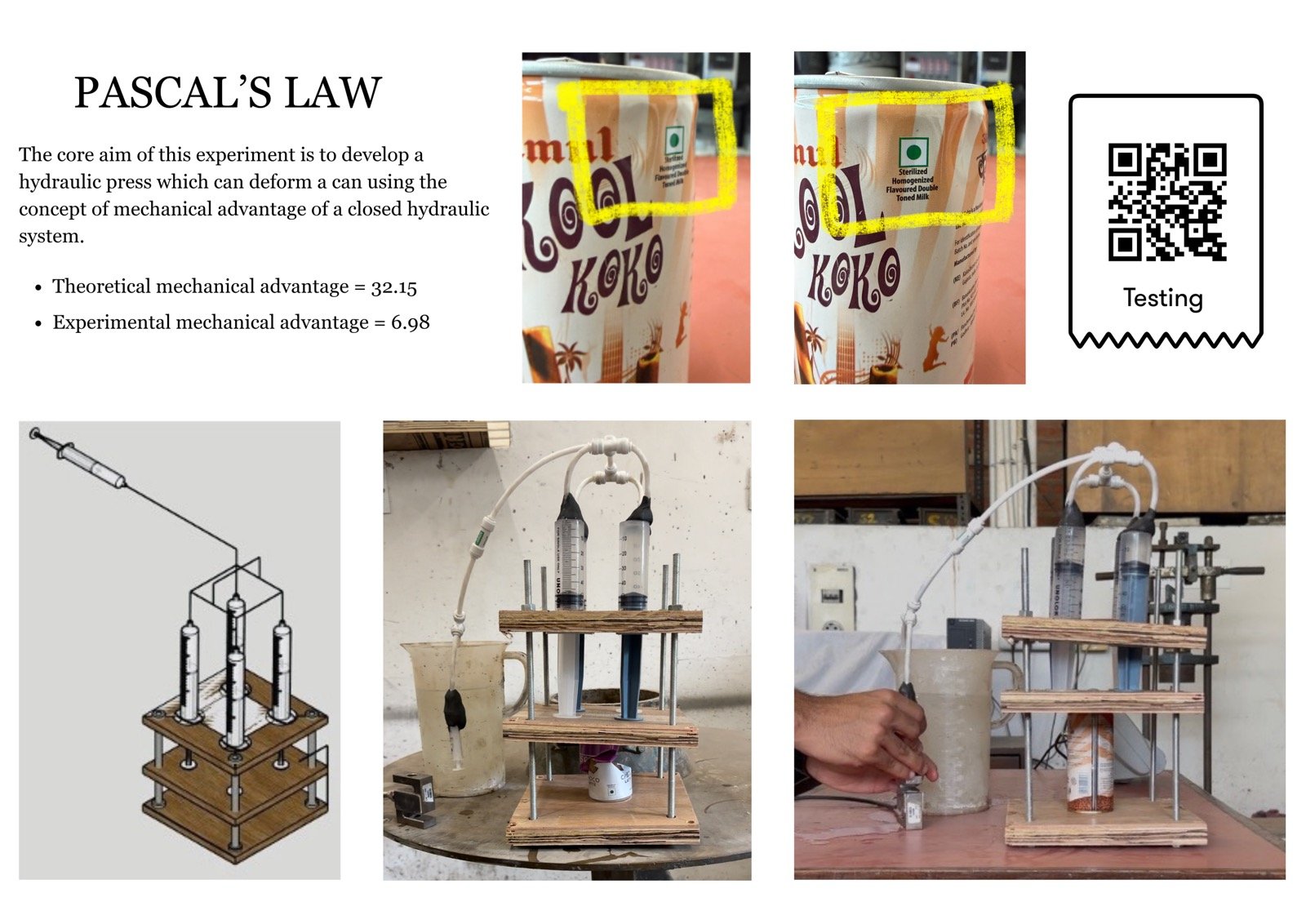
A syringe-based hydraulic press crushed a can, with a mechanical advantage of 6.98 against a theoretical 32.15.

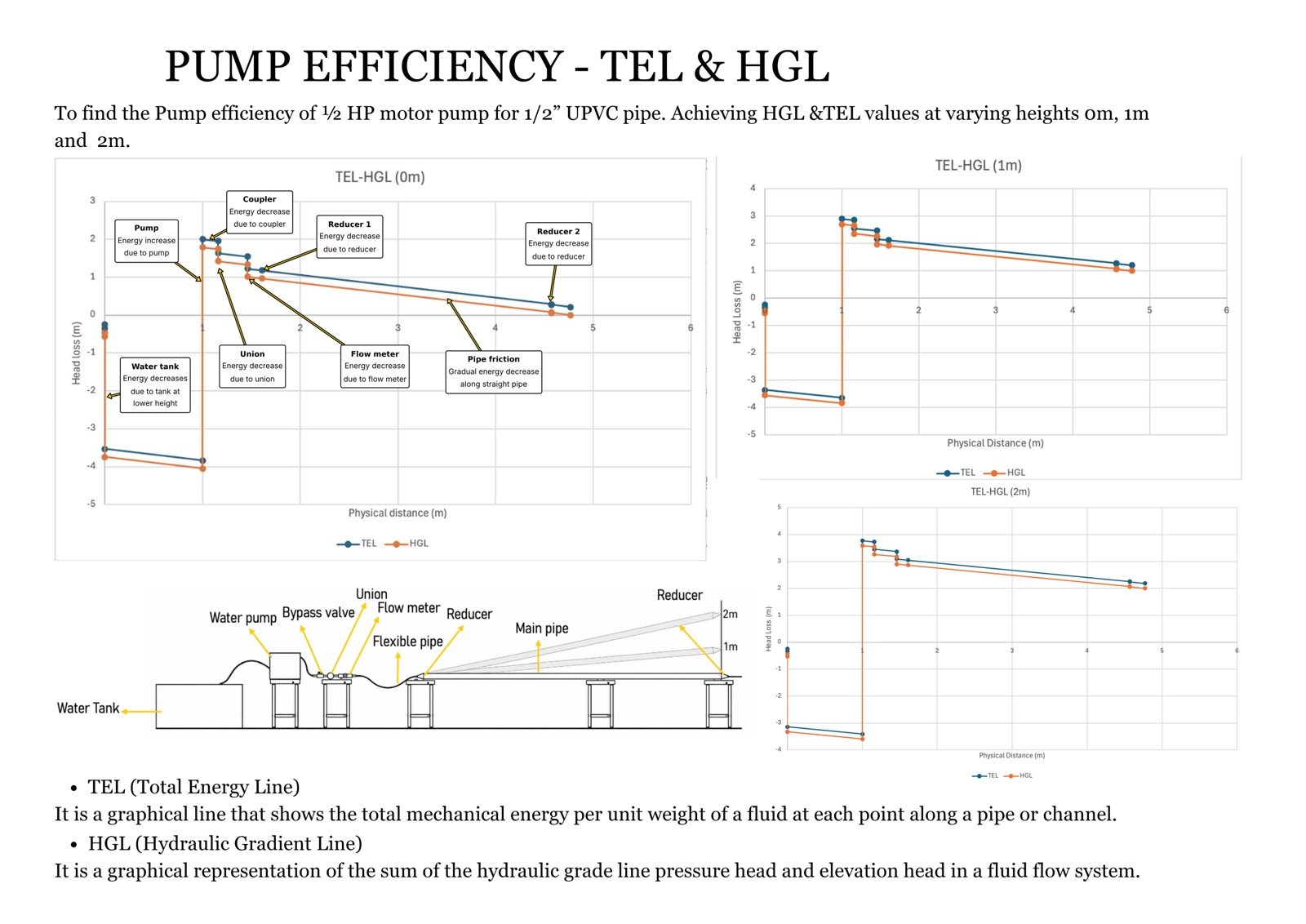
Energy lines plotted at 0 m, 1 m and 2 m show the pump's energy gain and the losses along the pipe.

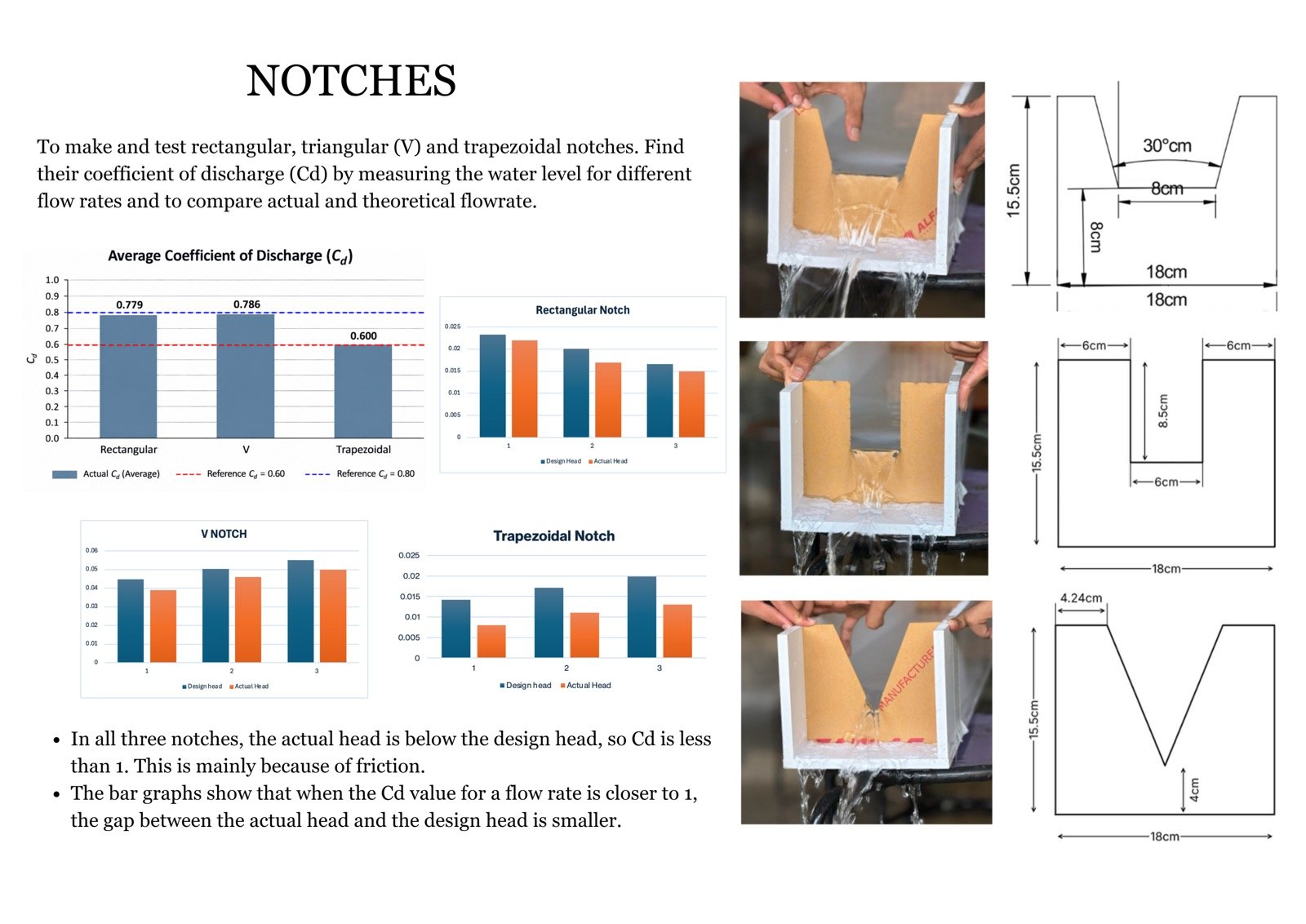
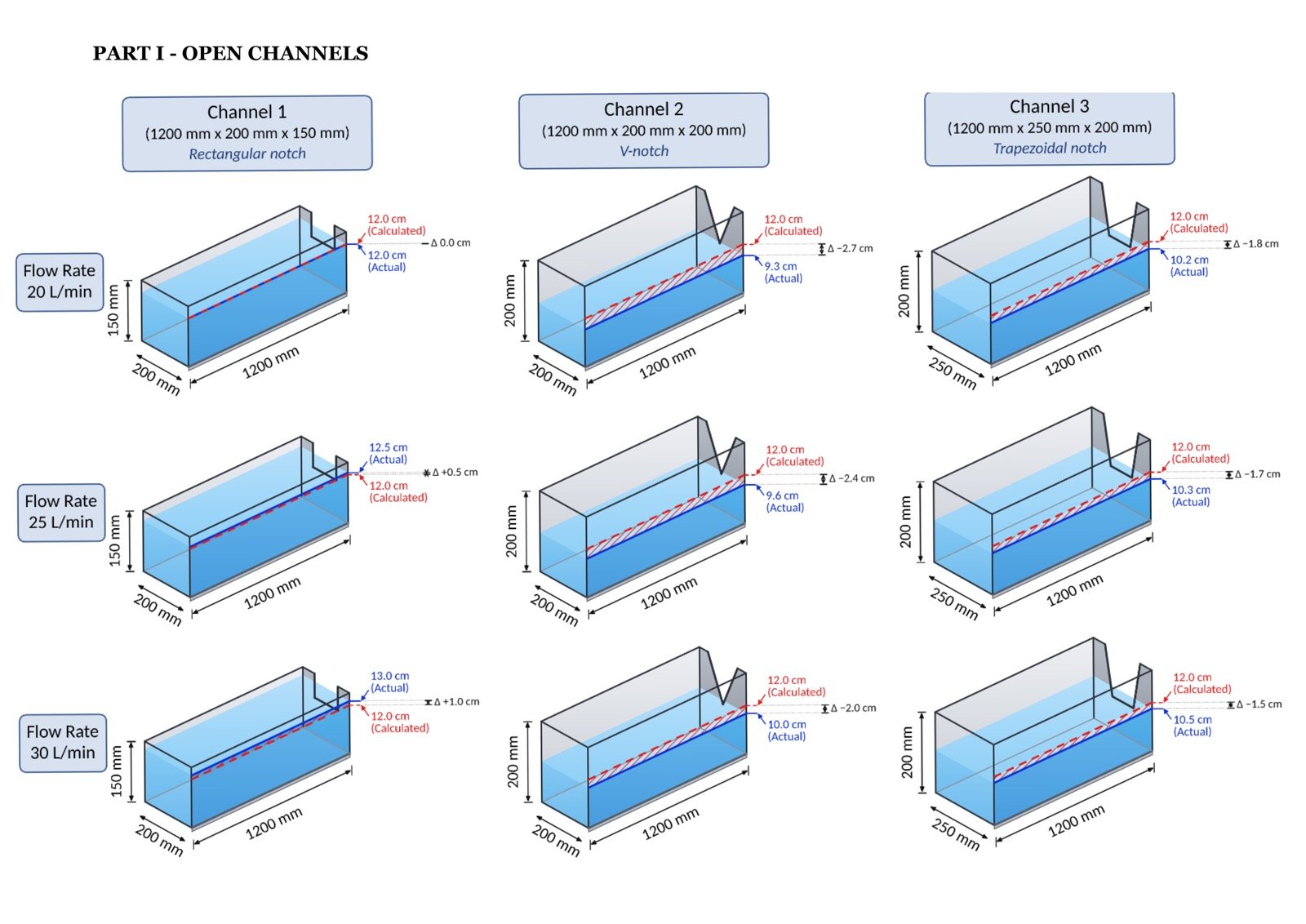
Rectangular, V and trapezoidal notches were tested, giving average Cd values of 0.779, 0.786 and 0.600.

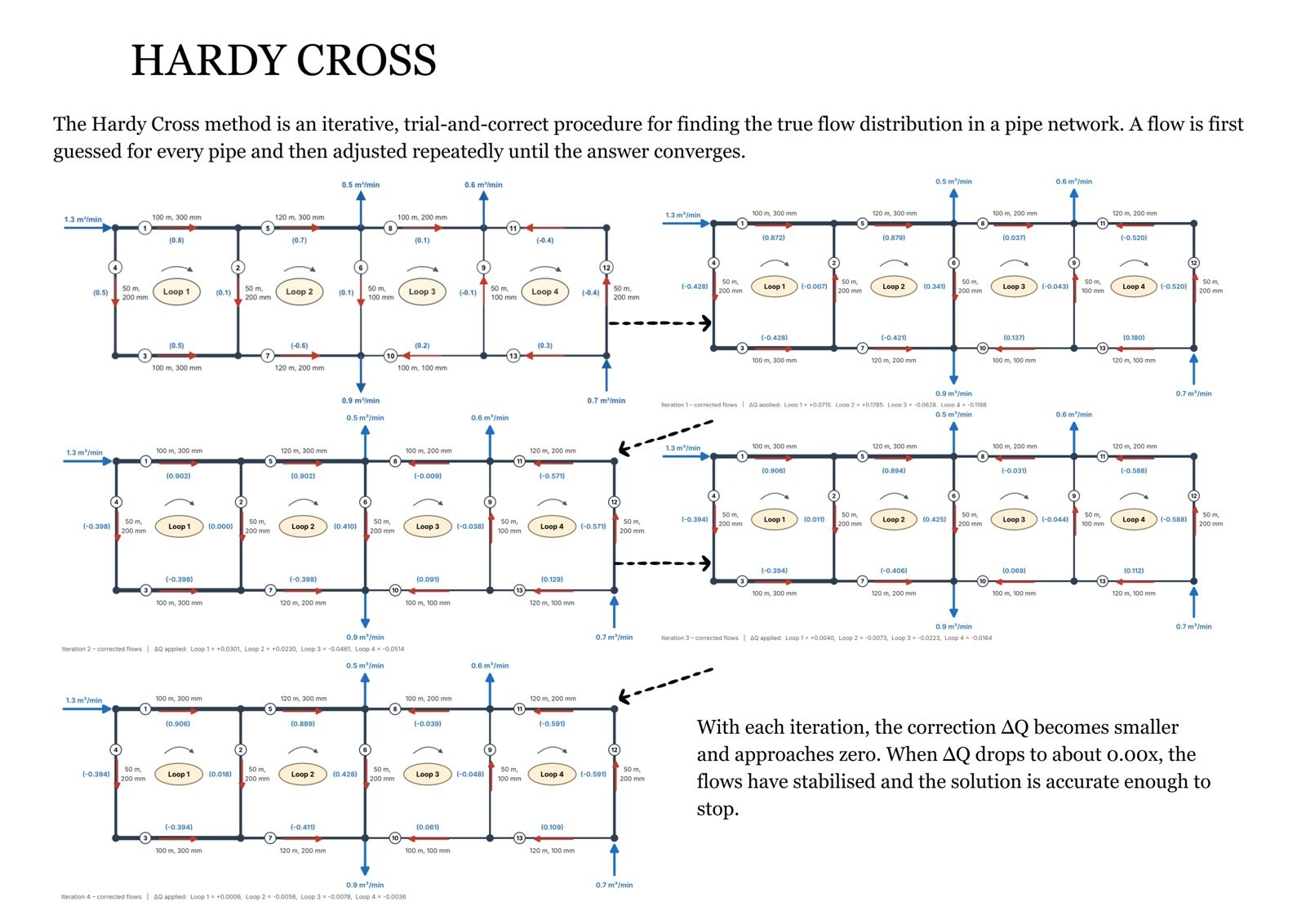
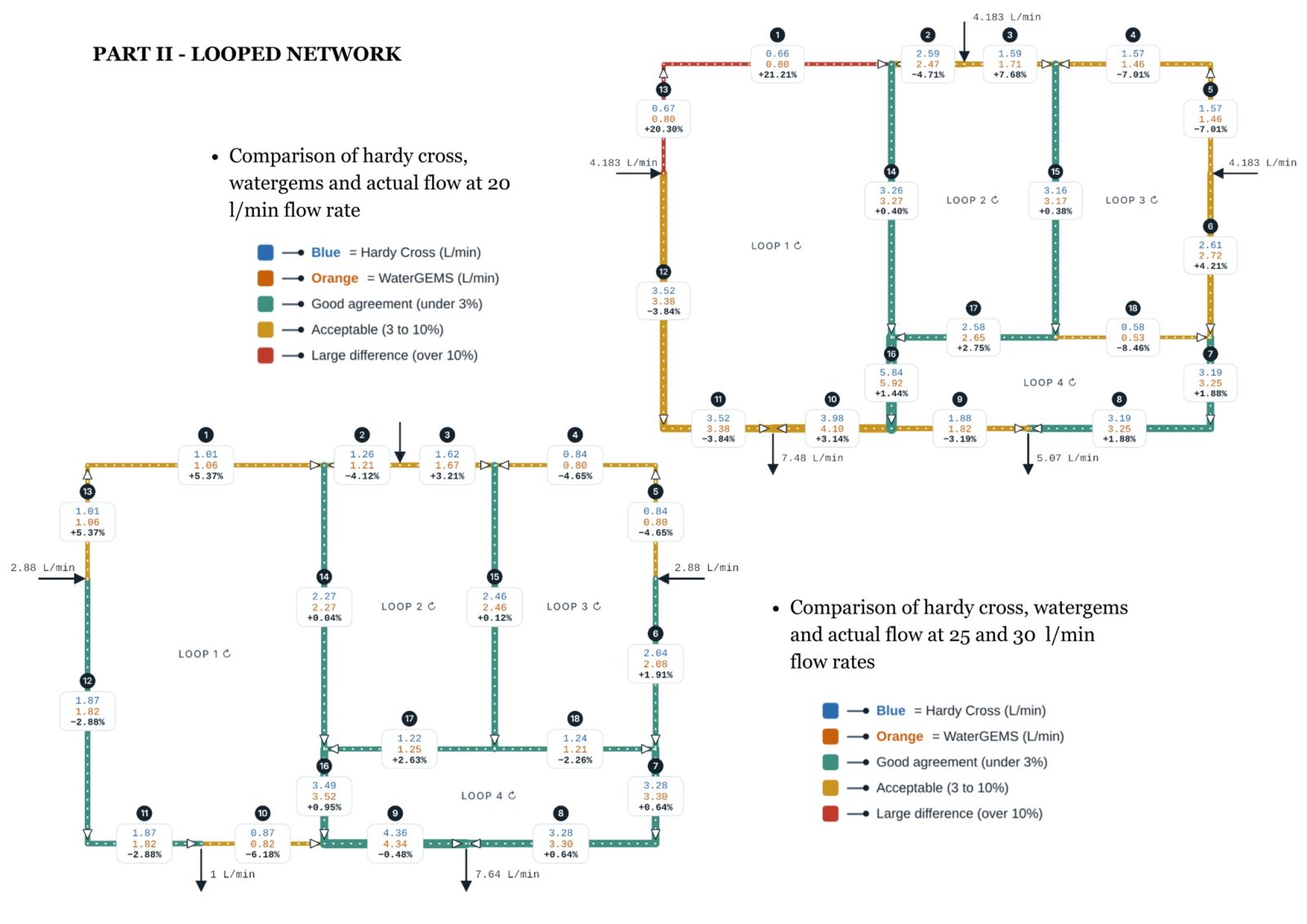
Flow in the pipe loops was corrected iteratively until ?Q approached zero.

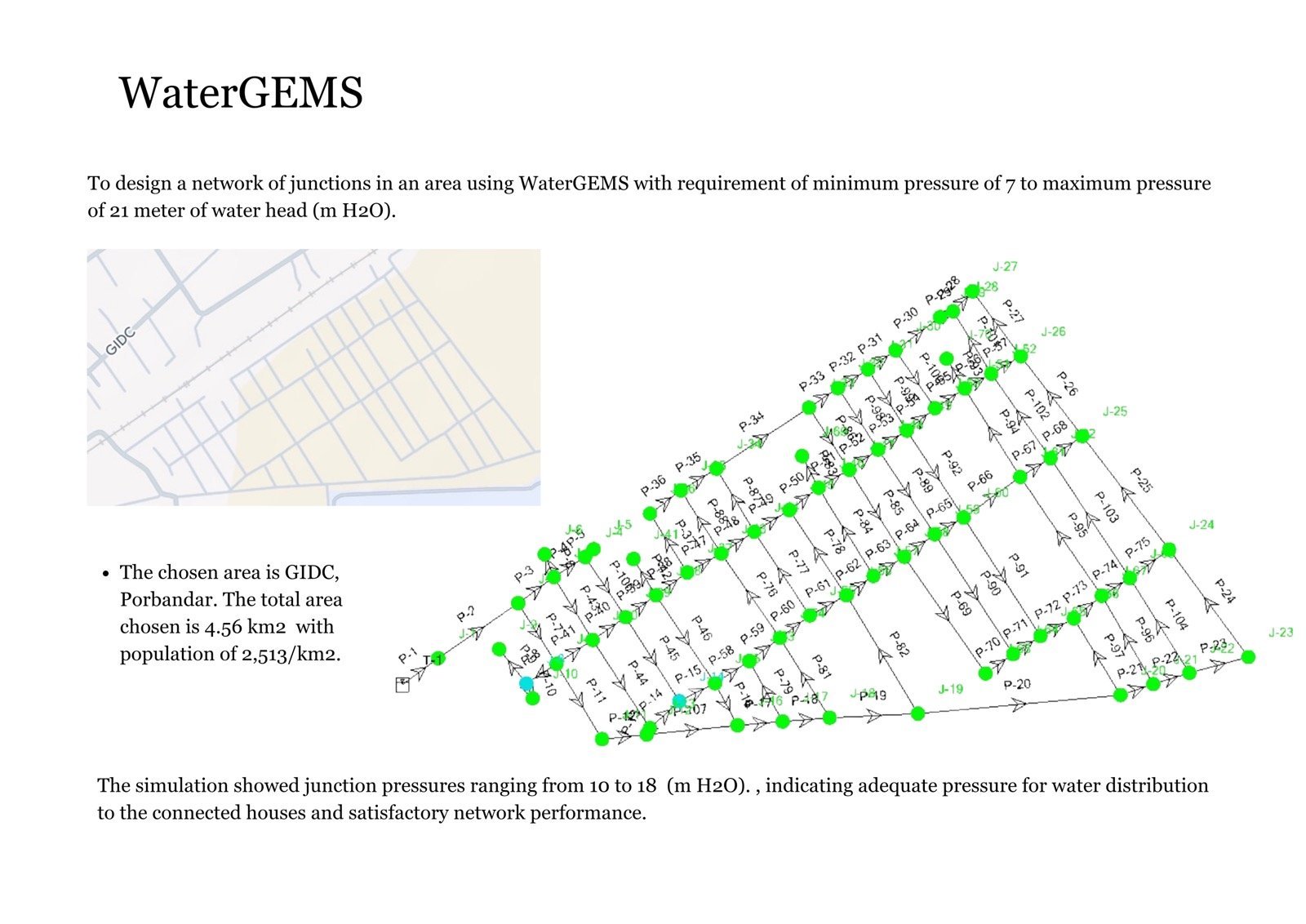
A pipe network for GIDC, Porbandar, gave junction pressures of 10–18 m H?O, within the 7–21 m requirement.

An integrated setup links three notch channels to a looped pipe network, with flowmeters at key points.

Actual and calculated water levels for the three notch channels were compared at 20, 25 and 30 L/min.

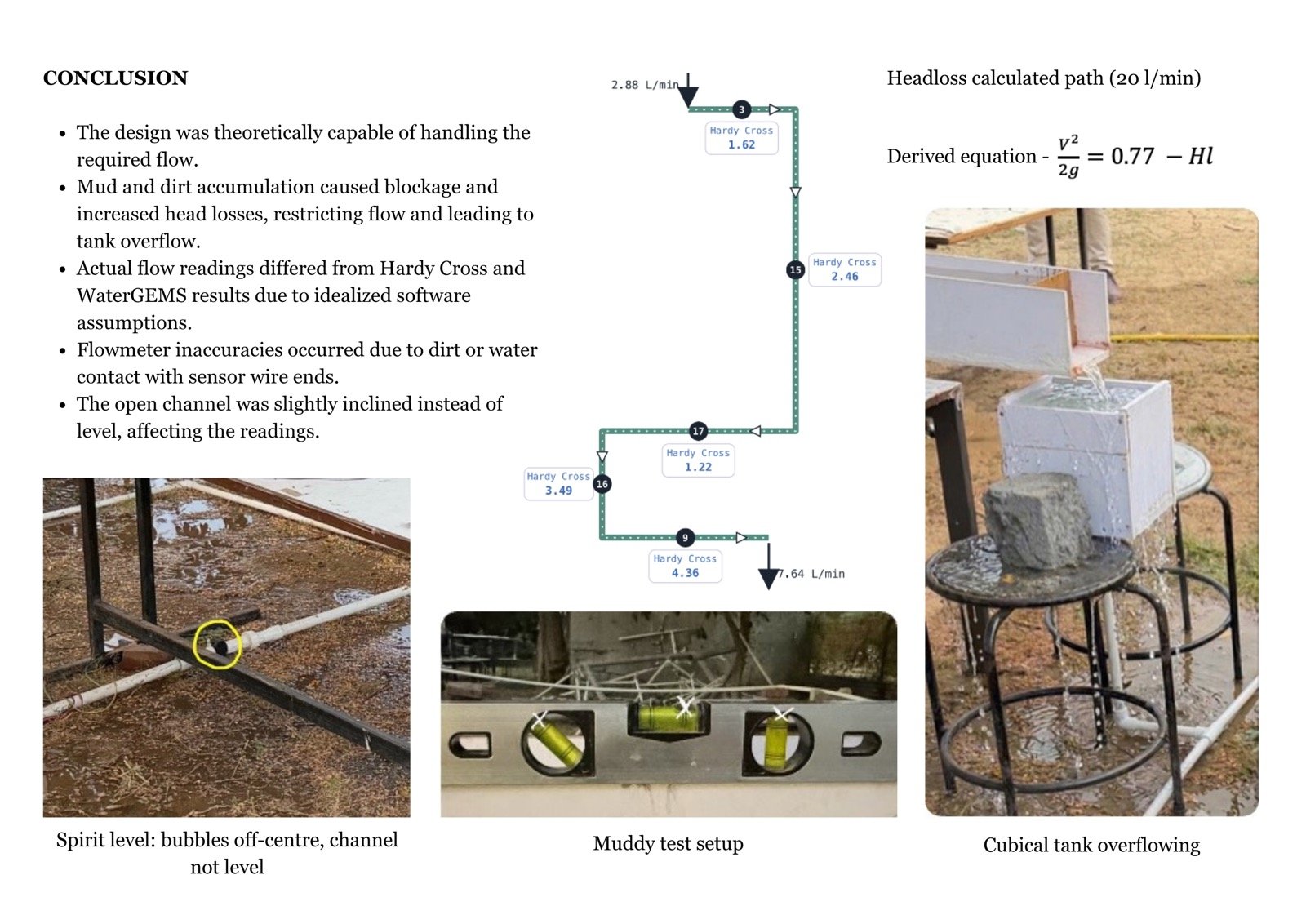
Hardy Cross, WaterGEMS and measured flows were compared, with most pipes agreeing within 10%.

Mud, a tilted channel and ideal-software assumptions explain why real flow differed from the Hardy Cross calculations.