Gupta Barbie Sachin

SD4007-1

Where Structure Becomes Movement

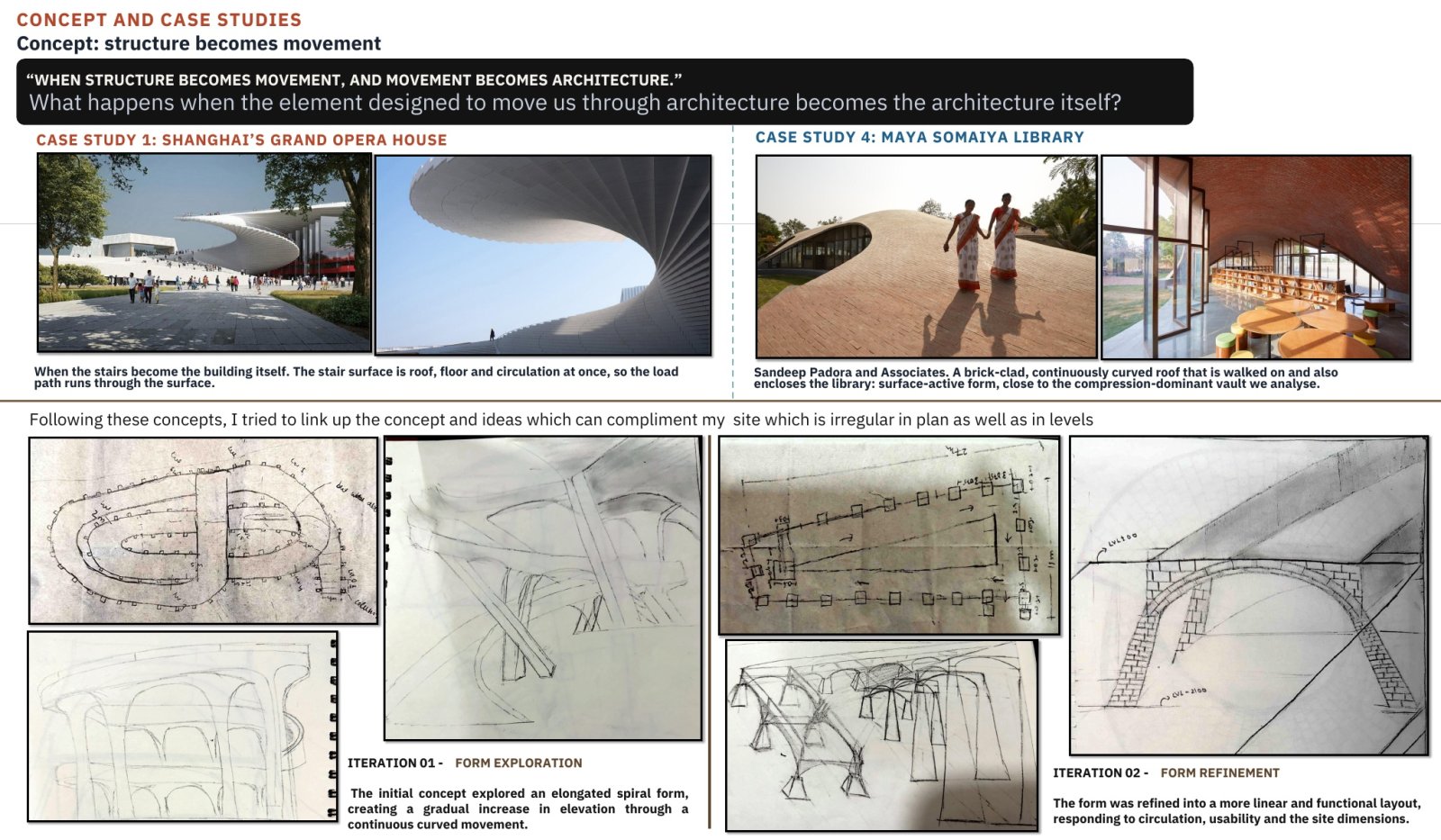
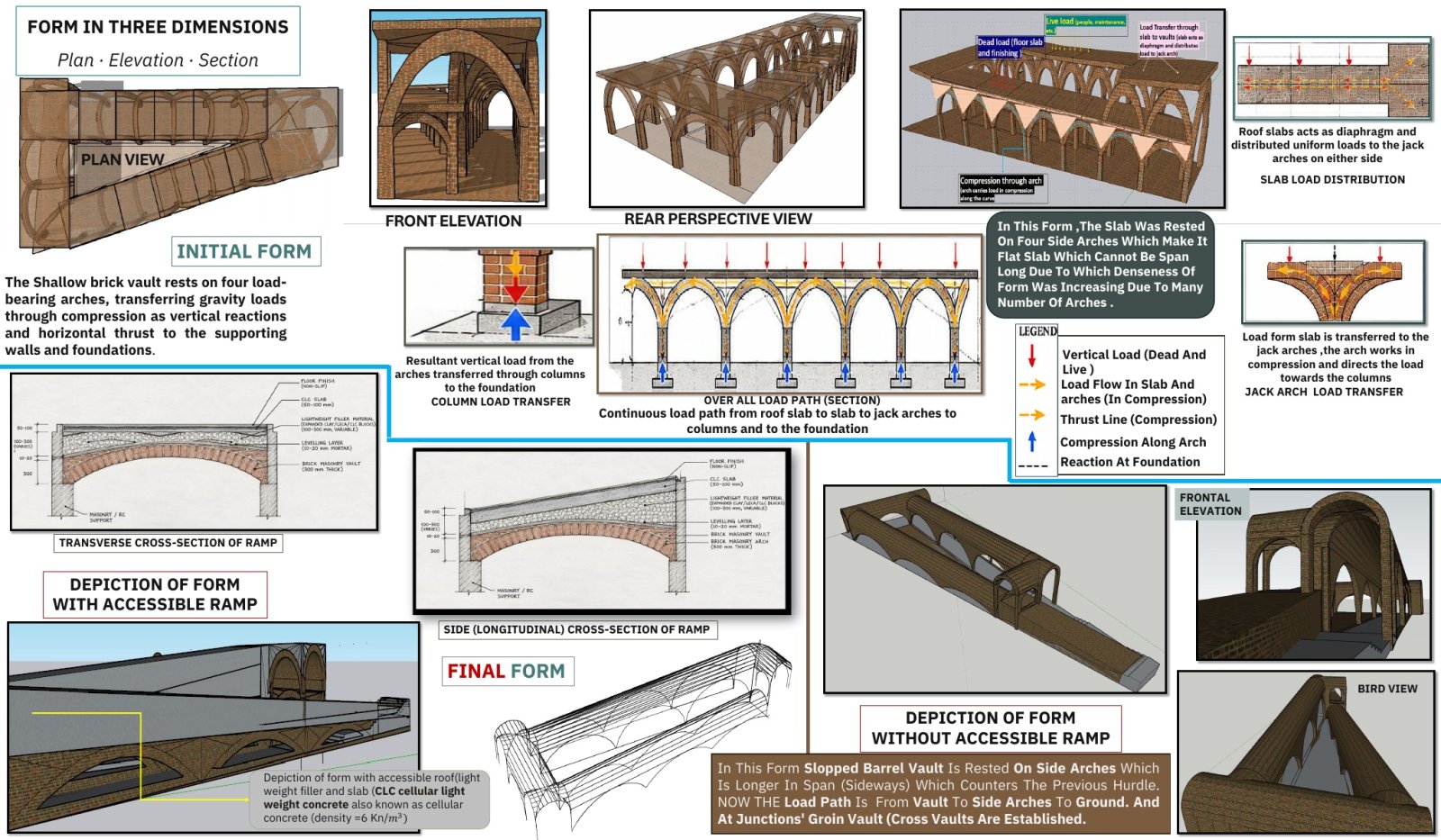
A brick convocation space for CEPT's Workshop Kund area, driven by the idea that structure becomes movement. The form evolved from a spiral into a sloped barrel vault resting on side arches, with an accessible roof that doubles as circulation. STAAD.Pro analysis, verified by hand calculation, tested vault thickness, wall inclination and catenary profiles against IS 1905 masonry limits. Horizontal thrust governed the design, as the side arches failed on their own. Tie rods at springing level, anchored through bearing plates, are proposed, with external buttresses as the alternative.
Report Content

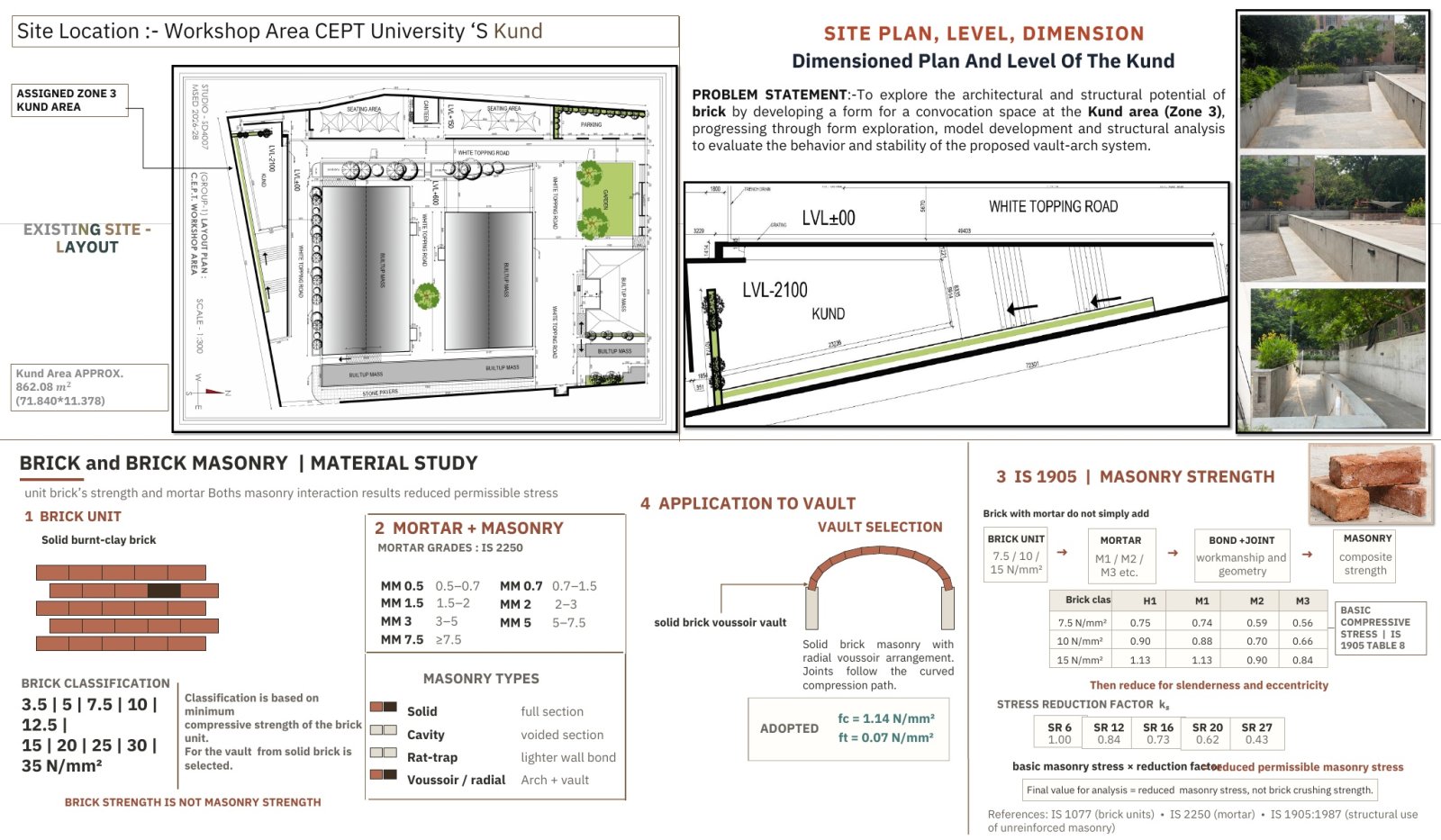
Site, the Kund (Zone 3), and a brick masonry study: from brick unit and mortar to the adopted masonry stresses

"Structure becomes movement": case studies and two form iterations, spiral to linear.

The flat slab on jack arches needed too many arches, so it became a sloped barrel vault on longer side arches. The vault is 300 mm thick brick masonry, with lightweight CLC filler and a slab above for the accessible ramp.

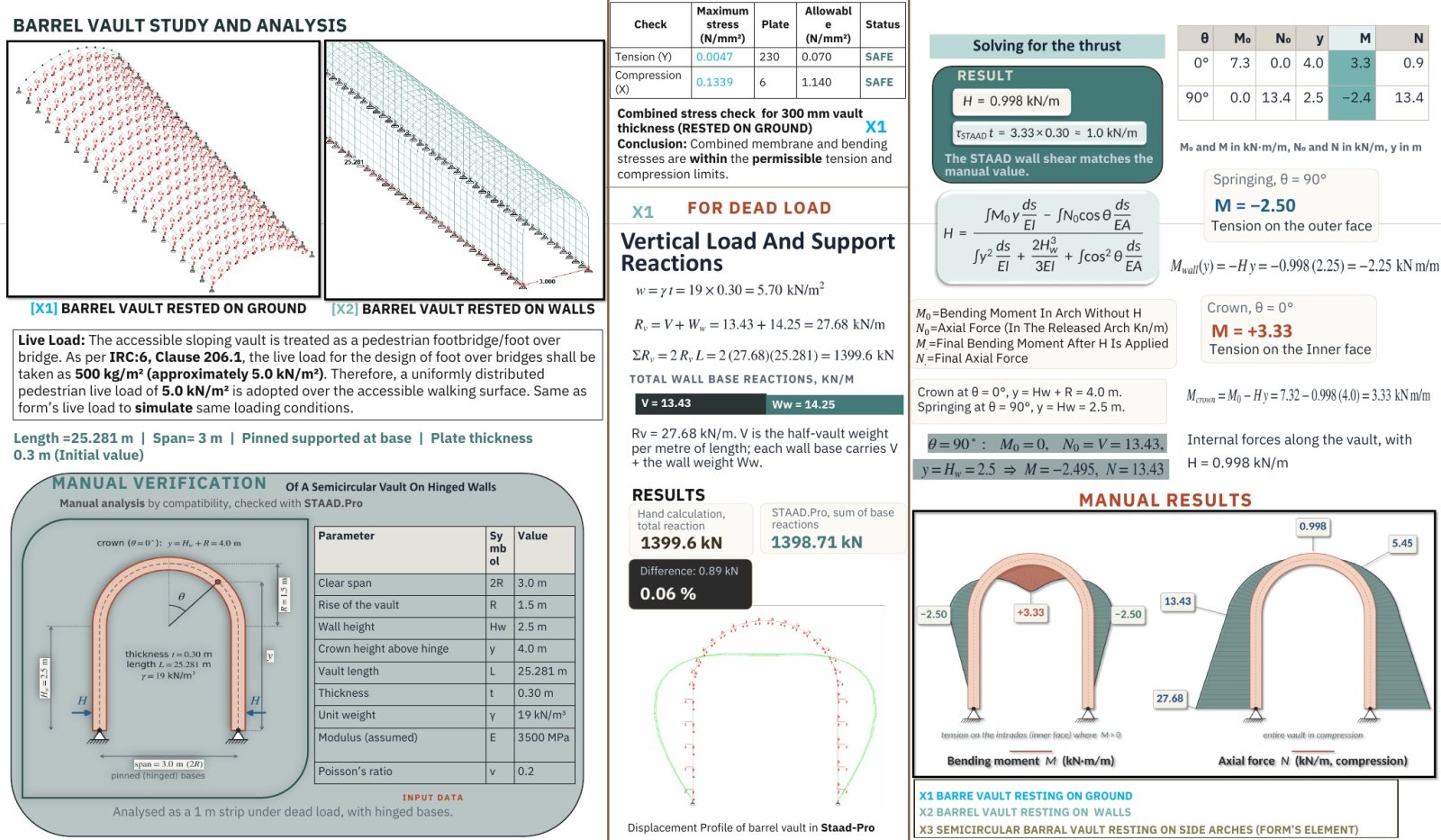
X1 (vault on ground) passes at 0.3 m, since the ground resists the thrust. X2 (vault on walls) fails in tension because the walls must resist it, so it needs about 1 m thickness. Our form, X3 (vault on side arches), behaves like X2 with openings, so it has to be checked next.

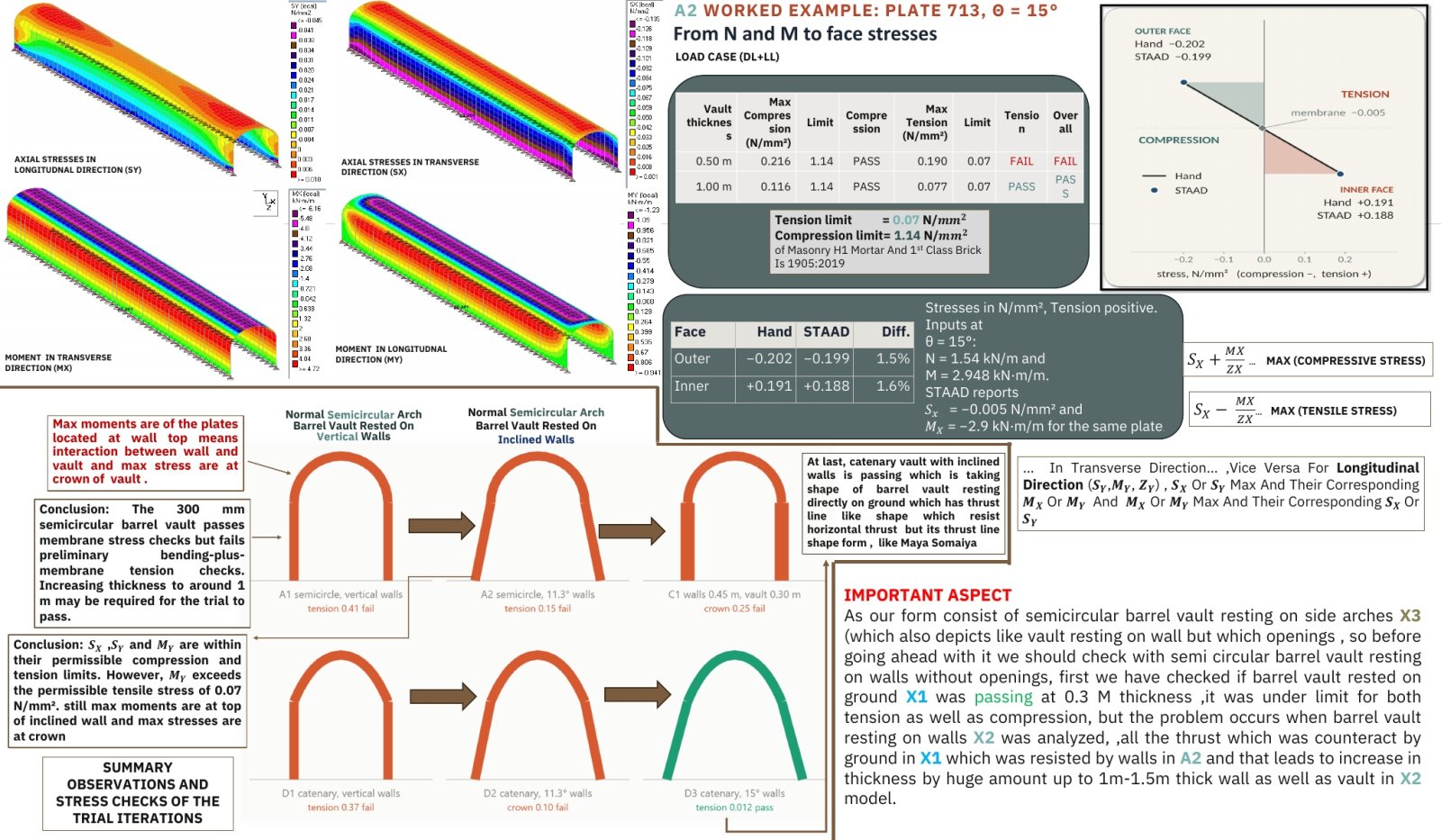
Vault on walls: the thrust problem, and how inclined walls and a catenary profile improve tension.

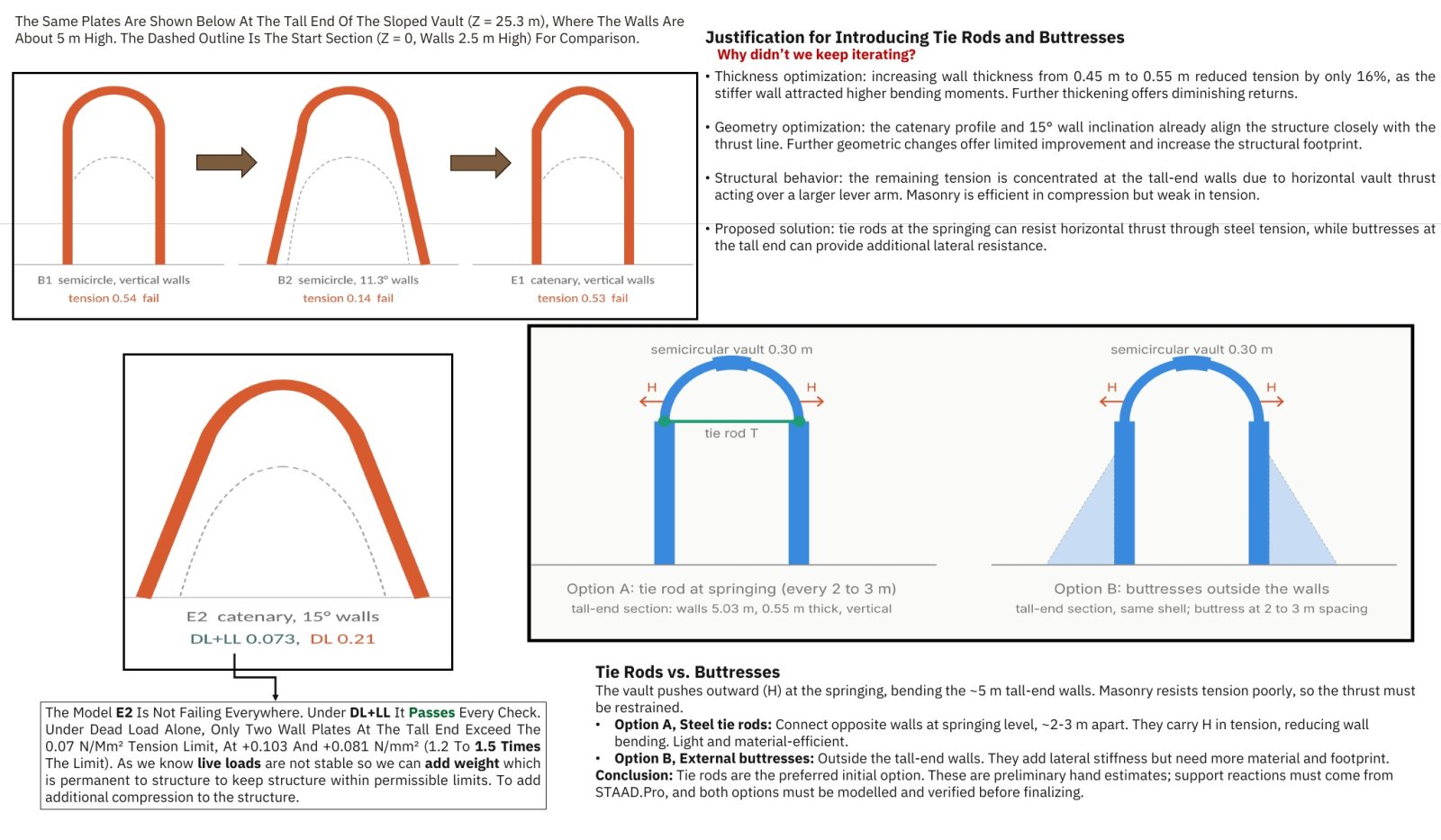
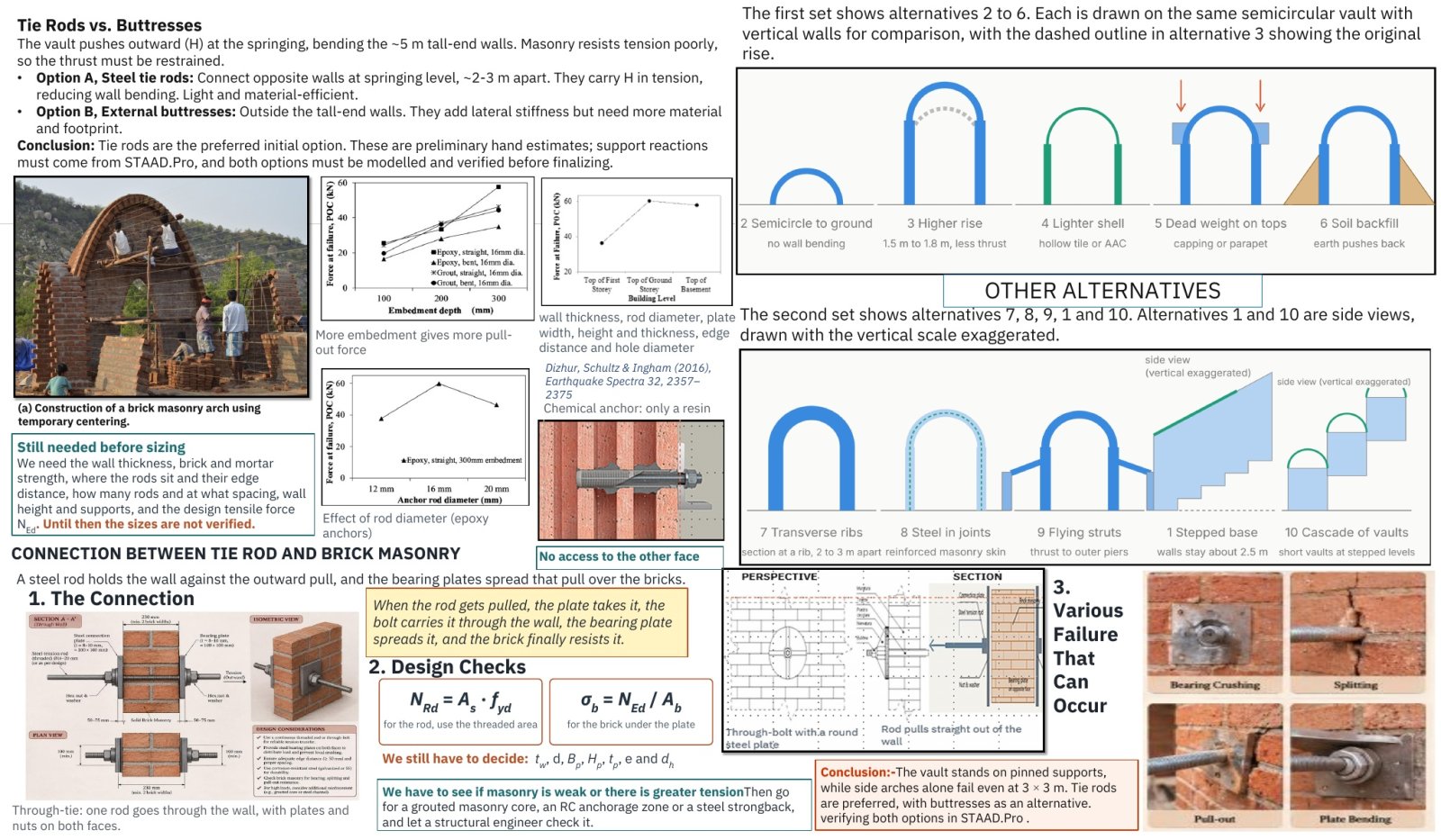
For the semicircular vault, tie rods or buttresses resist the thrust at the tall end.

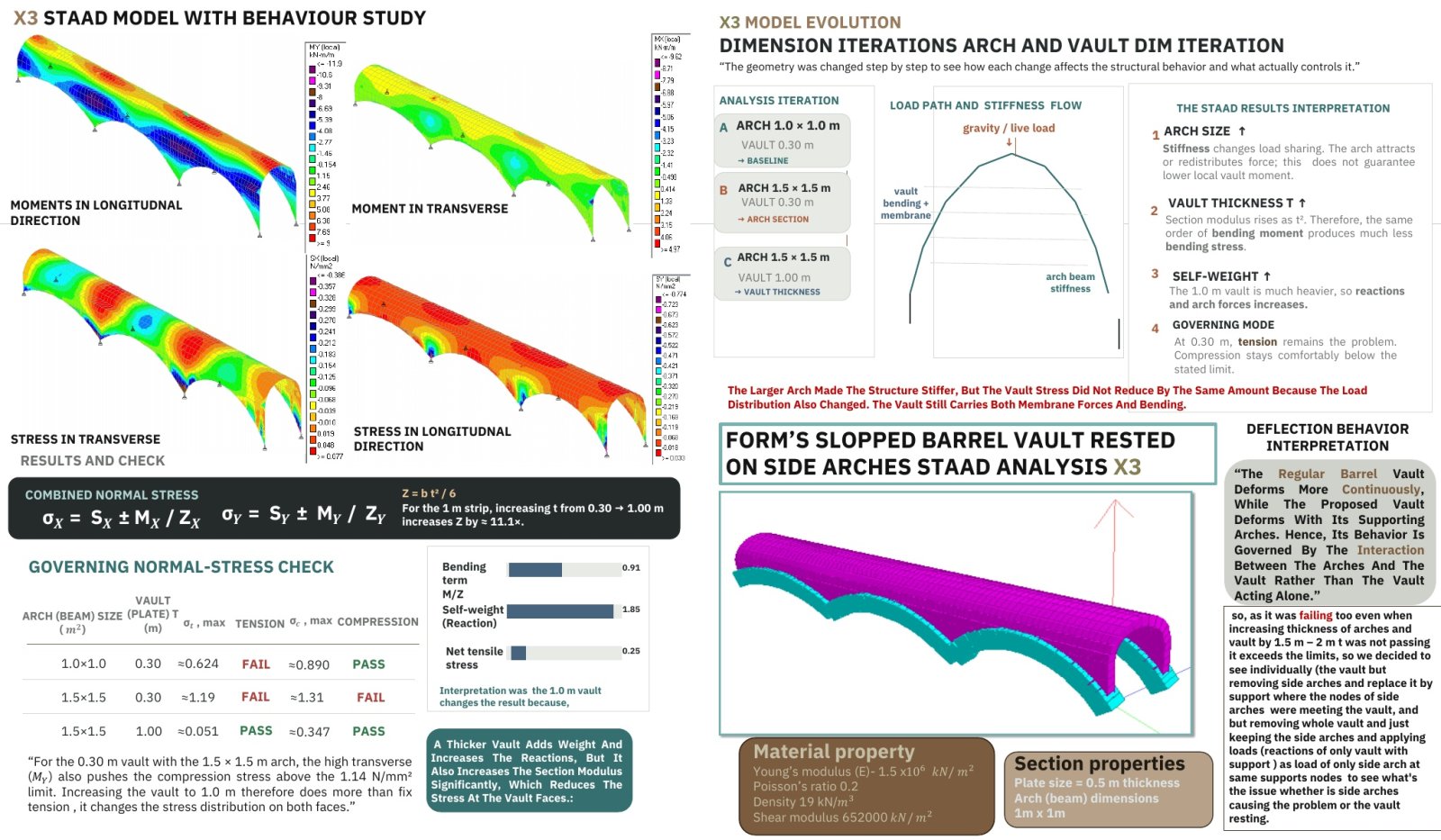
Vault on side arches, where a thicker vault passes but the arches stay critical.

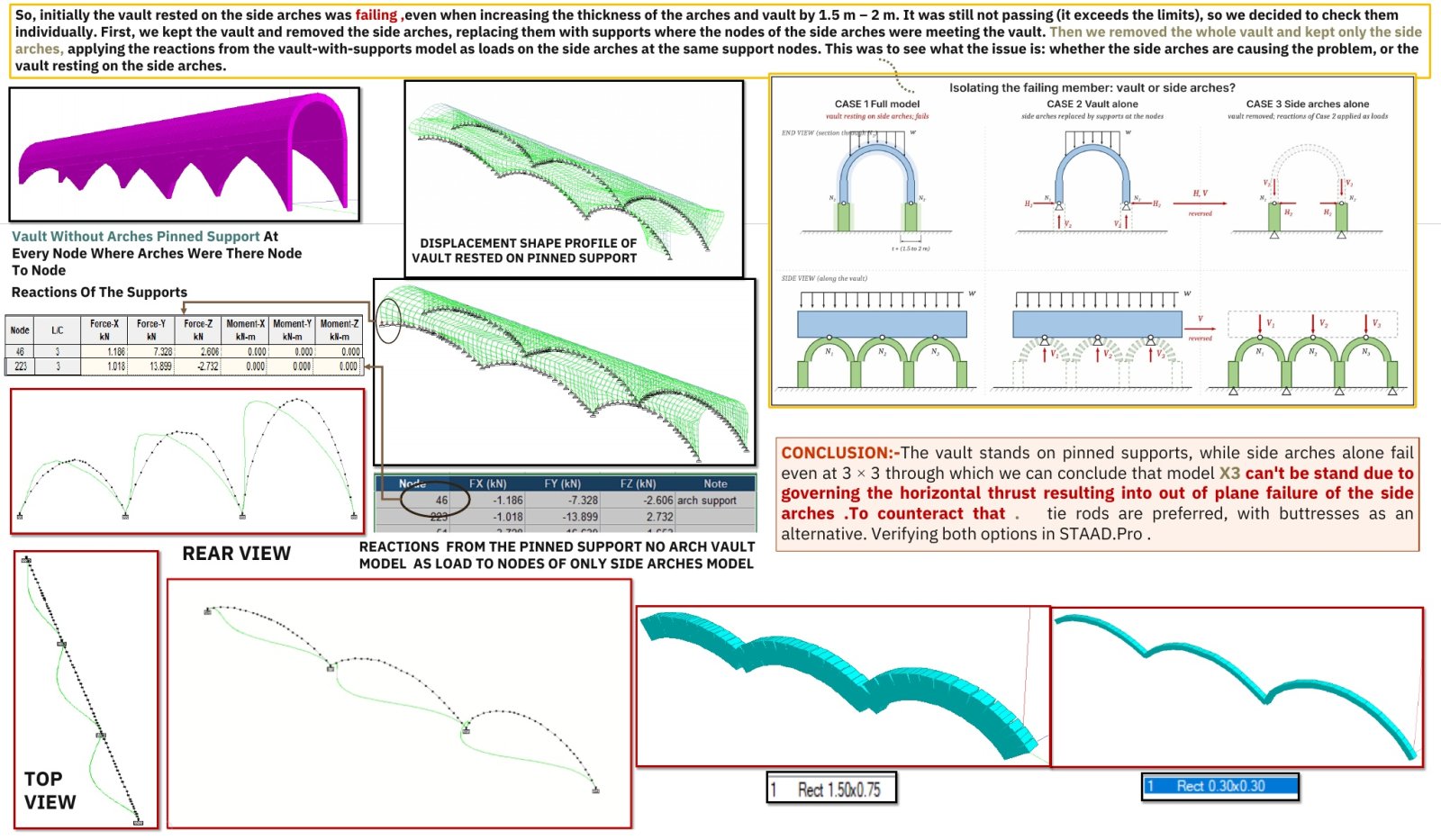
The vault alone stands on pinned supports at the arch nodes, but the side arches alone fail even higher thickness under the vault's reactions. Horizontal thrust causes out-of-plane failure of the side arches, so X3 needs tie rods or buttresses.

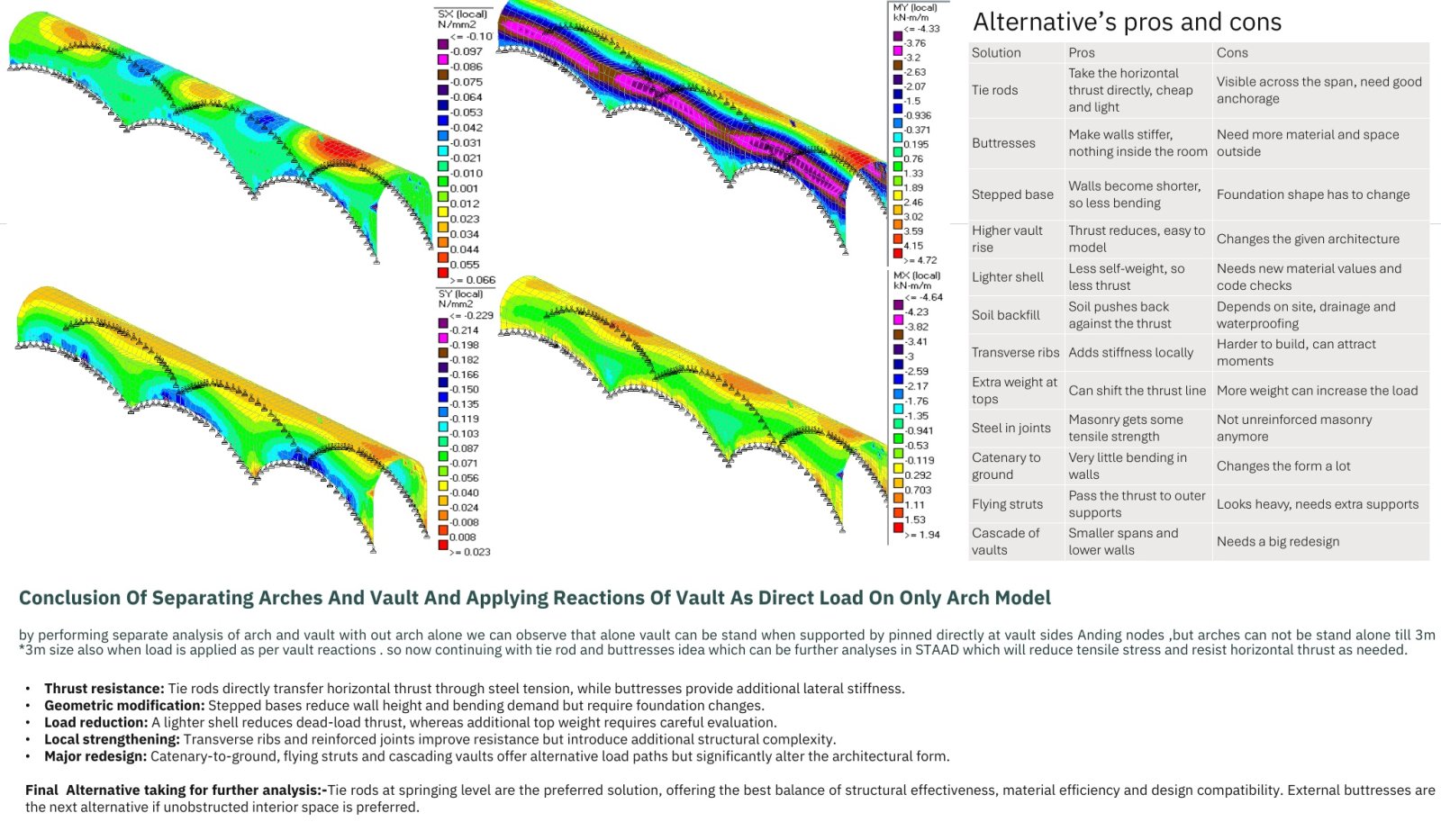
Alternate options for resisting thrust (tie rods, buttresses, stepped base, higher rise, lighter shell and others) were compared on pros and cons. Tie rods at springing level are taken forward, with external buttresses as the next option.

A tie rod is only as strong as its anchorage. Bearing plates must spread the pull into the brick without crushing, splitting or pull-out.