• Home
  • FT
  • CT3023
  • Conservation and Retrofitting of the Ahmedabad Fort Wall

Vatsal Denishbhai Thacker

CT3023

Conservation and Retrofitting of the Ahmedabad Fort Wall

Two surviving segments of Ahmedabad's 15th-century city wall, studied from site to retrofit. I documented both walls, mapped their damage and rated the masonry with the MQI method. I then checked their stability under ten loading conditions to IS 14458. Wall 1 stands free and is stable, so it needs masonry repair only. Wall 2 retains the ground under G+3 and G+4 apartments and failed every condition. Lime repointing, drainage and nine grouted soil nails per metre bring it within code limits without hiding the old brick face. A lab test on a glass-fibre mortar jacket completes the study.
Report Content

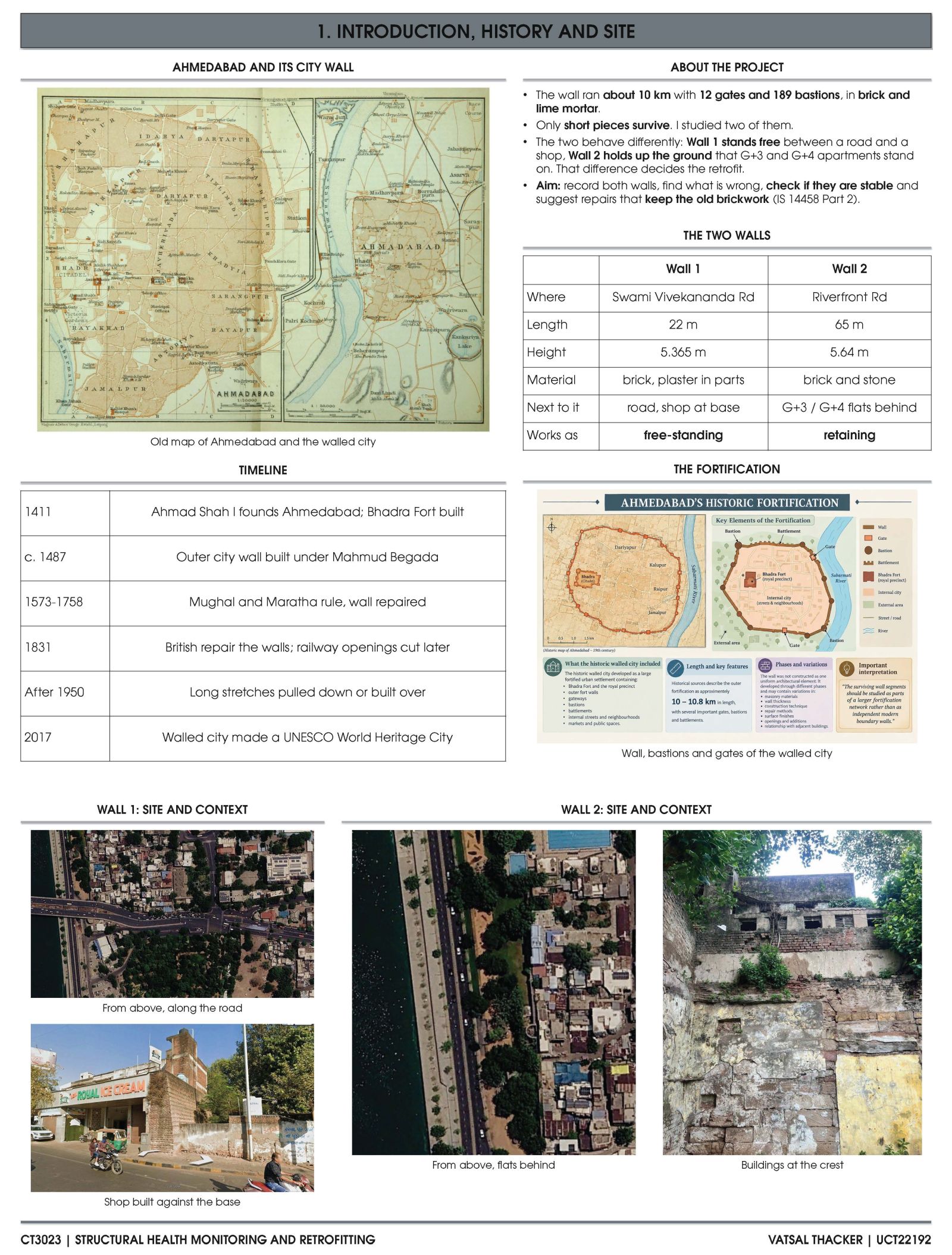
01 Ahmedabad's 15th-century brick city wall survives only in fragments. I studied two: free-standing Wall 1 (22 m) and Wall 2 (65 m), which retains ground under apartments.

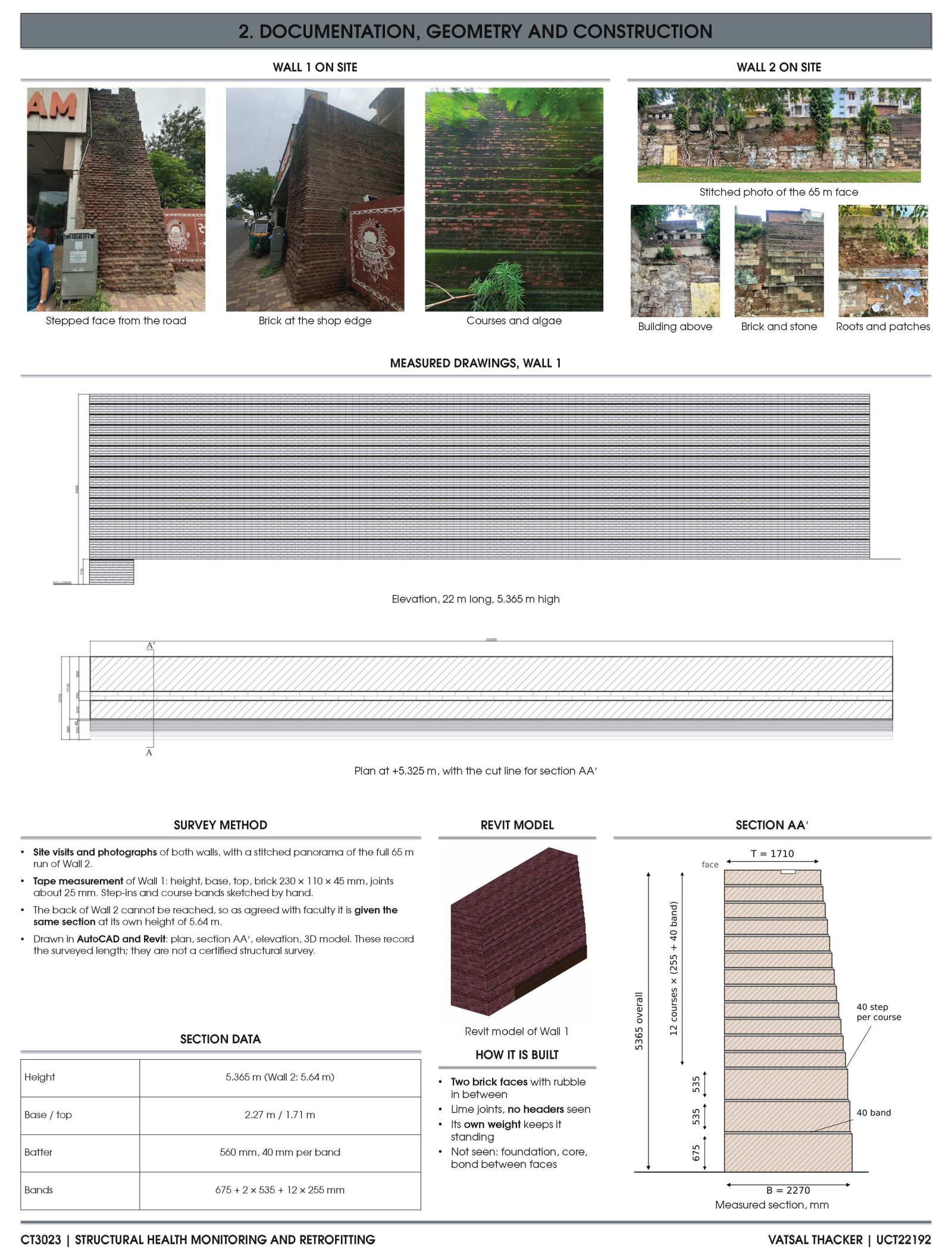
02 Both walls documented by site survey, photos and panorama. Wall 1 was tape-measured and drawn in AutoCAD and Revit. Its section tapers from 2.27 m to 1.71 m.

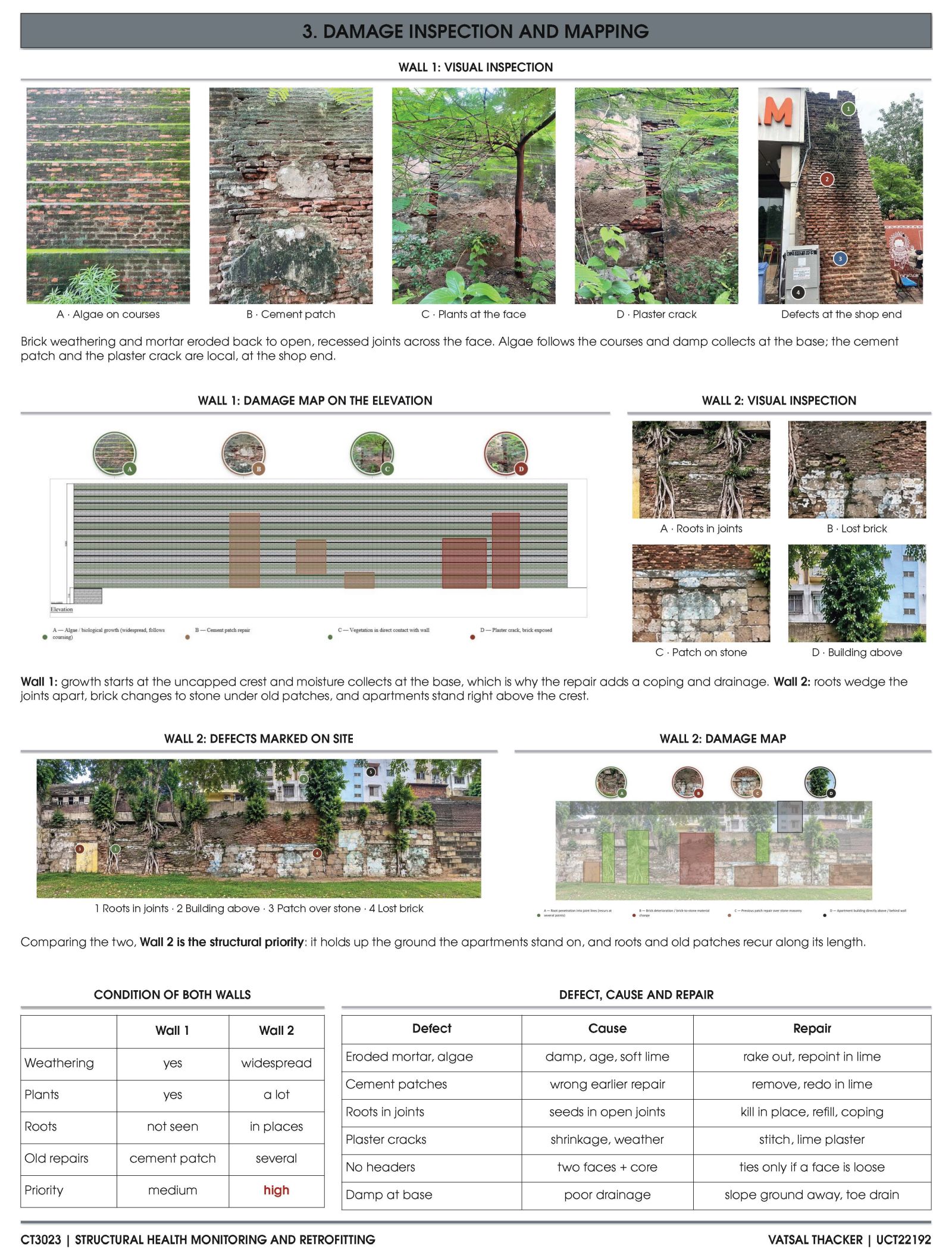
03 Damage mapped on both elevations: algae, eroded joints, cracks and patches on Wall 1, and roots, lost bricks and apartments above the crest on Wall 2.

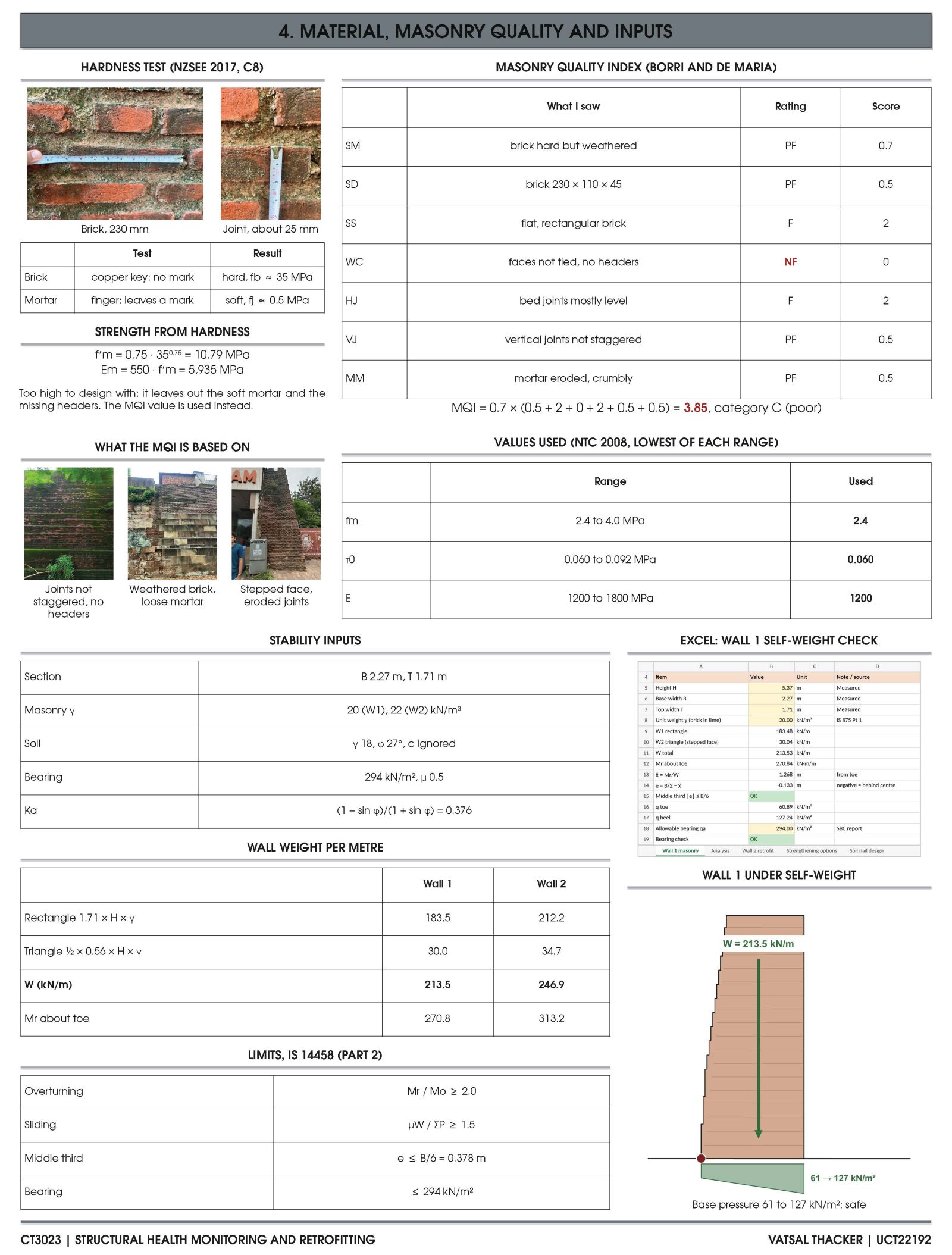
04 Scratch tests show hard brick and soft lime mortar. MQI 3.85 (category C, poor), so I adopted the lowest NTC 2008 values for design.

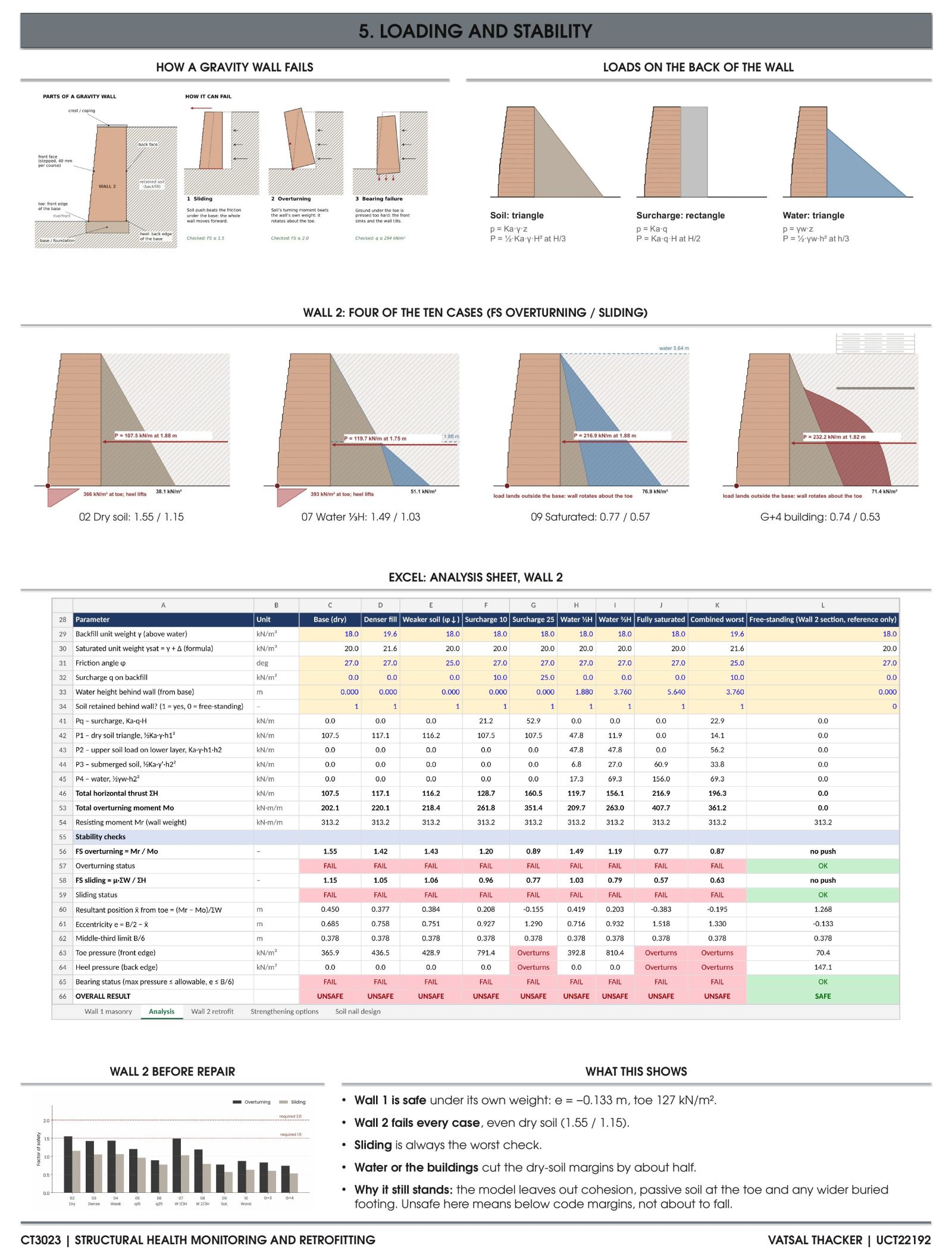
05 Stability checked to IS 14458 under ten loading conditions. Wall 1 is safe. Wall 2 fails every case, with sliding the weakest check.

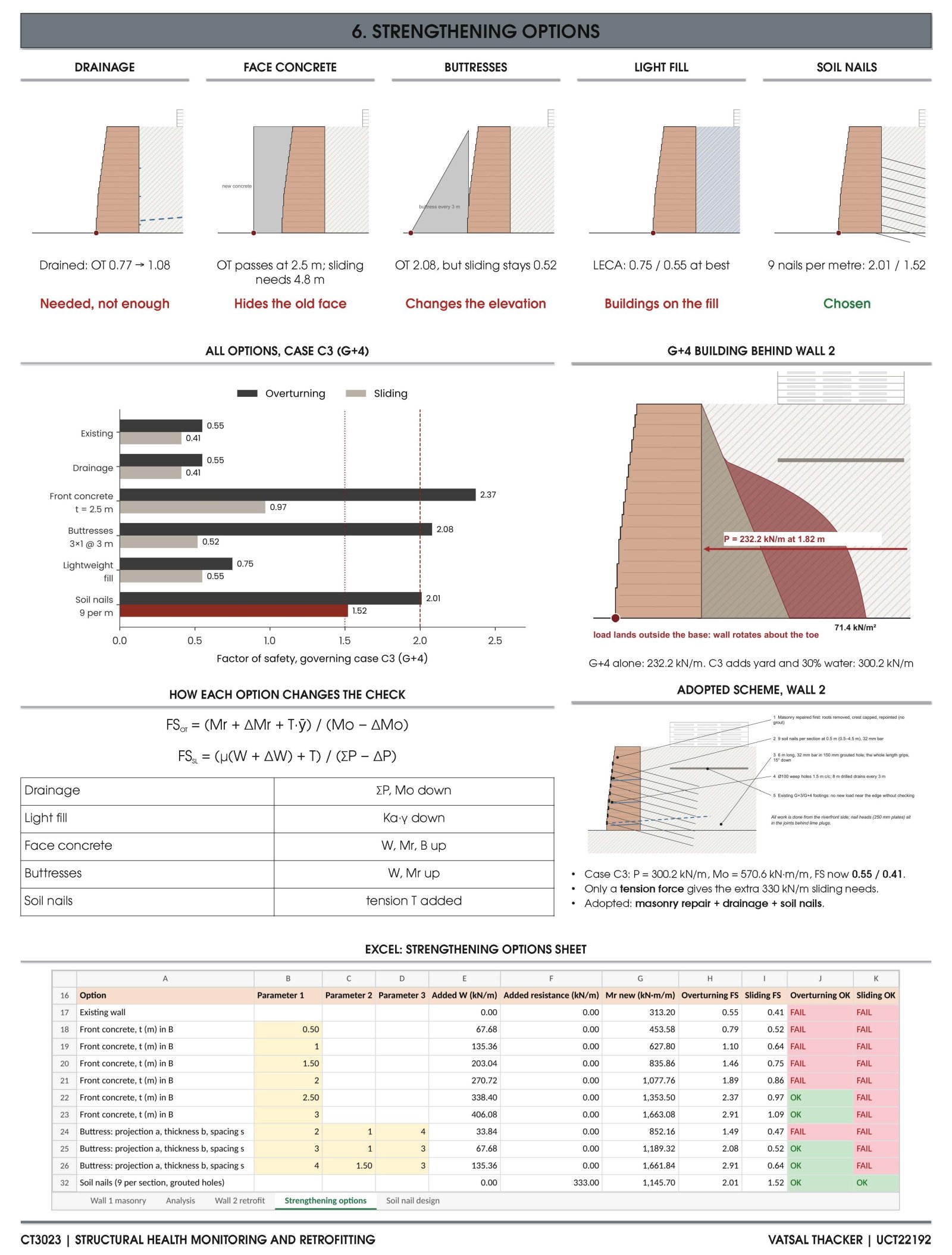
06 Five strengthening options compared on the governing case. Only a tension force fixes sliding, so I adopted masonry repair, drainage and soil nails.

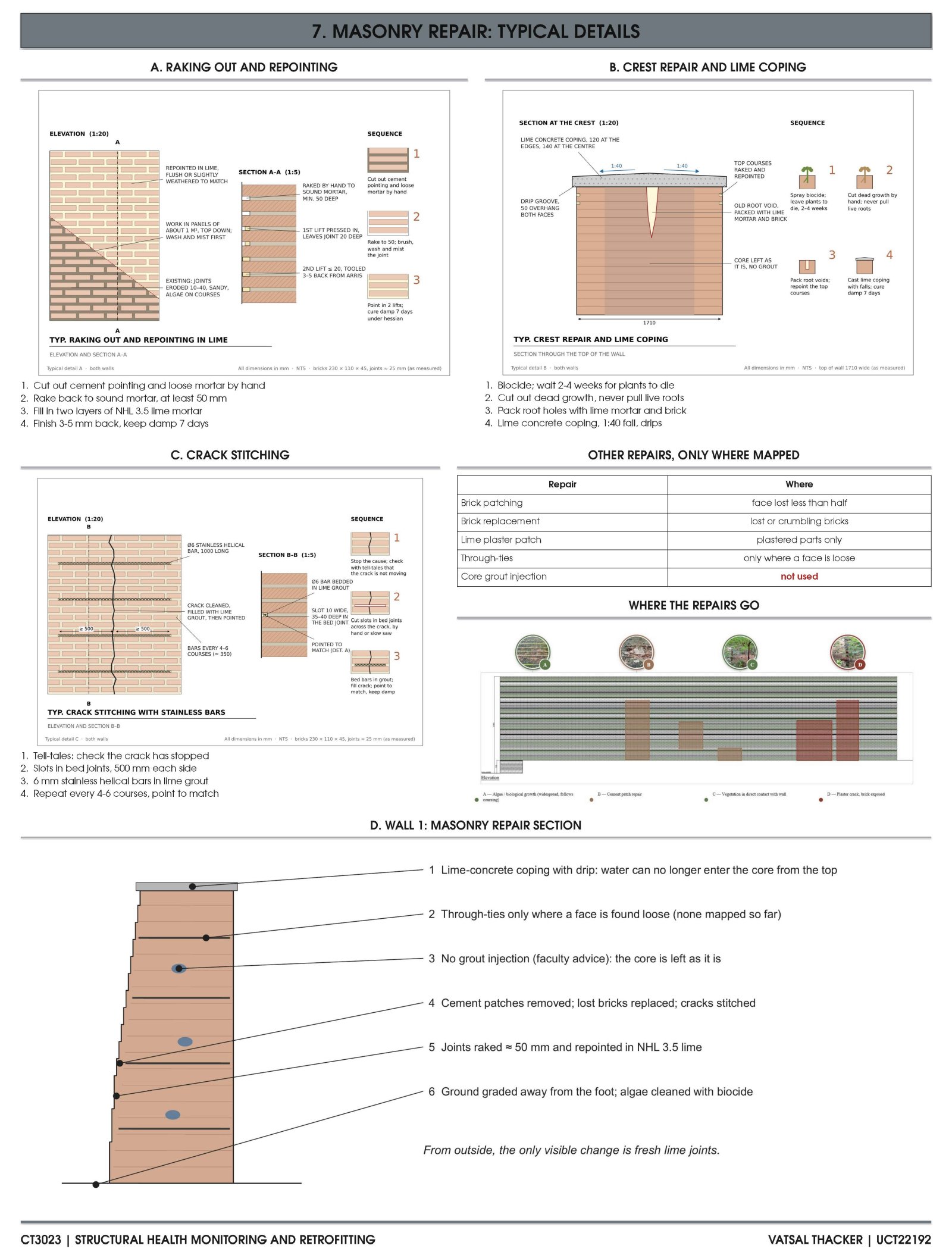
07 Repair details matched to the damage maps: NHL 3.5 lime repointing, lime-concrete crest coping and helical bar crack stitching. Only fresh lime joints show.

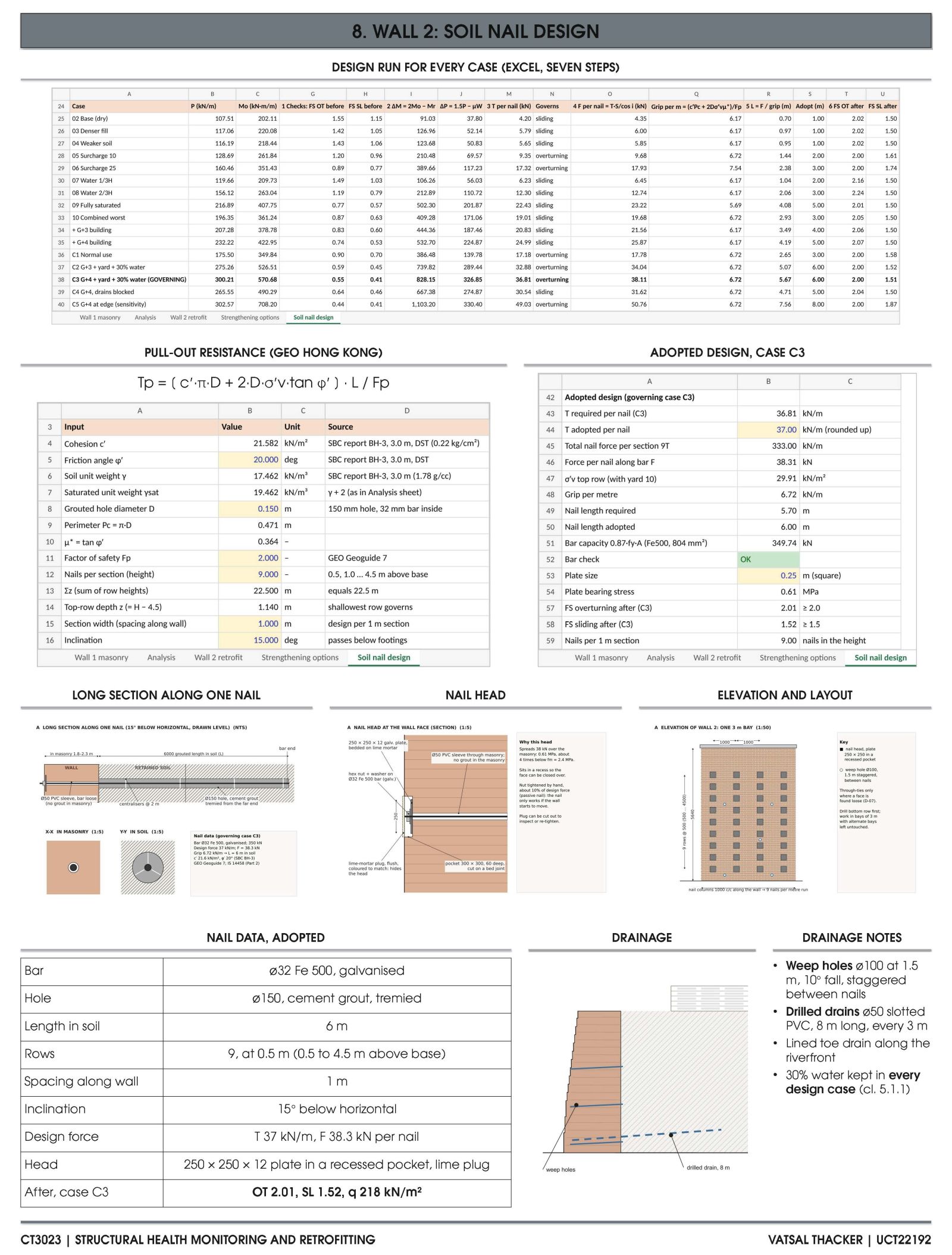
08 Soil nails designed in Excel: nine ø32 galvanised bars per metre, 6 m long at 15°, in grouted holes, with weep holes and drains.

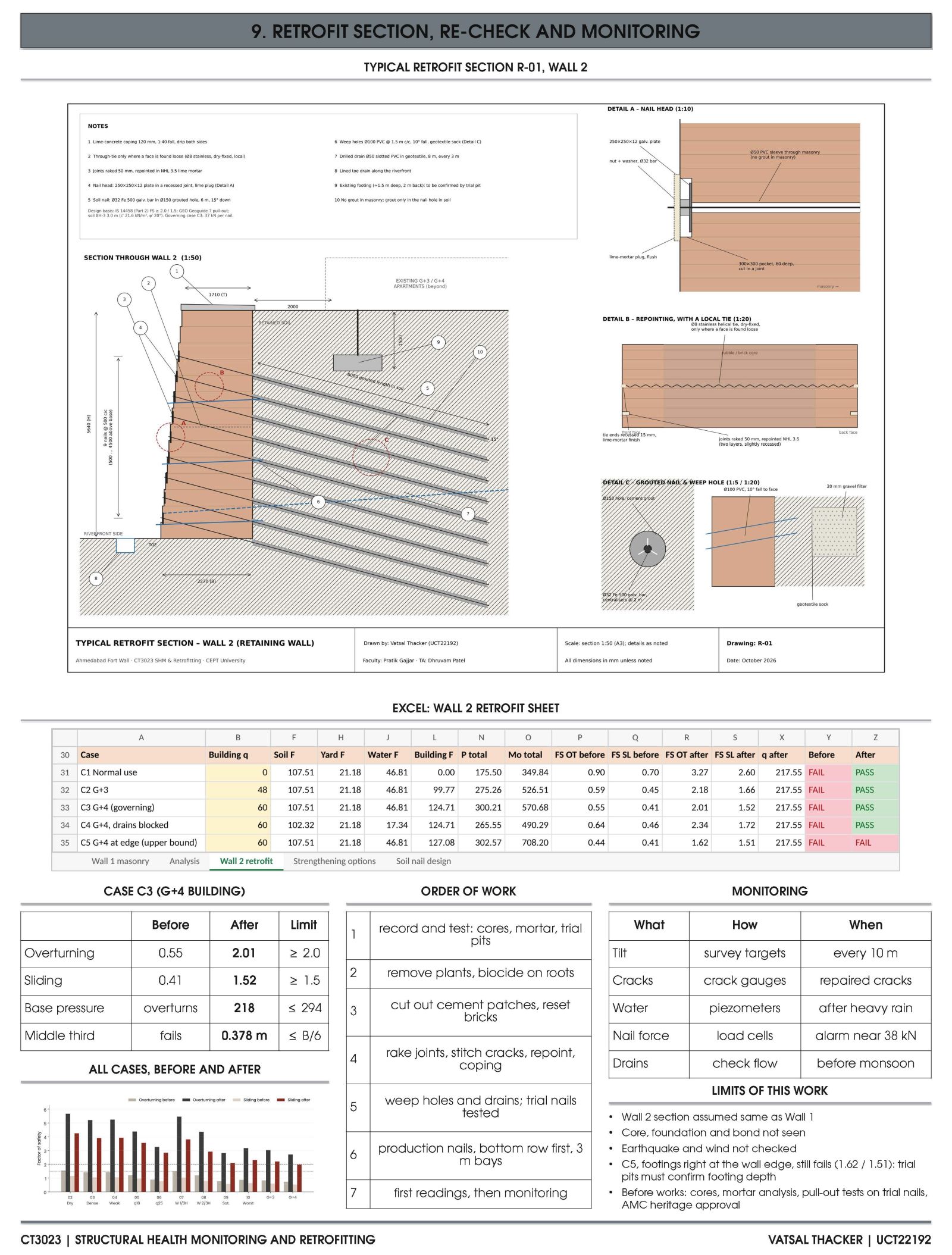
09 Retrofit section R-01: on the governing case, overturning rises from 0.55 to 2.01 and sliding from 0.41 to 1.52. All ten conditions now pass. Monitoring follows.

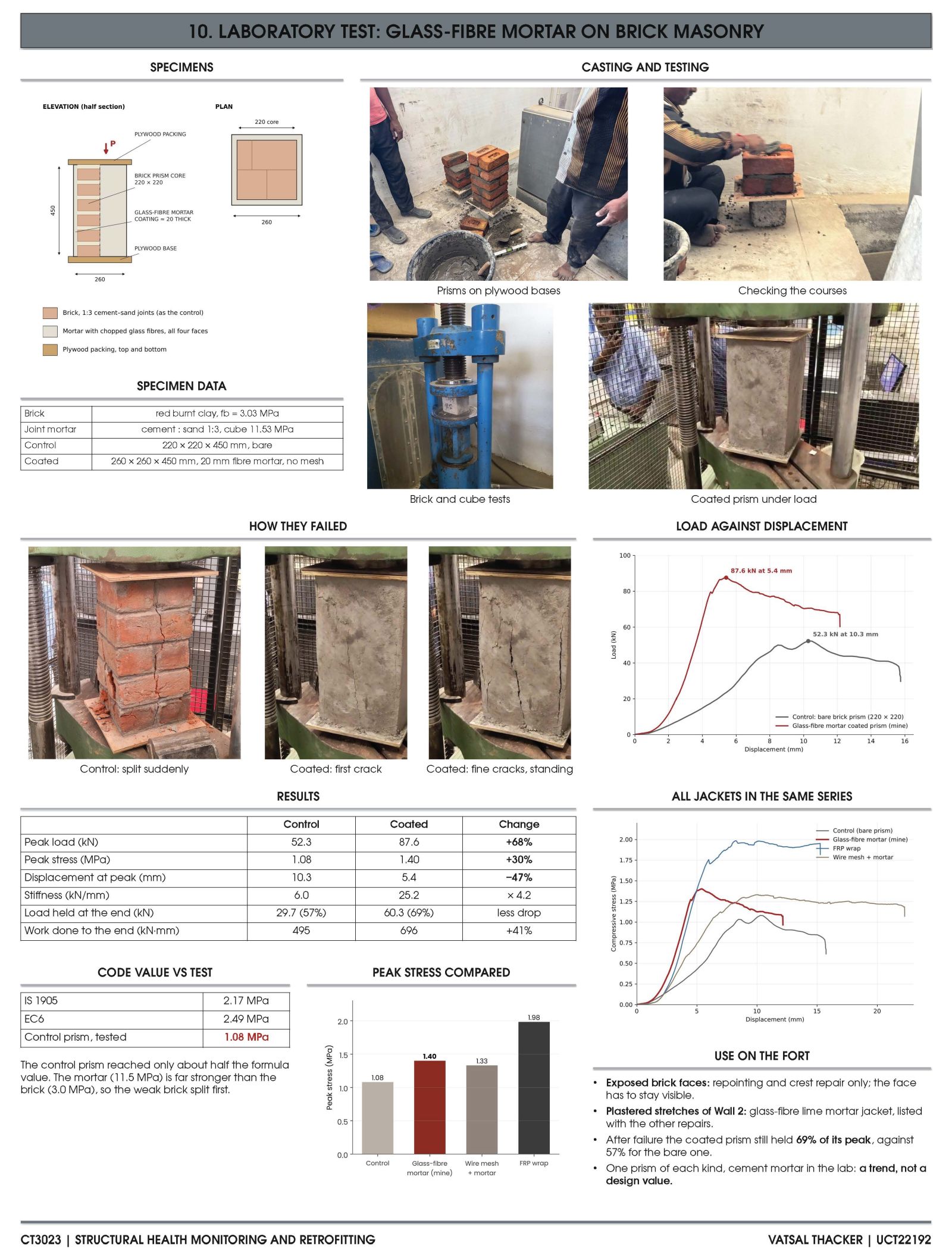
10 Lab test: a glass-fibre mortar jacket raised a brick prism's peak load by 68% and made it four times stiffer. It suits Wall 2's plastered stretches only.