Your browser is out-of-date!
For a richer surfing experience on our website, please update your browser. Update my browser now!
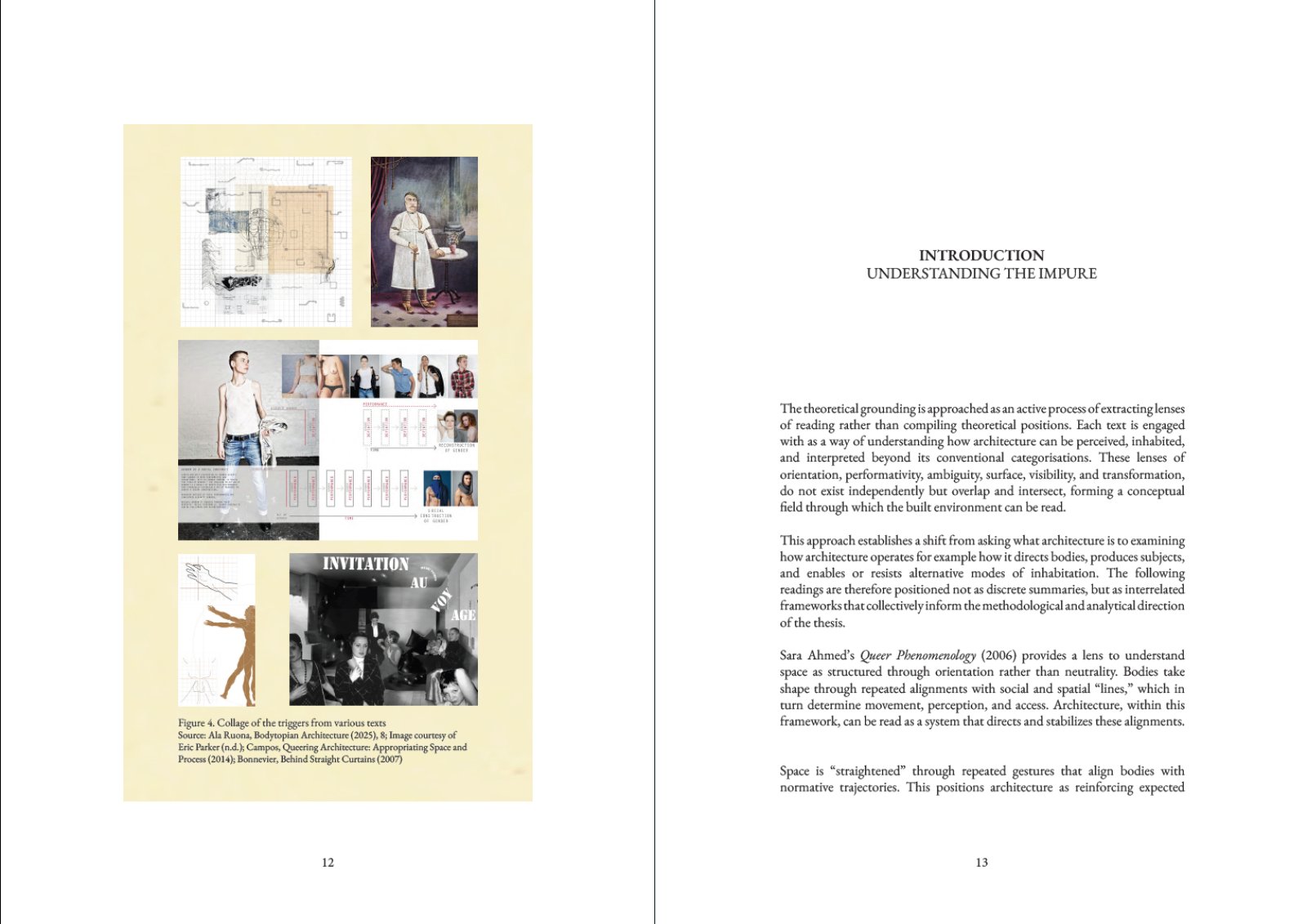
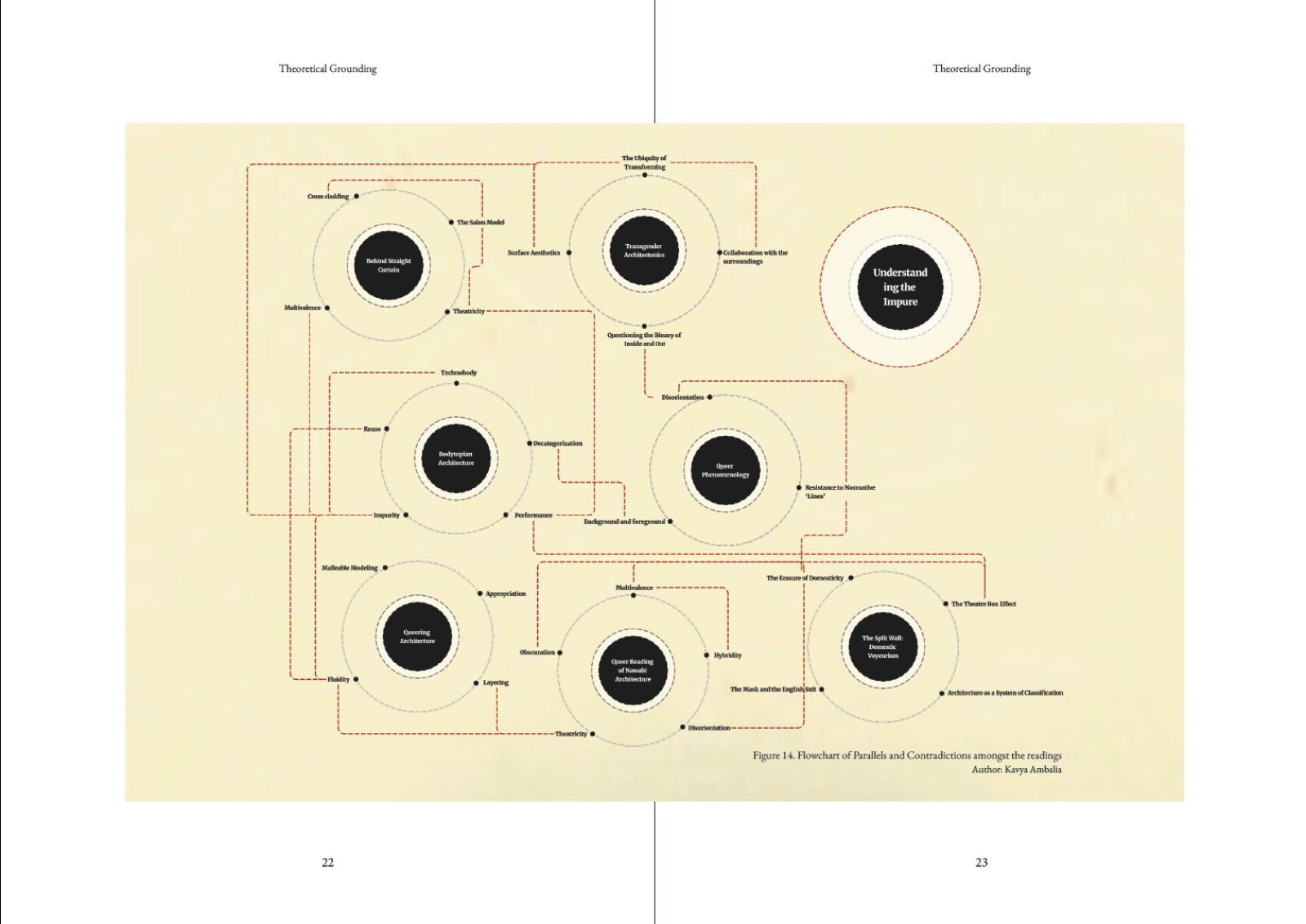
This research investigates queering not as a stylistic category, but as a method of reading architecture. Positioned against the idea that modernism operates through neutrality, purity, and standardization, the study examines how architecture produces, directs, and regulates bodies through spatial organization, visibility, circulation, and thresholds. Drawing from texts such as Queer Phenomenology, Bodytopian Architecture, and writings on Nawabi architecture and transgender architectonics, the thesis develops a set of interpretive lenses to understand how buildings exceed fixed meanings through inhabitation and perception.
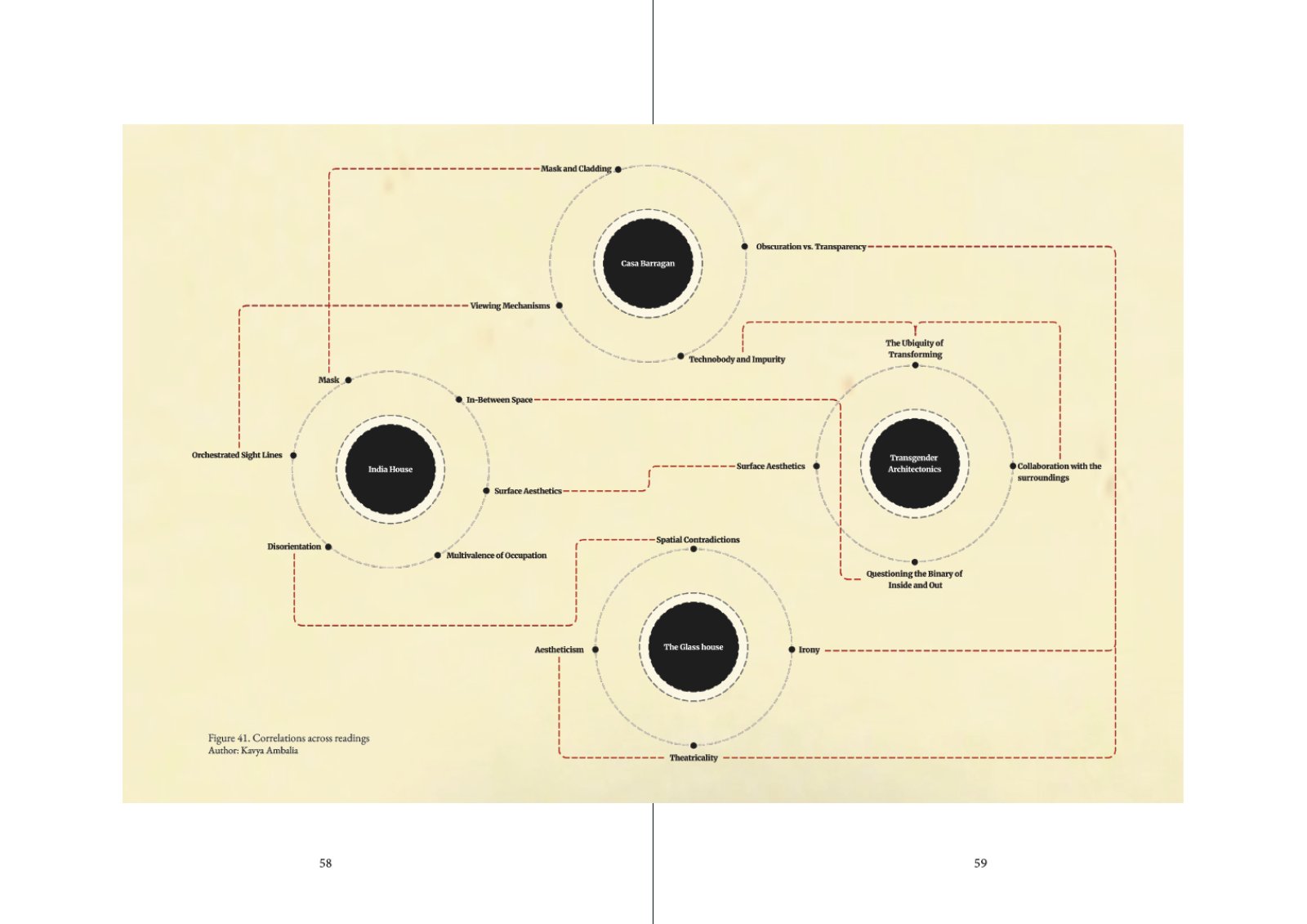
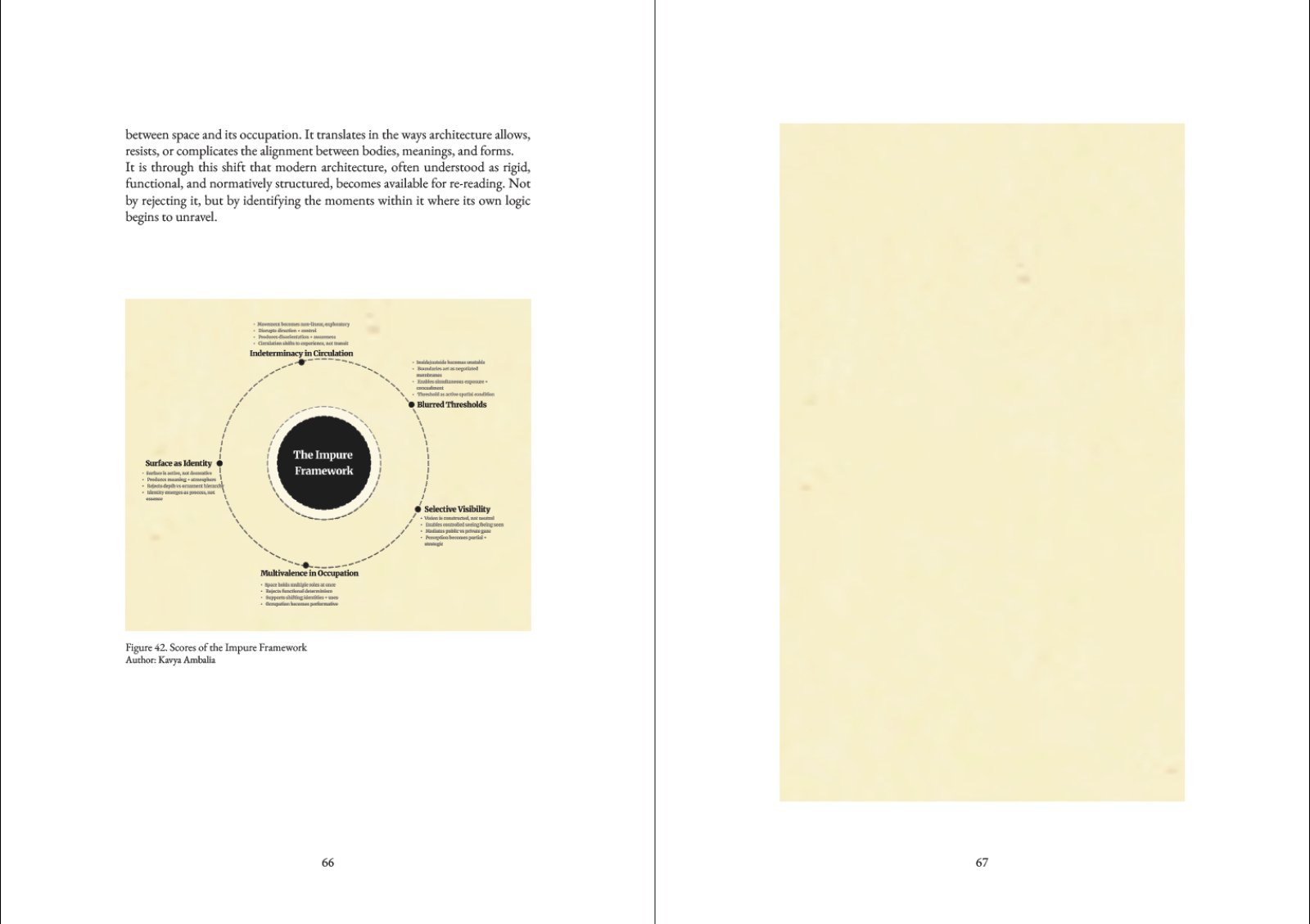
Through the analysis of projects such as the Blur Building, Glass House, Casa Luis Barragán, and India House, the research identifies recurring spatial conditions such as indeterminate circulation, blurred thresholds, selective visibility, multivalence, and surface as active identity-making. Ultimately, the thesis positions queerness as a critical spatial behavior rather than a fixed architectural classification.