Your browser is out-of-date!
For a richer surfing experience on our website, please update your browser. Update my browser now!
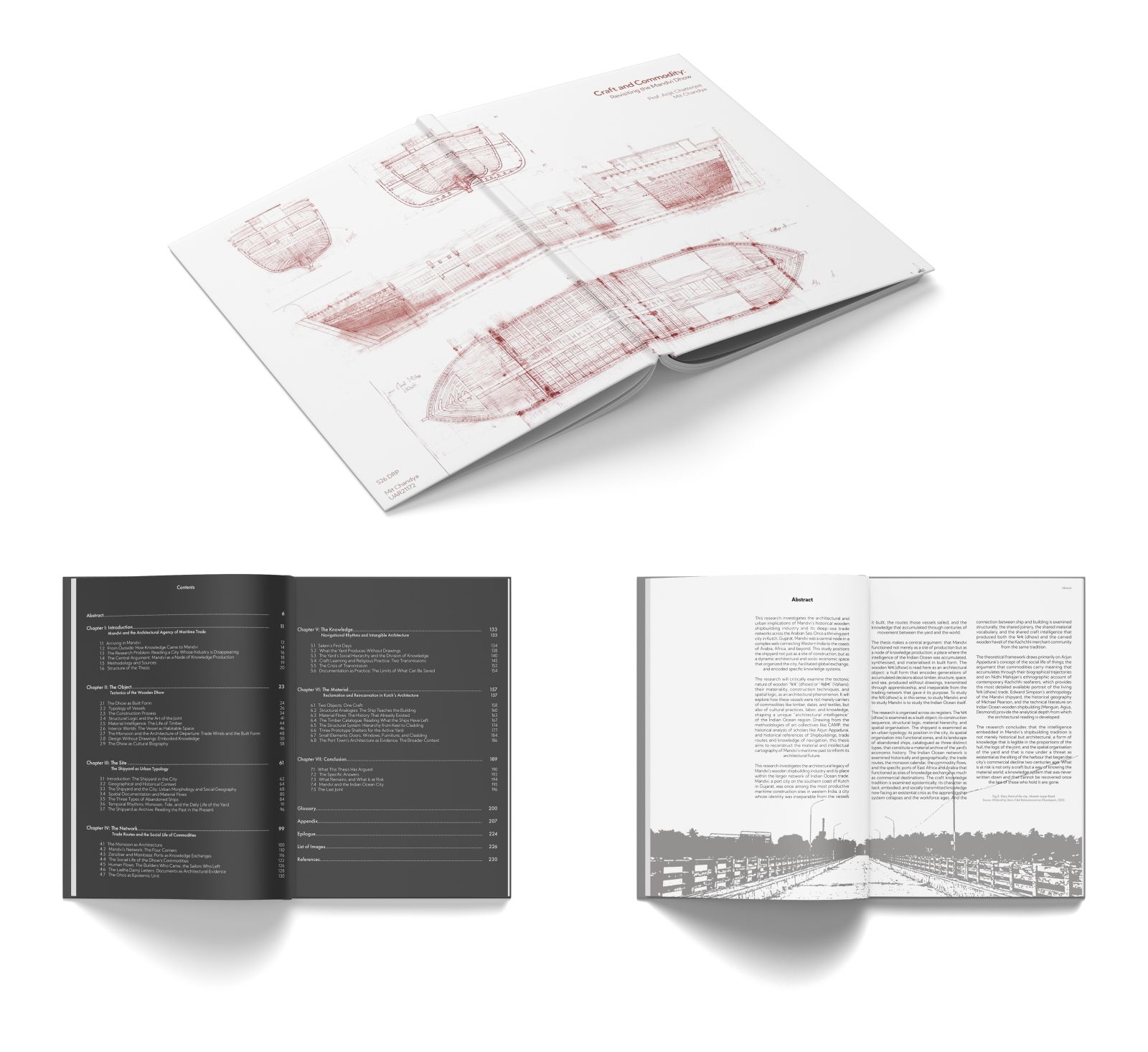
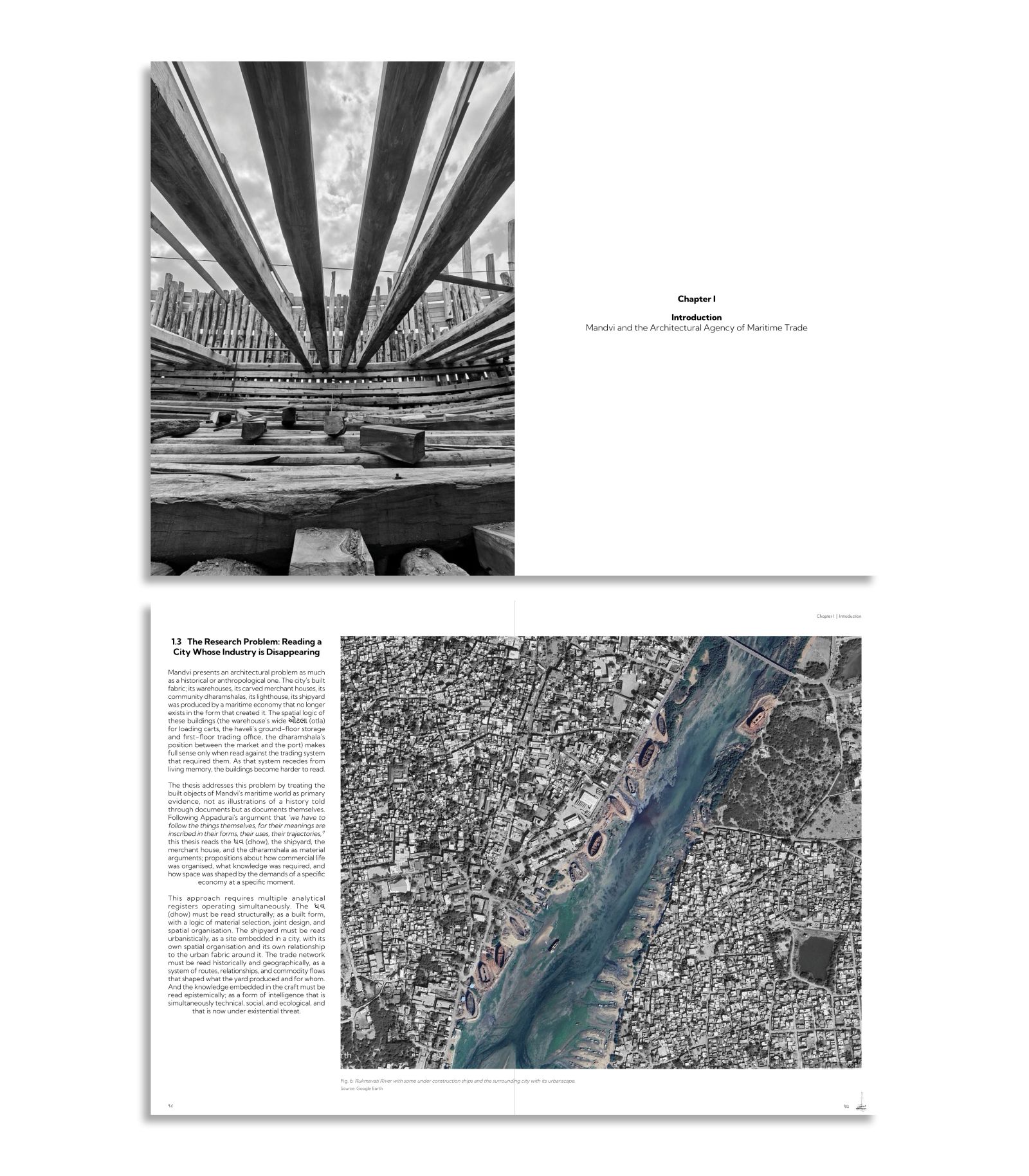
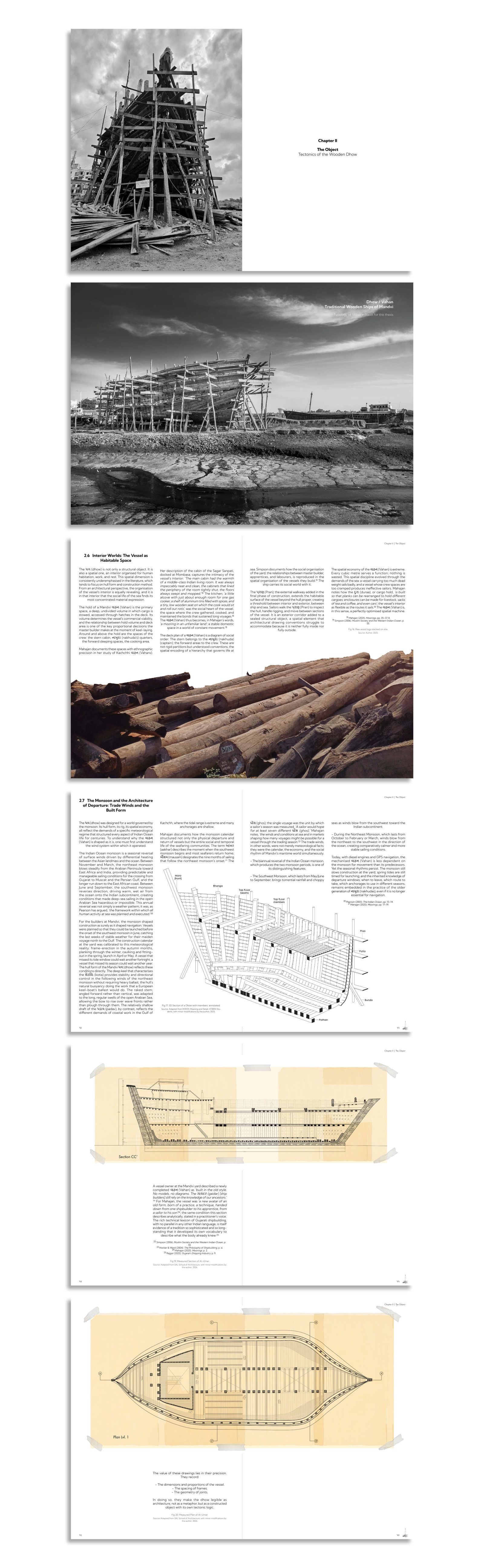
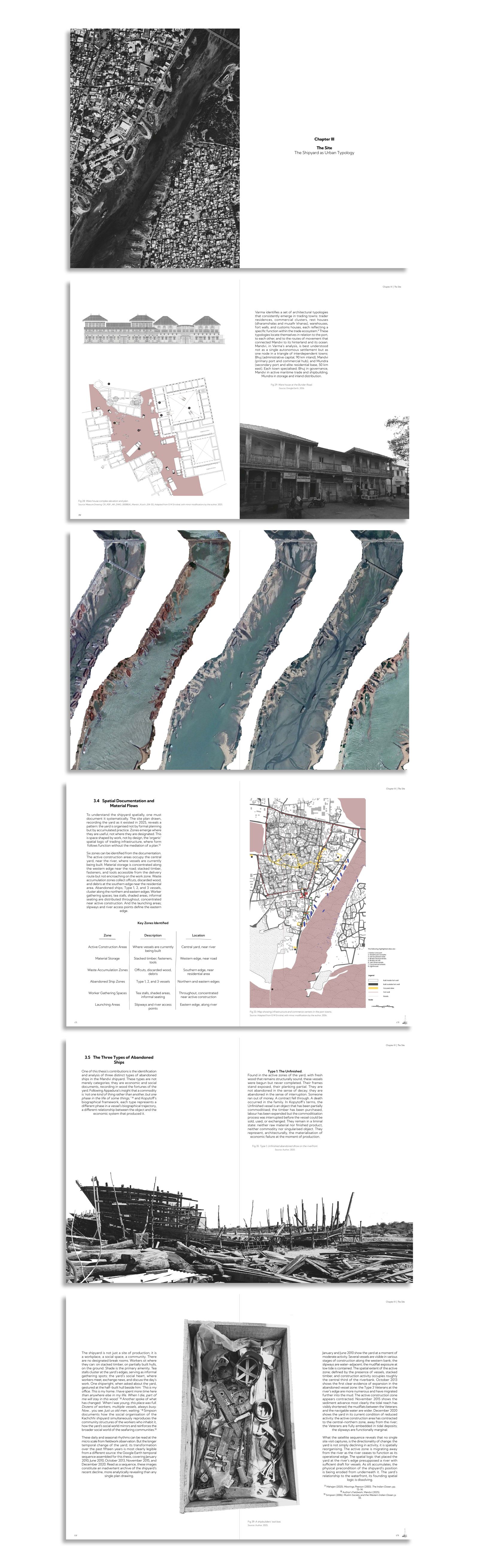
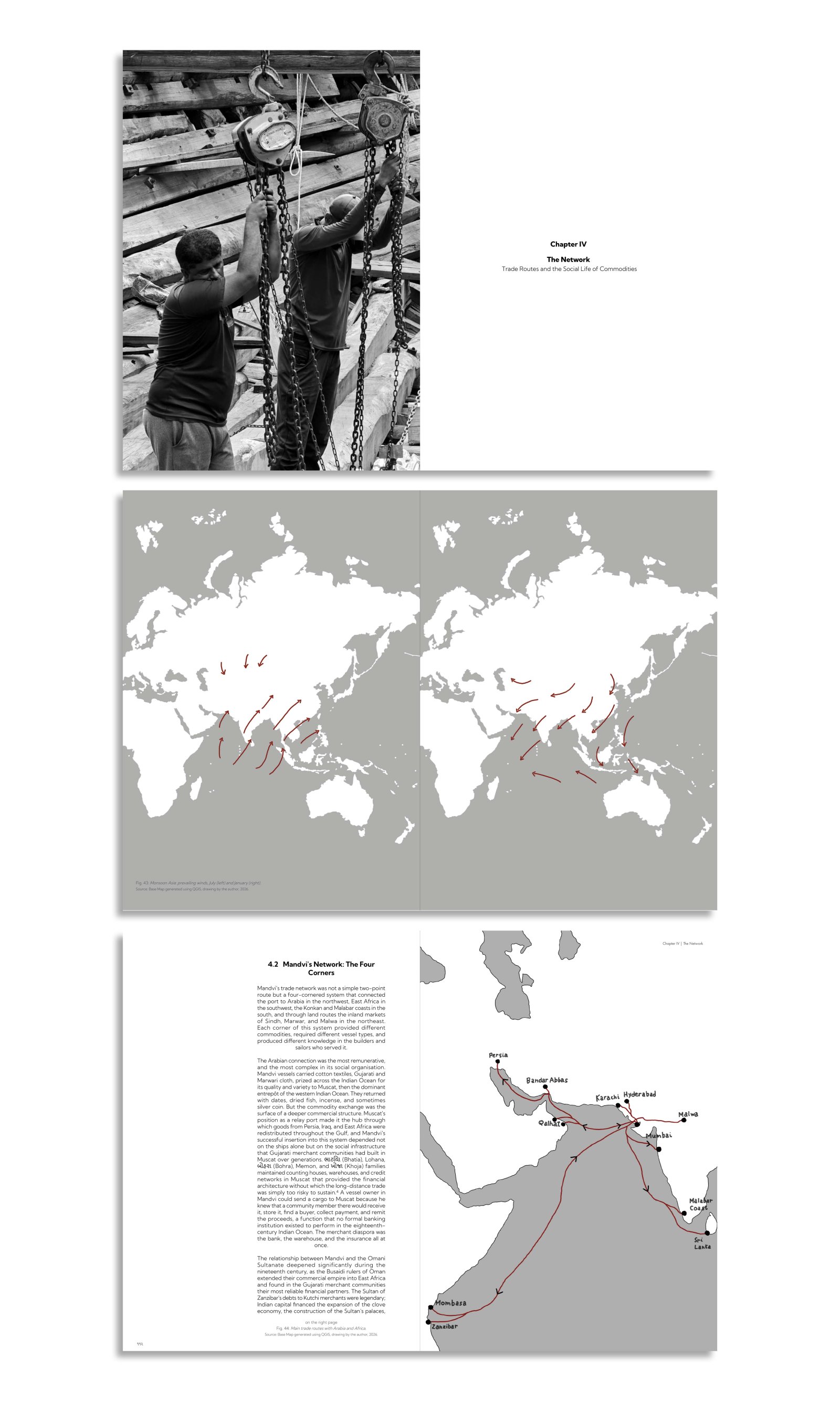
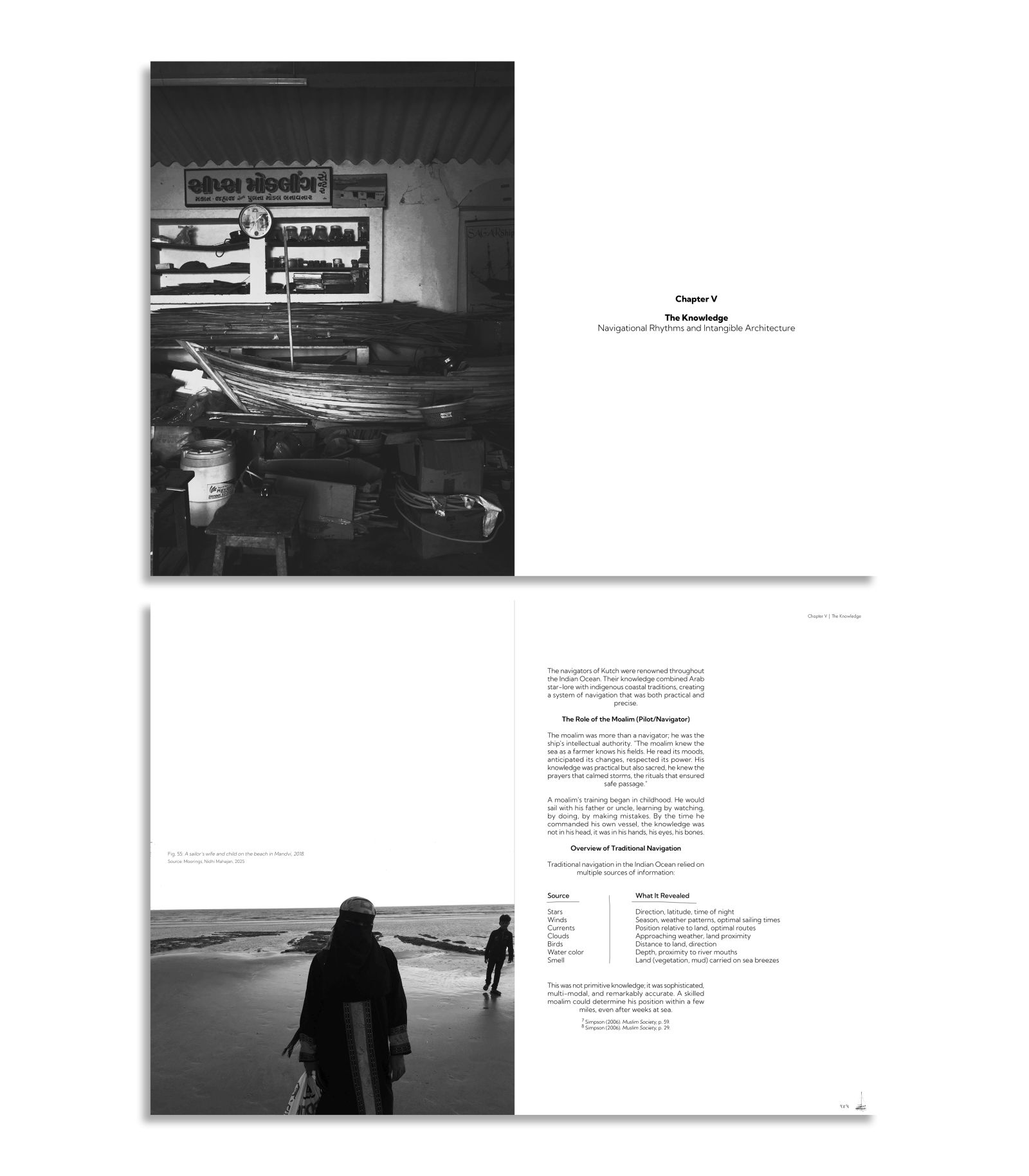
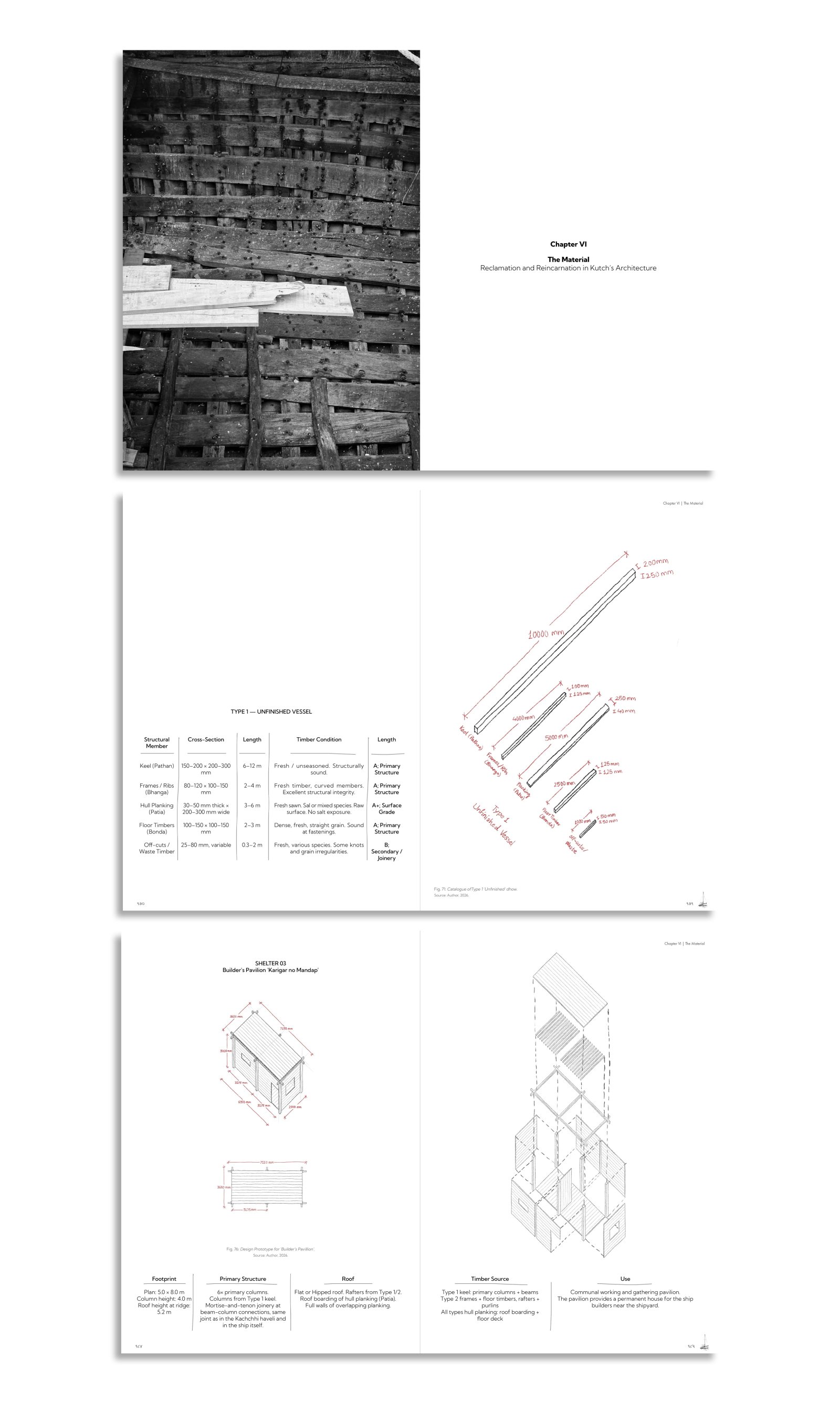
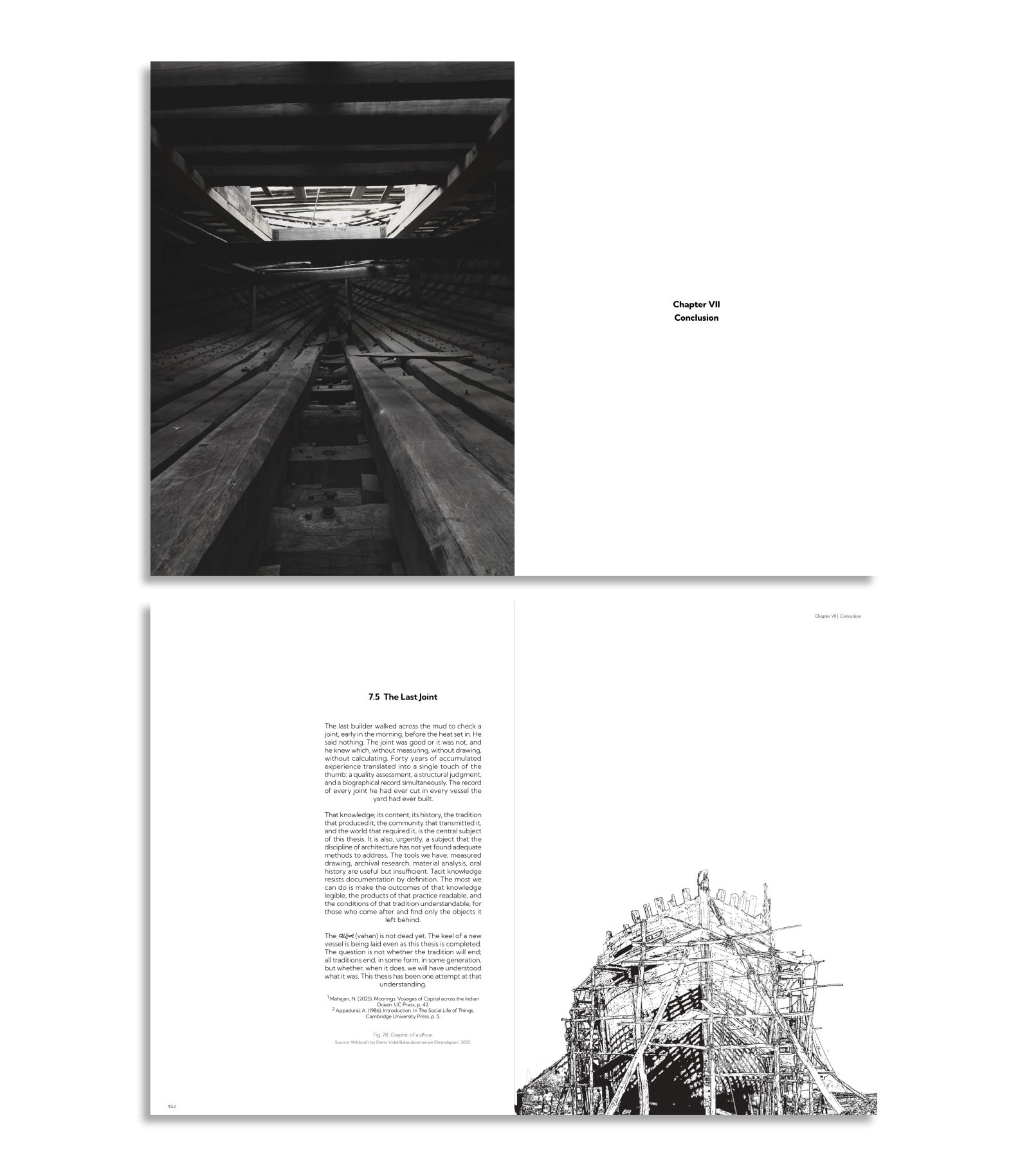
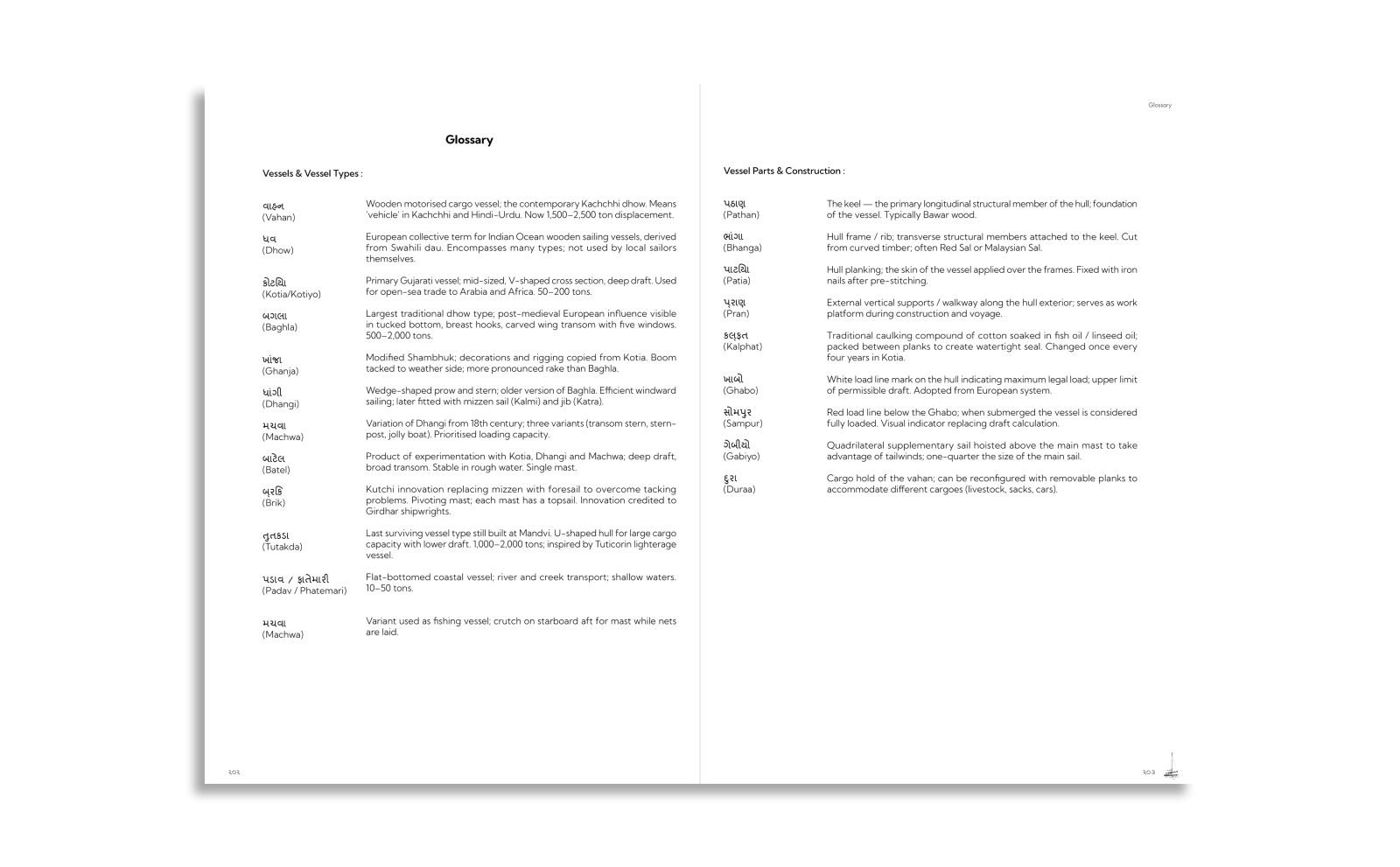
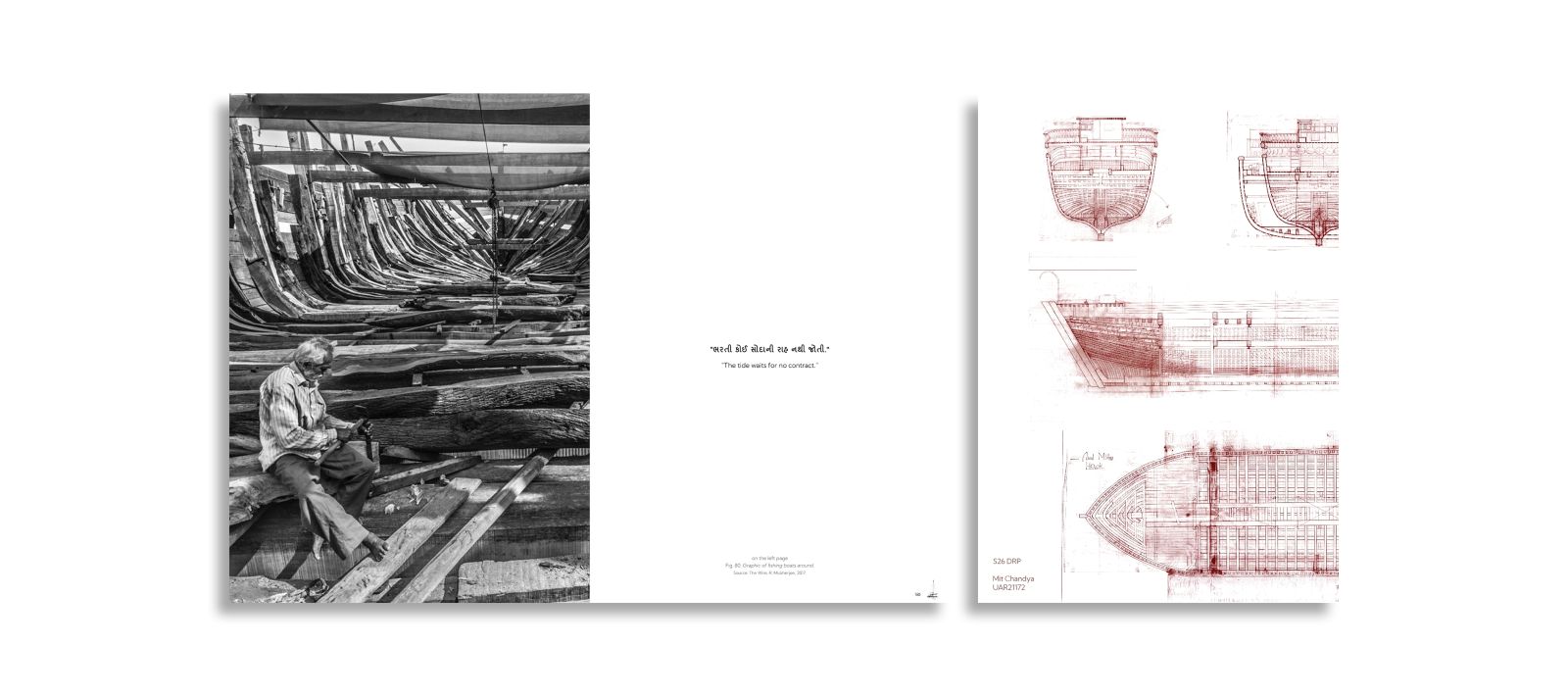
Craft and Commodity: Revisiting the Mandvi Dhow investigates the architectural intelligence embedded in Mandvi’s traditional wooden shipbuilding industry, positioning the dhow not merely as a vessel but as a built form shaped by centuries of material, spatial, and cultural knowledge. Once a key port in the Indian Ocean trade network, Mandvi functioned as a node where global exchanges of goods, people, and ideas were translated into craft practices and construction systems. Through fieldwork, historical research, and architectural analysis, the study reads the ship, the shipyard, and the port town as interconnected systems of knowledge production. It examines the dhow’s tectonics, the urban role of the shipyard, and the wider maritime networks that informed its evolution. The research also addresses the ongoing decline of this tradition, where embodied knowledge is at risk of disappearing. Moving beyond documentation, the project proposes design interventions that reclaim ship timber and reinterpret shipbuilding logic within contemporary architectural applications, bridging maritime craft and terrestrial construction.
View Additional Work