Your browser is out-of-date!
For a richer surfing experience on our website, please update your browser. Update my browser now!
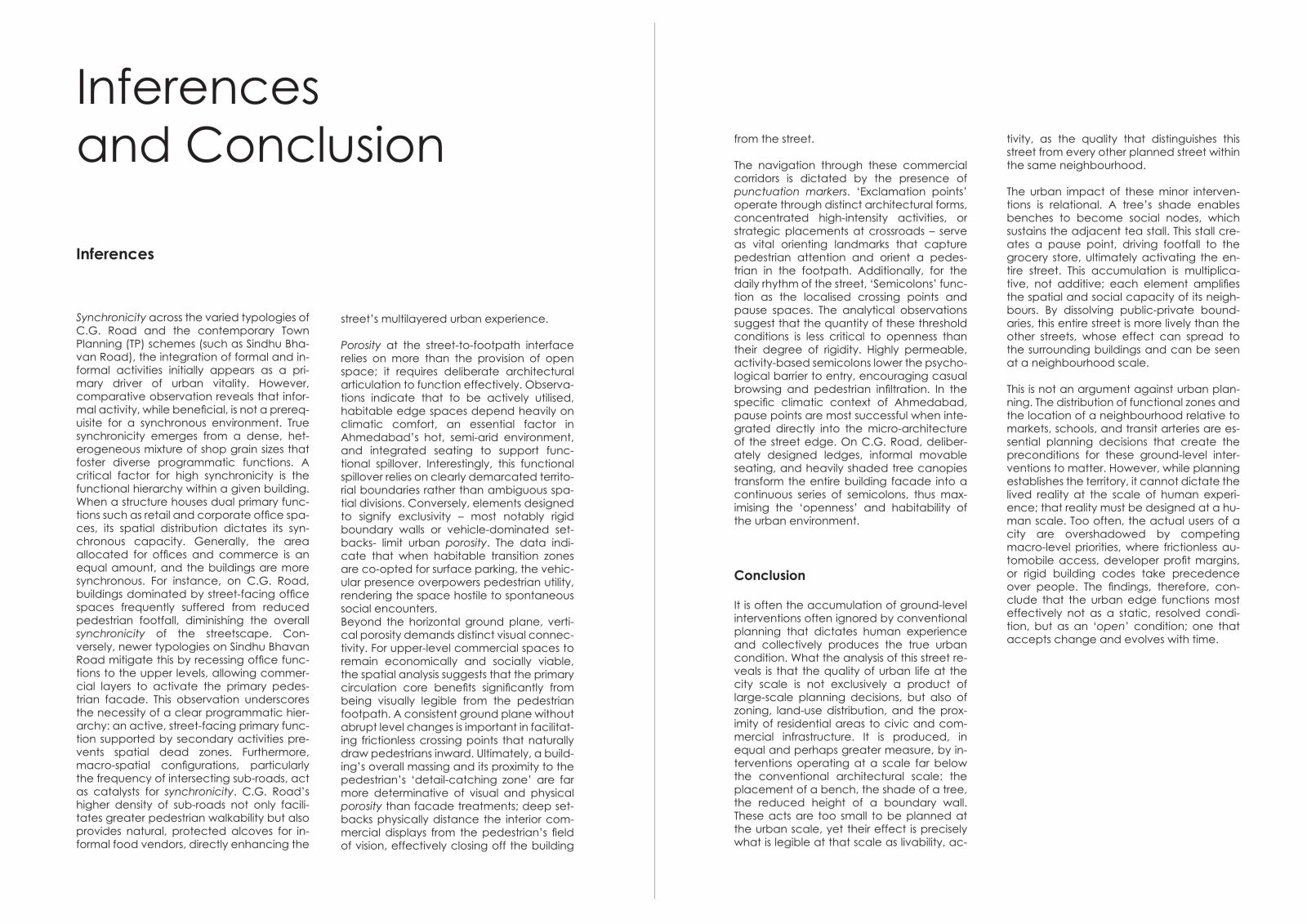
In Building and Dwelling, Richard Sennett articulates the concept of the ‘Open City’ as a counter-narrative to modern urbanism. While the universal aspiration for a city is one that balances organisation, hygiene, and community with cultural and intellectual stimulation, the prevailing modern paradigm often sacrifices vitality for order. Consequently, Sennett advocates for the ‘Open City’, an urban environment defined by permeability and spontaneity.
In the Indian context, Ahmedabad is a city which is undergoing development at a very fast pace. The city’s western periphery, which remained largely agrarian until the 1980s, underwent a rapid suburban transformation between the 1990s and 2000s. This study evaluates these emerging architectural typologies against Sennett’s framework to determine if they embody his criteria for openness: Synchronicity, Porosity, and Punctuation Markers. By analysing boundary porosity and spaces for social friction, it assesses whether the city's new urban fabric remains truly 'open' today.