Your browser is out-of-date!
For a richer surfing experience on our website, please update your browser. Update my browser now!
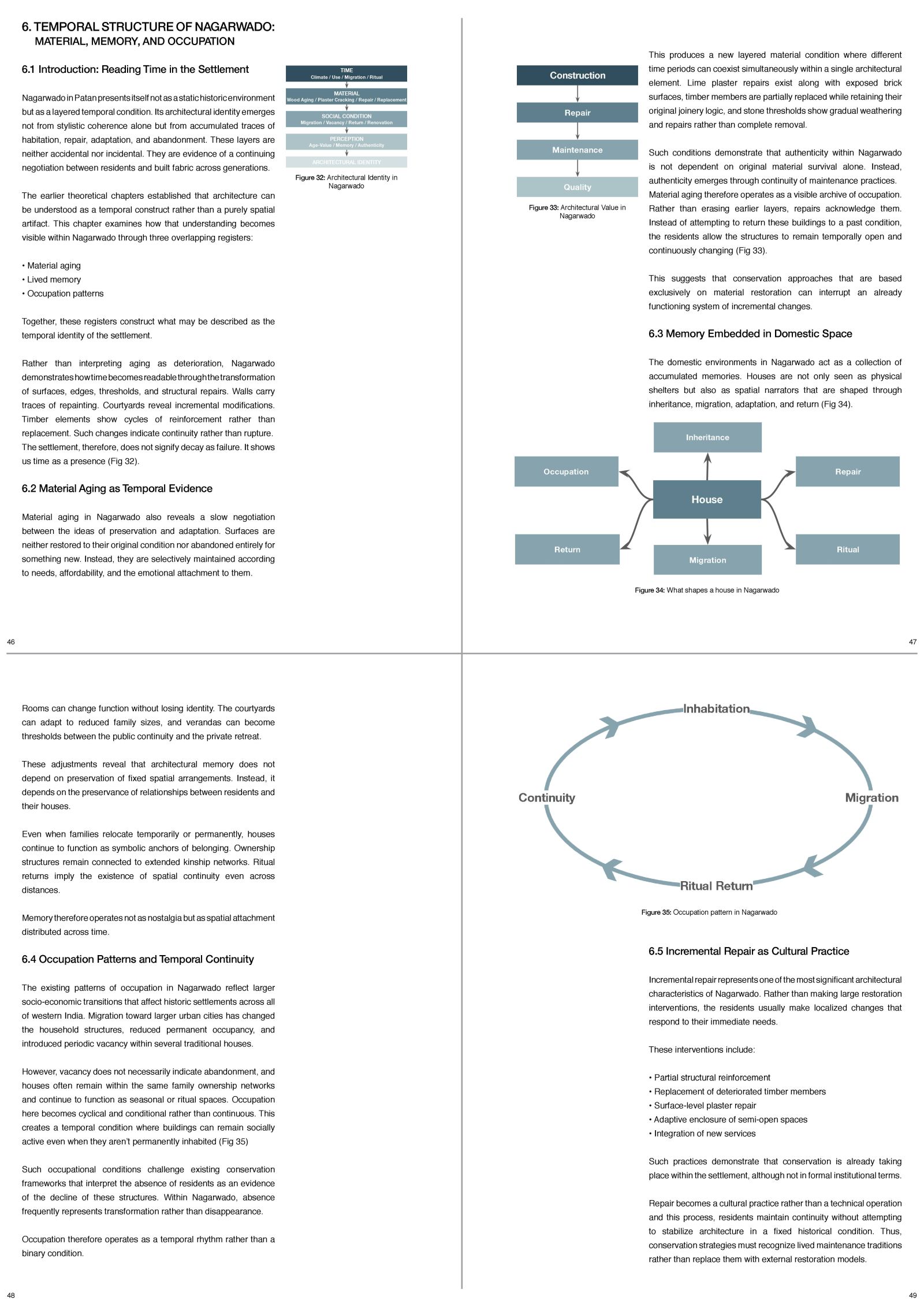
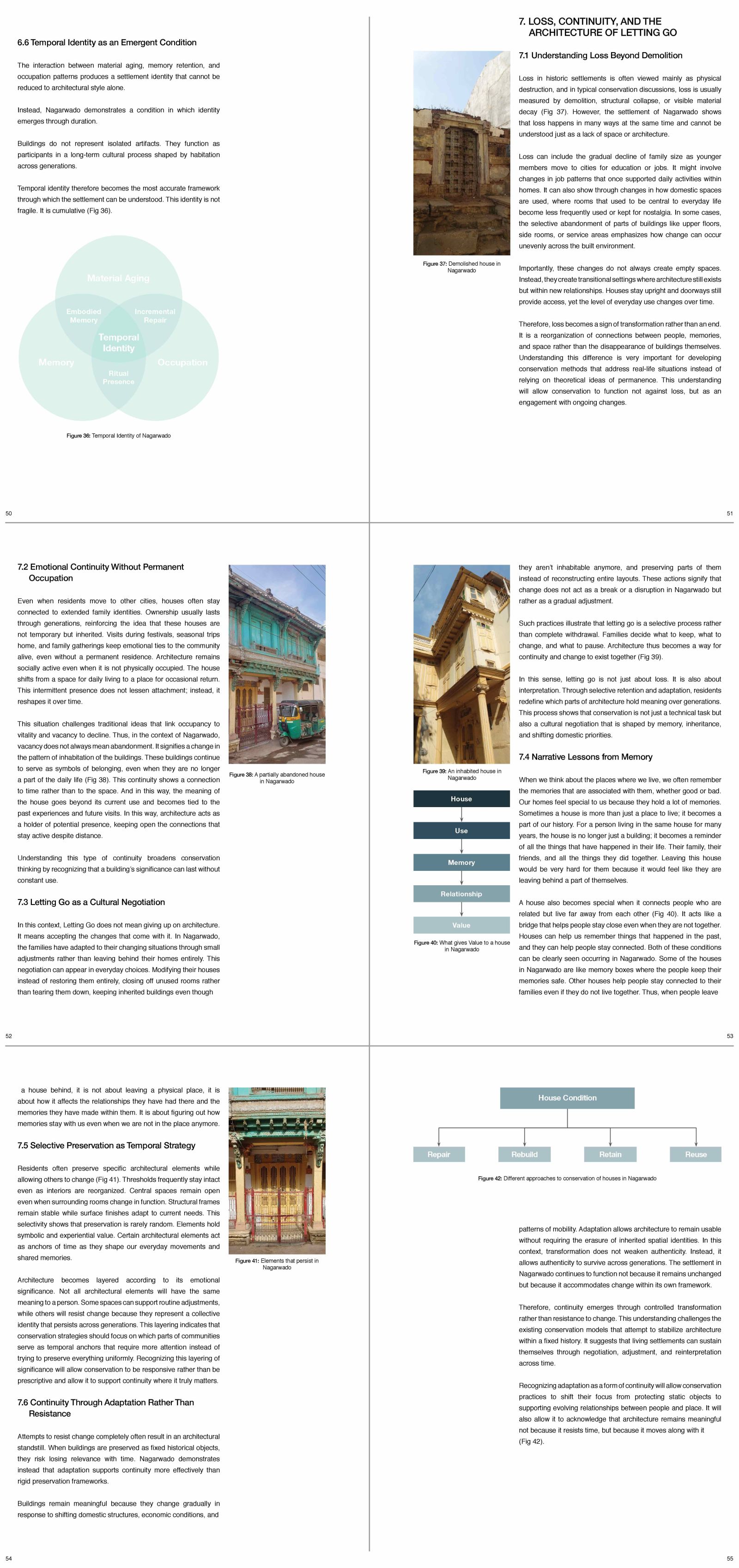
This thesis aims to examine time as an active agent in shaping architectural continuity within living settlements and not monuments. It critiques the conventional conservation approaches that prioritize material preservation and instead proposes a temporal understanding of architecture based on memory, occupation, repair, and social continuity.
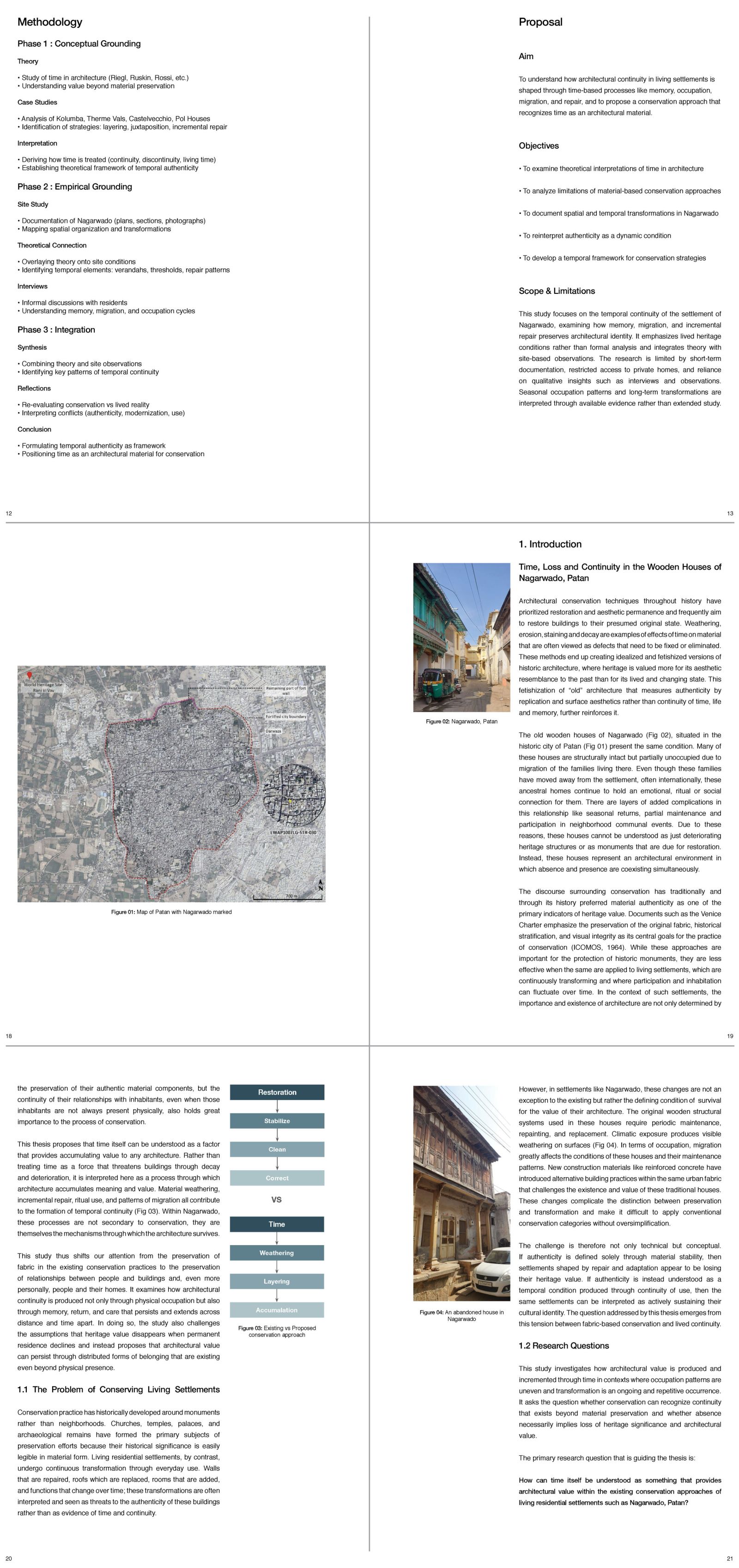
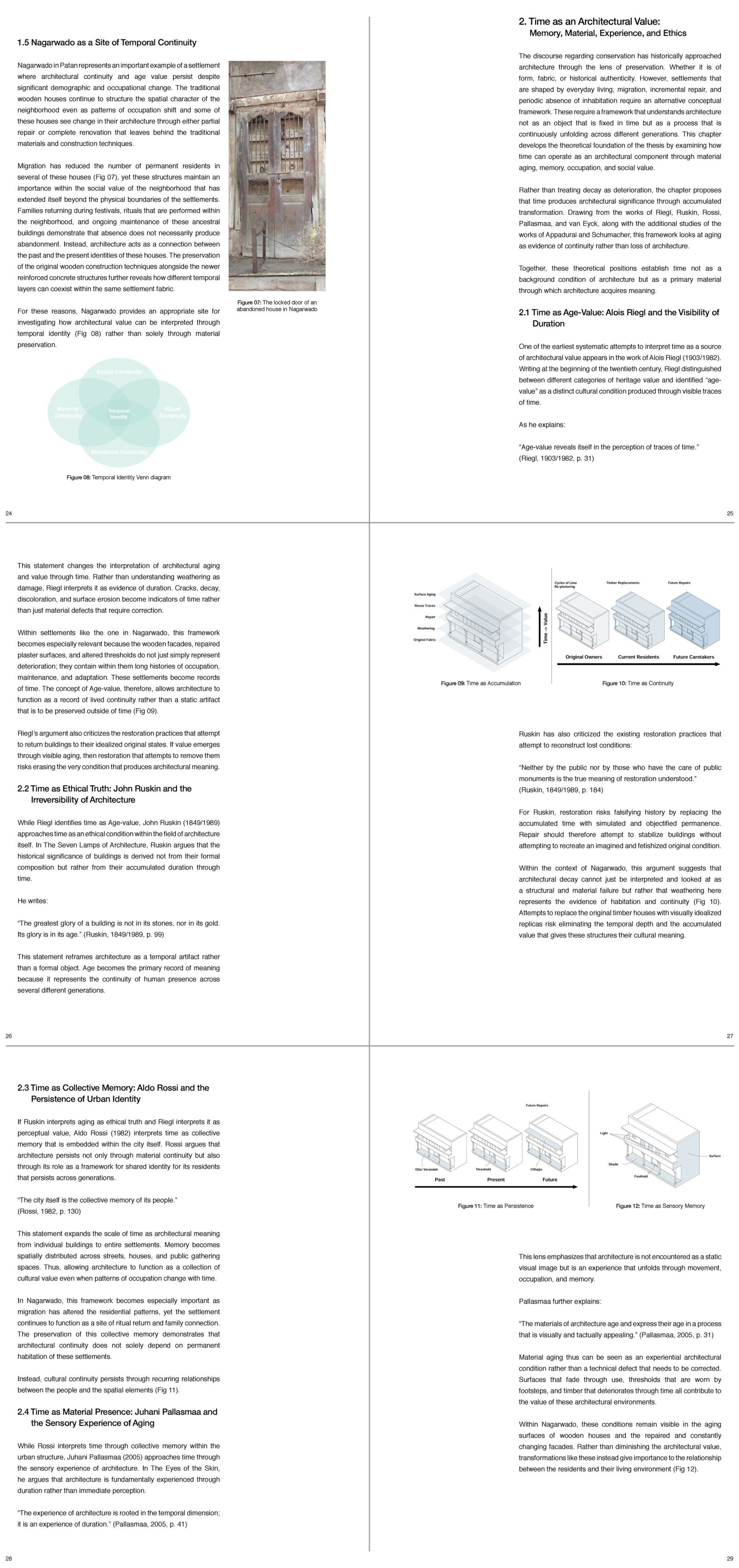
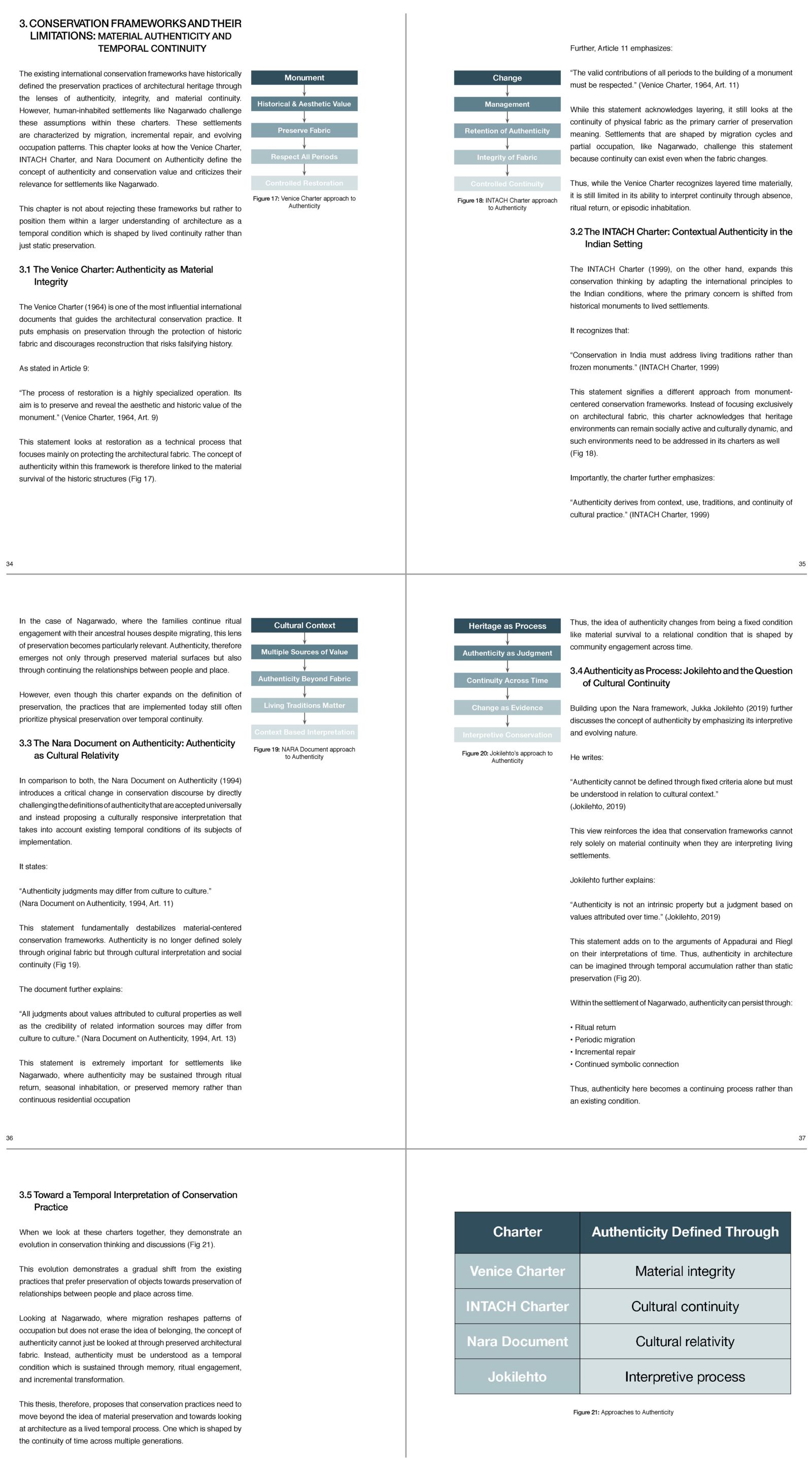
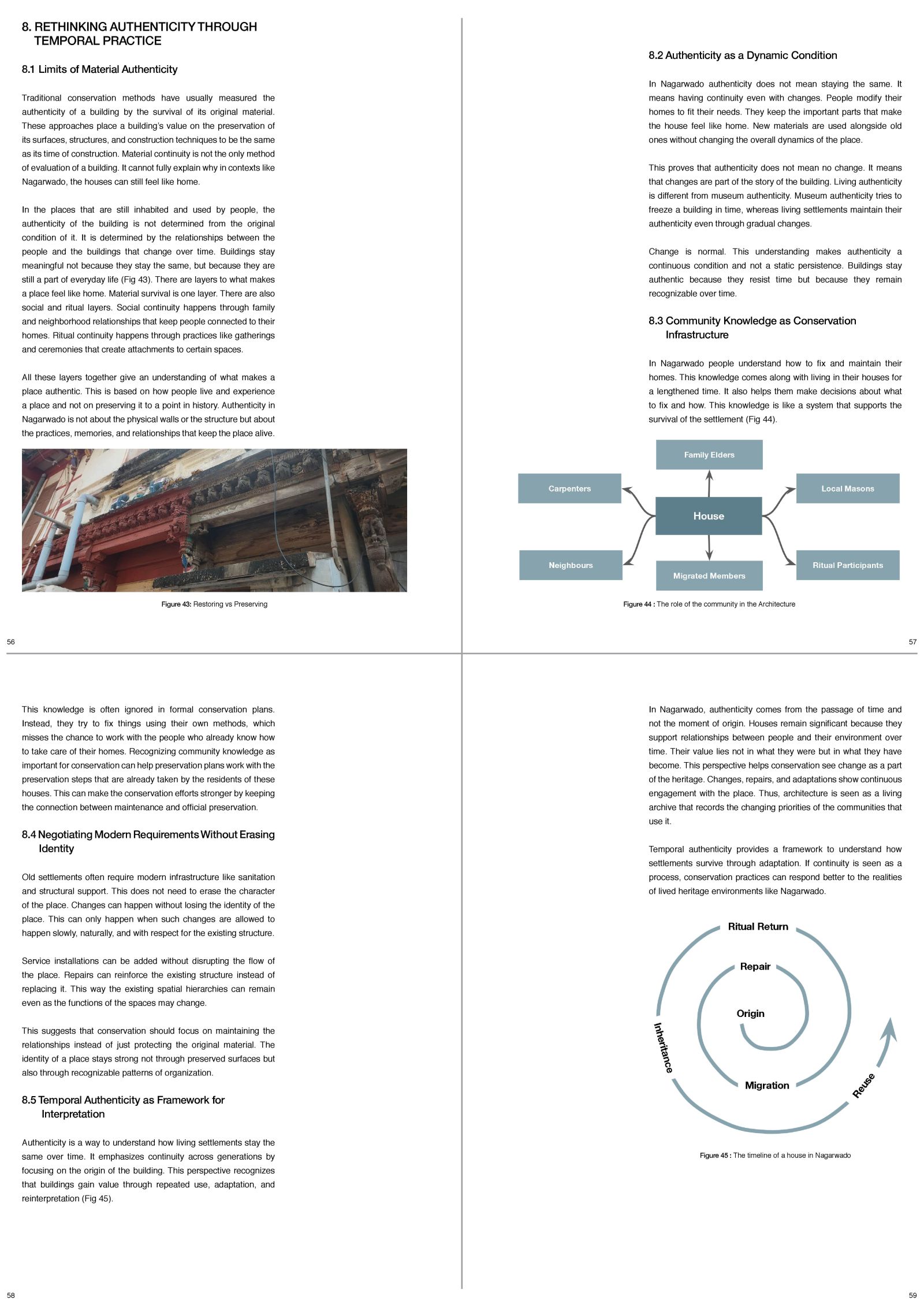
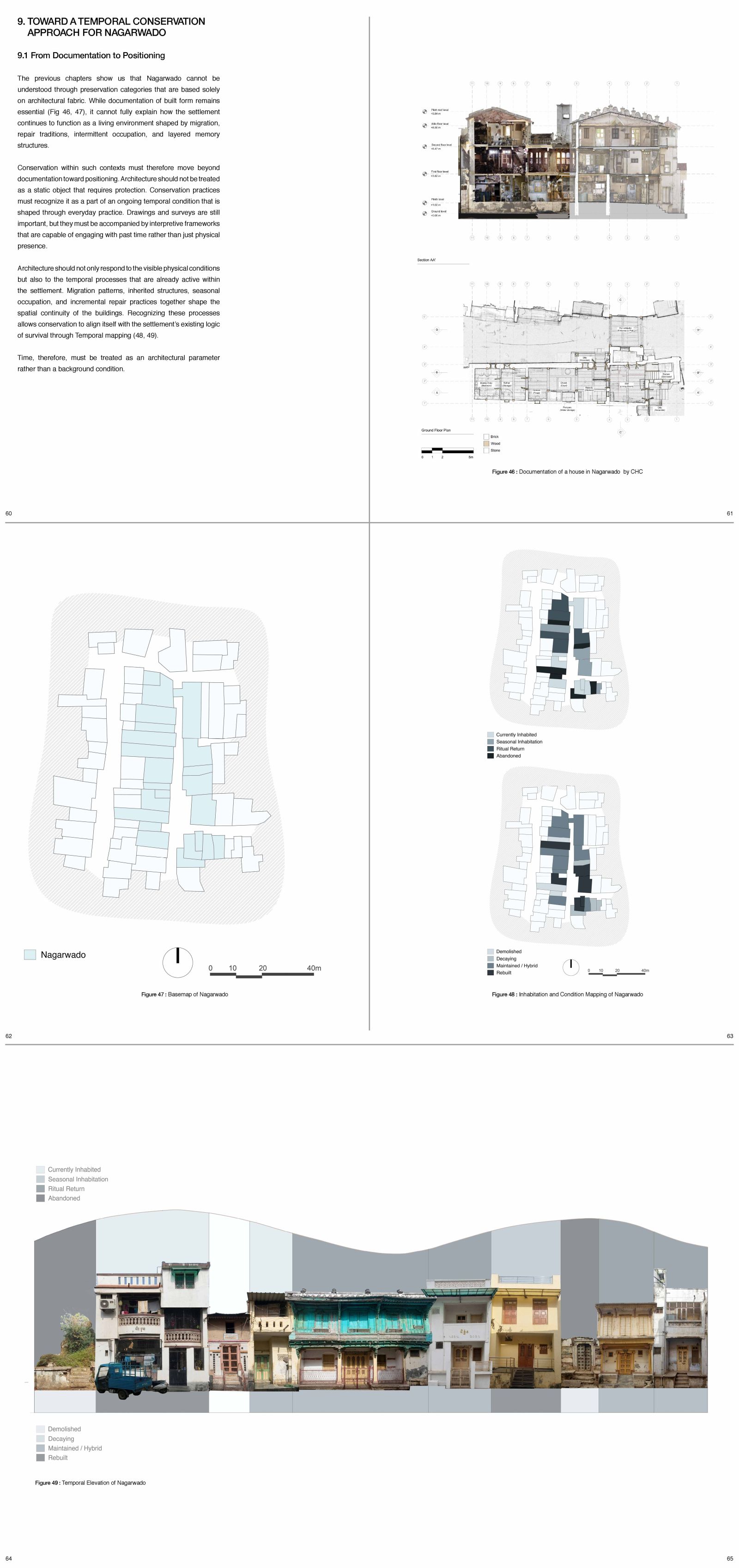
This thesis focuses on Nagarwado, a traditional settlement in the historic city of Patan with traditional wooden houses, where identity persists despite migration, vacancy, and incremental change. The study investigates how continuity is maintained through evolving relationships between people and built form. The research draws on theoretical positions from Alois Riegl, John Ruskin, Aldo Rossi, Juhani Pallasmaa, Aldo van Eyck, Arjun Appadurai, and E. F. Schumacher to different interpretations of time.
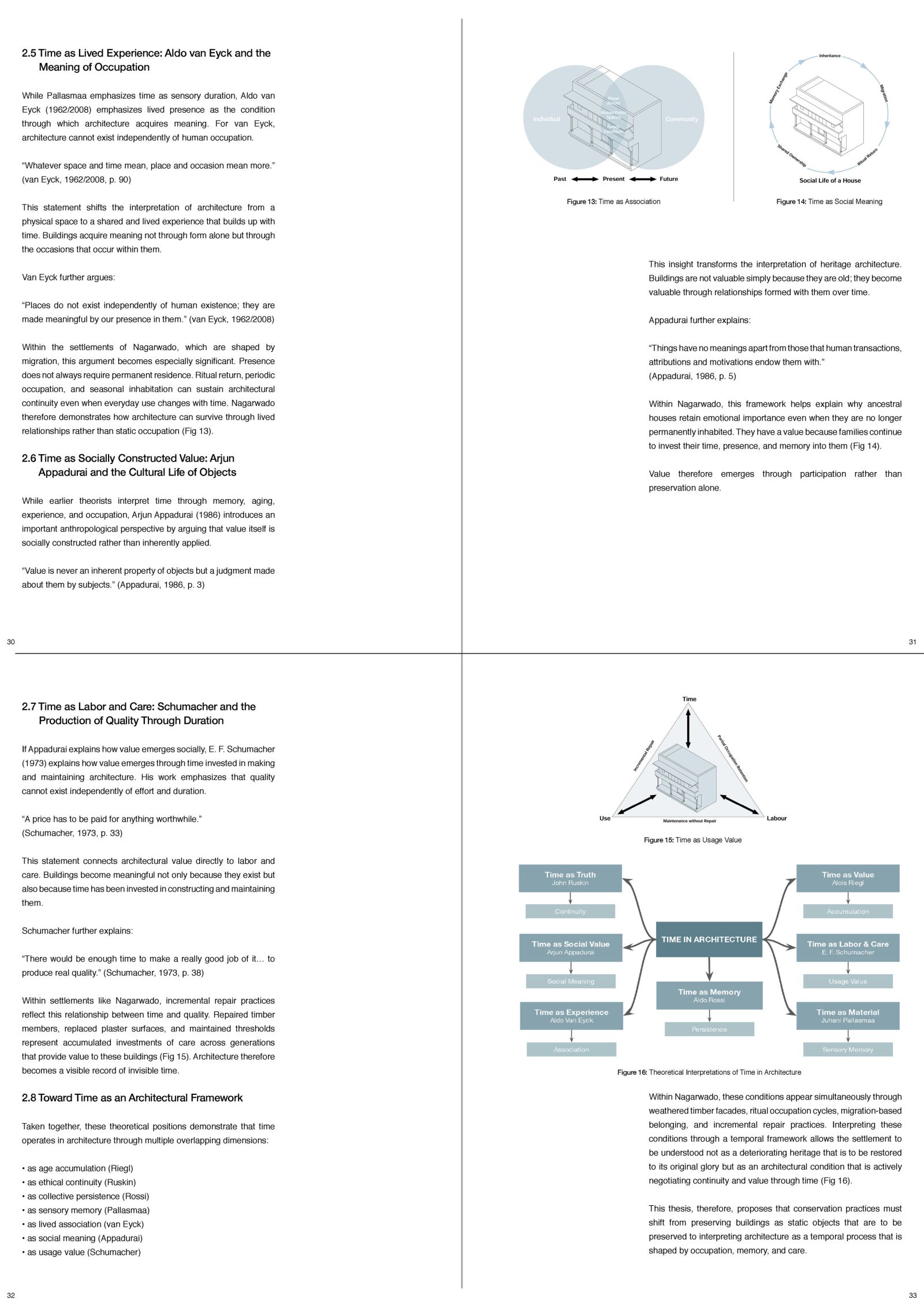
Through site documentation, mapping of occupation patterns, and analysis of repair practices, this study identifies important spatial elements like verandahs, thresholds, and incremental interventions that preserve continuity. These findings challenge the traditional meaning of authenticity and propose the idea of temporal authenticity, where architectural value emerges through duration, adaptation, and lived experience.
The thesis argues for a conservation approach that supports ongoing processes of change rather than preserving buildings as static monuments and positions time as a primary architectural material in conserving living heritage environments.