Your browser is out-of-date!
For a richer surfing experience on our website, please update your browser. Update my browser now!
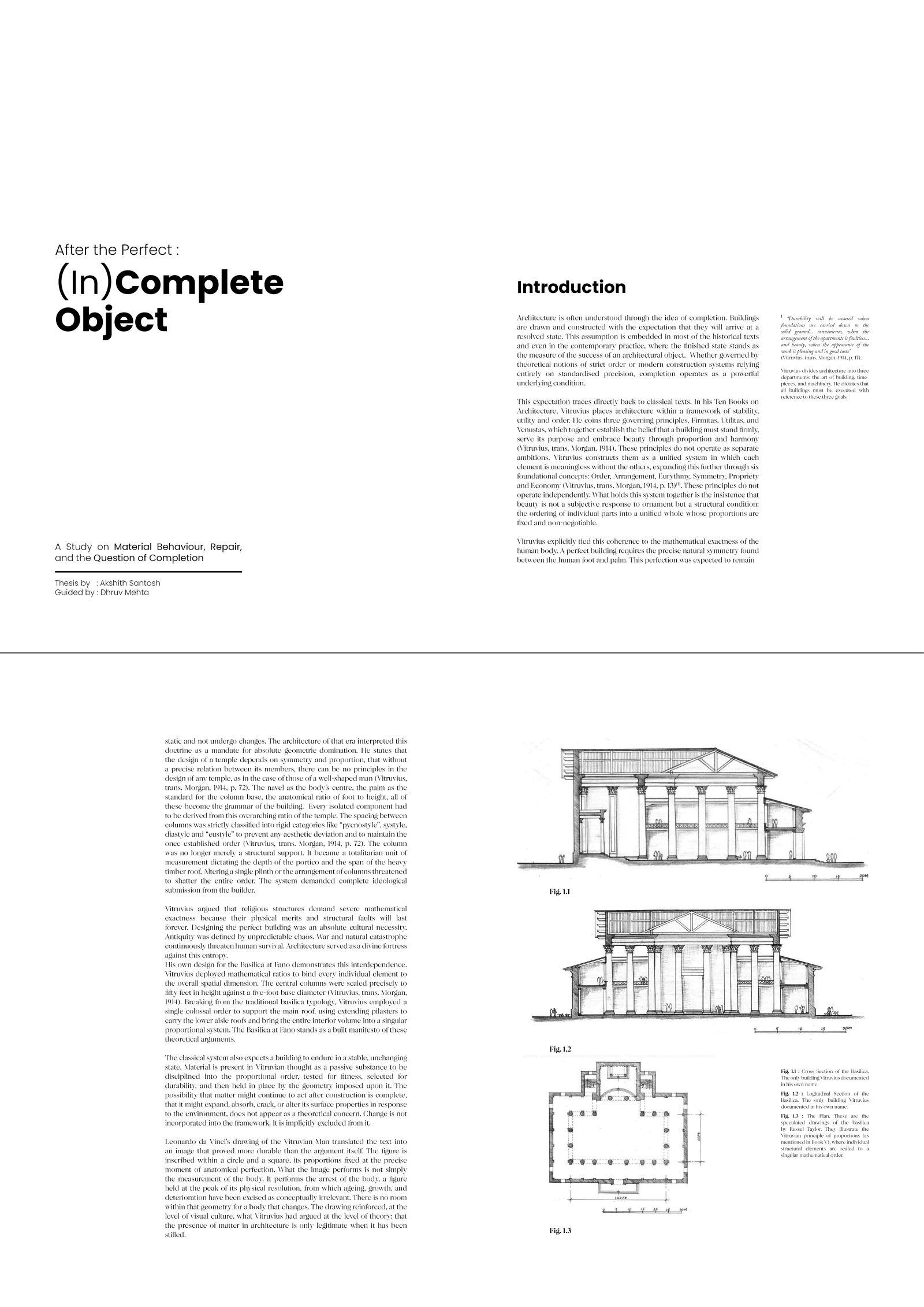
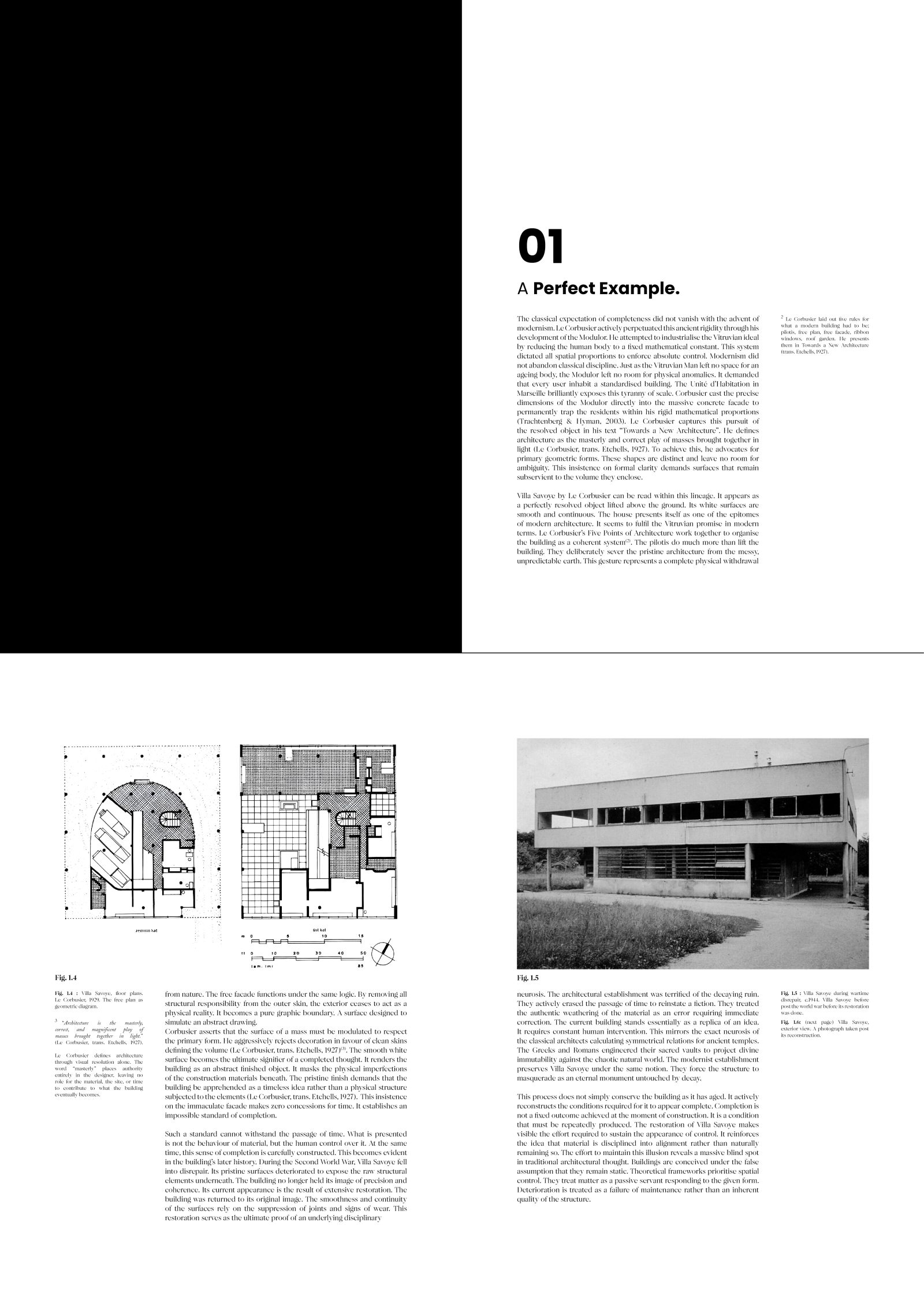
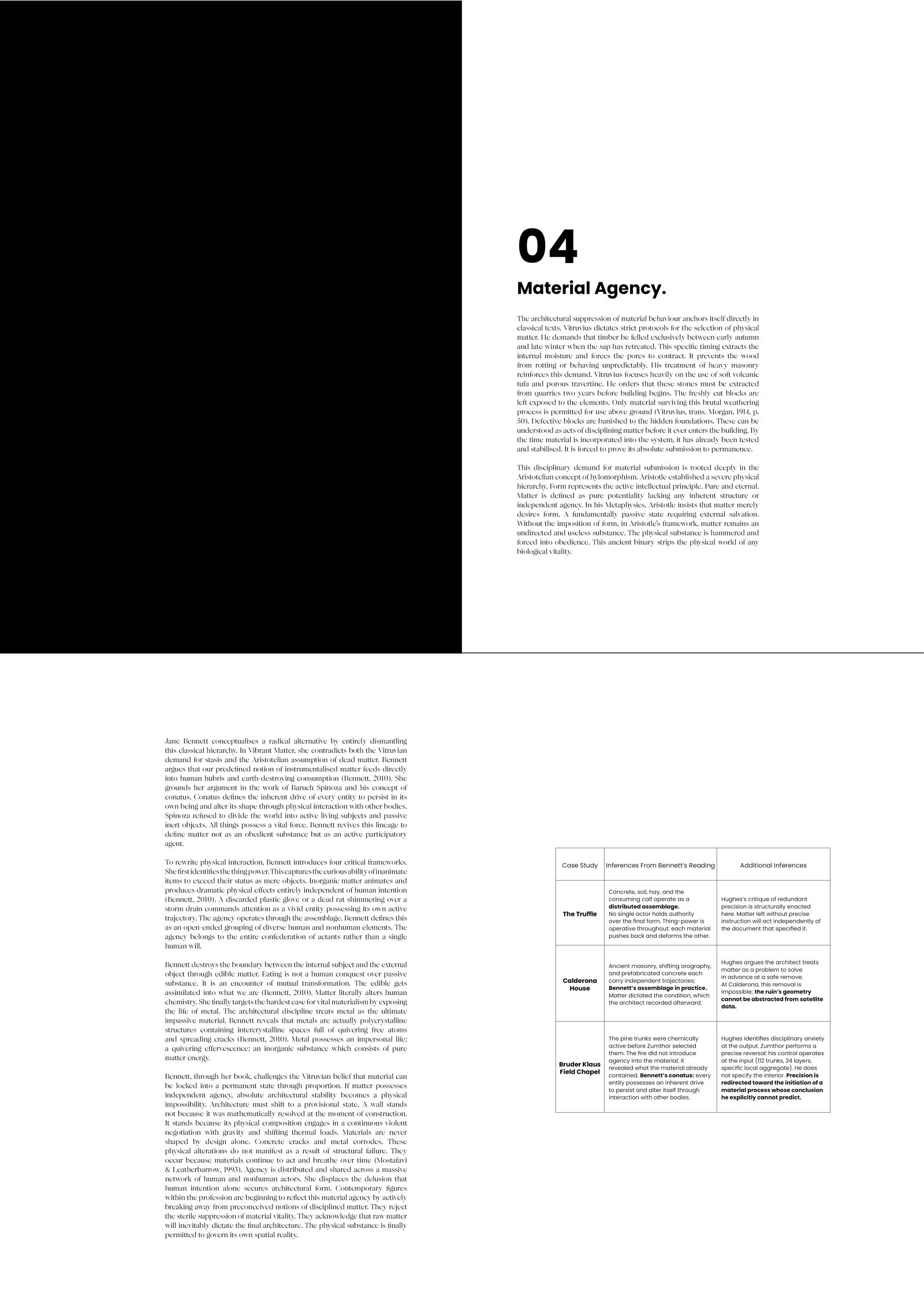
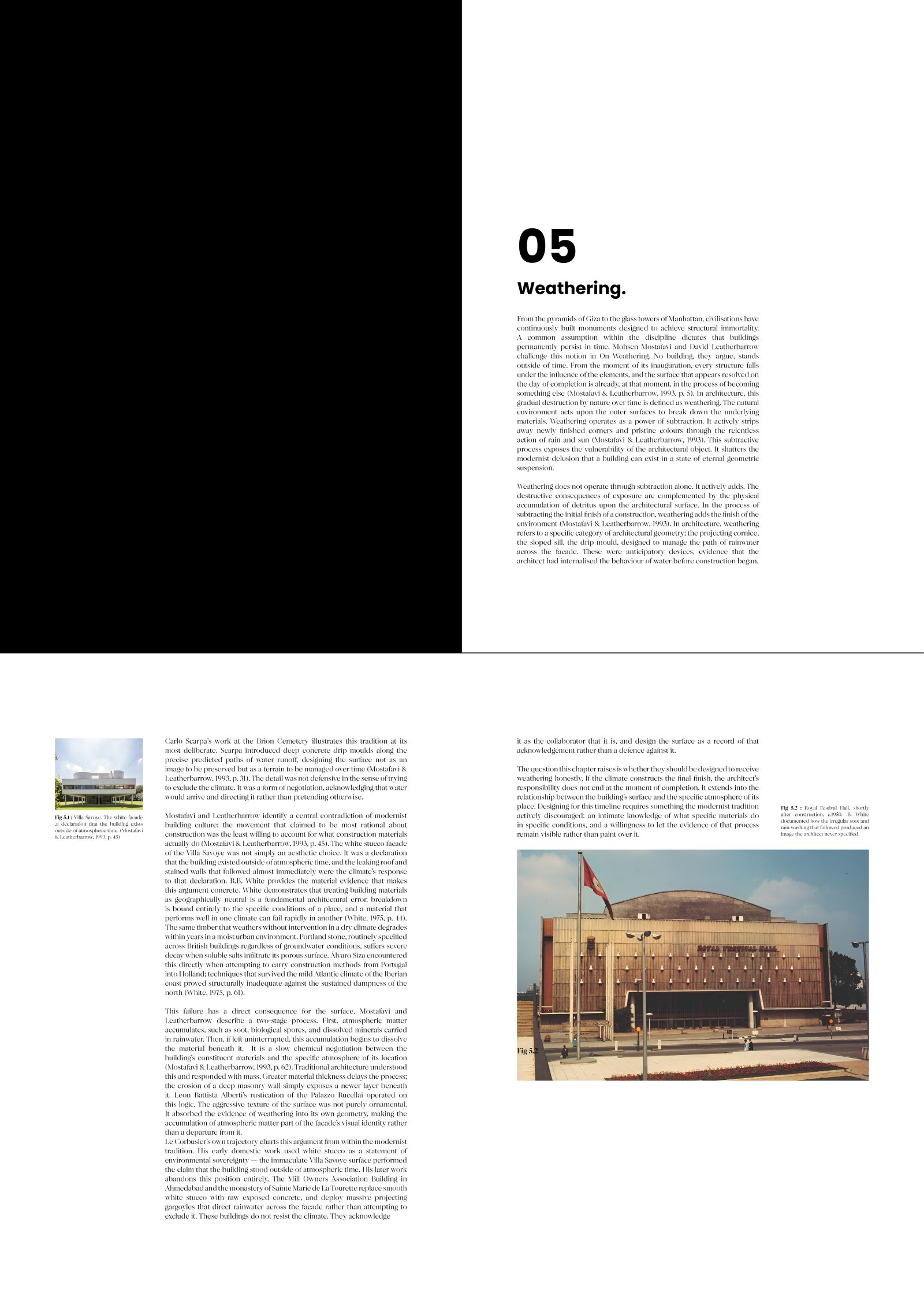
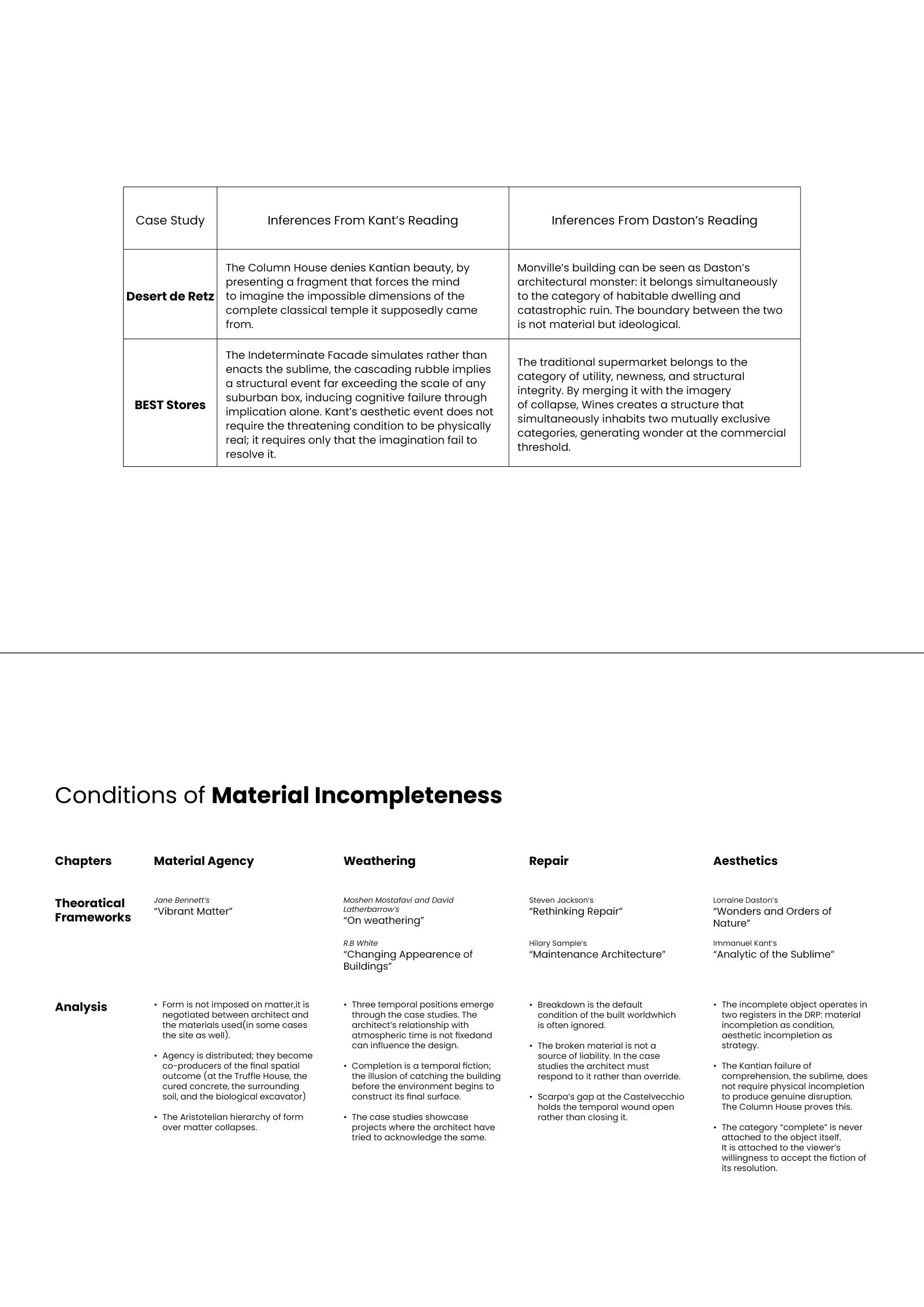
Modern architecture has been shaped by a strong belief in precision and completion, where control over matter became both a technical and moral ambition. From this perspective, the changes observed in buildings, cracks, decay, leaks, and wear are not simply failures of execution but expressions of material processes that architecture cannot fully control. What is often described as a stage of incompleteness can therefore be understood as an inherent condition rather than an error.
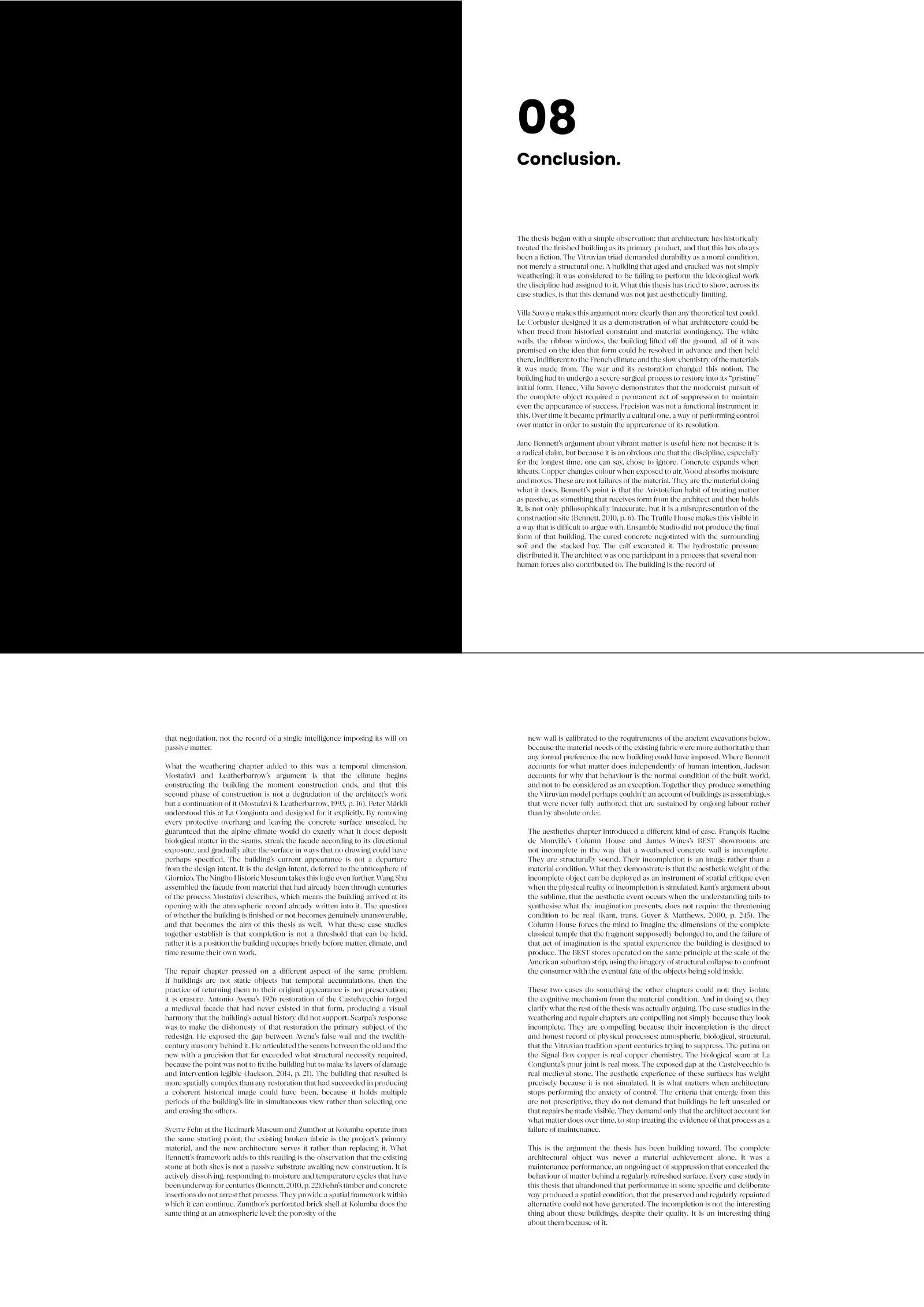
This research begins from the tension between these positions. It asks how architecture might be understood differently if material behaviour is not suppressed but allowed to remain visible. Rather than treating completion as a final state, the research attempts to read it as a state of temporary stabilisation; one that matters and human occupation continuously renegotiates, in certain instances with time as a third entity. This research uses incompleteness as a lens to examine how architecture engages with material behaviour across built work. Through the case studies analysed, the study investigates how material instability can reshape architectural judgement. Rather than rejecting precision, the study repositions it as a negotiation with processes that cannot be fully controlled, allowing architecture to operate with material change instead of suppressing it. To view the full DRP, click here.