Your browser is out-of-date!
For a richer surfing experience on our website, please update your browser. Update my browser now!
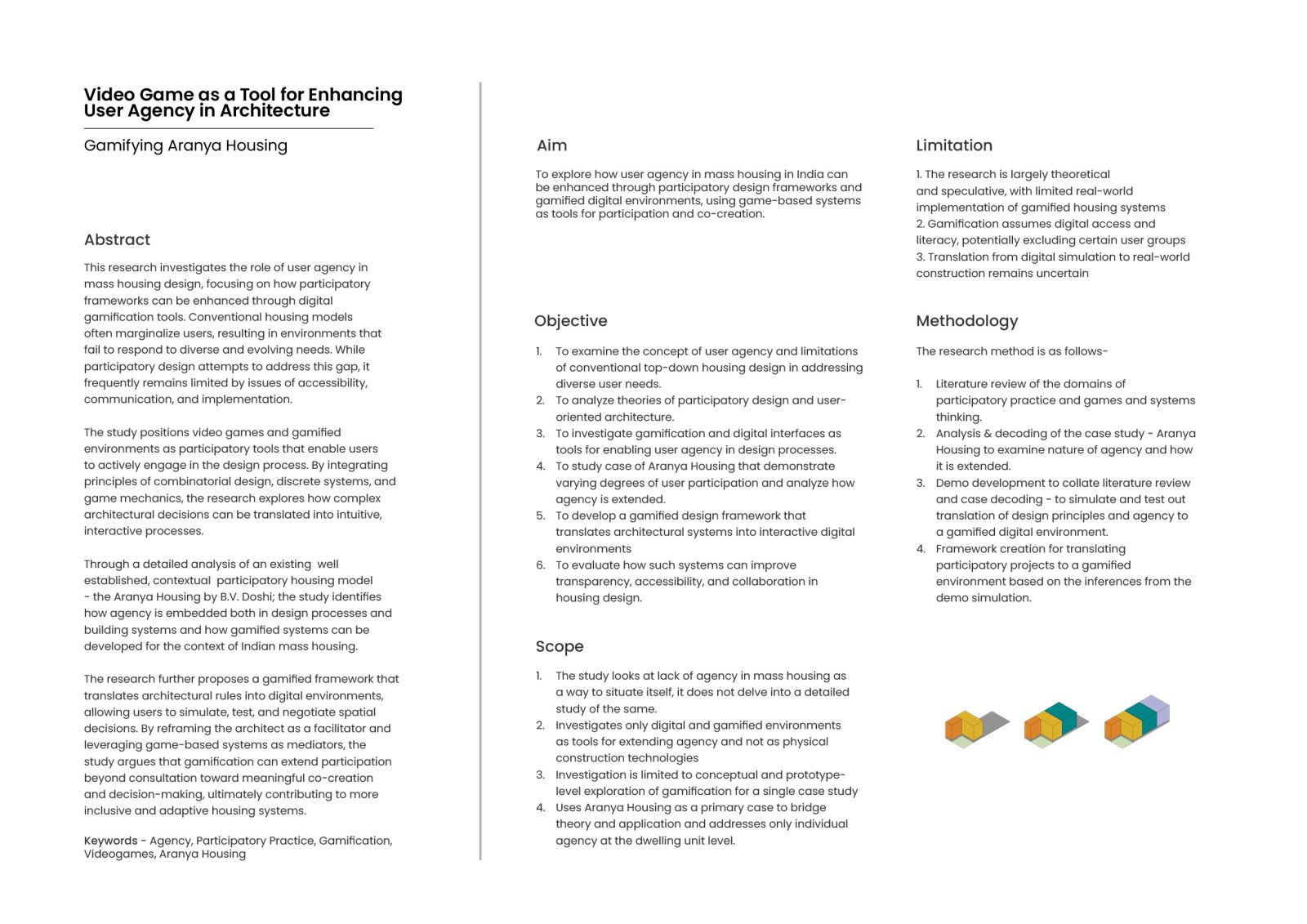
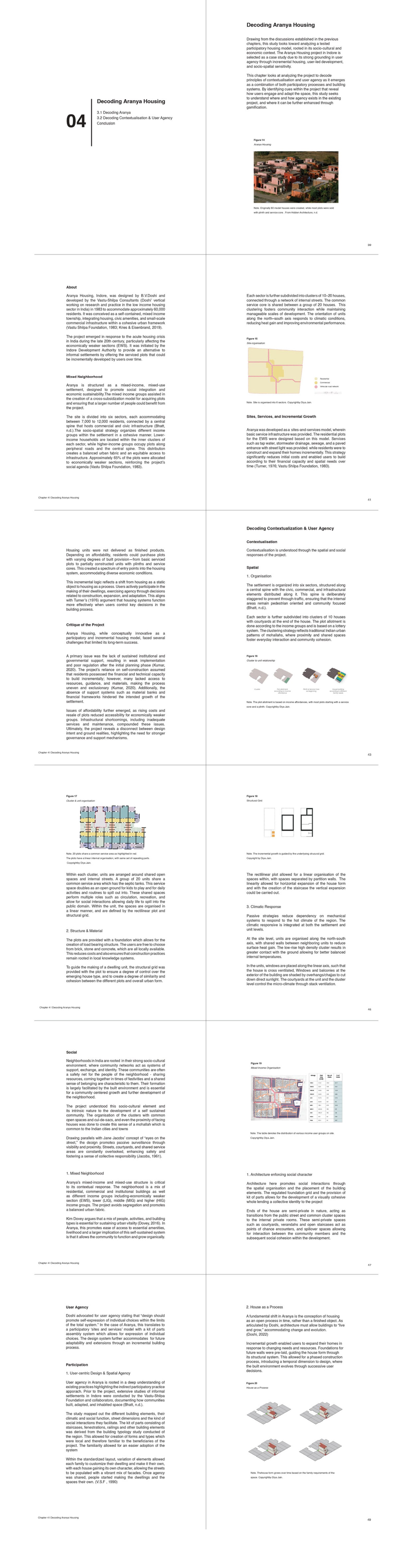
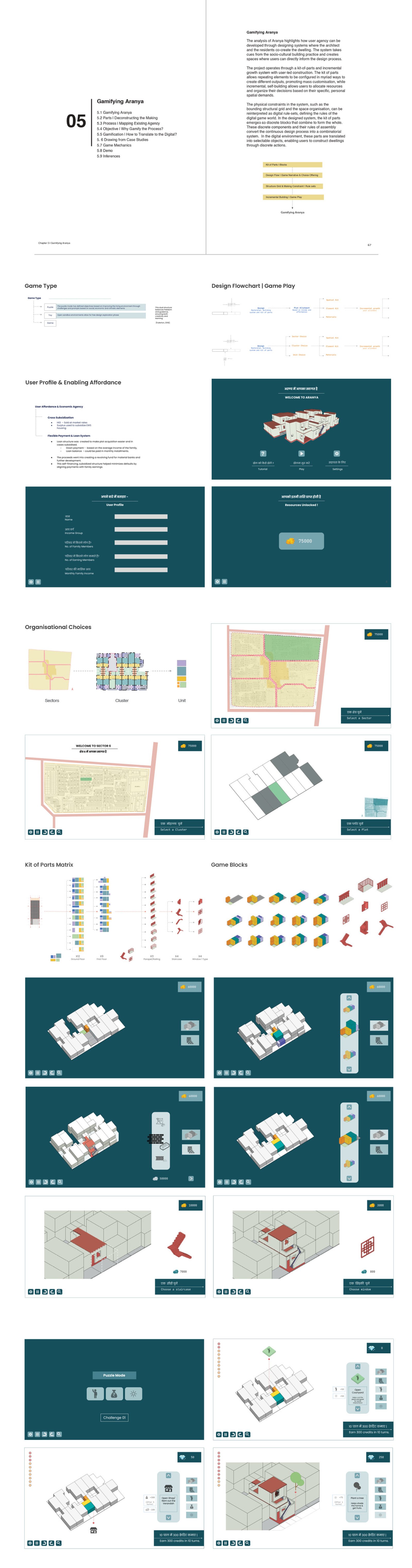
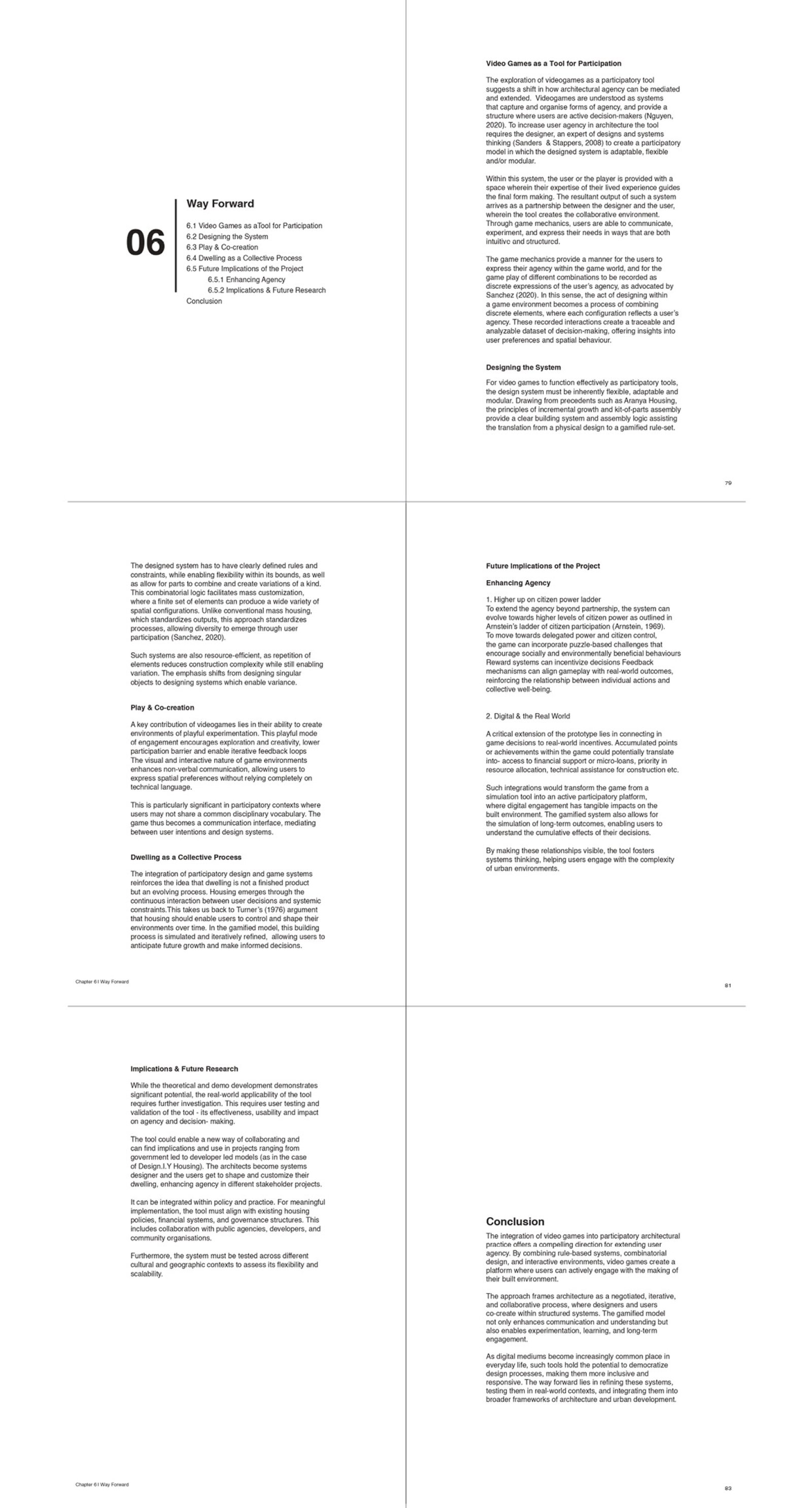
This research investigates the role of user agency in mass housing design, focusing on how participatory frameworks can be enhanced through digital gamification tools. Conventional housing models often marginalize users, resulting in environments that fail to respond to diverse and evolving needs. While participatory design attempts to address this gap, it frequently remains limited by issues of accessibility, communication, and implementation. The study positions video games and gamified environments as participatory tools that enable users to actively engage in the design process. By integrating principles of combinatorial design, discrete systems, and game mechanics, the research explores how complex architectural decisions can be translated into intuitive, interactive processes. Through a detailed analysis of an existing well established, contextual participatory housing model - the Aranya Housing by B.V. Doshi; the study identifies how agency is embedded both in design processes and building systems and how gamified systems can be developed for the context of Indian mass housing. The research further proposes a gamified framework that translates architectural rules into digital environments, allowing users to simulate, test, and negotiate spatial decisions. By reframing the architect as a facilitator and leveraging game-based systems as mediators, the study argues that gamification can extend participation beyond consultation toward meaningful co-creation and decision-making, ultimately contributing to more inclusive and adaptive housing systems.
View Additional Work