Your browser is out-of-date!
For a richer surfing experience on our website, please update your browser. Update my browser now!
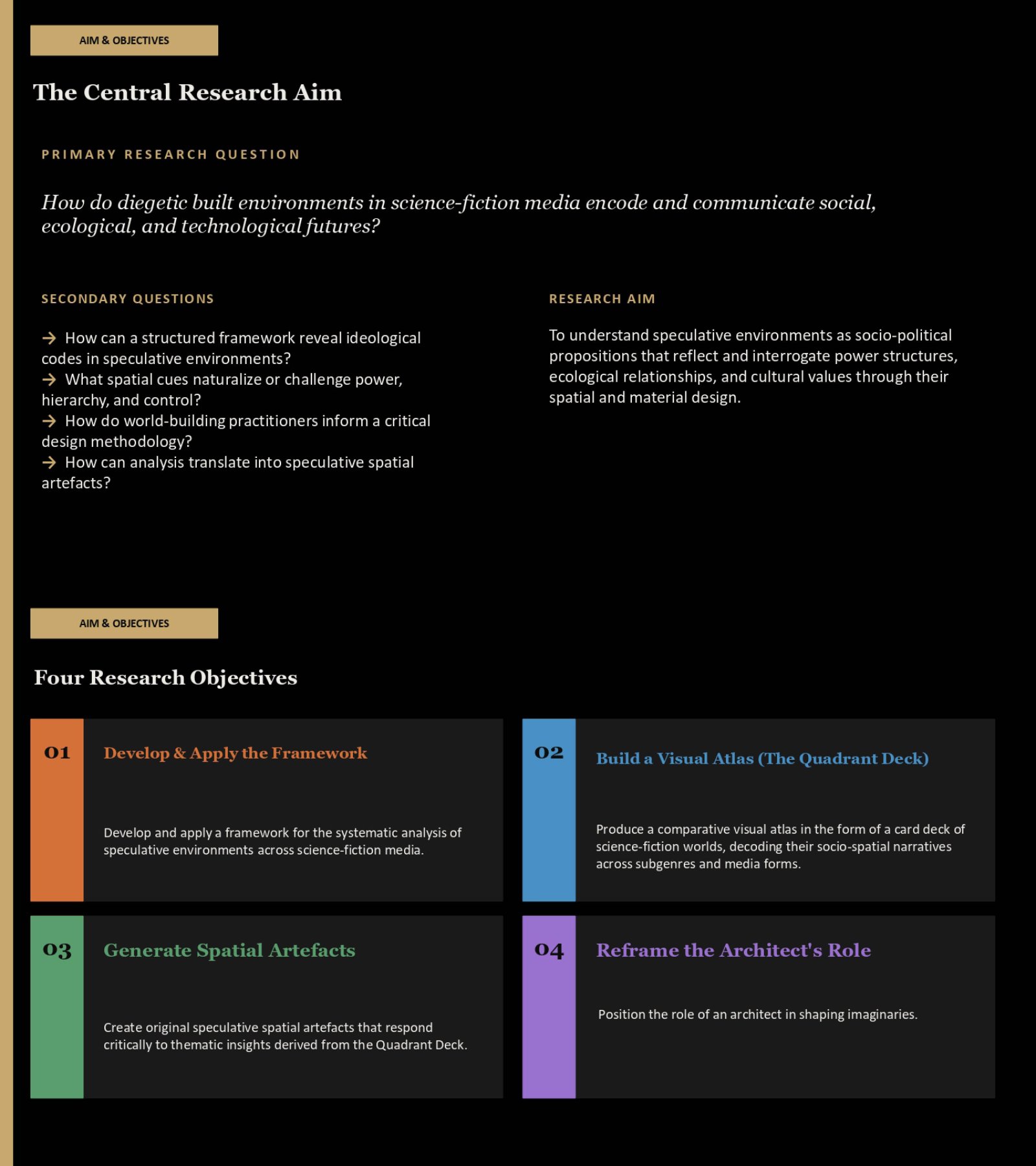
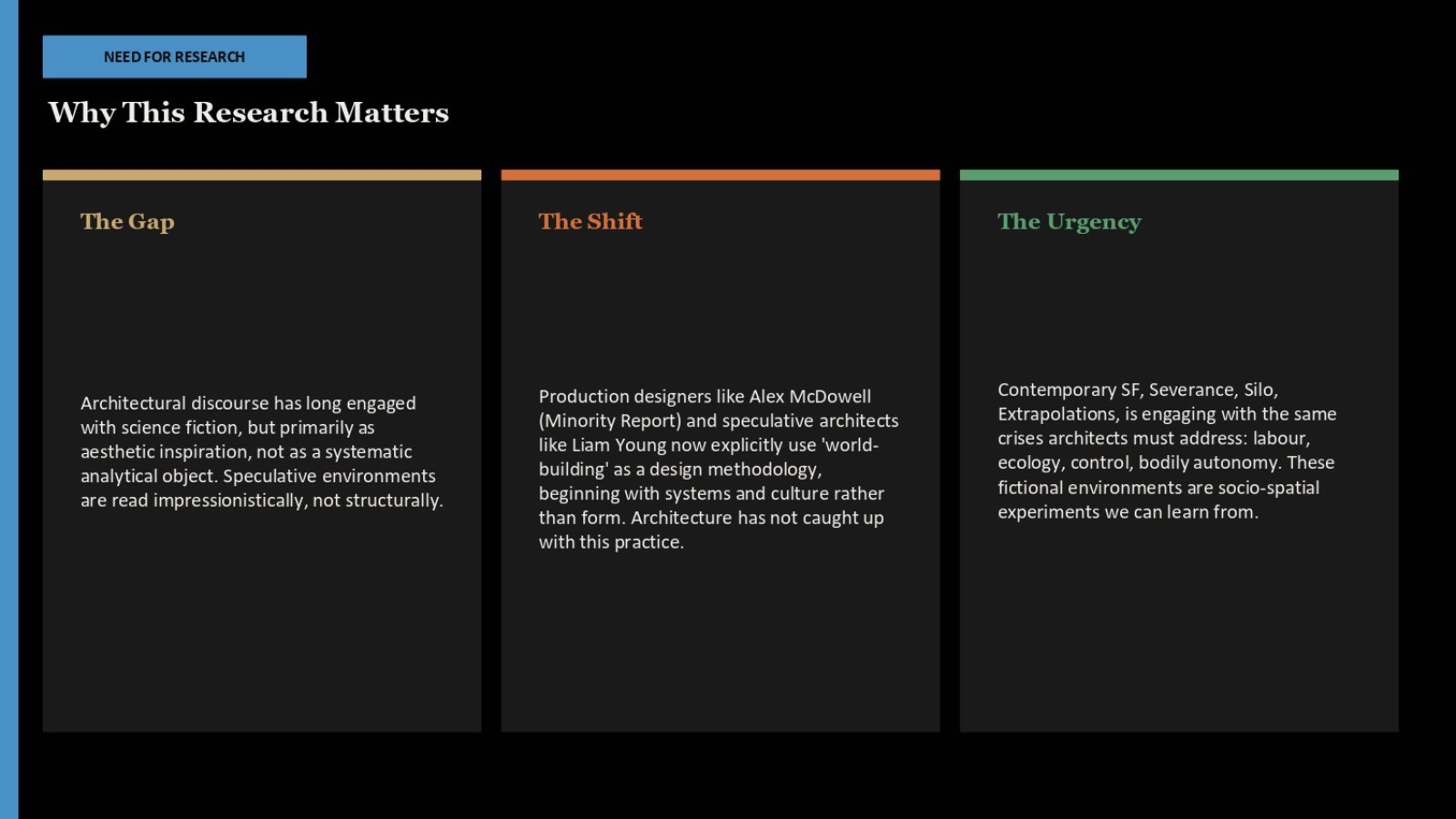
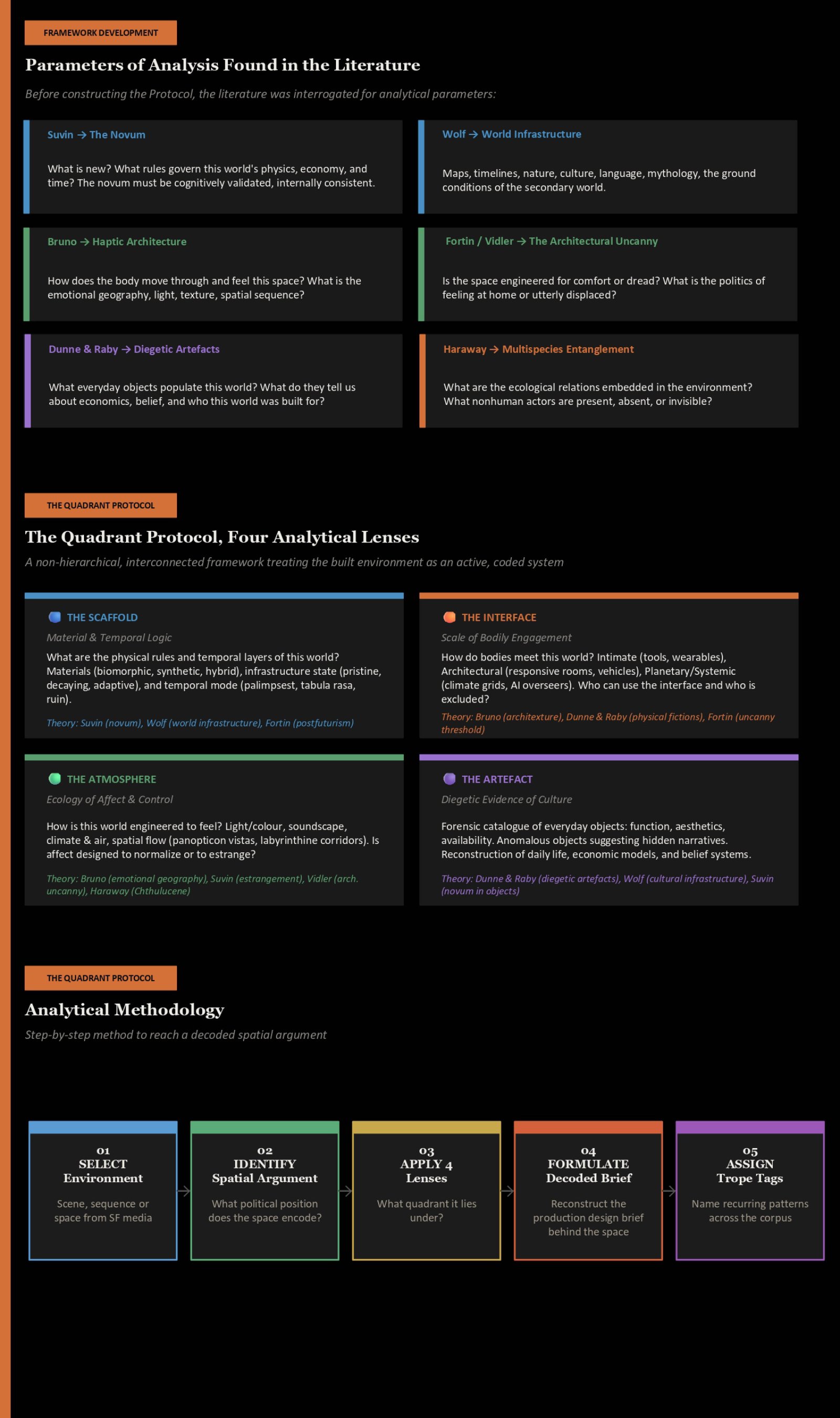
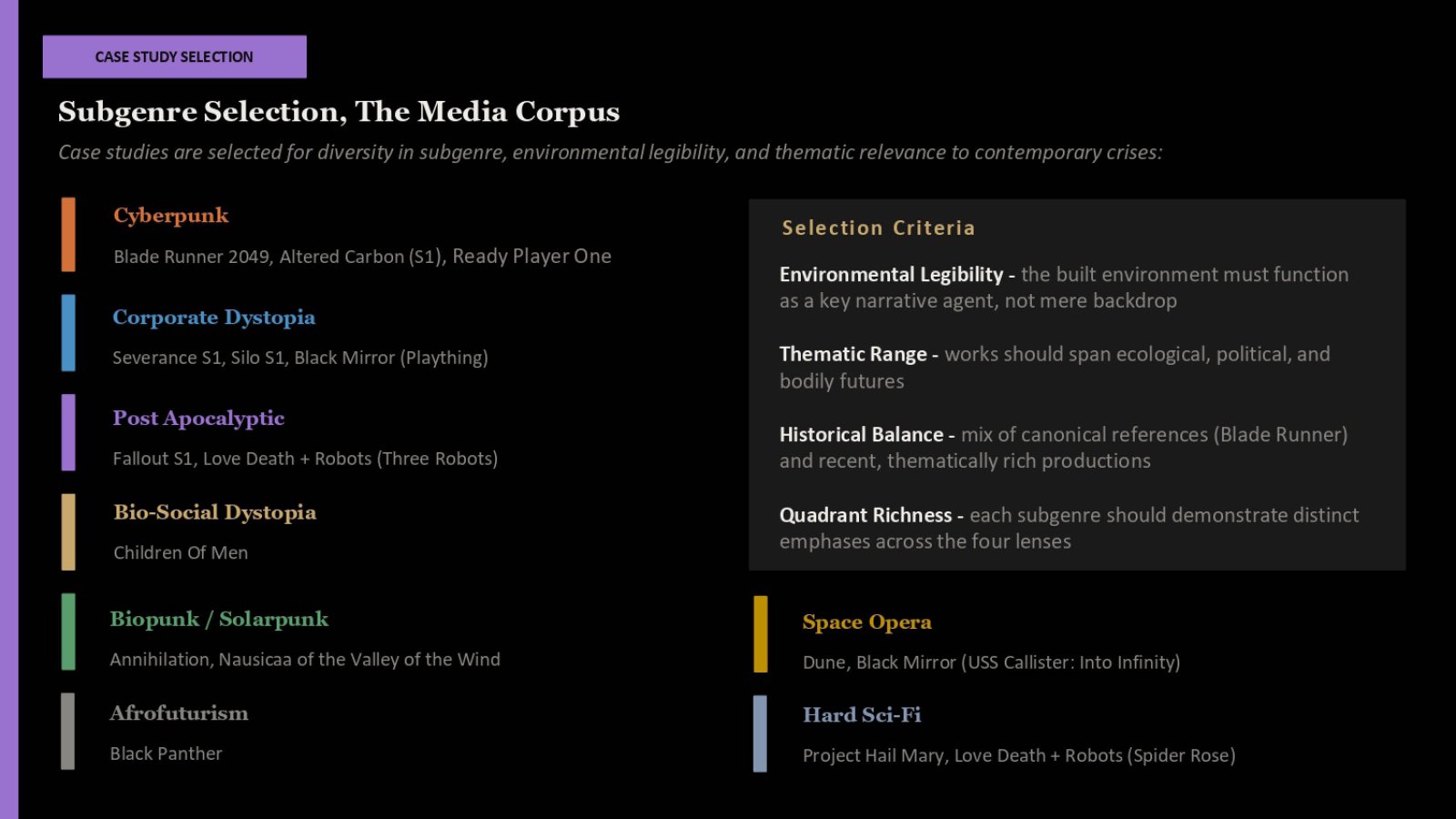
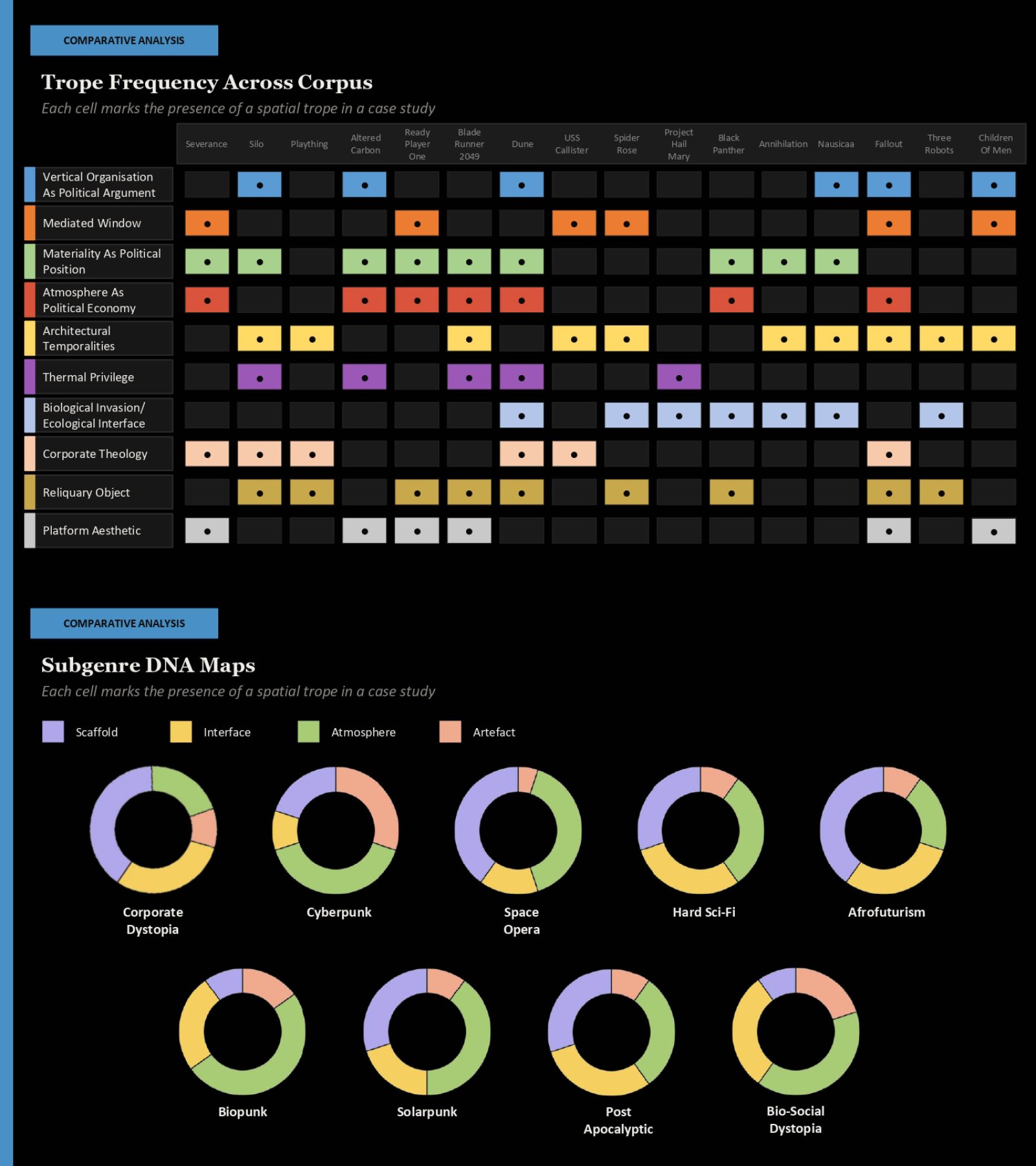
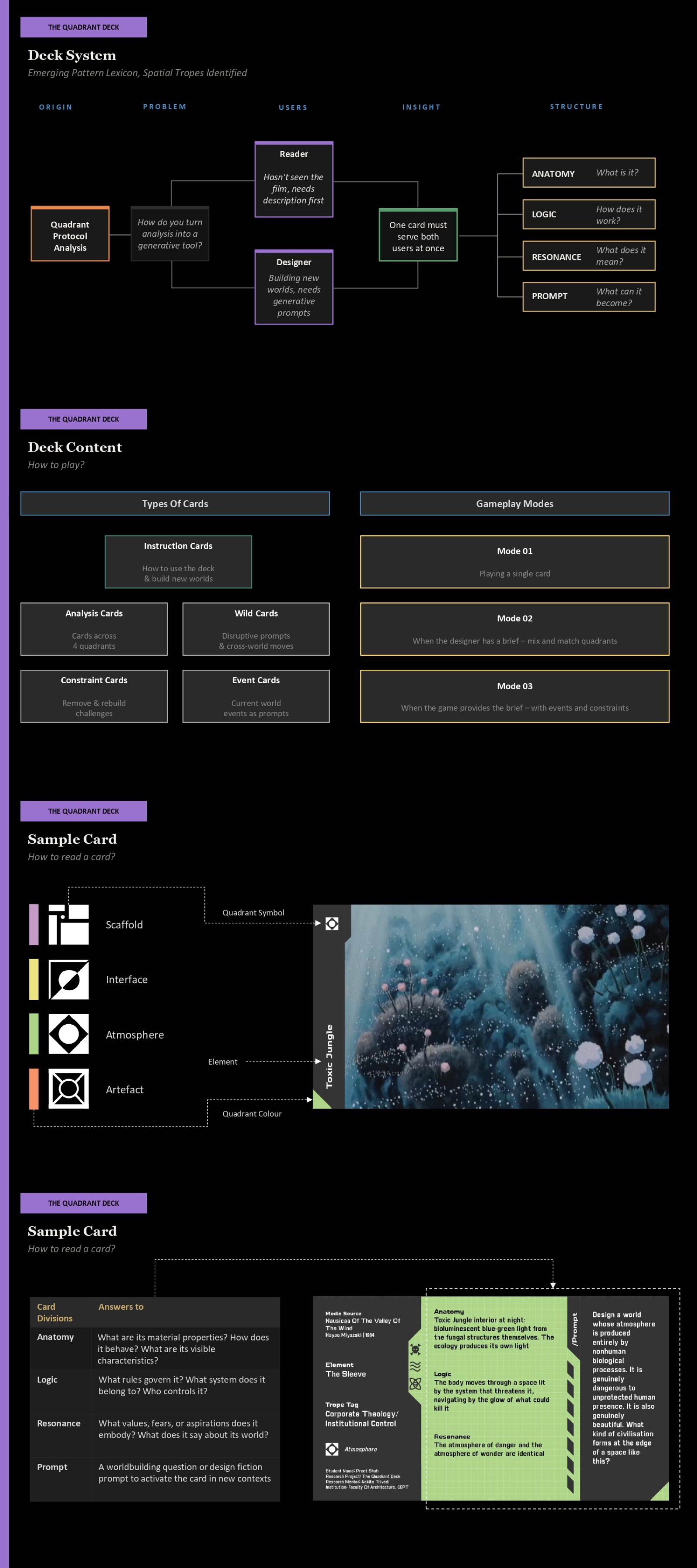
This research investigates the diegetic built environments of science-fiction film and television as socio-political propositions: designed spatial systems whose material decisions, atmospheric conditions, bodily interfaces, and artefact records communicate arguments about power, ecology, and the body independent of the narratives they support. The central claim is that speculative environments are not illustrations of story but spatial arguments in their own right, readable through the same analytical instruments one would bring to a work of architecture. To support this, the research develops the Quadrant Protocol, applies it to sixteen case studies across nine subgenres, and translates its findings into the Quadrant Deck, a generative design toolkit for architectural world-building.