Your browser is out-of-date!
For a richer surfing experience on our website, please update your browser. Update my browser now!
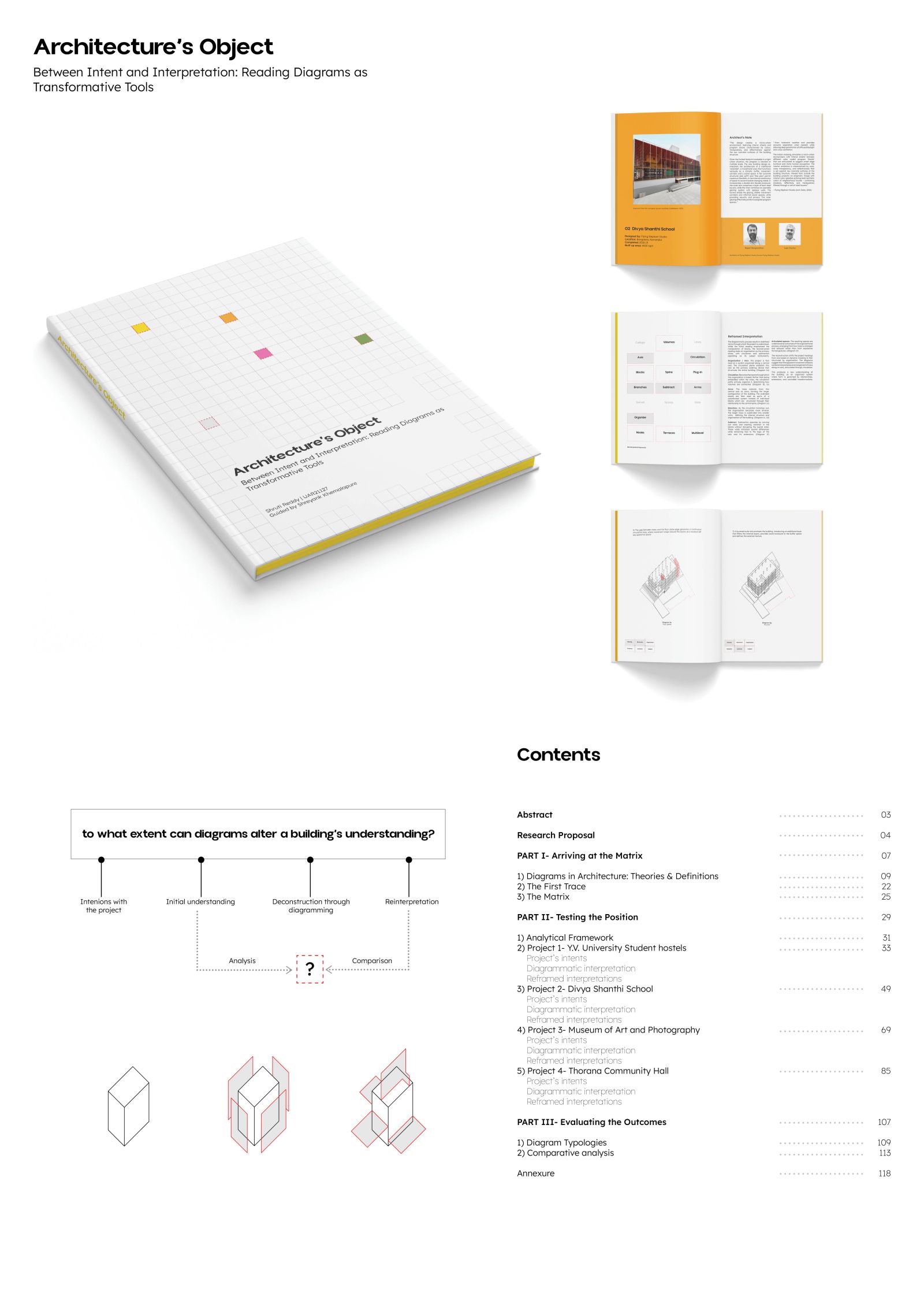
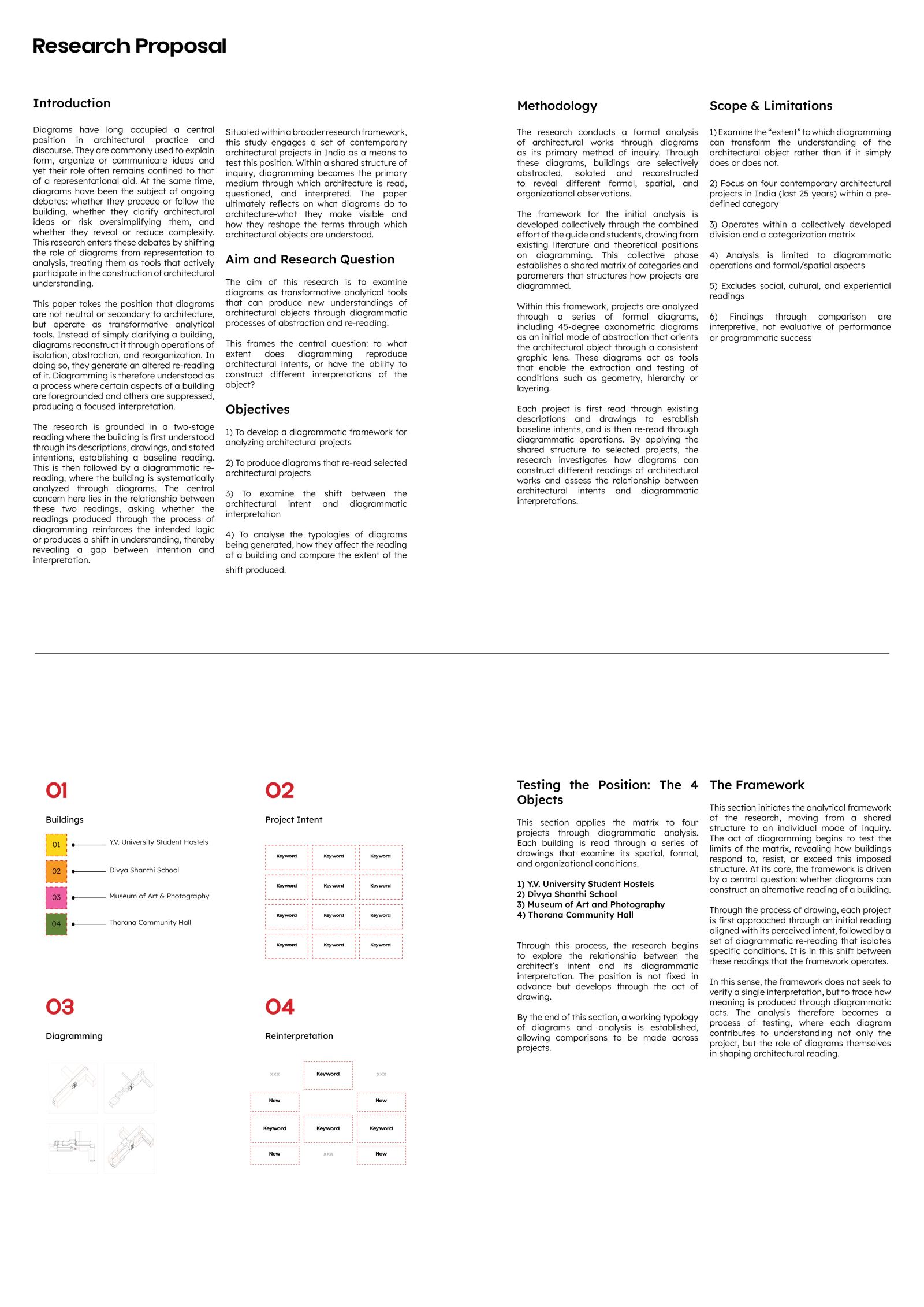
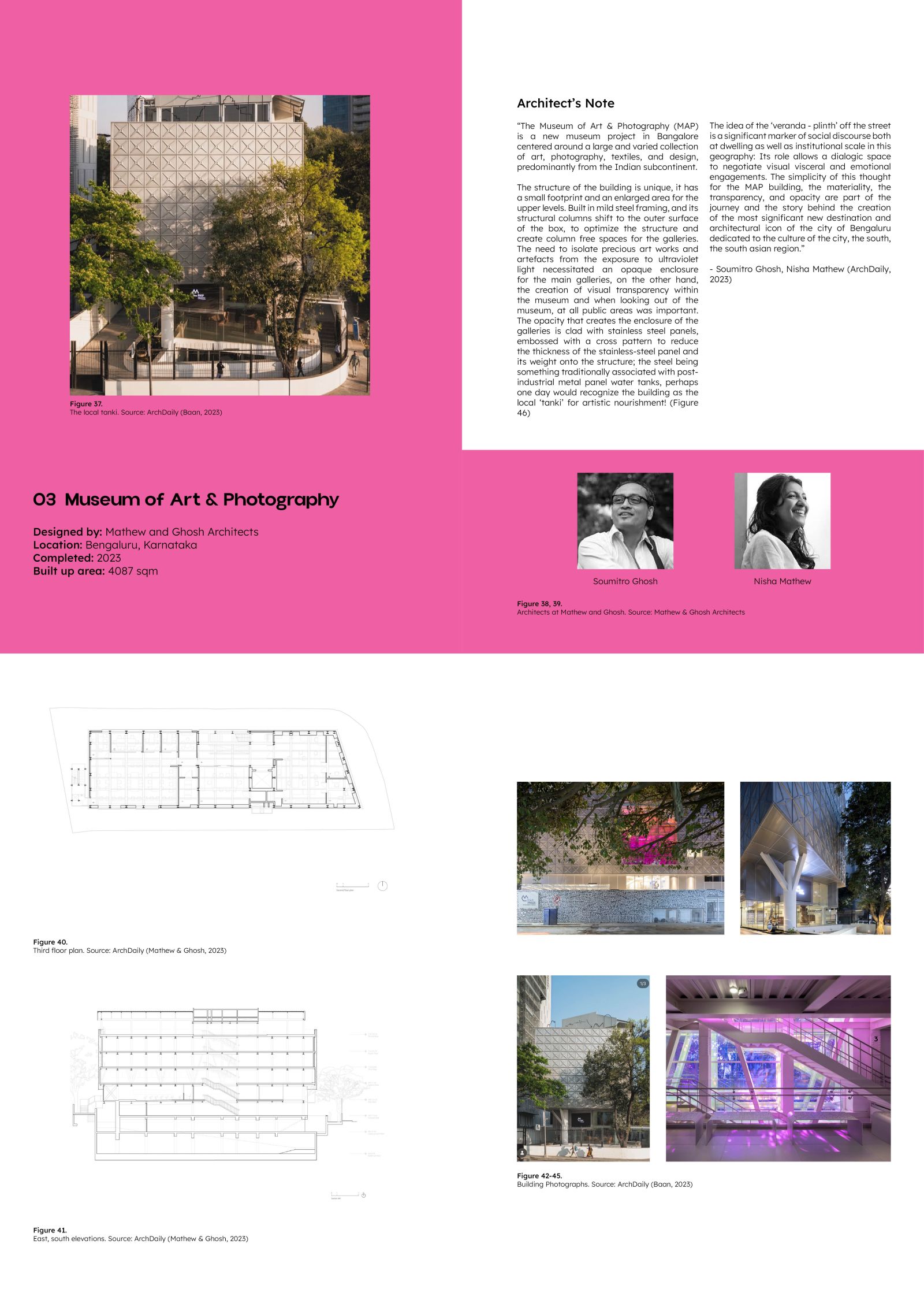
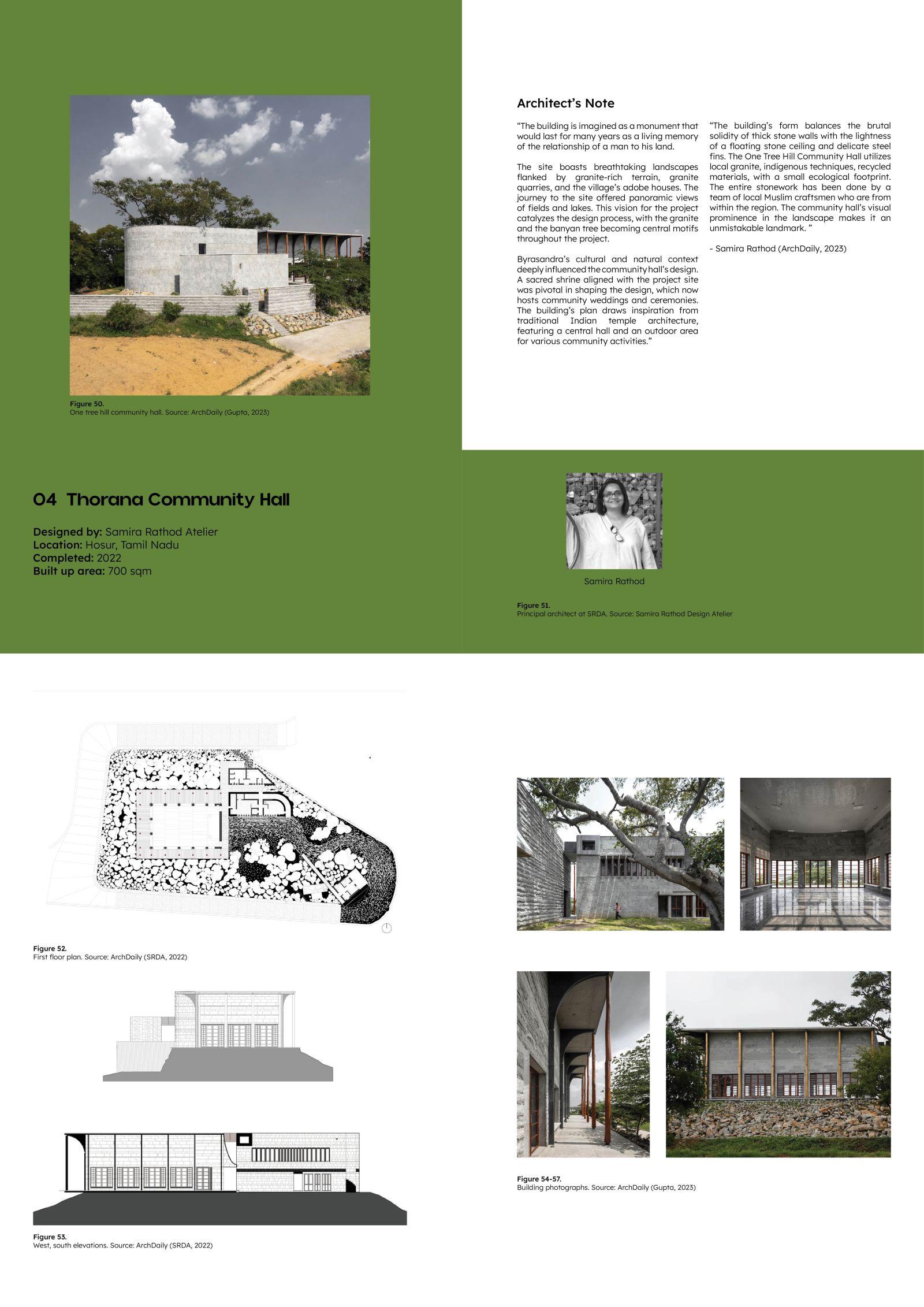
This research examines diagramming as a process that shapes how an architectural object is understood. Rather than simply translating intents, it is approached through acts of selective isolation and abstraction that construct a particular reading of the object.
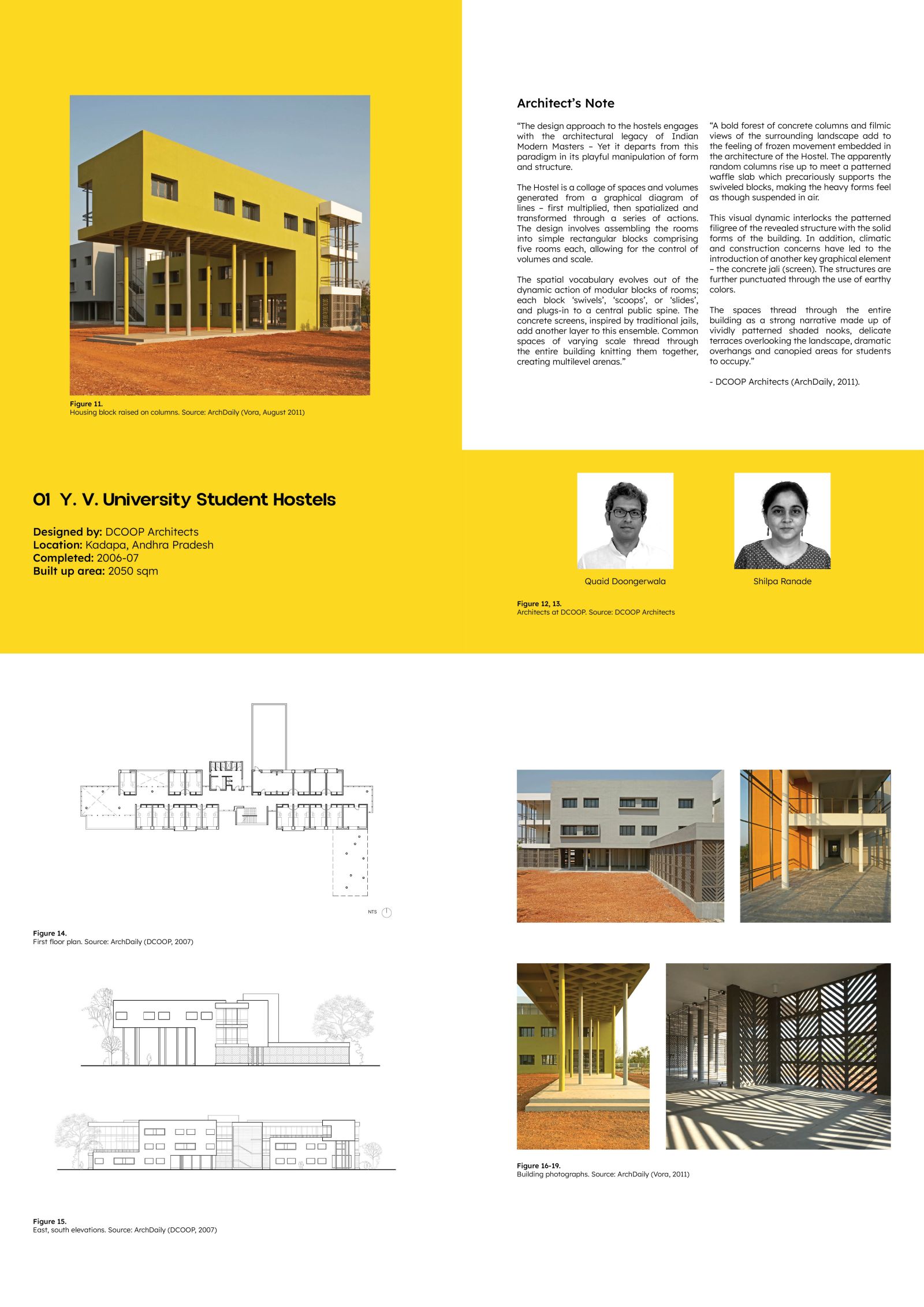
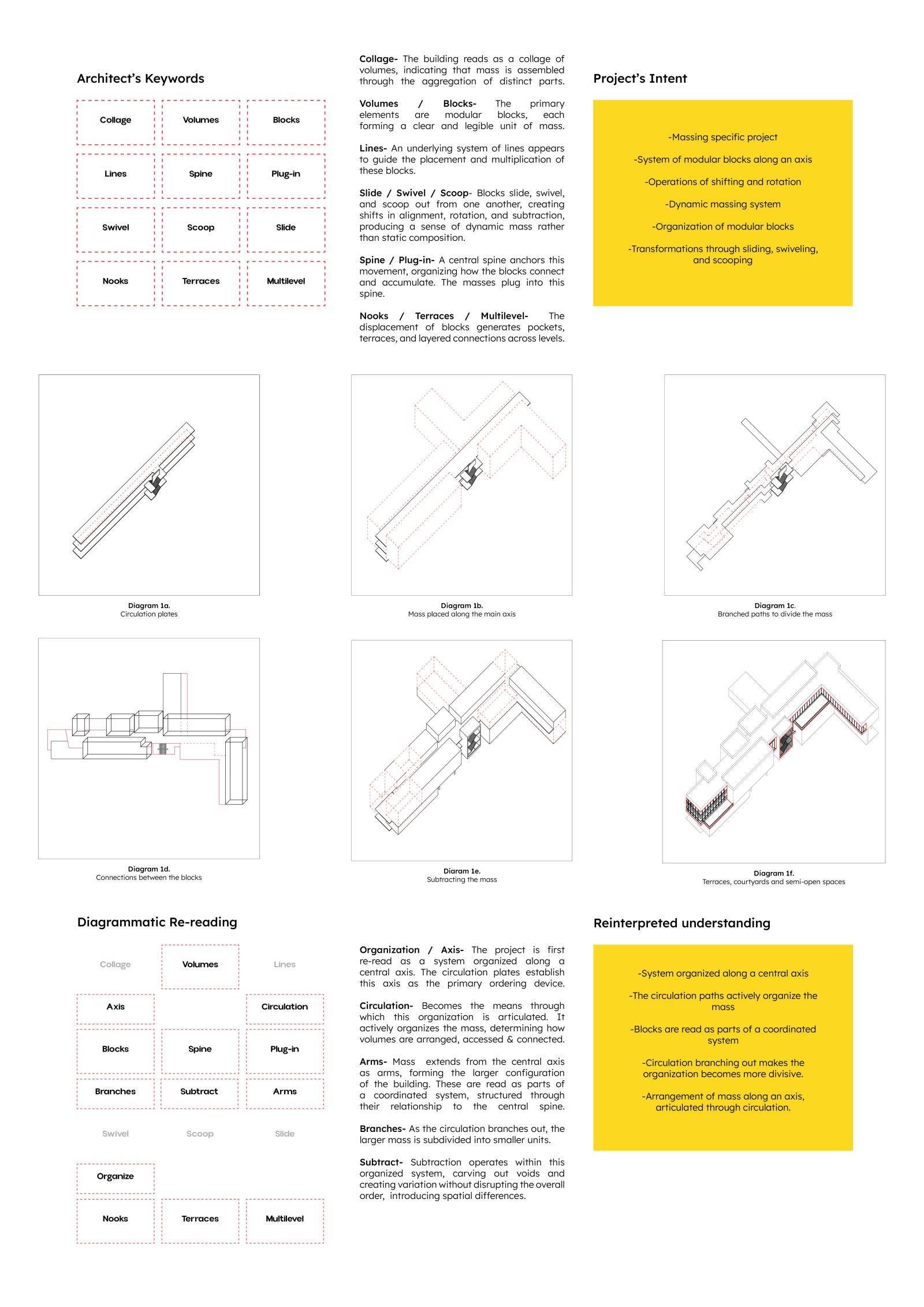
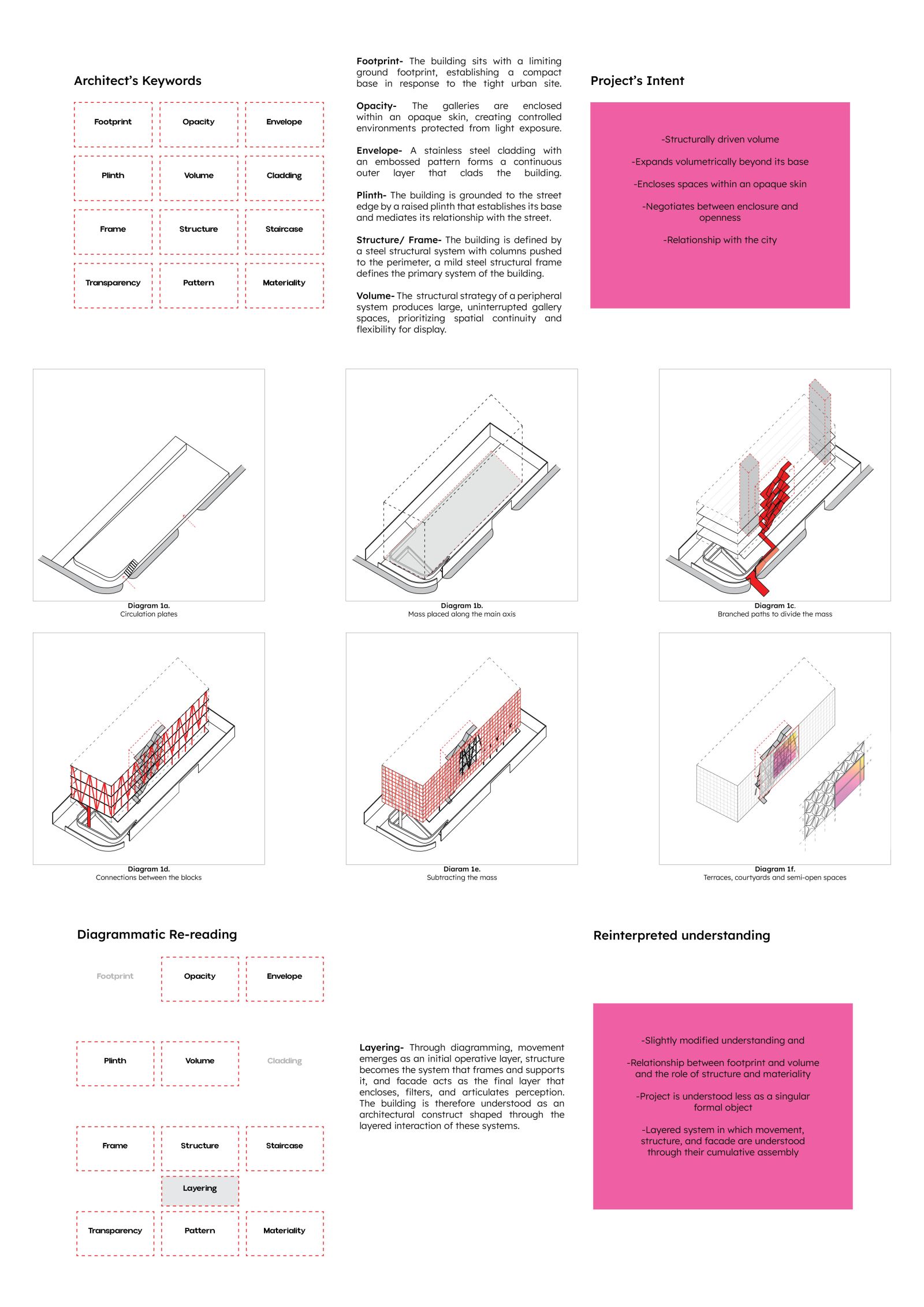
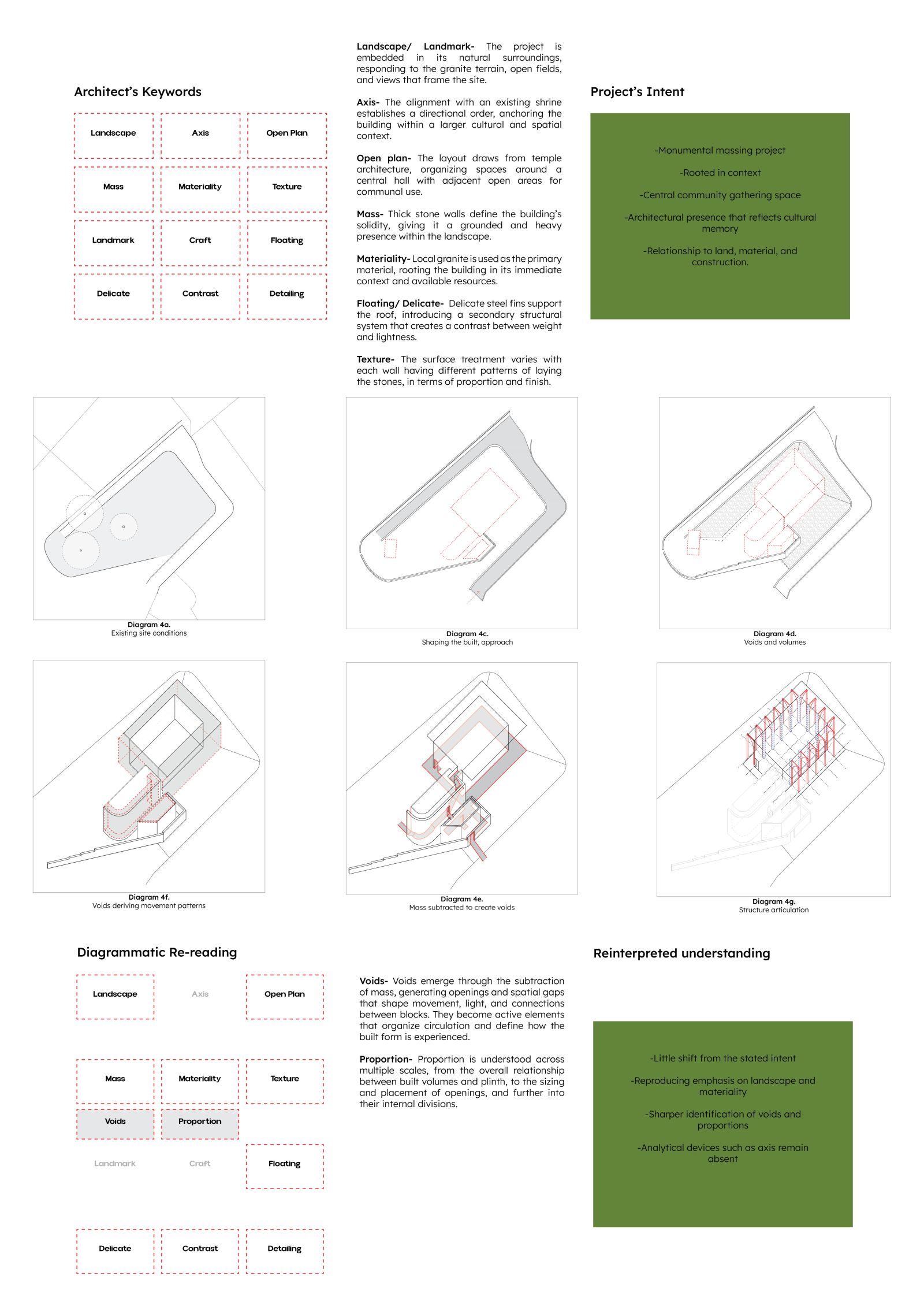
The study highlights a concern for the probable gap between architectural intentions and its diagrammatic interpretation. Each project is first read through the architect’s own descriptions, drawings, and stated intentions to establish a baseline logic. This is followed by a diagrammatic re-reading, where the project is deconstructed and reconstructed through a series of diagrams derived from a categorization matrix that identifies primary and underlying logics. Informed by existing theories, the research by doing so, develops its own analytical framework, which actively mediates this process by foregrounding certain relationships.
Within this process, each diagram functions as an argument, producing a specific interpretation that varies aspectually. Meaning is not lost or reduced here but reorganized through the framework itself. The findings emerge through a comparative analysis of these diagrammatic readings as typologies across projects, examining how the shift between intention and interpretation varies or exists in all cases. The paper ultimately positions diagramming as an analytical act that can construct its own architectural understanding by reorganizing the relationship between intentions, representations, and interpretations.