Your browser is out-of-date!
For a richer surfing experience on our website, please update your browser. Update my browser now!
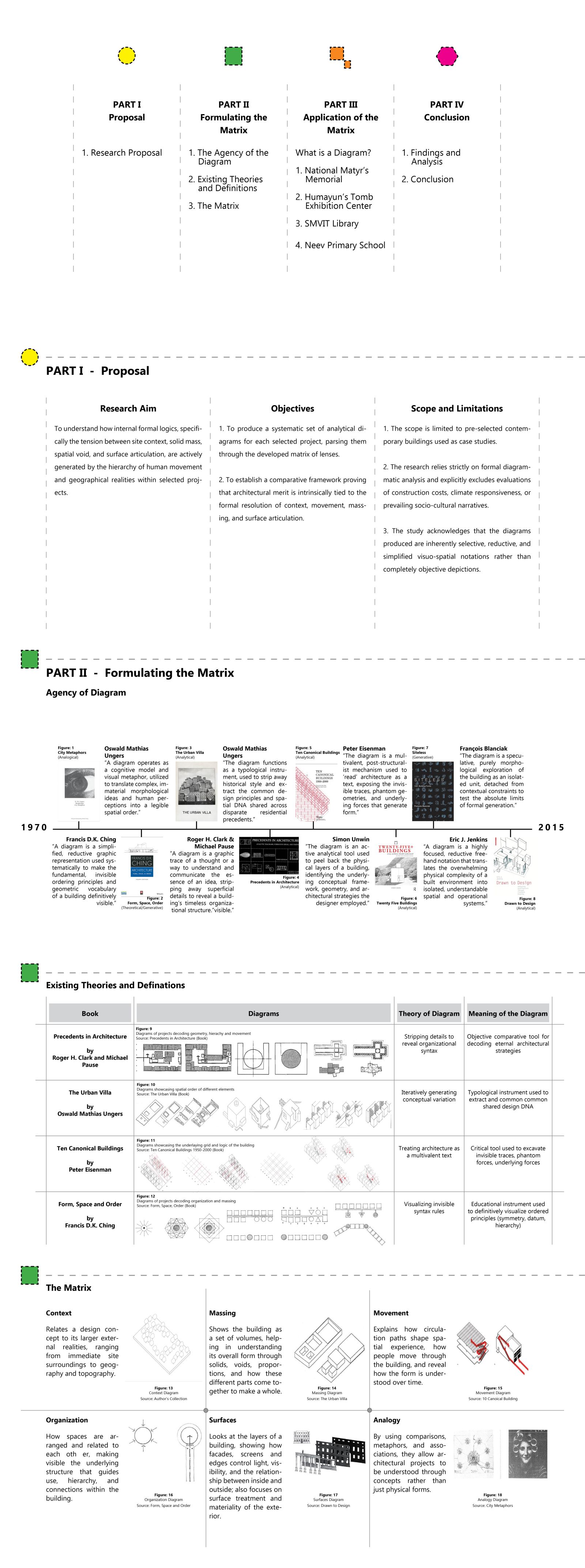
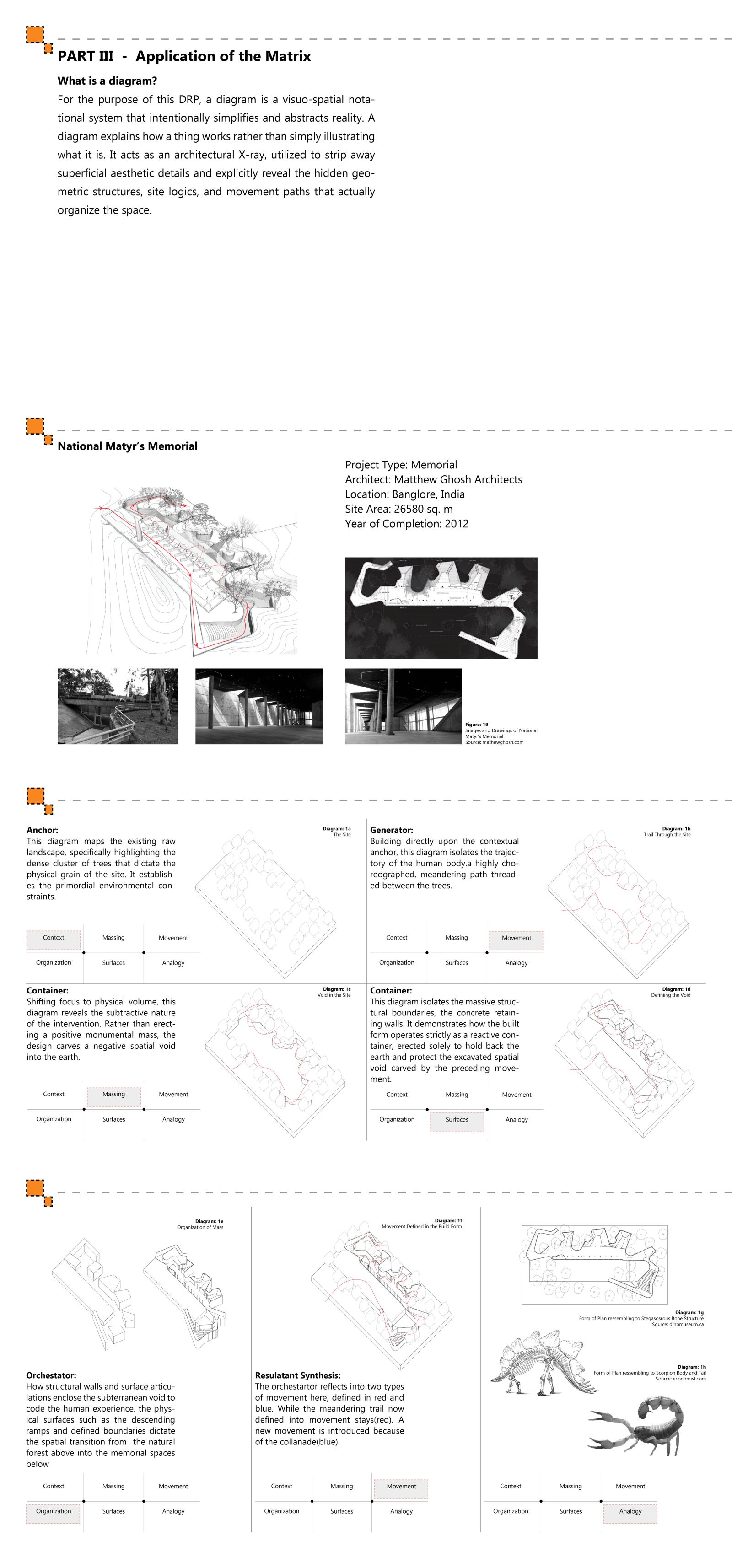
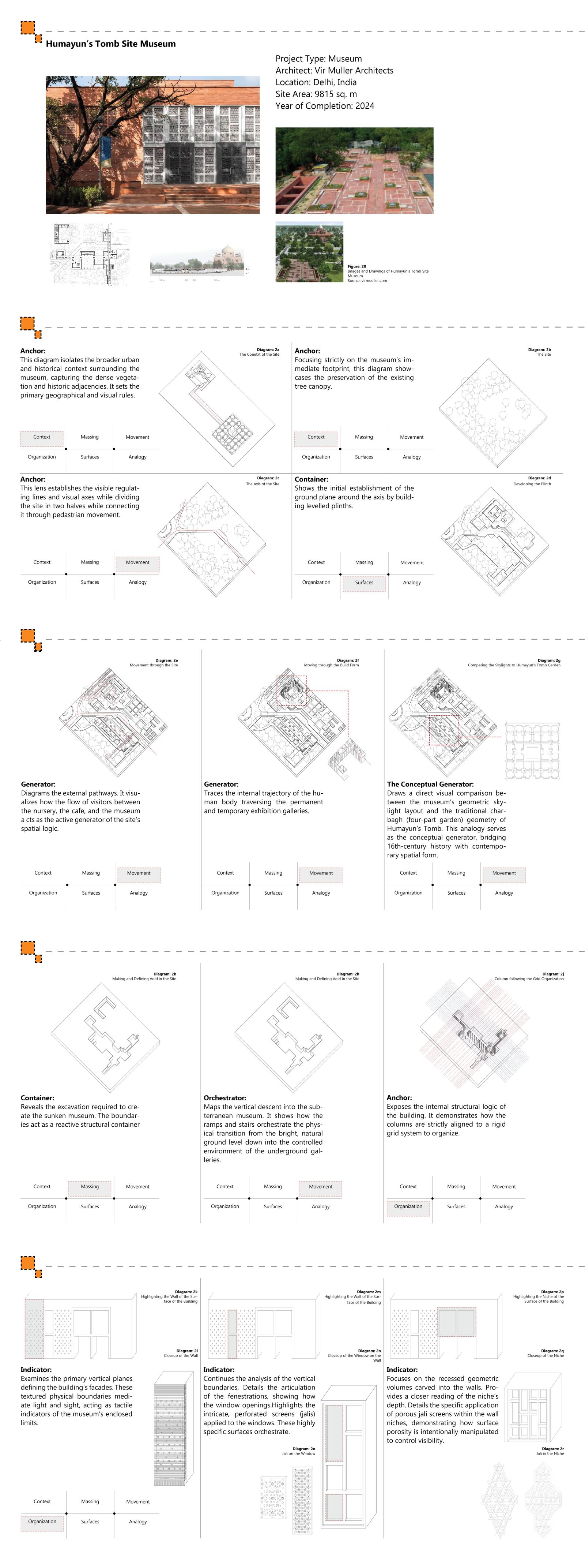
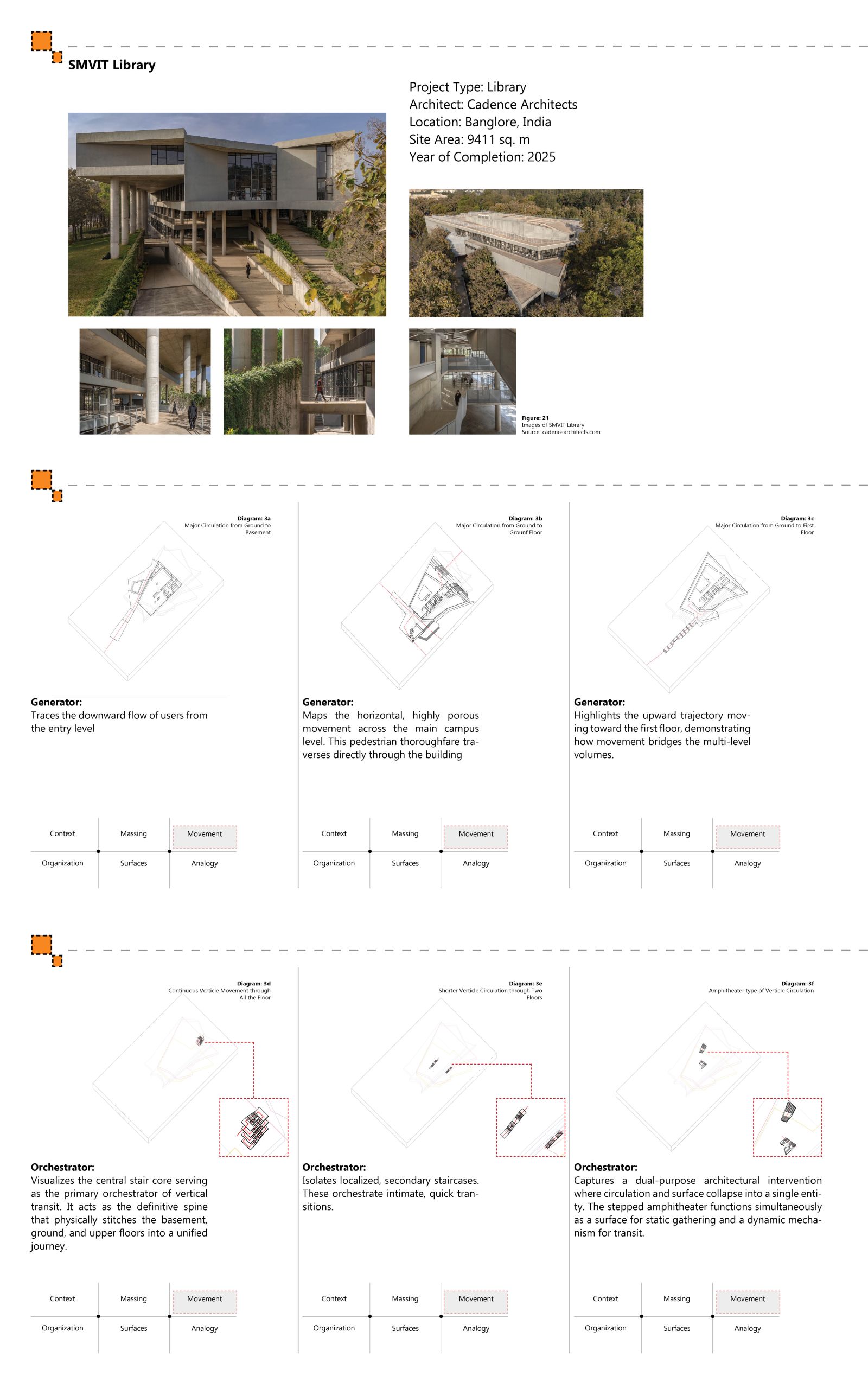
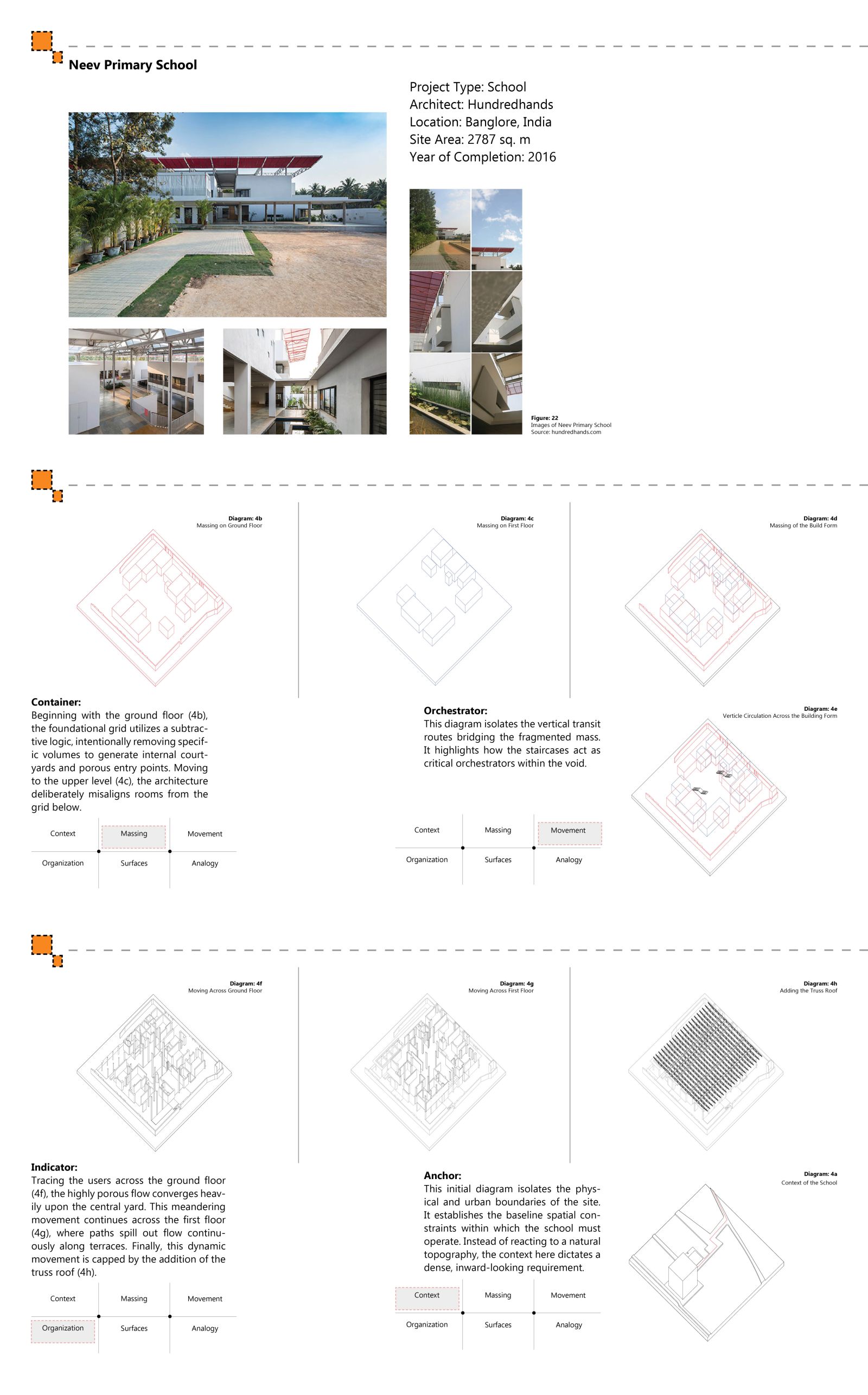
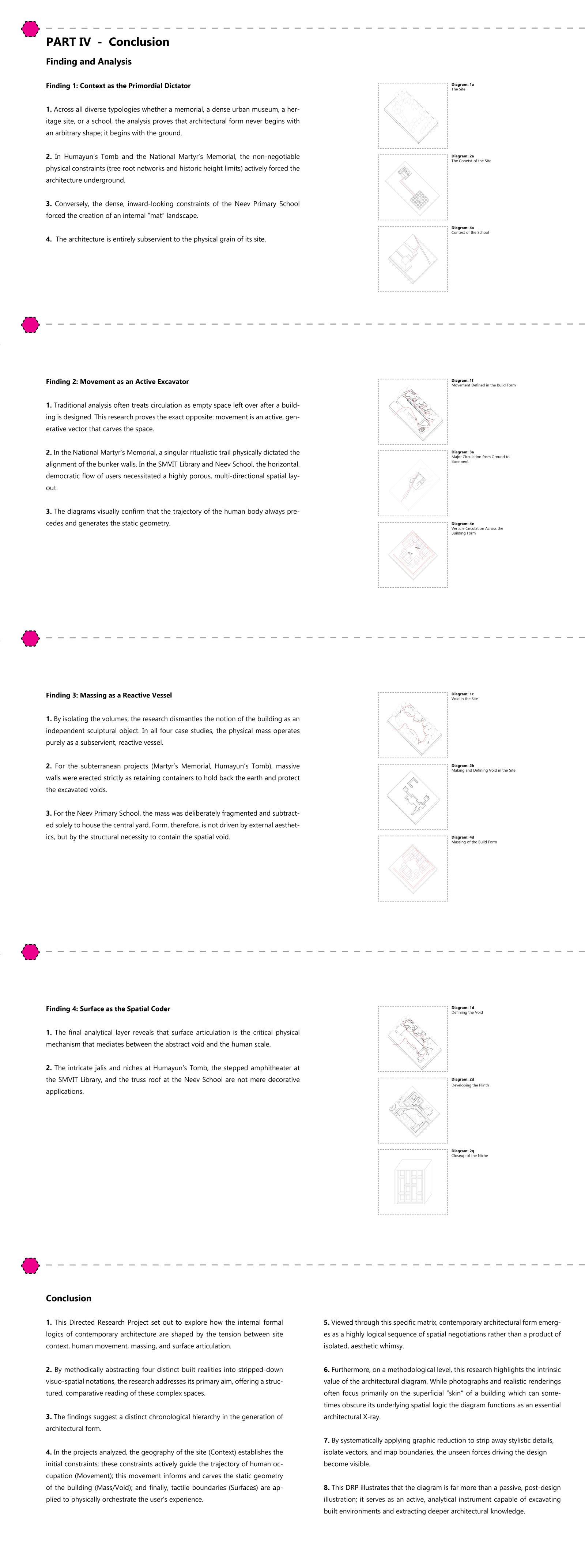
This research explores how the formal intelligence of selected post-2000 Indian architectural projects is fun damentally shaped by the relationship between their geographical anchorage, human movement, volumetric space, and surface articulation. Breaking away from tra ditional critiques that often evaluate buildings through the external lenses of socio-cultural narratives, climate, or construction economics, this study looks inward at the discipline’s internal spatial logics. To achieve this, the research introduces a rigorous, multi-layered ma trix system, a structured set of graphic lenses designed to systematically decode the architecture. By applying this matrix of formal analysis, the study extracts how a building sequentially negotiates its physical reality. Ulti mately, this research proves that by translating complex built environments into abstracted, reductive diagrams, we can make the invisible forces of design definitive ly visible, establishing the diagram as a vital analyti cal instrument capable of producing new architectural knowledge.
View Additional Work