Your browser is out-of-date!
For a richer surfing experience on our website, please update your browser. Update my browser now!
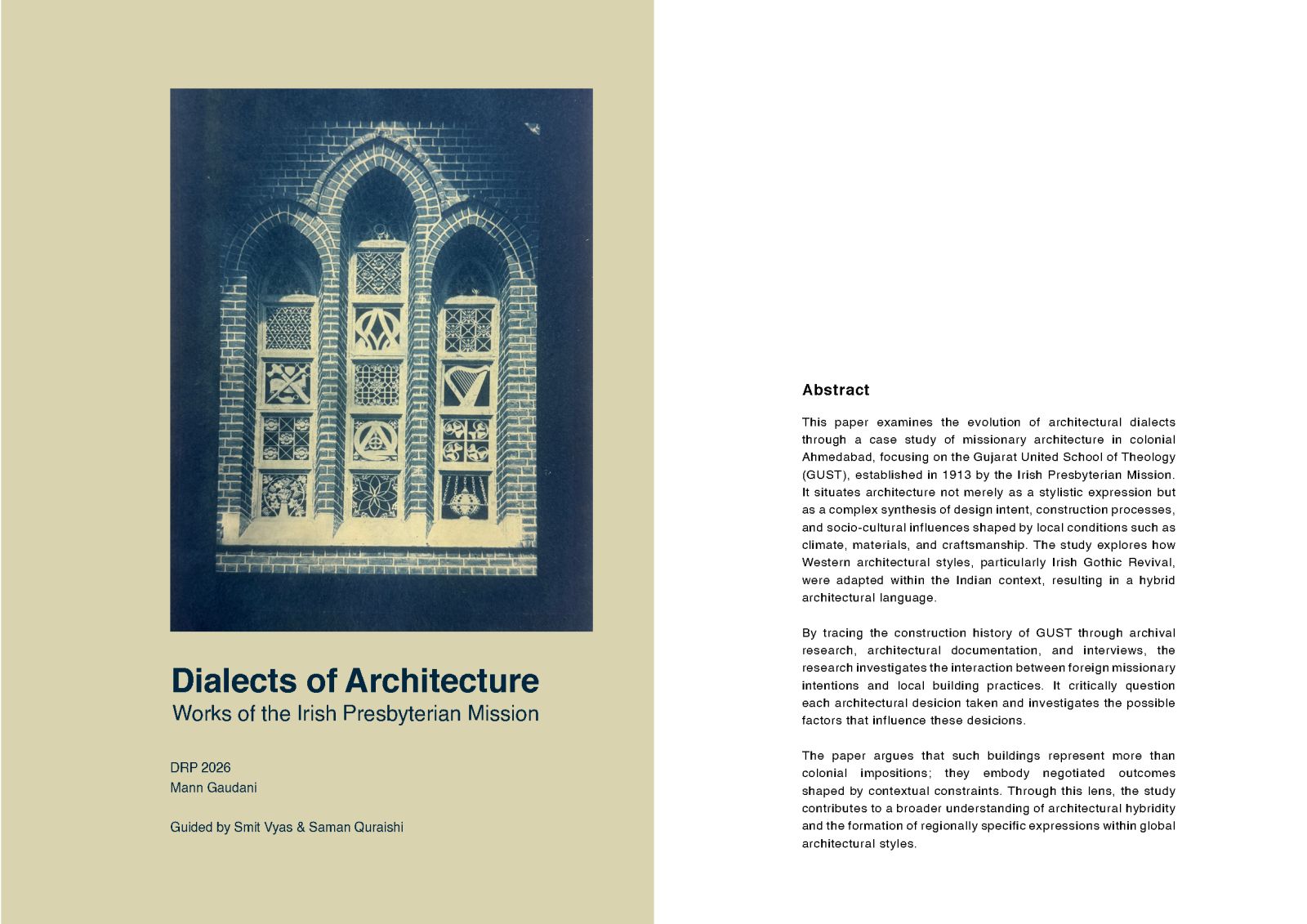
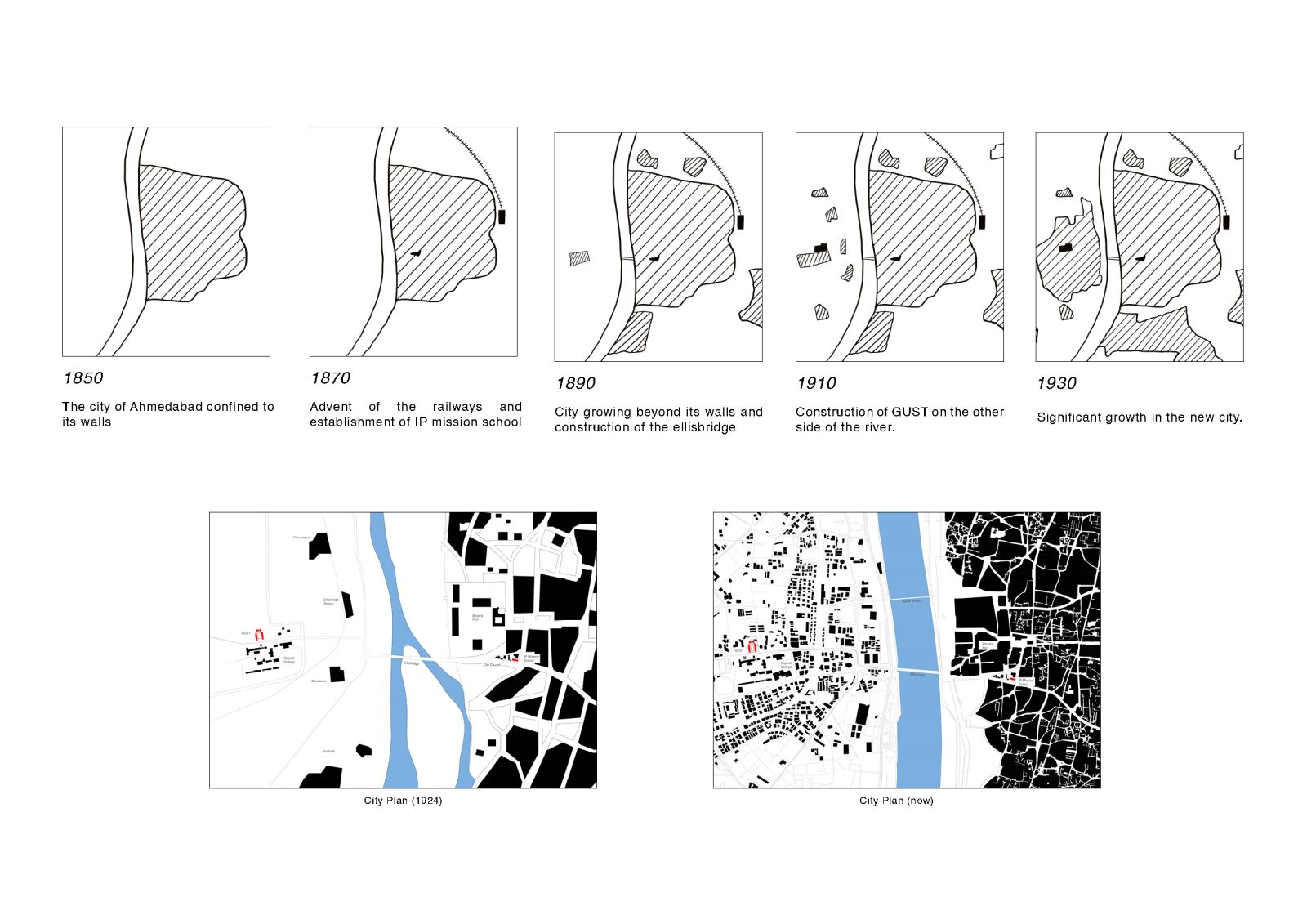
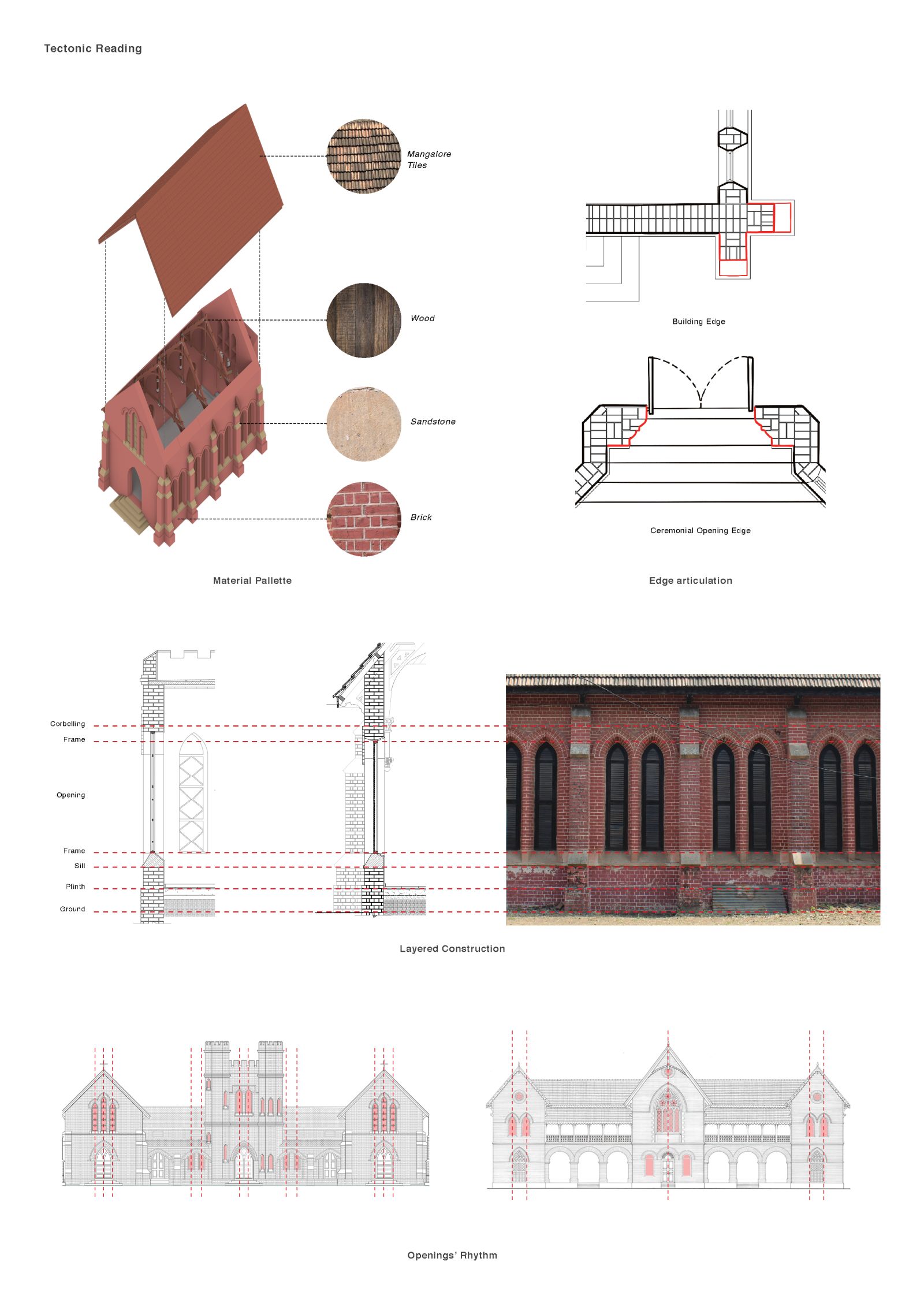
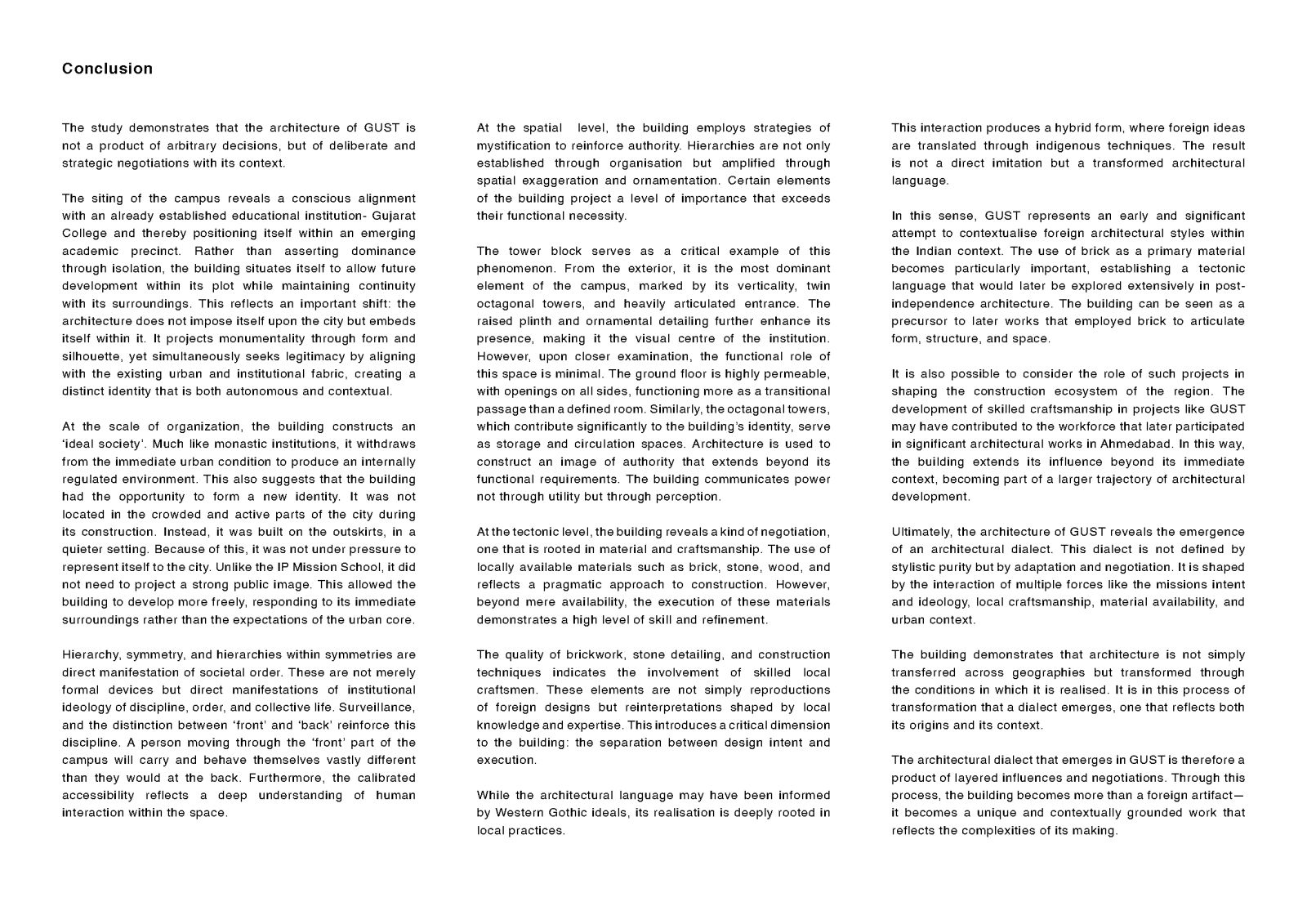
This paper examines the evolution of architectural dialects through a case study of missionary architecture in colonial Ahmedabad, focusing on the Gujarat United School of Theology (GUST), established in 1913 by the Irish Presbyterian Mission. It situates architecture not merely as a stylistic expression but as a complex synthesis of design intent, construction processes, and socio-cultural influences shaped by local conditions such as climate, materials, and craftsmanship. The study explores how Western architectural styles, particularly Irish Gothic Revival, were adapted within the Indian context, resulting in a hybrid architectural language.
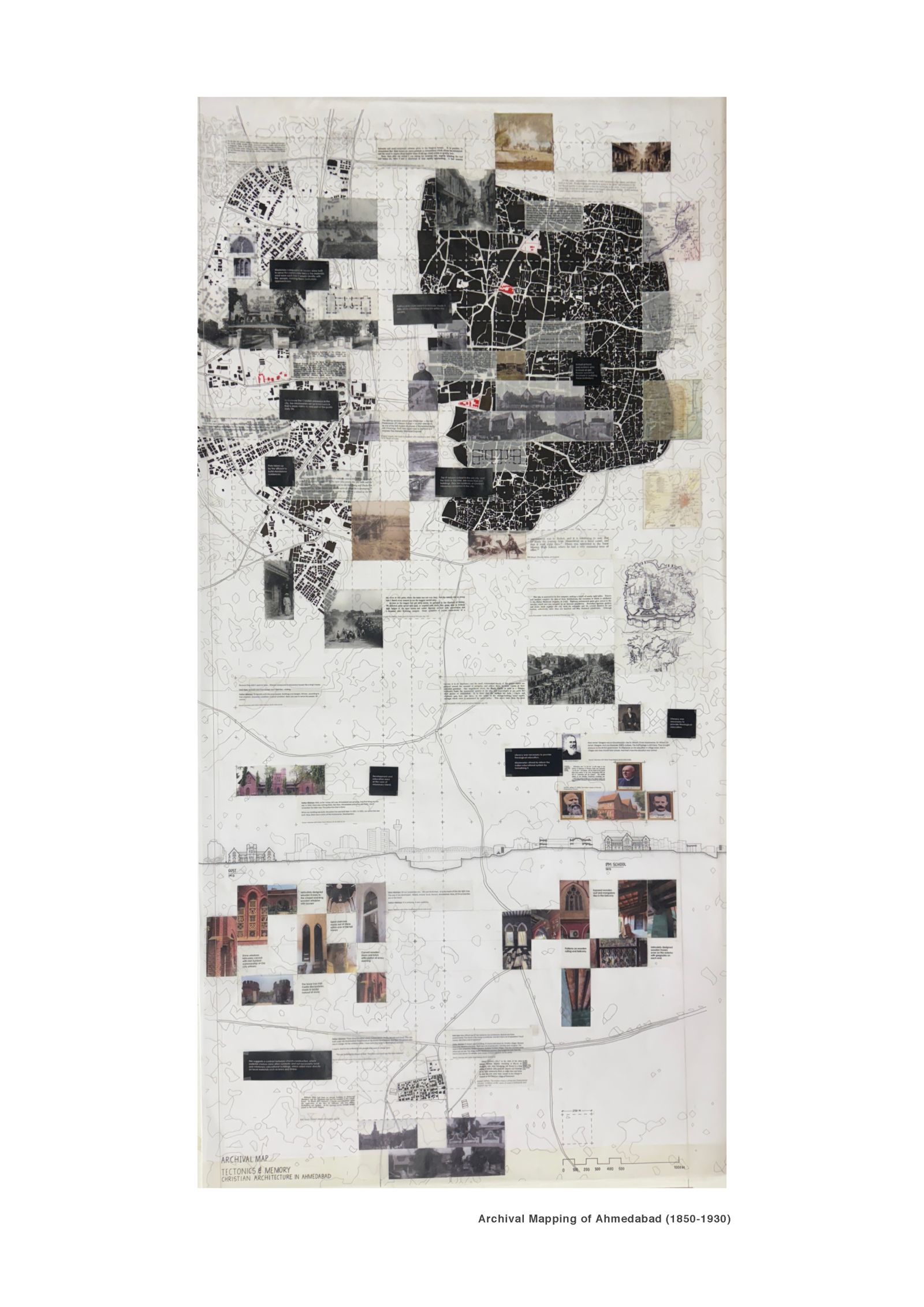
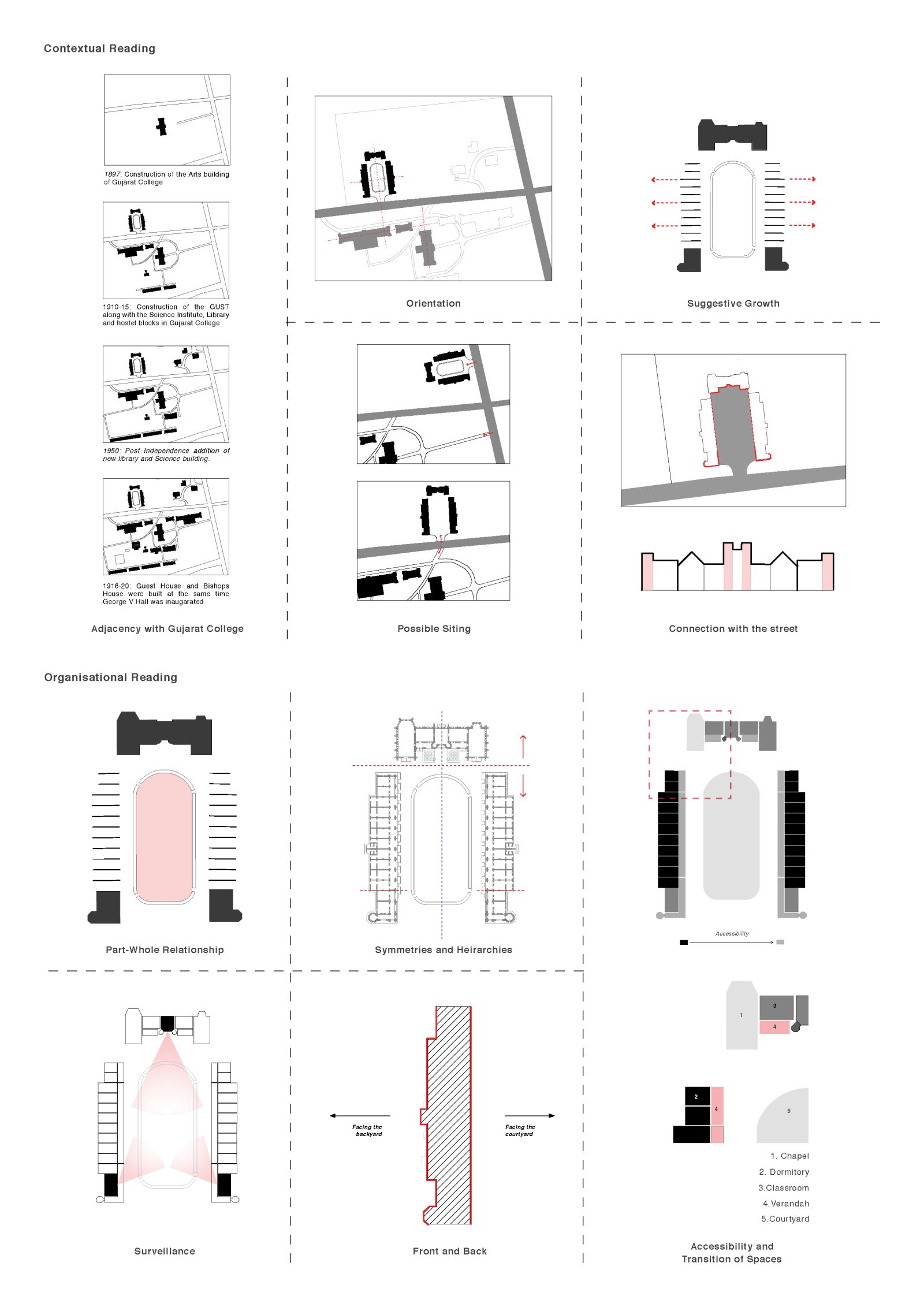
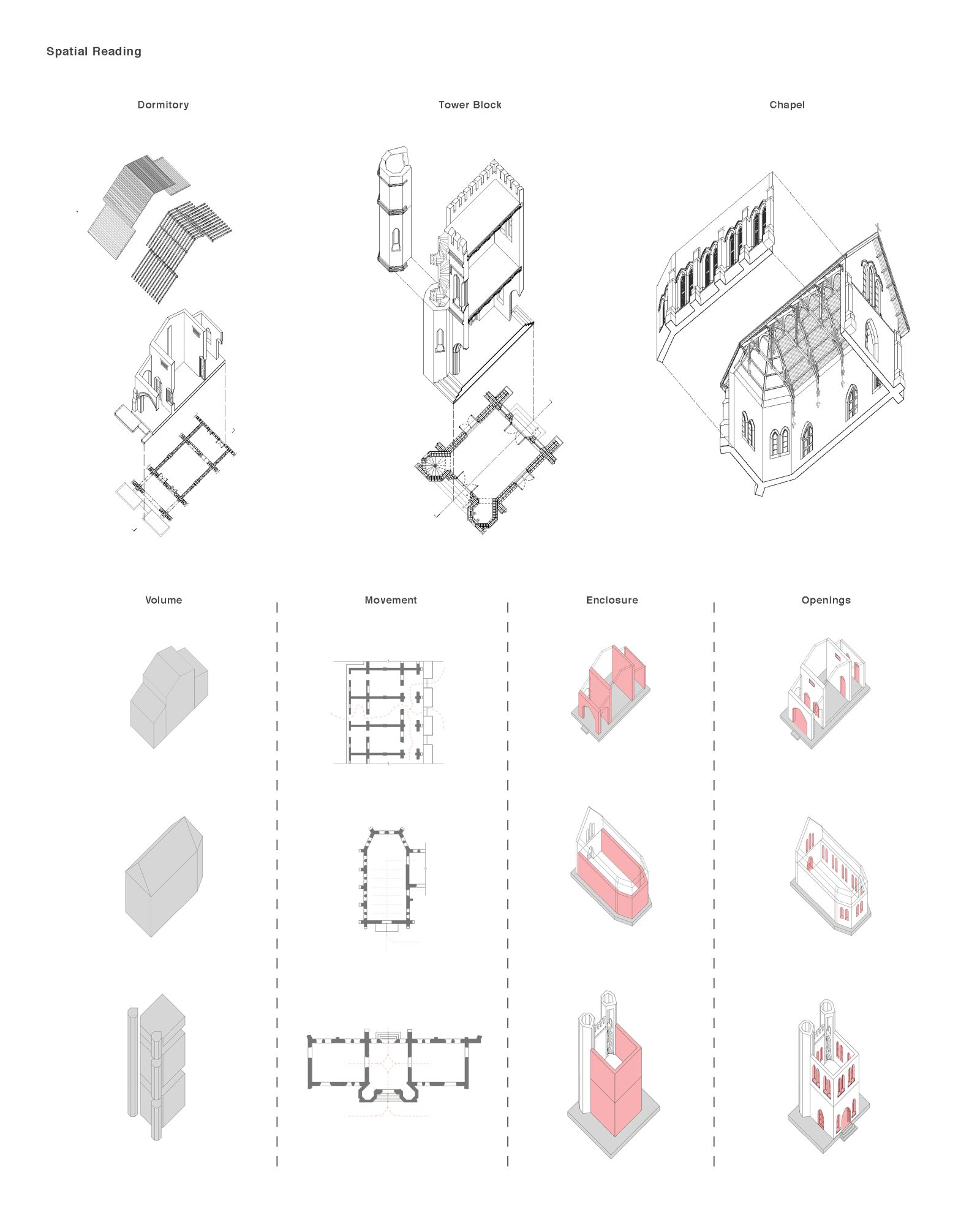
By tracing the construction history of GUST through archival research, architectural documentation, and interviews, the research investigates the interaction between foreign missionary intentions and local building practices. It critically question each architectural desicion taken and investigates the possible factors that influence these desicions.
The paper argues that such buildings represent more than colonial impositions; they embody negotiated outcomes shaped by contextual constraints. Through this lens, the study contributes to a broader understanding of architectural hybridity and the formation of regionally specific expressions within global architectural styles.