Your browser is out-of-date!
For a richer surfing experience on our website, please update your browser. Update my browser now!
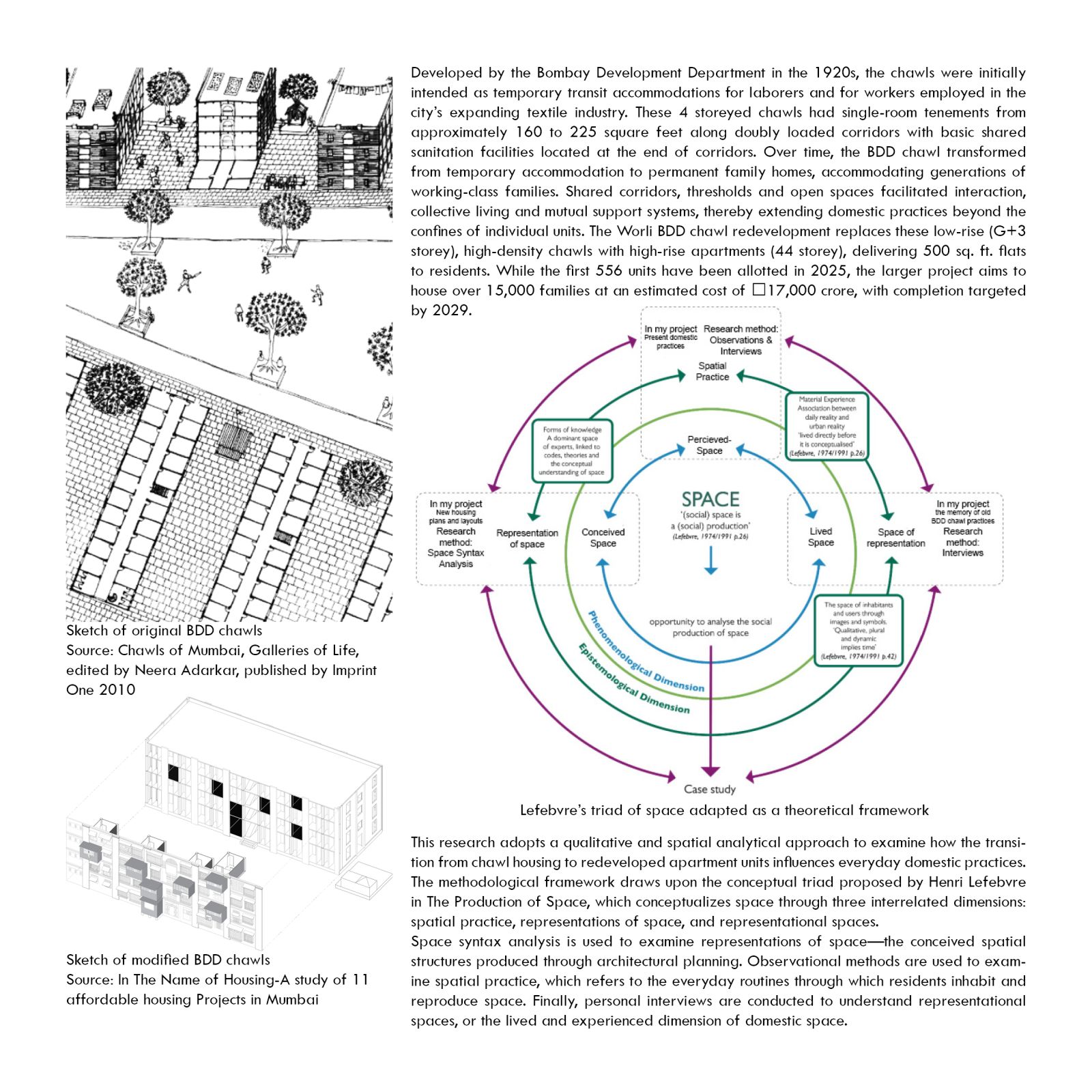
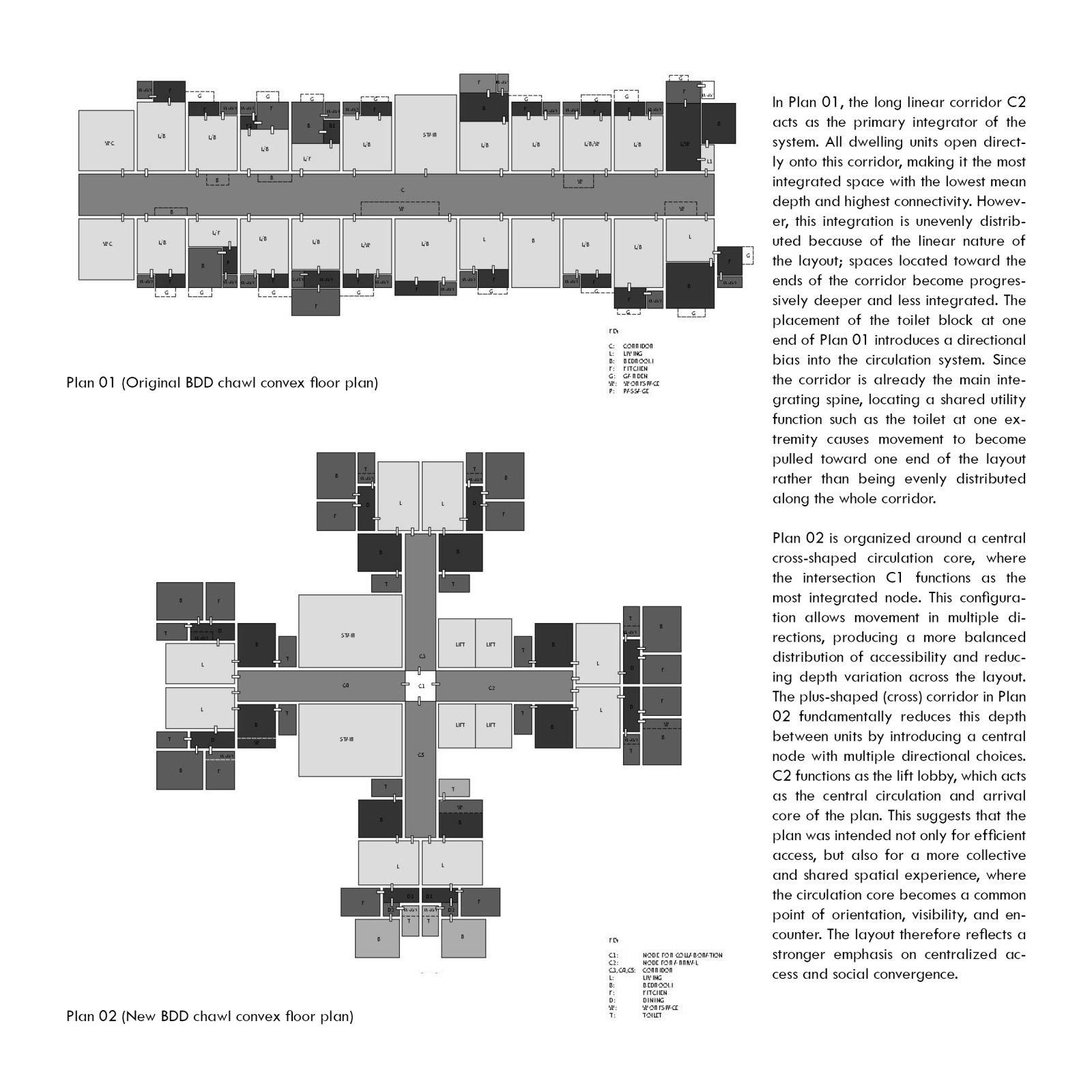
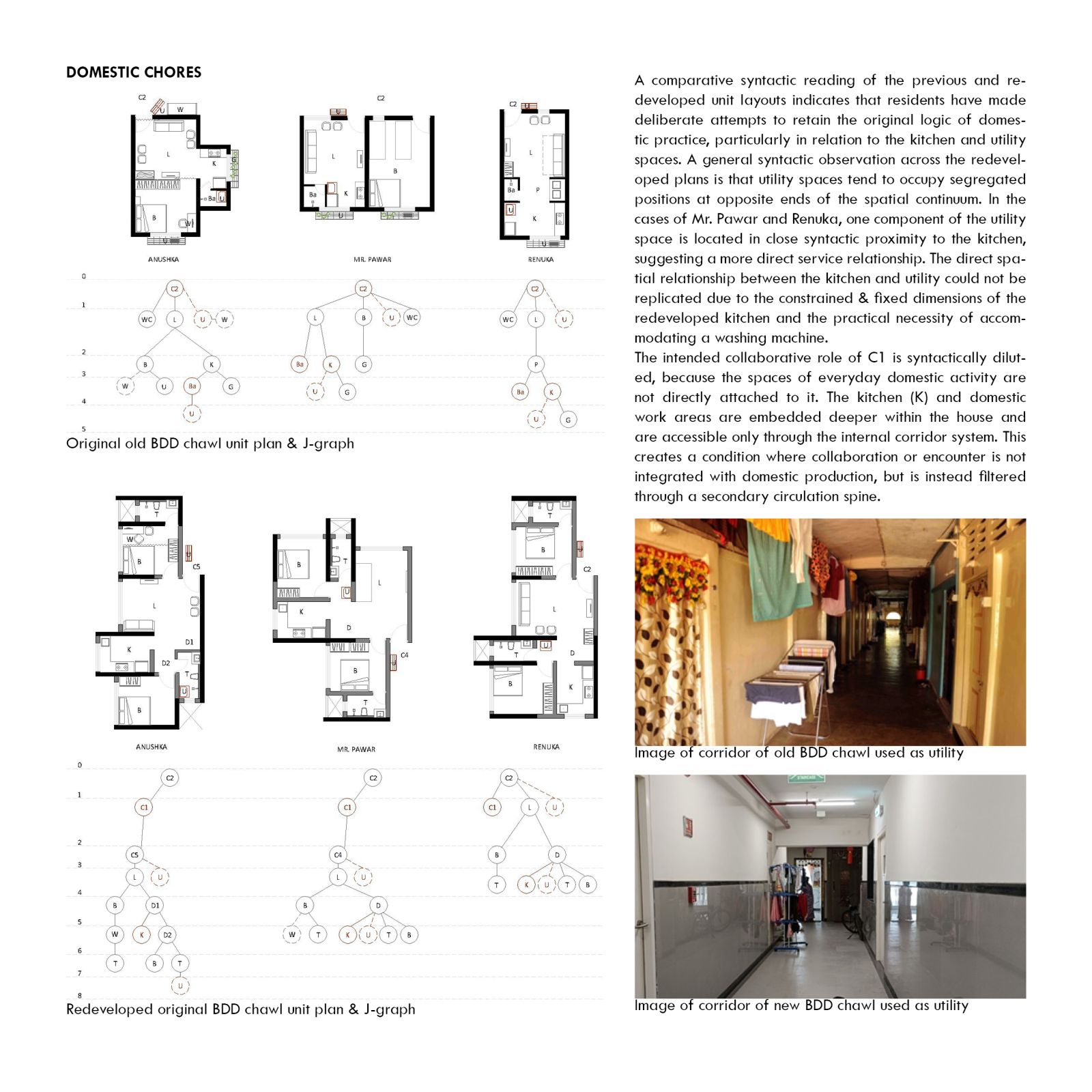
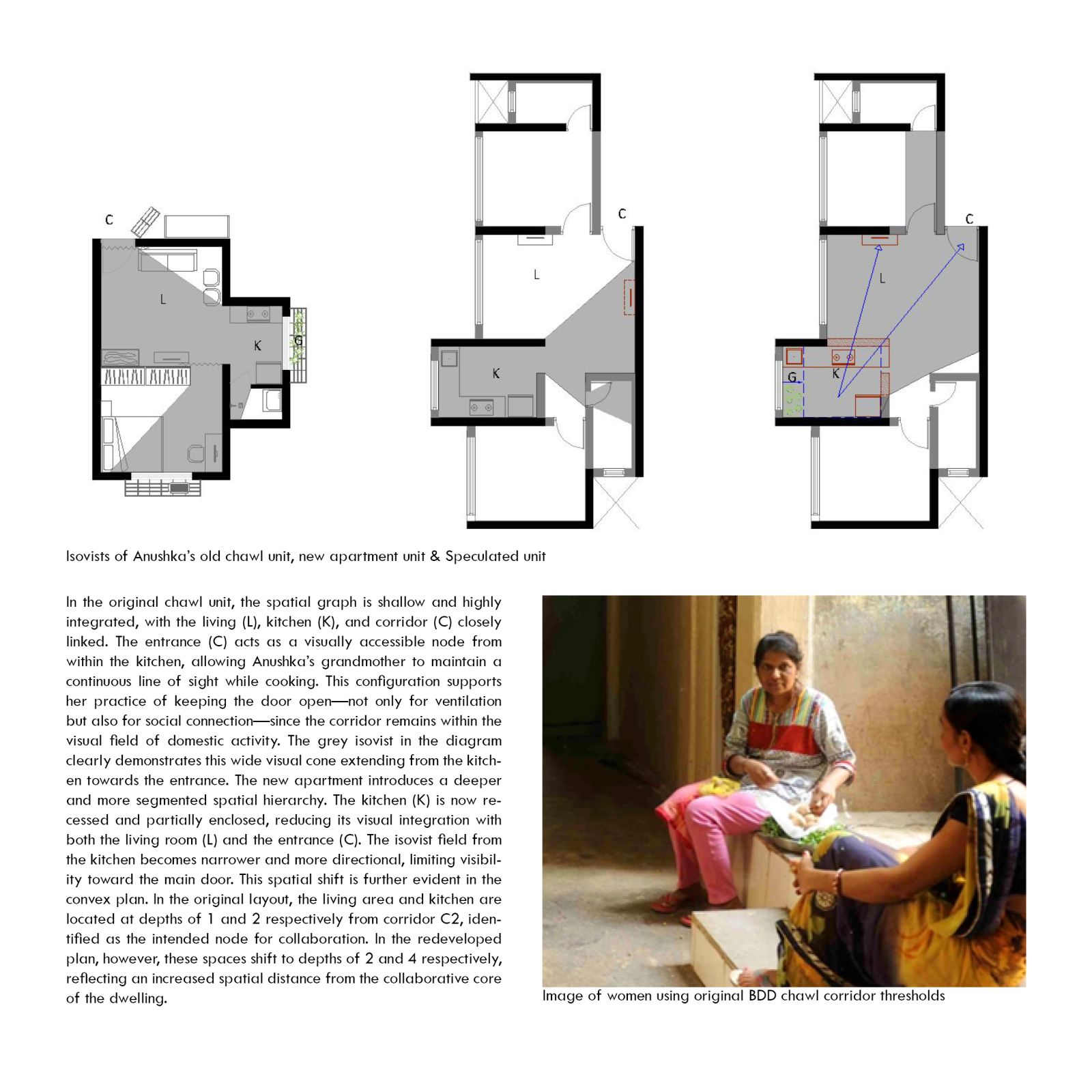
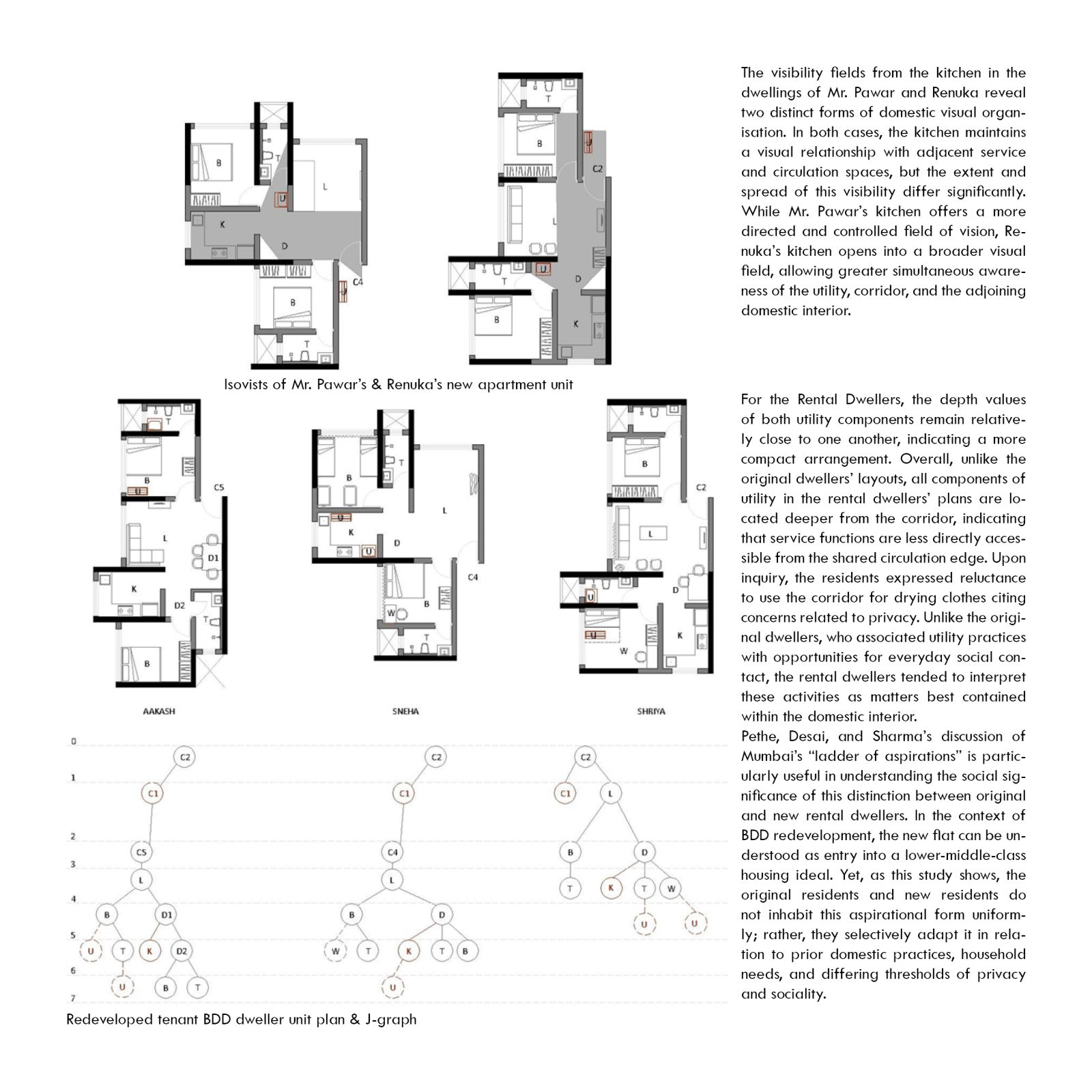
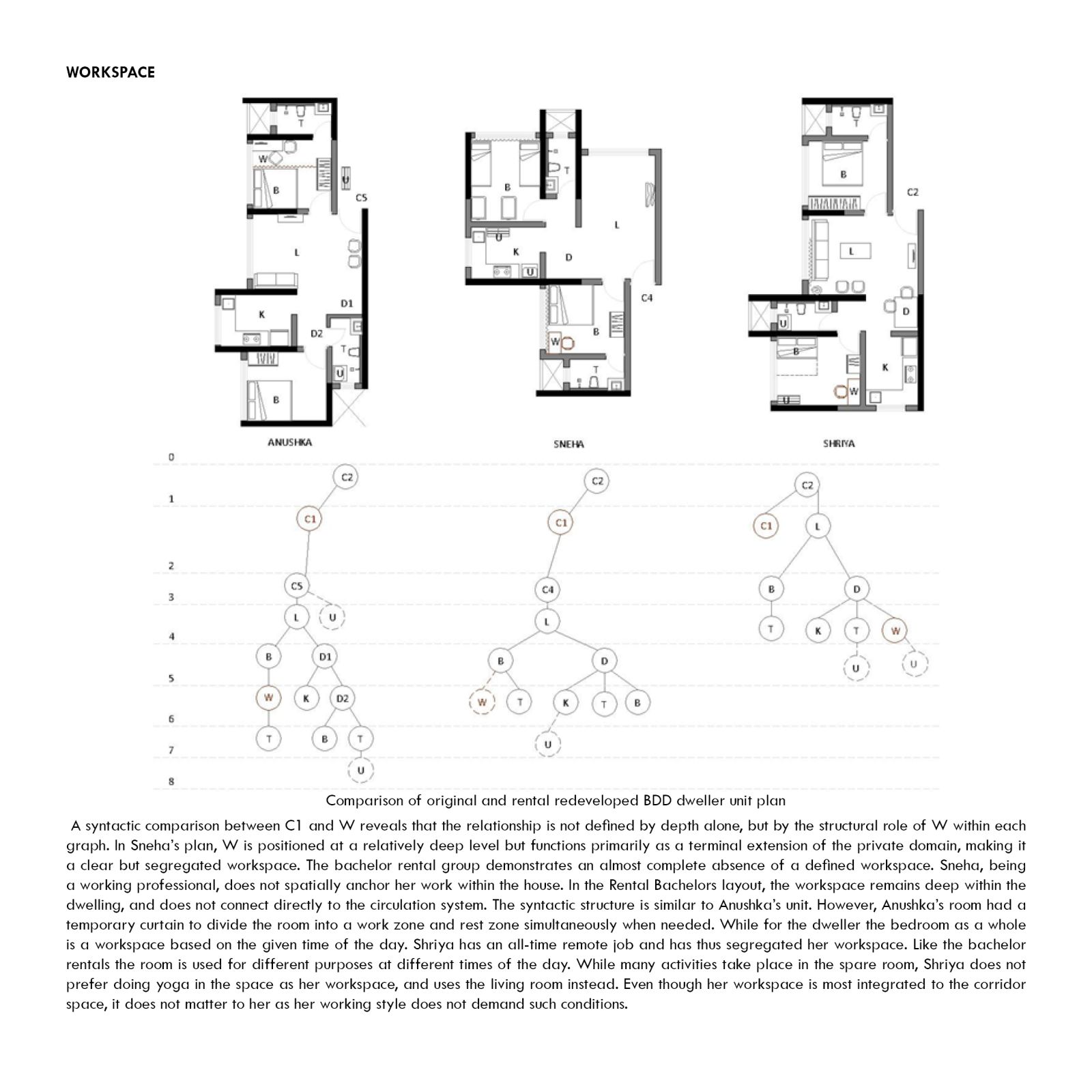
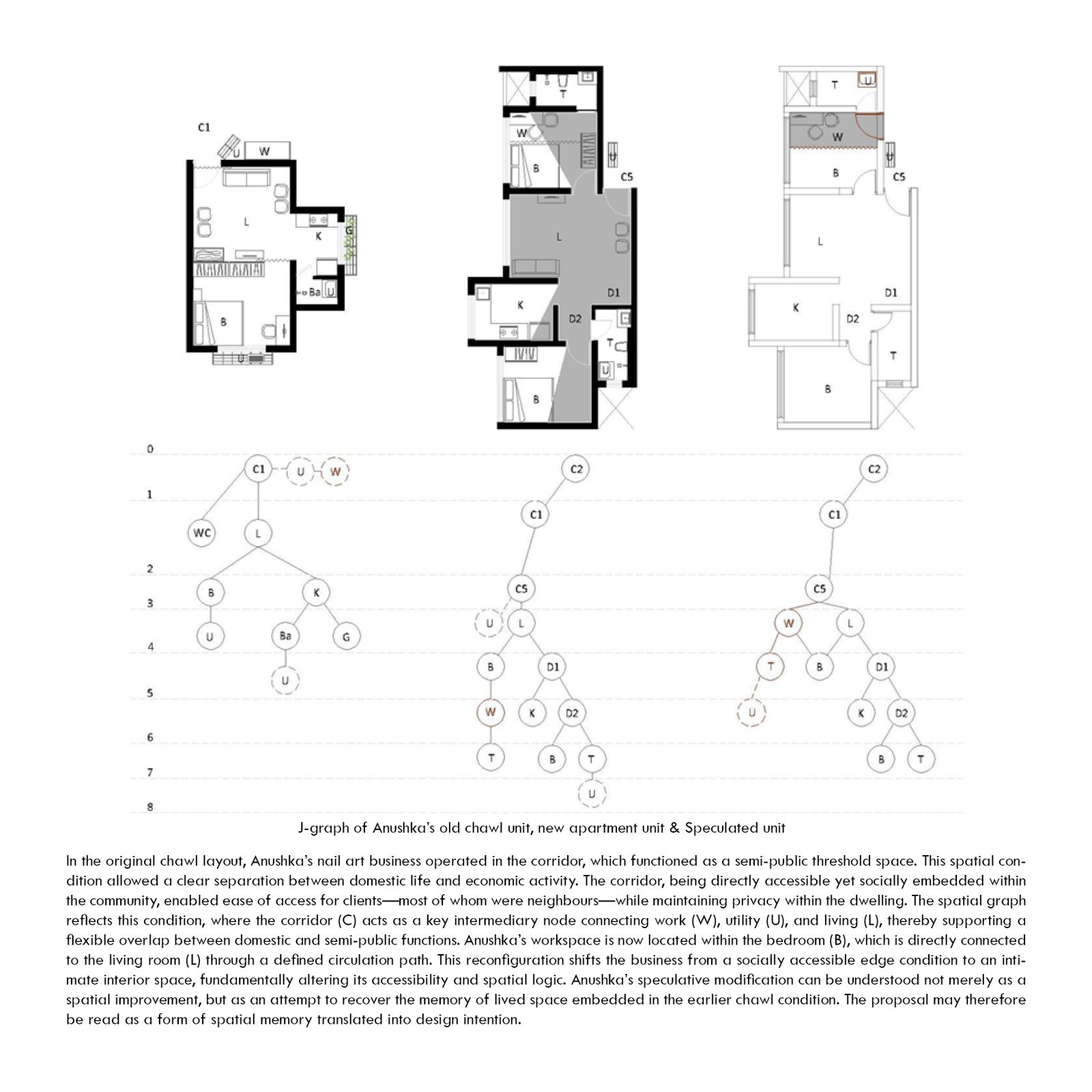
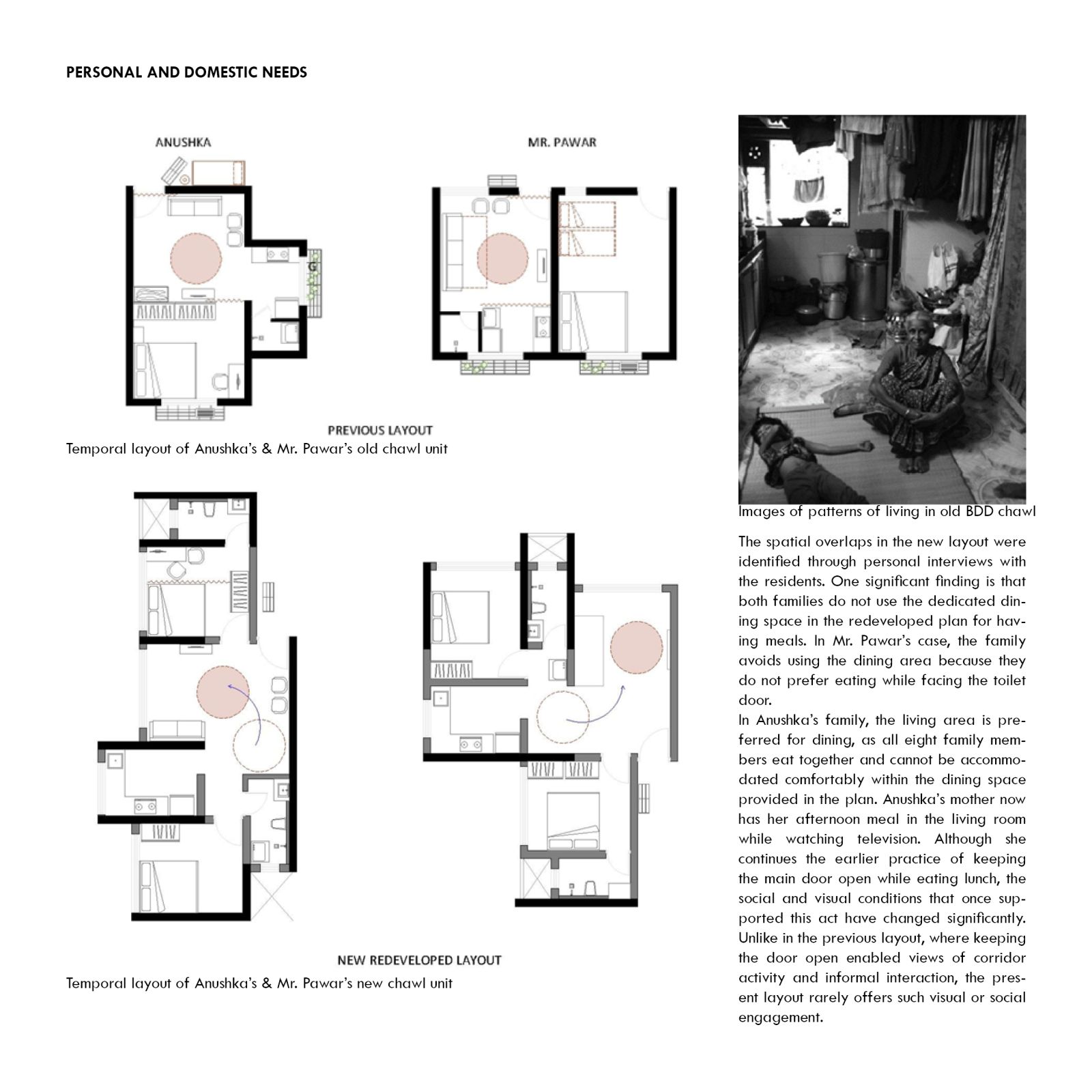
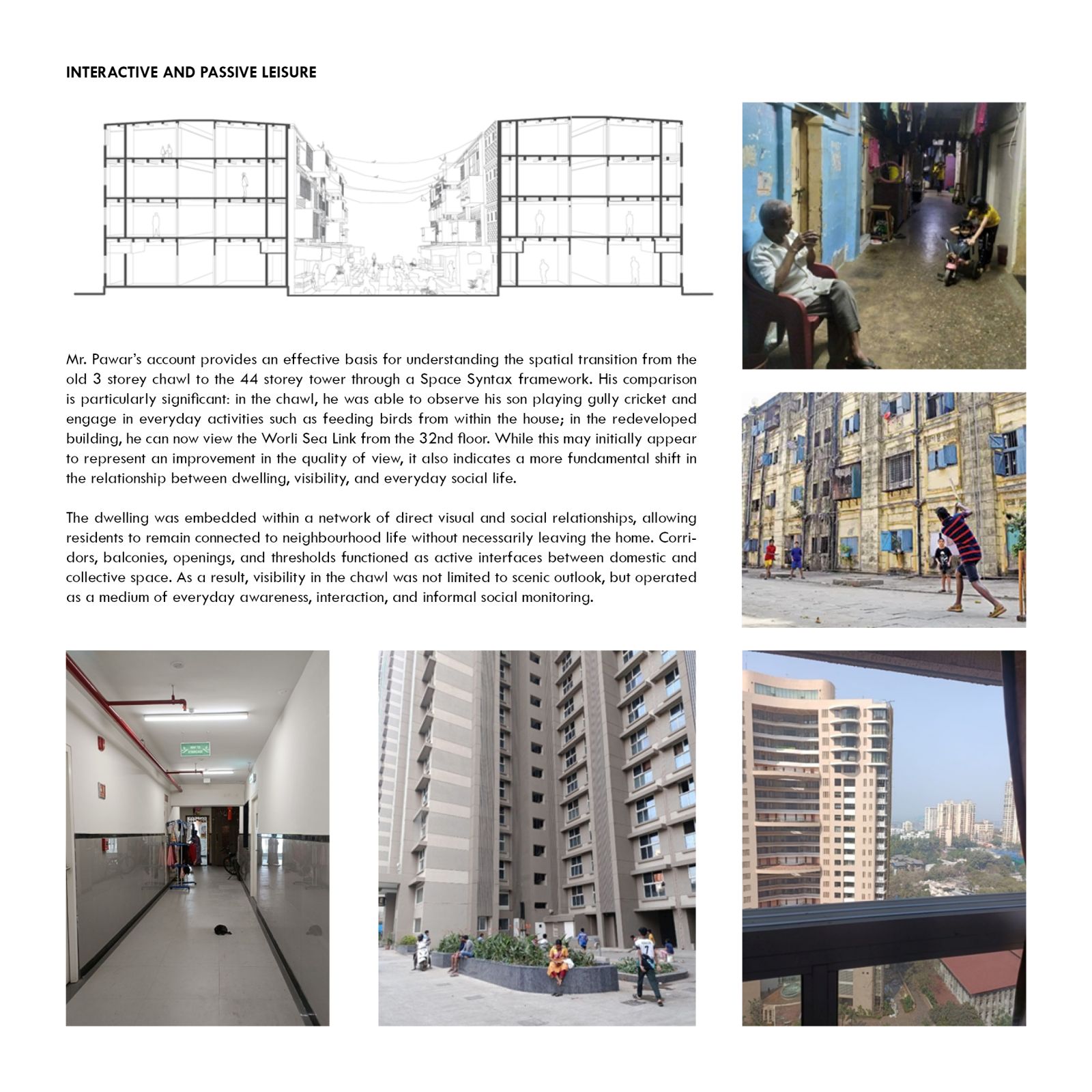
Domestic architecture forms one of the most fundamental components of built environment, as it directly shapes the everyday lives, routines and relationships of its inhabitants. Unlike monumental or institutional architecture, it is deeply embedded in the rhythms of daily life. The BDD chawls of Mumbai, built in the early 20th century as workers’ housing by the state of Bombay, developed a distinctive domestic culture shaped by shared infrastructure, spatial constraints and strong community networks. Over decades of occupation, residents adapted the single rooms with the addition of personalised kitchen and informal practices such as collective cooking, temporal sharing, flexible storage, systems that emerged through lived necessity. The architecture of chawls provided with basic physical framework, but it was the continuous adaptation and negotiation by residents that shaped the lived character of the environment. Through incremental modifications, shared routines, and informal cooperation, residents transformed these one-room units into dynamic domestic spaces that supported both individual household needs and collective community life. These chawls, now a century old are undergoing inevitable redevelopment. However, the architectural design of the new apartment typology is struggling to accommodate the established domesticity of the original dwellers, creating a tension between planned space and lived space. In response, residents attempt to revive or retain certain practices wherever possible. Henri Lefebvre’s spatial triad was used as a methodological framework for this study to analyse the relationship between large scale housing transformation and domestic practices. Conceived space is examined through syntax and spatial analysis of the dwelling layouts, perceived space through site observations of everyday domestic practices, and lived space through personal interviews that capture residents’ experiences, meanings, and attachments to home. Together, these methods enable a multidimensional understanding of how spatial change influences the practices and identity of the original dwellers. By recognizing domestic space as a lived and evolving environment, the research highlights the need for architectural planning to engage more closely with the everyday realities and cultural practices of its original inhabitants.