Your browser is out-of-date!
For a richer surfing experience on our website, please update your browser. Update my browser now!
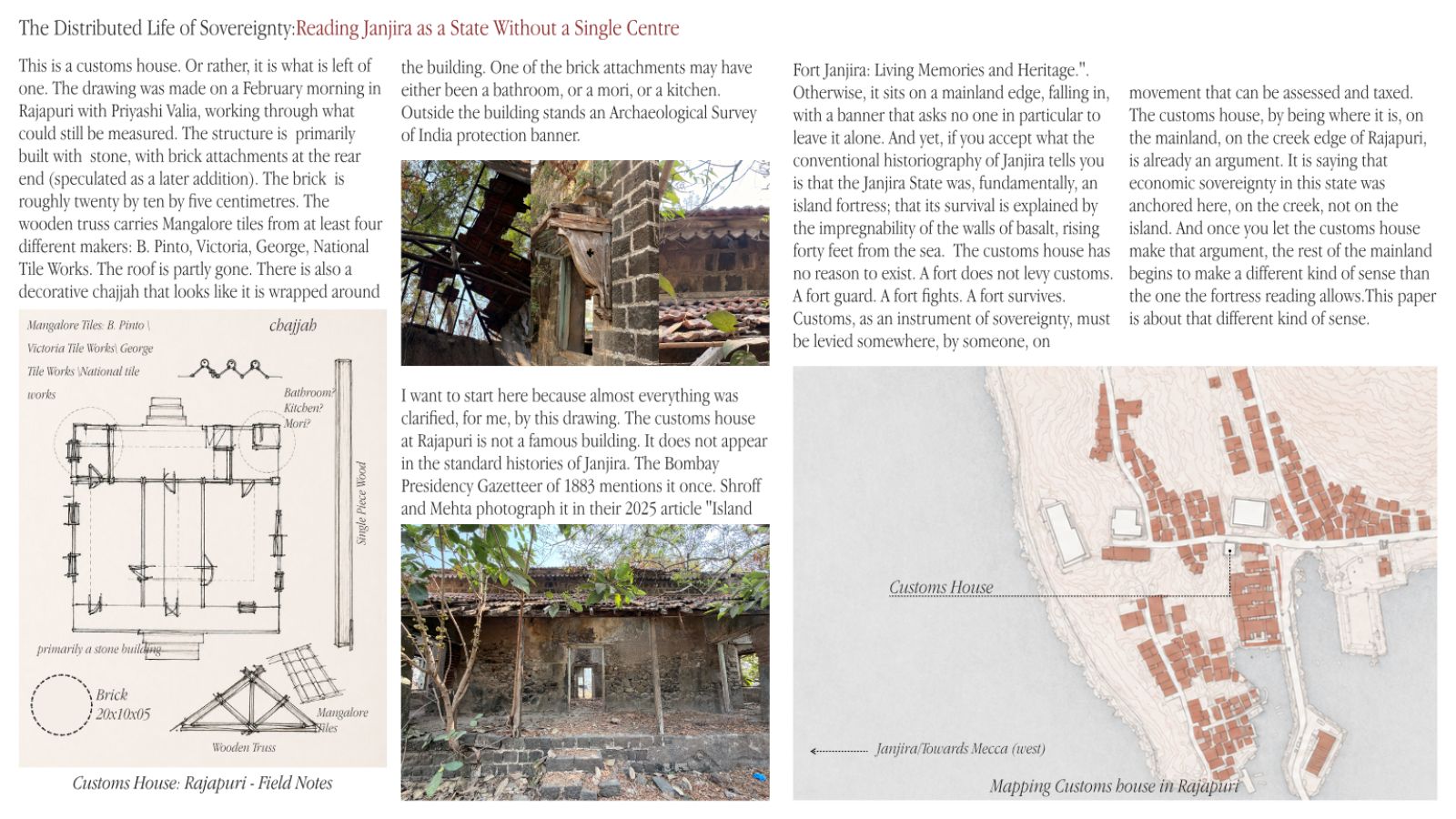
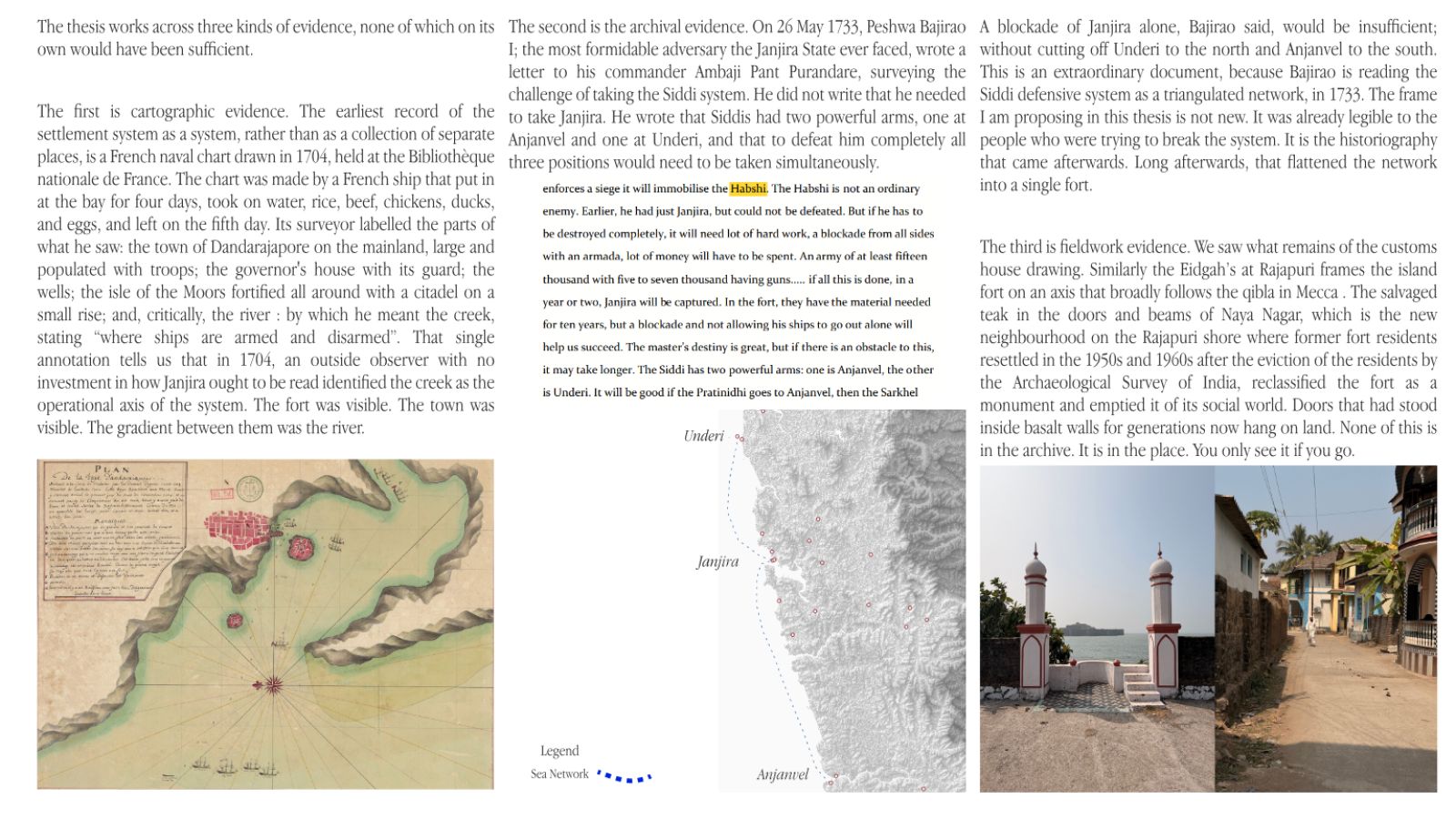
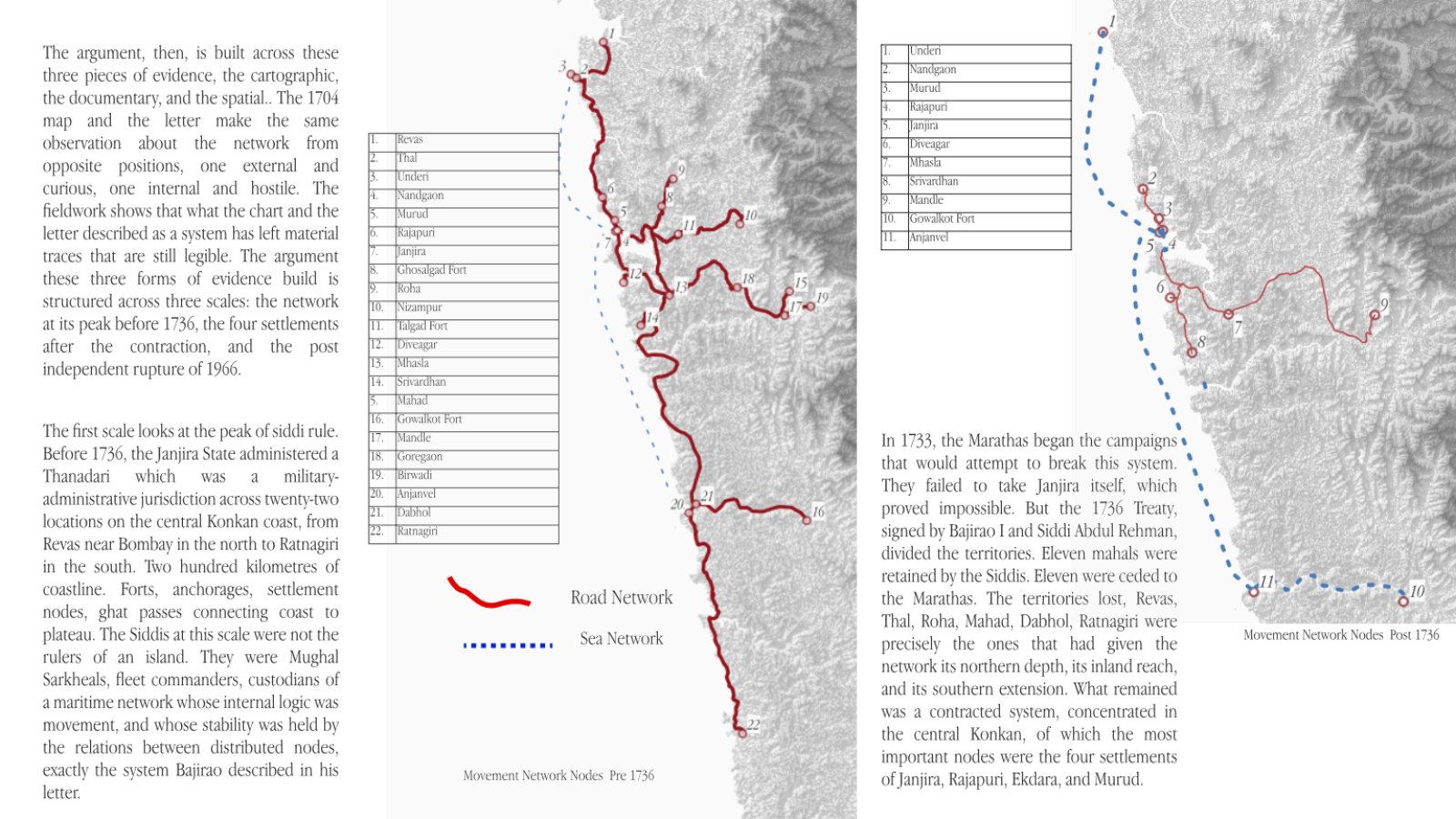
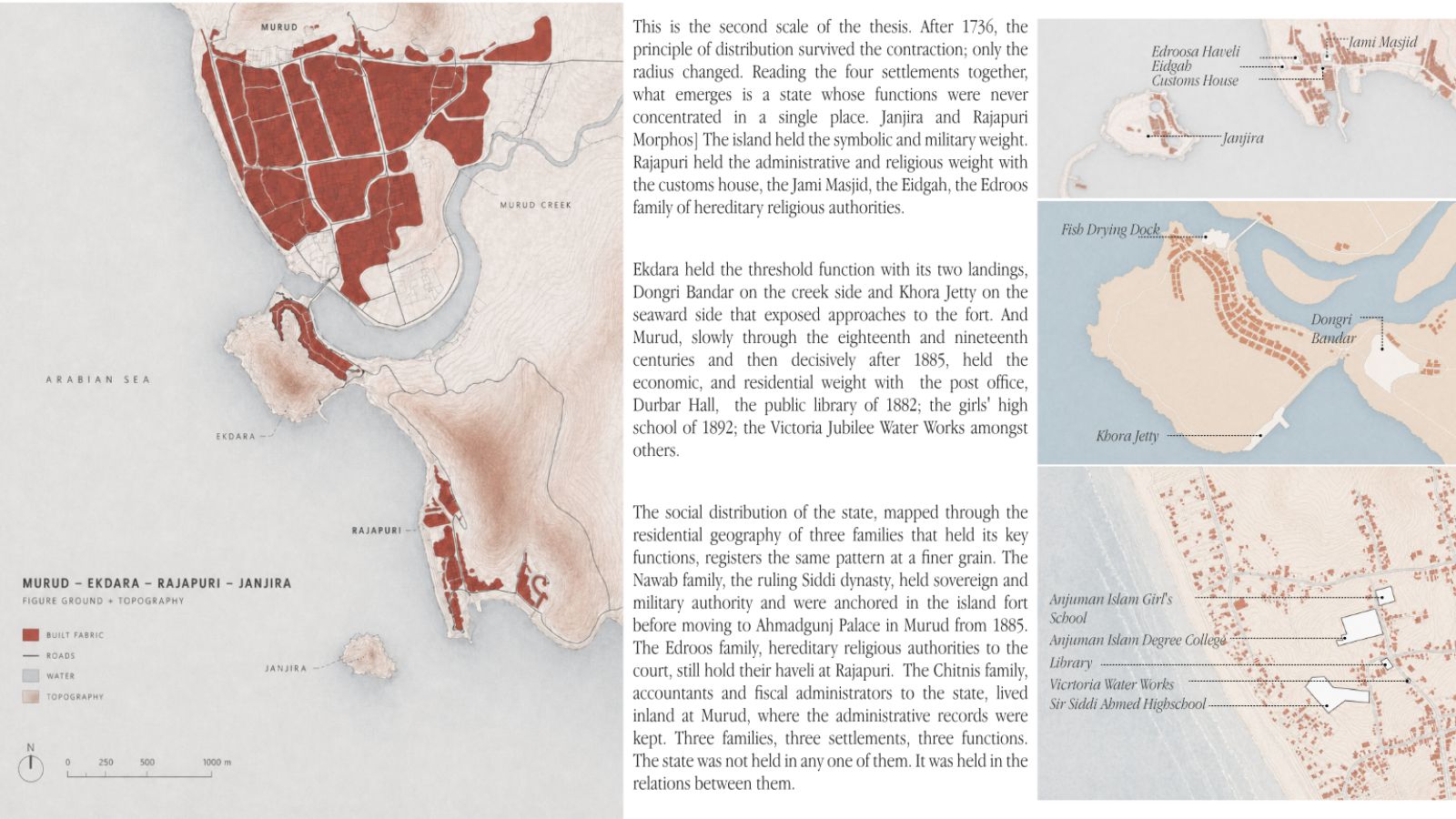
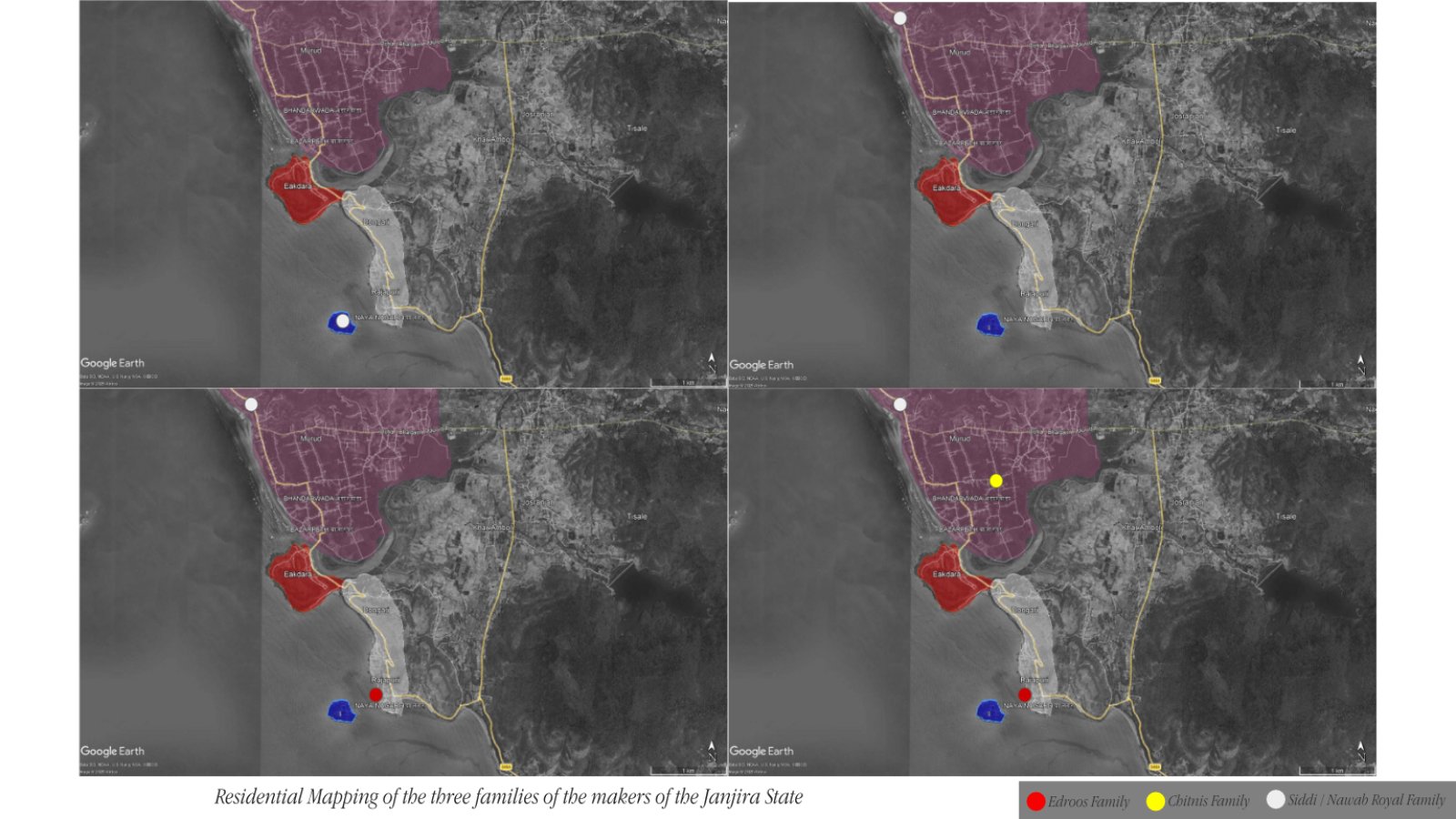
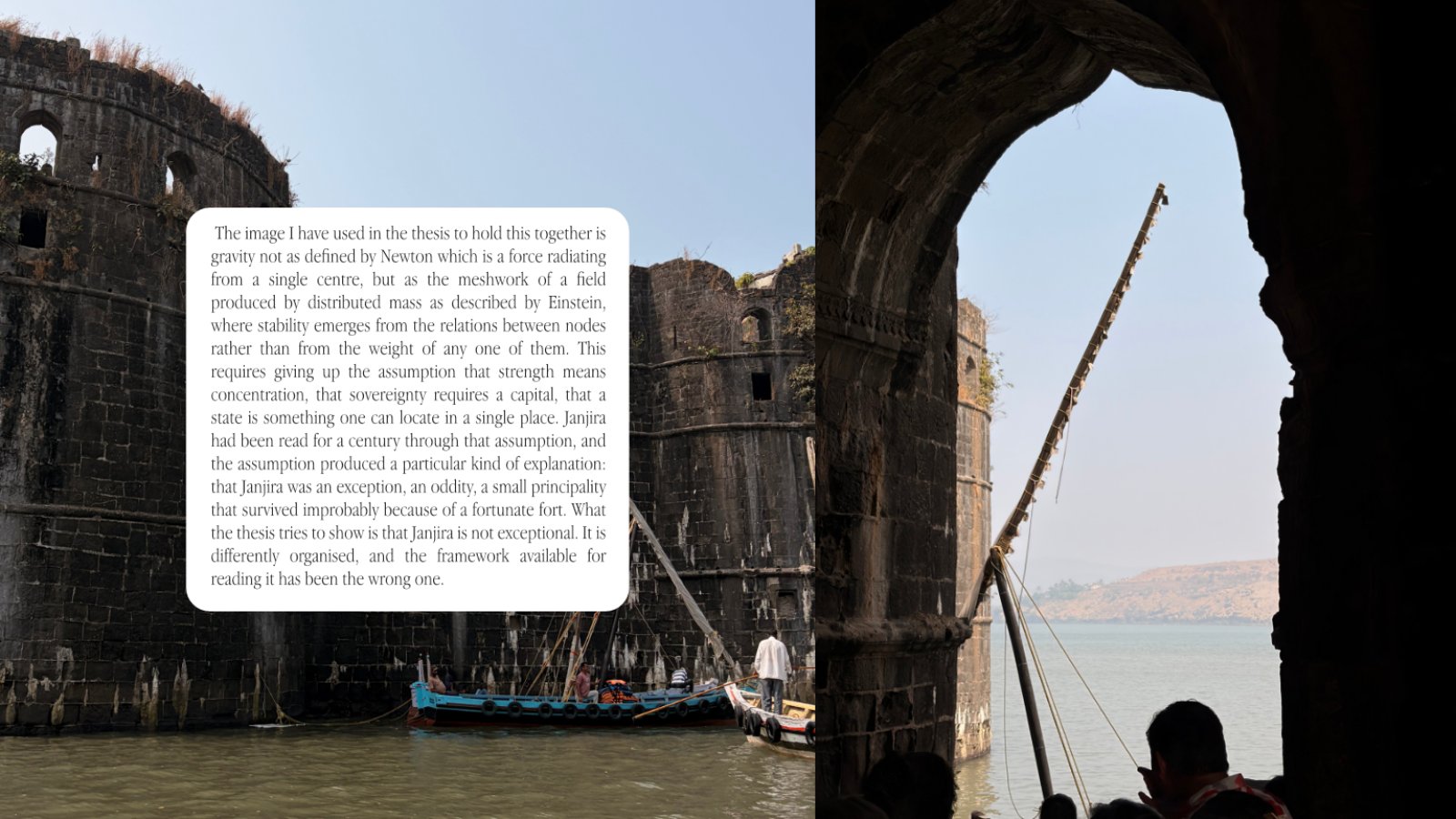
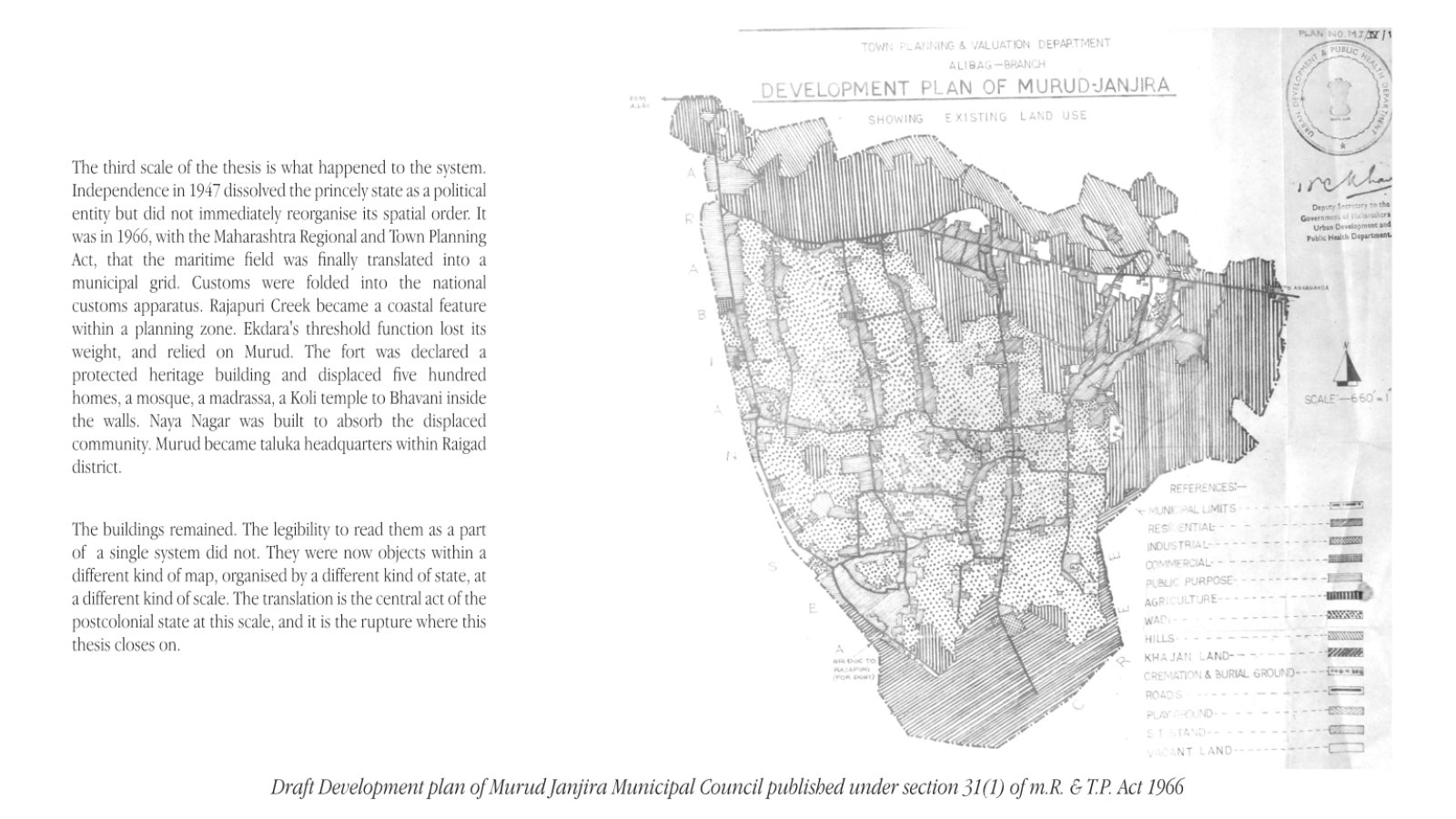
Between 1700 and 1966, the Janjira State, a small Siddi-ruled polity on the central Konkan coast of western India, survived two and a half centuries of pressure from the Marathas, the Portuguese, the Dutch, and the British. The conventional historiography explains this survival through a single image: an island fortress, militarily impregnable, anomalous in its endurance. The fortress reading reduces a complex polity to one building and leaves the architectural record of Janjira's other settlements either unexamined or treated as peripheral. If Janjira was simply a fortress, the buildings on the mainland have no clear reason to exist, and yet they do exist, and they were maintained for centuries. The frame is wrong. The thesis sets out to dismantle the fortress reading, to propose an alternative frame in which Janjira is understood as a distributed maritime field organised across multiple settlements and held together by the relations between them, and to test this frame against the surviving architectural record across the four settlements of Janjira, Rajapuri, Ekdara, and Murud. The thesis borrows a metaphor from physics: gravity not as a force radiating from a centre, but as the curvature of a field by distributed mass. The metaphor is offered as an analytic device. It allows the polity to be read at three scales. The first is the wider Konkan network of twenty-two forts and anchorages the Siddis administered until the Maratha contraction of 1736. The second is the four settlements that carried the system afterward. The third is the architectural evidence within each — the customs house, the mint, the religious institutions, the residential geographies of the Nawab, Edroos, and Chitnis families, and the Ahmadgunj Palace at Murud — through which sovereignty, trade, and identity were made spatially legible. Buildings are read as instruments of a system rather than as objects in a catalogue. The thesis demonstrates that Janjira's survival is legible as the survival of a distributed system rather than the persistence of a single defensible point. Four historical ruptures are tracked through the architectural fabric: the 1736 contraction, British paramountcy in 1799, the 1948 merger into the Indian Union, and the Maharashtra Regional and Town Planning Act of 1966. Each compressed the field further, until a distributed maritime order had been f lattened into a municipal grid. The buildings remained. The grammar that made them readable did not. The reconstruction at the wider Konkan scale is more provisional than at the others, given the unevenness of the documentary record. Janjira is not exceptional. It is differently organised, and the framework available for reading it has been the wrong one. Other small maritime polities of the western Indian Ocean may yield to the same reframing. For architectural history, the wider claim is that buildings are best read as instruments of the systems that produced them. Reading them as a system rather than as a sequence of monuments is the work this thesis attempts to begin.
View Additional Work