Your browser is out-of-date!
For a richer surfing experience on our website, please update your browser. Update my browser now!
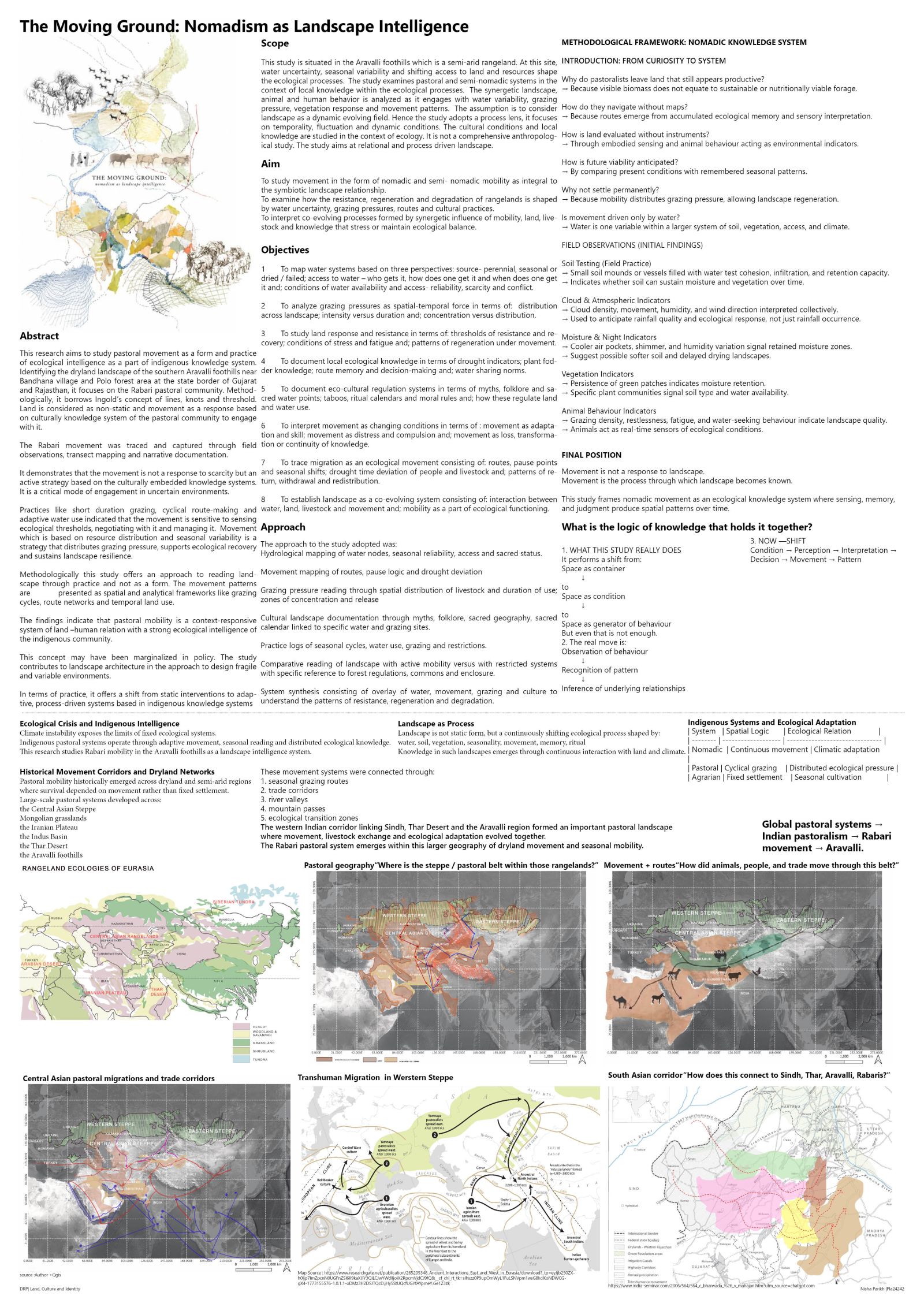
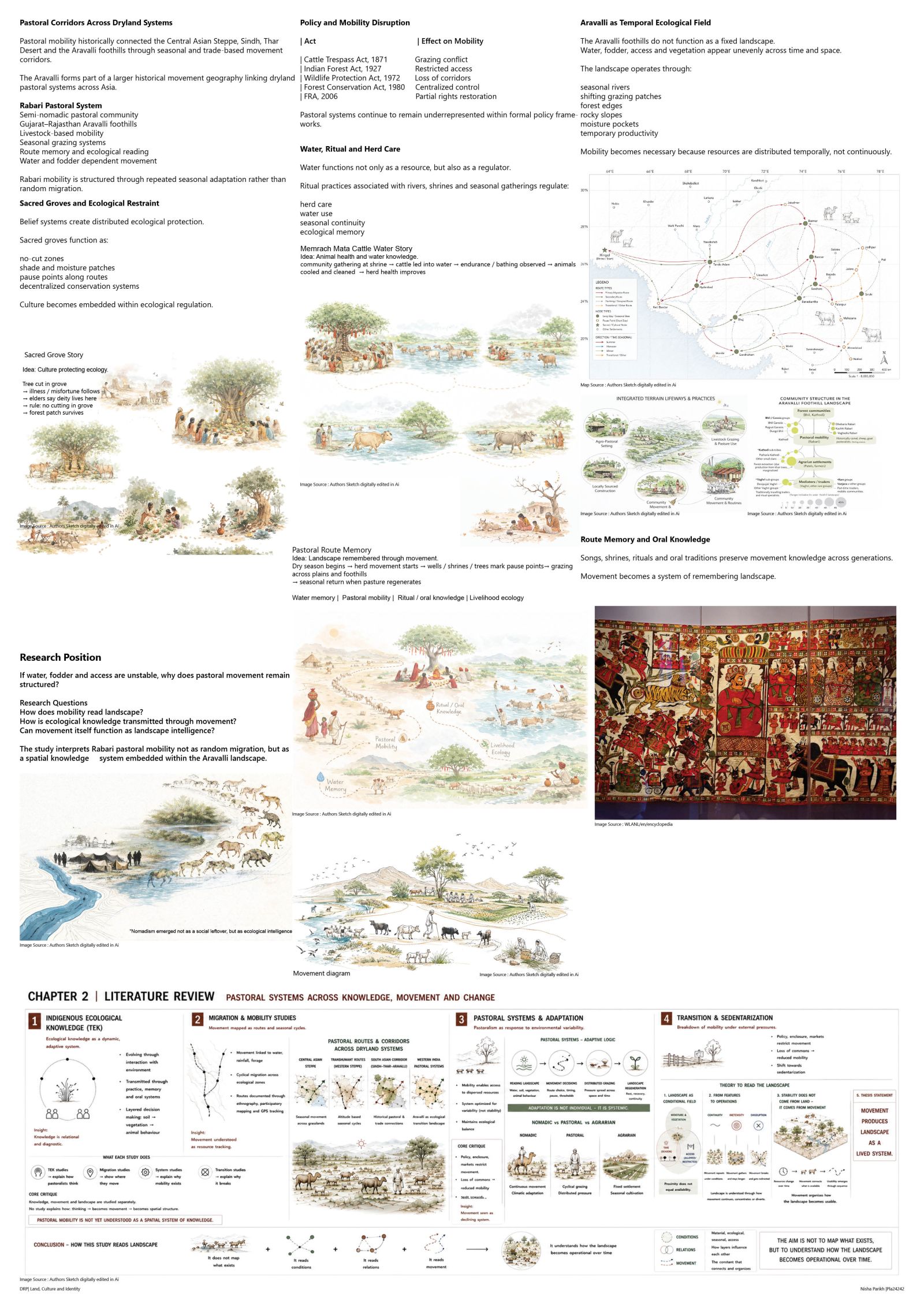
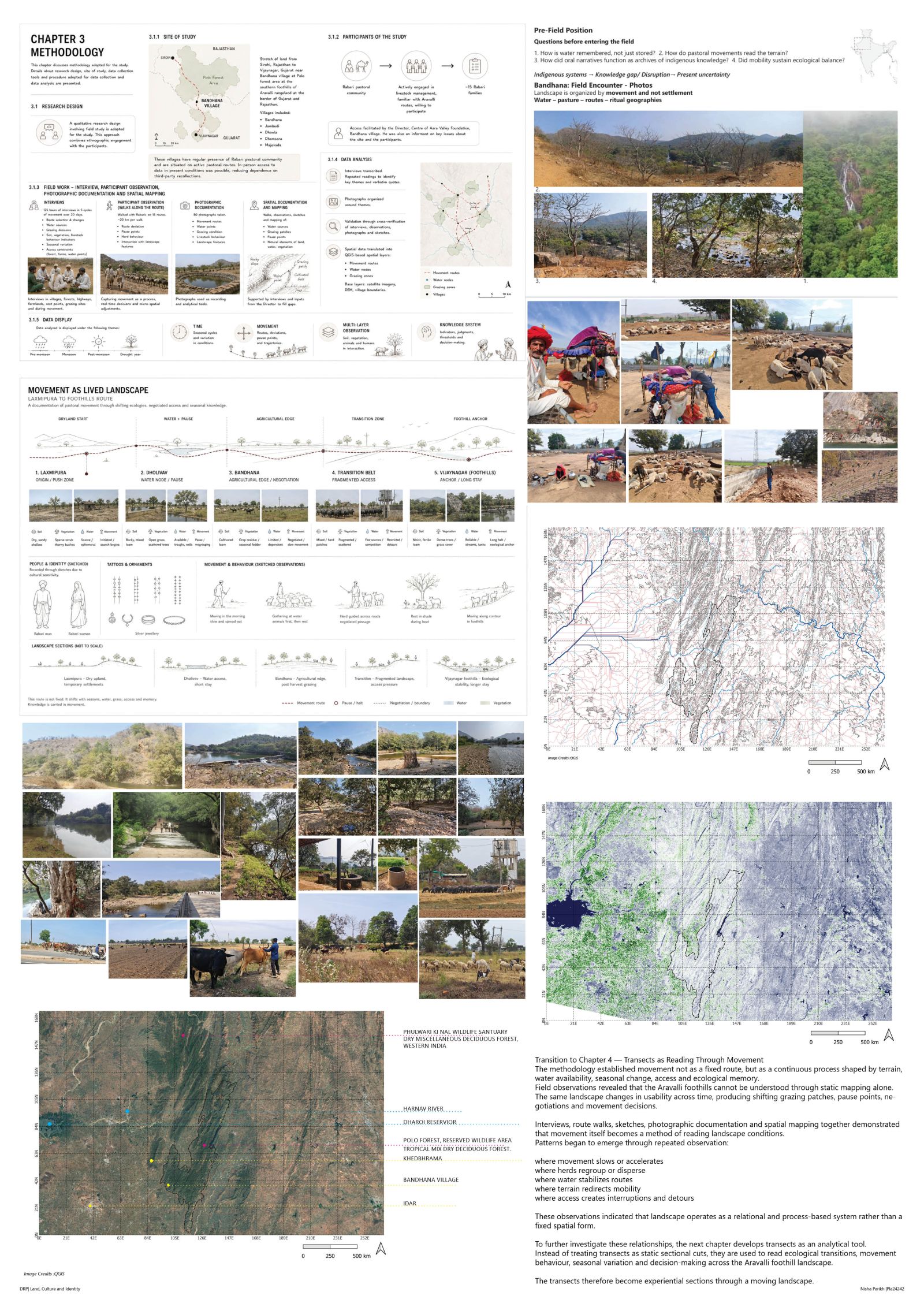
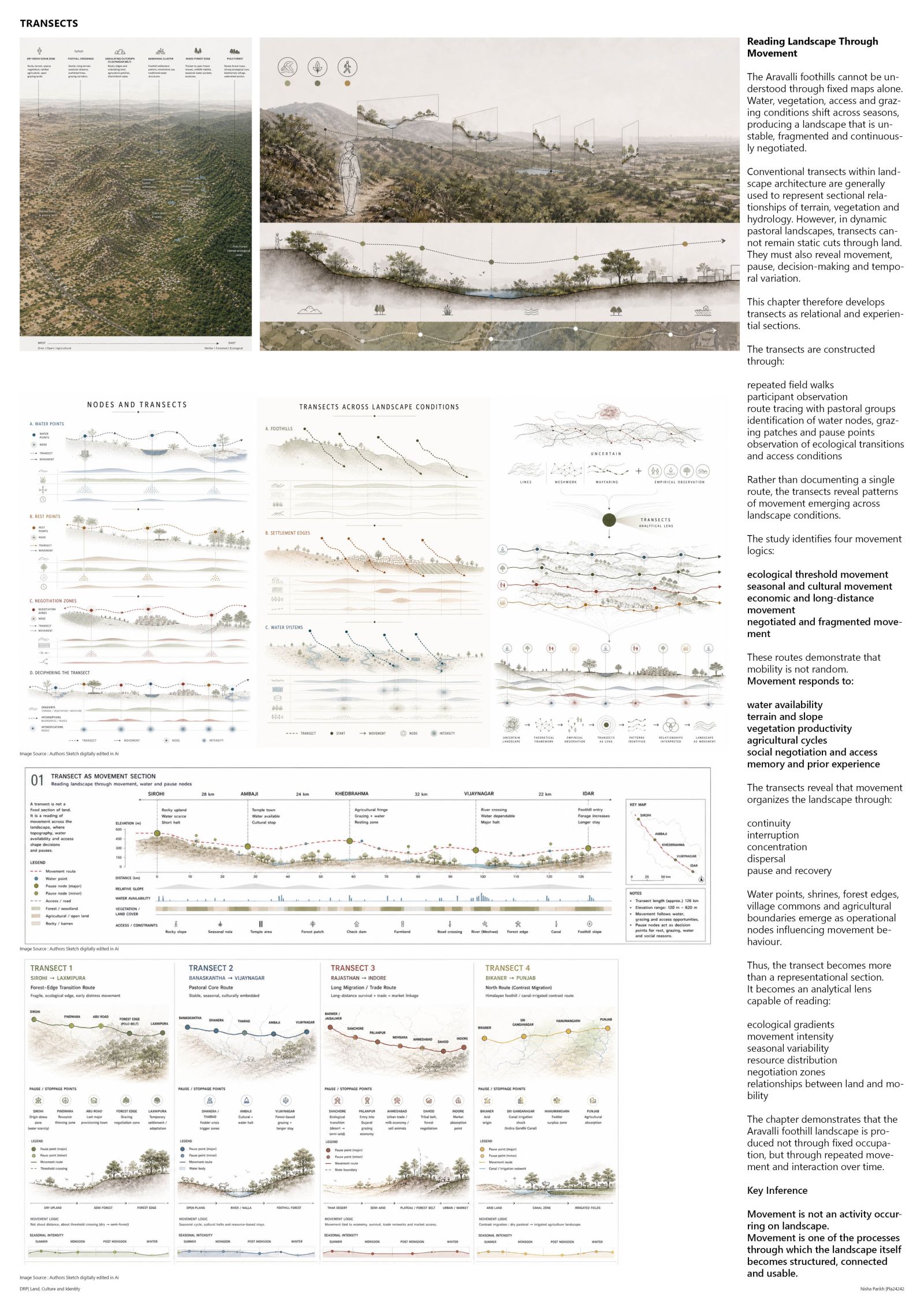
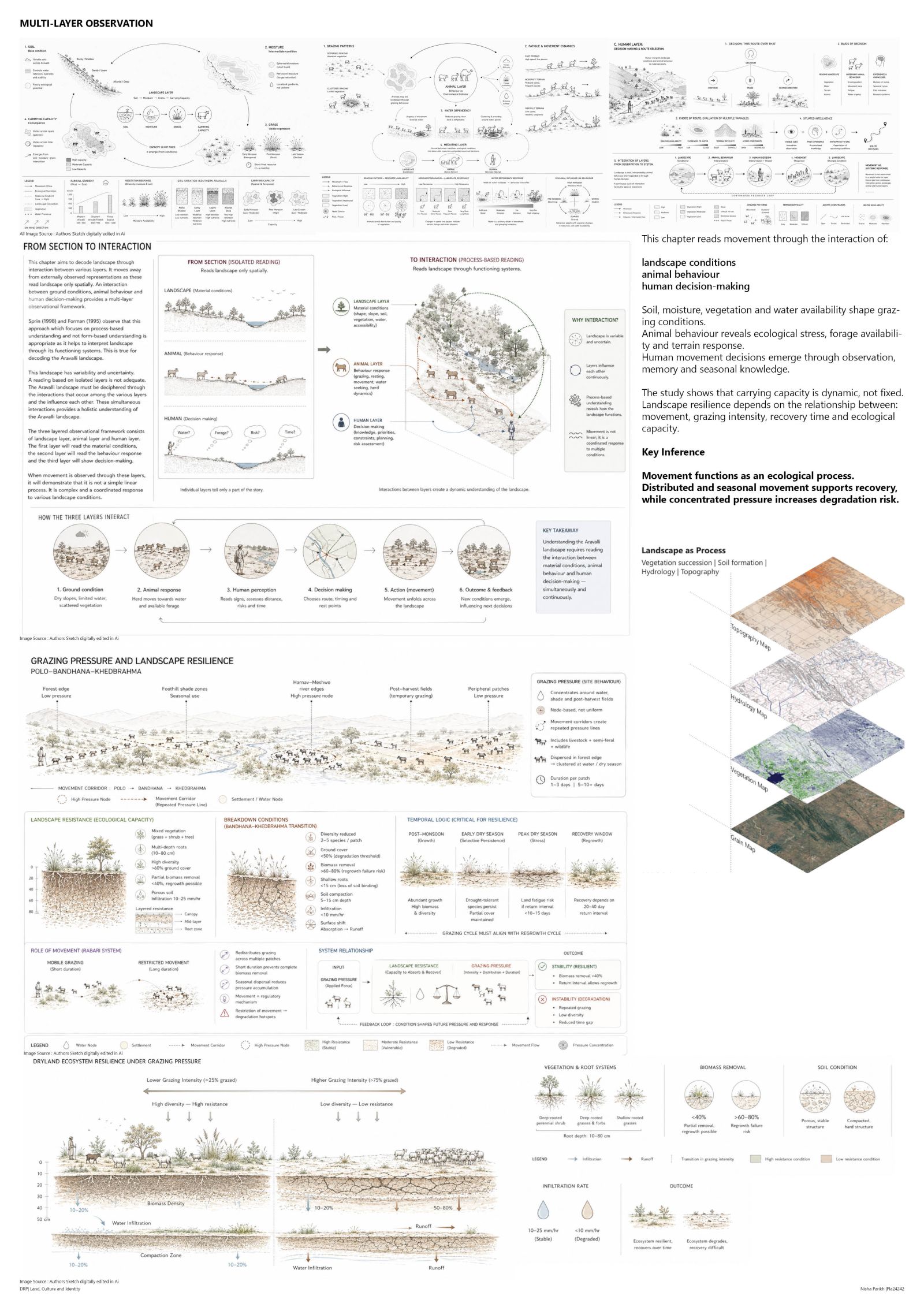
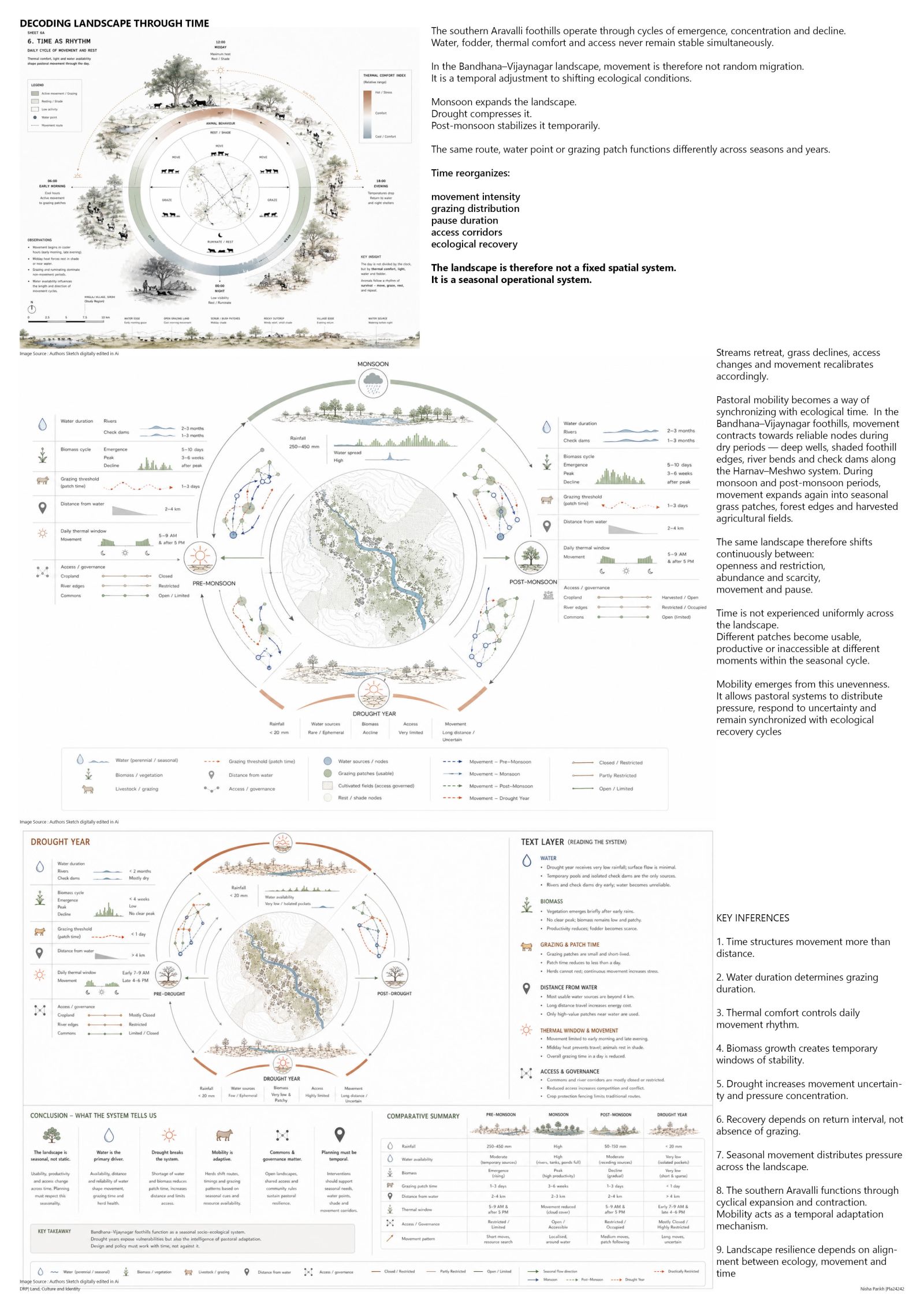
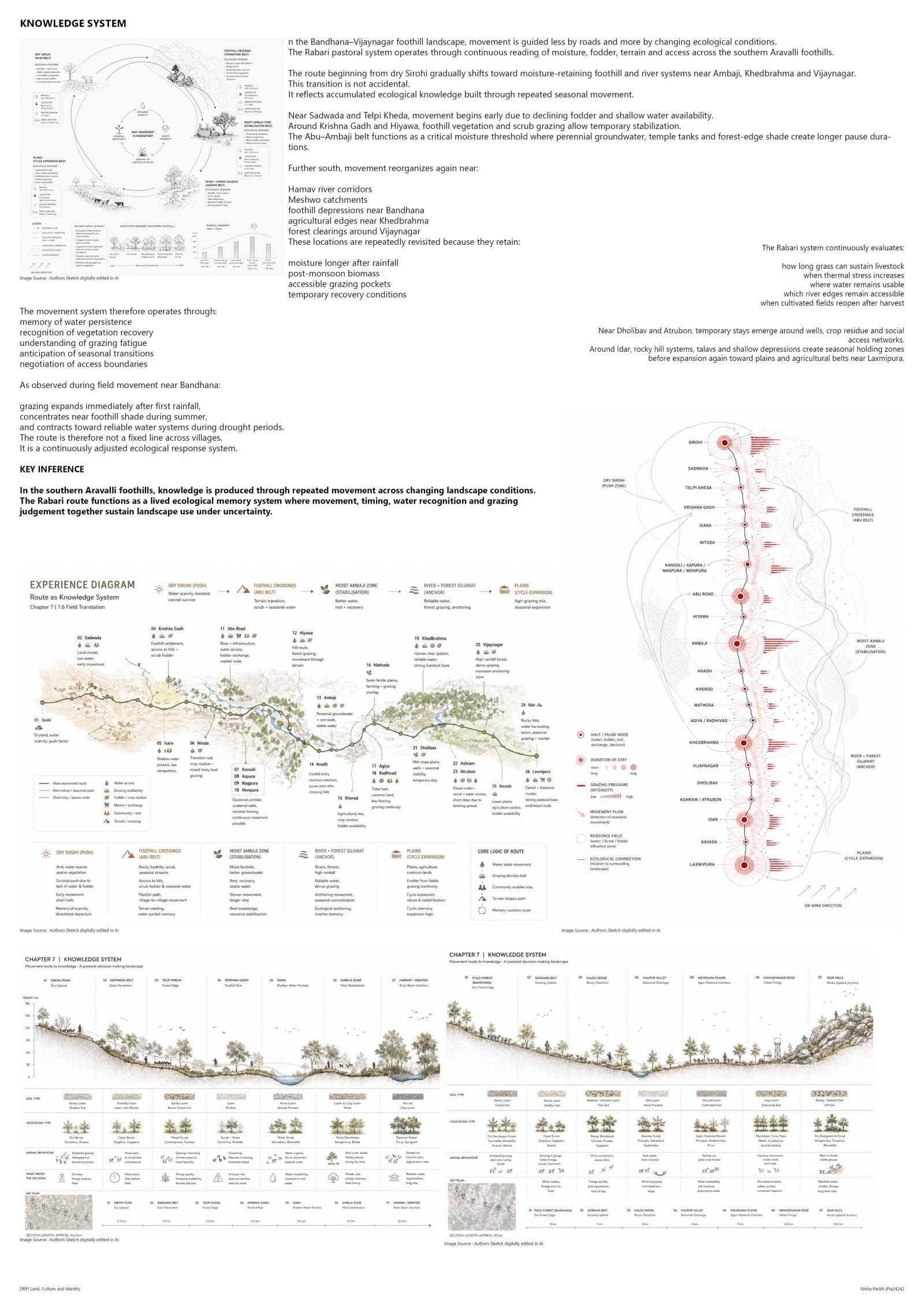
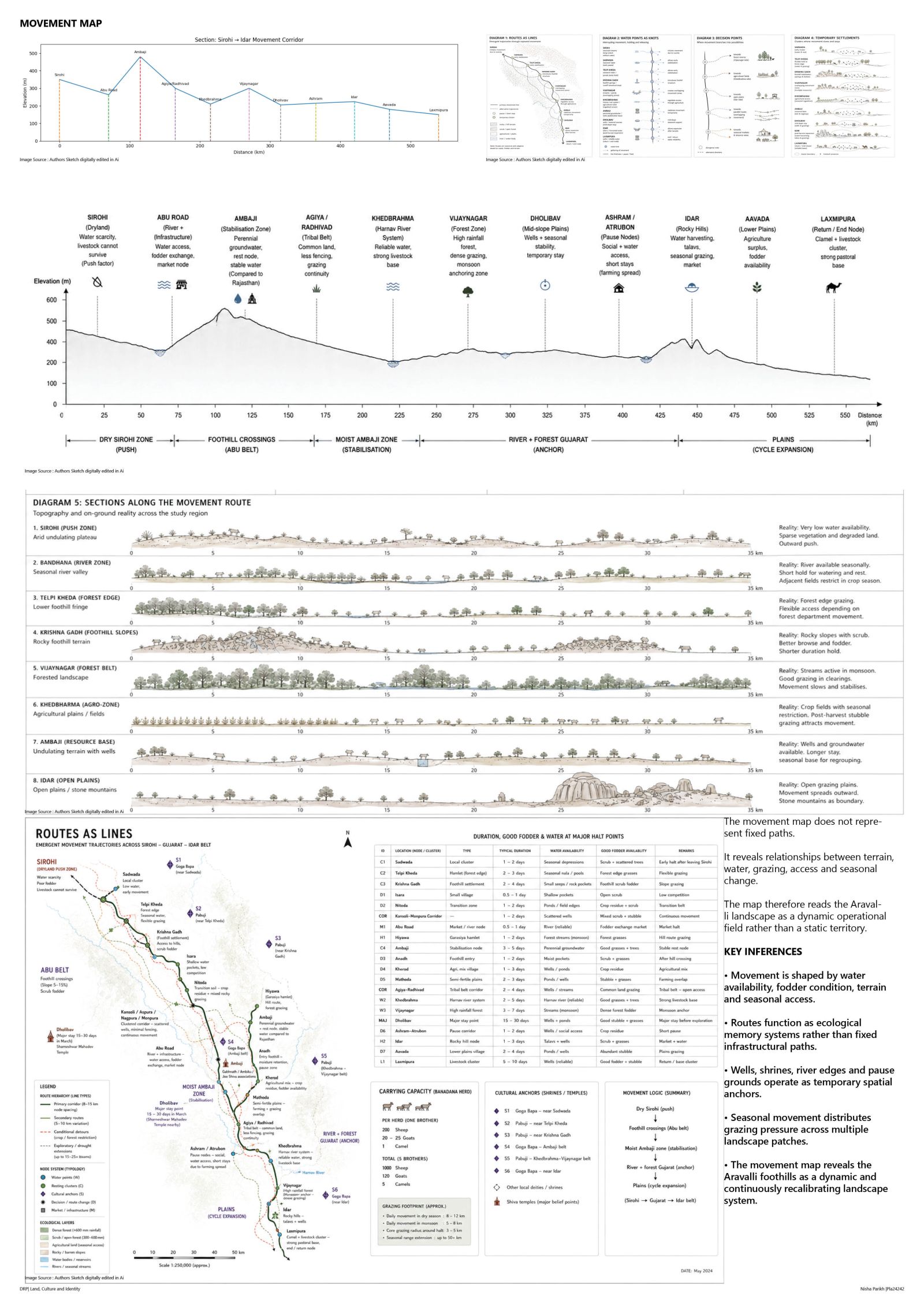
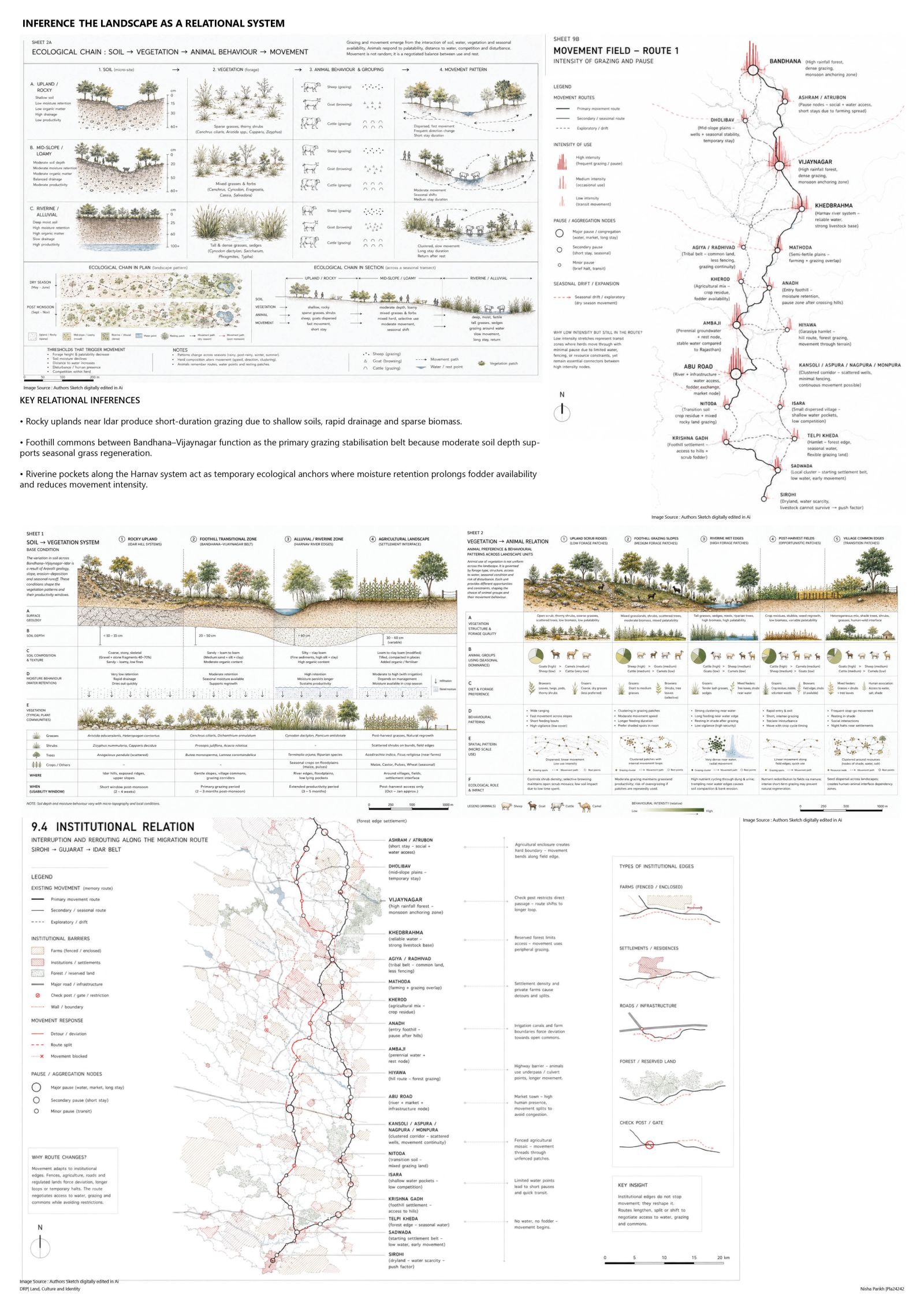
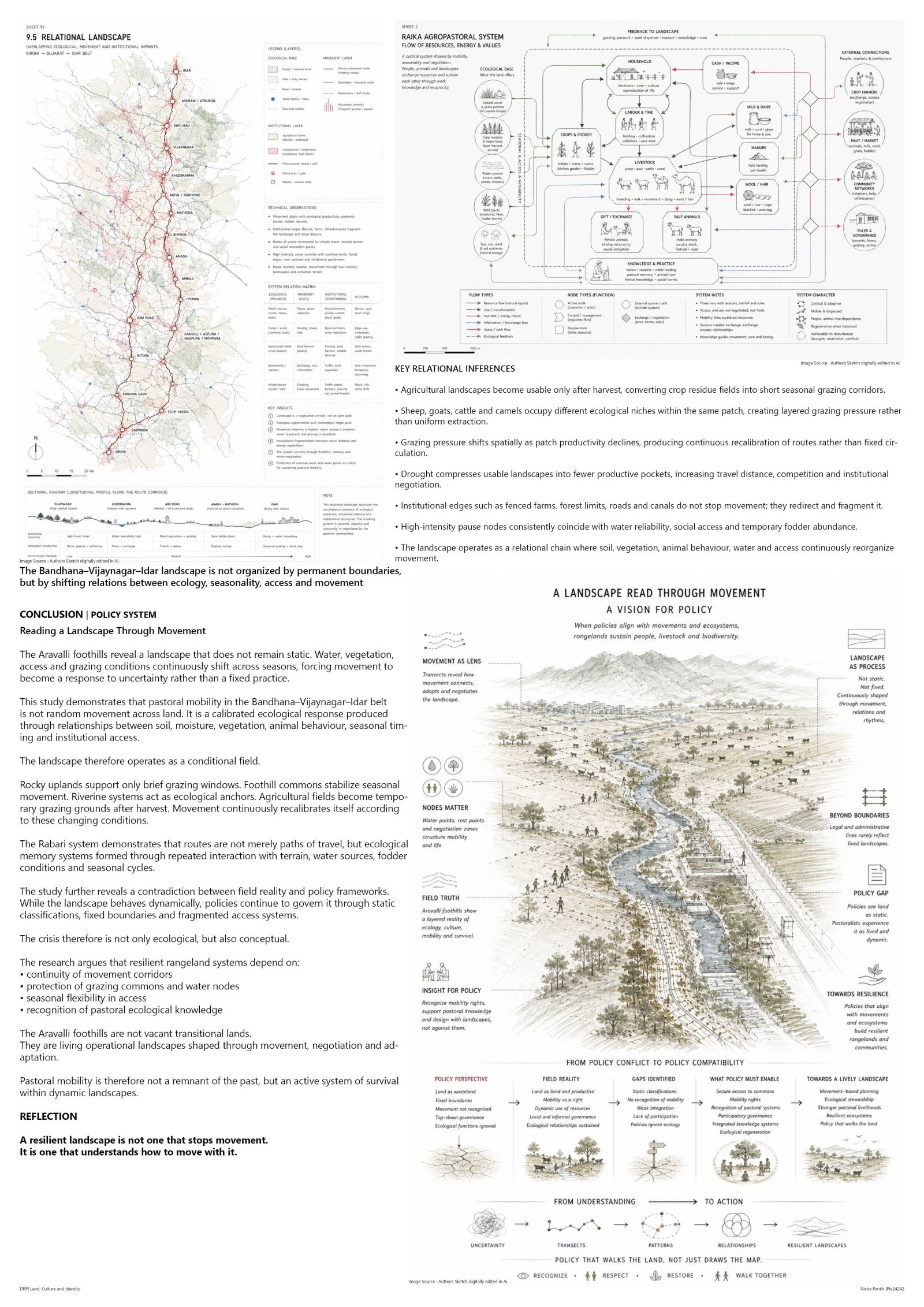
This study investigates pastoral mobility in the Bandhana–Vijaynagar–Idar belt of the Aravalli foothills as a landscape intelligence system emerging from ecological variability. Through transects, movement mapping and field observations, the research demonstrates how soil, water, vegetation, seasonality and institutional access continuously reorganize grazing patterns and routes. Rather than viewing movement as instability, the study interprets mobility as a calibrated response to uncertainty within dynamic dryland systems. The thesis argues that pastoral landscapes operate relationally rather than territorially, where routes function as ecological memory systems. It finally proposes a movement-based reading of landscape to rethink rangeland governance, resilience and policy frameworks.