Nishee Birenbhai Soni

LA4023

Shared canopies: study and shelter

Rasala Park is reimagined from a space of captivity to one of coexistence, where birds are no longer confined but supported through natural habitats. The design introduces wetlands, woodlands, and open grounds with native planting and water systems for nesting, feeding, and movement. Human spaces like paths, seating, and study areas are carefully placed to reduce disturbance. This transformation creates a balanced environment that supports biodiversity, improves microclimate, and allows people and birds to share the landscape respectfully.

View Additional Work
Report Content

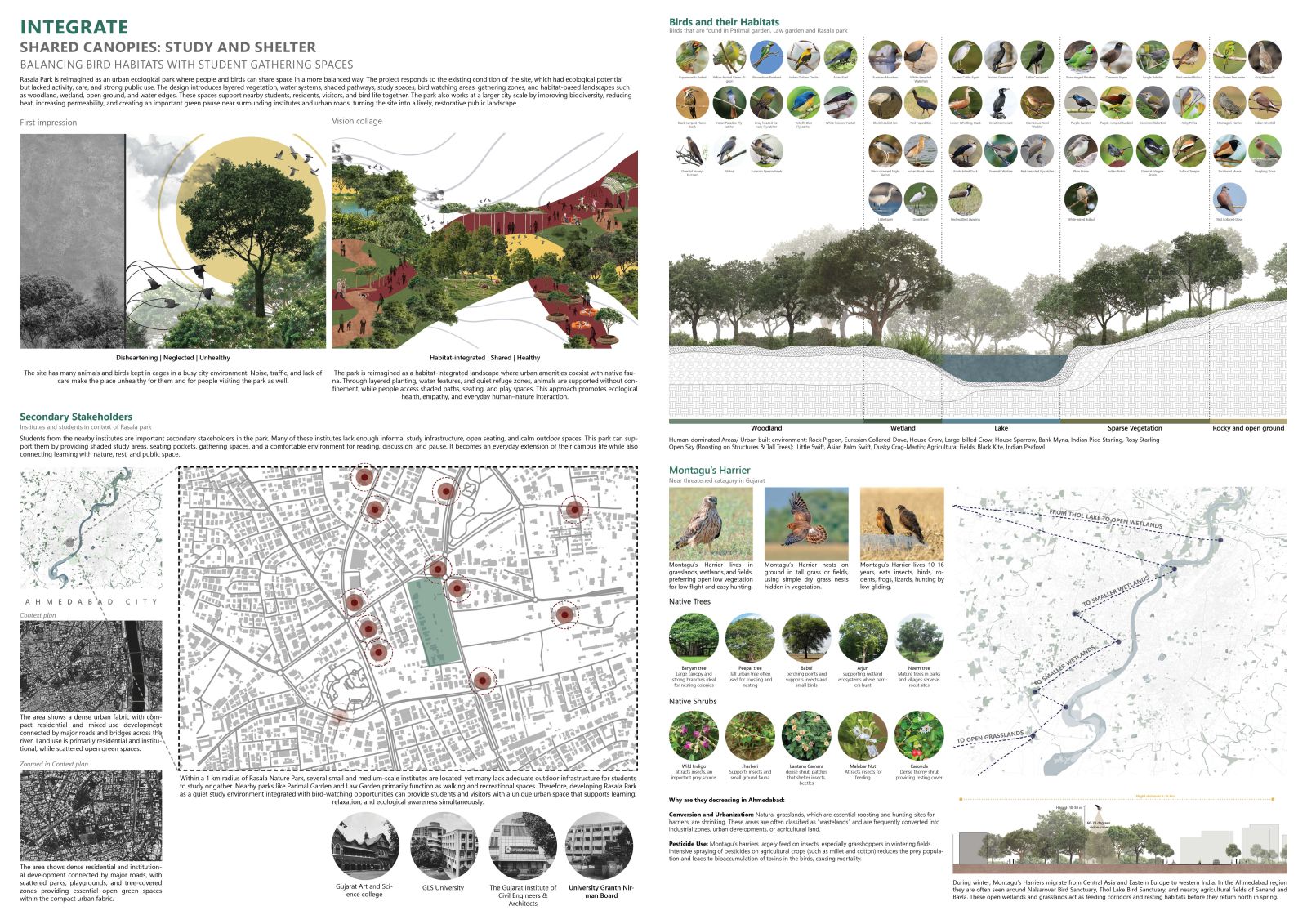
Early research explored site impressions and vision ideas, identifying student needs as key stakeholders. Bird habitats and near-threatened species shaped the design direction towards a balanced, shared, and ecological landscape.

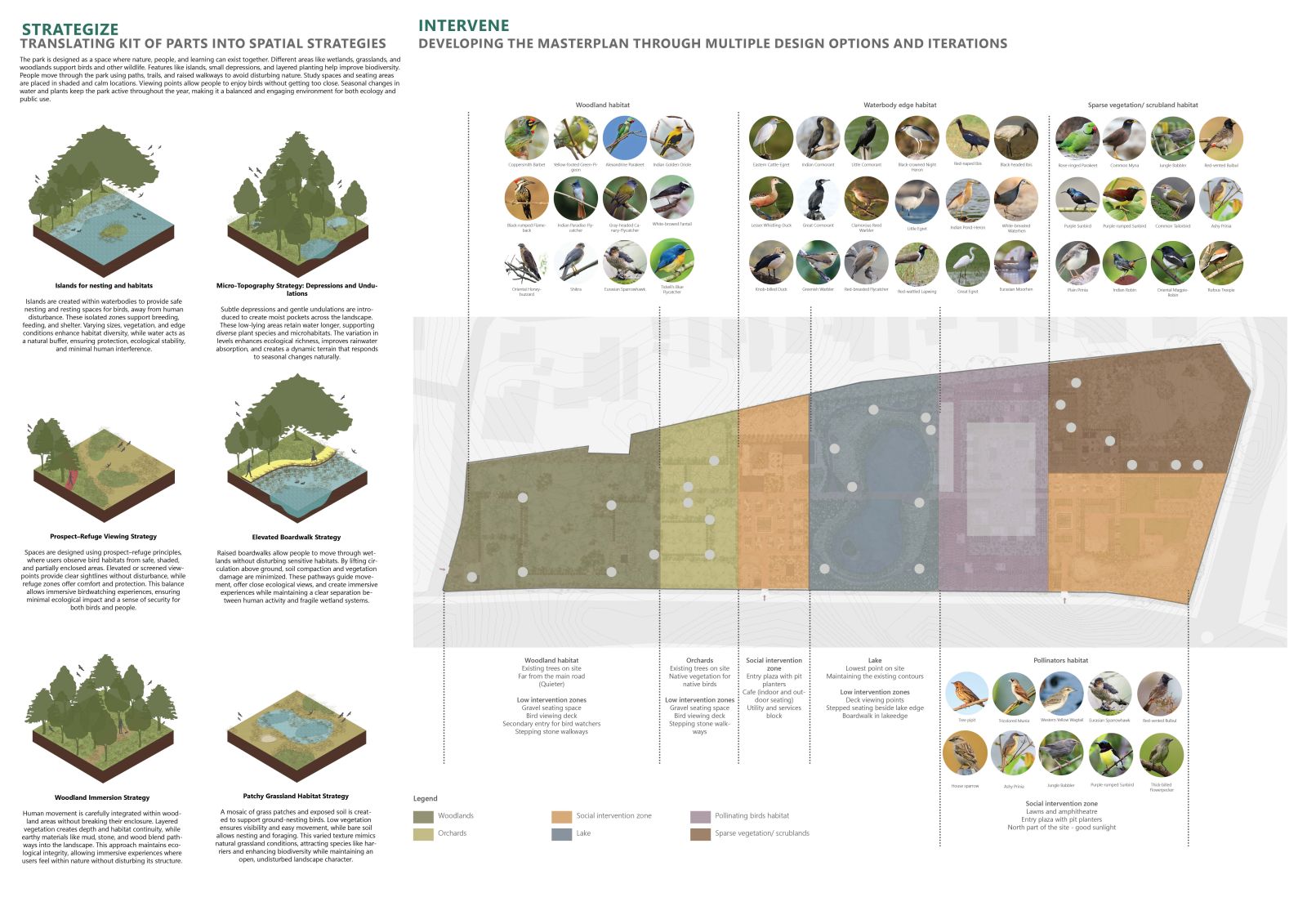
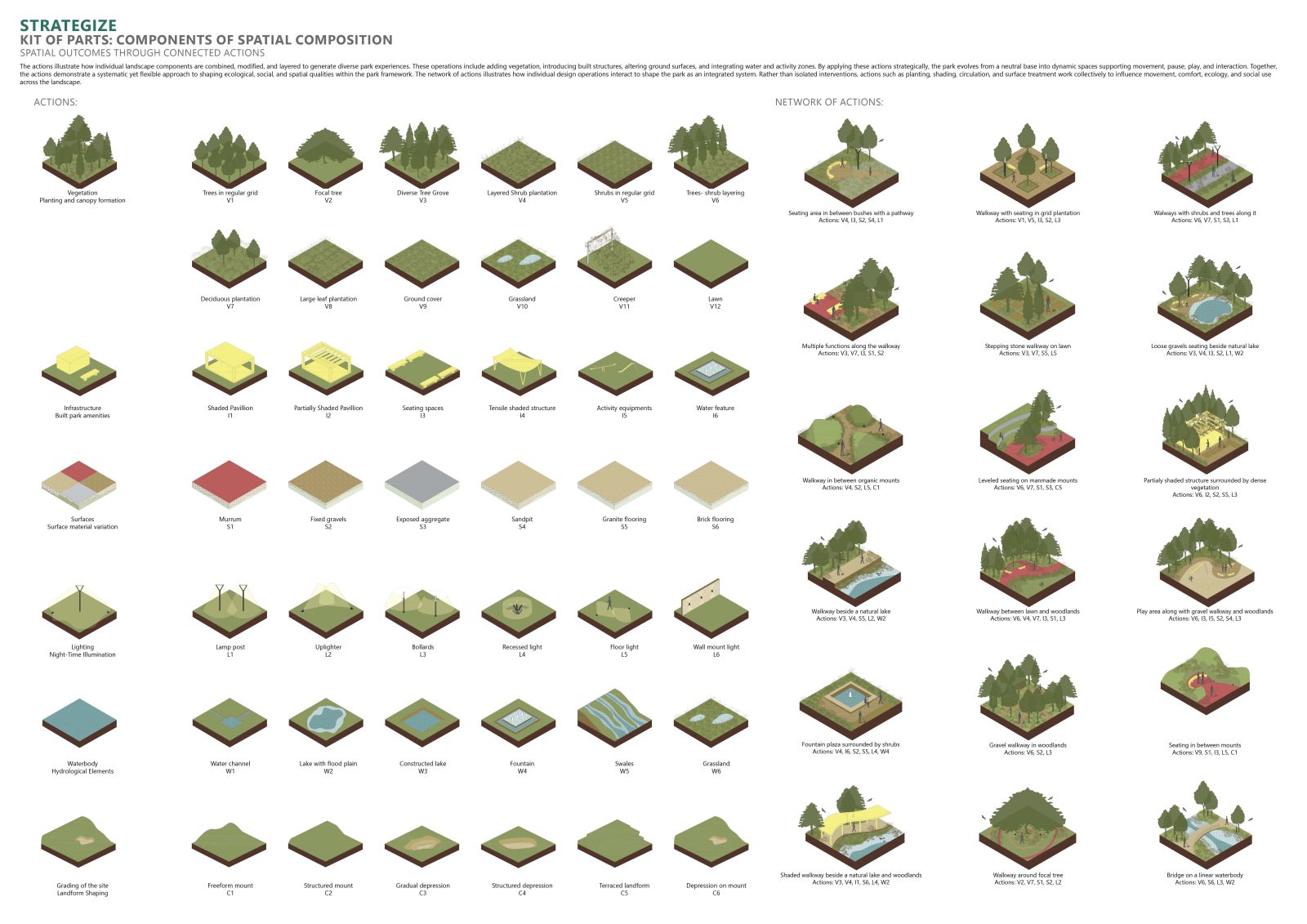
Kit of parts defines elements like planting, water, grading of site, and infrastructure. Individual actions guide each part, and together they form a connected network that shapes movement, habitat, and overall experience.

Strategies zone the site based on bird habitats, creating safe areas and shared edges. Planting, water, and paths balance bird needs with secondary stakeholders, allowing human interaction without disturbing ecological spaces.

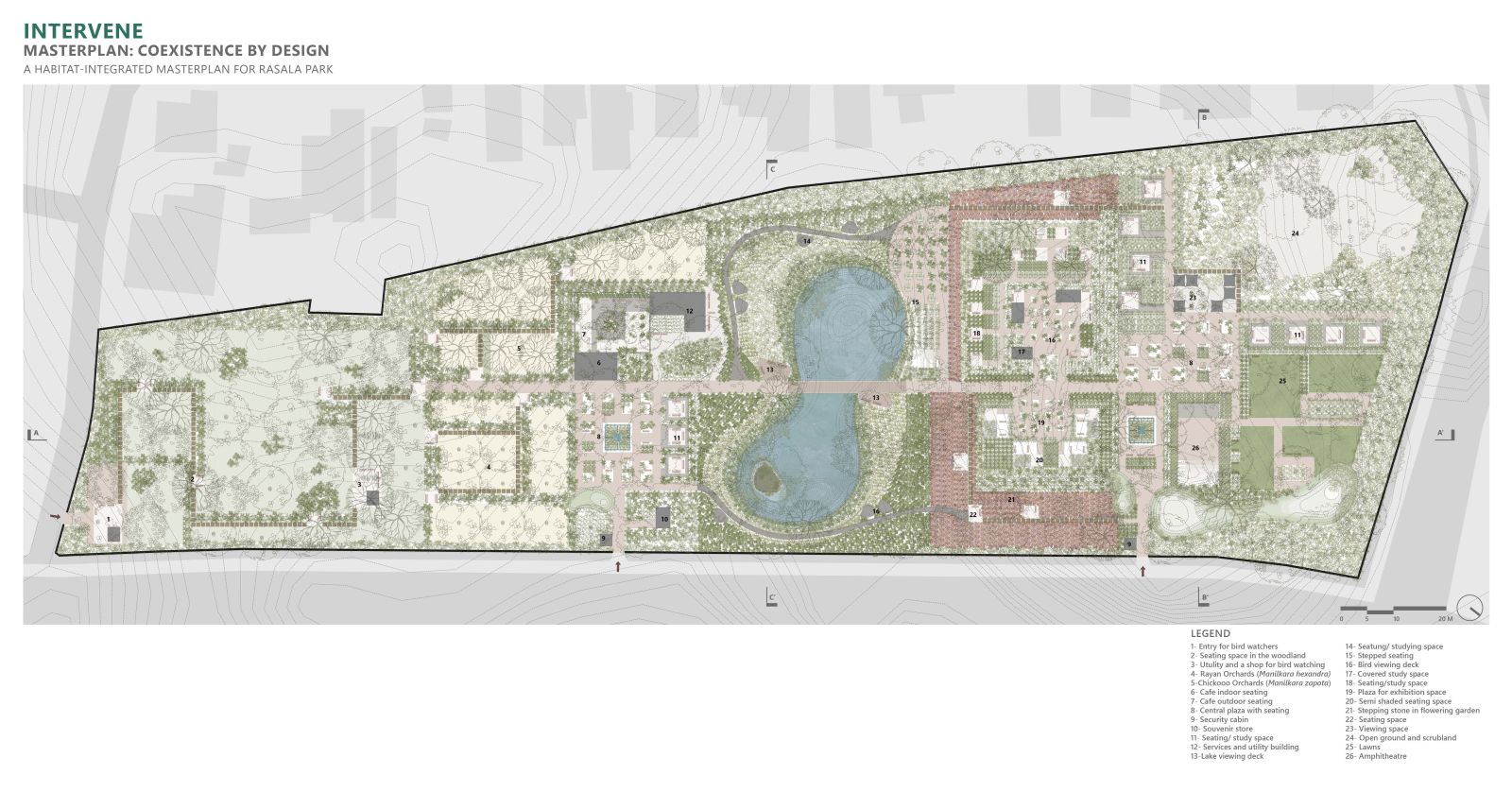
The masterplan organizes habitats, movement, and social spaces into a connected system. It balances bird needs and human use through zoning, planting, and water, creating a shared, ecological, and comfortable environment.

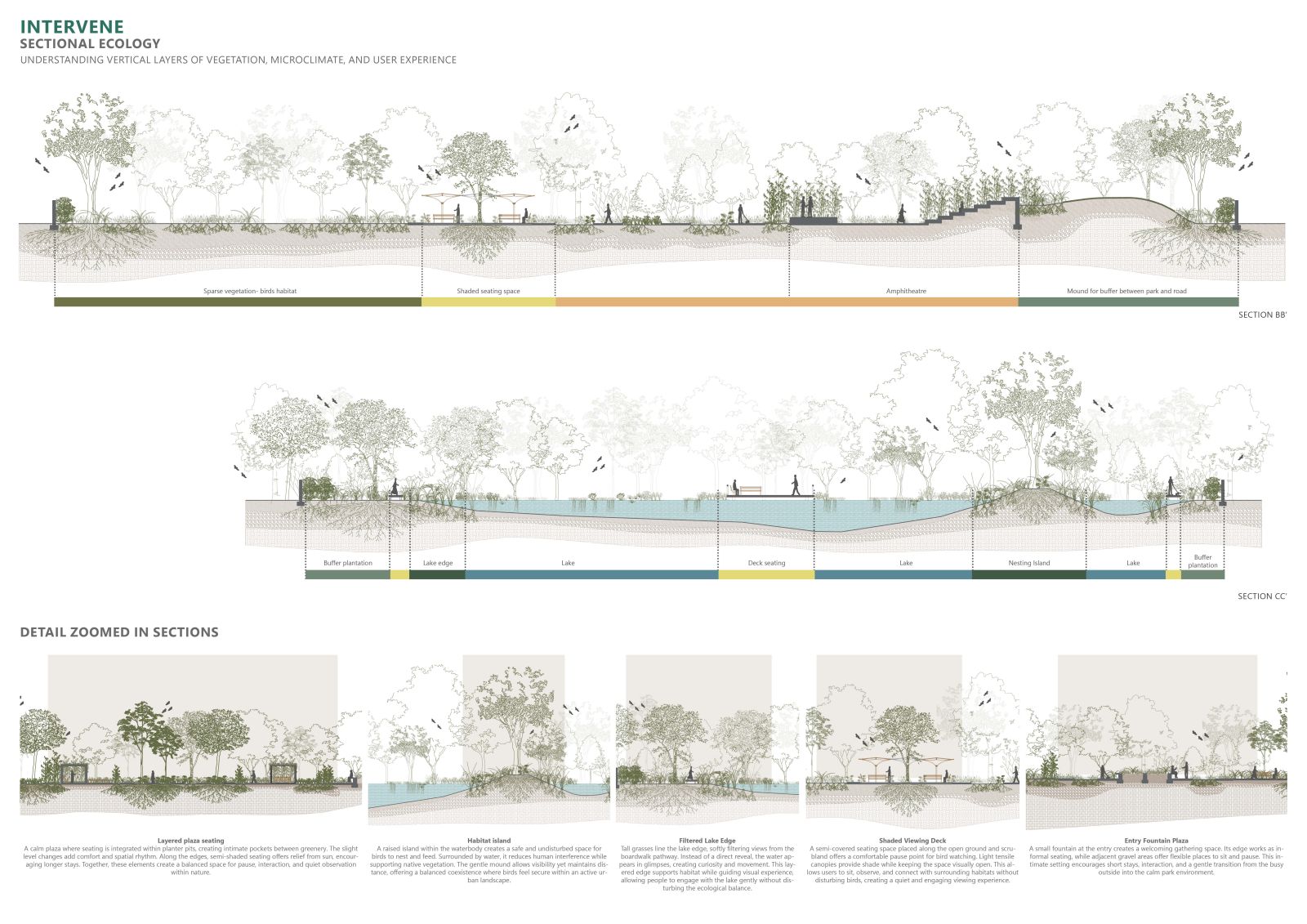
Sections show levels, plants, and spaces. Detailed sections zoom in to show materials and edges. They explain how design ideas like shade, paths, and bird habitats are used in the space.

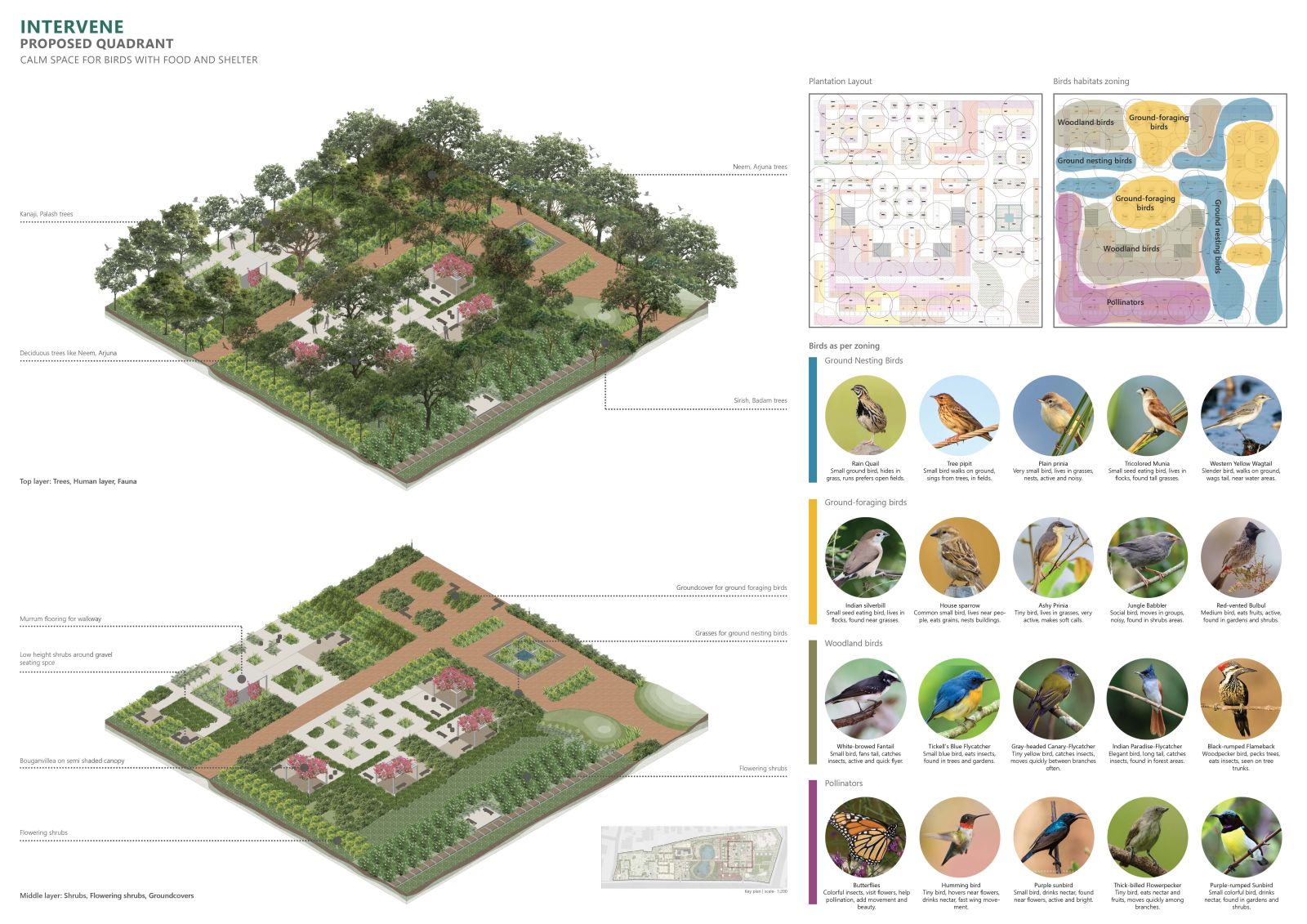
The detailed quadrant is designed based on bird zoning. Planting is arranged to support different bird needs like nesting, feeding, and shelter, while also allowing simple and controlled human movement.

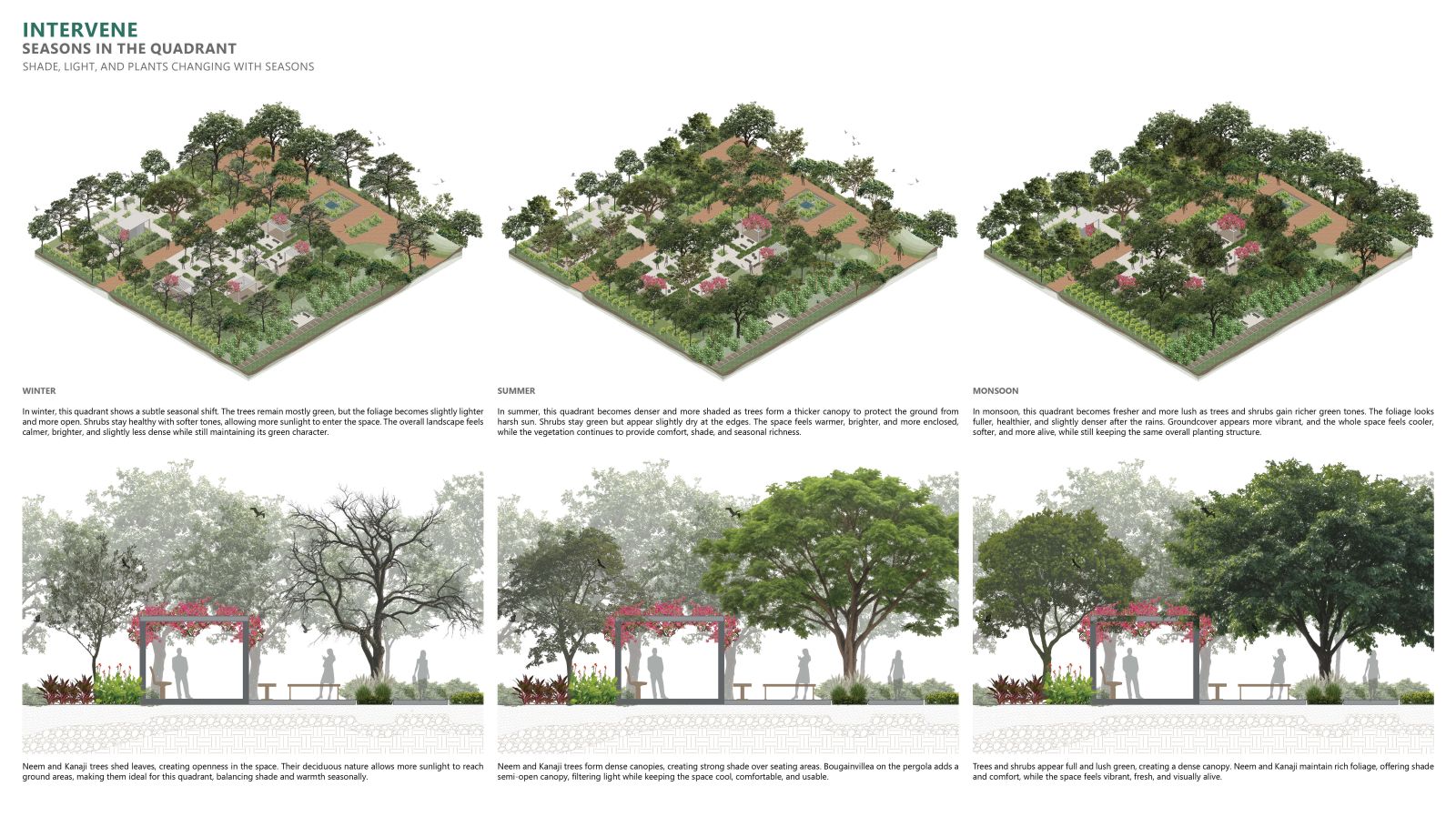
The quadrant changes with seasons. Summer has dense shade for comfort, winter allows sunlight through trees, and monsoon brings lush green growth, making the space active, pleasant, and suitable for birds and people.

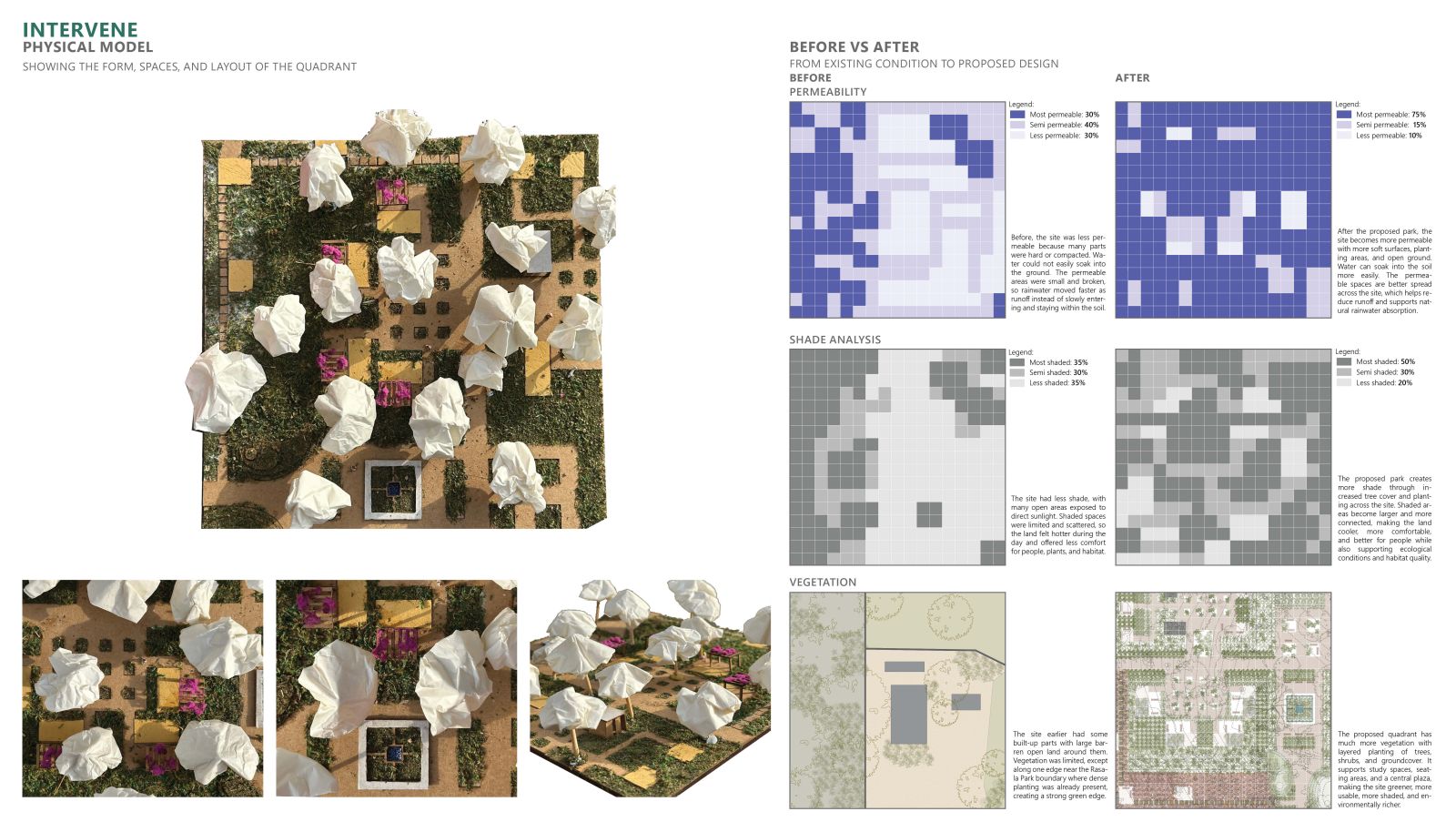
Before, the quadrant had low shade, poor permeability, and less vegetation. After design, shade increases, surfaces become more permeable, and planting improves.

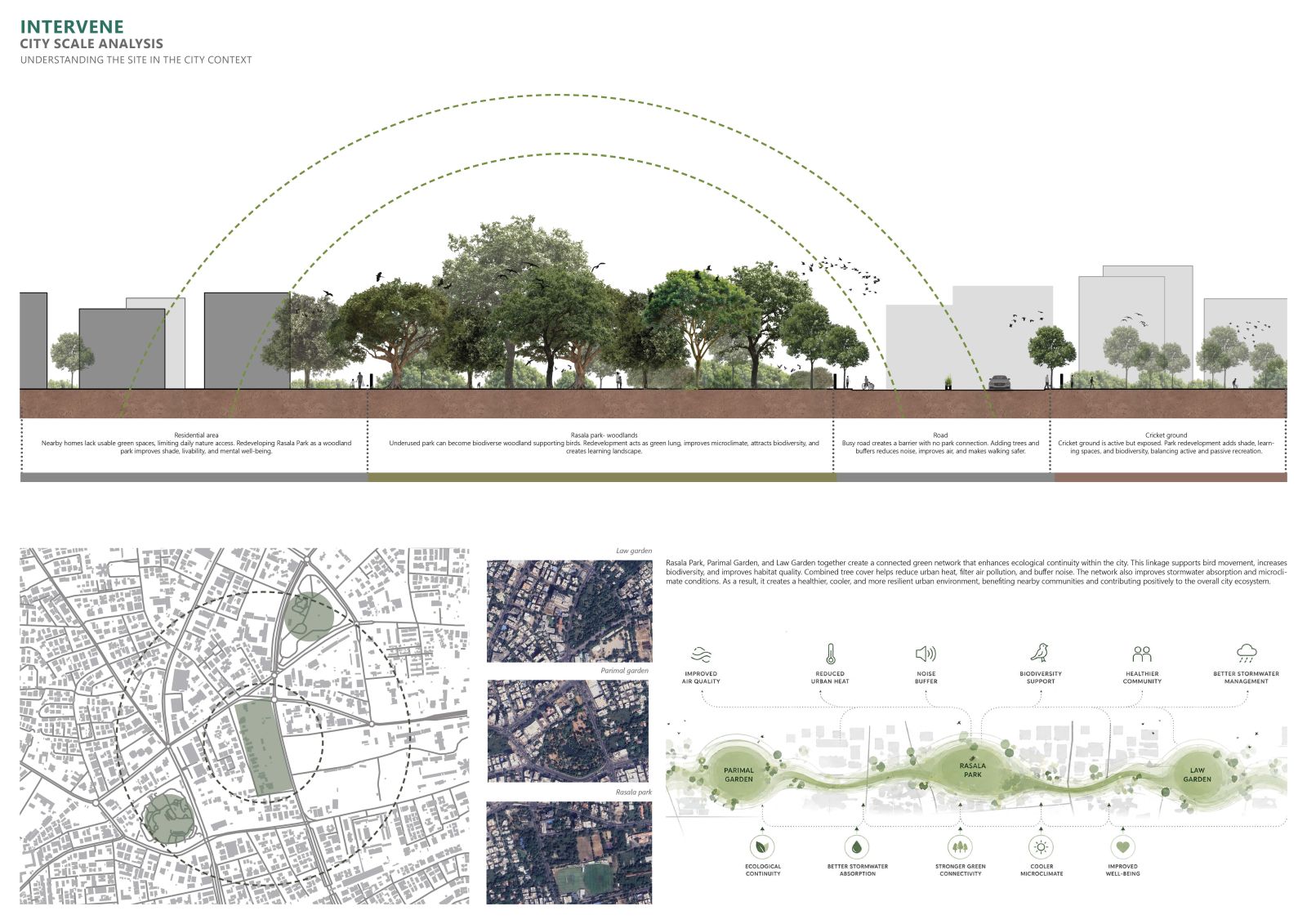
City scale analysis shows the park improves air, reduces heat, and adds green space. It connects nearby areas, supports biodiversity, and creates a healthier, cooler environment that benefits the whole city.

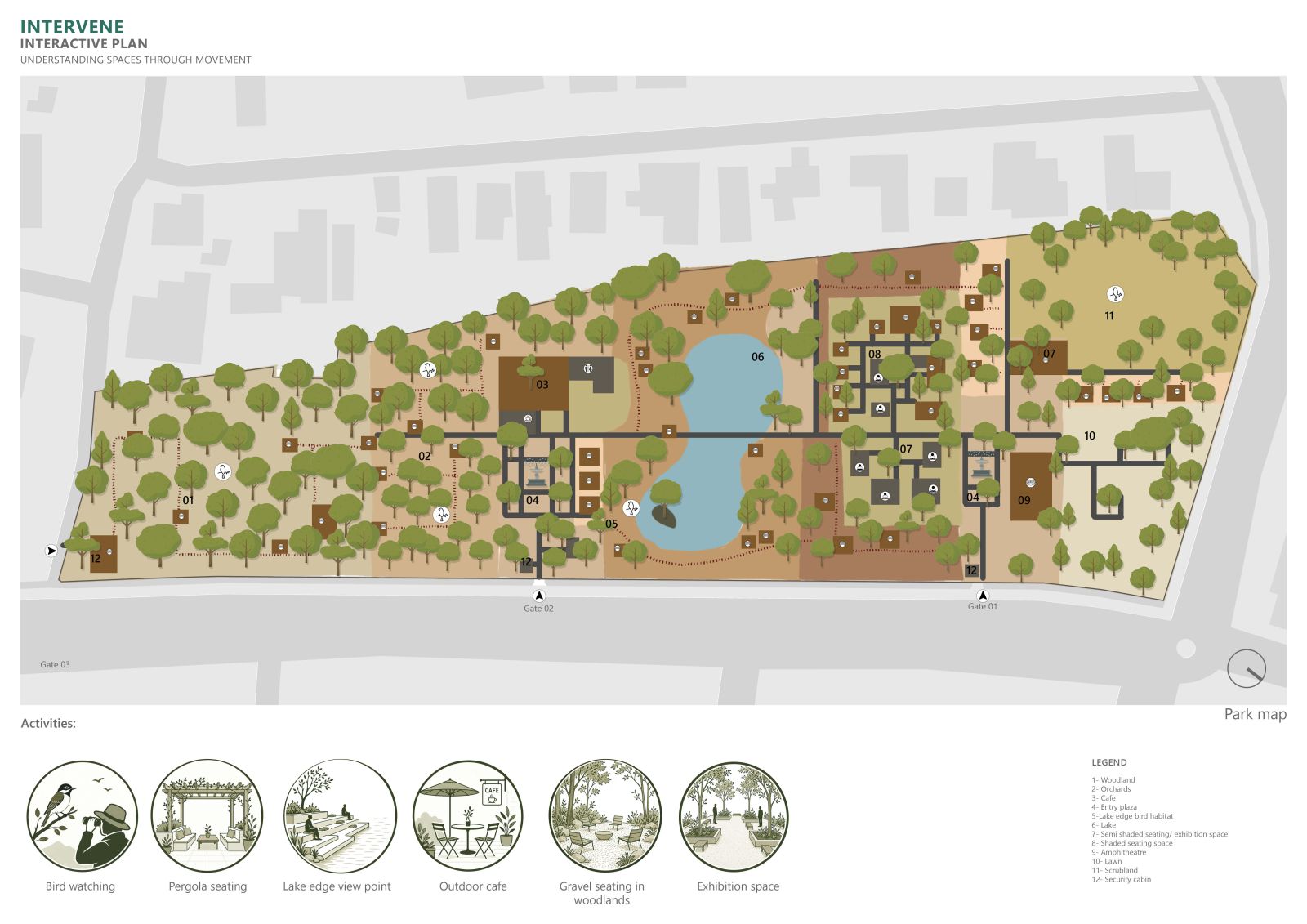
Interactive plan shows movement, paths, and spaces, helping understand how people and birds use and experience the park together.