Your browser is out-of-date!
For a richer surfing experience on our website, please update your browser. Update my browser now!
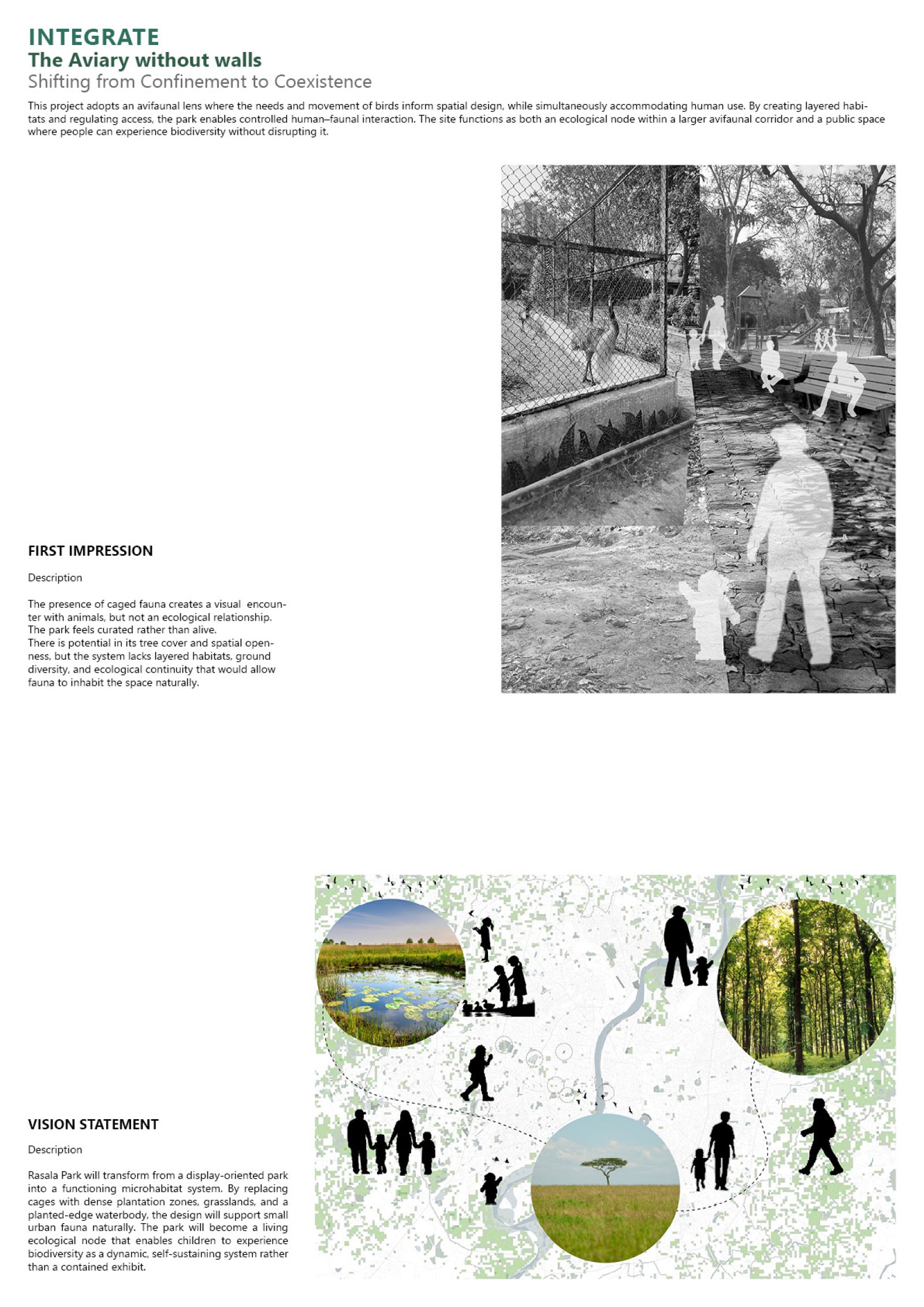
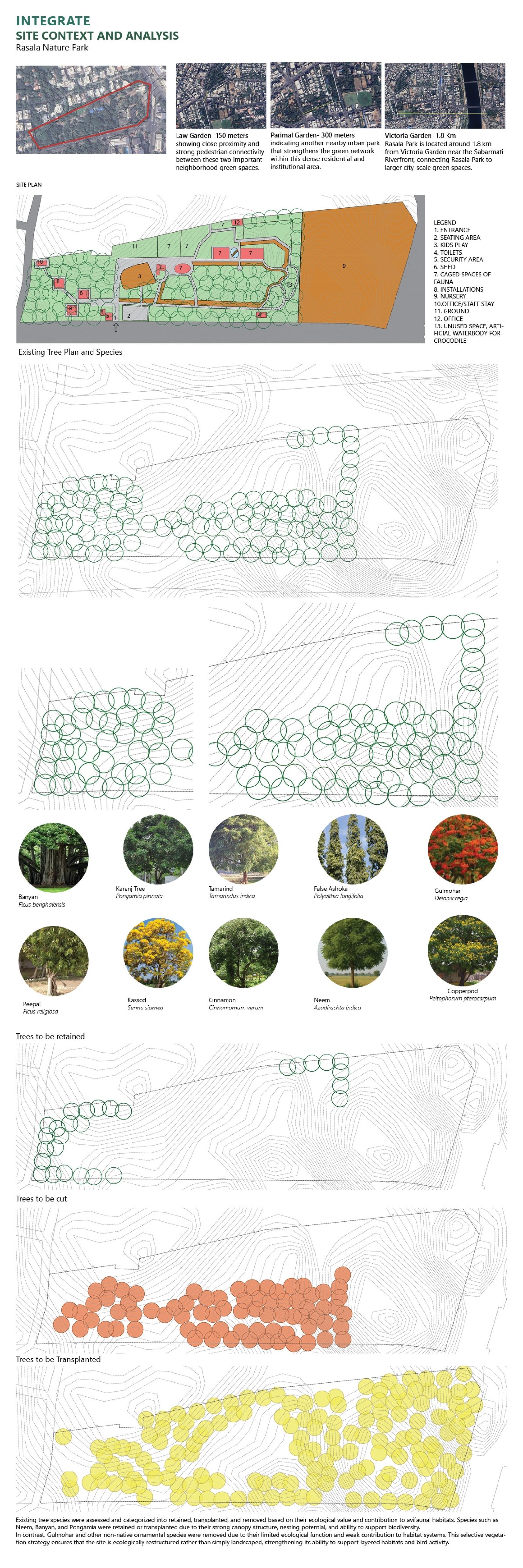
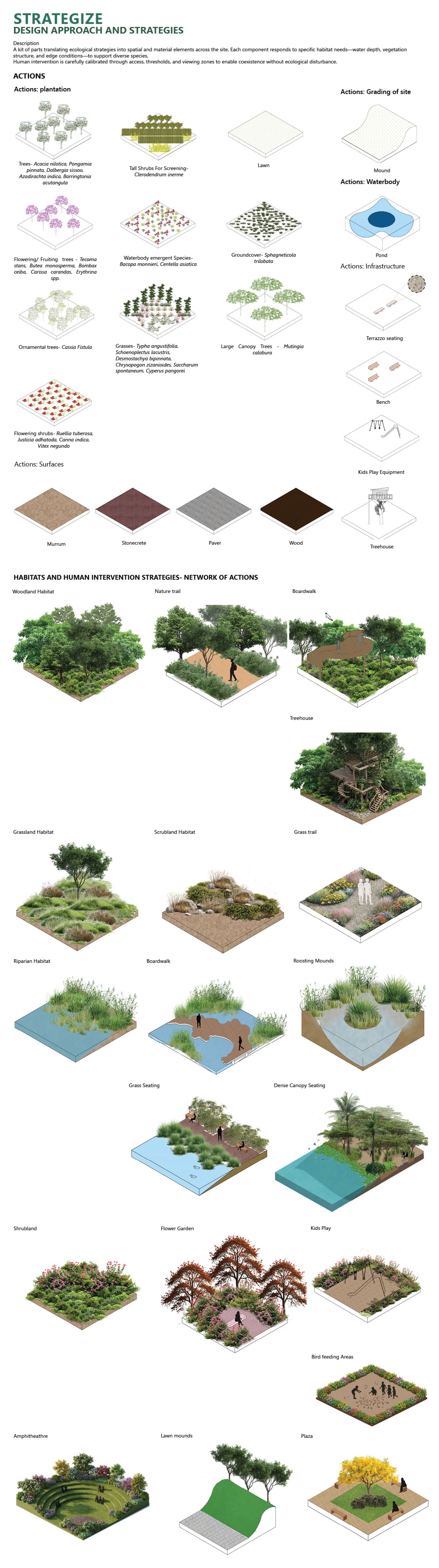
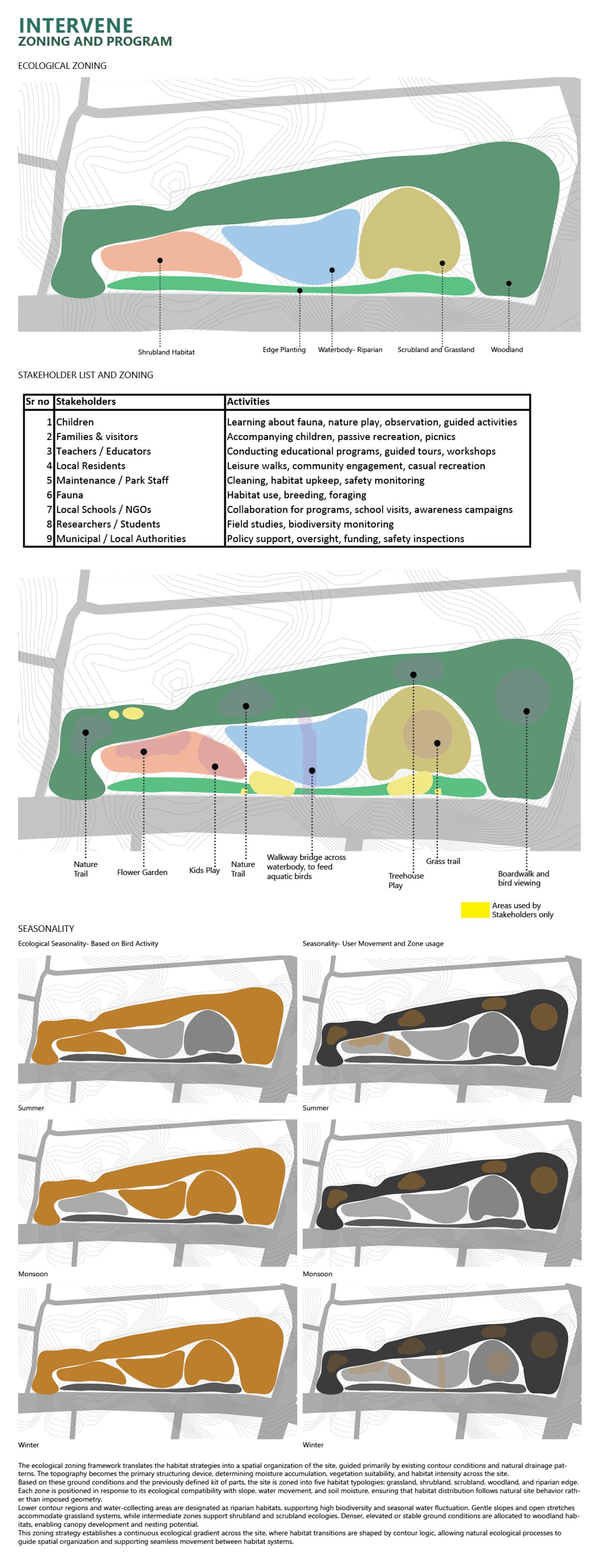
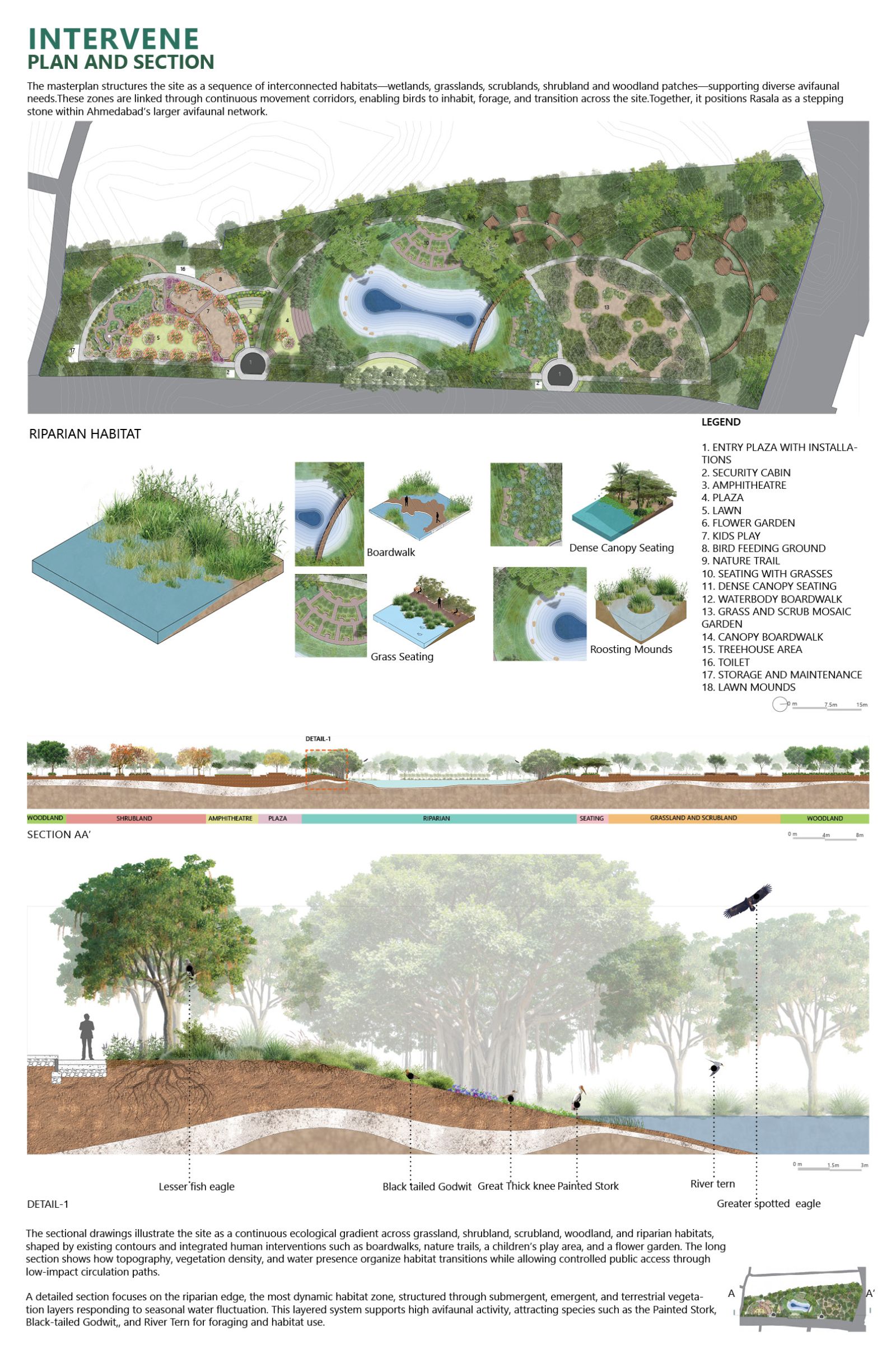
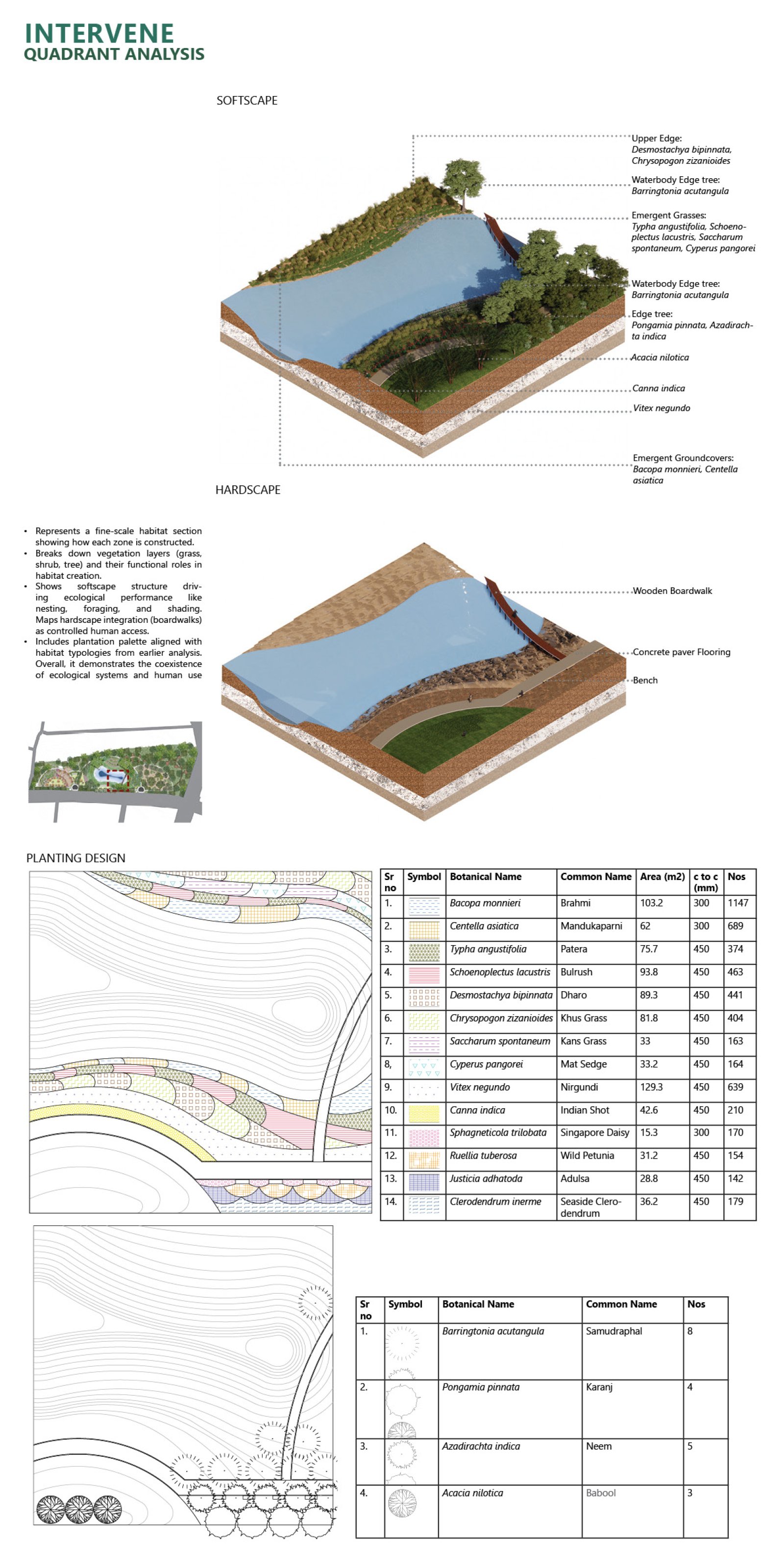
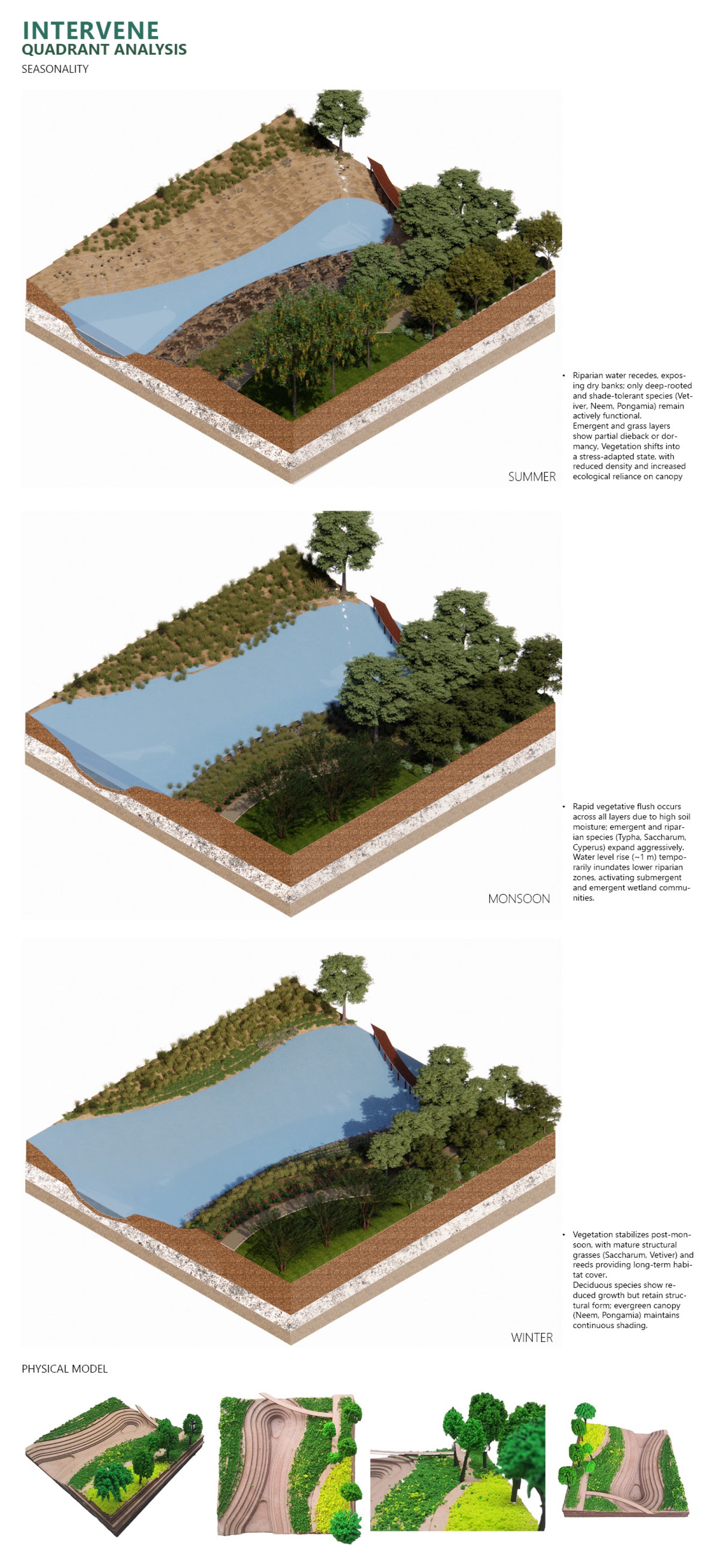
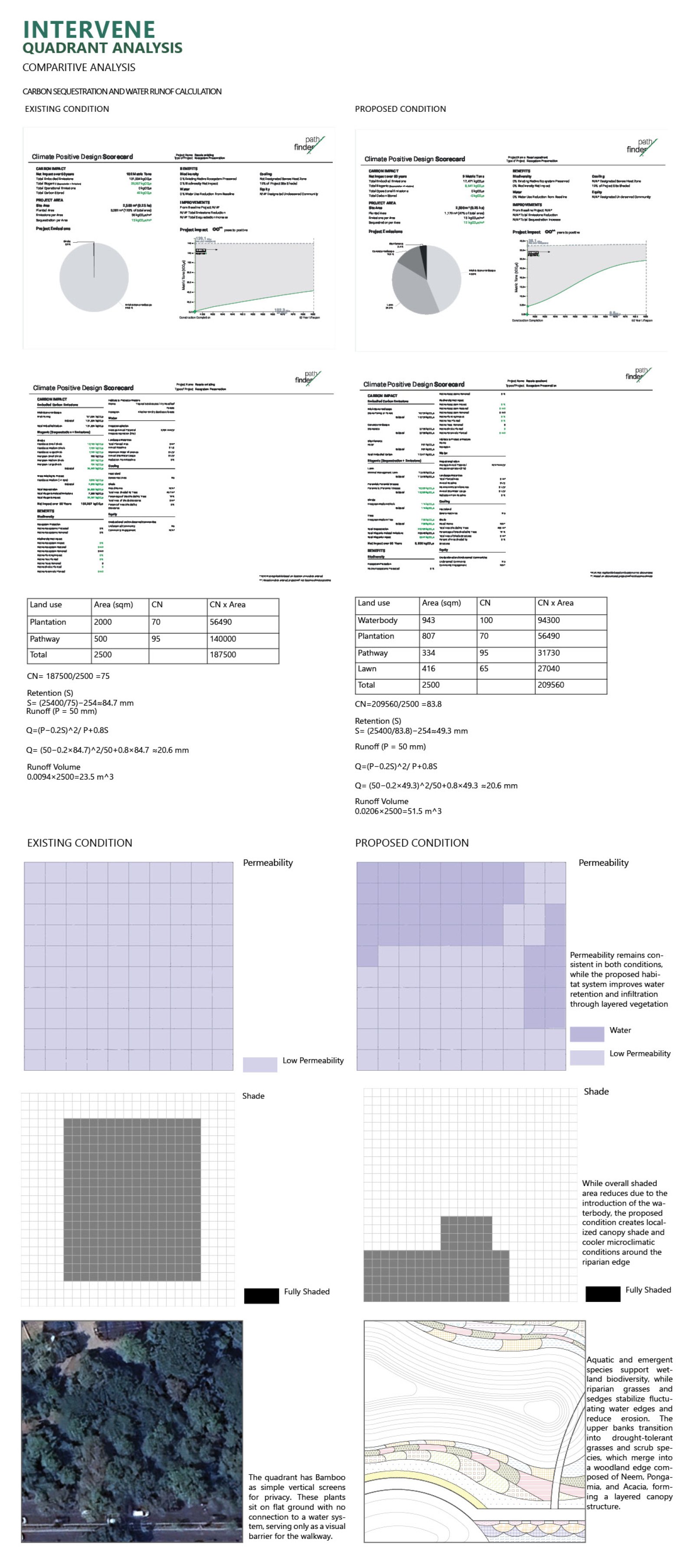
The project explores how urban landscapes can function as ecological infrastructure by supporting bird habitats within a rapidly urbanizing context. Developed through a multi-scalar ecological study across regional, city, and neighbourhood scales, the intervention investigates migratory networks, habitat fragmentation, and localized biodiversity systems to position the site as part of a larger avifaunal corridor. Using habitat dependency studies and species-specific ecological parameters, the design establishes five interconnected habitat typologies — grassland, shrubland, scrubland, woodland, and riparian edge — integrated with controlled human interventions such as boardwalks, nature trails, and interactive public spaces. The project emphasizes habitat continuity, native vegetation systems, and hydrological integration to support nesting, foraging, and seasonal bird movement while fostering human engagement with nature. Through ecological zoning, layered planting strategies, and contour-responsive design, the proposal reimagines the urban park as a multifunctional landscape that improves biodiversity, ecological resilience, and environmental performance within the city.
View Additional Work