This joint studio brings together MAHR and MLA students to explore landscape design and
history on a peri-urban site. Focusing on the 77-hectare Koteshwar Wilderness near
Ahmedabad (or a similar site), students will investigate ecological and cultural layers,
exchange disciplinary skills, and develop representational techniques to interpret and
document this self-evolving, non-designed landscape.
The studio will begin with site-based drawings that analyse species, systems, and landscape
frameworks. Post mid-semester, MAHR students will engage with texts on historic baselines,
nature, aesthetics, and land transformation. Their final output will be an essay linking site
observations to critical theory, with the option to selectively review MLA proposals. MLA
students will build on the initial enquiry to develop a master plan that responds to site history,
current land acquisition issues, landscape changes, and political pressures. From this, they
will design one area in detail, established via zoning, program development, and an
understanding of scale. This will further look at phasing and seasonal variations to
understand change in landscape.
Studio Unit
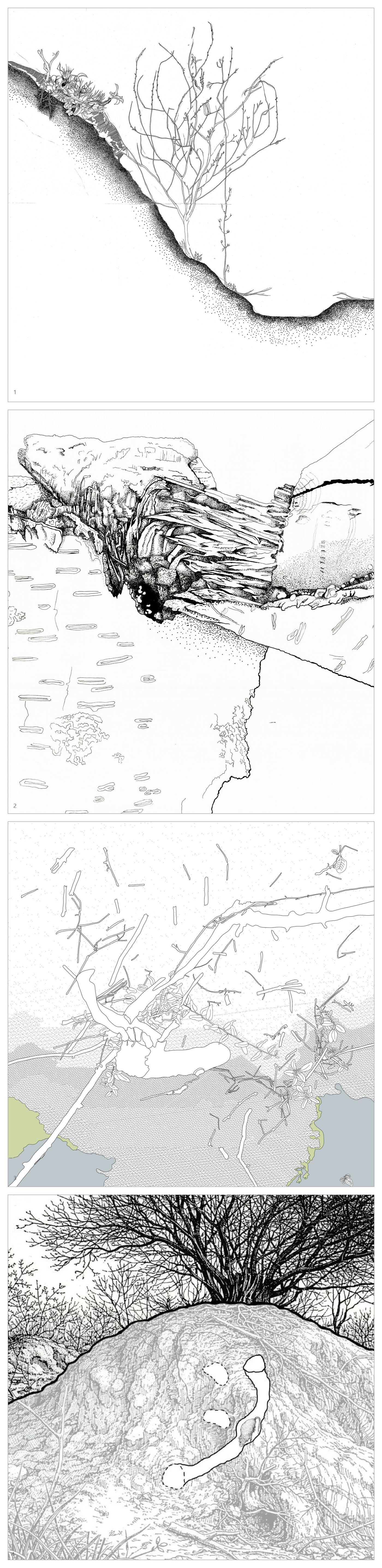
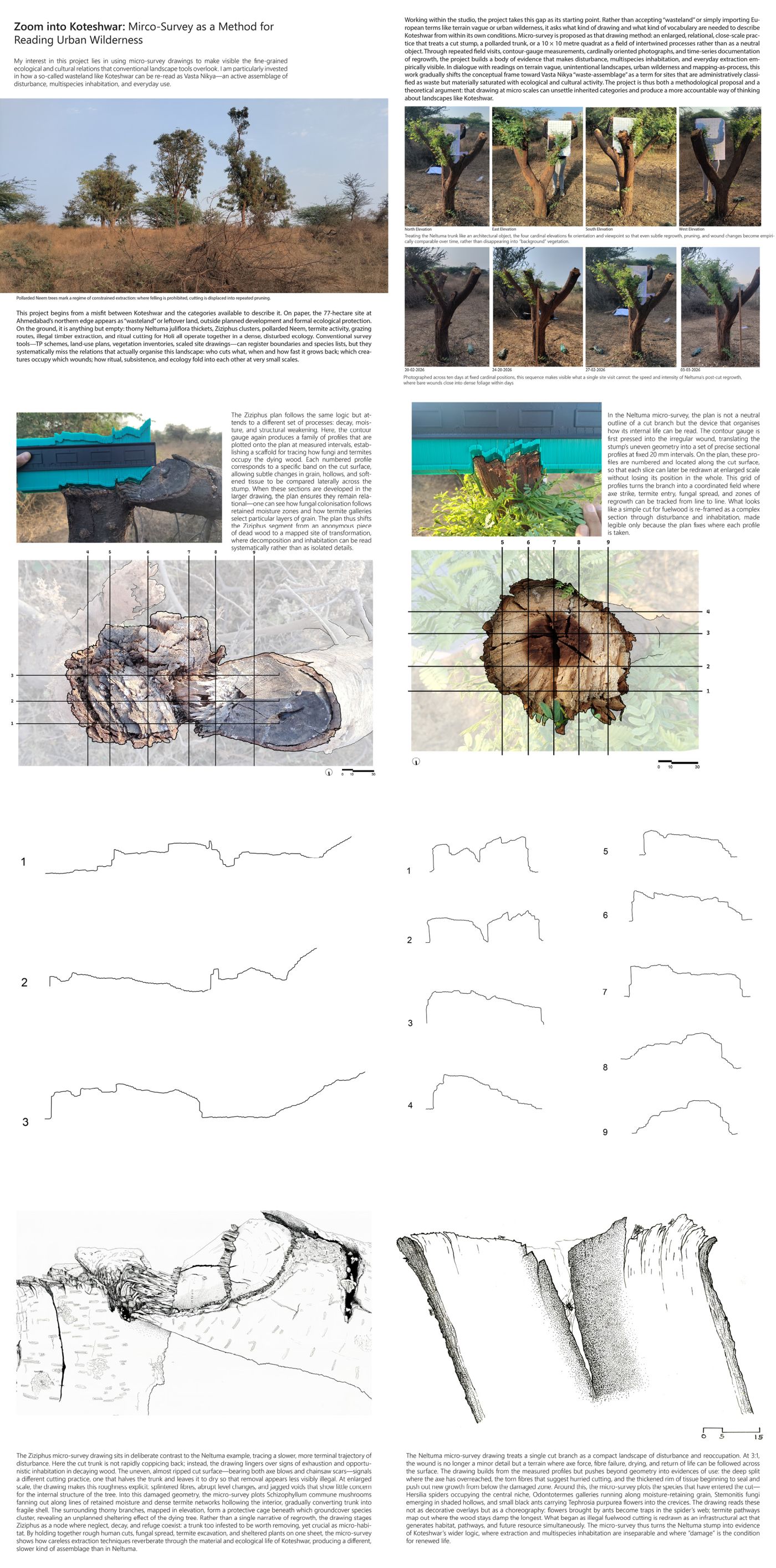
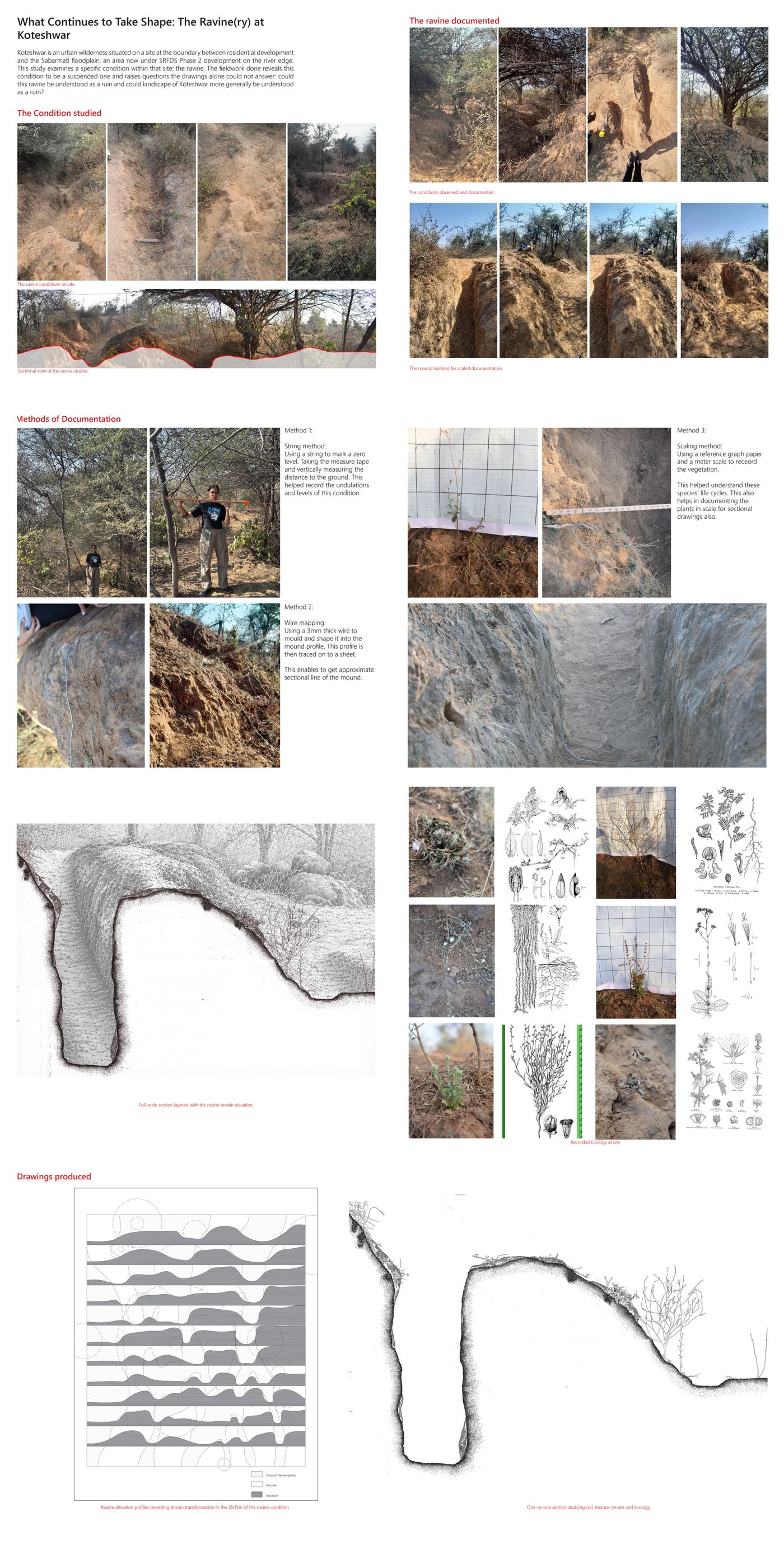
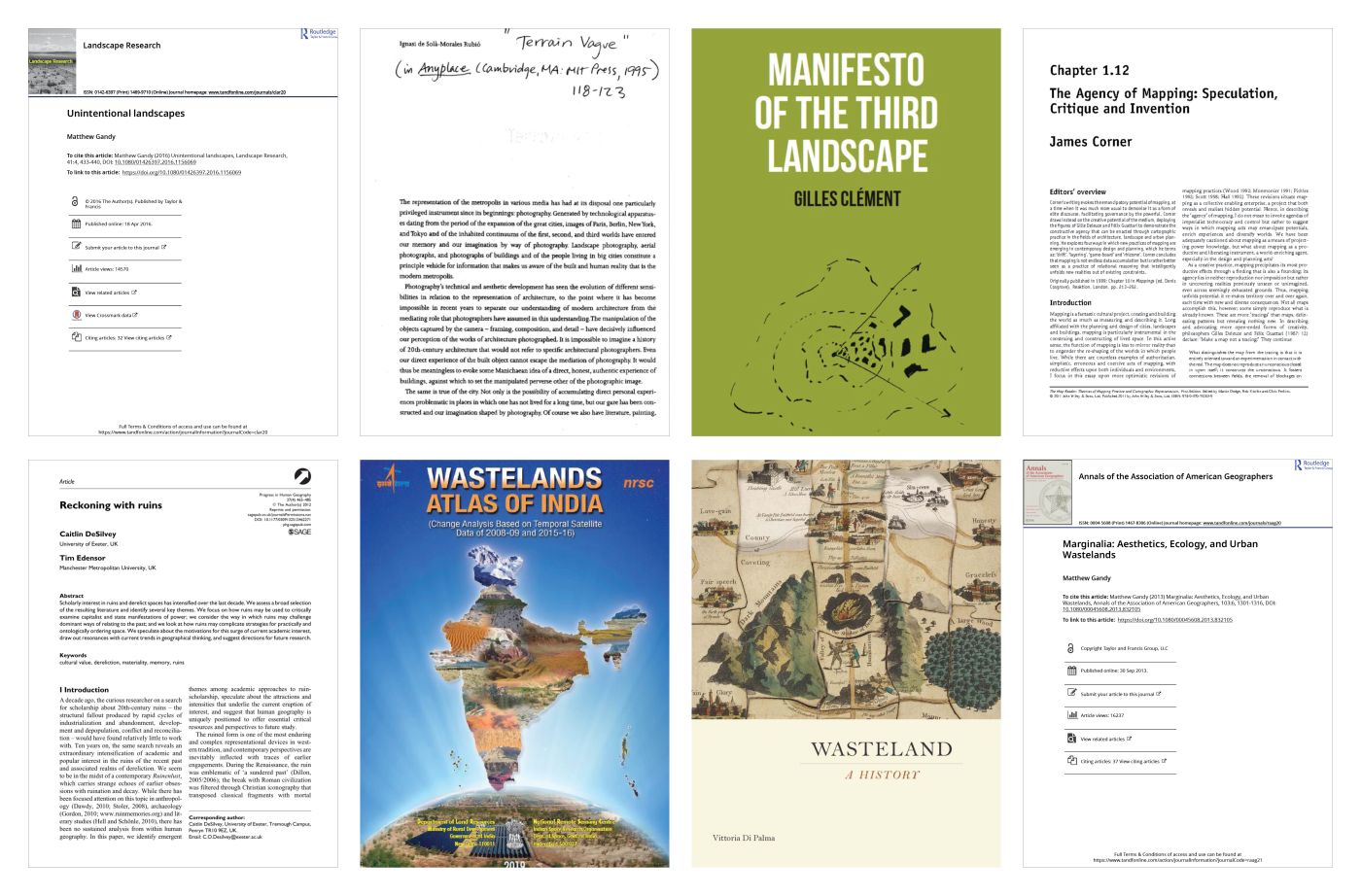
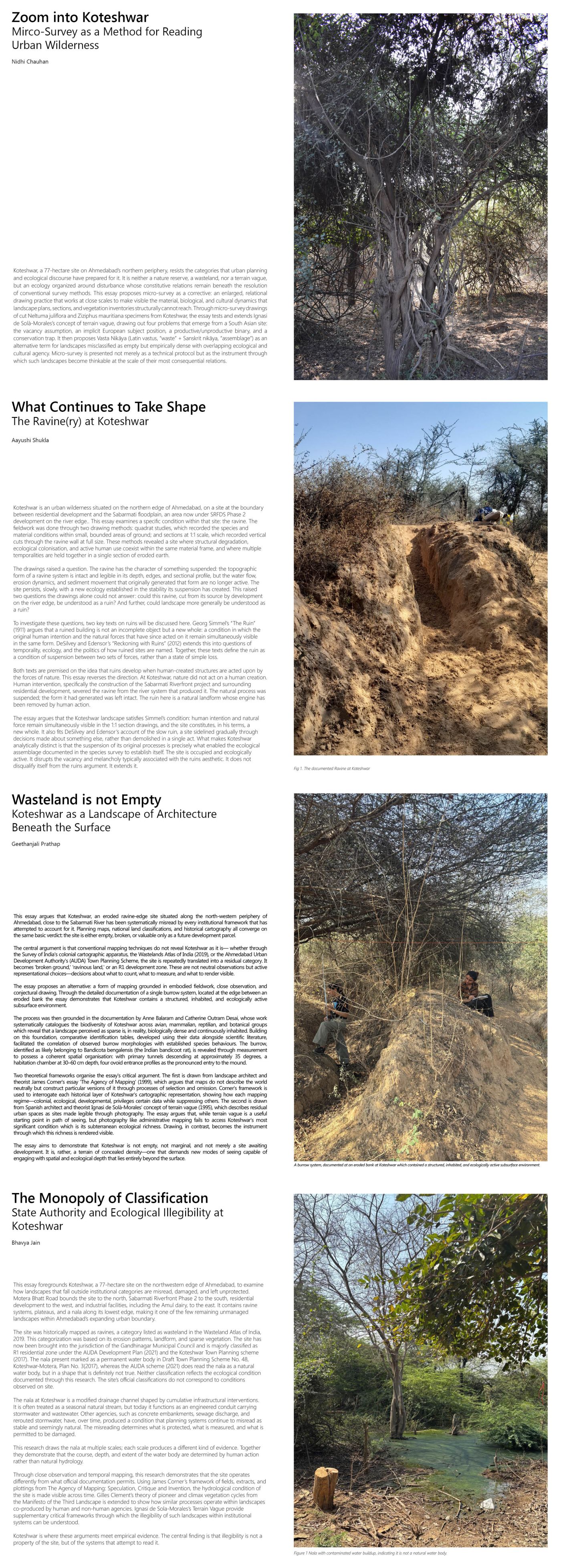
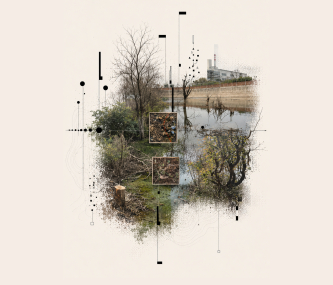
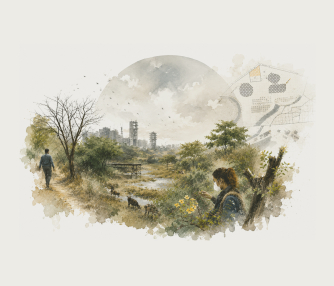
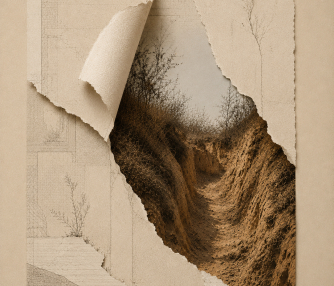
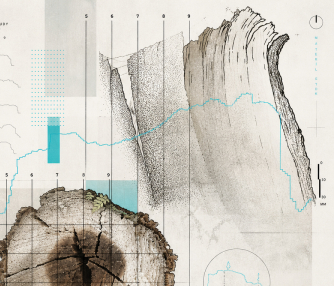
Detailed measure drawings of the landscape at are analytical tools rather than illustrations, enabling students to create new readings of a landscape ordinarily considered as vacant land or wasteland. Drawings with original scale indicated: Aayushi Shukla (1:1), Nidhi Chauhan (3:1), Bhavya Jain (1:1) & Geethanjali Prathap (1:2)
Applying architectural tools and conventions to measure drawing cut trees in Koteshwar, Nidhi Chauhan
Applying architectural tools and conventions to measure drawing Koteshwar Ravines, Aayushi Shukla
A three week seminar conducted close readings of core historic texts central to contemporary scholarship on urban landscapes. Terrain Vague, Ignasi de Solà-Morales (1994); Manifesto of the Third Landscape, Gilles Clément (2004); The Agency of Mapping, James Corner (1999), Natura Urbana, Matthew Gandy (2022)
Essays brought empirical readings of Koteshwar established through analytical drawing into conversation with core texts. In this process drawings provide a means of critiquing and expanding the ideas in texts and texts provide a range of theoretical positions with which to contextualise empirical readings